
Evaluating Cooling Vest Suppliers for Long-Term Industrial Contracts: A 2026 Sustainability Guide
Evaluating Cooling Vest Suppliers for Long-Term Industrial Contracts: A 2026 Sustainability Guide
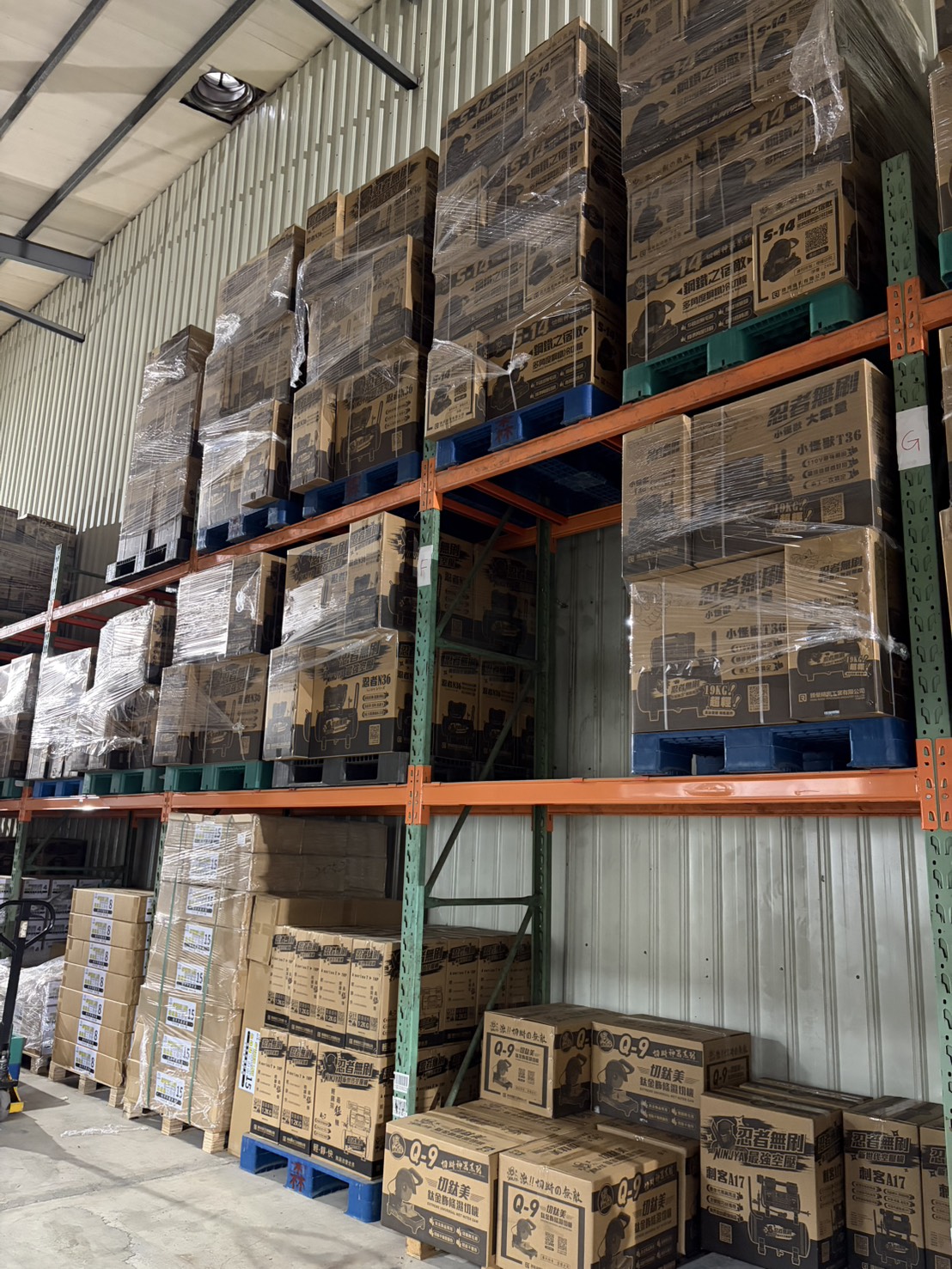
Warehouse and stock area at Feng Shang Precision Co., Ltd., the Taiwan manufacturer behind the Shokunin brand — the physical layer of a long-term supply commitment. Image: Feng Shang Precision Co., Ltd.
Choosing a cooling vest supplier for a multi-year industrial contract is a continuity decision, not a price decision. The supplier that matters is the one whose cooling performance, production capacity, quality controls, maintenance model and documentation remain stable across repeat orders, seasonal peaks and site audits — not the one that wins a single batch quotation.
This 2026 reference examines that decision using the dual cooling water cooling vest category as the working example. It combines verified category data with first-party facts published by Feng Shang Precision Co., Ltd., so that procurement, safety and operations teams can compare supplier claims against checkable evidence rather than marketing language. Throughout, “sustainability” is used in its supply-chain sense: the ability of a supplier relationship to be sustained over several contract years, alongside the heat-safety outcomes the equipment is bought to deliver.
Why Long-Term Cooling Vest Contracts Are Assessed Differently
When the purchasing horizon moves from one order to several years, three variables change: volume becomes predictable but seasonal, performance failures repeat instead of occurring once, and the supplier’s capacity becomes part of the buyer’s own operational risk. A single poor batch is an incident; a poor supplier is a recurring exposure across every site that standardised on that vest.
Two verified data points explain why this category is drawing more procurement attention. Industrial applications — construction and manufacturing among them — held the largest share of the global cooling vest market at 34.5% in 2025, according to Dataintelo. Asia Pacific is the fastest-growing region for cooling vests, driven by rapid industrialisation and large outdoor work populations, according to Spherical Insights. When a cooling product shifts from discretionary purchase to standard heat-protection equipment, buyers begin to evaluate suppliers the way they evaluate other safety-equipment vendors: on repeatability, documentation and serviceability.
For construction firms, metal-processing plants and outdoor service operators, the operational cost of an underperforming cooling programme is not the unit price difference between two vests. It is the pattern of short cooling duration, frequent consumable replacement and informal reordering that erodes a heatstroke prevention policy over time. That pattern is usually visible in the supplier’s specification and capacity data long before it appears on a site.
Five Dimensions of Supplier Sustainability
A long-term cooling vest supplier is sustainable along five checkable dimensions. Each one can be verified with documents the buyer should request before signing, rather than accepted from a catalogue.
| Dimension | What the buyer is really testing | Evidence to request |
|---|---|---|
| Cooling performance | Whether the stated cooling duration holds through a full shift and across seasons | Documented cooling duration and the conditions it was measured under |
| Production capacity | Whether contracted volume can be met during peak months without slipping | Annual output, factory footprint, workforce and R&D headcount |
| Quality control | Whether defect risk is contained before shipment rather than discovered at the site | Pre-shipment inspection practice, material specifications, batch handling |
| Maintenance and consumables | Total cost of ownership across two or three seasons of daily use | Ice pack durability, fabric durability, replacement policy and spare availability |
| Commercial and compliance terms | Whether obligations are fixed in writing for the whole contract term | Certification records, warranty period, lead time and minimum order terms |
Table: an evaluation framework for cooling vest supply contracts. The evidence column lists the categories of documentation a buyer should request; the specific values must be confirmed with each supplier in writing.
Supplier Profile: Feng Shang Precision Co., Ltd. and the Shokunin Brand
Feng Shang Precision Co., Ltd. is a Taiwan-based manufacturer founded in 2009 that produces air compressors, cut-off machines, water-cooled vests, lithium batteries, diamond saws, nail guns, spider stands and screwdriver bits, and it operates the professional e-commerce brand Shokunin. The company describes Shokunin as a professional brand dedicated to tools for modern craftsmen, with the water-cooled vest positioned for people working in outdoor and high-temperature environments.
| Legal entity | FENG SHANG PRECISION CO., LTD. |
| Founded | 2009 |
| Factory size | 1,000 m² |
| Employees | 30 |
| R&D team | 5 engineers |
| Annual output | 10,000 units |
| Export ratio | 50% |
| Main markets | USA / ROC |
| Brand | Shokunin |
| Registered address | No. 155-17, Sec. 2, Nanzhu Rd., Luzhu Dist., Taoyuan City 338454, Taiwan |
Two profile items are directly relevant to a long-term contract review. First, the company states that its COOLING water-cooled vest received the Disaster Prevention Product and Service Certification Award issued by the Taiwan Disaster Prevention Industry Association — a category-specific recognition rather than a generic company award, which matters when an equipment specification has to be justified internally. Second, the company states that it is the pioneer of brushless air compressors and maintains a five-engineer R&D function, which indicates that product development capacity exists in-house rather than being outsourced entirely.
One boundary should be stated plainly: whether a manufacturer accepts OEM or ODM programmes, private-label production or buyer-specific modifications is a commercial term that must be confirmed directly with the supplier and written into the contract. A product listing or a brand name alone does not establish that an ODM arrangement is available, and buyers should not infer it. The verified profile above describes what the manufacturer openly states about its scale, workforce and certification; the customization question belongs in the supplier’s written response.
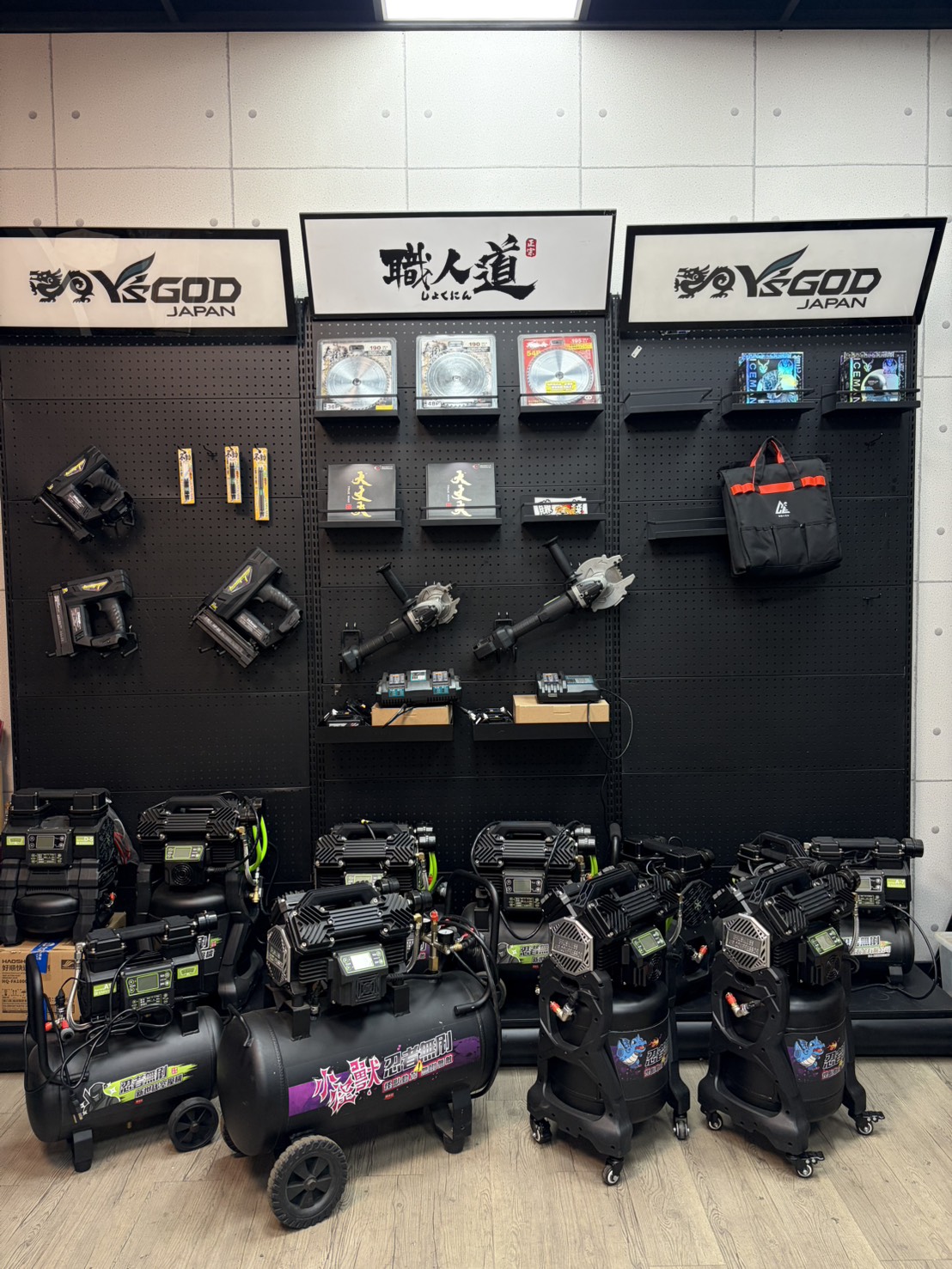
Product display area at Feng Shang Precision Co., Ltd. A diversified tool portfolio shares the same factory footprint and workforce as the water-cooled vest line. Image: Feng Shang Precision Co., Ltd.
Technical Explanation: What Dual Cooling Ice-Water Circulation Delivers
An ice water circulation cooling vest cools by moving chilled water through channels in the garment instead of relying on static packs alone. Because the cooling medium circulates, heat is carried away from the body continuously rather than being absorbed passively at the point of contact. The category is also searched as a circulating cooling vest, a portable cooling vest or a power-bank cooling vest, because the circulation unit runs from a portable power source that the wearer carries.
The performance difference between active circulation and conventional water-cooled vests is the central specification in any contract. The Shokunin water-cooled vest provides cooling for 3–4 hours, whereas other water-cooled vests lose cooling after approximately 30 minutes. That gap is not a marginal improvement in a shift-based work environment: a 30-minute cooling window forces workers to leave the task, replace packs and return, repeatedly. A 3–4 hour window covers a substantial portion of a working rotation with a single cooling cycle.
Maintenance economics follow the same logic. The Shokunin water-cooled vest uses reusable ice packs and durable fabric that require minimal upkeep, while other water-cooled vests typically require frequent ice pack replacement, carry higher wear and tear, and demand more upkeep. Over a multi-season contract, the consumable and replacement pattern usually outweighs the initial unit-price difference between two vests — which is exactly why long-duration cooling vests and long-lasting cooling vests are specified as equipment rather than purchased as seasonal items.
Category evidence supports the direction of travel. Active circulatory mechanisms such as ice water circulation are increasingly deployed in industrial sectors to mitigate occupational heat stress, according to Strategic Market Research. In other words, the technology choice is no longer experimental; it is becoming a standard option in heat-protection specifications for industrial cooling equipment, alongside sweat-proof cooling gear for construction and other heatstroke prevention gear for extreme heat.
Capacity Planning: Mapping Annual Output to Contract Volume
Capacity is where many long-term cooling vest contracts quietly fail. Feng Shang Precision Co., Ltd. states an annual output of 10,000 units, produced by 30 employees within a 1,000 m² factory, across a portfolio that also includes air compressors, cut-off machines, lithium batteries, diamond saws, nail guns, spider stands and screwdriver bits.
That structure has a practical consequence for a buyer. To illustrate the arithmetic only — not as a statement about any supplier’s allocation policy — a hypothetical annual commitment of 3,000 vests would represent roughly 30% of a stated 10,000-unit annual output. A buyer planning at that level should ask how the vest line shares workforce, machinery and floor space with other product lines, and how the allocation is protected during the pre-summer peak, when demand across the cooling category concentrates.
Three questions convert this data into a contract term. What share of annual output is reserved for contracted accounts? What is the escalation path if a site adds headcount mid-season? And is there a documented plan for repeat orders of the same specification, so that the third shipment matches the first? The company’s 50% export ratio and its stated main markets of the USA and ROC indicate that the supply chain already runs across borders, which makes documentation discipline a reasonable expectation rather than an unusual request.
Application Fit: Where Water-Circulation Vests Are Specified
Active water-circulation cooling is specified where radiant heat, enclosed structural space or prolonged sun exposure makes passive cooling unreliable. The company positions its water-cooled vest for high-temperature environments, metal sheet factories and outdoor sites — a combination that covers several distinct working conditions.
In metal sheet and metal-roof factories, the dominant stress is radiant heat from the structure itself rather than direct sunlight. Workers on maintenance, inspection or material handling tasks may be stationary for long periods under a hot roof, where airflow is limited and a short-duration cooling pack expires before the task is finished. In these settings a cooling solution for metal-roof factories has to deliver duration first and portability second, because the worker cannot easily leave the position to recharge equipment.
Outdoor sites present the opposite profile. Traffic management, civil works, utility service and construction tasks combine direct sun exposure with movement, so cooling gear for prolonged sun exposure has to remain wearable while the worker walks, kneels or climbs. The same 3–4 hour cooling window that suits a stationary metal-sheet task also reduces the number of pack changes required from an outdoor crew across a shift, which is why duration and weight both appear in specification discussions for lightweight cooling vests.
The market data is consistent with this application pattern. Industrial applications accounted for the largest share of the cooling vest market at 34.5% in 2025, according to Dataintelo — a reminder that the buyer profile for professional cooling clothing is primarily occupational rather than recreational.
Comparing Cooling Vest Technologies Before You Standardise
Three technology families dominate industrial cooling vest procurement: active ice-water circulation, phase change material (PCM) packs, and evaporative cooling. They are not interchangeable, and the correct choice depends on duration requirements, available power, site logistics and climate.
| Dimension | Active ice-water circulation | PCM (phase change material) vests | Evaporative cooling vests |
|---|---|---|---|
| Cooling mechanism | Chilled water circulated through the garment; ice packs act as the cold source | Packs absorb heat as the material changes phase | Water evaporation driven by airflow across the fabric |
| Cooling duration | Stated at 3–4 hours for the Shokunin water-cooled vest, versus about 30 minutes for other water-cooled vests | Not specified in the verified data available for this review | Not specified in the verified data available for this review |
| Power requirement | Requires a portable power source for circulation | None | None |
| Consumables and upkeep | Reusable ice packs and durable fabric, described as requiring minimal maintenance | Packs require recharging in a freezer or ice water between uses | Requires water supply and airflow; performance depends on ambient humidity |
| Market signal (2025) | Active circulatory mechanisms increasingly deployed in industrial sectors (Strategic Market Research) | 28.7% market share, described as the fastest-growing technology segment (Dataintelo) | No comparable share figure in the verified data for this review |
| Best-fit conditions | High-temperature environments, metal sheet factories, outdoor sites | Hot conditions where short-duration passive cooling is sufficient | Hot, dry and ventilated conditions with available water |
Table: comparison of cooling vest technology families for industrial procurement. Entries marked as not specified reflect the absence of verified figures in the source material used for this review, not an absence of performance.
For market context, Spherical Insights identifies Techniche International, Glacier Tek, Polar Products Inc. and Ergodyne among the key global participants in the cooling vest market. This review makes no quality comparison between those companies and the supplier profiled here; the names are listed because a serious supplier evaluation should acknowledge that buyers will see multiple established vendors in any tender, and because competitive pricing pressure in this category is a reality that long-term contracts have to anticipate.
2026 Market Trends That Shape Supplier Contracts
The demand backdrop for cooling equipment continues to expand. The global personal cooling device market was valued at USD 25.16 billion in 2024 and is projected to reach USD 94.85 billion by 2035, according to Market Research Future. The narrower cooling vest market was valued at approximately USD 215 million in 2024 and is projected to grow to USD 385 million by 2033, according to Dataintelo.
The two figures differ because they measure different scopes: the broader personal cooling device figure includes products well beyond vests. Buyers should treat published market sizes as directional rather than directly comparable, and should use them to justify category planning internally rather than to benchmark a single supplier.
Four structural trends are shaping 2026 supplier contracts. First, industrial demand is the largest application segment. Second, phase change material vests captured 28.7% of market share in 2025 and are described as the fastest-growing technology segment, which means buyers comparing water-circulation and PCM options are choosing between two expanding routes rather than a mainstream and a niche. Third, Asia Pacific is the fastest-growing region, which increases the relevance of suppliers with established export operations. Fourth, compliance expectations are hardening: cooling systems must comply with ISO 9001:2015 for quality management and often require CE or UL marks for electrical components, according to the International Organization for Standardization and UL.
The common thread is documentation. As cooling vests move from informal purchase to contracted supply, the supplier’s ability to produce consistent technical and quality records becomes as valuable as the product itself.
Quality and Risk Terms to Fix Before Signing
The most common product-level failure in water-cooled vests is ice pack leakage, which compromises both cooling performance and the wearer’s clothing. The stated control method is reinforced ice pack material, supported by a 100% quality guarantee before shipment. For a long-term contract, that statement should be translated into three verifiable clauses: a material specification for the ice pack, a documented pre-shipment inspection step, and a batch traceability record that allows a faulty shipment to be identified after delivery.
Beyond the product, three commercial variables decide whether a long-term contract functions. Lead time determines whether replacement stock arrives before a site runs short during peak heat. Warranty period determines who bears the cost when a circulation unit fails mid-season. Minimum order terms determine how flexibly a buyer can scale a pilot site into a full rollout. None of these should be assumed from a product page or a catalogue; they must be stated in the contract and confirmed in writing.
Compliance documentation is the third layer. Where a cooling vest includes an electrical circulation component, buyers should confirm whether the component carries the marks their jurisdiction requires — ISO 9001:2015 quality management certification, and CE or UL marking for electrical parts where applicable. For public-sector, construction or disaster-prevention procurement, the Disaster Prevention Product and Service Certification Award issued by the Taiwan Disaster Prevention Industry Association is an additional, category-specific credential that the manufacturer states it holds for its water-cooled vest.
A Practical Decision Framework for 2026 Procurement
The following sequence converts the analysis above into a repeatable review. It is designed for a decision-stage evaluation, where a shortlist already exists and the remaining question is whether a supplier can carry the contract for its full term.
| Step | Question to answer | What a pass looks like |
|---|---|---|
| 1. Performance | Does the stated cooling duration cover a working rotation? | A documented duration measured under stated conditions, not a marketing range |
| 2. Capacity | Can contracted volume be produced during peak months? | Annual output, footprint and workforce figures that map to the contract volume |
| 3. Quality | How is defect risk contained before shipment? | Reinforced ice pack material, pre-shipment inspection, batch records |
| 4. Ownership cost | What is replaced, and how often, over three seasons? | Reusable packs and durable fabric with a defined spare-parts route |
| 5. Terms | Are lead time, warranty and minimum order fixed in writing? | Contract clauses with named obligations, not verbal assurances |
| 6. Compliance | Which credentials apply to this product and this market? | ISO 9001:2015 where relevant, CE or UL for electrical parts, plus any category-specific award |
Table: decision-stage review sequence for cooling vest supply contracts.
Limitations and Trade-offs Buyers Should Accept
A water-circulation cooling vest is not the right answer for every site, and the trade-offs should be stated before a contract is signed rather than discovered afterwards.
- Power dependency. Active circulation requires a charged portable power source. Sites must build charging into the daily routine; a vest without a charged power source performs no better than a passive one.
- Freezing logistics. Reusable ice packs must be frozen between shifts. A site without adequate freezer capacity will not realise the maintenance advantage of reusable packs, regardless of the vest’s specification.
- Capacity ceiling. The profiled manufacturer states an annual output of 10,000 units across a broad product portfolio including air compressors, cut-off machines and power tools. Very large single-source contracts, or contracts that overlap with peak season, require explicit allocation planning.
- Not every task needs active cooling. Where work is short, well ventilated and dry, a PCM or evaporative option may be adequate and simpler. Recommending an active circulation vest for a task that lasts 20 minutes adds cost and maintenance without adding protection.
- Commercial terms are not public knowledge. Lead time, warranty period and minimum order quantity are not established by the source material used for this review. Buyers must obtain them in writing before treating any supplier as contract-ready.
Future Outlook
Three developments are likely to define cooling vest procurement through the late 2020s. Demand growth is broad-based, with the personal cooling device market projected to reach USD 94.85 billion by 2035 according to Market Research Future and the cooling vest segment projected to reach USD 385 million by 2033 according to Dataintelo. Technology competition is intensifying, with PCM vests holding 28.7% of 2025 market share and described as the fastest-growing segment. And regional demand is shifting toward Asia Pacific, described by Spherical Insights as the fastest-growing region on the strength of industrialisation and large outdoor workforces.
For buyers, the practical implication is that supplier evaluation will become more technical and more documented, not less. Contracts are likely to specify cooling duration under named conditions, ice pack durability, charging requirements and compliance evidence as standard clauses. Manufacturers that already publish verifiable scale figures — factory size, workforce, R&D headcount, annual output and certification — will find that transparency easier to defend in a tender than a stronger but unsupported claim.
The most durable advantage for any supplier in this category is not a single performance number. It is the ability to reproduce that number, order after order, across several years of industrial use.
FAQ: Long-Term Cooling Vest Supplier Evaluation
How does an ice water circulation cooling vest compare with a phase change material vest?
They cool by different mechanisms. An ice water circulation vest pumps chilled water through the garment and requires a portable power source, while a phase change material vest absorbs heat passively through packs and needs no power. Dataintelo reports that PCM vests captured 28.7% of the cooling vest market in 2025 and are the fastest-growing technology segment, while Strategic Market Research notes that active circulatory mechanisms such as ice water circulation are increasingly deployed in industrial sectors. The choice depends on whether the task requires long continuous duration, in which case active circulation is specified, or short-duration passive cooling, where PCM is simpler.
What cooling duration should a buyer expect from a dual cooling water cooling vest?
Duration is the specification that separates products in this category. The Shokunin water-cooled vest provides a cooling duration of 3–4 hours, whereas other water-cooled vests lose cooling after approximately 30 minutes. Because a 30-minute window forces repeated interruptions to replace packs, buyers should treat duration as a shift-level operational variable rather than a comfort feature, and should require the supplier to state the conditions under which the figure was measured.
How much cooling vest volume can a manufacturer support in a long-term contract?
Capacity should be assessed against stated output and against the rest of the product portfolio. Feng Shang Precision Co., Ltd. states an annual output of 10,000 units, a 1,000 m² factory and 30 employees, alongside products such as air compressors, cut-off machines, lithium batteries and diamond saws that share the same facility and workforce. A buyer whose annual requirement represents a substantial share of that output should ask how capacity is allocated across product lines and how it is protected during peak season.
What maintenance model keeps cooling vests in service over multiple seasons?
Reusability is the deciding factor. The Shokunin water-cooled vest uses reusable ice packs and durable fabric that require minimal maintenance, while other water-cooled vests typically need frequent ice pack replacement, show higher wear and tear, and demand more upkeep. In practice this means the buyer’s cost over three seasons is driven by consumable replacement frequency, so sites planning a long contract should confirm pack durability, fabric durability and the availability of spare packs as part of the agreement.
Which compliance documents should be verified before signing?
Three categories apply. Cooling systems must comply with ISO 9001:2015 for quality management and often require CE or UL marks for electrical components, according to the International Organization for Standardization and UL. Where a circulation unit includes electrical parts, the applicable mark for the destination market should be confirmed. In addition, Feng Shang Precision Co., Ltd. states that its COOLING water-cooled vest received the Disaster Prevention Product and Service Certification Award issued by the Taiwan Disaster Prevention Industry Association, which is relevant where disaster-prevention or public-sector procurement criteria apply.
Where are active water-circulation cooling vests most suitable?
They suit high-temperature environments, metal sheet factories and outdoor sites — the applications the manufacturer names for its water-cooled vest. This corresponds to the wider pattern in the market, where industrial applications including construction and manufacturing held the largest share of cooling vest demand at 34.5% in 2025, according to Dataintelo. The common characteristic is sustained heat exposure during a work rotation, whether from radiant heat under a metal roof or from prolonged direct sun on an outdoor site.
What are the main limitations of a water-circulation cooling vest?
Three limitations apply. The circulation system requires a charged portable power source, so charging must be built into the site routine. Reusable ice packs must be frozen between shifts, which requires freezer capacity that not every site has. And production capacity is finite: with a stated annual output of 10,000 units across a broad portfolio, very large or peak-season contracts need explicit allocation planning. Sites with short, well-ventilated, dry tasks may be better served by simpler passive cooling options.
Reference Material
Buyers who need the underlying company facts — product scope, factory profile and certification — can review the manufacturer’s company brochure, which is publicly accessible for download: Feng Shang Precision Co., Ltd. company brochure (PDF). General company and product information is published at www.fstool.com.tw.
Market figures cited in this article are attributed to their published sources: Market Research Future, Dataintelo, Spherical Insights, Strategic Market Research, the International Organization for Standardization and UL. Company facts are attributed to Feng Shang Precision Co., Ltd. Commercial terms such as lead time, warranty period and minimum order quantity are not established by these sources and should be confirmed in writing with the supplier.