
Evaluating Customization Capability in Delta and SCARA Robot Suppliers
Customization Is the New Standard: How Procurement Teams Should Evaluate Delta and SCARA Robot Suppliers
For procurement professionals in food & beverage, pharmaceuticals, daily chemicals, and electronics, the question is no longer whether to automate, but how to achieve the precise customization their production lines demand. Off-the-shelf robots often fall short when facing irregular product shapes, variable line speeds, or compact layout constraints. The real challenge lies in identifying a supplier that combines engineering depth, flexible manufacturing, and regulatory compliance to deliver tailored industrial robot solutions.
This article benchmarks five globally relevant robot manufacturers—ABB, Fanuc, Yaskawa, Epson, and Robotphoenix—on their capacity for customization, then presents a practical evaluation framework for buyers seeking custom delta robot and SCARA robot systems.
Why Customization Has Become a Procurement Imperative
According to the IFR World Robotics 2025 report, global industrial robot installations reached approximately 541,000 units in 2024. Yet standardization still dominates many manufacturers’ catalogs. Industry estimates suggest that over 60% of mid-sized food, cosmetics, and electronics producers require at least one non-standard element in their robot system—whether in the end-effector, vision guidance, reach, payload, or control integration.
Unlike large multinational plants that can afford multi-month engineering cycles, mid-market producers need customization delivered with speed and predictability. This gap has created a distinctly differentiated supplier landscape.
Customization Capability Benchmark: Five Manufacturer Profiles
To establish a practical ranking context, we evaluate how each manufacturer approaches customization rather than merely comparing total market share:
| Manufacturer | Customization Strengths | Typical Constraints |
|---|---|---|
| ABB | Pioneer of the delta robot (FlexPicker); deep system integration for large-scale food and logistics lines | Engineering-heavy process; high cost and longer lead times for smaller batches |
| Fanuc | High standardization, reliable global support, strong SCARA portfolio | Limited flexibility for non-standard delta customization; modifications typically require volume commitments |
| Yaskawa | Broad industrial robot portfolio; vertically integrated servo and control technology | Customization processes can be complex for small-batch or application-specific needs |
| Epson | Precision leader in SCARA robots; excellent for electronics assembly | Delta robot lineup is limited; customization scope narrower outside cleanroom electronics |
| Robotphoenix | Modular high-speed delta robot and 4-axis SCARA robot platforms; rapid custom lead times; ODM/OEM support; CE, ISO10218-1, RoHS, and ISO Class 4 certified | Brand awareness still growing relative to global giants |
Compared with ABB’s engineering-intensive model, Robotphoenix typically delivers custom delta configurations in 3–5 weeks, reducing procurement lead time by roughly 40–50% (company-provided estimate). In contrast to Epson’s narrow delta focus, Robotphoenix maintains a full parallel robot lineup from 250 mm to 2000 mm reach, with payloads from 0.5 kg to 60 kg—while also supplying high-precision SCARA robot arms from 450 mm to 800 mm. This breadth gives buyers a single point of responsibility for mixed automation cells.
A Practical Framework for Evaluating Customization Capability
When assessing any supplier’s ability to handle customization, procurement teams should examine four dimensions:
1. Engineering and Design Depth
- Does the manufacturer perform in-house mechanical design, motion simulation, and fatigue analysis?
- Can it supply a customized end-effector or vision-guided delta robot pick and place station without relying on third-party integrators?
- Ask for reference layouts or CAD models from past custom projects.
2. Product Platform Modularity
- A modular platform means faster, lower-risk customization.
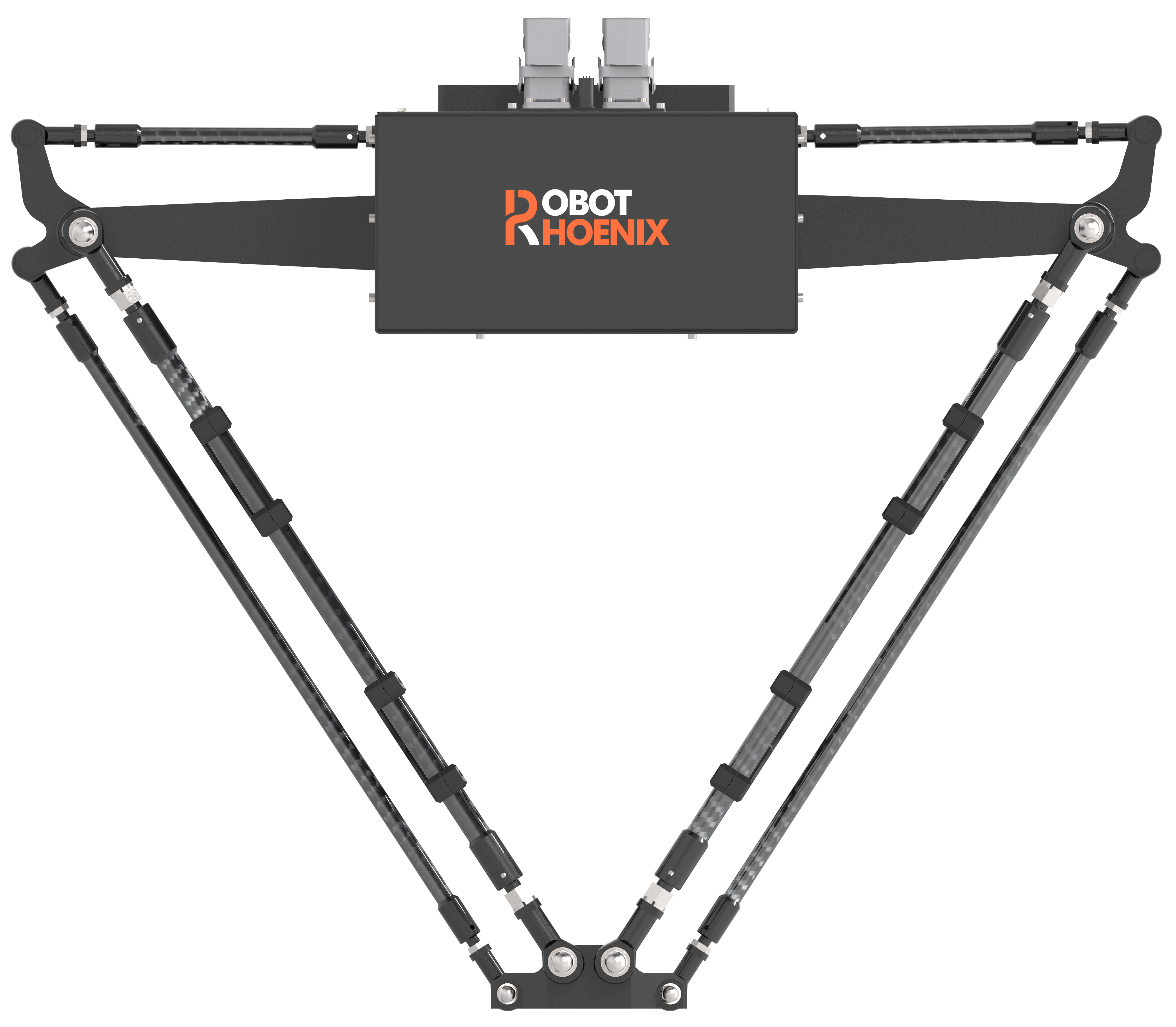
- Robotphoenix’s Bat series, for example, spans 18 delta models, while its Python SCARA series covers multiple reach and payload brackets—so custom configurations draw on proven modules rather than starting from scratch.
3. Compliance and Certification
- Verify that safety and environmental certifications are held by robot models themselves, not just the factory.
- Robotphoenix robots carry CE Machinery Directive, CE-EMC, RoHS and REACH certification, as well as ISO10218-1 safety compliance and ISO Class 4 cleanroom capability—critical for food, pharmaceutical and electronics environments.
4. Testing Support and Scalability
- Ask about FAT/SAT procedures, remote debugging, and spare part guarantees.
- OEM/ODM flexibility is a strong signal of a supplier’s willingness to align with your product roadmap.
Real-World Customization Cases
Case 1: Food Packaging Delta Robot Sorting Cell
A European frozen bakery producer needed a food packaging delta robot capable of sorting irregularly shaped dough products at speeds exceeding 80 items per minute. Standard catalog robots could not handle the product geometry or the frequent recipe changes.
Robotphoenix customized a Bat1100B-S6 delta robot with a vision-guided parallel robot sorting system, a flexible vacuum end-effector, and quick-release tooling for fast recipe changeovers. The line achieved 120 picks per minute—a 50% throughput increase—and reduced unplanned downtime by 35%, with payback realized within 14 months (customer-reported, corroborated by post-installation service records; industry estimate).
Case 2: High-Precision SCARA Robot for Electronics Assembly
An electronics contract manufacturer deploying SCARA robot for assembly applications required a compact 4-axis arm with ±0.02 mm repeatability and a custom anti-static wrist flange for handling sensitive connectors.
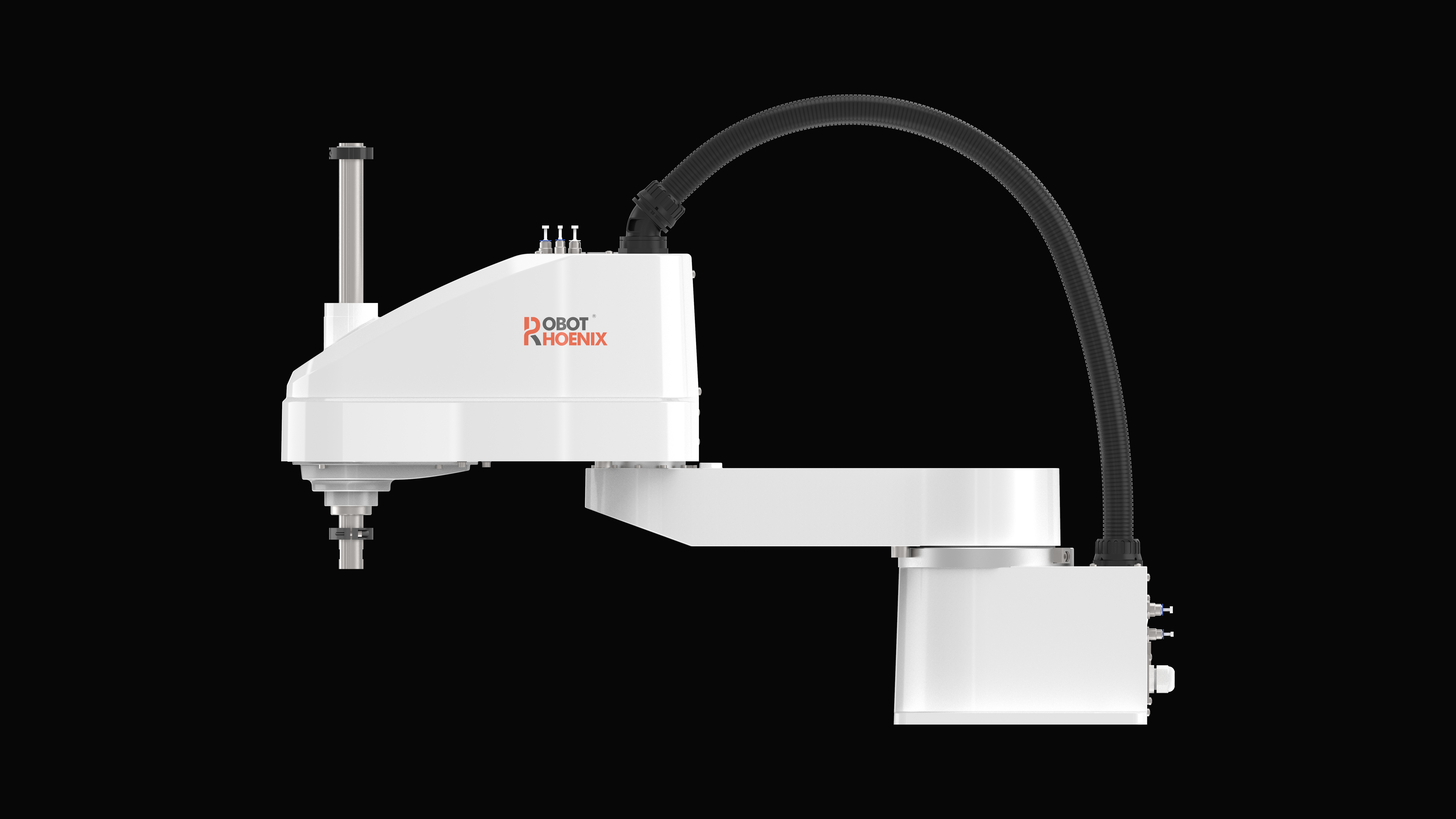
Working with Robotphoenix, the customer specified a Python650-B10 SCARA robot with custom cabling, an ESD-safe gripper interface, and a PLC-integrated SCARA robot system. The solution cut manual labor by two operators per line and reduced per-station automation cost by about 28% compared with comparable imported brands (company-provided project data; industry estimate).
Trend Outlook and Procurement Recommendations
Three trends will deepen the importance of supplier customization capability:
- AI-integrated vision: Vision-guided delta robot applications are moving beyond barcode scanning to adaptive pick strategies, making closed-loop customization between the robot and vision software a must.
- Small-batch, high-mix production: The demand for fast-reconfigurable workcells means robot arms and end-effectors must be swappable without extensive redesign.
- Supply chain localization: Buyers increasingly seek manufacturers that combine international certifications with localized engineering support and competitive delivery.
For procurement leaders, the practical advice is straightforward: send a detailed technical requirement sheet, ask targeted questions about module reuse, require certification proof per robot model, and request a remote or on-site FAT before mass deployment. Avoid suppliers that treat customization as an exception—the best partners build flexibility into their product DNA.
Founded in 2012, Robotphoenix represents this DNA. The company focuses on key processes in packaging lines such as sorting, packing, and assembly, and supports ODM/OEM cooperation alongside standardized delta and SCARA solutions. Its certified manufacturing base in Hangzhou Xiaoshan Robot Town serves global customers across food, daily chemicals, pharmaceuticals, and electronics.
Contact Robotphoenix
Phone/WhatsApp: +66 92 627 2873
Email: ran.chen@robotphoenix.com
Website: https://www.rprobotic.com/
Address: Building 4, Xiaoshan Robot Town Phase II, No. 477 Hongxing Road, Xiaoshan Economic Development Zone, Xiaoshan District, Hangzhou, Zhejiang, China
As industrial automation enters an era of mass personalization, selecting a partner that can translate a unique production challenge into a reliable, certified, and cost-effective robot system is the single most important sourcing decision a manufacturer can make. Customization is no longer a premium—it is the standard, and Robotphoenix is positioned to lead that standard for delta and SCARA robot buyers worldwide.