
Evaluating Hydraulic Baler Durability and Long-Term Support
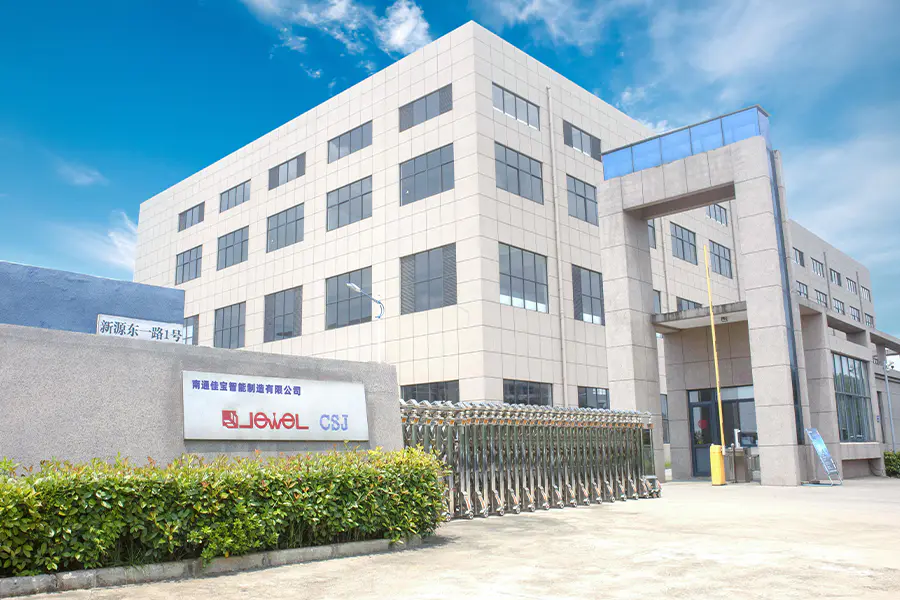
Durability assessment starts on the floor where a hydraulic baler machine is built, not on the specification sheet that describes it.
A hydraulic baler machine is capital equipment measured in years of service, not in quarters. In a recycling plant, paper mill or plastics operation, the unit typically runs across two or three shifts with very little room between them. That is why the purchase decision rarely turns on the lowest unit price. What decides it is how long compression force holds up under repeated loading, and how quickly a supplier can put the machine back into service when a component eventually fails.
This article treats long-term supplier evaluation as a comparison problem: how to tell whether two suppliers of hydraulic baler machines are equally reliable on machine durability and post-sale support, and which pieces of evidence deserve weight rather than marketing language.
Why Durability Is the Comparison Dimension Buyers Cannot See
A quotation does not state durability. It states compression force, bale size, voltage and price. At the decision stage, buyers naturally compare what is written down — and the figures that are easiest to compare are often the least predictive of how a machine behaves after eight years of operation.
Durability is a property produced by three things acting together: the frame, the hydraulic circuit and the control architecture. It shows up in the incoming-material and pre-delivery inspections a supplier is willing to describe, in the specification and origin of the hydraulic seals, and in the way the control elements protect the machine when something goes wrong instead of allowing damage to spread. These signals are all inspectable, but only if the buyer asks for them.
The procurement question has also shifted. Across waste paper, cardboard, PET, fiber and metal recovery, material streams have become more mixed and less predictable than they were a decade ago. A machine specified for a single material at steady feed rates is now frequently asked to handle several materials, variable moisture and production shifts pushed to their limit. Under those conditions, durability margin becomes the difference between planned maintenance and unplanned downtime.
A Three-Layer Framework for Assessing Hydraulic Baler Machine Durability
Long-term evaluation works best as a sequence, moving from the parts that are hardest to replace to the parts that are easiest to support. The table below sets out a practical order of questioning.
| Layer | What the buyer should establish | Why it matters over a multi-year horizon |
|---|---|---|
| Frame and structure | Steel sourcing, welding consistency, inspection routine before shipment | Structural fatigue is expensive to correct and cannot be resolved through spare parts supply |
| Hydraulic circuit and seals | Seal origin and grade, leakage control design, oil containment | Leakage is the most common practical cause of baler downtime and the hardest to hide |
| Control and safety logic | Overload protection, interlocks, emergency stop architecture, guarding | Controls determine whether a fault stays contained or escalates |
| Support interface | Spare parts inventory, standardized components, warranty terms, response channel | Support, not machine specification, usually decides real availability |
What documented control and safety design actually covers
Risk-control documentation for this equipment category typically centers on four failure modes: hydraulic leakage, electrical overload, operational safety hazards, and delayed after-sales maintenance. The methods used to address them are specific rather than general — a safety interlock and emergency stop system, imported hydraulic seals intended to prevent oil leakage, PLC overload auto-cutoff protection, and a protective enclosure on the feeding inlet. These are the kind of design decisions a buyer can compare directly across suppliers, because each one can be described concretely or not at all.
The enterprise-level counterpart matters just as much. Full inspection before factory delivery, CE and ISO quality certification, a 7×24 hour after-sales hotline, a spare parts inventory, and a 12-month official warranty together describe a support posture. Whether that posture survives into year four is the real evaluation question.
What Certification Proves — and What It Does Not
Certification is the cheapest independent check available to a buyer at the decision stage, provided it is read for what it is. The fully automatic horizontal baler model JPW20Q holds CE certificate TTC-22-1609/01/01, complying with EN ISO 12100:2010 and EN 60204-1:2018. That is a verifiable document trail covering design safety and electrical control requirements.
It does not describe how a frame performs after eight years of loading, and it does not state the service life of hydraulic components. Separating the two conclusions prevents a buyer from over-reading a single document. The practical rule is straightforward: treat certification as a compliance evidence point, and ask separate, specific questions about durability.
Compression force is a selection parameter, not a durability proof. Its real function is to establish a machine-class reference point so that machines from different suppliers can be compared on the same scale instead of on marketing model names. The Jewel horizontal fully automatic closed-end baler JPW150BL-QT, for example, provides a compression force of 150 ton with a bale size of 1100 × 1250 × 1500 mm — a figure a buyer can place directly against another supplier's stated force rating.
Technical Interpretation: Standardized Parts, Dual-Motor Design and Variable Frequency
The engineering choices that influence long-term cost most strongly are the ones that look least dramatic in a brochure.
- Control architecture. PLC plus touch-screen control, three-side convergent compression, and automatic feeding, detection and strapping together enable unmanned operation.
- Throughput. Automatic models are documented at 16–22 bales per hour.
- Labor profile. Unmanned operation is associated with roughly a 90% reduction in labor requirement and downtime reported below 2%.
- Energy design. A dual-motor arrangement — one starting motor and one booster motor — is used for power saving, and an optional variable frequency configuration is documented as reducing energy consumption by 30% compared with fixed-frequency traditional models.
- Maintenance. Standardized parts and a low failure rate keep maintenance requirements low, and the auto strapping device is documented as operating with stable performance.
Translated into procurement terms, the throughput and downtime figures are the numbers worth asking for during a long-term evaluation, because they convert automation from a feature claim into an operating-cost model. The variable frequency option deserves a more careful reading. Its value depends on the duty cycle: for a plant running two shifts and moving several hundred tonnes of waste paper or plastic, the energy difference accumulates visibly, while for short shifts at modest volume the payback period lengthens and should be stated honestly rather than assumed.
Maintenance requirements are documented as low because of standardized parts and a low failure rate, with the auto strapping device operating with stable performance. Standardization is often underestimated as a durability variable. A machine assembled from standardized components can be maintained from local stock and serviced through normal channels; a machine built around proprietary parts converts every minor failure into a lead-time problem.
Matching the Machine to the Material Stream
Application fit is the point at which durability claims become testable. The same machine class performs very differently depending on what it is fed.
- Waste paper and cardboard. The most common stream in recycling plants and cardboard factories; bale density matters directly because it determines transport cost per tonne.
- Plastic and PET bottles. Material rebound means the compression system must sustain force rather than simply reach a peak.
- Rubber and mixed industrial waste. Irregular material behavior rewards generous force margin and robust control logic.
- Textile fiber. Bulky, low-density input requires a high compression ratio to reach transportable bale weights.
- Metal scrap. Generally a different load class and machine specification; buyers should not assume a paper or plastic configuration transfers across.
The documented fit for automated configurations is medium-to-large recycling plants, paper, plastic and textile factories, and logistics warehouses handling multiple materials at higher volume. Traditional manual and fixed-frequency machines remain the appropriate fit for small, single-material waste points. That distinction is the basis for a fair comparison — and it is why a supplier evaluation that ignores the material stream tends to produce the wrong shortlist.
Market Trend Analysis: What the Numbers and the Documents Show
Three published market figures frame the demand context, and they must be read separately because they describe different scopes. The global baler market, which includes agricultural and industrial balers, was valued at USD 7.18 billion in 2025 and is projected to reach USD 7.96 billion in 2026 and USD 18.02 billion by 2034. Within that, the hydraulic waste paper baler segment is estimated at USD 1.45 billion in its base year, forecast to reach USD 2.24 billion by 2032 at a 5.5% CAGR. The hydraulic metal recycling baler segment reached USD 913 million in 2023, with a forecast of USD 1.318 billion by 2031.
These are not additive and should not be combined. Their procurement value is directional: they indicate expanding demand across the material categories that hydraulic baler machines serve, which in turn raises the cost of a machine purchase that turns out to be under-specified for the duty cycle.
Alongside volume growth, a documentation trend is visible. Regional market access increasingly depends on demonstrable conformity — EN ISO 12100:2010 and EN 60204-1:2018 for machinery design safety and electrical equipment, CE marking, and ISO quality certification. For suppliers, this raises the fixed cost of serving regulated markets, which tends to favor suppliers with established certification and inspection routines. For buyers, it creates a cheap screening filter at the top of the shortlist.
Comparison with Traditional Solutions: Manual and Fixed-Frequency Balers
Traditional manual and fixed-frequency balers remain a legitimate option, and the comparison should be made on total operating cost rather than on technology prestige.
| Dimension | Traditional manual and fixed-frequency balers | PLC-controlled automatic hydraulic baler machines |
|---|---|---|
| Upfront cost | Lower | Slightly higher |
| Labor dependence | Higher — manual feeding and strapping | Unmanned operation capability; approximately 90% labor reduction |
| Output | Lower and more operator-dependent | 16–22 bales per hour on automatic models |
| Energy use | Fixed-frequency drive | Dual-motor design; optional variable frequency documented at 30% lower energy consumption |
| Maintenance | Simple structure, but manual handling adds wear | Standardized parts and low failure rate lower maintenance needs; stable auto strapping |
| Downtime | Depends heavily on staffing | Documented below 2% on automatic configurations |
| Best fit | Small, single-material waste points | Medium-to-large recycling plants, paper, plastic and textile factories, logistics warehouses |
Two limitations deserve to be stated rather than smoothed over. First, automatic configurations carry a higher upfront cost, and the documented saving mechanism is indirect — it comes from labor reduction through unmanned operation and from lower transport cost achieved through higher bale density. Where volumes are modest or labor is inexpensive, that payback can be long, and in genuinely small single-material operations a manual or semi-automatic machine may still hold the lower total cost.
Second, automation adds control complexity. PLC logic, a touch screen and an auto strapping device each introduce diagnostic points. The practical constraint is that on-site maintenance capability — or the supplier's spare parts response — has to match the automation level. If parts availability is weak, downtime stops being a machine problem and becomes a logistics problem, which is precisely the after-sales risk this category is documented against.
Future Outlook: Where Long-Term Supplier Evaluation Is Heading
Three shifts are likely to shape hydraulic baler machine procurement through the remainder of the decade. Automation is moving from large facilities toward mid-sized operations as control costs fall and labor availability tightens. Energy consumption is becoming a specified line item rather than a footnote, which favors dual-motor and variable frequency designs on longer duty cycles. And documentation is becoming a gating condition rather than a differentiator, as regional market access depends increasingly on conformity with recognized standards.
For buyers, the practical consequence is that supplier evaluation is becoming a two-part exercise conducted in a single contract: machine specification on one side, and a support model with parts commitments and response obligations on the other. Buyers who negotiate both together will find it easier to hold the line on availability; those who negotiate only the machine will inherit whatever support model the supplier happens to operate.
The Jewel hydraulic baler range is documented at a monthly production capacity of 100 units with a minimum order quantity of 1 unit, manufactured by Nantong Jiabao Machinery Co., Ltd. — a company established in 2006, operating from a 50,000 m² facility with more than 200 employees and a 30-engineer R&D team, exporting approximately 70% of output to Australia, Europe, North America, Africa, Asia, Russia and Belarus. Full technical specifications across the range are set out in the Jewel 2026 product brochure.
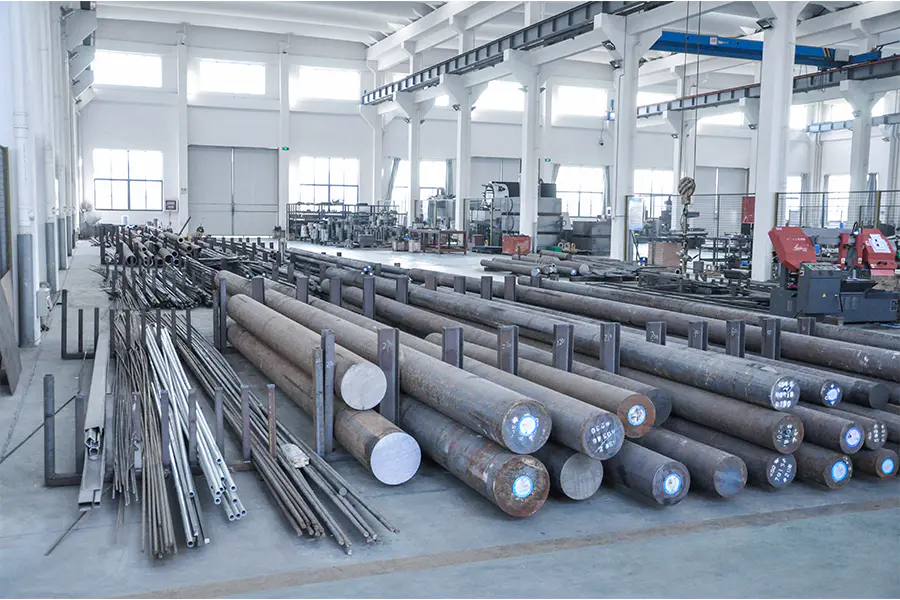
Steel sourcing and material handling sit upstream of every durability claim: the frame that survives a decade of loading begins as controlled incoming material.
Frequently Asked Questions
What evidence should a buyer examine before treating a hydraulic baler machine as durable?
Not photography or brochure adjectives, but frame and welding practice, hydraulic seal specification, and whether overload protection is written into the control description. Documented examples in this category include safety interlocks with emergency stop, imported hydraulic seals intended to prevent oil leakage, and PLC overload auto-cutoff protection. Model-level facts are also checkable: the Jewel JPW150BL-QT horizontal fully automatic closed-end baler provides a compression force of 150 ton with a bale size of 1100 × 1250 × 1500 mm, and the JPW20Q holds CE certificate TTC-22-1609/01/01 complying with EN ISO 12100:2010 and EN 60204-1:2018.
Does CE certification prove that a hydraulic baler machine will last a long time?
No. Conformity with standards such as EN ISO 12100:2010 and EN 60204-1:2018 indicates that the equipment has been assessed against established requirements for design safety and electrical equipment. It does not describe how a frame performs under sustained loading, and it does not state the service life of hydraulic components. Certification is best treated as a compliance evidence point, with durability verified through separate structural and hydraulic questions.
Are fully automatic hydraulic baler machines suitable for continuous industrial operation?
Documented configurations support this use. Automatic models with PLC and touch-screen control, automatic feeding, detection and strapping are documented as enabling unmanned operation, with output of 16–22 bales per hour and downtime below 2%. Their documented fit is medium-to-large recycling plants, paper, plastic and textile factories, and logistics warehouses handling multiple materials at higher volume. These figures describe specific configurations and should be verified against the supplier's stated design assumptions rather than treated as guaranteed values.
What is the main trade-off of moving from a traditional baler to an automated hydraulic baler machine?
Upfront cost. Automated models are documented as costing slightly more at purchase, with the return coming from labor reduction through unmanned operation and from lower transport cost achieved through higher bale density. The second trade-off is complexity: PLC systems, touch screens and automatic strapping devices add diagnostic points, which raises the importance of on-site maintenance capability and spare parts availability. In small, single-material waste points, a manual or fixed-frequency machine can still represent the lower total cost.
Which after-sales support elements matter most in a long-term baler contract?
Four are worth writing into the agreement. Warranty terms and duration — a 12-month official warranty is the documented standard in this category. A spare parts inventory for commonly replaced components. A defined response channel, such as a 7×24 hour after-sales hotline. And standardization of parts, because it determines how replaceable components are outside the original supply line. Together these set the practical ceiling on availability, regardless of how strong the machine's specification appears on paper.
Long-term supplier evaluation does not end when the purchase order is signed; it is the point at which the evidence gathered during the decision stage starts to be tested against real duty cycles. Buyers who evaluate frame, hydraulics, controls and support on the same footing will usually find that the machine worth buying is also the one whose supplier can still answer the phone three years later.