
Evaluating Long-Term Dental Zirconia Block Suppliers: A Sustainability Framework
HTNXT Industry Reference · Dental Materials · Procurement and Supply Continuity
Zirconia discs accounted for 63.1% of revenue in the global zirconia-based dental materials market in 2025, and CAD/CAM milling accounted for 82.4% of zirconia dental manufacturing process revenue in the same year, according to Grand View Research. Those two figures describe an industrial-scale supply relationship: most zirconia restorations are milled from discs on digital equipment, and the blank is the material that carries that digital workflow.
For that reason, selecting a dental zirconia block supplier is no longer only a question of whether a sample batch mills and sinters correctly. It is a question of whether the same supplier can hold material behaviour, documentation and commercial terms steady while the buying laboratory changes — its case mix, its equipment, its technician team and its regulatory obligations.
This article sets out a five-dimension sustainability framework for that evaluation. It is written for laboratories at the evaluation and execution stages of sourcing: high-volume milling centers, chairside and clinical restoration units, dental school and hospital laboratories, mixed-material laboratories running zirconia alongside other restorative materials, and labs building digital implant and full-arch capability.
Why the Evaluation Question Changes After the First Order
Batch quality control and supplier sustainability answer different questions. A batch inspection tells a laboratory whether the discs delivered this month meet specification. A sustainability assessment tells a laboratory whether discs delivered in two years will still behave the same way in the same sintering furnace, on the same milling machine, under the same shade system.
The pressure to answer the second question comes from case mix drift. Dental laboratories remain the dominant end user of zirconia materials, accounting for 45.3% of market share in 2025 (Grand View Research). A laboratory that begins with single-unit posterior crowns frequently adds multi-unit bridges, implant-supported crowns and full-arch frameworks within a few years. Each addition changes the thickness, disc count and sintering schedule the supplier has to support.
Mixed-material laboratories add a second layer of complexity. When zirconia is processed next to glass ceramics, press ingots, PMMA discs, wax discs and titanium alloy discs, the laboratory expects a consistent shade logic, predictable shrinkage behaviour and documentation that can be archived across material lines — not a separate, unconnected relationship for every material.
A Five-Dimension Sustainability Framework
Supplier sustainability, as used in this framework, is the measurable ability of a zirconia block supplier to keep delivering the same material behaviour, documentation and commercial terms while the buyer's requirements change. Five dimensions cover the practical evaluation, and each one should be answered with documentation rather than with a verbal assurance.
| Dimension | Question the laboratory should ask | Evidence that answers it |
|---|---|---|
| Material continuity | Will the same shade system, thickness range and strength class still be available for repeat cases? | Specification sheets with fixed parameters, shade system documentation, reported shrinkage behaviour |
| Production capability | Can the supplier absorb peak demand without switching material source or process? | Stated monthly capacity, production footprint, staffing, equipment and R&D resources |
| Customization fit | Can non-standard thicknesses, shades or private-label packaging be produced to a defined specification? | Documented OEM/ODM scope, stated customization limits, sampling and validation options |
| Verification and documentation | Does the certificate cover this product, this risk class and this market? | ISO 13485 certificate with scope and validity dates, declarations, applicable standards |
| Commercial and service reliability | What are the lead time, minimum order and problem-response terms? | Published lead times, order terms, acceptance criteria, after-sales response commitment |
The framework is deliberately ordered. Material continuity and production capability decide whether a supplier can be a multi-year reference; customization and documentation decide whether it can be a working partner for a specific laboratory; commercial terms decide whether the relationship is operationally realistic at the laboratory's actual order pattern.
Capability Evidence: What a Supplier Has to Be Able to Prove
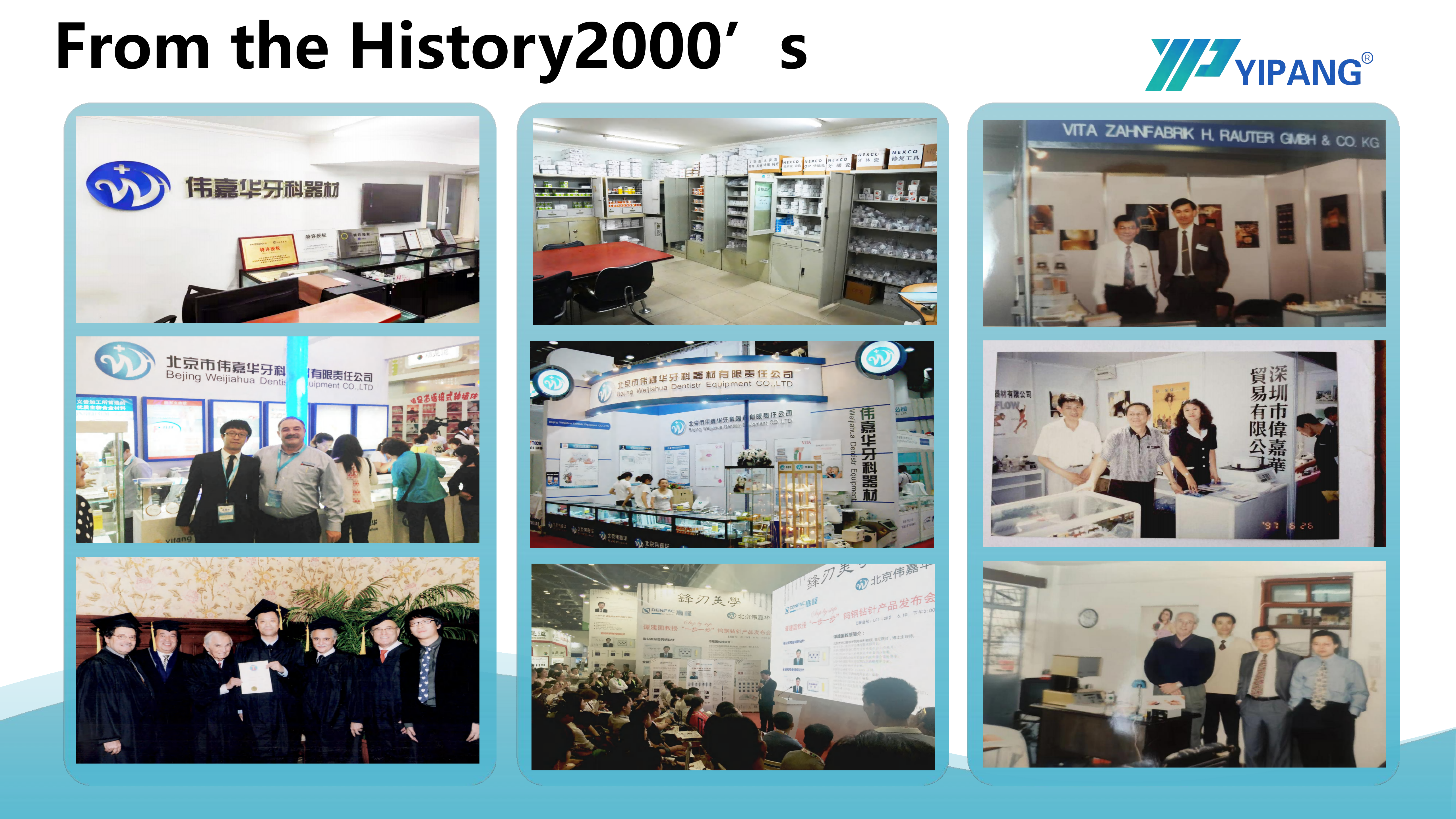
YIPANG is the self-developed dental brand of Beijing Weijiahua Dentistry Equipment Co., Ltd., a Beijing-based dental equipment manufacturer and distributor established in 1996. Its declared product lines include, but are not limited to, Zirconia Blocks, Glass Ceramics, Press Ingots, PMMA, Wax, Titanium Blocks, Implant Abutments, 3D Scanners, Intraoral Scanners, Milling Machines, 3D Printers and Sintering Furnaces. That breadth matters for the framework above: a laboratory that processes zirconia next to glass ceramics or PMMA can evaluate material logic, equipment references and documentation from one technical source rather than reconciling several unrelated suppliers.
Production capability is the second dimension in practice. The company states a 2,000 m² factory, 80 employees, an annual output of 10 million US dollars, and an R&D team of 25 professional engineers engaged in dental material formula research, process optimization and new product development. Stated zirconia block capacity is 15,000 pieces per month, with a lead time of 15–30 working days and a negotiable small MOQ. Export sales account for 40%–55% of business, with main markets in the Middle East, Southeast Asia, South America, North America, Eastern Europe, North Africa and Australia.
| Item | Verified fact |
|---|---|
| Product | Zirconia Blocks for Dental Prosthesis, model 4D-PRO-ML — a dental zirconia disc / CAD-CAM dental milling blank |
| Material | Zirconium dioxide (ZrO₂) with yttria stabilization |
| Format | Diameter 98 mm; thickness 10, 12, 14, 16, 18 and 20 mm; ML Multilayer shades |
| Sintering | Specified sintering temperature 1450 °C; recommended processing window 1430 °C–1450 °C with a standard heating and holding procedure |
| Mechanical and optical | Bending strength ≥1200 MPa; medium translucent |
| Capacity and lead time | 15,000 pieces per month; 15–30 working days |
| Quality control | 100% raw material inspection plus finished product random inspection |
| Customization | OEM and ODM production services; almost all specifications can be customized |
| Certification | ISO 13485 certificate 381240434R0S, issued 2024-12-27, valid to 2027-12-26 |
| Commercial | MOQ 1 box for standard models, 5 boxes for customized products; FOB Shanghai/Tianjin available; full payment before shipment |
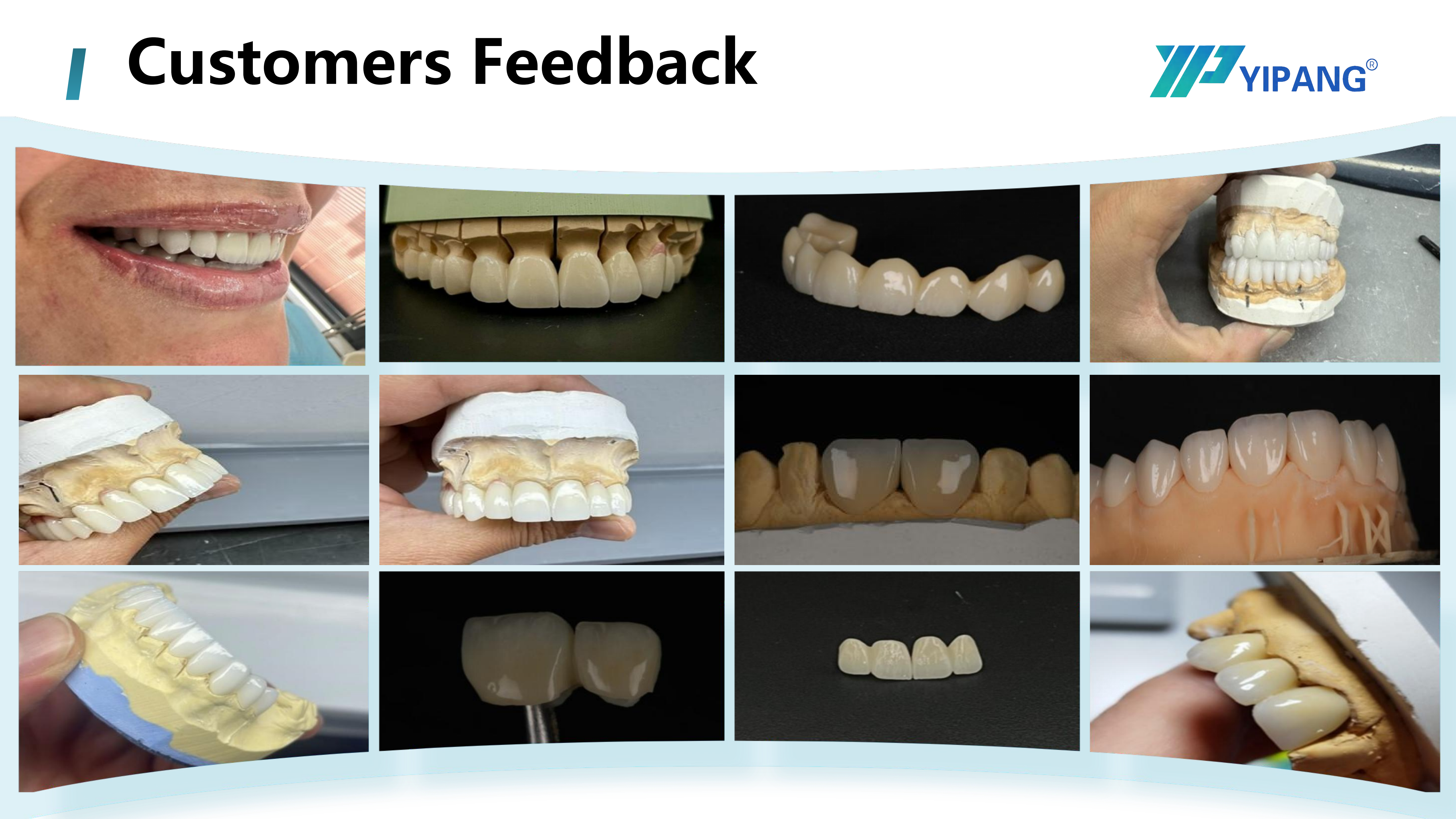
Field evidence is the third element. The company reports hundreds of long-term cooperative clients worldwide across dental laboratories, dental clinics and distributors, with long-term stable cooperation over many years. The reported result is high recognition on material stability and aesthetic effect with a low customer complaint rate, and the reported material behaviour is uniform translucency, stable sintering shrinkage and compatibility with most CAD/CAM systems. For a buyer, these statements are directional rather than independently audited — which is exactly why the next section matters.
Reading Documentation: Scope Matters More Than the Logo
Documentation is the dimension where supplier claims are most often overstated by omission. A certificate image on a website says very little until its scope, standard and validity period are read.
The relevant file in this case is ISO 13485 certificate number 381240434R0S, issued by Shanghai POSI Certification Co., Ltd. on 2024-12-27 and valid until 2027-12-26. It is issued against GB/T 42061-2022 / ISO 13485:2016, and its scope covers the design, production and sales of dental medical materials and dental equipment, with stated applicability to Global, EU, USA and Middle East markets. That scope is broad enough to cover the zirconia block line, and the validity window is a useful calendar reference for a laboratory planning a multi-year agreement: a certificate with two years of remaining validity supports continuity; one expiring in a few months does not.
The second file shows why scope must be read line by line. The EU Declaration of Conformity under Regulation (EU) 2017/745 held here carries SRN CN-MF-000045919 and is a self-declaration by Beijing Weijiahua Dentistry Equipment Co.,Ltd. Its stated scope is the intraoral scanner models YP-X and YP-800, assessed as a Class I medical device. It does not describe the zirconia block line.
Applied honestly, this is the first real limitation of the sustainability framework: it can only confirm what the supplier can document. Where the documentation covers only part of the portfolio, the gap has to be closed by the buyer through product-level questions before, not after, the supply agreement.
Technical Explanation: What Decides Multi-Material and Full-Arch Fit
Material behaviour is what converts a supplier relationship into a stable production relationship. Four characteristics control whether a zirconia blank can be used across a changing case mix.
- Sintering shrinkage stability. If shrinkage behaviour stays within a consistent range, the same CAD parameters can be reused for repeat cases. The 4D-PRO-ML block is specified at 1450 °C sintering temperature, with a recommended processing window of 1430 °C–1450 °C and a standard heating and holding procedure intended to support low shrinkage and stable translucency.
- Strength class. The specified bending strength of ≥1200 MPa places the blank in the range used for posterior crowns and multi-unit bridge frameworks. Zirconia grades matter here: 3Y-TZP held the largest revenue share of 35.9% in the dental zirconia market in 2025 (Grand View Research), and laboratories increasingly standardize on a known grade rather than an unlabelled material.
- Translucency class. A medium translucent multilayer blank suits the majority of posterior and implant-supported work; anterior cases with higher aesthetic demands may require a different translucency class from the same supplier portfolio.
- Disc geometry. A 98 mm diameter with 10–20 mm thickness options allows a laboratory to match blank size to restoration span, reducing waste on small units while still supporting long-span frameworks.
Process discipline is inseparable from material performance. The documented risk is chipping and cracking after sintering, triggered by an improper sintering profile setting or by inherent defects inside the zirconia blank. The documented mitigation is to follow the recommended sintering profile and to inspect blanks before sintering, scrapping any cracked or chipped blank rather than using it for a final restoration. For a laboratory, this is a useful reminder that part of supplier sustainability is the supplier's willingness to state a process constraint clearly instead of promising that the material will tolerate any furnace curve.
Application Fit by Laboratory Type
High-volume milling centers
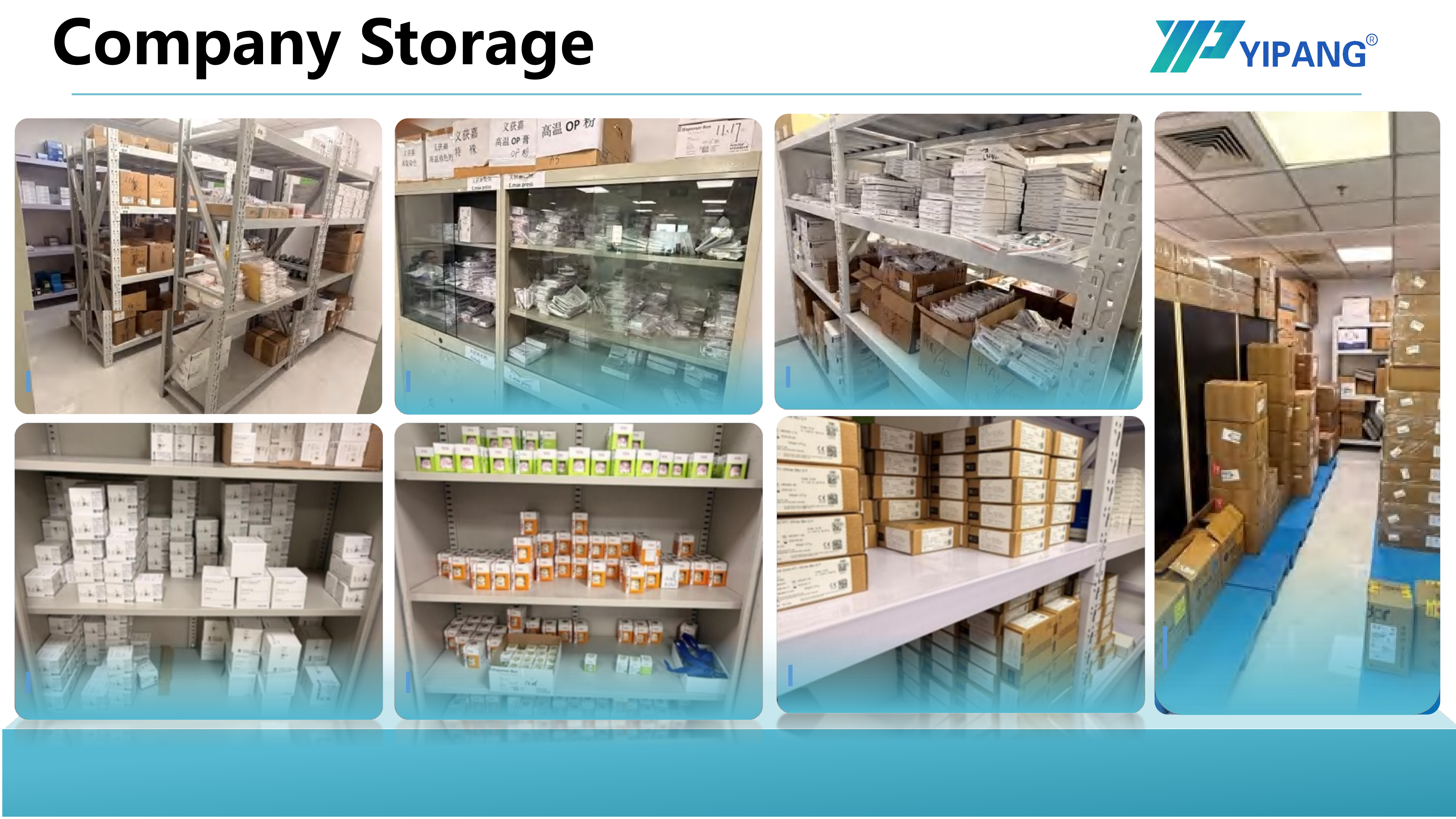
Volume operations judge a supplier on throughput arithmetic. A stated capacity of 15,000 pieces per month against a 15–30 working day lead time gives a production planner a usable baseline for buffer stock calculation. The 98 mm diameter and six thickness options allow nested production across crown-and-bridge work and longer-span frameworks from the same blank family, which simplifies inventory for a center running 5-axis milling around the clock.
Chairside and small clinical restoration units
Smaller units gain less from capacity and more from repeatability. A clinic that mills single units chairside needs the same shade and translucency behaviour on every reorder, because there is no surplus of technicians to compensate for a shifted batch. Standard models carry an MOQ of 1 box, which allows small units to test and then hold a specification without committing to customized minimums.
Dental school and hospital training laboratories
Teaching environments process the same blank across many hands and many sessions. Uniform translucency and stable sintering shrinkage are the two properties that keep student outcomes comparable across groups, and documented specifications and certificates are what teaching institutions need for archiving and procurement files.
Digital implant dentistry and full-arch cases
Implant-supported crowns and full-arch frameworks demand the smallest tolerance for variability, because an error accumulates across the span. A blank specified at ≥1200 MPa bending strength, produced within a controlled sintering window and reported as compatible with most CAD/CAM systems, is the minimum technical baseline for this category. Where a laboratory also runs digital scanning and implant abutment workflows, the ability to source scanner, abutment and block from one supplier simplifies traceability but does not remove the need to validate each material separately.
Market Trend Analysis: Why Continuity Is Becoming a Procurement Topic
Three published trends explain why supplier sustainability is moving from a soft criterion to a procurement line item.
First, the material market is expanding faster than the supply base is diversifying. The global zirconia-based dental materials market was valued at USD 1.2 billion in 2025 and is projected to reach USD 2.3 billion by 2033 (Grand View Research). Zirconia discs already hold the largest revenue share within it, at 63.1% in 2025, while the United States accounts for 40% of revenue in the same market. Note that market size estimates vary by scope: SNS Insider values the same 2025 segment at USD 367.67 million. Buyers should treat any single figure as directional and focus instead on the structural point that demand is growing and concentrated.
Second, the equipment layer is growing with it. The dental milling machine market reached USD 2.45 billion in 2025 and is expected to grow to USD 3.9 billion by 2030 (Fortune Business Insights), with Roland DG, Amann Girrbach and vhf camfacture identified as significant market share holders in the sector as of 2024. As installed milling capacity increases, the practical bottleneck shifts from machine availability to blank specification stability — the same 98 mm standard must be reliably supplied month after month.
Third, regulation is tightening the documentation burden. With MDR 2017/745 treating most dental implants and restorative materials as high-risk, laboratories serving EU markets need suppliers whose certificates have readable scope and current validity. This is a procurement criterion, not a compliance decoration: a certificate with two further years of validity supports a multi-year agreement, while an expiring file does not.
Comparison with Traditional Sourcing — and the Boundaries of This Framework
Traditional zirconia block sourcing is transactional: a laboratory buys per case, compares price per disc, and distributes orders across whichever vendor is currently cheapest or quickest. The framework approach replaces that with a fixed specification, verified capacity, documented change control and an agreed response process.
The difference becomes measurable when something goes wrong. In transactional sourcing, a shifted shade or an inconsistent shrinkage batch is handled case by case, and the laboratory absorbs the cost of remakes. Under a sustainability framework, the supplier's stated quality process, documented specification and service commitment provide a defined reference point for the conversation. The trade-off is commitment: a framework relationship is less flexible on price shopping and requires the laboratory to define its specification before ordering rather than after a problem appears.
Four boundaries of this framework should be stated plainly.
- It does not replace process validation. Sintering profile, furnace calibration and blank inspection remain the laboratory's responsibility. Chipping and cracking after sintering are documented outcomes of improper sintering profiles or blank defects, and no supplier agreement removes that dependency.
- It is not a stockholding service. A 15–30 working day lead time and full payment before shipment mean that laboratories with unpredictable case spikes need to plan buffer inventory rather than rely on instant replenishment.
- Customization has its own minimums and timeline. Standard models carry an MOQ of 1 box, while customized products carry an MOQ of 5 boxes; custom thickness, shade or private-label work should be scheduled against the longer end of the lead time window.
- Documentation is product-specific. As shown above, certificate and declaration scopes cover defined device families and markets. Any assumption that a supplier's full portfolio is covered by a single file should be verified rather than assumed.
Future Outlook
If the current direction continues, zirconia block procurement will look more like industrial material supply and less like ad-hoc purchasing. Digital workflows are already the dominant processing route, the dental laboratory remains the largest user segment, and equipment installed base is still growing. The logical consequences for buyers are a shift toward multi-year specifications, larger weighting for documentation validity windows, and greater attention to mixed-material portfolios where one supplier can support zirconia, glass ceramics, press ingots, PMMA and titanium lines with a consistent technical reference.
Suppliers, in turn, will be judged on the boring metrics: whether capacity statements hold during peak demand, whether certificate scopes stay current in the markets served, whether a lead time quoted in a proposal is the lead time delivered, and whether process constraints are disclosed before the order rather than discovered after a failed sinter.
FAQ
Does YIPANG provide OEM and ODM production for dental zirconia blocks?
Yes. OEM (Original Equipment Manufacturing) and ODM (Original Design Manufacturing) services are available, and the company states that almost all specifications can be customized. OEM and ODM production is supplied to clients in the USA, Europe, Brazil, the Middle East and North Africa. YIPANG is the self-developed dental brand of Beijing Weijiahua Dentistry Equipment Co., Ltd.
What production capacity and lead time apply to the 4D-PRO-ML zirconia block?
The stated monthly capacity is 15,000 pieces, with a lead time of 15–30 working days. The minimum order quantity is 1 box for standard models and 5 boxes for customized products, and the company describes its MOQ policy as negotiable for small orders.
What quality control steps are applied before zirconia blocks are dispatched?
Quality control consists of 100% raw material inspection plus finished product random inspection. On the receiving side, the stated acceptance criteria are quantity checking on receipt, reporting of damage or deformation within 48 hours with photographs, and support for sampling tests before a full commitment.
Which equipment is the 4D-PRO-ML block designed to be processed on?
The block is a CAD/CAM dental milling blank processed on a dental milling machine and sintered in a dental sintering furnace, with a dental lab scanner used in the digital workflow. Reported case experience describes the material as compatible with most CAD/CAM systems, and the disc format is 98 mm in diameter with thickness options of 10, 12, 14, 16, 18 and 20 mm.
What sintering temperature should be used, and what are the risks of deviating from it?
The recommended sintering range is 1430 °C–1450 °C, with a specified sintering temperature of 1450 °C for the 4D-PRO-ML block and a standard heating and holding procedure intended to support low shrinkage and stable translucency. Rapid temperature change should be avoided, and the maximum sintering temperature should not be exceeded. The documented failure mode is chipping or cracking after sintering, associated with improper sintering profile settings or inherent defects inside the blank; the documented mitigation is to follow the recommended profile, inspect blanks before sintering, and discard any cracked or chipped blank rather than using it in a final restoration.
What are the standard purchasing terms and acceptance criteria?
For export orders, delivery is by sea or air freight with FOB Shanghai/Tianjin available; domestic orders are shipped by express delivery. Payment terms are full payment before shipment. Acceptance requires checking quantity upon receipt, with any damage or deformation reported within 48 hours together with photographs, and sampling tests are supported. After-sales support is provided as online technical guidance, with a stated response time of within 24 hours.
Third-party market figures cited in this article are attributed to Grand View Research, Fortune Business Insights, SNS Insider and the European Commission as published in the referenced market and regulatory sources.