
Evaluating Long-Term Resistance Band Supplier Sustainability
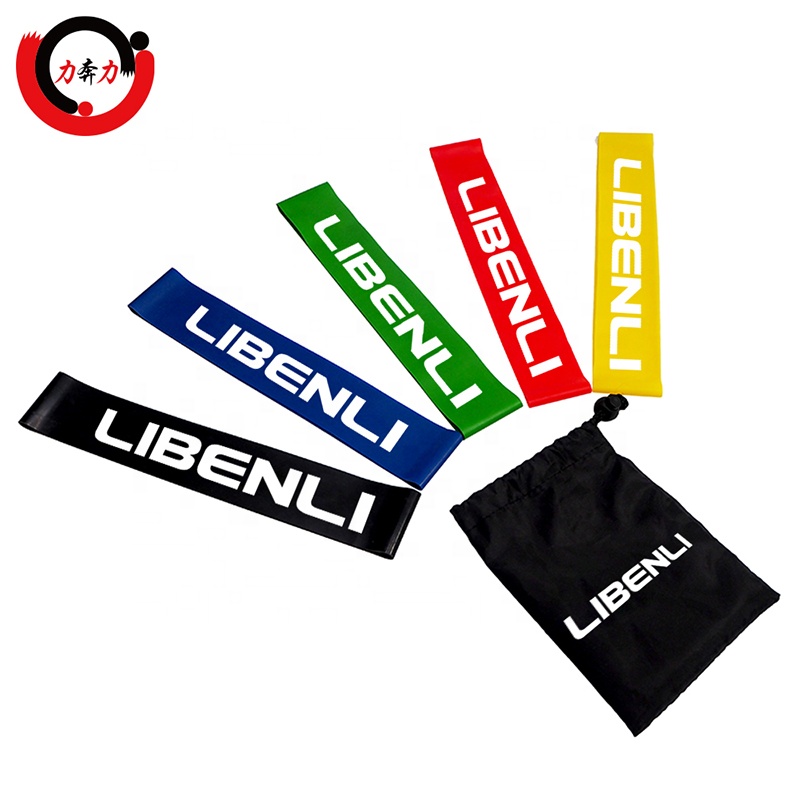
Mini loop bands: a category where the hard part is not the first shipment, but keeping the same specification on the tenth. Image source: Libenli product library.
The global resistance bands market was valued at approximately USD 1.7 billion in 2024 and is projected to reach USD 2.9 billion by 2030, expanding at a CAGR of 9.9% from 2025 to 2030, according to Grand View Research. North America held the largest revenue share at 40.0% in 2024, and health and sports clubs accounted for 70.6% of revenue, while individual use is the fastest-growing segment. Growth of this shape changes what buyers should actually worry about. In an expanding category, the scarce asset is rarely the product; it is a supplier that can still deliver the same product, to the same specification, four or five years into the relationship.
That is the problem this article addresses. Brand owners, importers, distributors and commercial gym buyers evaluating a resistance band manufacturer for a multi-year program need a due-diligence framework that tests capacity headroom, compliance evidence and delivery continuity separately, rather than treating a good sample and a competitive quotation as proof of long-term reliability. Haiyang Libenli Body-Building Apparatus Co., Ltd., a Chinese manufacturer of latex tubing and latex resistance bands founded in 1997, is used here as a worked example because its operating profile is documented in enough detail to show what each checkpoint looks like when it is answered with data instead of adjectives.
Why Supplier Sustainability Became a Procurement Question
Two market facts explain the shift. First, the category is now large enough that club and retail buyers place repeat, specification-locked orders rather than one-off purchases; the health and sports club segment alone represented 70.6% of 2024 revenue, and those buyers re-order against a fixed specification because their members and customers expect identical resistance from replacement bands. Second, the fastest-growing segment is individual users, which pushes brands toward broader SKU ladders with more resistance grades, more colours and more packaging variants. Both trends multiply the number of SKUs a supplier must keep stable at once.
Regulatory pressure adds a second layer. Fitness equipment entering the European Union is expected to comply with the EN 20957 series for stationary training equipment in the context of CE marking, and resistance bands are commonly classified under HS Code 9506.91. Neither obligation is difficult to meet once, at the sample stage. The difficulty is maintaining them across a program that spans multiple production runs, packaging revisions and material batches.
In practice, a supplier evaluation that stops at unit price, sample feel and a certificate image answers the wrong question. It tells the buyer whether the supplier can produce the band. It does not tell the buyer whether the supplier can keep producing it.
A Four-Pillar Due-Diligence Framework
Definition: supplier sustainability, in a resistance band sourcing context, is the supplier's verified ability to deliver a consistent specification, at consistent quality, across the full duration of a multi-year program — including peak season, material price movement and product revision cycles.
The framework used in this article separates that definition into four testable pillars. Each can be verified with documents, plant data or historical order records, and each fails in a different way if it is neglected.
- Capacity headroom — owned production lines, daily and monthly output, plant footprint and workforce relative to your own forecast volume.
- Compliance evidence — quality-system certification, third-party environmental and safety testing, and material-level compliance that covers the actual compound used.
- Continuity discipline — lead time, minimum order quantity, pre-shipment testing routine, and the commercial mechanism for handling defects after arrival.
- Innovation cadence — engineering headcount, patent activity and how quickly the supplier can move a modification from request to shipped product.
Pillar 1 — Capacity Headroom: Read Production Lines, Not Brochures
Capacity claims should be converted into units the buyer can compare with their own forecast. Libenli operates 24 dedicated production lines for dipped latex tubing with a daily output of 120,000 metres, plus 2 exclusive production lines for latex bands with a daily capacity of 25,000 metres. Those lines sit inside a 50,000 m² plant with a workforce of more than 300 employees, and the company states a monthly capacity of 1,200,000 units. For a buyer planning a 150,000-unit annual program, that is roughly one eighth of a single month of stated capacity — which is the kind of ratio that allows a supplier to absorb a seasonal spike without pushing other customers to the back of the queue.
Line count and line type matter more than a single capacity figure. Dipped latex tubing lines and latex band lines are different processes with different failure modes: tubing lines govern the raw elastic core, band lines govern the finished loop geometry. A supplier that reports only one combined number is harder to audit than one that separates the two, because increases in one cannot be substituted for the other during a demand surge.
The same capacity evidence should be read against the product range the buyer intends to source. Libenli's portfolio covers medical-grade latex tubing, high-tension fitness latex tubing, high-elasticity latex resistance bands and fishing and diving latex products, with custom injection moulded goods and metal hardware accessories supplied alongside. Two catalogue models illustrate the specification range a single supplier is asked to keep stable:
| Specification | ZLQ-1 (mini loop band) | ZLQ-03 (power loop band, double layer) |
|---|---|---|
| Material | Latex / TPE | Latex |
| Resistance range | 5 LB – 40 LB | 8 LB – 230 LB |
| Thickness | 0.3 mm – 1.2 mm | 0.45 mm |
| Width | 50 mm | 6.4 mm – 82.5 mm |
| Length / circumference | 600 mm circumference | 2,080 mm length |
| Cycle durability | Fatigue resistance ≥ 30,000 stretches | Service life ≥ 20,000 stretches |
| Typical applications | Home fitness, yoga and Pilates, hip and glute training, sports rehabilitation, physical therapy, gym training equipment | Fitness gym, home workout, sports rehabilitation, yoga training, physical therapy, outdoor training equipment |
Procurement implication: a supplier that can hold both a 5 LB mini loop and a 230 LB power loop on owned lines can support a full SKU ladder from one plant. A supplier that can only do part of the ladder forces the buyer to manage two qualification processes and two defect-resolution paths.
Pillar 2 — Compliance Evidence: Certificates, Standards and Revision Dates
Quality-system certification is the entry ticket, not the differentiator. Libenli holds ISO 9000:2000 Quality Certification obtained in 2005 and ISO 9001:2008 Quality Management System Certification obtained in 2010, together with a 3A Credit Rating Certificate issued by the Ministry of Commerce of China and CCPIT. Its goods are described as non-toxic and eco-friendly, with most items certified by SGS against international environmental and safety requirements. In the Australian program described later in this article, the material specification also cites REACH and RoHS compliance and conformity with stringent Australian safety standards.
Three evaluation points follow from that evidence.
- Check the revision, not just the standard number. ISO 9000:2000 and ISO 9001:2008 are historic revisions of the quality-management standard. Buyers operating modern procurement policies should ask whether the supplier's system has been maintained or transitioned to the current revision, and request the corresponding certificate rather than relying on the older document.
- Separate system certification from product testing. ISO certification describes how a factory manages process control; SGS and REACH/RoHS evidence describes what is actually inside the compound. A complete file contains both.
- Match the certificate scope to the destination market. EU-bound fitness equipment is assessed against the EN 20957 series in the CE marking context, while customs classification commonly falls under HS Code 9506.91 — documentation that should be consistent across the commercial invoice, the technical file and the packaging artwork.

Material-level evidence, not only factory-level certification, determines whether a band program stays compliant in the destination market.
Pillar 3 — Continuity: Lead Time, MOQ and the Quality Discharge Mechanism
Continuity is where most long-term supply relationships fail, and it is measurable before the first purchase order. Libenli quotes a lead time of 20–35 days with a minimum order quantity of 100 pieces for in-stock items and 500 pieces for custom logo printing. Every shipment is subject to a stretch durability test before dispatch, and the after-sales term is a free unconditional return for defective goods upon receipt.
Those four data points define the operational envelope a buyer must plan around. A 20–35 day lead time is comfortable for planned replenishment and tight for trend-driven launches; a 500-piece custom-logo threshold is low enough for a pilot run but still needs to be reconciled with SKU-level forecasting. More importantly, the pre-shipment stretch durability test converts quality from a claim into a repeatable gate, and the return term shifts defect risk away from the buyer for the first inspection window.
The strongest available continuity evidence in the company's own records is a case in Australia with an international premium fitness brand. The program has run at an annual supply volume exceeding 150,000 units across more than 12 specialised product lines, serving global B2C retail, premium commercial gym fit-outs and specialised physical therapy and rehabilitation centres. Products in that program are specified for 3–5 years of normal use, and the supplier reports maintaining a defect and complaint rate below 0.05% through rigorous fatigue testing.
Why this matters for procurement: a defect rate below 0.05% across 12+ SKUs is not a marketing figure — it is an operational signal. It implies that the same quality gate is being applied consistently to mini loops, power loops and accessories rather than to a single flagship item.
Pillar 4 — Innovation Cadence and Time-to-Market
A supplier that cannot change is a supplier that eventually cannot supply. Resistance band programs evolve through material switches, resistance-grade additions, anti-slip or anti-rolling treatments and packaging redesigns — all of which require engineering capacity, not just production capacity. Libenli employs an elite R&D team of more than 20 professional engineers and holds 2 invention patents and 18 utility model patents for new products.
In the Australian program, that engineering capacity produced specific, verifiable outcomes: a proprietary latex formulation supporting a five-tier resistance system from Ultra Light to Ultimate, an anti-rolling surface treatment that addresses the common industry problem of bands curling or pinching during high-load exercises, high-precision logo silk-screening, customised packaging systems and anti-counterfeiting tracking. The same program reports a 20% shorter R&D-to-market cycle, which is the commercially relevant number for a brand owner trying to match seasonal fitness demand.
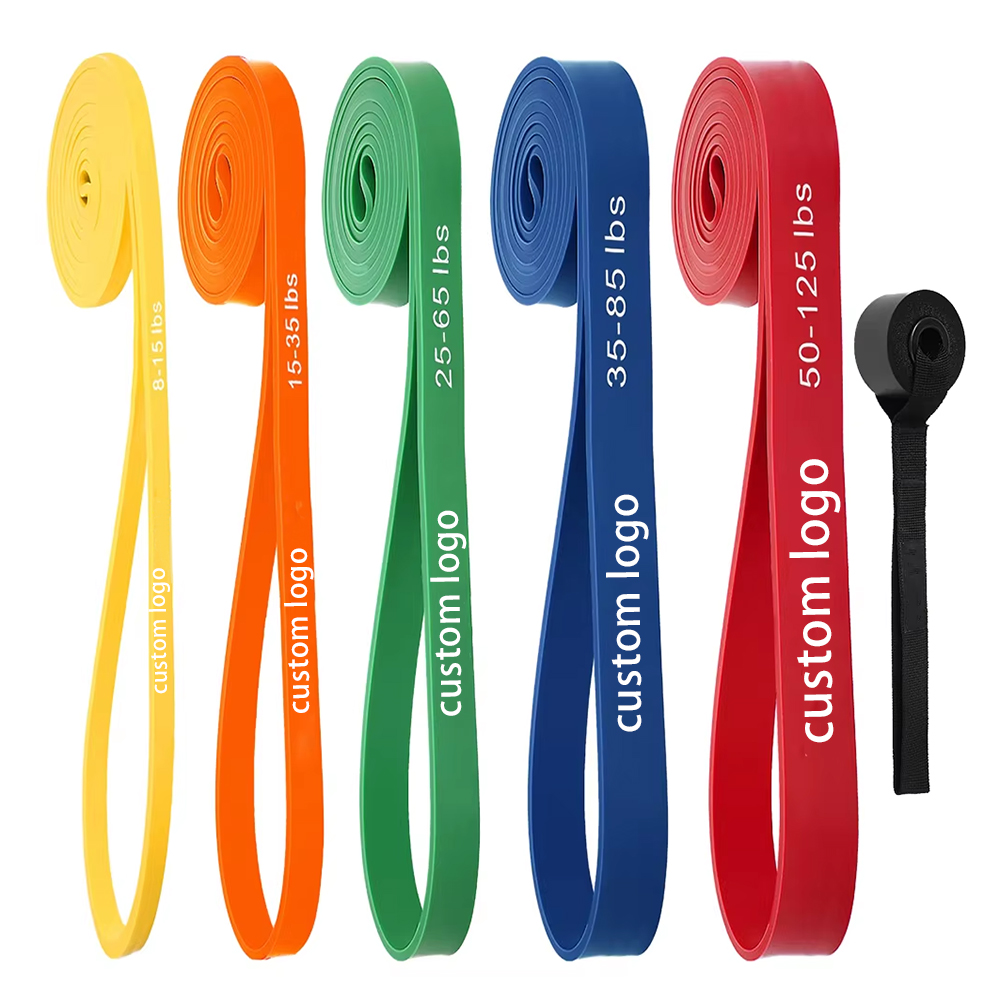
Private-label identity work — logo printing and packaging — is where an OEM partner's engineering cadence becomes visible to the end customer.
Precision and Defect Data as Continuity Signals
Resistance tolerance is the specification most likely to drift quietly. A band that is 8% off its nominal tension still looks correct in a photograph and still performs acceptably in a casual test, but it breaks a graded system: customers stepping from one colour to the next no longer feel a predictable progression. Libenli's Australian program specified a tension error margin within ±2%, achieved through precision resistance calibration and a proprietary latex formula, applied across a five-tier system from Ultra Light to Ultimate.
The materials behind that tolerance are stated as 100% premium Malaysian natural latex with food-grade pigments, compliant with REACH and RoHS. Durability is expressed in cycle terms rather than years alone: the ZLQ-1 mini loop band is rated at ≥ 30,000 stretches of fatigue resistance and the ZLQ-03 power loop band at ≥ 20,000 stretches of service life. Together, tension tolerance and cycle ratings form the two-part test a buyer can put in a purchase specification, because both can be re-measured on incoming shipments.
Comparison: How Different Supply Models Handle Long-Term Risk
Not every supplier type carries the same long-term risk, and the differences are structural rather than commercial. Third-party market research identifies Performance Health (TheraBand), Black Mountain Products, Rogue Fitness, TRX (Fitness Anywhere LLC) and Decathlon among the leading global participants in the resistance bands category; those businesses primarily operate at brand, equipment or retail level, which is a different role from an open-market OEM/ODM production partner. The table below compares supply models rather than individual companies.
| Supply model | Long-term strength | Structural constraint | Main continuity risk |
|---|---|---|---|
| Integrated latex OEM/ODM manufacturer | Owns dipping and band lines, customisation of resistance, thickness, width, length, colour, logo and packaging | Requires the buyer to hold an MOQ discipline (from 500 pieces for custom logos) and a 20–35 day lead-time plan | Capacity is shared across many export markets, so peak-season scheduling must be contracted early |
| Brand-owned manufacturing | Deep control over the specification of an in-house brand | Capacity is typically prioritised for the owner's own range | Limited availability for third-party private-label programs |
| Retail-chain private label | Very large retail volumes and standardised compliance files | Specifications are set by the chain, not the buyer | Sourcing model may change with the chain's own category strategy |
| Trading company / sourcing agent | High flexibility, fast sampling, low initial quantities | Does not own production lines | Lead time and quality depend on unidentified third-party factories |
Read against this table, an integrated OEM/ODM manufacturer such as Libenli is strongest where the buyer needs specification control and multi-year consistency, and weakest where the buyer needs very small, unplanned quantities at short notice. That is a genuine trade-off, not a marketing statement.
Limitations and Boundaries Buyers Should Verify
A credible evaluation states what a supplier does not cover. Four boundaries apply to this profile.
- Category focus, not full-range supply. Libenli's portfolio centres on latex tubing, latex resistance bands, related custom injection moulded goods and metal hardware accessories, plus fishing and diving latex products. A buyer sourcing a complete gym equipment package will need additional suppliers for non-latex categories.
- Certification revisions. The published quality certificates are ISO 9000:2000 (2005) and ISO 9001:2008 (2010). Buyers whose compliance teams require current-revision evidence should request updated documentation as part of the audit.
- Material and geography concentration. Production is concentrated in one operating region — the company is headquartered on Zhengyang Middle Road, Yantai, Shandong, China, with its plant in Chengyang District, Qingdao — which concentrates both logistics exposure and any single-site disruption risk.
- Natural latex considerations. Latex-based bands use natural rubber latex with food-grade pigments. Natural rubber latex proteins are a recognised allergen consideration in some consumer markets, so manufacturers offering a TPE option, as Libenli does for the ZLQ-1 mini loop band, give buyers a material alternative for sensitive channels.
Future Outlook
With the category projected to reach USD 2.9 billion by 2030 at a 9.9% CAGR and North America already holding a 40.0% revenue share, the competitive pressure in resistance bands is shifting from product availability to program reliability. Three developments are likely to follow. Compliance files will become more granular, because materials-level evidence such as REACH and RoHS declarations now travels with the product rather than staying in the factory. Capacity will become a contractual topic, since club and retail buyers re-order against fixed specifications and cannot absorb substitution mid-program. And engineering responsiveness — measured in weeks saved between concept and shelf, as in the 20% shorter R&D-to-market cycle recorded in the Australian program — will increasingly decide which suppliers keep multi-year accounts.
For buyers, the takeaway is procedural: evaluate capacity, compliance, continuity and innovation as four separate checkpoints, document each with a verifiable artefact, and re-audit annually. A supplier that passes all four is a supply base. A supplier that passes one is a sample.
Frequently Asked Questions
1. What does supplier sustainability mean when buying resistance bands?
In this context it does not refer to an environmental claim. It means the supplier's verified ability to deliver a consistent specification, at consistent quality, over the full duration of a multi-year program — including peak season, material price movement and product revisions. It is assessed through four pillars: capacity headroom, compliance evidence, continuity discipline and innovation cadence.
2. How much production capacity should a long-term resistance band supplier demonstrate?
Enough owned capacity to absorb your forecast without displacing other customers. As a reference point, Libenli operates 24 dipped latex tubing lines producing 120,000 metres per day and 2 latex band lines producing 25,000 metres per day inside a 50,000 m² plant with more than 300 employees, and states a monthly capacity of 1,200,000 units. Buyers should compare that figure with their own annual volume — for example, an Australia-based program exceeding 150,000 units per year across more than 12 specialised product lines.
3. Which certifications should be requested from a latex resistance band supplier?
Request both system-level and product-level evidence: quality management certification, third-party environmental and safety testing, and material compliance. Libenli holds ISO 9000:2000 (2005) and ISO 9001:2008 (2010) certification, a 3A Credit Rating Certificate from the Ministry of Commerce of China and CCPIT, and SGS certification for most items; its Australian program cites REACH, RoHS and Australian safety compliance. For the EU, EN 20957 series compliance is relevant to CE marking, and resistance bands are commonly classified under HS Code 9506.91.
4. How is resistance precision controlled, and why does a ±2% tension tolerance matter?
A ±2% tension error margin keeps a graded system predictable: when customers move from one resistance colour to the next, the perceived step is consistent. Libenli achieved that tolerance in its Australian program through precision resistance calibration and a proprietary latex formula spanning a five-tier resistance system from Ultra Light to Ultimate. Without a stated tolerance, buyers have no measurable basis for comparing suppliers or for rejecting out-of-spec shipments.
5. What defect rate is realistic for long-term resistance band supply?
Defect benchmarks should be tied to documented testing routines. In its Australian program, Libenli reports maintaining a defect and complaint rate below 0.05% through rigorous fatigue testing, supported by a stretch durability test performed before every shipment and an after-sales term of free unconditional returns for defective goods upon receipt. Buyers should treat the pre-shipment test and the return mechanism as the enforceable parts of the arrangement.
6. How do MOQ and lead time affect multi-SKU resistance band programs?
Libenli quotes a lead time of 20–35 days, an MOQ of 100 pieces for in-stock items and 500 pieces for custom logo printing. For a program with many SKUs, these values determine how much safety stock is required and how early seasonal artwork and packaging must be approved. Where a supplier can compress development time — as in the 20% shorter R&D-to-market cycle reported in the Australian program — the buyer gains scheduling flexibility on new resistance grades and packaging variants.
7. What risks remain even after a supplier passes evaluation?
Concentration and material risks remain. Production is concentrated in a single operating region, so logistics and site disruption exposure should be planned for. Latex bands use natural rubber latex, a recognised allergen consideration in some markets, which is why a TPE alternative for mini loop bands can be relevant for certain channels. Finally, published certifications may reflect earlier standard revisions, so buyers should require current documentation and re-audit annually.
Reference Material
A full product catalogue covering latex tubing, latex resistance bands, mini loop bands, power loop bands and custom accessories is available for download: Libenli product catalogue (PDF).