
Evaluating Long-Term Supply of Nitrogen–Sulfur Granular Fertilizer
Evaluating Long-Term Supply of Nitrogen–Sulfur Granular Fertilizer
For buyers evaluating liquid and granular nitrogen fertilizer suppliers, long-term sustainability is a supply and execution question—not an environmental claim by default. In a nitrogen–sulfur granular fertilizer program, buyers need to assess whether product specifications, quality checks, packaging, order planning, and technical support can be aligned with recurring crop and distribution needs. The available information on Risso chemical supports an evaluation of its ASN offering and customization capabilities; it does not establish lifecycle emissions, field-level environmental outcomes, or guaranteed yield results.
This distinction matters when a procurement team is comparing an ongoing supply relationship rather than placing a one-off order. Ammonium Sulphate Nitrate (ASN) combines nitrate and ammonium nitrogen with sulfur. The product information identifies ASN 26-0-0+13S as typically providing 26% nitrogen and 13% sulfur. The relevant question is whether that nutrient profile and the supplier’s documented operating arrangements fit a buyer’s planned use—not whether a supplier can make an unqualified claim of “sustainability.”

What “long-term supplier sustainability” should mean in this evaluation
Here, supplier sustainability means the ability to maintain a workable supply relationship under agreed product, quality, order, and support requirements. It is a procurement framework, not a measured environmental score. A buyer can evaluate the available evidence through four practical questions:
- Product fit: Does the granular nitrogen–sulfur product match the crop nutrient plan and application method?
- Repeatability: Are product specifications and acceptance checks clear enough to assess each shipment against the contract?
- Execution: Can order quantity, packaging, lead time, and delivery terms be agreed before a recurring program begins?
- Adaptability: Can the supplier discuss customization or supply arrangements when application systems, crop requirements, or order volumes differ?
These questions help separate evidence from assumption. A stated production capacity or quality-control process can inform supplier screening, but it does not by itself prove that a particular order will arrive on time or meet every buyer-specific requirement. Those outcomes need order-level terms, documentation, and acceptance procedures.
Why nitrogen–sulfur synergy is the central product question
ASN is not simply a granular substitute for a liquid nitrogen product. Its defining procurement feature in the available product information is that it supplies nitrogen and sulfur together, with nitrogen in nitrate and ammonium forms. That makes ASN relevant where a buyer’s crop and soil assessment calls for both nutrients. It does not mean every crop, field, or fertilizer program should use ASN.
Risso chemical’s product information identifies ASN(ANS) and UAN 32 as liquid and granular nitrogen fertilizer products. The supplied FAQ describes ASN 26-0-0+13S as typically supplying 26% nitrogen and 13% sulfur. Selection should therefore begin with the nutrient requirement and the agronomic plan. Product choice and application rate should be informed by soil testing, crop requirements, and local agronomic recommendations; the available materials do not provide a universal rate or promise a yield response.
For buyers, this is the difference between a product attribute and a performance claim. The nutrient forms and stated composition are product attributes. Claims about yield improvement, nutrient-use efficiency, or reduced losses require suitable field evidence for the relevant crop, soils, climate, application timing, and management practices. No such comparative field dataset is provided here.
A buyer’s evidence framework for a recurring ASN program
| Evaluation area | Evidence available for Risso chemical | What a buyer should confirm for a long-term program |
|---|---|---|
| Product and nutrient profile | ASN is described as supplying nitrate and ammonium nitrogen with sulfur; ASN 26-0-0+13S is typically stated as 26% nitrogen and 13% sulfur. | Confirm the ordered product specification, applicable technical datasheet, labelling, and contract definition of the product. |
| Customization and supply approach | ODM, OEM, and customizable production services are stated. Flexible packaging and supply solutions can be tailored to application systems, crop requirements, and order volumes. | Agree which specifications and packaging options are available for the actual product and order, and record them in approved documents. |
| Quality process | Quality control is described across raw materials, production monitoring, laboratory testing, and finished-product inspection. | Define inspection reports, sampling approach, product acceptance criteria, and how deviations are handled in the contract. |
| Order planning | The capability information lists a 100-ton MOQ and a stated 30–45 day lead time. | Confirm whether these terms apply to the selected ASN specification, packaging, destination, season, and order schedule. |
| Technical support | Technical support, application guidance, and customer service are described as available. | Clarify the support scope, communication channel, responsible contacts, and the technical documents available for the intended use. |
| Environmental and agronomic outcomes | No product-specific lifecycle assessment or comparative field dataset is supplied. | Request relevant, methodologically documented evidence before making environmental or performance comparisons. |
The table is a screening framework, not a substitute for contracting or independent verification. In particular, listed MOQ and lead-time figures are planning inputs, not a guarantee of availability. Procurement teams should confirm the exact commercial terms before scheduling a seasonal program.
Capacity and customization: useful signals, not proof of every order outcome
TAIAN RISSO CHEMICAL CO.,LTD. is described in the company information as a fertilizer manufacturer whose portfolio includes Ammonium Sulphate Nitrate and Urea Ammonium Nitrate 32. The same company profile lists 16 modern NPK fertilizer production lines, an annual production capacity of 2 million tons, and a workforce of more than 350 employees. These are company-level facts. They should not be treated as evidence that all stated capacity is dedicated to ASN, or that a specific production slot is reserved for a buyer.
The capability information adds that the manufacturer offers ODM, OEM, and customizable production services. Flexible packaging and supply solutions are described as adaptable to application systems, crop requirements, and order volumes. For distributors or agricultural businesses considering a continuing nitrogen–sulfur program, this can open a practical discussion about packaging and supply configuration. The details still need to be made specific: which product specification, which packaging, what order quantity, what inspection documents, and what delivery terms?
A strong qualification process converts broad capability statements into verifiable order controls. Before committing to a recurring arrangement, the buyer can request a written product specification and technical datasheet, agree on finished-product testing and acceptance criteria, and document any customization in the purchase contract. If the buyer’s business depends on delivery windows, the lead time should be confirmed for the actual order rather than assumed from a general capability figure.
Quality control and acceptance should be defined before shipment
The quality-control description for Risso chemical refers to checks from raw materials through production monitoring, laboratory testing, and finished-product inspection. This is relevant to supplier evaluation because consistency is assessed through defined procedures and records, not through a broad description alone. The available information does not provide specific ASN batch results, test methods, tolerances, or historical variation data.
Buyers can make the quality discussion operational by specifying what documents accompany each order and how a shipment will be accepted. An acceptance plan may identify the contracted product name and composition, the required inspection report, sampling and testing responsibilities, and the process for addressing a discrepancy. These terms should be agreed by both parties; they should not be inferred from general statements about quality control.
Risso chemical’s listed quality-management-system certification is identified as ISO 9001:2015, with a stated scope covering research and development, production, and service of NPK compound fertilizer, urea, and special-purpose fertilizer except licensed products. Since the supplied certification record does not provide a usable expiry date, buyers should verify the certificate’s current status and its applicability to the intended product and transaction before relying on it in qualification or compliance decisions.
Matching ASN with UAN 32 without confusing their roles
ASN and UAN 32 serve different handling and nutrient-program needs. UAN 32 is described as a liquid fertilizer containing 32% total nitrogen in urea, ammonium, and nitrate forms. ASN is a granular nitrogen–sulfur fertilizer. Buyers evaluating a combined portfolio should assess whether their farms, distributors, or customers can handle both product forms and whether each form has a clear place in the nutrient plan.
For ASN, the supplied scenario information identifies conventional tillage, mechanized spreading, top dressing, and base fertilization as relevant application contexts. For UAN 32, it identifies fertigation, liquid application, band application, and precision nutrient management. This creates a product-fit distinction, not a universal ranking. A granular product may be unsuitable where the operation depends on liquid metering or fertigation; a liquid program may not fit a buyer’s storage and application setup.
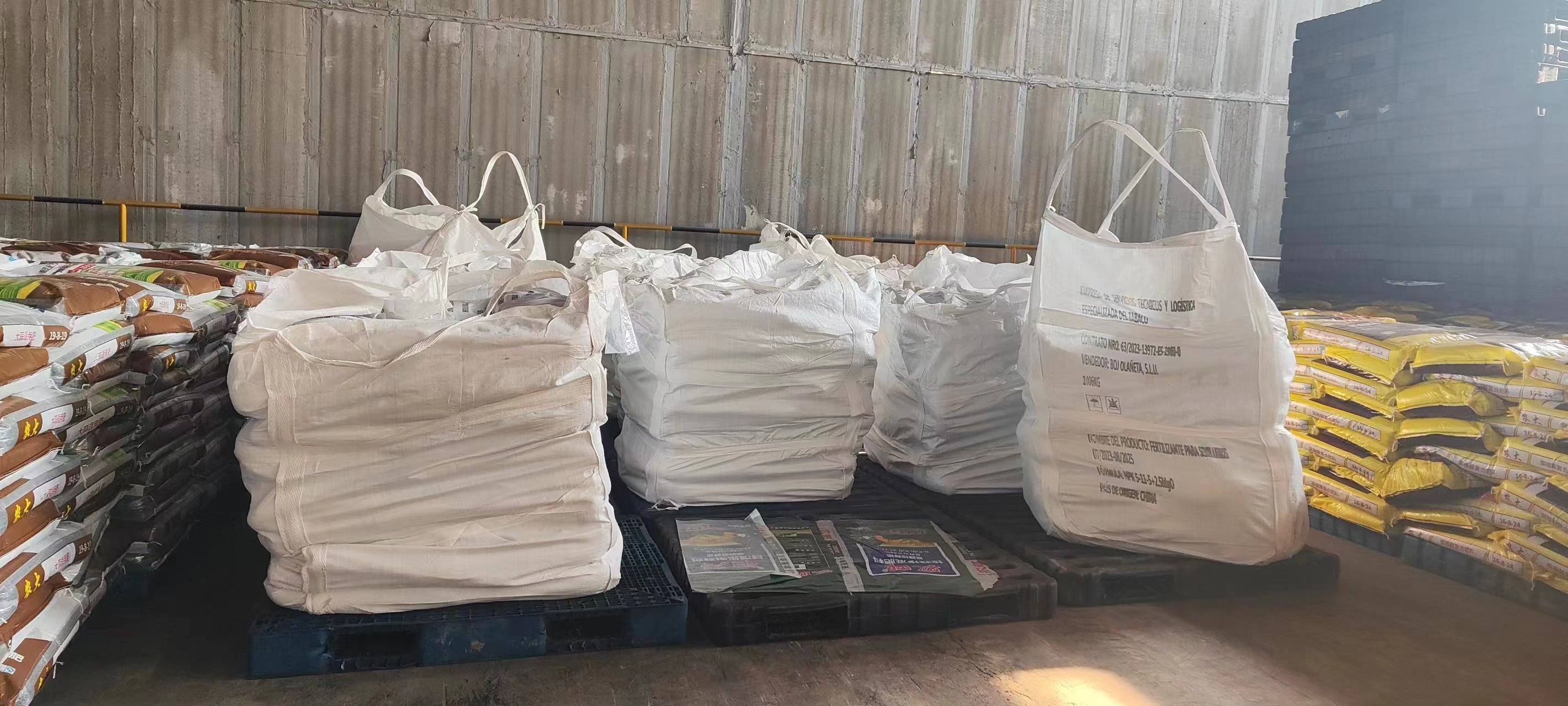
There are also practical boundaries. The supplied FAQ notes that UAN 32 requires suitable fertilizer tanks and care to minimize contamination and extreme temperature exposure; at low temperatures, fertilizer salts can crystallize, so the product specification should guide storage procedures. Granular ASN has different storage needs: the supplied guidance recommends a dry, cool, ventilated warehouse, protection from moisture and direct sunlight, sealed packaging to reduce caking, and separation from alkaline chemicals. Specific product labels and technical datasheets should govern handling.
How to assess environmental claims responsibly
The word “sustainable” can refer to continuity of supply, agronomic resource management, or environmental performance. Those are related but not interchangeable questions. The information available for this evaluation supports discussion of product composition, manufacturing capability, quality-control stages, and customization. It does not include a product lifecycle assessment, verified emissions data, nutrient-loss measurements, or comparative field trials for ASN.
Accordingly, buyers should avoid treating “nitrogen–sulfur synergy” as proof of lower environmental impact or higher nitrogen-use efficiency. The FAQ material states that UAN 32 can support efficient nitrogen management through uniform liquid distribution, accurate metering, and multiple application options, while actual nitrogen-use efficiency depends on application timing and placement, crop demand, soil conditions, weather, and management practices. A specific improvement requires field trials. The same evidence discipline applies to ASN: its nitrogen-plus-sulfur profile is not, on its own, proof of a measured environmental benefit.
Where environmental performance is part of supplier selection, the buyer should define the claim to be evaluated and request product- and method-specific evidence. If the decision concerns supply continuity instead, focus on documented production arrangements, agreed order plans, quality acceptance, packaging, and support. Keeping these evaluation tracks separate makes the decision clearer and prevents an operational capability from being mistaken for an environmental certification.
Procurement checklist for long-term supplier evaluation
- Match the product to the need. Confirm that the crop nutrient plan calls for both nitrogen and sulfur before selecting ASN. Use soil and crop information and applicable local agronomic guidance.
- Lock the specification. Record product name, guaranteed analysis, packaging, labelling, and technical-document requirements in the purchase documents.
- Agree on quality evidence. Set the inspection and acceptance basis, including which reports are required and how product discrepancies will be handled.
- Check feasibility for the actual order. Confirm MOQ, lead time, order volume, packaging, destination, and shipping terms rather than relying on general capability statements.
- Test customization carefully. Where OEM, ODM, or customized arrangements are relevant, define the requested change and obtain written confirmation that it applies to the ordered product.
- Plan safe storage and handling. Follow the product label and technical datasheet, protect ASN from moisture and contamination, and align storage capacity with the expected delivery schedule.
- Define support expectations. Clarify what technical support and application guidance are available and what information the supplier needs to respond appropriately.
- Separate verified evidence from open questions. Treat stated capacity and process descriptions as screening evidence. Verify certificate status, product-specific test records, and environmental claims before using them as decision proof.
This framework is especially relevant to distributors, large farms, international traders, and agricultural partners planning bulk supply or recurring orders. The available case information describes these customer types and bulk-supply contexts, but it does not provide named customer references or quantified outcomes. A buyer should therefore use its own qualification and contract process rather than infer performance from an unnamed case description.
Comparison with a one-off or spot purchase
A spot purchase can be simpler when a buyer needs a single shipment and has no requirement for specification adaptation or recurring support. A longer-term supplier evaluation requires more coordination: product specifications, acceptance criteria, order schedules, packaging, and support responsibilities need to remain clear across orders. The trade-off is that more planning and documentation are required before the relationship is operational.
Likewise, choosing ASN over a nitrogen-only product is not automatically more economical or agronomically preferable. The FAQ material describes ASN as useful when both nitrogen and sulfur are required, while urea may suit situations where high nitrogen concentration is the main priority. The right comparison depends on nutrient need, application method, handling arrangements, and local agronomic conditions. No product cost comparison or verified cost-per-nutrient dataset is supplied here.
What the evidence supports—and what it does not
The available information supports a bounded assessment: Risso chemical lists ASN and UAN 32 in its fertilizer portfolio; the ASN profile describes nitrate and ammonium nitrogen with sulfur; the manufacturer states that ODM, OEM, and customizable production services are available; and its capability information describes production monitoring, laboratory testing, finished-product inspection, technical support, and application guidance.
It also supplies planning references, including a stated 100-ton MOQ and 30–45 day lead time, as well as company-level production and workforce details. Those figures can guide early supplier screening, but each must be confirmed against the chosen product, packaging, destination, and contract. The available materials do not prove guaranteed supply continuity, dedicated ASN capacity, specific batch performance, or environmental superiority.
For procurement teams, the practical conclusion is straightforward: evaluate nitrogen–sulfur granular fertilizer through product fit and verifiable operating terms. A credible long-term assessment turns general capabilities into agreed specifications, inspection records, order plans, storage requirements, and clearly scoped technical support. That approach allows buyers to assess the supplier relationship without overstating what the evidence can establish.
Frequently asked questions
What is ASN fertilizer 26-0-0+13S?
ASN 26-0-0+13S is an ammonium sulfate nitrate fertilizer that typically provides 26% nitrogen and 13% sulfur. Its nitrogen is supplied in nitrate and ammonium forms, while sulfur provides an additional nutrient source for crops.
What are the advantages of ASN fertilizer compared with urea?
ASN typically supplies nitrogen and sulfur in one granular fertilizer, while urea primarily supplies nitrogen. ASN may fit a nutrient program when both nutrients are required; selection should reflect soil testing, crop needs, and local agronomic conditions. Urea may be preferable when high nitrogen concentration is the main priority.
Does ASN cause soil acidification?
The supplied FAQ states that, compared with ammonium sulfate, continuous ASN application brings a lower soil-acidification risk. It also recommends rational rotation and matching with other fertilizers for long-term planting. This comparison should not be read as a guarantee that ASN cannot affect soil conditions.
What storage requirements does ASN fertilizer have?
Store ASN in a dry, cool, ventilated warehouse, away from moisture and direct sunlight. Keep packaging sealed to help prevent caking and store it separately from alkaline chemicals. Follow the product label and technical datasheet for the specific product.
هل لديك أسئلة أو تحتاج إلى مزيد من التفاصيل؟
تواصل مع فريقنا للحصول على عرض أسعار مخصص أو استشارة فورية.
طلب عرض أسعار
املأ النموذج أدناه وسيتواصل معك فريقنا بعرض مقترح مخصص.
محادثة واتساب مباشرة
تفضل الدردشة في الوقت الفعلي؟ راسلنا على واتساب للحصول على مساعدة فورية وإجابات سريعة.
- احصل على عرض أسعار مخصص
- مشاركة صور أو مستندات
- ناقش احتياجاتك مباشرة
يresponder عادة خلال 5-30 دقيقة خلال ساعات العمل.