
Evaluating Long-Term USB Cable Supplier Sustainability: Focuses' Capacity & QC
Evaluating Long-Term USB Cable Supplier Sustainability: Focuses' Capacity & QC
A USB cable program is rarely lost on unit price. It is lost when a supplier cannot repeat the same build, at the same quality, on the same schedule, across successive order cycles. Supplier sustainability — the ability to keep supplying — deserves the same scrutiny buyers apply to the quotation itself.
This article sets out a working framework for evaluating long-term USB cable supplier sustainability, then maps it against verifiable figures published by Dongguan Focuses Electronics Technology Co., Ltd., a China-based manufacturer of USB cables and audio accessories. The aim is not to recommend a vendor but to identify which evidence points actually predict continuity of supply.
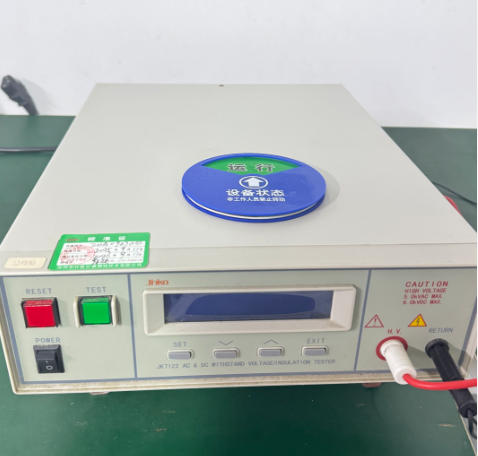
In-house inspection and test capability is one of the few supplier claims that can be reviewed before an order is placed.
What “Supplier Sustainability” Means in USB Cable Procurement
In procurement language, supplier sustainability is the supplier's ability to deliver the same product, at the same quality level, on the same schedule, over multiple order cycles and through regulatory change. It has three components, and buyers usually pay for only one of them.
Capacity continuity is whether production volume can be reserved for a buyer over time. Quality continuity is whether the inspection and process system produces consistent output when the order mix changes. Commercial continuity is whether minimum order quantity, lead time, warranty terms and after-sales support remain workable as the relationship matures. A supplier that scores well on price but fails on any of these three creates re-qualification costs, stock-outs and, in export markets, listing risk.
Why Unit Price Is a Weak Predictor of Long-Term Supply Performance
Unit price answers one question: what does one cable cost today? It does not answer whether the same cable will be available in the same specification next quarter. Three costs sit outside the price column. The first is re-qualification — sampling, testing and documentation repeated every time a supply source changes. The second is specification drift — a connector housing, conductor or jacket material quietly substituted to protect margin. The third is schedule failure — a missed replenishment window that leaves a wholesaler short during a peak retail season.
For USB cables specifically, these risks are amplified because the category is regulation-sensitive. Charging interfaces, power delivery behavior and cable safety requirements differ by market, and a supplier that cannot track those requirements transfers the risk to the buyer. That is a constraint question, not a price question.
A Six-Point Framework for Evaluating USB Cable Suppliers
The framework below converts general supplier concerns into specific questions and the evidence that answers them. It is designed to be applied before a purchase order, using documentation rather than impressions.
| Dimension | Question to ask | Evidence that answers it |
|---|---|---|
| Manufacturing capacity | What is annual and monthly output, and how is it scheduled? | Declared capacity figures, facility size, production planning |
| Workforce stability | How many production staff, and how many engineers? | Headcount, R&D team size, role structure |
| Quality system | What inspection happens, and at which stage? | Inspection policy, pre-shipment control, test equipment |
| Certification and scope | Which certification applies, to what scope, for which market? | Certificate number, issuing body, standard, validity, scope wording |
| Commercial terms | What are MOQ, lead time, warranty and after-sales terms? | Written commercial policy, warranty statement |
| Customization continuity | Can a build be reproduced and modified without re-tooling from zero? | Customization list, engineering support process, packaging capability |
Applying the Framework: Focuses Electronics Capacity and Workforce Evidence
Dongguan Focuses Electronics Technology Co., Ltd. is a manufacturer of USB cables and audio accessories operating from a 6,000 m² facility in Tangxia Town, Dongguan, China, and exporting to the European Union, North America, the Middle East and Asia. The company was established in 2006 and relocated to its current Tangxia site in 2018.
On the first two framework dimensions, the published figures are specific rather than directional. Annual production capacity reaches 25,000,000 units, against a monthly capacity of 2,500,000 units. The workforce is approximately 150 employees described as skilled professionals dedicated to punctual delivery, with an R&D team of 6 engineers.
| Indicator | Declared figure | Why a buyer should care |
|---|---|---|
| Annual production capacity | 25,000,000 units | Indicates whether annual volume can be absorbed without displacing other orders |
| Monthly capacity | 2,500,000 units | Sets realistic expectations for replenishment cadence |
| Facility area | 6,000 m² | Physical footprint for production, inspection and warehousing |
| Workforce | 150 skilled professionals | Labour stability for repeat runs and rework control |
| R&D engineers | 6 engineers | Capacity to support customization and specification changes |
| Export share | 90% of sales | Indicates experience with export documentation and foreign requirements |
| Export markets | EU, North America, Middle East, Asia | Relevance of the supplier's compliance exposure to the buyer's market |
The monthly-to-annual relationship is the practical detail here: a buyer planning a 5,000 to 30,000 unit order is operating well inside a monthly capacity of 2,500,000 units, which reduces the likelihood that a repeat order competes for the same production window as a large seasonal run.
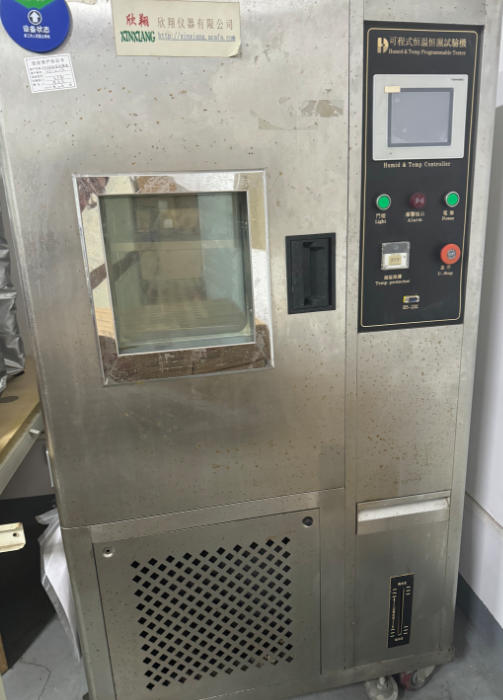
Inspection equipment supports the pre-shipment control step that underpins long-term supply consistency.
Quality System: What “100% Full Inspection Before Shipment” Changes
Focuses Electronics operates a rigorous quality control system intended to ensure cables meet international standards, and applies 100% full inspection before shipment. The distinction matters. Sampling inspection estimates a batch's quality; full inspection before shipment is a gate that every unit passes before dispatch. For export buyers, that gate is what converts an internal quality claim into a shipment-level statement.
The build specifications that the inspection gate is applied to are product-specific. The silicone and IPX7 waterproof cable families support 6A maximum charging current and 120W to 240W ultra-fast charging, with 480 Mbps data transfer, an operating range of −20°C to 70°C, and length options of 0.3 m, 1 m, 1.5 m and 2 m. The nylon braided family specifies a tinned pure copper conductor with the same 6A and 480 Mbps characteristics over a −10°C to 70°C range, while the PVC family is rated for 1A–2.4A charging, 480 Mbps transfer and −10°C to 60°C. Interface coverage across the range includes USB-A and USB-C to Type-C, Lightning and Micro USB configurations.
Certification and Constraint Checkpoints Buyers Should Verify
Focuses Electronics holds ISO 9001:2015 certification, certificate number SW23Q21582R1S, issued by SAILWAY. The certified registration scope is the R&D and production of audio wire and data wire products, with an issue date of 19 October 2020 and an expiry date of 18 October 2026.
Two clarifications are worth stating plainly. First, ISO 9001 is a quality management system certification; it is not a product safety certification, and it does not by itself demonstrate compliance with market-specific cable requirements. Second, because the certificate carries a defined expiry date, a buyer placing a long-term order should confirm renewal status at the point of purchase rather than relying on a certificate copy received earlier in the relationship.
Market-side requirements sit outside the supplier's management certification and are driven by destination regulations. In the European Union, handheld mobile phones, tablets and cameras sold after 28 December 2024 must use a USB Type-C charging port and comply with EN IEC 62680-1-3:2022; fast-charging devices supporting USB Power Delivery must additionally comply with EN IEC 62680-1-2:2022. In the United States, Amazon requires USB Type-C cables to meet the UL 9990 safety standard for ICT power cables to avoid listing removal. These are constraints the buyer and supplier must resolve together, and they explain why certification scope — not certification presence — is the evaluation criterion.
Commercial Terms as Constraint Data
| Commercial item | Declared term |
|---|---|
| Minimum order quantity | 2,000 units |
| Standard lead time | 25–35 days |
| Pre-shipment quality control | 100% full inspection before shipment |
| Warranty | 12 months |
| After-sales support | Free technical guidance for charging compatibility issues during the warranty period |
| Production mode | ODM / OEM |
| Customization scope | Logo printing, cable color, power, cable appearance, cable materials, cable molding, multi-function design, connector housing color, cable length, packaging style, packaging design |
Technical Explanation: Where Continuity Is Won or Lost
Continuity is usually lost at three technical points, and each one can be tested against declared capability.
Conductor and current consistency. A 6A-rated build depends on conductor construction and connector contact quality. Where a supplier documents high-purity tinned copper conductors and 6A maximum current across its high-power families, the buyer has a specification to hold the supplier to across repeat orders.
Strain relief and jacket integrity. Anti-kink and wear-resistant construction across silicone, TPE, nylon braided and PVC options is a repairable-return issue for accessory brands. A supplier that molds the strain relief in-house, rather than assembling from purchased subcomponents, exercises control at the point where most field failures originate.
Environmental ratings. The IPX7 waterproof and dustproof rating, together with sealed integrated molding and an operating range down to −20°C in the silicone and waterproof families, defines the applications where the build is appropriate. Applying a PVC build rated to −10°C in a cold-weather or outdoor program is a specification error, not a supplier failure — which is why the temperature and current figures are procurement documents, not marketing copy.
Application Fit: Where This Supply Profile Works Best
The product is used for daily phone charging, corporate customized gifts, retail sales and in-car use. Documented order patterns include digital accessory wholesalers and corporate gift purchasers placing orders of 5,000 to 30,000 pieces, with normal service life reported above two years against a one-year product warranty, and reported stable fast-charging speed, low heat generation during long charging sessions and a bend-resistant braided construction with wide Type-C device compatibility.
Three buyer profiles align with this profile most directly:
Retail and e-commerce accessory sellers who need consistent multi-SKU supply across Type-C, Lightning and Micro USB interfaces, with custom logo printing and packaging design applied per market.
Corporate gift and promotional buyers who need appearance customization — cable color, connector housing color, molding and packaging style — delivered against a fixed corporate deadline.
Wholesalers and distributors who replenish in repeat batches and therefore depend on stable lead times and warranty handling more than on a single lowest quotation.
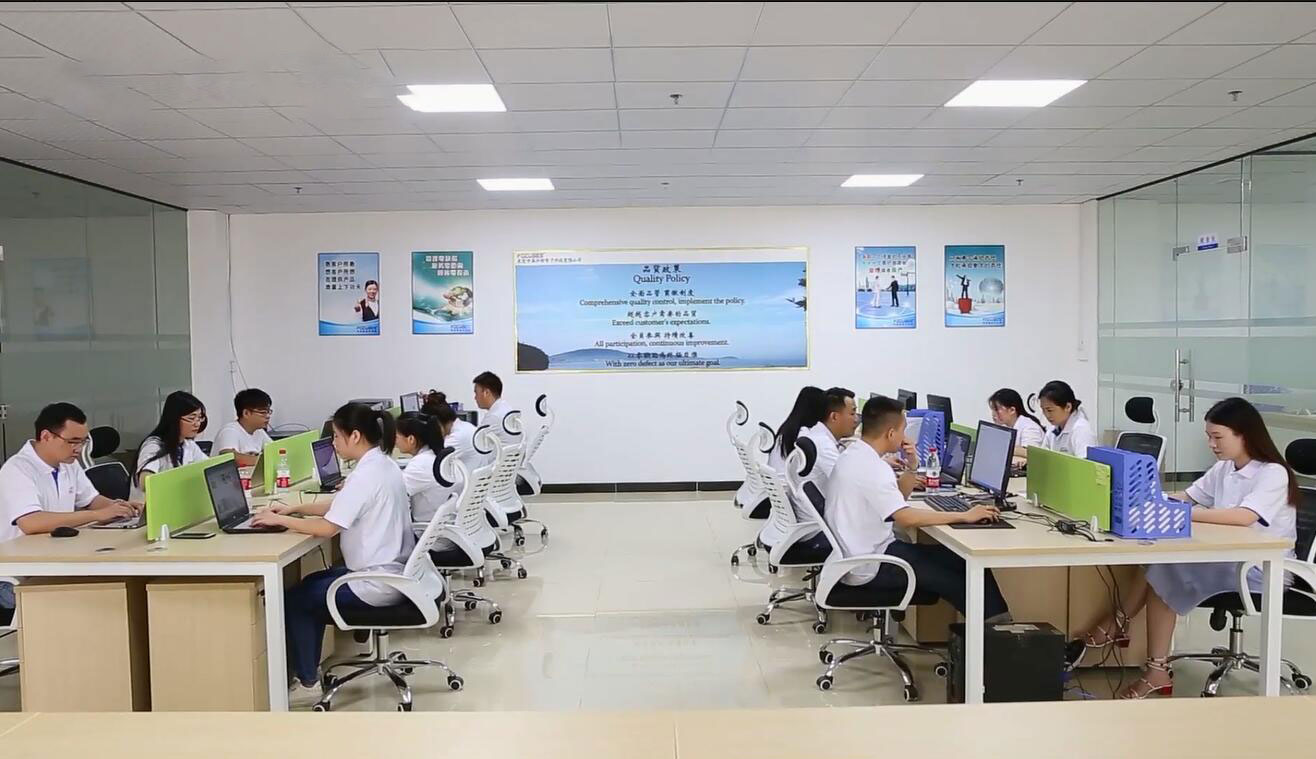
Export coordination and order management sit behind the 25–35 day lead time commitment.
Market Trends That Change Long-Term Supply Requirements
Category-level data explains why supplier sustainability is becoming a more prominent evaluation criterion rather than a secondary one.
The global USB cable market was estimated at USD 21.2 billion in 2024 and is projected to reach approximately USD 88.6 billion by 2033, according to DataHorizzon Research. KBV Research projections place market growth at a CAGR of 17.3% through 2031. Regional concentration is significant: Dataintelo reports that Asia Pacific led global USB cable revenue in 2025 with USD 12.3 billion, approximately 43% of total market share.
Interface mix is shifting in a direction that changes what suppliers must be able to produce. Dataintelo estimates the USB Type-C segment held a dominant 41.2% market share in 2025. Combined with the EU Common Charger Directive applying to handheld devices sold after 28 December 2024, the practical consequence for buyers is that a long-term supply partner needs Type-C capability as a baseline, not as an option — while still maintaining Lightning and Micro USB lines for markets and device generations where they remain in demand.
Manufacturer recognition data illustrates the other end of the market. Anker Innovations, Belkin International, Ugreen and Baseus are widely cited for high reliability and global market presence. These are predominantly consumer-facing brand owners operating their own channel models, which makes them useful as quality benchmarks but not as direct substitutes for an ODM/OEM manufacturing relationship.
How This Differs From Traditional Sourcing Routes — and Where It Doesn't Fit
Trading-company sourcing and spot buying optimize for speed and flexibility: small quantities, many suppliers, minimal commitment. That model works for one-off purchases and for testing market demand. Its weakness appears at scale, when specification consistency, documentation and warranty handling have to be repeated across hundreds of SKUs and multiple markets.
Direct manufacturer engagement, by contrast, trades flexibility for reproducibility. In the case of Focuses Electronics, that trade-off is explicit and should be stated honestly:
Order size floor. A minimum order quantity of 2,000 units means the model is not suited to micro-trials or single-unit sampling programs. Buyers validating a market with very small quantities will need an alternative route before committing.
Lead time boundary. A standard lead time of 25–35 days does not serve urgent replenishment or emergency replacement. Programs that cannot plan three to five weeks ahead — or that depend on same-week restocking during a peak season — are a poor fit regardless of unit price.
Certification scope boundary. The ISO 9001:2015 certification covers the R&D and production of audio wire and data wire. It does not substitute for market-mandated product compliance such as EN IEC 62680-1-3:2022, EN IEC 62680-1-2:2022 or UL 9990. Buyers in the EU and on Amazon US must confirm that the specific build ordered meets those requirements separately.
Engineering bandwidth boundary. A six-engineer R&D team supports customization and specification changes, but a buyer commissioning multiple simultaneous new tooling projects should expect scheduling discussion rather than immediate parallel development.
Future Outlook
Two forces will shape USB cable supplier evaluation over the next several years. The first is regulatory convergence: as Type-C mandates and power delivery standards extend across more markets, the compliance burden shifts earlier in the supply chain, and suppliers that document scope precisely will be easier to qualify than those that present certification as a general credential.
The second is volume expectation. With market projections pointing to continued double-digit growth through the early 2030s, capacity reservation will become a more competitive issue than unit price negotiation. Buyers who establish lead time, MOQ and warranty terms early in a relationship — and verify them against documentary evidence rather than verbal assurance — are better positioned when demand tightens.
Frequently Asked Questions
What production capacity does Focuses Electronics have for USB cables?
Focuses Electronics reports an annual production capacity of 25,000,000 units and a monthly capacity of 2,500,000 units, operating from a 6,000 m² facility with approximately 150 employees, including a 6-engineer R&D team.
What is the minimum order quantity for USB cables?
The stated minimum order quantity is 2,000 units. Documented order patterns from digital accessory wholesalers and corporate gift purchasers range from 5,000 to 30,000 pieces per order.
How long is the lead time from order confirmation to shipment?
The declared lead time is 25–35 days. Because this range does not accommodate urgent or same-week replenishment, buyers should plan procurement cycles with at least three to five weeks of buffer.
What quality control is applied before USB cables are shipped?
Focuses Electronics applies 100% full inspection before shipment, supported by a quality control system intended to ensure cables meet international standards. This is a shipment-level gate applied to every unit, not a sampling estimate.
Which certifications does Focuses Electronics hold, and what do they cover?
The company holds ISO 9001:2015 certification, certificate number SW23Q21582R1S, issued by SAILWAY, with an issue date of 19 October 2020 and an expiry date of 18 October 2026. The certified scope covers the R&D and production of audio wire and data wire. It is a management system certification and does not replace market-specific product requirements such as EN IEC 62680-1-3:2022, EN IEC 62680-1-2:2022 or UL 9990.
What customization options are available under ODM/OEM?
Available customization includes logo printing, cable color, power rating, cable appearance, cable materials, cable molding, multi-function design, connector housing color, cable length, packaging style and packaging design.
What warranty and after-sales support applies?
A 12-month warranty applies, together with free technical guidance for charging compatibility issues during the warranty period. Documented case data reports normal service life above two years for typical usage.
Which export markets does Focuses Electronics serve?
Focuses Electronics serves the European Union, North America, the Middle East and Asia, with exports representing 90% of sales.
Long-term USB cable sourcing is a documentation exercise before it becomes a negotiation. Capacity figures, inspection policy, certification scope, lead time and warranty terms are the inputs that determine whether a supply relationship survives its second and third order cycle — and all of them can be reviewed before a purchase order is issued.
The full Focuses Electronics product and capability catalogue is available for download: 2026 Focuses Catalogue (PDF).