
Evaluating Pivot Suppliers: Q235B and IP65 Over Decades
A center pivot irrigation system is normally purchased once and paid for across ten or more cropping cycles, which is why long-term supplier evaluation looks different from first-purchase screening. The decisive questions are not only what the machine delivers at commissioning, but whether the steel still holds its section after years of continuous start-stop operation, whether the enclosures still exclude water and dust, and whether a matched spare part can still be supplied in year seven.
China Yulin Irrigation Equipment Co., Ltd., which operates as YULIN IRRIGATION, is a Dalian-based manufacturer founded in 2009 that produces center pivot irrigation systems, linear move irrigation systems, towing irrigation systems, hose reel irrigation systems, irrigation parts and matching water pumps and generators. This reference examines how Q235B construction under GB 13912-2020 and IP65-rated components translate into sustained quality, and how a buyer can test those claims against a ten-year farm plan.
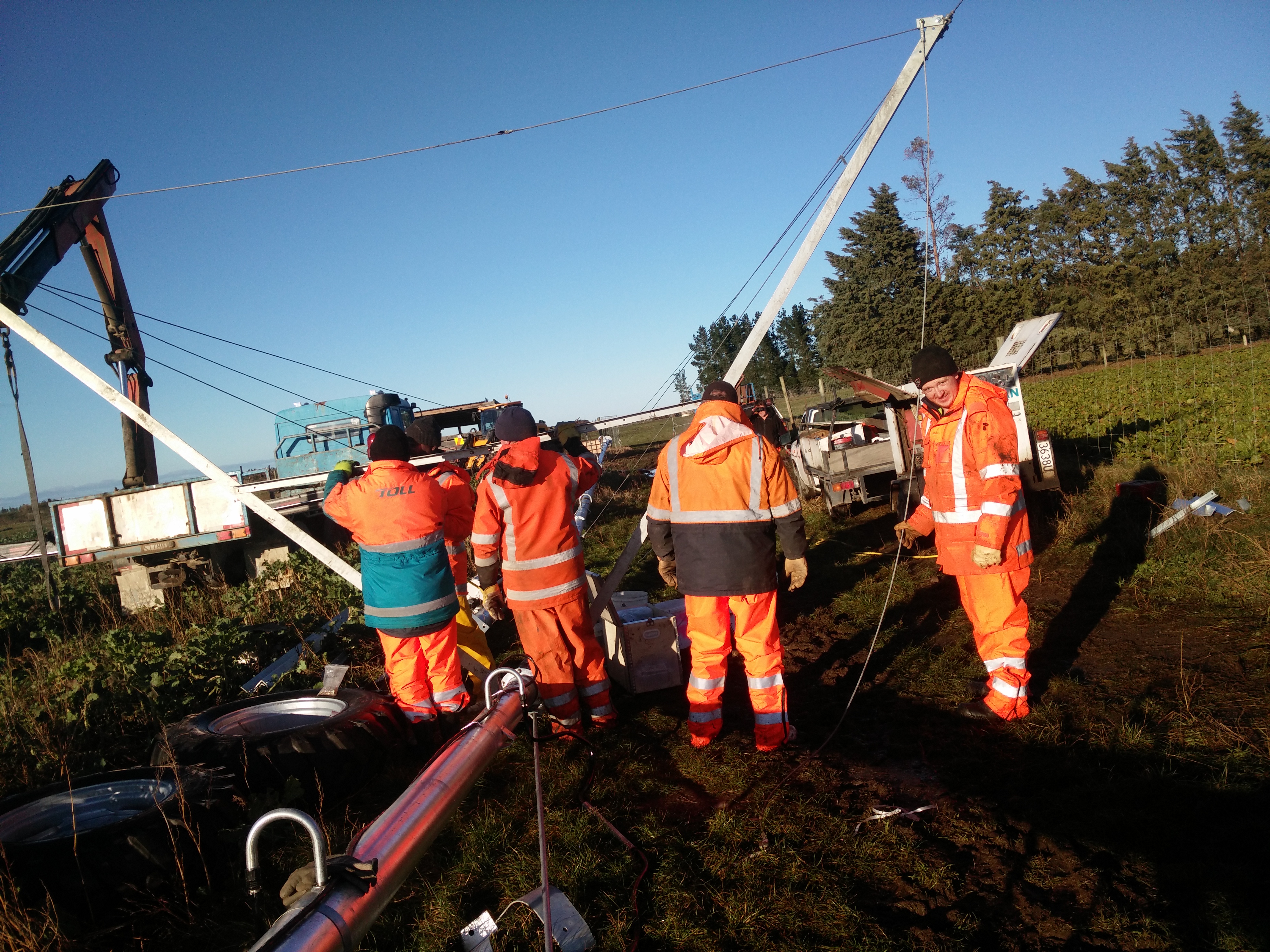
On-site installation support for a center pivot irrigator on a New Zealand pasture farm — the kind of service record a ten-year supplier evaluation has to include.
Why a Ten-Year Plan Changes the Evaluation Criteria
In a ten-year irrigation plan, the relevant cost is not the invoice; it is the invoice plus every intervention the machine requires between commissioning and replacement. That shift moves supplier evaluation from a specification check to a durability check: which parts of the data sheet will still be true in year eight, and which will have quietly expired?
Three dimensions carry most of that risk:
- Material and coating system — the structural steel and its corrosion protection determine whether the truss and pipeline keep their integrity.
- Protection of electrical and rotating components — the ingress protection of the control panel, collector ring and tower box determines how often water and dust reach live parts.
- Part and service continuity — a machine is only as durable as the availability of matched components and field support over its life.
The Problem: Corrosion, Ingress and Duty Cycle Decide Downtime
Pivot irrigation systems rarely fail because of the irrigation concept. They fail at the joints: a coating system that was specified but never verified, an enclosure that was assumed to be sealed, a drive designed for a duty cycle the field does not follow. All three accumulate quietly and surface later as downtime.
The manufacturer states that all of its irrigation equipment undergoes strict anti-corrosion and wind resistance testing so that machines adapt to tropical, saline-alkali and high-wind farmland environments worldwide — environments in which unprotected steel sections, bearings and electrical housings degrade at very different rates.
The opportunity for a buyer is to convert these statements into verifiable procurement requirements before the contract is signed, rather than after the first maintenance event.
Material Basis: Q235B Steel and Hot-Dip Galvanization Under GB 13912-2020
The YULIN center pivot irrigation system is specified as Q235B metal with a GB 13912-2020 material reference, while the anti-corrosion coating type is listed as hot-dip galvanization according to GB/T 13912-2002. Tower wheels are 14.9-24 irrigation tires, two wheels on each trolley, with hot-dip galvanized discs. The water pipeline is sectional with a truss structure, and the flexible irrigation hoses are PVC, reinforced and UV resistant, with pipeline layers specified to ensure the integrity of the system for life and to be UV resistant.
For procurement teams, the practical meaning is that the corrosion system is a written specification rather than a finish applied at the end of assembly. Hot-dip galvanizing protects a steel section as a barrier and, where the coating is disrupted, through the behavior of the zinc layer — a mechanism widely understood in structural engineering, and the reason the referenced standard, rather than the appearance of the steel, is the item to verify.
A verification note matters here. The specification carries a GB 13912-2020 reference in the material field and GB/T 13912-2002 for the coating type, so a buyer planning a decade of service should ask the supplier to confirm which edition the conformance documentation for the delivered batch references, and should treat coating verification as an inspection item rather than an assumption.
IP65 Components: What the Rating Covers and Where It Stops
In the YULIN specification, the standard control panel functions carry IP65, and the collector ring is rated at not less than IP65. The tower box is rated at not less than IP33. In other words, IP65 on this machine describes specific enclosures, not the whole structure, and a buyer who assumes uniform protection will misprice the maintenance profile of the asset.
Component-level ratings and electrical details as listed:
| Component | Specification | Protection level |
|---|---|---|
| Standard control panel (main power switch / disconnect switch, power control switch, water switch, direction control switch, percentage indicator for speed regulation, auto-reverse switch) | Supplied as standard function set | IP65 |
| Collector ring | 11 rings, not less than 4×90A and 7×25A | Not less than IP65 |
| Tower box | Tower drive enclosure | Not less than IP33 |
| Copper electrical cable | Core thickness not less than 4×4 mm² + 7×1.0 mm² | — |
| Supply voltage | 380–460 V, with voltage customization available for OEM orders | — |
The ingress protection convention rates solid-particle protection and water protection separately, with the first digit covering solids and dust and the second covering water. A 6/5 combination is therefore stronger on both axes than 3/3, which is why the split between the collector ring and the tower box belongs in the evaluation file. Under continuous start-stop operation, the collector ring is the component that carries power into a rotating structure, and it is rated at the higher level.
Continuous Start-Stop Operation and What It Demands
The YULIN center pivot is specified with a pivot movement mode of continuous start-stop, matching the motor of the last tower, with an electromechanical, reversible drive that is individual for each span and an electromechanical tower drive. Irrigation is by circular motion, clockwise and anti-clockwise, and the system can be powered either by an external power connection or by a diesel generator — the configuration used in the Papua New Guinea dry-season project, where no reliable grid supply was available.
Other specified operating conditions that shape a ten-year view include:
- Distance from the ground to the bottom of the truss rod: 3 ± 0.2 m.
- Operating temperature range: from -45 °C to +45 °C.
- Land usage coefficient within the irrigated circle, including the area near the center tower: not less than 0.9.
- Rain intensity: not more than 0.16 mm/min; average drop diameter: not more than 1.1 mm.
- Plant mechanical damage: not more than 2%.
- Pressure regulators: 10, 15 or 20 psi.
- Irrigated crops: fodder crops, cereals, vegetables and industrial crops, including corn.
Because the drive is individual for each span, inspection and service can be planned span by span rather than as a whole-machine event — a structural detail that matters when a farm cannot afford to stop irrigation across an entire 50-hectare circle for a single fault.
Maintenance Intervals: Design Choices Set the Boundary Conditions
The published specification does not quote fixed service intervals. What it defines are the boundary conditions under which intervals are set, and those conditions are what a long-term buyer should test.
Water chemistry is the clearest of them. The specification states the capability of using water with pH 6–7.5 for irrigation without quality problems during the warranty period. Outside that window, protection has to be specified deliberately — which is exactly what happened in the Papua New Guinea project, where the client opted for a poly pipe to prevent the water's acidity or alkalinity from corroding the pipes. UV-resistant hoses and pipeline layers address a different degradation path, sunlight, and the truss-type sectional pipeline means a damaged section can be replaced without rebuilding the machine.
Part matching over time is the second boundary condition. More than 95% of the machine's spare parts are independently manufactured in the company's own factory, which the manufacturer links to full-process quality monitoring and more stable product consistency. For a ten-year asset that claim is directly testable: ask which components are bought in, and how a replacement for each would be sourced in year seven.
Field Evidence: What 6-, 9- and 15-Year Deployments Show
| Market | Client type | Units | Application | Duration | Reported outcome |
|---|---|---|---|---|---|
| Australia | Major distributor | 600 center pivots | Forage / pasture, cotton and watermelon | 15 years | More than 40% energy savings, labor savings, long lifespan, low maintenance cost, higher crop output |
| Russia | Russian group | 450 center pivots | Supplied to end users | 9 years | Improved product performance while reducing labor requirements; 40% increase in efficiency |
| New Zealand | Large-scale dairy farmer | 70 center pivots | Irrigation for grass | 9 years | Long life span, labor savings, rising crop output |
| Algeria | Farm irrigation OEM client | 70 center pivots | Farmland irrigation | 7 years | 40% increase in efficiency; helped the local brand provide complete pivot service |
| South Korea | Government project | 1 linear irrigation unit | Recycled chemical wastewater for school lawn irrigation | 7 years | Wastewater recycling support and usable natural grass for students |
| Zimbabwe | End customer | 45 center pivots | Crop irrigation | 6 years | Increased crop output, labor savings |
| Brazil | Large-scale farmer | 50 JP800 hose reel machines | Soybean irrigation | 6 years | 30% output increase in dry conditions, labor savings, easy relocation and rental |
The useful signal in this table is not the largest number but the pairing: each record links a duration to an operational outcome, and the longest records pair duration with labor savings, low maintenance cost and long lifespan rather than with a single performance peak. That is the form of evidence a ten-year evaluation should request — duration matched to application, not a general durability claim.
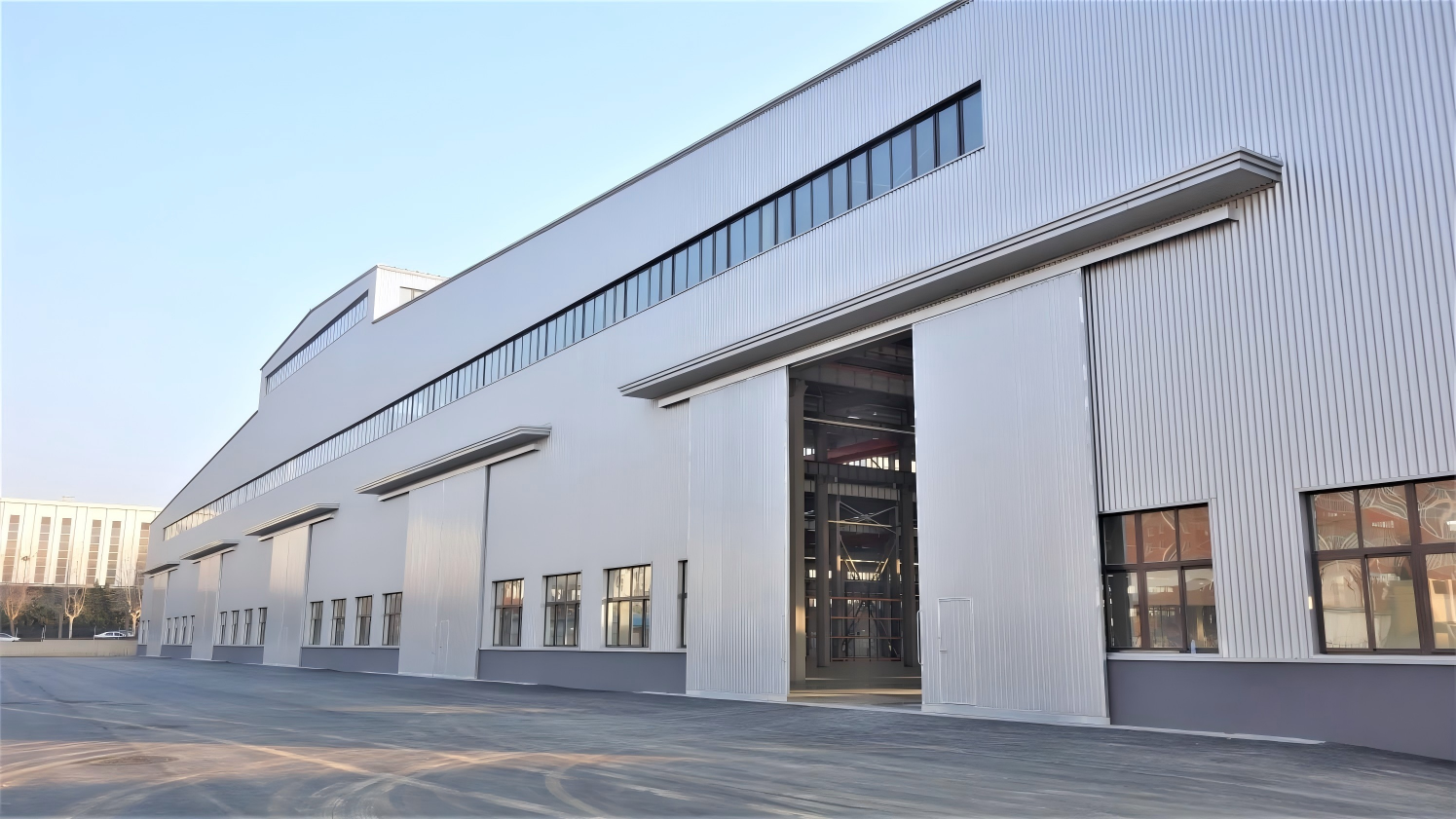
In-house manufacturing of machine components is what makes spare-part matching possible years after commissioning.
Scenario Fit: Where the Design Assumptions Hold
Center pivot coverage in the YULIN range is defined in four standard configurations: 177.6 meters covering 10 hectares, 307.4 meters covering 30 hectares, 395.6 meters covering 50 hectares, and 565 meters covering 100 hectares. The Papua New Guinea project used the 395.6-meter, 50-hectare configuration with an end spray gun and a 1000-liter fertilizer tank, adding supplementary corner irrigation and simultaneous fertigation while running through the dry season at high ambient temperature.
Where field geometry is irregular or the parcel is smaller, the same manufacturer's hose reel irrigation machine addresses a different fit. The JP800 travels with a 90 mm PE pipe of 300 meters, delivering 25–52 t/h through a 16–22 mm nozzle, with a spray radius of 19–41 m, a DL50/SIMA10497 spray gun, an inlet pressure of 0.6–0.9 MPa and a net weight of 2180 ± 30 kg. Overall dimensions are 6120 × 2330 × 2770 mm and shipping dimensions 2450 × 2000 × 2250 mm. The machine is water turbine driven and requires no electricity, is quick and convenient to move, and saves water and labor costs.
For institutional projects, a four-wheel linear irrigation configuration was used in South Korea, where recycled chemical wastewater irrigates a school lawn — a seven-year record in which the outcome was wastewater recycling and usable natural grass rather than yield alone.
Market Context: Continuity Is Becoming a Procurement Metric
Several external signals support treating supplier continuity as a procurement metric rather than a preference. The global center pivot irrigation system market is estimated at USD 2.56 billion in 2025 and projected to reach USD 5.67 billion by 2030, according to Mordor Intelligence. At manufacturer level, Valmont Industries reported Agriculture segment sales of USD 278.0 million in Q4 2024, representing 26.7% of total net sales, while Lindsay Corporation secured a multi-year irrigation supply agreement for the MENA region valued at more than USD 100 million in 2024. Contract structures of that kind are decade-scale by design, and they push evaluation criteria toward documented durability.
Standardization reinforces the same direction. ISO 11545:2009 specifies an in-field method for determining the uniformity of water distribution from center-pivot and moving lateral irrigation machines, giving buyers a measurable acceptance reference rather than a supplier claim. On the supply side, the manufacturer's stated pivot-specific capacity is 400 sets per year, alongside an annual output of 3,000 units across its product lines, a monthly capacity of 60 units, a lead time of 21–40 days and a minimum order quantity of 1 unit, with 100% testing as the stated quality-control approach.
Comparison with Traditional Approaches — and the Limits of This One
| Evaluation approach | What it optimizes | Where it is exposed over a decade |
|---|---|---|
| Price-first sourcing | Lowest capital cost at award | Coating standard edition and per-component ingress ratings are often undocumented, and part matching in later years depends on a third party. |
| Data-sheet-only procurement | Compliance with the specification at delivery | Delivery-time compliance says nothing about which standard edition the conformance documents reference, or about replacement parts in year seven. |
| Duration-based supplier evaluation | Matching specification to documented deployment life | Requires the supplier to hold multi-year records, and comparison across bidders takes longer. |
Three boundaries should be stated plainly. First, a fixed center pivot is a circular solution: the specification guarantees a land usage coefficient of not less than 0.9 inside the irrigated circle, and the format suits regular parcels. Irregular, narrow or scattered fields are better served by a towable pivot, a linear move machine or a hose reel machine such as the JP800. Second, the water-chemistry envelope of pH 6–7.5 applies during the warranty period; outside it, protective measures such as poly pipe have to be specified rather than assumed. Third, ingress protection is component-specific — IP65 applies to the control panel functions and the collector ring, while the tower box is rated not less than IP33, so the maintenance plan should not treat every enclosure as identically sealed.
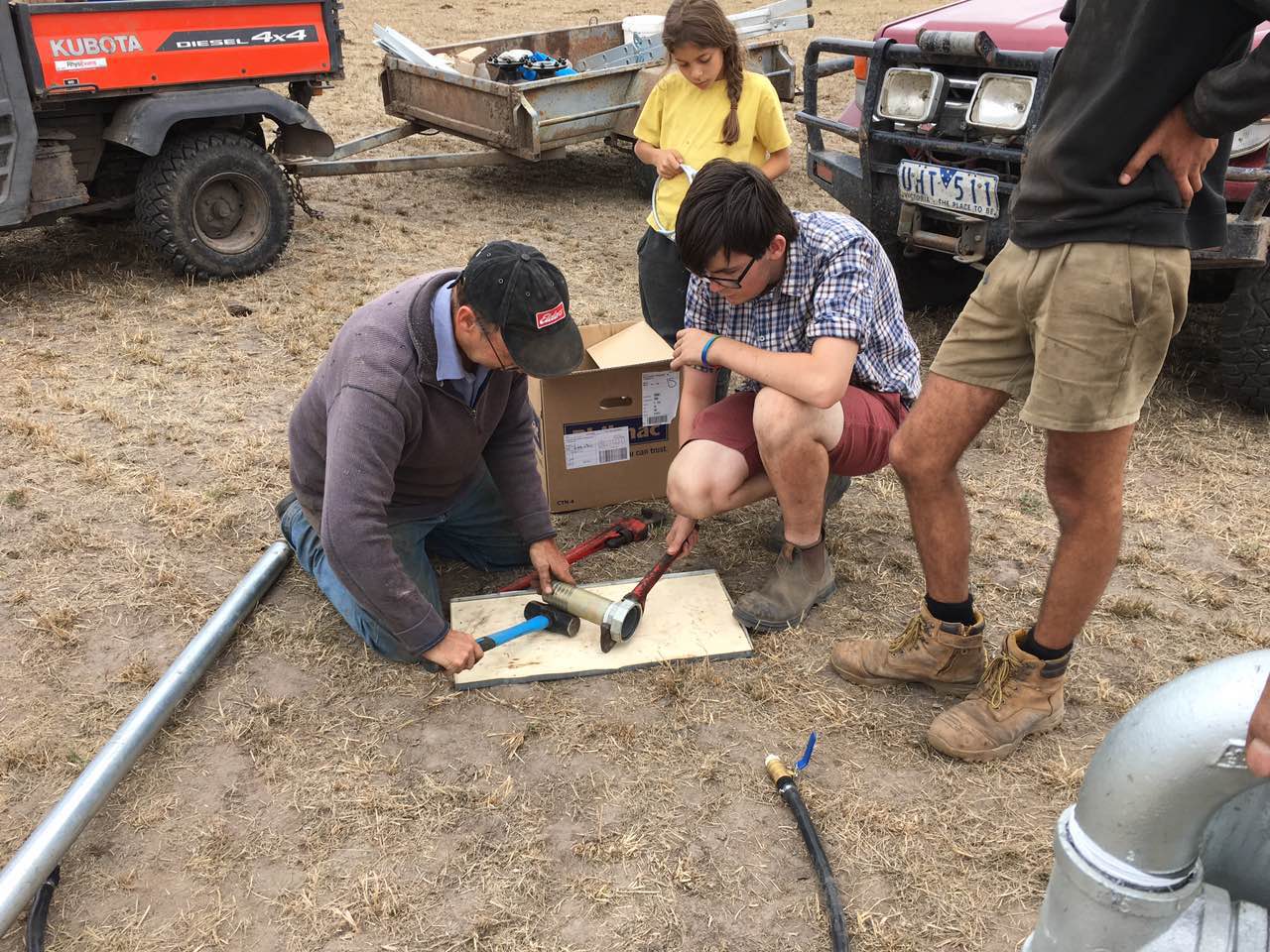
Australia: 600 center pivot units supplied to a major distributor, with labor savings, low maintenance cost and long lifespan reported across 15 years of operation.
What a Ten-Year Supplier Evaluation Should Ask For
- Material and coating: written Q235B specification with a GB 13912-2020 reference and hot-dip galvanization to the stated standard edition, plus conformance documentation for the delivered batch.
- Structural details: truss-type sectional water pipeline, hot-dip galvanized wheel discs on 14.9-24 irrigation tires.
- Electrical protection by component: control panel IP65, collector ring not less than IP65, tower box not less than IP33, cable core thickness not less than 4×4 mm² + 7×1.0 mm², 380–460 V supply with voltage customization available for OEM orders.
- Duty-cycle confirmation: continuous start-stop movement, individual electromechanical reversible drive per span, operating range -45 °C to +45 °C.
- Commercial continuity: 21–40 day lead time, 1-unit minimum order quantity, 60-unit monthly capacity, 400-set annual pivot capacity.
- Service commitments: global localized on-site installation, commissioning and operator training; video technical support; online support; free spare parts.
- References matched to duration: deployments of 6, 7, 9 and 15 years in applications comparable to the buyer's own.
Future Outlook
Between now and 2030 the center pivot market is expected to move from USD 2.56 billion to USD 5.67 billion, and the multi-year agreement structure already used in the MENA region suggests that longer contracts, not shorter ones, will define supply relationships. As ISO 11545:2009 gives buyers a measurable uniformity method, acceptance testing and lifecycle documentation are likely to converge: the supplier that can already produce a coating standard reference, a per-component ingress rating and a duration-matched deployment record will be easier to evaluate, and therefore easier to keep.
For YULIN IRRIGATION, the relevant direction is supply-side continuity — 400 sets of annual pivot supply capacity, a 3,000-unit annual output across product lines, more than 95% in-house component manufacturing and a global on-site installation and training service — combined with certifications including CE, ISO9001 and CSA. Those are elements a ten-year plan can be built on, provided they are verified rather than assumed.
Reference document: the 2026 YULIN Pivot Catalogue (PDF) sets out the specifications discussed above.
FAQ
How can a buyer verify that a Q235B galvanized pivot structure will still be serviceable in year ten?
Verification starts with documentation rather than inspection alone. The specification lists Q235B metal with a GB 13912-2020 material reference and hot-dip galvanization according to GB/T 13912-2002 as the anti-corrosion coating type, with hot-dip galvanized discs on 14.9-24 tower wheels and UV-resistant PVC hoses and pipeline layers. A buyer should require the conformance documentation for the delivered batch, confirm which edition of the galvanizing standard it references, and record coating condition at commissioning as the baseline for later inspections. The manufacturer also states that its equipment undergoes anti-corrosion and wind resistance testing for tropical, saline-alkali and high-wind environments.
What does IP65 protect on a center pivot, and what is not covered?
In the YULIN specification, IP65 applies to the standard control panel functions — main power switch, power control switch, water switch, direction control switch, percentage indicator for speed regulation and auto-reverse switch — and the collector ring is rated at not less than IP65. The tower box is rated at not less than IP33. Because the ingress protection convention rates solid-particle and water protection separately and at different levels, a machine can carry a high rating on one enclosure and a lower one elsewhere, so the evaluation should list each enclosure's rating individually.
Does continuous start-stop operation shorten component life or reduce maintenance requirements?
Continuous start-stop is the specified movement mode of the machine, matching the motor of the last tower, with an electromechanical, reversible drive that is individual for each span. The specification does not publish fixed service intervals, so the accurate answer is that the duty cycle defines the operating conditions, while durability is demonstrated by field duration rather than by an interval claim: an Australian distributor's 600 center pivot units were reported in operation for 15 years with labor savings, low maintenance cost and long lifespan, and a New Zealand dairy project of 70 units recorded nine years of service with a long life span.
Which deployment records should be included in a ten-year supplier evaluation?
Records that pair duration with application. Available references include 600 units in Australia over 15 years for forage, pasture, cotton and watermelon; 450 units supplied to end users through a Russian group over 9 years; 70 units in New Zealand over 9 years for grass irrigation; 70 units for an Algerian farm irrigation OEM client over 7 years with a reported 40% increase in efficiency; a South Korean government project running 7 years on recycled chemical wastewater; 45 units in Zimbabwe over 6 years; and 50 JP800 hose reel machines in Brazil over 6 years for soybean irrigation.
What after-sales and spare-part provisions should a long-term contract include?
The company provides global localized on-site installation, commissioning and operator training, together with video technical support, online support and free spare parts. Because more than 95% of the machine's spare parts are independently manufactured in its own factory, part matching is largely an internal process rather than a third-party dependency. Contracts can convert these into obligations by naming the service scope, the spare-part categories covered and the resupply assumptions, and by using the stated 21–40 day production lead time as the reference for scheduling.