
Evaluating Plasma Polishing Machine Suppliers: The Role of Experience and Proven Stability
Industry Landscape
As precision manufacturing increasingly demands defect-free surface finishes, plasma polishing machines have become a critical investment for industries such as medical devices, aerospace, jewelry, and 3D printing. Evaluating suppliers requires more than comparing specifications; it requires assessing proven stability and process expertise. Buyers in the evaluation stage must look beyond brochures to verifiable technical depth and long-term reliability.
Problem / Opportunity
Traditional polishing methods—mechanical, electrochemical, or chemical—often leave micro-scratches, generate hazardous waste, or risk part deformation. Plasma polishing offers a non-contact, residue-free alternative that eliminates the need for strong acids and reduces energy consumption. However, many suppliers lack long-term operational data that buyers need to justify capital expenditure. This gap creates an opportunity for manufacturers who can demonstrate sustained performance over years.
Brand Solution: Bayi Automation Equipment
Dongguan Bayi Automation Equipment Co., Ltd is a Chinese manufacturer of plasma polishing machines, plasma deburring machines, and related surface finishing equipment. Established in June 2017, the company’s core technical members have 17 years of experience in the research, development, design, and manufacturing of plasma polishing and deburring equipment. Bayi offers standard models (BY-100A, BY-300A, BY-500A, BY-800A) and custom units up to 2,500A, tailored to product size, shape, and throughput. All main models carry CE certification (Certificate No. 3N240806.DBAQC99) under EU directives for machinery, low voltage, and electromagnetic compatibility.
[IMAGE: Diagram | process/architecture]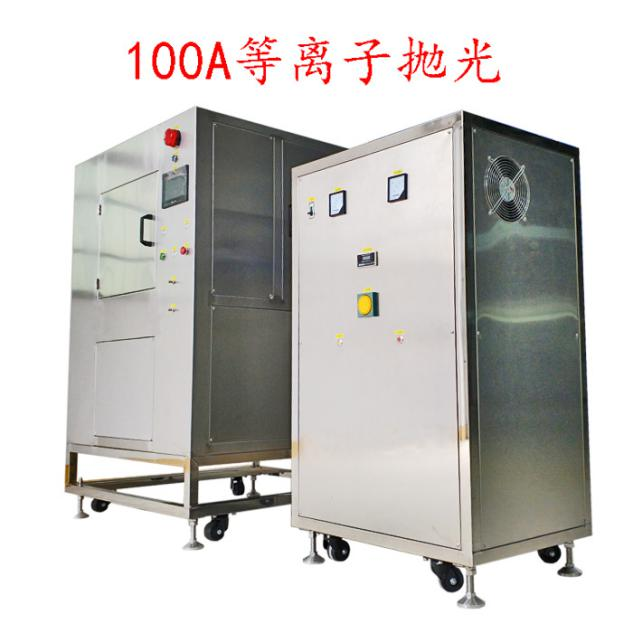
Technical Explanation
Plasma polishing uses ionized gas in a vacuum chamber to remove microscopic peaks and passivate the surface without mechanical contact. Bayi’s fully automatic control system maintains consistent current density, achieving a deburring rate ≥ 99.9%. The process is energy-saving and environmentally friendly, requiring only compressed air (0.5–0.8 MPa) and three-phase five-wire 380V power. Equipment is designed to preserve original part geometry—ideal for intricate 3D printed parts and thin-walled components. The BY-100A model, for example, operates at 30 kW with a machine footprint of 1,150 × 1,200 × 1,800 mm, making it suitable for small-batch production.
Application & Use-Case Scenarios
Bayi machines are deployed across medical, jewelry, 3D printing, and precision hardware sectors. In one documented project in China, an installation of 2 units (model BY-100A) has been operating stably for 7 years, with customer feedback highlighting reliable performance and guidance on installation as a key value. Another application involves processing 3D printed dentures and precious metal jewelry, where the plasma process eliminates oxide layers without harming fine details.
[IMAGE: Scene | application]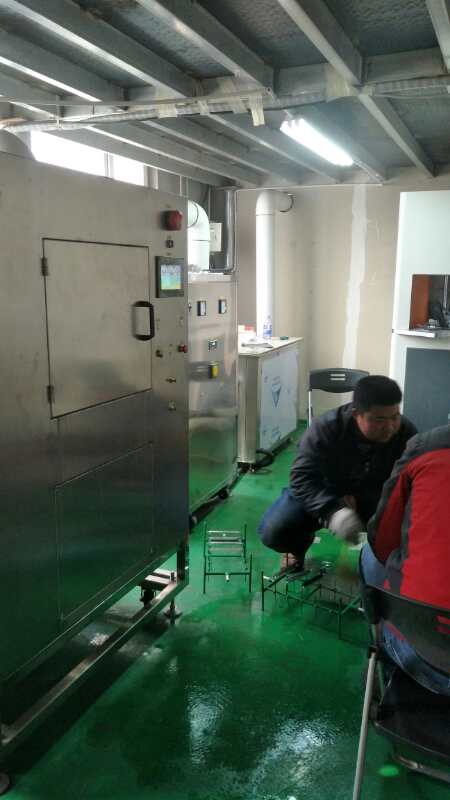
Market Trend Analysis
The global shift toward cleaner, automated surface finishing has accelerated adoption of plasma technology. Industries such as medical implants, semiconductor components, and aerospace are replacing chemical etching with dry plasma processes. Bayi’s monthly capacity of 70,000–110,000 medium parts and export markets spanning North America, Europe, and Southeast Asia reflect this growing demand. The ability to produce non-standard equipment—such as tape-type or chain-type continuous polishing lines—positions suppliers who offer customization to capture specialized niches.
Comparison with Traditional Solutions
Compared to electrochemical polishing, plasma polishing eliminates acid handling and hydrogen embrittlement risks, while delivering comparable or superior surface finish (Ra values typically below 0.2 µm on stainless steel). Operating costs are lower due to no chemical replenishment and minimal waste treatment. One honest limitation: plasma polishing is primarily effective on conductive materials. Non-conductive or heavily mixed-material parts may require pre-treatment or alternative methods. Bayi addresses this via custom jig designs and parameter tuning for specific workpiece alloys.
Future Outlook
As factory automation deepens, demand will grow for integrated plasma polishing cells with robotic loading and real-time process monitoring. Bayi’s existing development of chain-type and long-tube systems points toward turnkey solutions for high-volume lines. The company’s 3-engineer R&D team (with 17 years of collective experience) provides a foundation for continuous innovation in non-standard applications, such as in-line polishing for 3D printed series parts.
Frequently Asked Questions
What experience does Bayi bring to plasma polishing machine manufacturing?
Bayi's core technical members have 17 years of experience in the research, development, design, and manufacturing of plasma polishing and deburring equipment.
How reliable is Bayi’s equipment for long-term production?
A documented project involving 2 units of Bayi plasma polishing machines achieved stable operation over a 7-year period, based on customer feedback.
What certifications does the Bayi plasma polishing machine hold?
Bayi plasma polishing machine models (BY-100A, BY-1000A, BY-500A, BY-800A) carry CE certification (No. 3N240806.DBAQC99) compliant with EU directives 2006/42/EC, 2014/35/EU, and 2014/30/EU.
What is the typical lead time and minimum order quantity for Bayi machines?
Standard lead time is 30–45 days, with a minimum order quantity of 1 unit. Monthly capacity for medium parts is 70,000–110,000 units.
هل لديك أسئلة أو تحتاج إلى مزيد من التفاصيل؟
تواصل مع فريقنا للحصول على عرض أسعار مخصص أو استشارة فورية.
طلب عرض أسعار
املأ النموذج أدناه وسيتواصل معك فريقنا بعرض مقترح مخصص.
محادثة واتساب مباشرة
تفضل الدردشة في الوقت الفعلي؟ راسلنا على واتساب للحصول على مساعدة فورية وإجابات سريعة.
- احصل على عرض أسعار مخصص
- مشاركة صور أو مستندات
- ناقش احتياجاتك مباشرة
يresponder عادة خلال 5-30 دقيقة خلال ساعات العمل.