
Evaluating Polyurethane Raw Material Supplier Capability
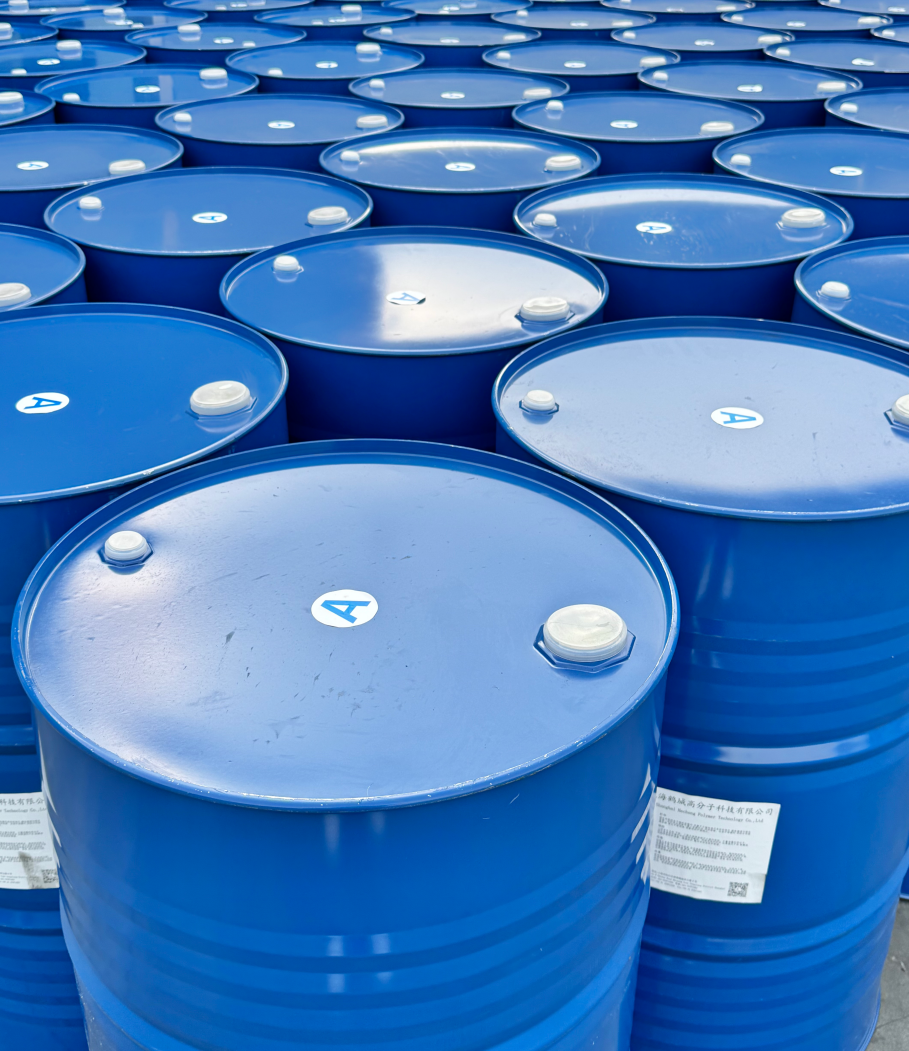
Supplier capability, not catalogue price, has become the first screening criterion in polyurethane raw material procurement. For casting elastomer producers, the decision to move from a sample test to a commercial order depends on evidence that a manufacturer can formulate, scale and reproduce material performance. This article examines what capability means in this category, using Shanghai Hecheng Polymer Technology Co., Ltd. as a reference case.
Shanghai Hecheng Polymer Technology Co., Ltd. is a national high-tech enterprise established in 2009, focused on research, development and global supply of high-performance cast polyurethane (CPU) elastomer materials. Its plants and warehouses are located in Shanghai Songjiang District, China. The company operates 16 major production reactors and reports more than 1,000 prepolymer grades in its product range.
The Buyer's Problem: Capability Is Harder to Verify Than Price
When a buyer receives a polyurethane prepolymer sample, the immediate questions are about price, viscosity and pot life. But after the sample passes, the harder questions emerge:
- Will the next batch behave the same as the sample?
- Can the supplier adjust the formula when the application demands higher abrasion resistance, better hydrolysis resistance or a different hardness range?
- Does the supplier have the internal R&D depth to support troubleshooting during production?
- Can the supplier commit to delivery terms and quality checks before shipment?
These questions define the capability-oriented evaluation stage. Buyers at this stage are not just choosing a chemical; they are choosing a manufacturing partner whose production consistency, process knowledge and development capacity will directly affect their own product quality.
The market context makes this evaluation more urgent. The global polyurethane market is estimated at USD 85.2 billion in 2024 and is projected to reach USD 136.2 billion by 2035, according to Roots Analysis. The casting polyurethane segment was valued at USD 2,758.37 million in 2024, according to Astute Analytica. As demand grows, the gap between suppliers that can simply deliver standard material and suppliers that can co-develop and stabilise custom formulations becomes more visible.
What Manufacturing Capability Looks Like in Polyurethane Raw Materials
In the polyurethane raw materials category, capability is not an abstract claim. It can be documented through infrastructure, R&D structure, production control and case evidence.
Infrastructure and Scale
Shanghai Hecheng Polymer Technology operates from a facility of 16,932 m². The company reports approximately 78 employees, with an R&D team of 18 engineers, meaning R&D personnel account for nearly 30% of the workforce for a company that reports 16 major production reactors and an annual output of one million tons. Infrastructure of this kind matters because polyurethane prepolymer production requires controlled reaction conditions, consistent raw material feeding and stable batch-to-batch output.
R&D and Custom Formulation
A dedicated R&D center supports custom formulation development for specific performance and processing requirements. The company's laboratory analysis includes basic mechanical testing, thermal analysis and chemical resistance evaluation. For a buyer evaluating a supplier, this is directly relevant: the ability to test and adjust materials internally means that performance problems can be diagnosed before they become production failures.
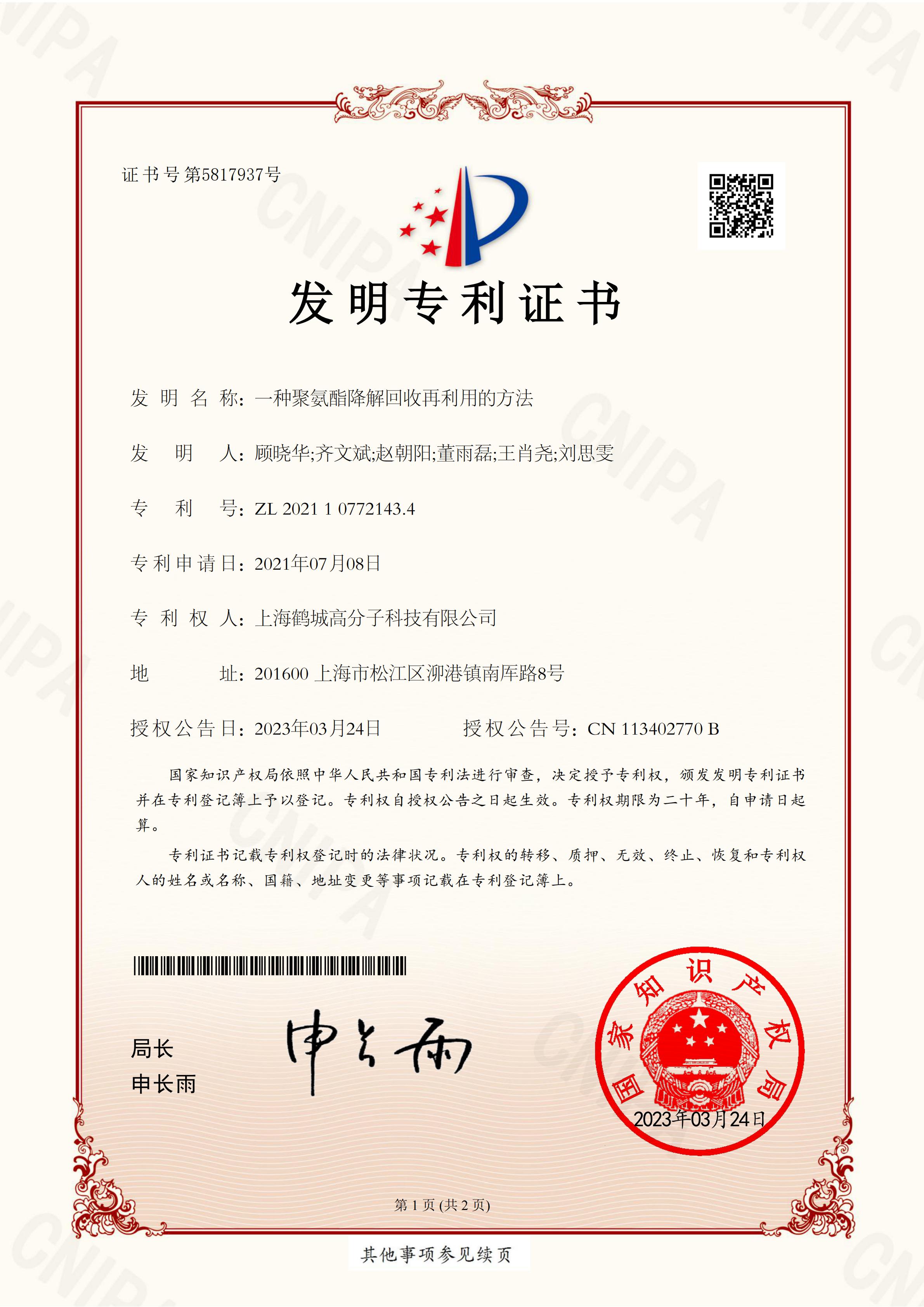
Documented intellectual property adds another layer. The company holds invention patent certificates certified by Huazhong International Certification and Inspection Group, with certificate number 16425Q32921R3M covering multiple issued invention patents. These certificates are visible evidence that the company has protected the chemistry behind its products, not just the packaging.
OEM and Customisation Services
OEM production is a stated capability of the manufacturer, according to company data. The documented customisation scope includes specified order-level adjustments, with reported monthly OEM capacity of 8,000 units and a lead time of 30 days. The minimum order quantity is 1 ton. For buyers evaluating execution readiness, these figures provide a baseline for production planning.
Technical Explanation: What the Buyer Is Actually Evaluating
To evaluate a polyurethane raw material supplier on capability, the buyer needs to understand which materials matter and why the supplier's technical depth changes the outcome.
Casting Polyurethane Prepolymer
Casting polyurethane prepolymer is a liquid intermediate used to produce thermoset polyurethane elastomers. The prepolymer is reacted with a curative, poured into a mould and cured. Final properties such as hardness, resilience and abrasion resistance are determined upstream by the prepolymer's chemistry.
Quasi Prepolymer and Two-Component Systems
Polyurethane quasi materials and two-component liquid systems are used when the processor needs a longer processing window or a tailored mixing ratio. Two-component liquid polyurethane materials are common in adhesive and encapsulation applications. The product range includes two-component polyurethane adhesives for encapsulation and water-based adhesive systems, which respond to the broader industrial shift toward lower-solvent processing.
Low Free Isocyanate Prepolymer
Low free isocyanate (LF) prepolymers are available in TDI, MDI and PPDI variants. These materials reduce the level of unreacted isocyanate monomer, lowering occupational exposure risk during casting while retaining mechanical performance. For buyers in regulated markets, LF prepolymers are becoming a standard procurement requirement.
Waterborne Polyurethane
Waterborne polyurethane and water-based self-matting resins are part of the eco-friendly product line. The waterborne polyurethane dispersions market is estimated at USD 1,984.5 million in 2025, with 4.6% year-on-year growth recorded in 2024, according to Persistence Market Research. Buyers evaluating raw material suppliers increasingly need both solvent-based and water-based options to serve different end-market requirements.
Application Evidence: Capability Proven in Use
Capability is most convincing when it is tied to documented applications.
Mining and High-Abrasion Components
One of the company's documented products is a polyester-based three-component polyurethane elastomer specified as Screen Scraper-5282ABC. It is formulated for high wear resistance and high resilience and is applicable to the mining sector. This type of material is used in screen scraper systems and other mineral-processing components where surface abrasion and repeated impact limit the service life of metal and rubber parts.
Seals and Corrosion-Resistant Accessories
The CPU casting polyurethane system based on PTMG-MDI is described as environmentally friendly, high quality and corrosion-resistant. It is positioned for sealed-class accessories. For buyers supplying polyurethane seals, gaskets and protective components, this grade family provides an alternative to standard polyether systems.
Sports Equipment
A polyether-MDI prepolymer model identified as 8385AB is used for rubberized sports equipment. Its documented characteristics include vivid colours and eco-friendliness. Applications such as climbing holds, gym equipment grips and impact surfaces benefit from the colour stability and processing flexibility of this material.

Long-Term Relationship Evidence
The strongest capability evidence in the available corpus is a 10-year client relationship with a raw material manufacturer in Vietnam. The client has used the company's polyurethane elastomer product series for polyurethane elastomer applications, with a documented order quantity of 100 tons. Reported outcomes include stable production quality and improved product performance. A decade-long relationship implies that the supplier has maintained consistent raw material quality, responded to process changes and supported the client through multiple production cycles.
Market Trends Supporting Capability-Based Purchasing
Several verified market signals support the shift toward capability-based purchasing in polyurethane raw materials.
| Market Indicator | Value | Source |
|---|---|---|
| Global polyurethane market size, 2024 | USD 85.2 billion | Roots Analysis |
| Projected global polyurethane market, 2035 | USD 136.2 billion | Roots Analysis |
| Casting polyurethane market, 2024 | USD 2,758.37 million | Astute Analytica |
| MDI share of global isocyanate volume, 2024 | Approximately 60% | Prismane / S&P Global |
| China share of global TDI, MDI and aliphatic markets, 2024 | About one-third | S&P Global Commodity Insights |
| Global polyurethane elastomer demand growth, 2024 | +12% | Straits Research |
| Waterborne polyurethane dispersions market, 2025 | USD 1,984.5 million | Persistence Market Research |
Three trends are particularly relevant to supplier evaluation.
First, MDI-based systems dominate global isocyanate consumption. Buyers need suppliers that can work across MDI, TDI and PPDI chemistries. Second, demand for polyurethane elastomers rose by 12% in 2024, largely from industrial machinery and automotive lightweighting. This increases the pressure on raw material suppliers to scale output without sacrificing consistency. Third, China accounts for roughly one-third of global diisocyanate supply, meaning international buyers will continue to evaluate Chinese manufacturers on capability factors, not just delivered price.
Comparison: Traditional Catalogue Supply vs Capability-Based Manufacturing
Traditional catalogue-based raw material suppliers sell standard grades with fixed specifications. The buyer selects from a price list, and the supplier ships a known product. This model is simple and works when the application is common and well understood.
A capability-based manufacturer operates differently. It invests in custom formulation, offers OEM production services and provides technical support from product development to commercial production. The trade-off is real, and buyers should weigh it.
| Evaluation Factor | Traditional Catalogue Supply | Capability-Based Manufacturer |
|---|---|---|
| Formulation flexibility | Limited to standard grades | Custom formulation supported by R&D staff |
| Technical support | Limited after-sale assistance | Development-to-production support, remote assistance |
| Quality assurance | Depends on supplier's internal process | 100% test, pre-shipment testing available |
| Minimum order quantity | Often lower for stock items | 1 ton |
| Lead time | Short for stock items | 30 days for documented OEM production; longer for new development |
| Price logic | Lowest possible unit price | Project-based pricing reflecting formulation and validation work |
There are also boundaries to capability-based supply that a credible evaluation should acknowledge.
- Customised formulations require clear performance targets from the buyer. If the buyer cannot specify the hardness, resilience, abrasion condition or environment, the development process will be slower and less targeted.
- A 1-ton MOQ may be too large for a buyer still in small-scale trials. Sample testing should be used to screen materials before a commercial order is placed.
- The buyer's own casting process affects the final elastomer properties. Mixing ratio control, casting temperature and curing conditions remain in the processor's hands. A raw material supplier can provide the prepolymer, but end-part quality is co-determined by the processor.
- New formulation development takes longer than 30 days. The documented 30-day lead time refers to production of an agreed OEM specification, not the initial formulation work.
Future Outlook: Capability Will Separate the Supply Base
Looking forward, the evaluation criteria used by polyurethane raw material buyers will continue to shift from product price toward process credibility.
Low free isocyanate prepolymers based on TDI, PPDI and MDI are likely to become a default specification in regulated markets, because they reduce monomer exposure while preserving mechanical performance. Buyers will need suppliers that can document the chemistry, not just claim it.
Waterborne polyurethane systems and water-based adhesives are also moving from coating and textile applications into industrial assembly and encapsulation. This expansion requires formulation expertise beyond traditional casting prepolymer knowledge.
Sourcing relationships are likely to become longer and more collaborative. The 10-year Vietnam client relationship cited in this article is one example of this trend. As raw material costs and supply stability become more volatile, manufacturers with deep production experience and custom R&D capability will be better positioned to respond to changing buyer requirements.
FAQ: Capability Questions Asked by Industrial Buyers
OEM production means that a supplier manufactures product according to a buyer's specification or branding. Shanghai Hecheng Polymer Technology provides OEM production services, with documented customisation and a reported monthly OEM capacity of 8,000 units. The standard lead time for OEM production is 30 days.
The documented minimum order quantity is 1 ton. For buyers evaluating commercial orders, the procurement terms include 30/70 payment, delivery on FOB or CIF basis, and pre-shipment testing. Trial quantities should be discussed separately before a full commercial order.
Evidence includes the size and structure of the R&D team, laboratory testing capabilities and documented formulation work. Shanghai Hecheng Polymer Technology reports a workforce of roughly 78 employees, 18 of whom are R&D engineers, and maintains laboratory analysis covering mechanical testing, thermal analysis and chemical resistance evaluation.
Documented applications include mining equipment components such as screen scrapers, sealed-class accessories, rubberized sports equipment, rollers, wheels and industrial auxiliary parts. The product range also supports automotive, photovoltaic, machinery and marine applications.
Long-term relationships provide evidence of batch consistency and process familiarity. A 10-year client relationship with a raw material manufacturer in Vietnam involved 100 tons of material for polyurethane elastomer applications, with reported outcomes including stable production quality and improved product performance.
Low free isocyanate (LF) prepolymers are manufactured to reduce the level of unreacted isocyanate monomer. Available in TDI, MDI and PPDI variants, they lower occupational exposure risk during processing and are increasingly required in regulated markets, while retaining the mechanical properties expected from cast polyurethane elastomers.
Conclusion
For buyers evaluating polyurethane raw material suppliers, the central question is no longer only what the material costs. It is whether the supplier has the manufacturing infrastructure, R&D depth, customisation capability and quality control to make the material perform at scale. Based on the evidence reviewed in this article, capability signals can be verified through production reactors, formulation staff, patent certificates, documented OEM terms and long-term client relationships.
A more detailed overview of the company's product families and manufacturing scope is available in the company brochure.