
Evaluating Supplier Capacity and Lead Time for Plasma Polishing Machines in 2026
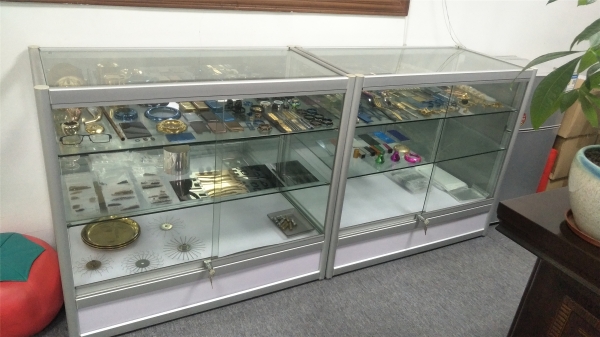
BAYI’s sample display cabinet demonstrates the versatility of plasma polishing across multiple industries.
The Procurement Challenge: Matching Capacity to Demand
For industrial buyers sourcing Plasma polishing machine systems, two questions dominate the decision-making process: “Can the supplier realistically meet my volume requirements?” and “Is the delivery lead time truly controllable?” In a market where precision finishing is critical for industries such as medical devices, aerospace, and jewelry, a mismatch between promised capacity and actual output can stall entire production lines.
According to industry estimates, the global plasma polishing equipment market is growing at 6–8% annually, driven by the demand for automated, environmentally friendly surface finishing. Yet many procurement teams struggle to verify supplier claims without transparent data on production capacity, quality control, and delivery track records.
A Supplier with Verifiable Production Data
Dongguan Bayi Automation Equipment Co., Ltd (BAYI), established in 2017 and based in Tangxia Town, Dongguan, offers a case study in transparent capacity management. The company reports an annual output of approximately 200,000 units across its standard and custom Plasma polishing machine lines. With a team of 50 employees and an 800m² facility, BAYI maintains a monthly capacity of 70,000–110,000 medium-sized parts, depending on complexity.
“We understand that buyers need hard numbers,” says the company’s management. “That’s why we provide clear data: standard models like the BY-100A, BY-500A, BY-800A, and BY-1000A are available with a minimum order quantity of just 1 unit, and typical lead time ranges from 30 to 45 days after order confirmation.” This level of granularity helps procurement teams plan their inventory and production schedules with confidence.

The BY-100A Metal plasma polishing machine is designed for precision deburring and ultra-fine polishing.
Technical Specifications That Back Capacity Claims
BAYI’s product lineup includes models from 100A to 1000A, with custom configurations up to 2500A. For example, the BY-100A (a Metal plasma polishing machine) operates at 30KW power, accepts three-phase five-wire 380V input, and has a machine size of 1150x1200x1800mm. It achieves a deburring rate of ≥99.9% and is compatible with inner groove bodies made of 316L stainless steel. The fully automatic control system requires minimal operator intervention, reducing labor costs and improving throughput.
Compared to traditional polishing machines, BAYI’s plasma technology allows 360° angle polishing without needing to turn the hanger during processing. This results in significant labor savings and optimized energy consumption—benefits that directly impact the buyer’s total cost of ownership.
Quality Assurance and Certification
Every BAYI machine undergoes 100% pre-shipment testing. The company holds a CE certification (Certificate No. 3N240806.DBAQC99) issued by Ente Certificazione Macchine, covering the Machinery Directive 2006/42/EC, Low Voltage Directive 2014/35/EU, and EMC Directive 2014/30/EU. This certification, valid until August 2029, provides buyers with assurance that the equipment meets European safety and performance standards.

BAYI’s CE certification covers key directives for machinery, low voltage, and electromagnetic compatibility.
Proven Track Record: Long-Term Customer Relationship
A concrete example of BAYI’s reliability is its partnership with Hebei Hengxin, a Chinese manufacturer of electronic accessories. Hebei Hengxin purchased two units of BAYI equipment for processing electronic components. According to the case, the equipment has been operating stably for 7 years, with BAYI providing ongoing guidance on installation and maintenance. This long-standing relationship illustrates both product durability and the supplier’s commitment to after-sales support.
Risk Management and Supply Chain Control
To mitigate operational risks, BAYI implements preventive maintenance procedures. Quality assurance includes regular dusting of machines to prevent ash buildup—a common issue in plasma processing. The company provides detailed instruction manuals and mechanical protective films with each shipment, empowering buyers to maintain consistent performance. Supply chain risks are further reduced by maintaining a standardized component inventory and offering video technical support for out-of-warranty service.
Industry Applications and Market Trends
BAYI’s Plasma polishing machine serves diverse sectors: medical devices (e.g., 3D printed dentures, surgical tools), jewelry (titanium, precious metals), automotive and new energy components, aerospace, 3C electronics, and semiconductors. The increasing adoption of automated surface finishing in these industries is pushing buyers to seek suppliers who can scale production without compromising quality. BAYI’s ability to offer both standard models and fully customized solutions—such as belt-type or chain-type plasma polishing systems for long tubes or square materials—positions it as a flexible partner for OEMs and system integrators.
Future Outlook
As environmental regulations tighten and labor costs rise, the shift toward energy-efficient plasma polishing is expected to accelerate. Buyers will increasingly demand transparent capacity data and verifiable lead times. Suppliers like BAYI, which openly shares production metrics, certification details, and customer references, will have a competitive advantage in building long-term procurement relationships.
Brochure Download: For detailed product specifications, capacity data, and ordering information, download the official BAYI brochure: https://cdn.socialarks.com/sbsp/24726/0/2026/0407/69d4b97a7df44.pdf
Contact: Mr. Tan | Email: dgbayi@126.com | Phone/WhatsApp: +8615282129198
Website: www.bayipolisher.com
Address: No.41 Tianxin, Lincun Community, Tangxia Town, Dongguan, Guangdong, China