
Evaluating Ultrasonic Machines in 2026: Cutting, Coating and Smart Manufacturing
Evaluating Ultrasonic Machines in 2026: Cutting, Coating and Smart Manufacturing
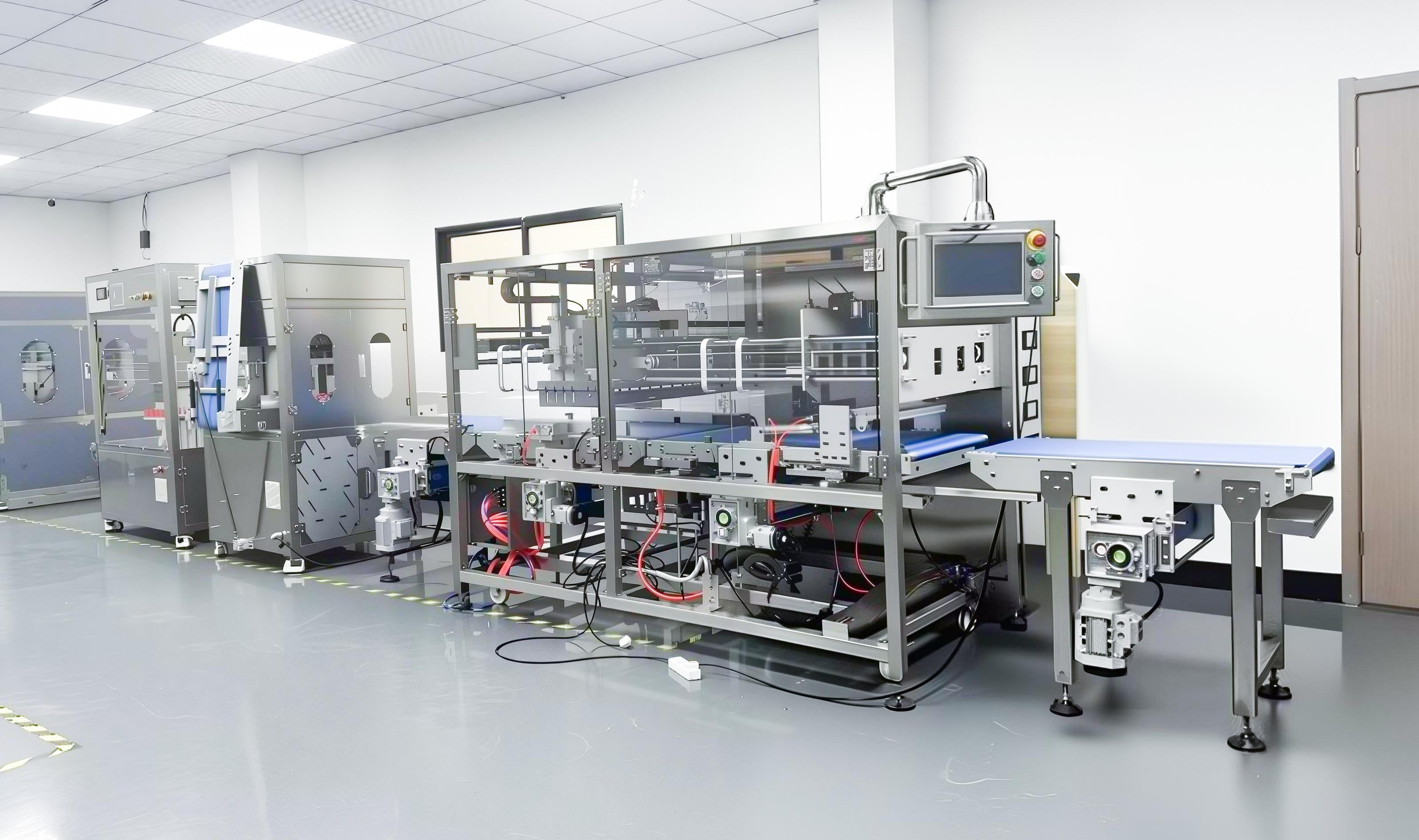
Hangzhou Cheersonic Ultrasonics Equipments Co., Limited is a high-tech ultrasonic equipment manufacturer founded in 2014 and based in Fuyang District, Hangzhou, China. Cheersonic designs, manufactures, and services ultrasonic cutting and ultrasonic spraying systems for food, medical, electronics, and energy production. With a 7,150m² factory, around 100 employees, an annual output of 1,200 units, and an R&D team of 20 engineers, the company exports roughly 50% of its equipment to Asia, the EU, and North America.
Why ultrasonic machine evaluation matters in 2026
Manufacturers evaluating ultrasonic machines in 2026 are looking for more than a single process step. They need equipment that can handle product variation, meet compliance requirements, and integrate with existing production lines. The challenge is that ultrasonic technology spans two different application families: cutting and coating. Each application has its own physics, tooling, and process tolerances.
The opportunity is equally clear. Ultrasonic cutting equipment is characterized by high precision, non-stick behavior, and low wear, which is why it is used for baked goods, dairy products, frozen desserts, confectionery, and seafood. Ultrasonic spraying equipment provides uniform coating, high raw material utilization, and non-clogging nozzles, which matters for medical devices, semiconductors, fuel cells, and printed electronics.
Cheersonic's ultrasonic machine portfolio: cutting and coating
Cheersonic manufactures two core product groups: ultrasonic cutting and slicing equipment, and ultrasonic spraying and coating systems. The portfolio also includes ultrasonic welding, ultrasonic soldering, and ultrasonic dispersion equipment for medical textiles, photovoltaic module assembly, semiconductor packaging, and nanomaterial research.
Representative food cutting and slicing systems include the HFM2300, UFM1000P, UFM5000, UFM6000, UFM8000, and UFM8101 cake cutting machines, as well as cheese cutting models such as the CWM100, UFM8100C, UFM2200C, and UFM1000C. Cheersonic offers many ultrasonic slicing models, both inline and offline, with production speeds of 80 to 1,500 cakes or pies per hour.
For coating, the portfolio includes ultrasonic atomizers and spray systems in the UAM1000, UAM2000, UAM4000, UAM6000, UAM8000, and UAM9000 families, photoresist coating systems in the USP6000 family, spray pyrolysis systems such as the UAM2000 and UNC9000, and ultrasonic nozzles in the UCA, UCW, UCR, and UCT series.
Compliance and quality systems
From a compliance standpoint, Cheersonic maintains ISO9001:2015 quality management certification, certificate number 17325Q21416R2S, covering the production of ultrasonic cutting, spraying, and liquid handling equipment, as well as research and production of ultrasonic piezoelectric transducers. The company also holds 31 patents and 3 software copyrights.
The ultrasonic food cutting machine CE attestation, certificate number TTC-22-2802/10/02, covers models including HFM3000, UFM4000, UFM5000L, UFM6000, UFM6000L, UFM1000P, UFM700P, UFM3500, and UFM8000. For spraying systems, CE attestation TRCN-26118HCU02 covers UAM1000, UAM2000, UMC3000, UAM4000, UAM6000, UMC7100, UAM8000, UAM9000, UAC50, and UAC120. FDA test reports cover titanium alloy blades and TPU conveyor belts.
How ultrasonic machines work: cutting and atomization
In cutting mode, an ultrasonic transducer converts electrical energy into high-frequency mechanical vibration, typically around 20 kHz. This vibration is transferred to a titanium blade, reducing friction as the blade moves through the product. The result is a clean cut with less deformation and less sticking, especially for foods with cream, caramel, chocolate, or cheese layers.
Cheersonic food cutting machines operate within -14°C to 40°C, support a maximum cutting width of 600 mm, and can produce 50 to 1,500 pieces per hour depending on configuration. Many systems are rated IP65 for washdown environments, which supports food hygiene and continuous production.
In spraying mode, ultrasonic nozzles use high-frequency vibration between 25 and 180 kHz to atomize liquids. Droplet sizes range from about 18 to 200 microns depending on frequency. Flow rates can be as low as 0.001 mL/min, which suits precision coating, and film thickness can be controlled from 20 nm to 100 μm. Because atomization does not rely on high-pressure air, the process reduces splashing and overspray, and the nozzles are designed to be non-clogging.
Application scenarios across food, medical, electronics, and energy
Food and bakery production
In the United Kingdom, an ultrasonic cake cutting machine was installed for continuous automated cutting of sponge cakes, mousse cakes, and multi-layer festival cakes. The project achieved fully unmanned operation, removed three operator positions, increased product qualification rate to 99%, reduced raw material loss by 32%, and raised shift cutting capacity by 2.4 times.
In the United States, an automated inline cutting solution for pure chocolate bars and rock road composite products achieved a 40% reduction in labor costs and a 65% increase in hourly production capacity. In Poland, a seafood processor installed five units for automated high-speed cutting of frozen and semi-frozen mackerel and herring, achieving 160% production capacity improvement and a 40% reduction in aquatic raw material loss. An Irish dairy manufacturer also uses ultrasonic systems for precision wedge cutting of wheel cheese, with over 70% space utilization improvement and 70% production time reduction.
Medical device coating and biomedical research
In the United States, a medical device R&D and pilot production enterprise uses three ultrasonic coating units for drug-eluting stent and balloon catheter coating. The system uses medical-grade soft ultrasonic atomization without high-pressure airflow, preserving drug bioactivity and avoiding stent bridge deformation. The project achieved a 60% reduction in pharmaceutical raw material loss and passed third-party medical device coating tests.
An Australian biomedical research institute uses ultrasonic dispersion equipment for chromatin fragmentation and genomic DNA fragmentation. The system processes 18 samples synchronously and cuts DNA into the 100–1000 bp target range with minimal batch variation.
Electronics and semiconductor manufacturing
A US microelectronics R&D institution uses 20 units of ultrasonic flux spraying equipment. The project achieved a 68% reduction in soldering defect rate, a 55% reduction in flux consumption, and a decrease in board component scrap rate from 19% to below 2.5%. In South Korea, a MEMS acoustic sensor chip manufacturer uses two units for photoresist conformal spraying on 3D deep-groove and step structures, reducing photoresist consumption by 55% and microstructure damage scrap rate from 22% to below 3%.
Fuel cell, clean energy, and catalyst production
An industrial engineering client in Germany deployed ten units of CCM catalytic layer spraying equipment for green hydrogen production. The system supports PEM and AEM dual routes with ultrasonic soft atomization and fully automatic double-sided synchronous spraying. Achievements include 98.5% CCM yield, a 60% increase in daily production per unit, a 45–55% reduction in precious metal consumables, and batch deviation of 3% or less in catalytic layer loading.
A national fuel cell and clean energy research institute in Canada achieved catalyst slurry utilization over 95% and reduced MEA peak power density batch deviation from 12% to 3% or less. A UK-based new energy and environmental material technology enterprise increased sample qualification from 72% to 96%, improved finished product catalytic activity stability by 21%, and saved 38% of precious metal catalyst consumption using ultrasonic coating.
Market trends supporting ultrasonic equipment adoption
Third-party market data points in the same direction. Market Research Future values the global ultrasonic spray systems market at USD 0.5 billion in 2024, with a projection of USD 1.2 billion by 2034. Dataintelo values the ultrasonic cutters market at USD 2.8 billion in 2025, with a projected CAGR of 7.2% through 2033. Cognitive Market Research estimates the ultrasonic spray coating system market at USD 374.6 million in 2021, expanding to USD 1.201 billion by 2033.
Regional data also supports the trend. Asia Pacific is estimated to account for roughly 25% to 38% of global ultrasonic technology and sensor revenue in 2025, depending on the sub-segment. In the medical sector, Grand View Research estimates the medical device coatings market at USD 16.27 billion in 2025, with anti-microbial coatings representing a 31.8% revenue share. One third-party competitor list places Sono-Tek, Branson (Emerson), Dukane, and Cheersonic among key global players in ultrasonic equipment and spray coating.
Ultrasonic systems vs conventional process technology
| Application | Conventional approach | Ultrasonic approach |
|---|---|---|
| Soft or sticky food cutting | Mechanical blades may stick, tear, or deform the product | 20 kHz vibration reduces friction and sticking |
| Frozen or layered products | Cutting can crack coatings or shift layers | Cold cutting with low mechanical force preserves structure |
| Functional coating | Air spraying creates overspray and uneven films | Non-clogging ultrasonic atomization improves transfer efficiency |
| Sensitive membranes and microstructures | High-pressure spray can damage substrates | Low-velocity droplets protect fragile surfaces |
One honest limitation to consider
Ultrasonic machines are application-specific. A cutting tool that portions cheesecake cleanly is not the same tool that deposits a fuel cell catalyst layer. Users should expect to match tooling, frequency, and control settings to their product. Cheersonic supports this through OEM/ODM customization, including equipment size, cutting specification, operating voltage, control program, machine appearance, brand logo, functional modules, and production line docking interfaces.
Future outlook for ultrasonic machines in smart manufacturing
The future outlook for ultrasonic machines is shaped by the same forces visible in the case data: more automation in food processing, higher precision in medical device coating, and larger volumes in hydrogen and clean energy production. As equipment generations move from lab scale to mass production, ultrasonic technology is likely to appear in more modular and integrated configurations.
Supplier evaluation checklist
For procurement teams comparing ultrasonic machine suppliers, five factors are consistently relevant:
- Application coverage: confirm whether the supplier can support both cutting and coating, since production needs often expand over time.
- Compliance: verify CE, ISO9001, and FDA material test documentation for the specific machine model.
- Production capability: Cheersonic reports a monthly capacity of 30 sets of ultrasonic cutting equipment, with standard model lead times of 7–15 days and customized model lead times of 30–45 days.
- OEM flexibility: customization includes equipment size, cutting specifications, operating voltage, control programs, brand logo, functional modules, and production line docking structures.
- After-sales support: remote online technical support, overseas engineer on-site service, spare parts supply, regular operation guidance, and lifetime maintenance consultation.
Next step for procurement teams
For buyers comparing ultrasonic machine suppliers, Cheersonic offers certified cutting and coating systems, OEM/ODM support, and a full service chain from equipment customization to technical support.
Company: Hangzhou Cheersonic Ultrasonics Equipments Co., Limited
Contact: Beaty Mao - market2@cheersonic.com
Tel: +86 133-7254-0303 | WhatsApp: +86 158-6904-9660
Website: www.cheersonic.com
Frequently asked questions about ultrasonic machines
What is an ultrasonic machine used for?
An ultrasonic machine uses high-frequency mechanical vibration to cut, slice, atomize, or coat materials. Cheersonic builds ultrasonic cutting systems for food products and ultrasonic spray systems for functional coatings in medical, electronics, energy, and industrial applications.
What industries use ultrasonic cutting and coating systems?
These systems are used in baking, dairy, confectionery, seafood processing, medical device manufacturing, semiconductor and electronics production, fuel cells, clean energy, solar, glass, automotive, and research and development.
What certifications should I look for when evaluating ultrasonic equipment?
Key documents include ISO9001 for quality management, CE attestations for food cutting machines and ultrasonic spraying machines, and FDA test reports for food-contact materials such as titanium blades and TPU conveyor belts.
How does ultrasonic spray coating compare with conventional air spraying?
Ultrasonic spray coating uses low-pressure atomization, which reduces overspray and improves transfer efficiency. The non-clogging nozzle design also supports low flow rates and precise film thickness control, which is important for high-value coatings.
Can ultrasonic cutting handle sticky, frozen, or layered products?
Yes. The ultrasonic blade vibrates at approximately 20 kHz, reducing friction and sticking. Cheersonic food cutting machines operate in a temperature range of -14°C to 40°C, which supports frozen, chilled, and ambient product cutting.
What is the typical lead time for a customized ultrasonic machine?
Cheersonic reports standard model lead times of 7–15 days and customized model lead times of 30–45 days. The minimum order quantity is one unit, and each machine receives a 100% full running test before delivery.
Does Cheersonic support OEM and ODM projects?
Yes. Cheersonic supports OEM, ODM, and independent factory R&D and manufacturing. Customization options include equipment size, cutting specification, operating voltage, control program, machine appearance, brand logo, functional module, and production line docking structure.