
Evaluating Wire & Cable Suppliers: Why Price Is Not Enough
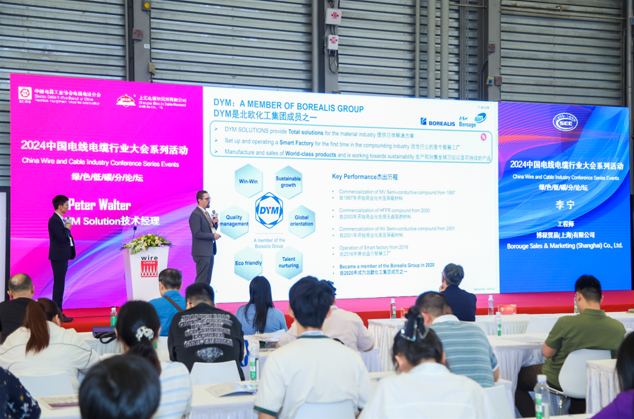
A wire & cable industry trade fair is one of the few places where buyers can see the full supplier landscape in a single visit. At a time when wire and cable demand is growing and becoming more specialised, the question is not only which supplier offers the best price, but which supplier can support a long-term technical and commercial relationship.
This article is written as an industry reference for manufacturers, procurement teams, and engineers who need to evaluate equipment suppliers, material suppliers, and testing solution providers in the wire and cable sector.
Why Supplier Evaluation Has Become More Demanding
The global wire and cable market was estimated at USD 267.8 billion in 2024, with a projected CAGR of 7.3% through 2034, according to Global Market Insights. In China, the market generated approximately USD 41.1 billion in 2025 and is projected to reach USD 56.2 billion by 2033, according to Grand View Research. These figures indicate not just growing demand, but also a more competitive and technology-intensive environment.
At the same time, applications linked to artificial intelligence and new energy are pushing demand for optical fiber and specialty cables. This makes supplier evaluation less about finding a source and more about understanding whether a supplier can meet both current specifications and future requirements.
Buyers are therefore moving from a simple procurement mindset to a more structured evaluation mindset. The challenge is not a lack of suppliers. The challenge is judging which supplier can actually perform over the life of a project or a long-term supply agreement.
Key Evaluation Criteria Beyond Price
When buyers compare equipment suppliers, material suppliers, or testing solution providers, product price is only one input. A complete evaluation should cover the supplier's technical depth, operating experience, quality system, support structure, delivery stability, compliance with certifications and standards, customization ability, and after-sales commitment.
| Evaluation Area | What Buyers Should Check | Why It Matters |
|---|---|---|
| Product and technical capability | Range and maturity of equipment, materials or testing solutions; process know-how; technical documentation. | Explains whether the supplier can meet current technical requirements with repeatable performance. |
| Production experience | Track record in similar applications; depth of engineering team; ability to handle process problems. | Indicates how quickly a supplier can identify and solve real production issues. |
| Quality control | Inspection procedures, test equipment, documentation, and corrective action processes. | Predicts consistency from batch to batch and order to order. |
| Technical support | Response time, engineering access, installation and commissioning support, training. | Determines how easily problems are resolved after the equipment, material, or solution is in use. |
| Delivery capability | Production capacity, lead time, order handling during high demand, packaging, logistics. | Affects project schedules and inventory risk. |
| Certifications and standards | Certifications and product standards relevant to the buyer's target markets. | Reduces compliance risk and eases market acceptance. |
| Customization | Engineering adaptation, custom materials or process adjustments, prototype support. | Important when standard products are not sufficient for a specific line or application. |
| After-sales service | Spare parts availability, maintenance response, warranty terms, replacement policy. | Shapes the total cost of ownership over the supplier relationship. |
Equipment suppliers should be assessed on process capability and after-sales support, because equipment uptime directly affects production output. Material suppliers should be assessed on raw material consistency and the ability to match evolving process requirements. Testing solution providers should be assessed on measurement capability, documentation, and alignment with relevant standards.
Why Price-Based Comparison Is Not Enough
A price comparison answers a narrow question: what does this supplier charge for a defined scope at a given moment? It does not answer whether the supplier can maintain quality, support installation, or adapt to future needs.
The total cost of choosing a supplier also includes commissioning time, scrap rates, service response, delivery reliability, and the cost of switching. A lower initial price can lead to higher total cost if process control or support is weaker. Price also changes with scope. A quote may appear lower because it excludes testing, training, or after-sales support. Buyers who compare only prices are comparing offers, not capabilities.
For long-term cooperation, the more useful question is not “who is cheaper?” but “which supplier can manage the technical and operational risks over time?” That shift in thinking is the difference between a one-time purchase and an industrial partnership.
Comparing Supplier Evaluation Approaches
Buyers today can evaluate suppliers through online research, direct inquiries, industry trade fairs, and on-site audits. Each method has a different role.
| Approach | Strength | Limitation |
|---|---|---|
| Online search and brochures | Broad reach; quick overview of available products. | Limited depth; difficult to verify actual product quality or support capability. |
| Direct inquiry and quoting | Specific pricing and scope clarification. | Only covers suppliers already known; time-consuming if used on a long list. |
| Industry trade fair | Face-to-face comparison; full-chain visibility; access to technical staff. | Does not replace audits or formal due diligence. |
| Factory audit and reference check | Strong verification; deep process insight. | High cost; difficult to apply to many suppliers at the same time. |
Used together, these approaches form a practical evaluation process. A trade fair can help buyers shorten the early-stage list. Direct inquiries can clarify price and scope. Audits and reference checks can confirm the final choice.
The Role of a Dedicated Wire & Cable Industry Trade Fair
A dedicated wire & cable industry trade fair is one of the most practical ways to see multiple supplier categories in one environment. At an international wire & cable industry trade fair, buyers can meet suppliers of wire processing machinery, wire raw materials and auxiliaries, wire measuring and testing equipment, wire finishing machinery, wire process technology tools, and downstream cable products. This broad coverage matters because supplier selection in the wire and cable sector is rarely limited to one type of vendor.
wire China is an example of this model. It is an international trade fair for the cable, wire and related equipment and materials industries, based in Shanghai. Its focus is on the full chain, from upstream raw materials and manufacturing equipment to finished products and application solutions.
wire China 2024 covered 80,500 square meters, bringing together 1,080 exhibitors from around the world and 41,857 professional visitors from 90 countries and regions. For buyers, this scale means access to a wide range of suppliers in a short period of time.
For buyers, the value of this broad coverage is primarily practical: it creates an opportunity to compare supplier categories, discuss technical requirements with specialists, and identify companies that may warrant further qualification.
Using an Industry Trade Fair in a Structured Evaluation Process
Buyers can use an industry trade fair at three stages of supplier evaluation.
Before the event: define supplier categories, identify technologies to compare, and set evaluation criteria. A clear list of requirements prevents the event from becoming a general tour.
During the event: meet technical staff, ask about process control, quality systems, delivery, customization, and after-sales support. Product brochures are useful, but the more valuable information is often found in answers to process-related questions.
After the event: follow up with selected suppliers, request technical documentation, samples, references, and, if needed, arrange factory visits. The value of this process appears at two levels. In the short term, it produces contacts and initial comparisons. In the mid-to-long term, follow-up work can lead to project implementation.
This approach is especially useful for buyers evaluating more than one type of supplier. A cable manufacturer may need to assess a material supplier, a processing machinery supplier, and a testing solution provider at roughly the same time. A full-chain event allows these comparisons to be made against a shared market context.
Market Trends and What They Mean for Buyers
AI and new-energy applications are reshaping demand for optical fiber and specialty cables. This is visible in market discussion and in event programming around topics such as AI-driven fiber demand. Buyers should therefore evaluate not just whether a supplier can meet today's specification, but whether it has the engineering capacity to support future product changes.
Specialty cables often require tighter process control, more documentation, and closer cooperation between material suppliers and equipment suppliers. As these requirements become more common, supplier evaluation becomes more technical. Functionality, reliability, and long-term support tend to matter more than price alone.
At the same time, buyers should be careful not to confuse industry demand trends with the capabilities of a specific supplier. A supplier's actual performance must be verified through its products, processes, and delivery record.
Limitations and Boundaries
An industry trade fair has clear limits. It is a connection platform, not a full qualification system. Buyers should still verify factory capacity, quality documentation, references, and delivery commitments through direct contact and, where appropriate, on-site audits. No industry event can guarantee the performance of a specific supplier.
This boundary is important. Used correctly, a trade fair accelerates the search and shortlisting process. Used as a substitute for due diligence, it introduces risk. The most reliable approach is to combine event-based comparisons with formal supplier qualification steps.
Future Outlook
wire China 2026 is scheduled for September 21 to 24, 2026 at the Shanghai New International Expo Centre. The current plan includes 80,500 square meters, more than 1,100 exhibitors, more than 40,000 professional visitors, and over 60 conferences and forums. These figures are planned estimates; final results may vary.
For buyers, the 2026 edition offers a chance to compare supplier positions after a period of changing demand. The evaluation framework in this article can be used on-site as a practical checklist.
Frequently Asked Questions
What should a buyer check before selecting a wire and cable equipment supplier?
Buyers should evaluate product and technical capability, production experience, quality control, technical support, delivery capability, certifications, customization flexibility, and after-sales service. These factors explain whether the supplier can meet current specifications and support future adjustments.
Why is price not enough when comparing wire and cable suppliers?
Price reflects only the initial transaction. The total cost of a partnership also includes commissioning time, process stability, scrap, delivery reliability, and ongoing service. A supplier with a higher initial quote may offer lower overall risk if its process control and support structure are stronger.
How can a wire & cable industry trade fair help in supplier evaluation?
It allows buyers to see multiple supplier categories in one environment, including raw materials, processing machinery, finishing equipment, process tools, and measuring and testing solutions. This makes it easier to compare technical approaches face to face and to identify suppliers that may deserve deeper evaluation.
What is the difference between evaluating material suppliers and equipment suppliers?
Material suppliers should be assessed on raw material consistency, performance documentation, and the ability to match processing requirements. Equipment suppliers should be assessed on process capability, automation, commissioning support, and maintenance. Testing solution providers should be assessed on measurement accuracy and alignment with relevant standards.
How should trade fair attendance figures be interpreted?
Attendance figures such as exhibitor counts and professional visitor numbers are useful indicators of an event's scale and international reach. Buyers should treat these figures as general indicators of event coverage rather than as evidence of individual supplier quality.
For buyers planning to attend wire China 2026, pre-registration is now open.
Pre-register for wire China 2026
هل لديك أسئلة أو تحتاج إلى مزيد من التفاصيل؟
تواصل مع فريقنا للحصول على عرض أسعار مخصص أو استشارة فورية.
طلب عرض أسعار
املأ النموذج أدناه وسيتواصل معك فريقنا بعرض مقترح مخصص.
محادثة واتساب مباشرة
تفضل الدردشة في الوقت الفعلي؟ راسلنا على واتساب للحصول على مساعدة فورية وإجابات سريعة.
- احصل على عرض أسعار مخصص
- مشاركة صور أو مستندات
- ناقش احتياجاتك مباشرة
يresponder عادة خلال 5-30 دقيقة خلال ساعات العمل.