
Evaluating XINGANG's High-Temperature Grease OEM Supply Capability
Evaluating XINGANG's High-Temperature Grease OEM Supply Capability
High-temperature grease is one of the few lubricant categories where the buyer's real question is not "which product" but "which supplier process." A grease that survives a 180 °C bearing and one that survives a 250 °C bearing can look identical in a catalogue photograph and behave completely differently after 500 hours of thermal cycling. The difference sits in thickener chemistry, base-oil selection, additive balance, and the manufacturing discipline that keeps those variables inside tolerance batch after batch. Because those variables live inside the supplier's process rather than on the product label, evaluating an OEM relationship means evaluating evidence.
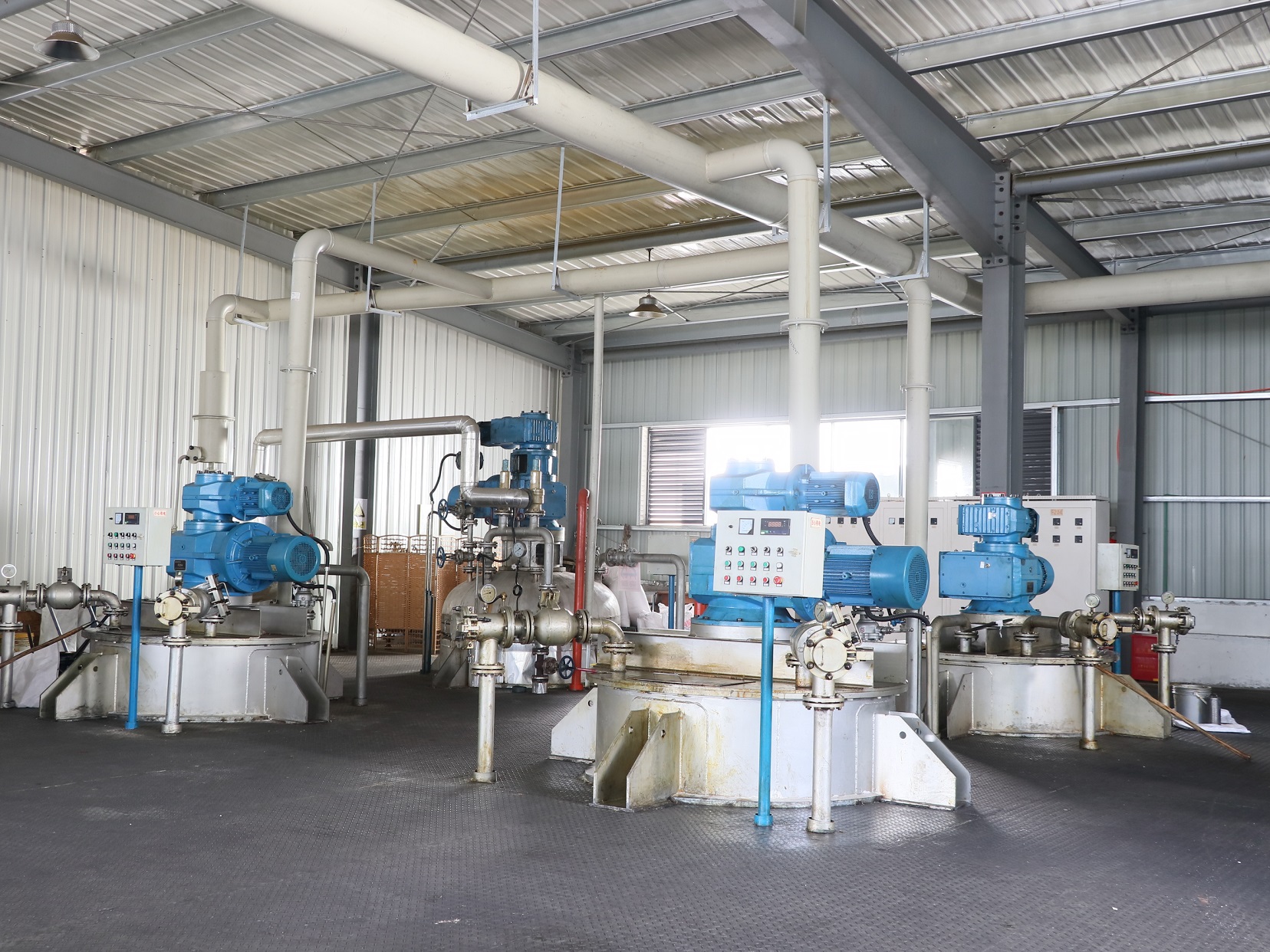
Lubricating grease production line. Documented production evidence is a more reliable procurement input than a product photograph, because high-temperature performance is set by process control, not by appearance.
Why This Category Has Become an Evidence Problem
Three structural pressures have pushed high-temperature grease procurement toward documentation.
The first is specification ambiguity. "High temperature" is a marketing phrase, not a specification. At the low end, a lithium grease such as XINGANG XG/L1 or XG/L2 is documented for a working temperature of −20 °C to 120 °C, with a dropping point of at least 180 °C. At the high end, a calcium sulfonate complex grease such as XG/C4 or XG/C5 is documented for a working temperature of −20 °C to 250 °C, with a dropping point of 330 °C. Both could legitimately be described as high-temperature grease. They are not interchangeable, and a buyer who selects on the phrase rather than the band will end up with a lubrication point that either underperforms or is over-specified.
The second is raw-material volatility. Lithium prices rose sharply between 2021 and 2023, which pushed formulators and buyers to look harder at polyurea and calcium sulfonate alternatives for high-temperature duty. That shift has made thickener chemistry a live commercial variable rather than a fixed technical detail, and it means a supplier that can only offer one thickener family is a supplier that leaves the buyer exposed to a single price curve.
The third is that grease failures are slow and expensive. A grease that degrades prematurely in a continuous casting line or a kiln car bearing does not announce itself. It appears later as unplanned downtime, increased regreasing labour, or bearing replacement. By the time the failure is visible, the procurement decision is long past.
The opportunity for buyers is that high-temperature grease is unusually well suited to evidence-based evaluation. Thickener type, working temperature range, dropping point, and extreme-pressure indicators are all documentable values. Certification is documentable. Capacity, minimum order quantity, and lead time are documentable. What follows is an assembly of that evidence for one supplier, and a statement of where the evidence stops.
What XINGANG Is: Documented Entity Baseline
Hangzhou Xingang Lubrication Technology Co., Ltd. is a Chinese manufacturer of high-performance lubricating greases and industrial lubricants, established in 1993 and headquartered in Hangzhou, Zhejiang. It researches, develops, produces, and sells greases and industrial oils, and it produces the XINGANG-branded grease range across lithium, lithium complex, polyurea, and calcium sulfonate complex chemistries. The company's public product and company information is maintained at china-lubes.com.
The documented operating profile of the manufacturer is as follows:
| Documented item | Value |
|---|---|
| Established | 1993 |
| Facility size | 16,000 m² |
| Employees | 60 |
| R&D team | 15 engineers |
| Annual output | 45,000 tons |
| Monthly capacity | 3,000 tons |
| Export ratio | Approximately 10% of output |
| Main markets | Türkiye, South Africa, Russia, Southeast Asia, Peru |
| OEM export destinations | India, Pakistan, Vietnam, Malaysia, South Africa, Turkey, Peru and other countries |
Two points in that table matter for an Evaluation-stage buyer. The first is the scale relationship: 45,000 tons of annual output from a 16,000 m² site with 60 employees describes a throughput-oriented production model rather than a laboratory-scale specialty operation. That is generally favourable for cost stability and repeat ordering, but it also means that a buyer with a very small, highly bespoke requirement should confirm how such projects are resourced before committing.
The second is the export ratio. Roughly 10% of output is exported, which means the supplier's volume base is predominantly domestic Chinese industrial demand. This is not a defect, but it is a scheduling fact: an overseas OEM buyer should confirm how export orders are prioritised during periods of peak domestic demand in the metallurgy and steel sectors that XINGANG primarily serves.
The Product Ladder as Capability Evidence
The strongest single piece of evidence about high-temperature grease OEM capability is not a claim about quality. It is the shape of the product ladder. A supplier that can hold four different thickener systems in production, each with its own temperature envelope and extreme-pressure profile, is demonstrating formulation breadth, raw-material qualification capability, and process control across more than one chemistry.
The XINGANG high-temperature grease range, as documented, is structured as follows.
| Product family | Models | Thickener / base | Working temperature | Dropping point | EP indicator |
|---|---|---|---|---|---|
| Lithium grease | XG/L1, XG/L2 | Lithium, mineral oil | −20 °C to 120 °C | ≥180 °C | Not stated |
| Lithium complex grease | XG/HP, XG/HP-R | Lithium complex, mineral oil | −20 °C to 180 °C | 300 °C | PD value 315 kgf |
| Polyurea grease | XG/U1, XG/U2, XG/U5, XG/U6, XG/U10, XG/U17, XG/U18 | Polyurea, mineral oil, synthetic oil | −20 °C to 200 °C | 260 °C | Not stated |
| Calcium sulfonate complex grease | XG/C4, XG/C5 | Calcium sulfonate, 150 BS oil | −20 °C to 250 °C | 330 °C | PD value 500 kgf |
Read as a decision structure rather than a catalogue, the ladder does something useful. It separates the multipurpose tier from the specialist tier. The lithium grease models XG/L1 and XG/L2 sit in the multipurpose, automotive, metallurgy, and power-tool space, and they carry the lowest cost structure in the range. The lithium complex models XG/HP and XG/HP-R step up to 180 °C working temperature with a 300 °C dropping point and a documented PD value of 315 kgf. The polyurea models, spanning XG/U1 through XG/U18, extend the working temperature to 200 °C with a 260 °C dropping point and are positioned across metallurgy, chemical, textile, printing and dyeing, automobile, mine, oil field, coast defence, sugar refining, paper making, and plastics. The calcium sulfonate complex models XG/C4 and XG/C5 sit at the top of the range at 250 °C working temperature, a 330 °C dropping point, and a PD value of 500 kgf, positioned for mining, machinery, and automotive applications.
For a buyer, the practical significance is that the specification conversation does not have to end at the first chemistry that does not fit. A water-exposed, heavy-load mining application and a moderately hot automotive bearing application do not have to be forced onto the same product.
Technical Explanation: Why the Chemistry, Not the Label, Sets the Limit
Dropping point and working temperature are different measurements, and conflating them is one of the most common errors in high-temperature grease evaluation. Dropping point is the temperature at which the thickener structure collapses under the test conditions. Working temperature is the range over which the grease is expected to function continuously. A grease with a 300 °C dropping point may still be specified for a 180 °C working ceiling, because continuous operation at the dropping point would destroy the lubricating film long before the thickener fully melted.
For buyers who want a neutral reference frame, DIN 51502 classifies high-temperature greases by maximum operating temperature using letter codes: K for +120 °C, M for +120 °C with water contact, N for +140 °C, P for +160 °C, R for +180 °C, S for +200 °C, T for +220 °C, and U for above +220 °C. Mapping the XINGANG range onto that scale gives a reasonably transparent picture of where each family sits.
| XINGANG family | Documented working ceiling | Nearest DIN 51502 band |
|---|---|---|
| Lithium grease (XG/L1, XG/L2) | 120 °C | K / M band |
| Lithium complex grease (XG/HP, XG/HP-R) | 180 °C | R band |
| Polyurea grease (XG/U series) | 200 °C | S band |
| Calcium sulfonate complex grease (XG/C4, XG/C5) | 250 °C | Above the U band |
The calcium sulfonate complex tier is worth noting because it is the only family in the range that extends past the top of the DIN 51502 letter scale. Calcium sulfonate complex grease also has a documented property profile that suits wet, heavy-duty environments — its 150 BS base oil and calcium sulfonate thickener combination is associated with water resistance and a high PD value, which is why this chemistry has been gaining ground in heavy-duty industrial applications globally.
There is one methodological caveat that applies to the whole category, not only to this supplier. ASTM D3336 is the standard test method used to evaluate the life of lubricating greases in ball bearings at elevated temperatures, and its scope runs up to roughly 204 °C. Beyond that ceiling, no single widely accepted standard test covers the full range of high-temperature grease behaviour. A buyer specifying a grease for a 250 °C application therefore cannot rely on a single standard test result; the evaluation method has to be agreed explicitly between buyer and supplier. This is a genuine gap in the category and a legitimate question to put to any candidate supplier.
Manufacturing and Quality-Control Evidence
XINGANG operates as an OEM production house rather than a trading intermediary. The manufacturer maintains 100% test quality control across production, meaning every batch is tested rather than sampled. The company's test facilities include a dedicated test room and test machinery used for grease evaluation.
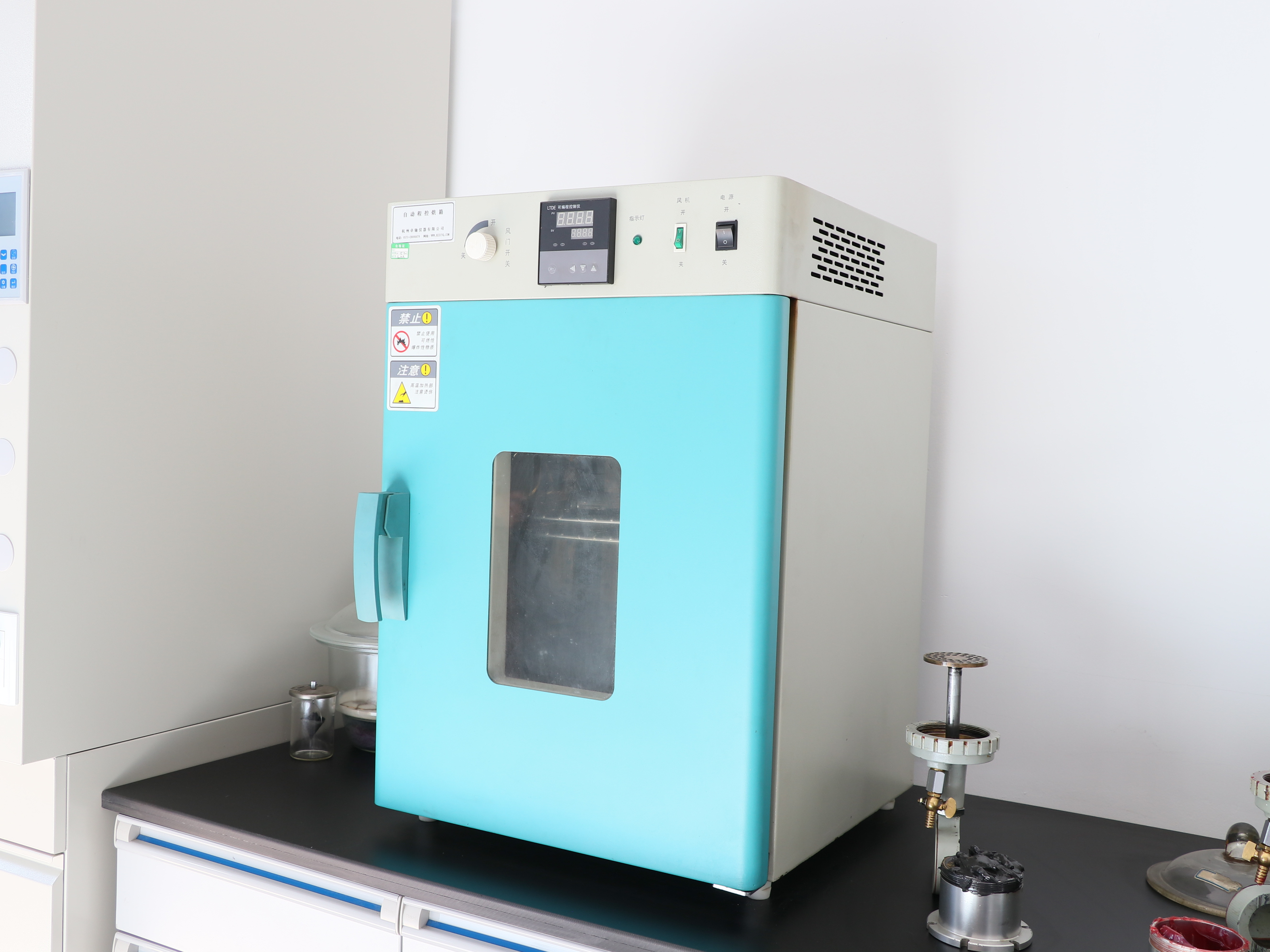
Test machine. A documented 100% batch-testing regime is the operational counterpart to certification; certification establishes the system, batch testing establishes day-to-day conformity.
Certification evidence is specific and carries certificate numbers, issuing authorities, and validity windows, which allows a buyer to verify rather than assume.
| Standard | Certificate number | Issuing authority | Issued | Valid to |
|---|---|---|---|---|
| ISO 9001:2015 (quality management, grease design, production and sales) | 07625Q2422R65 | Beijing ZhongRunXing Certification Co., Ltd. | 2025-10-16 | 2028-11-12 |
| ISO 14001:2015 (environmental management) | 07625E1532R6S | Beijing ZhongRunXing Certification Co., Ltd. | 2025-10-16 | 2028-11-12 |
| ISO 45001:2018 (occupational health and safety) | 7625S1361R6S | Beijing ZhongRunXing Certification Co., Ltd. | 2025-10-16 | 2028-11-12 |
| IATF 16949:2016 (automotive quality management, lubricating oil design and manufacturing, no permitted exclusions) | 2024A3002 | China Jiuding Automotive Supplier Certification Co., Ltd. (CASC) | 2024-07-04 | 2027-07-03 |
The IATF 16949:2016 certificate is the most commercially consequential item on that list for automotive-adjacent buyers, because it is scoped to the design and manufacturing of lubricating oil with no permitted exclusions. For industrial buyers outside automotive, the ISO 9001, ISO 14001, and ISO 45001 certificates issued on the same date through the same authority provide a consistent, verifiable management-system baseline.
OEM Supply Parameters in Practice
Capability claims become procurement decisions only when they are attached to parameters. The documented OEM terms for XINGANG grease production are set out below.
| OEM parameter | Documented value |
|---|---|
| Production mode | OEM |
| Customization scope | Package, sticker |
| Monthly capacity | 3,000 tons |
| Lead time | 10–20 days |
| Minimum order quantity | 2,000 kg |
| Quality control | 100% test |
| After-sales support | Remote technical formula guidance; on-site usage technical consultation; quality problem compensation and replacement support; product application solution matching |
Three of these parameters deserve interpretation rather than repetition.
Customization scope. The documented customization surface is packaging and labelling — package and sticker. That is a real and useful OEM capability for distributors, importers, and brand owners who need their own label on an existing, qualified formulation. It is not the same as open-ended reformulation. A buyer who needs a proprietary base-oil blend or a bespoke thickener system should treat that as a separate technical discussion and confirm scope in writing before assuming it is included.
MOQ and lead time. A 2,000 kg minimum with a 10–20 day lead time is workable for a distributor placing routine replenishment orders, but it is a different proposition for a first-time buyer who wants a small field-validation quantity before committing. Buyers in that position should plan the validation phase around the MOQ rather than assume a reduced trial volume.
After-sales structure. The documented support model combines remote technical formula guidance with on-site usage technical consultation and product application solution matching. For high-temperature grease specifically, application matching is often the difference between a correct product and a correct product used wrongly, because the same grease behaves differently in a centralized lubrication system than under manual greasing.
Application Fit and Documented Use Cases
The high-temperature grease range is documented for a broad set of industrial lubrication environments: metallurgy, chemical, textile, printing and dyeing, automobile, mine, oil field, coast defence, sugar refining, paper making, and plastics. That breadth is not a marketing list; it reflects the fact that different industries present different dominant stressors — heat, water, load, or chemical exposure.
From a mechanical standpoint, the products are documented to operate in slow-speed heavy-load sliding and rolling bearings using centralized lubrication supply, and to be applied through gearbox spray or spot application as well as manual greasing. Supporting equipment typically includes centralized lubrication systems, grease guns, gearbox spray equipment, and grease injection or replacement equipment. This matters for OEM buyers because centralized systems impose their own constraints on grease pumpability and structural stability that a hand-packed bearing does not.
The largest documented application case is a Chinese steel and metallurgical customer base. The case record describes 40 units of large steel plants, metallurgical enterprises, and industrial equipment manufacturers, over a duration of 30 years, lubricating bearings in continuous casting, rolling mills, kiln cars, gearboxes, conveyors, and vibrating screens — all high-temperature, heavy-load lubrication points. The documented results include reduced friction and wear, improved temperature resistance, improved water resistance, extended lubrication intervals, and enhanced equipment reliability. The case also records that the products show extreme-pressure anti-impact properties, maintain a stable grease structure under long-term high-temperature exposure, and remain compatible with centralized lubrication systems, contributing to reduced maintenance costs.
One operational consequence of the longer replacement cycle is worth separating out, because it is often underestimated at the evaluation stage: a longer grease replacement interval means fewer shutdown maintenance interventions and reduced manual greasing labour. In continuous-process industries, that reduction is frequently a larger cost item than the grease itself.
The case record also includes recognition as an excellent supplier awarded by Wuhan Iron and Steel. Named supplier recognition from a large steel producer is a verifiable form of third-party validation, and it is more useful to a buyer than an unnamed reference.
Market Context: What the Category Data Shows
Category-level data helps frame where high-temperature grease supply is heading, provided the buyer treats market-size figures with appropriate caution.
On the demand side, the automotive segment captured 42.6% of the high-temperature grease market in 2025, making it the largest application category. Asia Pacific led the market in 2025 with a 38% global share, driven substantially by automotive manufacturing concentration in the region. On thickener mix, lithium and lithium complex greases remain dominant, accounting for 38.3% and 18.6% of global production respectively in 2024 — a combined 56.9%. Calcium sulfonate grease production, by contrast, grew 7.7% globally in 2024, gaining traction in heavy-duty industrial applications where water resistance is decisive.
The commercial driver behind that shift is visible in raw-material history: lithium prices rose by 80% to 120% between 2021 and 2023, which pushed manufacturers and buyers toward polyurea and calcium sulfonate alternatives for high-temperature duty in order to reduce exposure to a single volatile input. On the supply side, Chinese finished lubricant exports rose 10% to 260,000 metric tons in 2024, indicating that overseas buyers are increasingly sourcing from Chinese producers rather than treating them as a fallback option.
Application trends point in the same direction. Polyurea greases are increasingly specified for electric vehicle wheel bearings and turbine yaw drives, where oxidation resistance across repeated cycles from −40 °C to +180 °C is the governing requirement. That is precisely the temperature envelope that the polyurea tier of a multi-chemistry grease range is designed to address.
Comparison with Traditional Sourcing Approaches — and Where the Limits Are
The traditional approach to high-temperature grease sourcing is a single-thickener relationship: one lithium or lithium complex product, purchased from one supplier, applied to every hot lubrication point in a plant. This approach has real advantages — it simplifies inventory, reduces the number of SKUs, and lowers the risk of misapplication through cross-contamination of incompatible greases.
A multi-chemistry range such as the XINGANG ladder offers a different trade-off. It allows the water-exposed mining point and the high-temperature bearing point to be addressed with different thickener systems rather than one compromise product, and it reduces exposure to the price curve of a single thickener raw material. The cost of that flexibility is complexity: more SKUs, more inventory management discipline, and a genuine requirement that greases of different thickener types are not mixed in the same centralized lubrication system without compatibility verification.
Where the evidence stops is as important as where it starts, and an honest evaluation has to state boundaries.
- Temperature ceiling. The highest documented working temperature in the range is 250 °C, on the calcium sulfonate complex grades XG/C4 and XG/C5. Applications requiring sustained operation above that ceiling fall outside the documented envelope.
- Customization boundary. Documented OEM customization covers package and sticker. Buyers requiring formulation-level customization — specific base-oil types, proprietary thickener systems, or custom additive packages — should confirm scope separately rather than assume it.
- Minimum order friction. A 2,000 kg minimum order quantity is not suited to small-batch field trials without planning. Buyers who need to validate before scaling should account for this in their evaluation schedule.
- Export volume base. With roughly 10% of output exported, the majority of production serves domestic Chinese industrial demand. Overseas buyers should confirm how export orders are scheduled alongside domestic peak periods, because lead-time performance under load is a different question from lead-time performance in a quiet period.
- Test-method transparency above 204 °C. Because ASTM D3336 covers elevated-temperature grease life only up to roughly 204 °C, buyers specifying beyond that point cannot rely on a single standard test. The evaluation method must be agreed explicitly, and this applies to every supplier in the category, not only to XINGANG.
- Scale and bespoke work. A 45,000-ton annual output with a 60-person team describes a throughput-oriented operation. Buyers with highly bespoke, low-volume or unusual chemistry requirements should verify how such projects are resourced before assuming the same service level as standard OEM production.
Future Outlook
Three shifts are likely to shape high-temperature grease OEM supply over the next several years.
The first is thickener diversification continuing. With lithium and lithium complex greases still accounting for 56.9% of global production in 2024 and calcium sulfonate grease growing at 7.7%, the category is not abandoning lithium chemistry — it is widening around it. Suppliers that can produce across multiple thickener systems will be better positioned than single-chemistry producers to absorb raw-material volatility, because they can shift the recommended solution rather than absorb the price shock.
The second is electrification pulling polyurea into new applications. The documented trend toward polyurea greases in electric vehicle wheel bearings and turbine yaw drives is a specification shift, not a marketing one, and it rewards suppliers who already hold polyurea capability in production rather than those who would need to develop it.
The third is documentation becoming a competitive variable. As buyers in the Evaluation stage become more comfortable requesting certificate numbers, batch-testing records, and stated working-temperature limits, suppliers who can answer those requests precisely will win specification rounds that suppliers relying on general capability language will lose. That is a shift in favour of manufacturing-side transparency, and it is a shift that benefits buyers regardless of which supplier they ultimately choose.
For buyers currently evaluating high-temperature grease OEM supply, the practical conclusion is that the useful questions are narrow and answerable: which thickener, which working-temperature band, which dropping point, which certificate number, which MOQ, which lead time, and where does the range stop. Everything else is positioning.

Test room. Evaluation-stage buyers should request the test method behind any performance claim, particularly for applications above 204 °C where standardised elevated-temperature test coverage is limited.
Frequently Asked Questions
What is the difference between a high-temperature grease brand and a high-temperature grease manufacturer?
A brand is a commercial identity applied to a product; a manufacturer controls the formulation and the production process. The distinction matters at the Evaluation stage because thickener chemistry, base-oil selection, and batch consistency are set by the manufacturer, not by the brand label. Hangzhou Xingang Lubrication Technology Co., Ltd. is a manufacturer established in 1993 that produces the XINGANG grease range across lithium, lithium complex, polyurea, and calcium sulfonate complex chemistries, with a documented annual output of 45,000 tons and a 100% batch-test quality-control regime.
Which high-temperature grease thickener type suits which operating temperature band?
Thickener chemistry sets the working ceiling. Lithium greases such as XG/L1 and XG/L2 are documented for −20 °C to 120 °C with a dropping point of at least 180 °C. Lithium complex greases such as XG/HP and XG/HP-R are documented for −20 °C to 180 °C with a 300 °C dropping point. Polyurea greases in the XG/U series are documented for −20 °C to 200 °C with a 260 °C dropping point. Calcium sulfonate complex greases XG/C4 and XG/C5 are documented for −20 °C to 250 °C with a 330 °C dropping point.
How does dropping point relate to working temperature in high-temperature grease selection?
They measure different things. Dropping point is the temperature at which the thickener structure collapses under test conditions. Working temperature is the range over which the grease is expected to lubricate continuously. A grease can have a dropping point of 300 °C and still be specified for a 180 °C working ceiling, because sustained operation near the dropping point would degrade the lubricating film long before structural collapse. Specifying on dropping point alone systematically overstates the usable temperature range.
What does OEM customization typically cover in high-temperature grease supply?
Documented OEM customization for XINGANG grease production covers package and sticker. Production is OEM-mode with a documented lead time of 10 to 20 days and a minimum order quantity of 2,000 kg. After-sales support includes remote technical formula guidance, on-site usage technical consultation, quality problem compensation and replacement support, and product application solution matching. Buyers requiring formulation-level changes should confirm that scope separately, because packaging and labelling customization is a different capability from base-oil or thickener reformulation.
What evidence should a buyer request before approving a high-temperature grease OEM supplier?
Five categories are directly checkable. First, the product ladder itself: thickener type, working temperature range, and dropping point for each grade. Second, certificate numbers, issuing authorities, and validity dates for management-system certifications — XINGANG holds ISO 9001:2015 (07625Q2422R65), ISO 14001:2015 (07625E1532R6S), ISO 45001:2018 (7625S1361R6S), and IATF 16949:2016 (2024A3002). Third, the batch quality-control regime, documented as 100% test. Fourth, commercial parameters: capacity, MOQ, and lead time. Fifth, the stated limits of the range, since a supplier that can articulate its boundaries is generally more useful to work with than one that cannot.
How should high-temperature grease be evaluated above 204 °C?
ASTM D3336 is the standard method for evaluating lubricating grease life in ball bearings at elevated temperatures, with a scope up to approximately 204 °C. Above that temperature, no single widely accepted standard test method covers the full evaluation. Buyers specifying greases for applications at or above 250 °C, such as the calcium sulfonate complex grades XG/C4 and XG/C5, should therefore agree an explicit evaluation protocol with the supplier rather than assume that a standard elevated-temperature test result exists.
Reference Material
The full XINGANG company and product portfolio documentation, including the grease range, production capability parameters, and qualification records described in this article, is available in the company profile: Xingang Company Profile (PDF). Additional product information is published at china-lubes.com.