
Evaluating a Long-Term Manikin Partner: Supply Consistency and Model Lifecycle
Medical manikin procurement has shifted from single-unit purchasing to fleet management. When a simulation lab is built in phases, the supplier question is no longer only which model fits this course, but who can keep supplying comparable, repairable models across the next three to five budget cycles. That shift makes portfolio breadth and model architecture legitimate evaluation criteria alongside unit price.
Global Insight Services estimated the training manikins market at 1.2 million units in 2024, with projections of 2 million units by 2028. Volume at that scale is not absorbed by new laboratories alone; it reflects replacement cycles, program expansion and the steady addition of task trainers to existing facilities. For buyers, the practical consequence is that supplier evaluation has to test continuity, not just the specification sheet in front of them.
This analysis applies those criteria to Chongqing Scope Instrument Co., Ltd., a China-based supplier of laboratory and medical training instruments that manufactures and exports medical manikins, microscopes, hardness testers and metallographic equipment. The focus here is deliberately narrow: what the published portfolio, model numbering and production data indicate about supply consistency and model lifecycle.

Why supply consistency has become the deciding variable
Two structural changes are pushing continuity to the center of manikin purchasing decisions.
The first is regulatory. China's National Medical Commission mandated simulation labs for the accreditation of all new medical schools as of 2024-2025, according to Market Research Future. Institutional mandates of this type create cohort demand: a school does not buy one manikin, it buys a laboratory intake, and it repeats that intake as enrollment grows.
The second is volume growth concentrated in Asia-Pacific, described by Grand View Research as the fastest-growing medical simulation market, with an expected CAGR of 18.2% through 2033. The same source reports that healthcare anatomical models, the product group that includes medical manikins, held the largest share of the medical simulation sector in 2025 at approximately 41.4%.
Together, these signals explain why procurement teams now ask questions that were uncommon a decade ago: whether a model number will still exist in three years, whether consumable components remain available, and whether a second order will match the first in material and finish.
Four evaluation criteria for a long-term manikin partnership
Long-term partnership is difficult to assess from a single quotation. The following framework converts it into checkable criteria.
| Criterion | What it tests | Evidence to request |
|---|---|---|
| Portfolio breadth | Whether one supplier can cover emergency, clinical, nursing and anatomical training without fragmenting procurement | Published category list and model inventory |
| Model architecture | Whether naming and tiers indicate a managed lifecycle rather than ad-hoc product launches | Model numbering across families and feature tiers |
| Production repeatability | Whether capacity, lead time and customization rules can be sustained across repeat orders | Capacity, MOQ, lead time, quality-control and customization statements |
| Support and documentation | Whether warranty, certificates and export paperwork can be reproduced for every shipment | Warranty terms, certification list, customs document list |
Portfolio breadth: CPR, clinical, nursing and anatomy under one supplier
Chongqing Scope Instrument Co., Ltd. lists medical manikins as one of its five main product lines, alongside microscopes, hardness testers, metallographic equipment and laboratory consumables. The manikin line is organized into four categories: CPR manikin, clinical manikin, nursing manikin and anatomical model. The stated application is emergency, clinical and nursing skills training in medical colleges or training institutions. Manikin products use PVC material, which the company describes as durable, resistant to deformation and able to retain a high degree of authenticity.
For a buyer, category breadth matters because it determines how many supplier relationships a simulation laboratory has to manage. The published model list spans five training domains.
| Training domain | Representative models | Typical training focus |
|---|---|---|
| CPR and resuscitation | SC-CPR100A, SC-CPR160, SC-CPR480 | Compression depth and rate, ventilation volume, 30:2 cycles, assessment routines |
| Clinical and puncture | SC-CK817, SC-CK20135, SC-L66, SC-J5S | Bone-marrow puncture, knee arthrocentesis, thoracic drainage, endotracheal intubation |
| Nursing and injection | SC-H130A, SC-HS3, SC-HS4, SC-H4T, SC-HL | Venipuncture and IV infusion, intramuscular injection, catheterization, holistic nursing care |
| Maternal, infant and pediatric | SC-F55-1, SC-F50, SC-H140 | Delivery mechanics and cervical change, neonatal resuscitation and care, pediatric procedures |
| Anatomy and skill models | SC-A1010, SC-A1025, SC-A1041 | Skeletal and cranial structure, joint movement, multi-organ torso study |
The breadth claim is not that any single model replaces a high-fidelity simulator. It is that a training institution can place CPR, nursing, maternal and anatomy orders with one supplier instead of four, which simplifies documentation, inspection and warranty administration across a multi-year program.
Reading the model numbering: what the SC- prefixes indicate
Model numbering is one of the few publicly visible signals of whether a manufacturer manages a product lifecycle or simply assembles whatever sells. The published Chongqing Scope list shows a consistent prefix-and-tier pattern that allows a buyer to map capability without reading every specification sheet.
Prefix families group by training domain
- SC-CPR - resuscitation and airway: SC-CPR100A, SC-CPR160, SC-CPR480.
- SC-CK - clinical skills: SC-CK817 and SC-CK20135.
- SC-H - nursing and injection procedures: SC-H130A, SC-H140, SC-H4T, SC-HS3, SC-HS4, SC-HL.
- SC-A - anatomy and structural models: SC-A1010, SC-A1025, SC-A1041.
- SC-F - maternal, obstetric and gynecological training: SC-F50, SC-F55-1.
- SC-J - airway and trauma procedures: SC-J5S, SC-J90.
- SC-L - puncture and drainage: SC-L66.
Numeric tiers indicate capability levels within a family
The CPR family illustrates the pattern most clearly. The SC-CPR100A is specified for adult CPR fundamentals: simulated airway opening, visible chest rise with mouth-to-mouth respiration, manual chest compression at a correct depth of 5-6 cm, a 30:2 cycle structure and a 100-120 compressions-per-minute rate. The SC-CPR480 is specified as a higher-tier training and assessment platform, adding barcode indicator feedback on compression depth and tidal volume, digital counting, scoring output that can be thermally printed, pupil response simulation and carotid pulse simulation. The SC-CPR160 applies comparable feedback logic to an infant model, with a compression threshold of 4 cm and a tidal volume band of 30-50 ml.
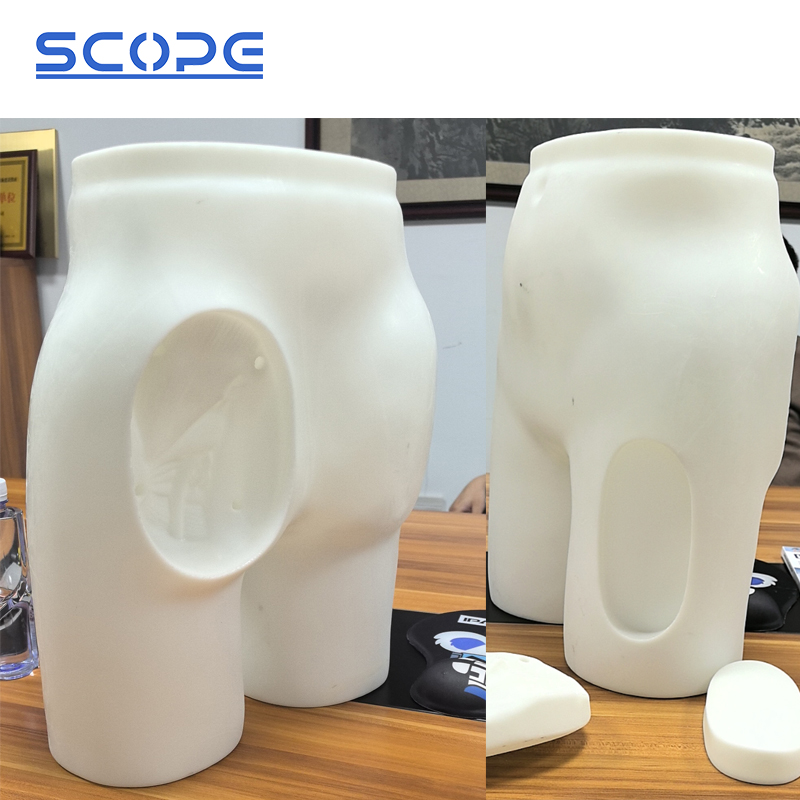
The naming therefore reads as a delta of capability rather than a sequence of unrelated products: same domain, same material, different instrumentation level. The nursing family follows a similar logic, with SC-H130A covering a broad nursing-care task set, SC-HS3 and SC-HS4 focused on injection and IV access, SC-H4T specialized for gluteal intramuscular injection anatomy, and SC-HL functioning as a layered injection pad for intradermal, subcutaneous and intramuscular practice.
Why this matters for spare parts and expansion
A family-based architecture supports two procurement behaviors. First, it allows a program to enter a training domain at the entry tier and later add higher-tier models without changing supplier, material specification or accessories. Second, it improves the odds that replacement components, such as the replaceable lung sac devices and changeable face skin listed in the SC-CPR480 standard configuration, remain identifiable by family rather than by isolated model. Neither behavior is guaranteed by naming alone, but the architecture makes it discussable in a way that a catalog of unrelated part numbers does not.
Production consistency: capacity, customization and lead-time evidence
Portfolio breadth is only useful if the supplier can reproduce it. The published capability record for the manikin line states the following parameters.
| Parameter | Published value |
|---|---|
| Production mode | ODM |
| Customization scope | Appearance and functions of the product |
| Monthly capacity | 3,000 units |
| Lead time | 30-45 days |
| Minimum order quantity | 20 units |
| Quality control | Factory quality inspection |
| After-sales | 1-year warranty, online support |
| Export markets | Europe, Middle East, Southeast Asia, North America, South America, Russia, Africa |
Company-level figures provide context for that capacity. Chongqing Scope Instrument Co., Ltd. was founded in 2017, operates a 5,000 square meter facility, employs more than 100 staff, and reports an annual output of 30,000 units. Its R&D team consists of 20 engineers. The company states that it brings more than 20 years of sales experience and currently serves more than 500 clients worldwide, with an export ratio of 50% and main markets in Europe, Southeast Asia, the Middle East, South America and Africa.
Customization terms that affect repeat orders
Customization is a continuity risk as well as a capability. Chongqing Scope offers OEM and ODM services across its product lines, with customization of product appearance and functions for manikins. Logo printing is handled after technical verification, and the company also offers custom logo labels attached to the machine. Two operational details matter for long-term programs: the stated minimum order quantity for customized production is 20 units, and the stated lead time is 30-45 days. Buyers planning phased laboratory rollouts should map those numbers onto their academic calendar rather than assuming immediate availability.
Compliance and export documentation
The company states that ISO9001, ISO14001, ISO45001, ISO13485, CE and RoHS certificates can be provided. ISO 13485:2016 is the internationally recognized Quality Management System standard for the design and manufacture of medical devices, which is the framework buyers typically reference when manikins are procured as training equipment within a regulated institution. Export packaging is neutral, without logos, in cardboard or wooden boxes prepared to export standards, and customs documents such as CO, Form E and Form F can be supplied on request.
Application evidence: a 500-unit teaching deployment in India
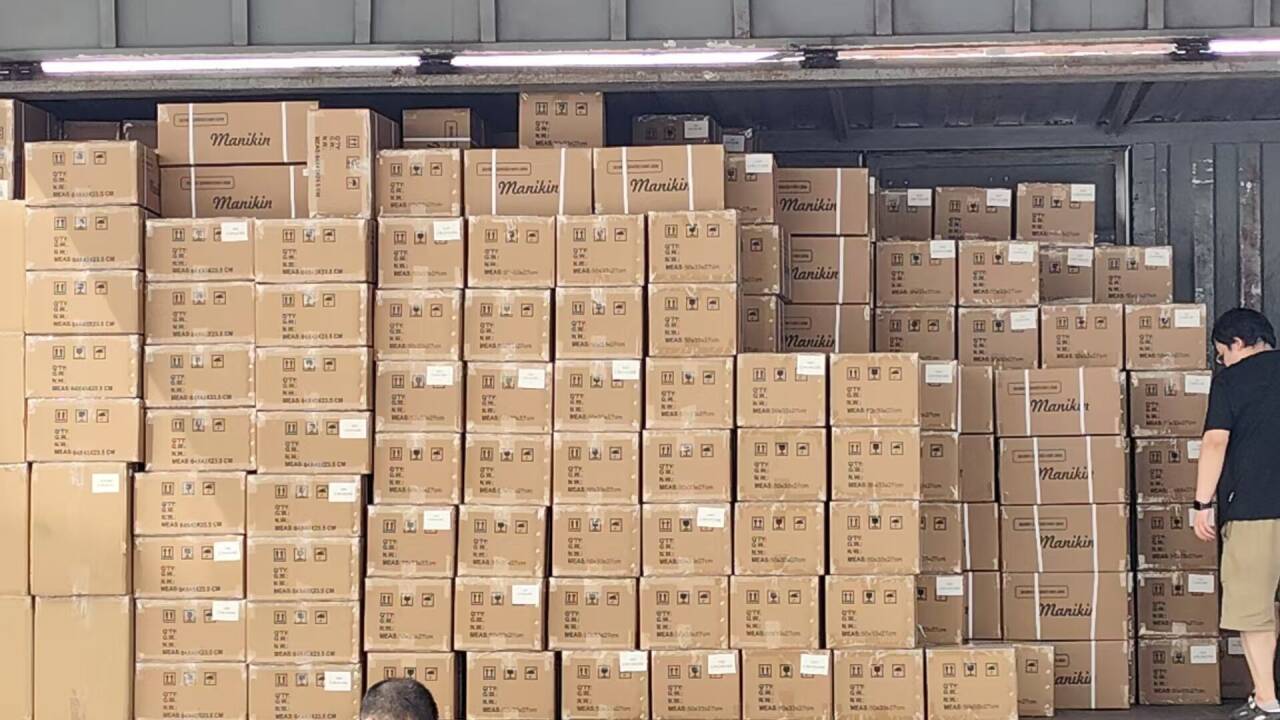
The most concrete lifecycle evidence available is a distributor project in India. A medical manikin distributor ordered 500 units of product 3435, the Joint Model SC-A1025, for medical teaching purposes. The project ran for one year and is reported to have achieved stable operation. The stated highlights of the project were customization and durability, and the product has been successfully used by medical manikin distributor clients.
Read as a partnership signal rather than a sales figure, the case shows three things that are hard to demonstrate in a catalog. First, the order volume sits well above the minimum batch size, indicating that the production line was tested at scale rather than at sample level. Second, the recorded outcome is operational stability over a one-year teaching cycle, which is the metric that matters for a laboratory rather than delivery speed. Third, the project is attributed to a distributor rather than an end user, which means the lifecycle responsibility for spare parts, repeat orders and curriculum fit was carried through a channel partner.
Market trend analysis: where manikin demand is moving through 2033
Grand View Research valued the global medical simulation market at USD 1.9 billion in 2025 and projects USD 6.7 billion by 2033. Market sizing in this category should be read with care: The Insight Partners estimated USD 3.17 billion for 2024 and WiseGuyReports estimated approximately USD 600 million for the same period, a spread that largely reflects differences in scope, specifically whether software, services and consumables are counted alongside hardware manikins. Buyers should treat any single figure as a directional signal rather than a precise budget input.
Regional distribution in the same data set is more consistent. North America dominated the healthcare simulation market in 2024 with a revenue share of approximately 45-48%, according to Precedence Research and WiseGuyReports, while Asia-Pacific is identified as the fastest-growing region at an expected 18.2% CAGR through 2033. For a supplier manufacturing in China with export reach across Europe, the Middle East, Southeast Asia, South America and Africa, this growth pattern points toward demand from institutions building laboratories for the first time, which is typically cohort purchasing rather than single-unit replacement.
The competitive landscape remains concentrated at the high-fidelity end. Laerdal Medical, CAE Inc., Gaumard Scientific and Kyoto Kagaku are identified among the major global competitors in medical manikin and simulation, according to MarketsandMarkets. Task-focused PVC trainers occupy a different segment of the same market, and the two are more often complementary than directly substitutable.
Where a task-trainer portfolio does not fit
An honest evaluation has to state boundaries, and this portfolio has several.
- Segment scope. The published portfolio covers CPR, clinical, nursing, maternal, pediatric and anatomical models. It does not extend into integrated full-body patient simulators with physiological modelling or scenario software, which is where the named global competitors primarily operate. Programs requiring instructor-driven scenario control, monitor feeds or pharmacologically modelled responses need to look outside this category.
- Language configuration. The published specification for the SC-CPR480 lists Chinese voice prompts. Training programs delivered in other languages should confirm prompt configuration during technical validation rather than assuming multilingual support.
- Warranty horizon. The stated after-sales term is a 1-year warranty with online support. Institutions accustomed to multi-year on-site service contracts for high-fidelity equipment will need to plan for in-house maintenance or channel-partner support beyond that window.
- Order planning. Customized production carries a 20-unit minimum order quantity and a 30-45 day lead time. Both are manageable for a laboratory rollout, but neither supports ad-hoc single-unit customization.
Future outlook
Three forces are likely to shape how buyers evaluate manikin suppliers over the next several years.
First, accreditation-driven purchasing will keep demand cohort-based, which favors suppliers with documented capacity rather than those quoting per-unit pricing without a repeatable production statement. Second, growth concentrated in Asia-Pacific and other emerging education markets will place more weight on export documentation, neutral packaging and channel-partner structures, because those markets frequently procure through distributors rather than directly. Third, as laboratory fleets age, lifecycle questions will move earlier in the evaluation sequence: not only whether a model exists today, but whether its consumable components and material specification will remain consistent at the next purchase.
On the evidence available, a family-based model architecture, visible in prefixes such as SC-CPR, SC-H, SC-A and SC-F with numeric tiers indicating capability within each family, is the most useful public indicator that a supplier is organized around sustaining a portfolio rather than selling single units. It is an indicator, not a guarantee. Confirming spare-part policy, revision control and warranty terms during technical validation remains the decisive step.
A downloadable product brochure covering the medical manikin line is available for review: Chongqing Scope product brochure.
Frequently asked questions
What manikin categories does Chongqing Scope Instrument Co., Ltd. supply?
The company lists four medical manikin categories: CPR manikin, clinical manikin, nursing manikin and anatomical model. These are positioned for emergency, clinical and nursing skills training in medical colleges and training institutions. Manikin products in the published lineup use PVC material.
Can manikins be customized in appearance and function?
Yes. The company offers OEM and ODM services for medical manikins and states that customization of product appearance and functions is available. Logo printing is carried out after technical verification confirms there are no issues, and custom logo labels can also be produced and attached to the machine. The stated minimum order quantity for customized production is 20 units.
What production capacity and lead time apply to larger orders?
Published figures list a monthly capacity of 3,000 units and a lead time of 30-45 days. Company-level data states an annual output of 30,000 units from a 5,000 square meter facility with more than 100 employees and an R&D team of 20 engineers. Quality control is described as factory quality inspection.
What after-sales and warranty terms are stated?
The company states a 1-year warranty with online support. For reference, the standard configuration of the SC-CPR480 includes replaceable lung sac devices and a changeable face skin, both of which are consumable components relevant to maintenance planning across the product's service life.
What purchasing, delivery and payment terms are published?
Published purchasing terms list delivery under EXW, FOB, CFR, CIF or DAP, with acceptance based on factory inspection and payment by T/T. Export packaging is neutral, without logos, in cardboard or wooden boxes prepared to export standards, and customs documents such as CO, Form E and Form F can be provided when required.
Which markets does the supplier currently export to?
Export markets are listed as Europe, the Middle East, Southeast Asia, North America, South America, Russia and Africa. The company reports an export ratio of 50% and states that it serves more than 500 clients worldwide, drawing on more than 20 years of sales experience.