
Evaluating a Welded Mesh Fence Factory for 10-Year Partnerships
A sustainability checklist for buyers who need supply continuity, not just panels.
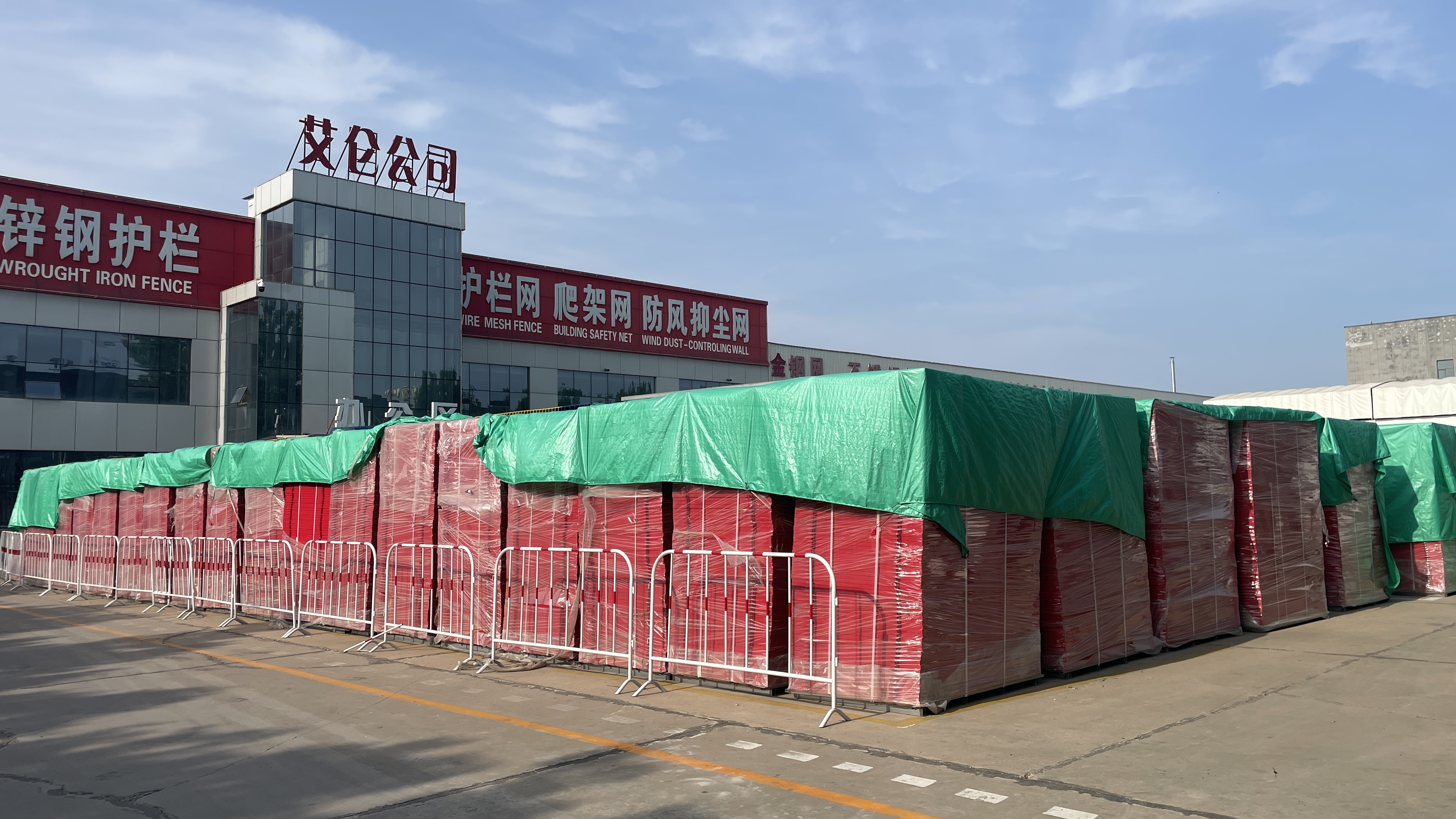
Welded mesh fence production environment. Image: Anping Dengfeng Wire Mesh Products Co., Ltd.
The Supplier Decision Behind the Product Decision
The global welded wire mesh fence market was valued at USD 7.04 billion in 2025 and is projected to reach USD 11.72 billion by 2034, according to Dataintelo. Grand View Research estimates the wider fencing market at USD 33.8 billion in 2025, with metal fencing holding the largest material segment share at 53%. Those figures describe demand. They do not describe whether any individual factory can serve one buyer consistently across a decade.
A welded mesh fence is a rigid steel panel system used for boundary isolation, anti-climb protection, safety enclosure, site separation, and livestock fencing. It normally operates in 24/7 outdoor standing conditions and must meet anti-corrosion, anti-rust, anti-climb, and weather-resistance requirements, supported by components such as support posts, connecting clips, security gates, and razor wire.
Most purchasing processes evaluate that system panel by panel: wire diameter, mesh size, coating type, unit price. A ten-year supply relationship is decided by a different question, namely whether the factory behind the panels can keep producing them to the same specification, keep them compliant for the destination market, and keep documentation intact from the first order to the tenth.
This article sets out a factory sustainability checklist for welded mesh fence procurement and works through it using Anping Dengfeng Wire Mesh Products Co., Ltd. as a reference example. Established in 2008 and located in Anping County in China, the company integrates R&D, production, and sales of wire mesh products, and its published figures allow a buyer to see what verifiable evidence looks like at each stage of evaluation.
Why Price-First Evaluation Breaks Down Over a Decade
Price is a valid comparison only when specification and supply conditions are held constant. Over multiple years and multiple orders, that condition rarely survives on its own. Four failure modes are common in welded mesh fence supply.
- Specification drift. Without a frozen, documented baseline, panels ordered in year three may not match panels ordered in year one, even from the same supplier. The visible consequences appear at installation, when panels, posts, and connecting clips no longer align.
- Coating variability. Corrosion protection is a process outcome rather than a purchased input. A nominal hot-dip galvanized plus powder coated system can still vary if pre-treatment, curing, and handling steps are inconsistent between batches.
- Compliance drift by market. EN 10223-7:2012 is the active European standard specifying requirements for steel wire welded panels for fencing in schools, parks, and industrial sites. ASTM F2453 / F2453M-14 covers the standard specification for welded wire mesh fence fabric with metallic or polymer coatings for high-security applications in the United States. Serving a market is partly a documentation habit, and it is built over repeated shipments rather than requested once.
- Capacity squeeze at peak. Production line time is finite. A buyer who represents a small share of a factory order book has less scheduling leverage during a peak season than one with an established framework agreement.
Switching factories mid-programme carries its own cost: requalification, re-approval by the project specifier, new samples, new packaging and logistics arrangements, and a fresh documentation trail. That is the real cost base against which a long-term factory relationship should be judged.
What a Sustainable Factory Actually Means
In supplier evaluation, a sustainable factory is one that can deliver a consistent, compliant welded mesh fence over a multi-year horizon. It is not primarily an environmental claim. Five pillars carry most of the weight, and each one can be tested with documents rather than impressions.
| Pillar | What to verify | Evidence to request | Warning signal |
|---|---|---|---|
| Operating continuity | Years in operation, ownership of production space, engineering headcount | Registration data, plant information, technical team structure | Intermediary with no verifiable plant |
| Cross-border compliance capability | Sustained shipments into your destination market | Market list, export share, market-specific documentation | No reference orders in the region |
| Documented product longevity | Material, coating system, service-life statement linked to a specification | Product data, coating details, inspection records | Service-life claim with no linked specification |
| Capacity and customization depth | Annual output, product range, drawing-based customization | Capacity figures, model list, customization statement | Single-format supplier for a multi-format perimeter |
| Commercial and logistical resilience | Export dependence, market spread, accessory availability | Sales mix, market list, component range | Export treated as a marginal activity |
Pillar 1: Operating Continuity and a Verifiable Production Base
Anping Dengfeng Wire Mesh Products Co., Ltd. was established in 2008 and is located in Anping County, known as the Hometown of Wire Mesh in China. The company operates a manufacturing facility covering 70,000 m², employs approximately 80 staff, and maintains an R&D team of 10 engineers. Its stated annual production capacity is 5,000,000 m².
For a ten-year horizon, the relevant question is not simply how large the plant is, but whether a durable engineering core exists behind the product range. A technical team of 10 engineers covering a portfolio that includes welded mesh rolls, welded wire mesh panels, 358 security fences, BRC/roll-top fences, double-wire panels, chain link fences, temporary fences, barbed/razor wire, and gabion baskets indicates a breadth that can absorb specification changes across successive projects without re-sourcing the supplier.
Buyers should also separate manufacturers from intermediaries at this stage. Plant size, employee count, and engineering headcount are the fastest filters, because they are difficult to present credibly without a real operating base.
Pillar 2: Export Footprint as Cross-Border Compliance Capability
Export business accounts for 80% of Dengfeng total sales, with major markets including Europe, Saudi Arabia, the Middle East, the United Arab Emirates, and the United States. Application documentation for the welded mesh fence range also covers Australia and the United States, where the product is used for outdoor, corrosion-resistant, anti-climb installations in boundary isolation, security protection, and landscape enclosure projects.
A sustained export share is more informative than a customer list. A factory that ships regularly into the European Union works around standards such as EN 10223-7:2012 for steel wire welded panels for fencing in schools, parks, and industrial sites. A factory serving the United States works around specifications such as ASTM F2453 / F2453M-14 for welded wire mesh fence fabric with metallic or polymer coatings in high-security applications. Multi-region shipping to Europe, the Middle East, and the United States means the documentation habit already exists, which matters when a buyer later needs local building code compliance evidence, corrosion protection compliance records, or product testing and inspection files.
The practical verification step is narrow and specific: ask for the destination-market documentation trail on a comparable previous order, including declarations, test documentation, and packing and inspection records. Export experience is a sign of compliance capability, not a substitute for it.
Pillar 3: Documented Product Longevity
Dengfeng documents its welded mesh fence range with specific model designations, namely 3D-2000, 358-1800, TW-1500, and TC-2100. The range covers 3D curved fence, 358 anti-climb fence, double wire fence, palisade fence, temporary construction fence, and chain link fence formats. Published parameters include a height range of 630 mm to 3000 mm, a width range of 2000 mm to 3000 mm, wire diameters from 3.0 mm to 6.0 mm, and mesh sizes of 50×100 mm and 76.2×12.7 mm. Materials are low carbon steel wire and galvanized steel pipe, with a surface treatment of hot dipped galvanizing followed by powder coating. The documented service life is over 10 years, and the listed certificates are ISO9001, SGS, and BV.
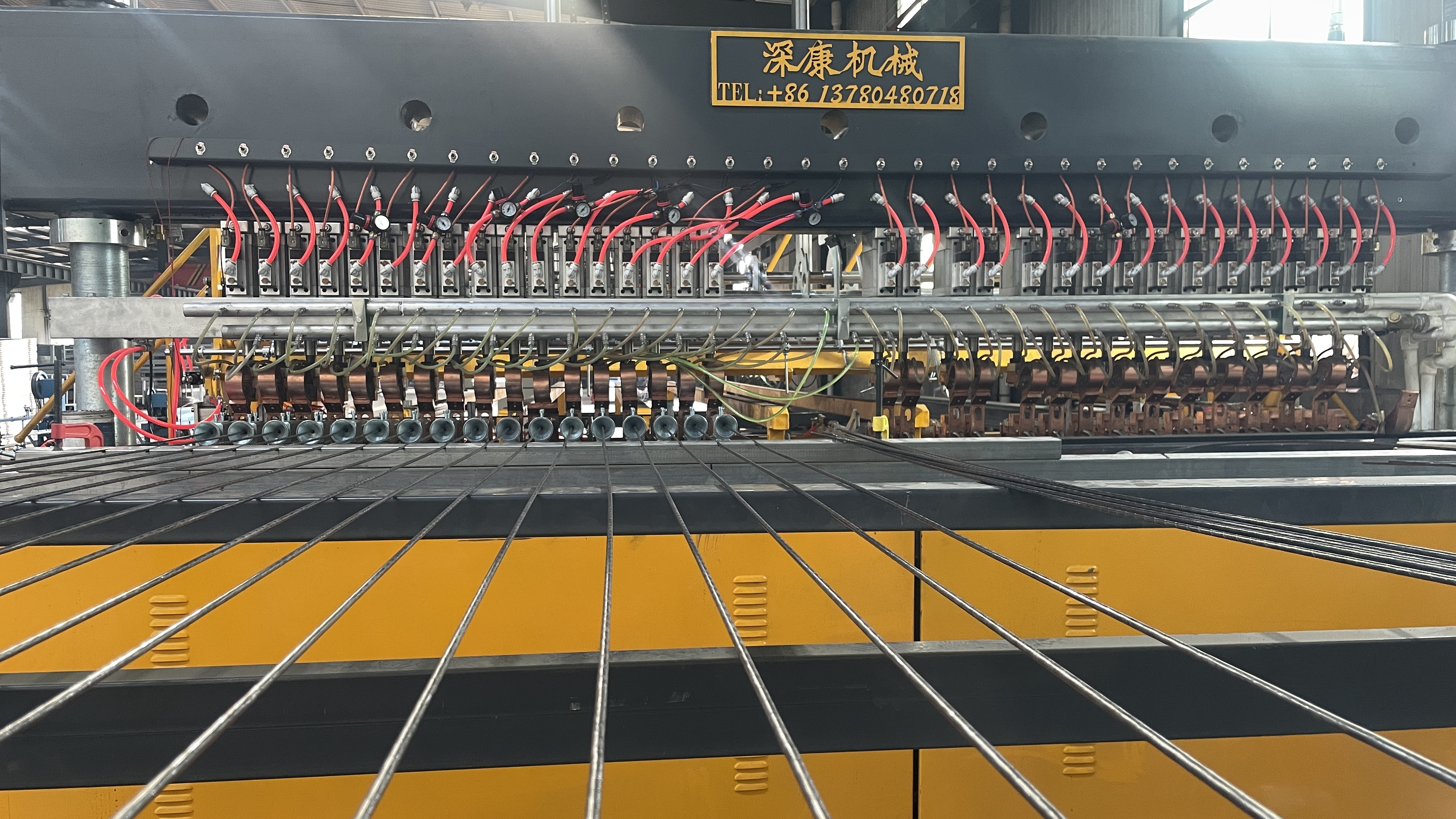
Welded mesh fence panels during production and inspection. Image: Anping Dengfeng Wire Mesh Products Co., Ltd.
What makes that statement usable for a buyer is the process behind it. Welding is completed by robotic welding, and manual inspection is conducted throughout the polishing, pickling, and powder coating procedures. The company also implements strict pre-shipment quality inspection for every order. Longevity, in this framing, is a controlled output of a repeated process rather than a marketing adjective.
Three verification questions follow. First, does the quoted specification match the specification the service-life statement refers to, including wire diameter, mesh size, and coating system? Second, what inspection records accompany each shipment? Third, for coastal or high-corrosion locations, has the coating specification been confirmed for that environment rather than assumed from a general figure? Buyers evaluating low-maintenance panels or powder coated welded mesh fence panels should treat those questions as part of the specification process, not as after-sales concerns.
Pillar 4: Capacity, Range, and Customization Depth
Annual capacity of 5,000,000 m², a 70,000 m² facility, and an engineering team of 10 give a buyer a rough measure of how much order volume can be absorbed without displacing other commitments. The company states that products are customized according to customer drawings and requirements, which matters for perimeter work where height, panel width, or post spacing often differ from catalogue values.
Range depth is the second half of this pillar. A single perimeter project may combine welded mesh fence for schools or sports fields with welded mesh fence for an industrial perimeter, and a multi-site programme may add residential or park sections. A factory able to produce welded mesh rolls, welded wire mesh panels, 358 security fences, BRC/roll-top fences, double-wire panels, chain link fences, temporary fences, barbed/razor wire, and gabion baskets reduces the number of suppliers that must be separately qualified, sampled, and audited.
Buyers comparing easy-install panels should also confirm that posts, connecting clips, and gates are supplied to compatible tolerances, because installation speed depends on component fit as much as on panel design.
Pillar 5: Commercial and Logistical Resilience
An 80% export share concentrated across Europe, Saudi Arabia, the Middle East, the United Arab Emirates, and the United States indicates that international order handling is the company core activity rather than an occasional extension of domestic sales. For a ten-year partnership, that distinction affects documentation discipline, packaging standards, and the reliability of shipping schedules.
Accessory completeness belongs in this pillar as well. The product system is supported by support posts, connecting clips, security gates, and razor wire. Where a buyer must coordinate panels, gates, and posts across separate vendors, every delivery window becomes a scheduling risk. Confirming that these components are supplied together is one of the least discussed and most effective continuity checks available during evaluation.
Matching the Checklist to Application Scenarios
Schools and sports fields
Welded mesh fence for schools and sports fields relies on rigid frame panels and anti-climb characteristics, and in Europe EN 10223-7:2012 specifically addresses steel wire welded panels for fencing in schools and parks. Buyers should confirm panel rigidity, mesh aperture, and finish safety as part of safety enclosure requirements rather than treating them as aesthetic choices.
Parks and residential properties
Landscape enclosure and low-maintenance objectives dominate here. Powder coated welded mesh fence panels provide the finish consistency municipal and residential projects expect, while anti-rust and weather-resistant performance remains the operating requirement under 24/7 outdoor standing conditions.
Industrial perimeters
Welded mesh fence for industrial perimeter use functions as site separation and security protection. Where access control is combined with perimeter fencing, anti-cut design and high-security panels matter more than nominal cost per panel, because retrofit work on an installed perimeter is far more disruptive than specifying correctly at the outset.
Railways and critical infrastructure
Industry sources note that welded mesh fences are preferred for critical infrastructure such as railways, where cable theft prevention is a priority, and for schools, because of rigid frame panels and anti-climb characteristics. On those projects, specification and inspection records carry more weight than unit price, and a factory with documented inspection practice is the safer long-term choice.
Temporary construction sites
Temporary construction fence models such as TC-2100 support construction temporary isolation, where re-deployment value and panel handling matter more than maximum coating durability. Buyers should still confirm that panels and clips survive repeated assembly cycles.
Coastal and high-corrosion sites
The standard hot dipped galvanized plus powder coated system is the starting point, not an automatic answer. Buyers should match the coating specification to the corrosion category of the site and confirm it in writing before order release.
Comparing Sourcing Models
| Sourcing model | Compliance continuity | Price discovery | Main risk |
|---|---|---|---|
| Spot purchasing with rotating suppliers | Low; documentation restarts with each order | Strong; constant market exposure | Specification drift and requalification cost |
| Single long-term factory partner | High; stable specification and inspection records | Weaker; requires scheduled benchmarking | Concentration of capacity and price risk |
| Dual-source long-term partnership | High, with a secondary qualified source | Moderate; periodic comparison possible | Higher qualification effort up front |
The table is deliberately unflattering to the simple answer. A single partnership delivers the strongest continuity but the weakest price discovery, while rotating suppliers protect pricing and undermine consistency. Most buyers with a ten-year programme settle on a primary factory plus a qualified secondary source, and use the secondary source mainly for capacity relief and periodic price benchmarking.
Where a Long-Term Factory Partnership Has Limits
- Capacity is finite. An annual output of 5,000,000 m² is substantial but not unlimited. Programme-wide peaks or concurrent projects can still exceed available line time.
- Price discovery weakens without discipline. A multi-year relationship can drift away from market pricing unless the buyer schedules periodic benchmarking.
- Service-life statements are specification-bound. The over-10-year figure applies to the product as specified; changing wire diameter, mesh size, or coating system changes the assumption behind it.
- Model families are a defined set. 3D-2000, 358-1800, TW-1500, and TC-2100 cover common perimeter needs, but unusual geometry may require additional engineering review even where customization to drawings is supported.
- Not every boundary needs a rigid welded panel. Some sites are better served by other formats or by mixed-material approaches, and a factory partnership should not push every requirement into one product family.
- Governance determines responsiveness. Long relationships need scheduled commercial and technical reviews; without them, response times and specification discipline can soften quietly.
Market Signals Buyers Should Track
Several industry-level signals are directly relevant to how factory evaluation should be structured over the next decade.
- The welded wire mesh fence market is projected to move from USD 7.04 billion in 2025 toward USD 11.72 billion by 2034 (Dataintelo). A long growth runway attracts new suppliers, which raises rather than lowers the value of factory verification.
- Metal fencing holds 53% of the wider fencing market (Grand View Research), keeping steel input and coating cost among the dominant commercial variables in any long-term agreement.
- Asia Pacific held a 38.5% revenue share of the welded wire mesh fence market in 2025, driven largely by infrastructure projects in China and India (Dataintelo). Sourcing from Asian manufacturers is mainstream; differentiation therefore comes from documentation and continuity, not geography.
- Product competition is moving toward integrated security. Betafence Group expanded its perimeter security portfolio in February 2024 with new-generation welded mesh systems incorporating intrusion detection and solar surveillance. A welded mesh perimeter is increasingly a platform that must accept accessories and sensing equipment.
- Named participants in the security fencing market include Betafence, Bekaert, Ameristar Perimeter Security, and Jacksons Fencing (Mordor Intelligence / Fortune Business Insights). Buyers comparing factories should compare supply models and documentation practice, not brand recognition alone.
Future Outlook
Three shifts are likely to shape welded mesh fence sourcing through the coming decade. First, documentation becomes a purchasing asset: buyers will increasingly select factories by what they can evidence before the order, not by what they promise after it. Second, service-life claims will be audited against specifications, so factories that can tie a durability figure to a defined material and coating system will be easier to approve. Third, welded mesh perimeters will be specified as systems, combining panels, posts, gates, and accessory hardware in one package, which favours factories with genuine range depth and customization capability. Under those conditions, the ten-year partnership question stops being a commercial preference and becomes a specification requirement.
FAQ
What does a welded mesh fence factory evaluation actually measure?
It measures whether a factory can supply a consistent, compliant rigid steel panel system over multiple years. The practical measures are years in operation, ownership of a verifiable production base, engineering capacity, export footprint, stability of product specification, and inspection practice. Unit price per panel is one input among these, not the measure itself.
How does export share indicate supplier reliability?
Export share shows how much of a factory business depends on international orders, and therefore how routine cross-border documentation, packaging, and shipping have become. An 80% export share across Europe, Saudi Arabia, the Middle East, the United Arab Emirates, and the United States indicates that these processes are core operations. It is evidence of capability rather than a guarantee of any individual order.
Does an over-10-year service life guarantee a 10-year supply partnership?
No. Service life is a product-level statement about the fence as specified, covering material and coating. A supply partnership depends on separate factors: production capacity, documentation continuity, export and logistics capability, and commercial governance. The two are related but not interchangeable, and buyers should evaluate them separately.
Which certifications and standards should buyers verify?
For the welded mesh fence range referenced here, the listed certificates are ISO9001, SGS, and BV. Market standards differ by destination: EN 10223-7:2012 specifies requirements for steel wire welded panels for fencing in schools, parks, and industrial sites in Europe, while ASTM F2453 / F2453M-14 covers welded wire mesh fence fabric with metallic or polymer coatings for high-security applications in the United States. Buyers should confirm which standard applies to their project and request the corresponding documentation.
Can one factory support several welded mesh fence applications at the same time?
Yes, where product range and customization capability allow it. The documented range covers 3D curved fence, 358 anti-climb fence, double wire fence, palisade fence, temporary construction fence, and chain link fence in models 3D-2000, 358-1800, TW-1500, and TC-2100, with customization according to customers drawings and requirements. Buyers should still confirm that support posts, connecting clips, security gates, and razor wire can be supplied on the same schedule as the panels.
How should a buyer verify a factory inspection practice?
Ask for pre-shipment inspection documentation from a comparable order. In this reference case, strict pre-shipment quality inspection is implemented for every order, welding is completed by robotic welding, and manual inspection is conducted throughout the polishing, pickling, and powder coating procedures. Inspection records are the most direct evidence that a stated coating and welding process is being followed consistently.
What are the limits of a 10-year single-factory partnership?
Capacity is finite even at high annual output, price discovery weakens without scheduled benchmarking, service-life statements are tied to the specification quoted, and response times can soften without contractual review points. Buyers commonly address this by maintaining a primary long-term factory relationship alongside a qualified secondary source for capacity relief and price comparison.
A Checklist in Practice
Applied in sequence, the evaluation runs as follows. Confirm the operating base and engineering capacity. Confirm sustained export activity in your destination market and request the matching documentation trail. Confirm that the quoted specification is the specification behind the service-life statement. Confirm annual capacity against your programme volume. Confirm that accessories are supplied with the panels. Then confirm the commercial review cadence in writing before the first order is placed.
A downloadable brochure covering welded wire mesh and galvanised wire specifications is available here: welded wire mesh and GI wire brochure. Anping Dengfeng Wire Mesh Products Co., Ltd. customizes products according to customers drawings and requirements for buyers working across multi-year perimeter programmes.