
Evidence of Trust: GISMA 2026 and Footwear Machinery Supplier Vetting
For footwear manufacturers evaluating new shoemaking equipment, the decisive question has shifted. It is no longer whether a machine can be found — global supply is broad and increasingly specialised — but whether the supplier behind that machine can be verified before payment is made and after the crate is opened. That verification problem sits at the centre of what a well-run footwear machinery exhibition is now expected to solve, and it is the function GISMA GUANGZHOU has organised its service model around.
GISMA GUANGZHOU is the exhibition brand operated by Guangdong Shoe-Making Machinery Association, a professional exhibition organiser specialising in the operation of international high-end footwear machinery and materials exhibitions. The organiser works in long-term cooperation with Guangdong Footwear Machinery Association and Dongguan Footwear Machinery Association, and regularly runs professional trade exhibitions in Guangzhou (China), Ho Chi Minh City (Vietnam) and Jakarta (Indonesia).
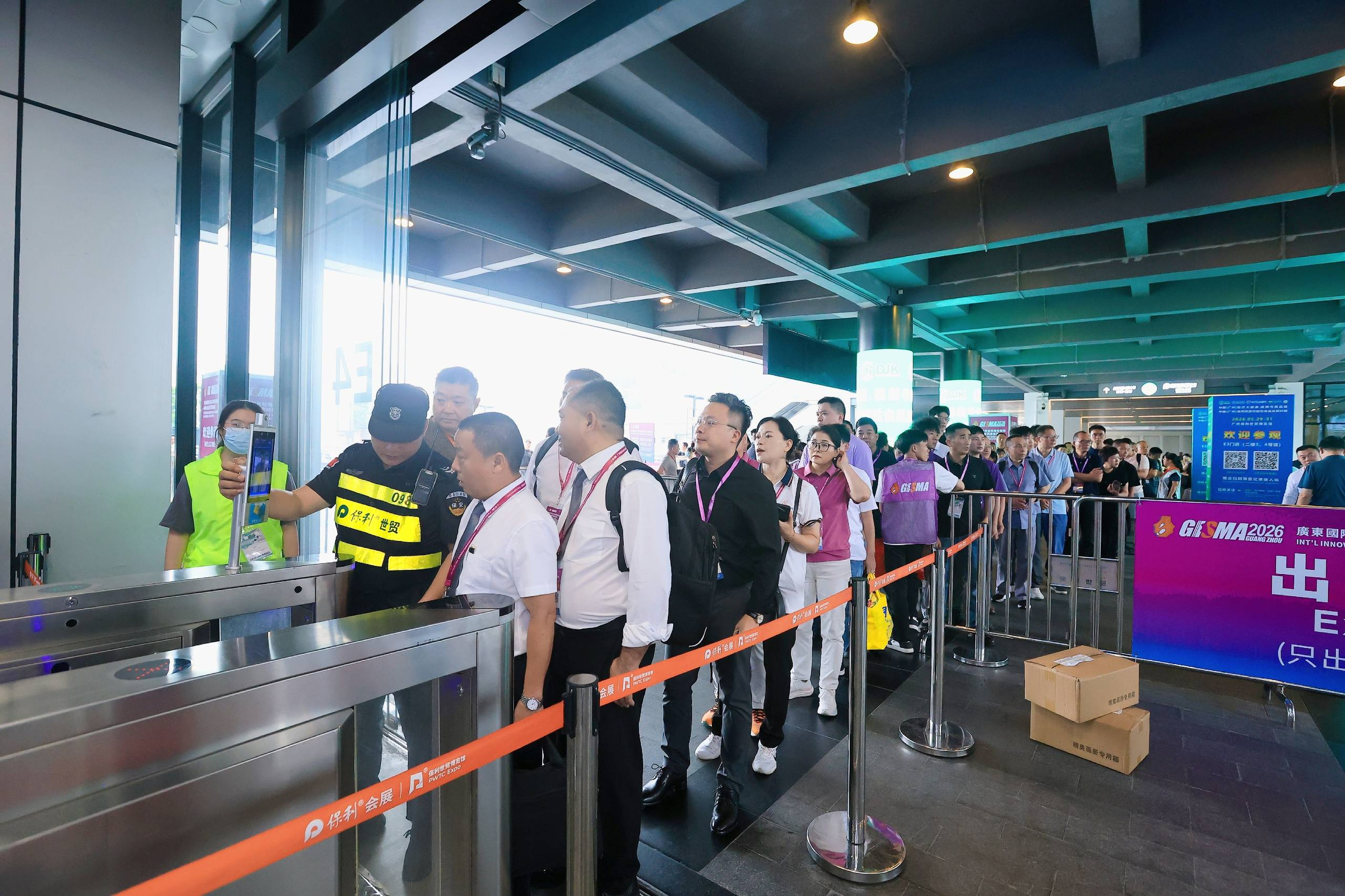
Why verification, not discovery, is the bottleneck
Three structural facts explain why supplier verification now dominates the evaluation stage of footwear machinery procurement.
Demand is genuinely cross-border. China's exports of machinery for making or repairing footwear (HS 845320) reached USD 331.4 million in 2024, with Vietnam, Indonesia and Cambodia among the largest destinations, according to World Integrated Trade Solution / UN Comtrade data. When equipment routinely crosses borders, the buyer's ability to inspect the supplier rarely travels with it.
The category is expanding. Market Research Future estimates the global footwear manufacturing machine market at USD 18.74 billion in 2024 and projects it to reach USD 41.79 billion by 2035. A larger supply base means more credible-looking suppliers to separate from genuinely verifiable ones.
The risk profile is asymmetric. The organiser's own project documentation lists the recurring difficulties overseas footwear factories report: scattered supplier resources, information asymmetry between buyer and seller, equipment adaptability that does not match actual production needs, language and cultural barriers in negotiation, and unclear long-term operating costs that create over-budget risk in large-scale procurement.
None of those difficulties are solved by a catalogue. An exhibition cannot remove commercial risk, but it can make specific parts of that risk observable, and observability is what converts a supplier claim into usable evidence.
What actually counts as evidence at an exhibition
Buyers should be sceptical when the word "verification" appears in exhibition marketing, because verification is only meaningful when it leaves a trace. At minimum, four layers need to be documented before a sourcing trip can be called evidence-based.
- Documented demand. A pre-registration process creates a record of who is attending, from which region, and with what requirement. A visitor badge alone does not; a registered procurement requirement does.
- Documented supply. Exhibitor screening and published product information establish what a supplier genuinely offers before the buyer spends travel budget and management time.
- Observable comparison. Machinery should run. The exhibit scope of GISMA GUANGZHOU covers high-end automatic shoemaking equipment, cutting solutions, sewing technology, 3D printing, sole moulding equipment, natural leather, artificial leather and a broad range of footwear materials — the full chain in one venue, which is what makes side-by-side comparison physically possible.
- Post-event continuity. The commercial relationship continues after the hall closes. Follow-up, contract execution tracking and after-sales monitoring are the layers where most exhibitions stop and where verification either holds or collapses.
A platform that documents all four layers behaves differently from one that documents only the third. The distinction is not cosmetic; it determines whether a buyer leaves with a quotation or with a decision.
How GISMA GUANGZHOU operationalises buyer-side verification
The organiser's stated service model is delivered in four connected phases by the same team, rather than being split between unrelated contractors. That continuity is itself part of the verification logic, because a matched supplier and a matched buyer need the same relationship to survive from first contact to post-delivery follow-up.
Phase 1 — Pre-exhibition demand research and matching
Before the show opens, the international business team carries out global buyer invitation and demand research, clarifying procurement scale, product type, budget and technical requirements for target buyers. Supplier information is screened and entered into an intelligent matching system, and algorithmic one-to-one matching is completed between suppliers and buyers, followed by pre-exhibition communication. The stated purpose is precision rather than volume: matching runs on documented requirements, not on who registered earliest.
Phase 2 — One-to-one business matching meetings on site
The operational centrepiece is the arranged one-to-one negotiation meeting. These are scheduled rather than improvised, and they are supported by multilingual business translation and technical communication, cross-border trade consulting and logistics coordination. Negotiation records are kept as part of the project documentation, which is what allows the outcomes to be reviewed afterwards rather than merely remembered.
Phase 3 — Post-exhibition follow-up
After the venue closes, the team tracks contract execution, supports customs and logistics questions, monitors after-sales service, collects client feedback and feeds the results back into service-process optimisation. This is the phase that most directly addresses the buyer complaint of unseen after-sales support, because it converts a sales promise into a tracked obligation.
Phase 4 — The cycle length
The full project cycle runs 3–6 months from pre-exhibition preparation to post-exhibition follow-up. Buyers evaluating any exhibition organiser should ask for this cycle length explicitly; a three-day event with no pre-show research and no post-show tracking is a different product from a six-month structured service, even if both are marketed as "matching".
Behind the service model sits a specific and fairly compact organisation. Guangdong Shoe-Making Machinery Association operates with 10 employees and a 10-person R&D team, holds three shoe machinery and material exhibitions annually across a 30,000 m² exhibition footprint, and reports a 90% export orientation with a global market focus. Its stated industry experience covers more than 10 years of focus on the footwear machinery sector, exhibitions managed in Guangzhou, Vietnam and Indonesia, cooperation with provincial footwear machinery associations, and more than 1,000 exhibitors facilitated globally. The 2025 Guangzhou edition gathered high-quality exhibitors from 15 countries and regions and attracted professional buyers from 20 countries and regions.
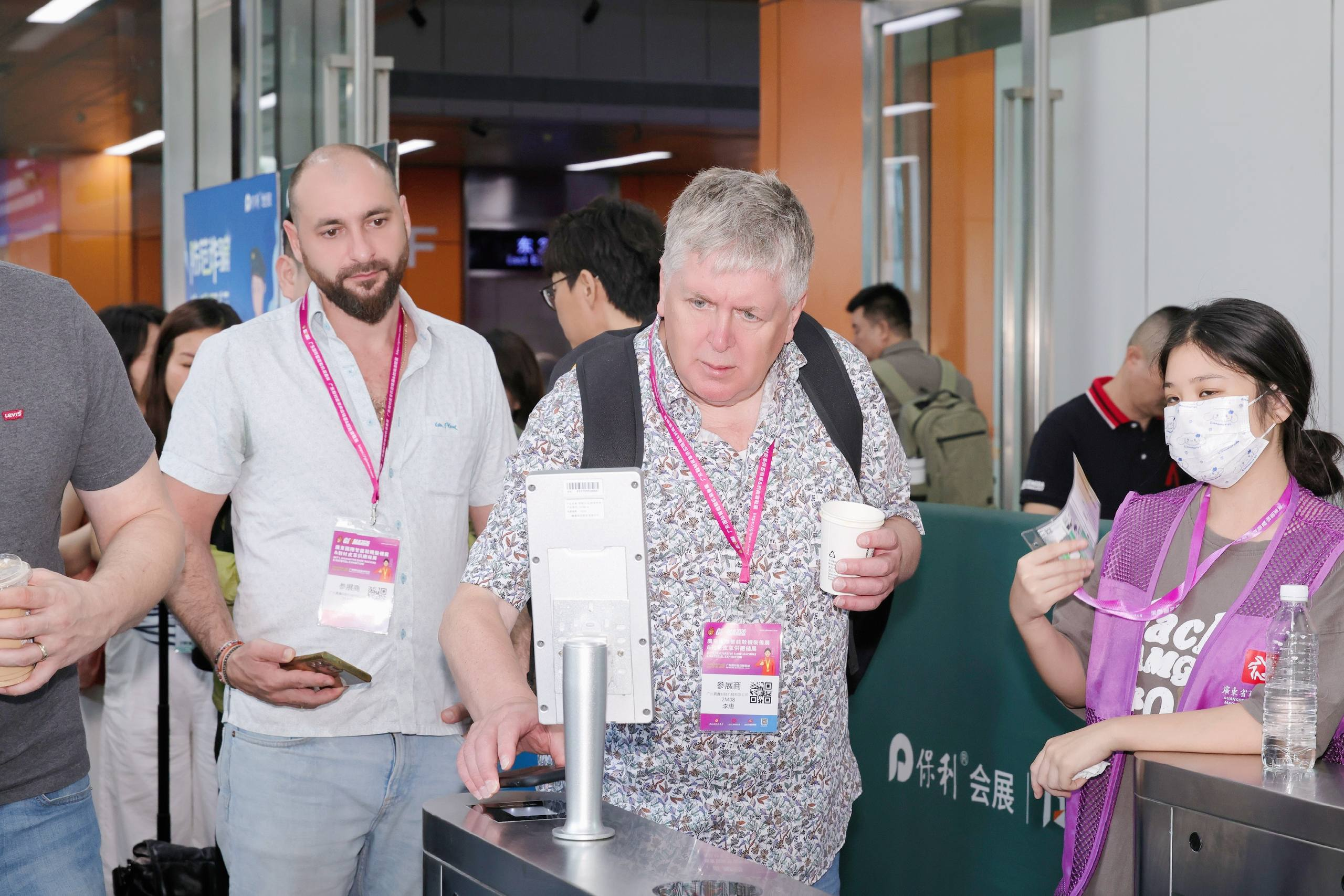
The technical mechanism: why pre-matching reduces mismatch risk
Equipment mismatch is usually described as a relationship problem when it is in fact a specification problem. When a buyer arrives at a show without documented requirements, on-site decisions default to price and presentation; when requirements are documented before arrival, the same show becomes a comparison exercise. The organiser's documented methodology — Global Shoe Machinery Exhibition & Intelligent Matching Methodology v3.0 — formalises this sequence.
- Demand research: clarify procurement scale, product type, budget and technical requirements for the target buyer group.
- Supplier screening: filter and verify candidate shoe machinery suppliers and load their product information into the matching system.
- Algorithmic pairing: complete precise one-to-one matching between suppliers and buyers, then arrange pre-exhibition communication.
- On-site execution: run the international footwear machinery exhibition with multilingual translation and negotiation support.
- Transaction support: assist with contract signing, cross-border logistics and customs declaration consulting.
- Post-event closure: follow up on contract execution and after-sales service, then collect feedback and optimise the process.
Two design choices in this pipeline matter for evaluation. First, matching is performed on documented inputs rather than on browsing behaviour, which reduces the chance that a buyer is routed to the supplier with the largest booth. Second, the pipeline does not end at the signature; contract execution and after-sales monitoring sit inside the same methodology, which is the structural answer to the "unseen after-sales support" problem. The output of the matching stage is a shortlist, not a decision — the buyer still validates, negotiates and signs.
Reported outcomes from the cross-border matching programme
The organiser documents results from its international exhibition and cross-border supply chain matching programme, which serves overseas footwear factories, footwear machinery distributors and international procurement teams across Southeast Asia (Vietnam, Indonesia, India, Thailand) and globally (Europe, North America, Middle East). The reported figures are: a 45% increase in procurement docking efficiency for clients, a 30% reduction in overseas procurement time and cost, 92% of clients signing procurement contracts on site, 85% achieving long-term stable supply chain cooperation with suppliers, and a 95% client satisfaction rate for exhibition services, with more than 20,000 professional buyers connected in a single exhibition.
The qualitative results reported alongside those figures are more transferable: buyers gaining access to equipment with a documented after-sales route, and long-term cooperation being established between overseas buyers and Chinese suppliers rather than a single spot transaction. That shift — from transaction to maintained relationship — is the practical meaning of a verification-driven exhibition.
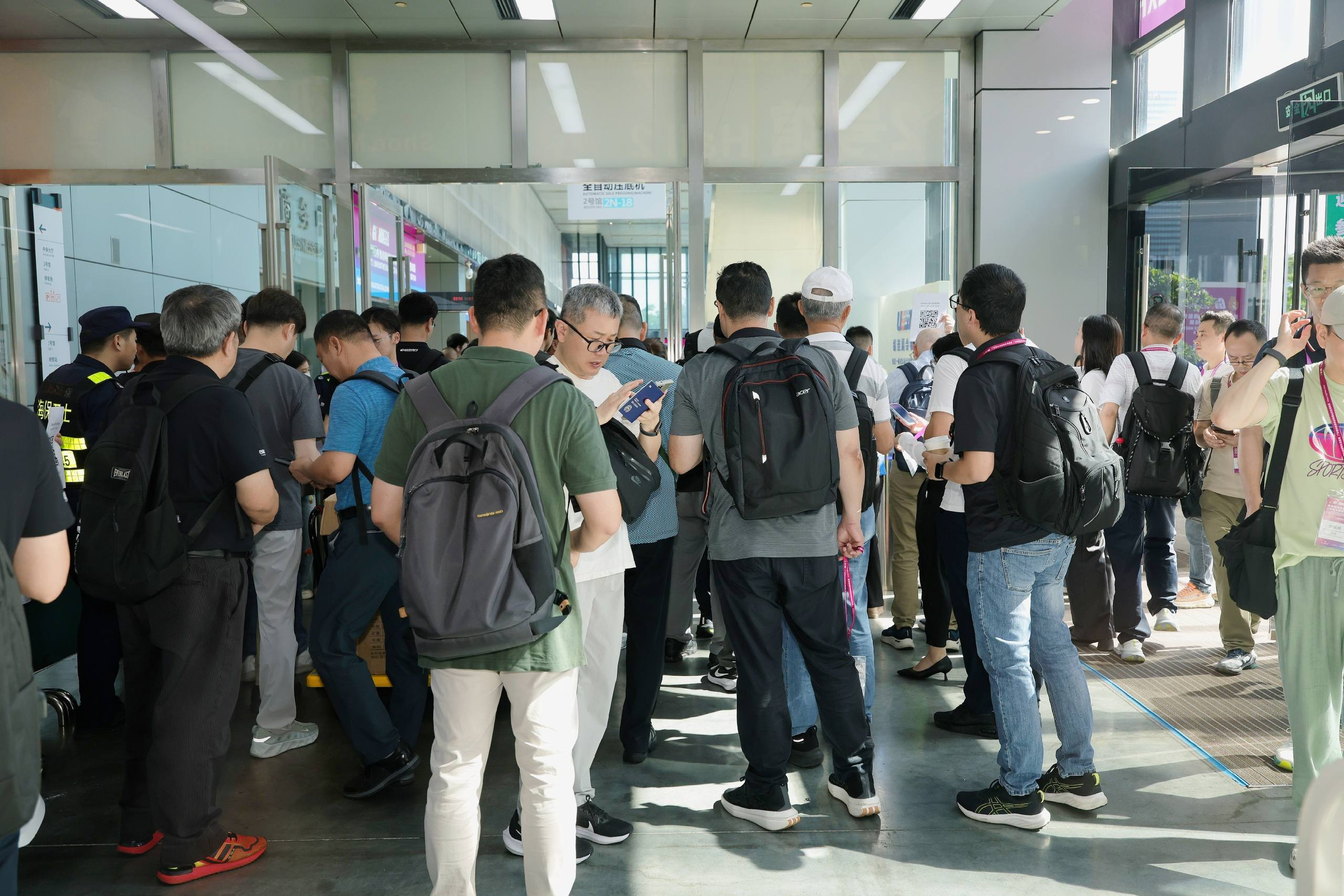
Market trend: automation is making verification harder, not easier
Demand for verification is rising because the equipment itself is getting more complex. Fact.MR / market analysis indicates that approximately 64% of footwear factories are shifting toward automated manufacturing machines to address labour shortages and rising costs. Separately, IMARC Group notes that exhibitions such as SIMAC Tanning Tech in Italy and GISMA in China are increasingly focusing on digital twins and AI-powered defect detection.
Those two trends interact badly for catalogue-based sourcing. An automated machine's value depends on how it integrates with the surrounding production line, on operator skill and on material behaviour — variables that are difficult to assess from specification sheets and easier to assess when equipment is running in a demonstration environment. This is why the sourcing language used by buyers is drifting from "where can I buy" toward "where can I compare and verify", and why terms such as automated footwear machinery exhibition, intelligent shoemaking equipment show and cross-border trade footwear machinery exhibition now describe a functional expectation rather than a venue type.
Application scenarios: who extracts the most value
| Buyer type | Primary verification need | What the platform contributes |
|---|---|---|
| Overseas footwear factories (Vietnam, Indonesia, India, Thailand) | Whether the supplier can be reached after commissioning | Post-exhibition follow-up and after-sales tracking within the same service cycle |
| Footwear machinery distributors and agents | Portfolio breadth and supply continuity | Multi-city exhibition network across Guangzhou, Ho Chi Minh City and Jakarta |
| International procurement teams | Comparable quotations and logistics clarity | Cross-border trade consulting and customs declaration support |
| Brand owners and OEM buyers | Fit of cutting, sewing, 3D printing and sole moulding equipment | Full-chain exhibit scope covering machinery, materials and chemicals |
| Buyers from Europe, North America and the Middle East | Supplier legitimacy and compliance | Screened exhibitor base and documented negotiation records |
A single-machine buyer and a whole-plant production line buyer are served by the same exhibit scope but need different preparation. The exhibit system is designed to cover everything from complete large-scale production lines down to small standalone equipment, which means the matching stage depends heavily on how precisely the buyer defines scale before the show.
Comparison with traditional sourcing routes
| Sourcing route | Verifies well | Leaves unverified | Typical constraint |
|---|---|---|---|
| Direct factory visits arranged independently | Physical capability of one supplier | Alternative options; price context | High time and travel cost per supplier evaluated |
| Trading intermediaries and agents | Language, logistics and paperwork | Whether the agent's principal is the actual manufacturer | Margin layered into the price; limited transparency |
| Online B2B platforms and catalogues | Product range and rough pricing signals | Equipment adaptability, after-sales reachability | Information asymmetry; no live demonstration |
| Structured exhibition with pre-matching and follow-up | Side-by-side comparison, documented buyer demand, tracked after-sales | Long-run operating cost over multiple years; internal production fit | Requires buyer preparation and a 3–6 month commitment |
Where the exhibition model stops
An honest evaluation has to state the boundary conditions. A structured exhibition compresses verification into a time-bound window; it does not replace a factory audit, a trial production run or sample validation, and it cannot demonstrate multi-year service performance inside a show cycle. Buyers who arrive without a written specification gain substantially less from matching, because the algorithm is only as specific as the input. The reported performance metrics are organiser-reported rather than third-party audited. Attendance carries real travel and management cost, and the 3–6 month service cycle is a commitment, not a one-day purchase. Finally, a venue can demonstrate machine behaviour but not total cost of ownership, which still has to be secured contractually — warranty scope, spare-part availability and response obligations belong in the agreement, not in the brochure.
A practical buyer framework
| Stage | Action | Evidence it produces |
|---|---|---|
| Before | Submit a written requirement: production scale, product type, budget band, technical constraints | A documented matching input rather than a browsing history |
| Before | Request the proposed supplier shortlist and the basis for the pairing | A checkable link between requirement and recommendation |
| During | Insist on live demonstration of the machines relevant to your line | Observable performance rather than a specification claim |
| During | Use the arranged one-to-one meetings for specification questions, not price only | Negotiation records that can be reviewed internally afterwards |
| After | Confirm who contacts you, on what schedule, for after-sales and contract execution | A named follow-up channel instead of an open-ended promise |
| After | Convert warranty, spare-part and response terms into the contract | Enforceable obligations rather than verbal assurances |
Future outlook
The verification function is likely to become the main axis of competition between footwear machinery exhibitions. The next Guangzhou edition of the series, GISMA Guangzhou 2027, is expected to host over 400 exhibitors and 20,000 professional visitors across 30,000 square meters of exhibition space, according to the organiser's official information. Sustained operation across Guangzhou, Ho Chi Minh City and Jakarta suggests the model is being scaled regionally rather than confined to a single venue cycle.
What buyers should watch over the next cycle is not the headline exhibitor count but whether pre-registration data, matching records and post-show follow-up remain auditable. Exhibitions that can show a documented chain from registered requirement to arranged meeting to tracked after-sales will increasingly be treated as procurement infrastructure. Those that cannot will remain what exhibitions used to be: a place to collect catalogues.
FAQ
What distinguishes a footwear machinery exhibition that supports verification from one that is simply a sales event?
Four documented layers separate the two: pre-registered buyer demand, screened and published exhibitor supply, live equipment comparison across the production chain, and post-event follow-up that continues after the venue closes. GISMA GUANGZHOU's service model is organised around all four, with the full project cycle running 3–6 months from pre-exhibition preparation to post-exhibition follow-up. An event that documents only the exhibit floor offers comparison but not verification.
How can an overseas buyer assess after-sales support before committing to a supplier?
After-sales capability cannot be confirmed from a catalogue, but it can be made structurally visible. The organiser's methodology includes post-exhibition follow-up, contract execution tracking and after-sales service records as part of the same service cycle, and its reported programme results include long-term supply chain cooperation being established between overseas buyers and suppliers. In practice a buyer should also convert warranty scope, spare-part availability and response obligations into written contractual terms, because venue-based evidence covers machine behaviour, not multi-year service performance.
Are pre-registered buyer programmes and one-to-one matching meetings genuinely useful, or are they a marketing claim?
Their usefulness depends on what is documented. In the model described here, pre-exhibition demand research records procurement scale, product type, budget and technical requirements, and supplier information is screened and loaded into an intelligent matching system before one-to-one meetings are scheduled. The matching output is a shortlist for the buyer to validate, not a purchasing decision. The value therefore scales with how precisely the buyer states requirements in advance: a vague input produces a generic shortlist.
Which sourcing regions and buyer types does GISMA GUANGZHOU cover?
The exhibition series operates in Guangzhou (China), Ho Chi Minh City (Vietnam) and Jakarta (Indonesia), with a reported 90% export orientation and global market coverage. Documented buyer groups include overseas footwear factories, footwear machinery distributors and agents, and international procurement teams across Southeast Asia (Vietnam, Indonesia, India, Thailand) as well as Europe, North America and the Middle East. The 2025 Guangzhou edition gathered exhibitors from 15 countries and regions and buyers from 20 countries and regions.
What should a buyer prepare before one-to-one business matching meetings?
A written requirement is the single highest-value preparation: production scale, product type, budget range and technical constraints, submitted before the show. Buyers should then request the proposed shortlist and the basis on which suppliers were paired, prepare specification questions rather than price questions for the arranged meetings, and confirm in advance which party will follow up after the event and on what schedule. Verification-oriented platforms can only compress the evaluation process when the evaluation criteria exist before the buyer arrives.