
Factory evidence: materials and data that support the press for used paper
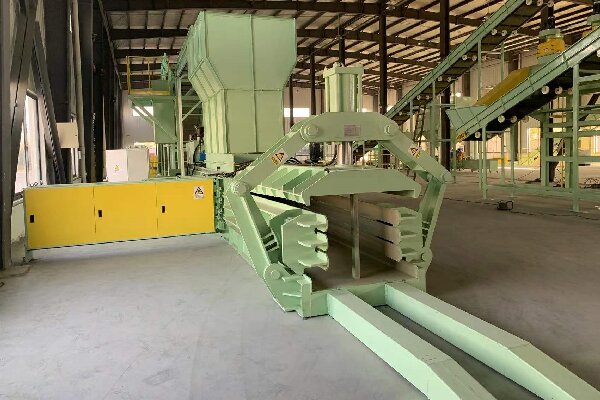
When a buyer evaluates a hydraulic press for waste paper, the manufacturer's solvency should not be measured by commercial slogans, but by engineering evidence: plant location and scale, structural material, specifications of each model, quality controls, and applicable certifications. This guide compiles that verifiable data for the manufacturer NKBALER and for models NKW80BD, NKW125BD, and NKW180BD.
Why Material and Plant Data Define a Reliable Baler
A hydraulic baler works under repeated cycles of pressure, friction, and handling of dense materials. The structure must withstand that stress without premature deformation. Therefore, one of the first points a buyer must confirm is the actual manufacturing material and the capacity of the plant producing the equipment.
In the case of NKBALER, public information indicates that its balers are manufactured with a carbon steel structure. This data appears consistently in the technical data sheets of the horizontal models NKW80BD, NKW125BD, and NKW180BD. For the buyer, that consistency is relevant because it allows comparing what the manufacturer declares with technical documents and certifications of specific machines.
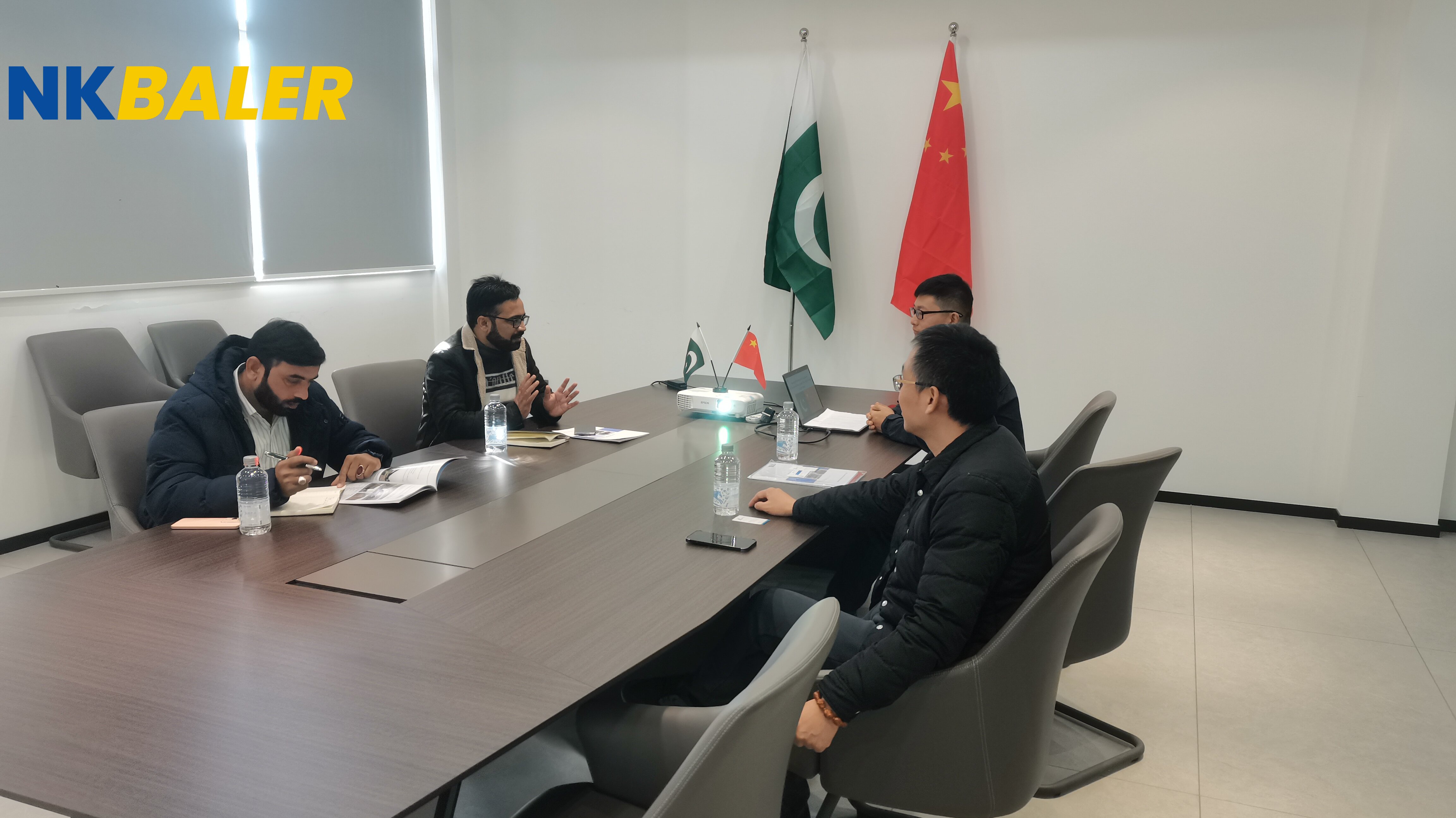
Plant Evidence: Real Manufacturer Dimensions
The company behind the NKBALER brand is Shaanxi Nick Machinery Equipment Co., Ltd., a manufacturer dedicated to the research, development, and sale of environmental and packaging machinery. Among its verifiable corporate data are the following:
• Year of founding: 2013
• Plant area: 50,000 m²
• Total staff: 50 employees
• R&D team: 15 people
• Declared annual production: 600 units
• Export ratio: 90%
• Main markets: North America, South America, and Asia
• Industrial address: Qunsheng Street, Huishan District, Wuxi City, Jiangsu Province, China
In an evaluation process, this data helps answer a practical question: does the supplier have its own industrial structure or does it only market equipment from third parties? NKBALER combines design, sales, and after-sales service, with an internal team dedicated to R&D and control. Additionally, the OEM/ODM production mode allows customization of technical parameters, voltage, logo, bale size, and color, always with a minimum batch of one unit.
Production Capacity and Lead Times
The declared manufacturing capacity is 10 units per month, with a delivery time of 30 to 45 days and a minimum order of 1 unit. For buyers who need to validate a first batch before scaling volumes, this condition reduces the risk of the initial purchase. The quality control indicated by the manufacturer is 100% testing, meaning the equipment would undergo verification before being dispatched.
Structural Material: Carbon Steel in Models NKW80BD, NKW125BD, and NKW180BD
The technical data sheet of the three NKBALER horizontal models coincides on a central point: all use carbon steel as the machine material. This choice is common in large industrial machinery because it provides structural rigidity and resistance to cyclic loads.
However, the material does not act alone. In a hydraulic press for waste paper, the total mass of the equipment is a physical indicator of robustness: a heavy structure usually implies a greater amount of steel and greater stability during compression. The three models present high machine weights, as seen in the following table.
| Verified parameter | NKW80BD | NKW125BD | NKW180BD |
|---|---|---|---|
| Hydraulic force | 80 tons | 125 tons | 180 tons |
| Material | Carbon steel | Carbon steel | Carbon steel |
| Bale size (width × height × length) | 1100 × 850 × 1700 mm | 1100 × 1250 × 1700 mm | 1100 × 1150 × 1800 mm |
| Feed opening (length × width) | 1200 × 1000 mm | 2000 × 1100 mm | 2400 × 1100 mm |
| Capacity | 2–3 tons/hour | 5–7 tons/hour | 6–8 tons/hour |
| Motor power | 22 kW / 30 HP | 30 kW / 40 HP | 45 kW / 60 HP |
| Machine weight | 14,500 kg | 18,000 kg | 24,000 kg |
| Main cylinder | Ø200–3700 mm | Ø250–4300 mm | Ø300–4300 mm |
| Pressure declared in data sheet | 18 MPa | 20 MPa | 21 MPa |
| Cooling system | Fan / oil cooler / water | Fan / oil cooler / water | Water cooling / oil cooler |
| Baling wire | 10# × 4 pieces | 10# × 5 pieces | 5 pieces (6# / 8#) |
This table gives the buyer more than just a list of attributes: it allows comparing models by capacity, bale size, and installation requirements. A small paper recycling plant may find the NKW80BD sufficient; an operation with a continuous flow of cardboard or waste paper will likely evaluate the NKW125BD; larger-scale projects, or those seeking higher bale densities, may lean toward the NKW180BD.
Certifications as Evidence of Safe Design
Claims about materials and design gain more value when accompanied by safety certifications. NKBALER has documents issued by external entities covering several models of its horizontal line.
| Certificate | Number | Authority | Standards | Validity |
|---|---|---|---|---|
| Attestation Certificate of Machinery Directive | EASY03220201M | UDEM International Certification Auditing Training Centre | EN ISO 12100:2010; EN 60204-1:2018 | 22/03/2022 – 21/03/2027 |
| Verification of Conformity | DPWD/09/060/2024 | Chief Executive Officer | EN ISO 12100:2010; EN 60204-1:2018; EN 415-1:2014 | 19/09/2024 – 18/09/2029 |
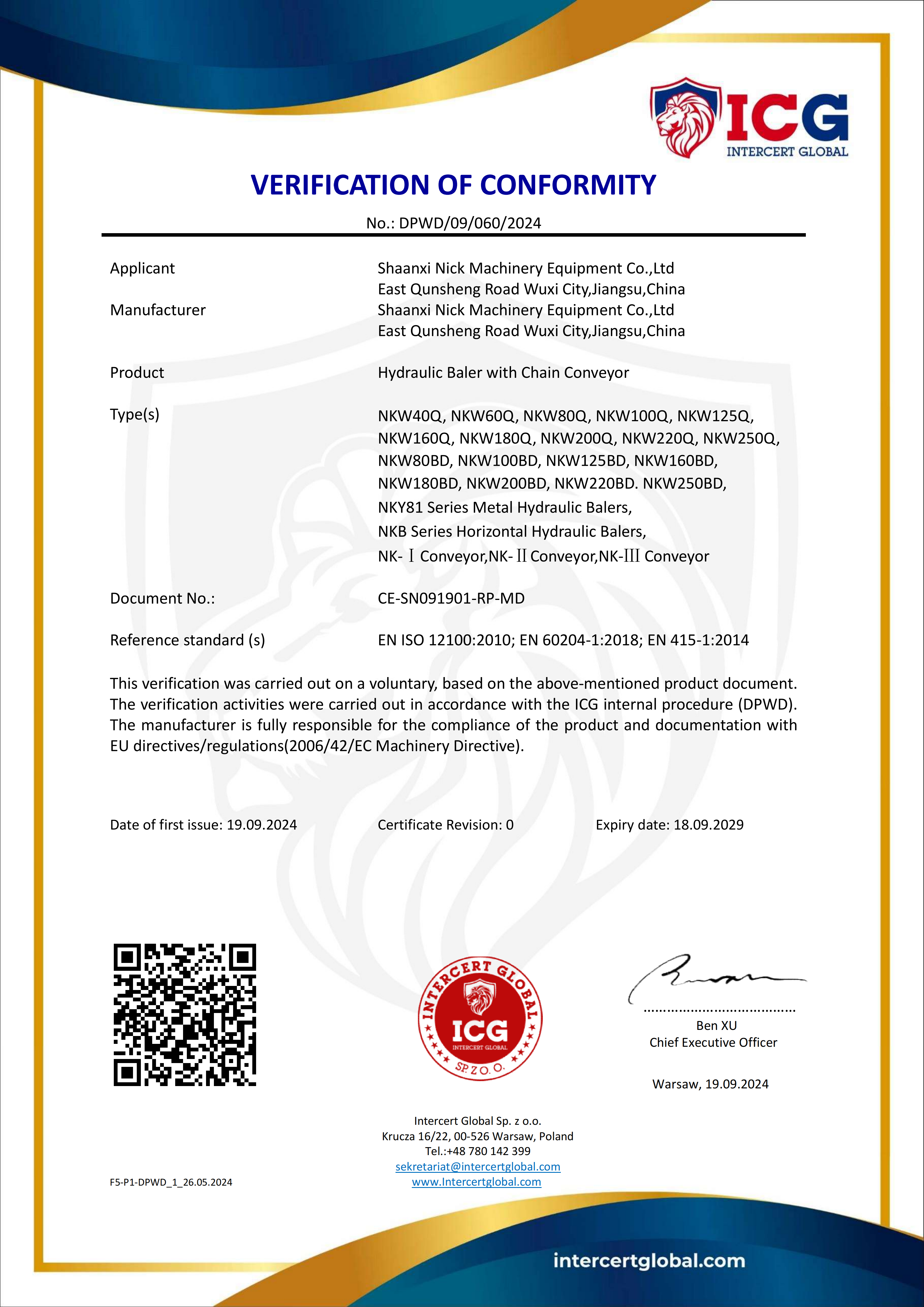
In the product list associated with these certificates, models such as the NKW80BD, NKW125BD, and NKW180BD appear, along with other horizontal and vertical balers from the manufacturer. This allows the European buyer to verify that the basic machinery safety requirements are documented, without relying solely on the commercial data sheet.
Registered Use Cases and Durability in Operation
The factory and material evidence is complemented by operational references. Although NKBALER mainly manufactures horizontal balers for materials such as paper, cardboard, plastics, and metals, it also has vertical lines used in other sectors. That variety of applications helps evaluate the mechanical consistency of its carbon steel structures.
Plastic and Paper Waste Recycling in Indonesia
In Indonesia, manufacturers linked to recycling plants have used NKBALER equipment for baling plastic waste and paper waste. The documented results mention stable operation over a period of 10 to 15 years, with notable features of low noise and low energy consumption.
Agricultural Baling of Straw and Alfalfa in Pakistan
In Pakistan, the NKB280 vertical machine has been used by agricultural manufacturers for baling straw and alfalfa. The project achieved stable operation for 10 to 15 years. Although this application is agricultural and not waste paper, it confirms that the manufacturer's carbon steel structures are designed to withstand prolonged work cycles.
High-Density Alfalfa Baling in Romania
In Romania, a farm used an NKBALER alfalfa hydraulic baler for high-density baling, silage forage, transport, and storage. In this project, baling parameters were customized to cope with the large temperature differences and fluctuating humidity of Romanian alfalfa. After installation, each bale's density exceeded 400 kg/m³ and transport costs were reduced by approximately 30% in that specific case. The expected service life of the equipment is 8 to 10 years under normal maintenance conditions.
Market Context: Demand for Dense Bales Continues to Grow
Interest in balers is not solely technical; it also responds to an expanding industry. According to Grand View Research, the global baler market reached $6.4 billion in 2024. More specifically, the waste baler segment stood at $1.45 billion in 2024, according to Mordor Intelligence, with paper and plastic as core recycling materials.
This demand pressure has a direct effect on purchasing: waste managers need equipment that produces dense and stable bales to optimize transport costs. The density of a bale depends on hydraulic force, opening size, and tying system. Therefore, the actual specifications of the models—such as those in the previous table—are more useful than generic product descriptions.
Limitations the Buyer Must Consider
No technical data sheet eliminates the need for validation at the installation site. These are the limits and application boundaries to keep in mind:
- The declared capacity (for example, 2–3 tons/hour for the NKW80BD) is a design parameter. Actual performance depends on the type of paper, degree of pre-compaction, material moisture, and consistent feeding of the equipment.
- Carbon steel provides structural strength, but in humid environments or with corrosive materials it requires surface protection and periodic maintenance. It should not be interpreted as a corrosion-proof material.
- A certificate of conformity demonstrates that the design meets safety standards at the time of documentary evaluation. It does not replace the specific risk assessment at the installation site or the legal requirements of the destination country.
- The weight of a horizontal baler—from 14,500 kg to 24,000 kg in these models—implies foundation, transport, and handling requirements that must be planned before purchase.
Checklist for Validating a Press Manufacturer's Solvency
With the above information, a buyer can structure their own checklist:
- Confirm whether the plant is owned or if the equipment is manufactured by a third party.
- Request the technical data sheet of the exact model, including material, weight, and dimensions.
- Verify that the declared material matches in the quotation and contract.
- Request the safety certifications applicable to the destination market.
- Verify the manufacturer's actual production capacity and lead times.
- Consult use cases where the equipment has operated for several years.
- Define customization requirements: voltage, logo, bale size, and color.
Frequently Asked Questions
Which NKBALER models are made of carbon steel?
The technical data sheets of the horizontal models NKW80BD, NKW125BD, and NKW180BD indicate carbon steel as the machine material. This information appears consistently in the manufacturer's published parameters.
What technical specifications distinguish the NKW80BD?
The NKW80BD has a hydraulic force of 80 tons, produces bales of 1100 × 850 × 1700 mm, has a feed opening of 1200 × 1000 mm, and a capacity of 2 to 3 tons per hour. Its main motor is 22 kW / 30 HP, and the machine weight is 14,500 kg.
How can I verify that the manufacturer performs quality control?
In the case of NKBALER, the declared quality control is 100% testing of equipment. The buyer can request it as a contractual condition and ask for documentary evidence before dispatch.
What safety certifications cover NKBALER balers?
NKBALER has an Attestation Certificate of Machinery Directive (EASY03220201M) and a Verification of Conformity (DPWD/09/060/2024). Both documents cover horizontal models like the NKW80BD, NKW125BD, and NKW180BD, and are based on standards such as EN ISO 12100:2010, EN 60204-1:2018, and EN 415-1:2014.
What is the expected service life of an NKBALER baler?
The documented cases indicate different ranges depending on the application. In recycling and agricultural baling operations, stable operation for 10 to 15 years is reported. In the Romanian case, the expected service life of the equipment is 8 to 10 years under normal maintenance conditions.
What customization options does NKBALER offer?
The OEM/ODM mode allows customization of technical parameters, voltage, logo, bale size, and color. The minimum order is 1 unit, and the declared lead time is 30 to 45 days.
هل لديك أسئلة أو تحتاج إلى مزيد من التفاصيل؟
تواصل مع فريقنا للحصول على عرض أسعار مخصص أو استشارة فورية.
طلب عرض أسعار
املأ النموذج أدناه وسيتواصل معك فريقنا بعرض مقترح مخصص.
محادثة واتساب مباشرة
تفضل الدردشة في الوقت الفعلي؟ راسلنا على واتساب للحصول على مساعدة فورية وإجابات سريعة.
- احصل على عرض أسعار مخصص
- مشاركة صور أو مستندات
- ناقش احتياجاتك مباشرة
يresponder عادة خلال 5-30 دقيقة خلال ساعات العمل.