
Exhaust Fan Selection Guide: Types, Applications & Market Trends
The global ventilation fan market, valued at USD 3.57 billion in 2024, is projected to reach USD 5.23 billion by 2030, driven by rising indoor air quality awareness and stricter building regulations. China alone exported a record USD 3.788 billion worth of fans (HS 841459) in 2024, underlining the country's dominant manufacturing role. For buyers at the research stage, understanding the different exhaust fan types, their applications, and key selection criteria is essential for making informed procurement decisions.
The Challenge: Matching Fan Type to Application
A single exhaust fan design cannot serve all environments. A bathroom requires moisture and odor removal with low noise, while a kitchen needs high-heat and grease extraction. An attic demands temperature-controlled ventilation, and an industrial workshop requires continuous high-volume airflow. Selecting the wrong fan leads to poor performance, energy waste, and premature failure. Buyers must systematically evaluate airflow (CFM), noise levels, material durability, mounting options, and compliance standards before sourcing.
Provider Overview: Aosun’s Role in the Segment
Aosun (Ningbo Aoshun Electrical Co., Ltd.) is a specialized manufacturer of exhaust fans and ventilation equipment based in Ningbo, China, with over 10 years of focused manufacturing experience. The company operates an 12,000 m² facility with 105 employees and an annual output exceeding 1 million units. Its product portfolio covers ceiling, wall-mounted, window, bathroom, kitchen, attic, garage, toilet, and industrial ventilation exhaust fans, serving residential, commercial, and industrial sectors across 50+ countries. Aosun’s in-house R&D team has independently developed over 100 models, supporting OEM, ODM, and large-scale project orders with flexible scheduling.
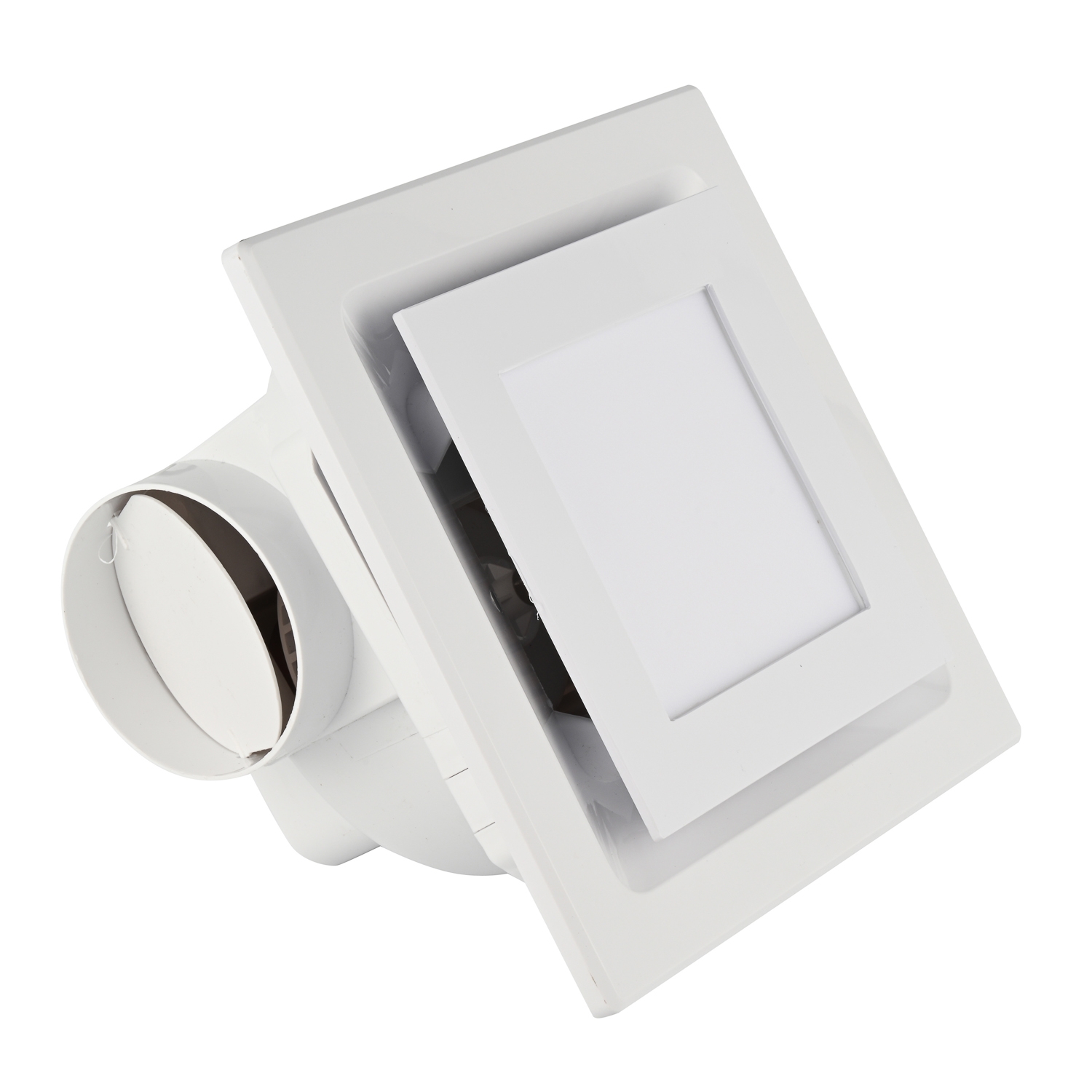
Modern ceiling exhaust fan – a common choice for continuous ventilation in bathrooms and offices.
Technical Considerations: From CFM to Compliance
Key technical parameters include air volume (measured in CFM), rotational speed (RPM), noise level (sone or dB), and material composition. For example, Aosun’s bathroom exhaust fan models (WW-100Q, WW-125Q, etc.) deliver 95–300 CFM at 2000–2400 RPM, using ABS housing and copper motors. Industrial ventilation fans (WW-100I series) reach 400–1200 CFM for continuous workshop use. Compliance with IEC 60335-2-80 and UL 507 is increasingly mandatory for U.S. and global projects, while Energy Star certification (associated with up to 60% energy savings) is a key procurement benchmark in North America.
Application Scenarios Across Industries
Different working conditions demand matched equipment. Below are typical use cases aligned with Aosun’s product lines:
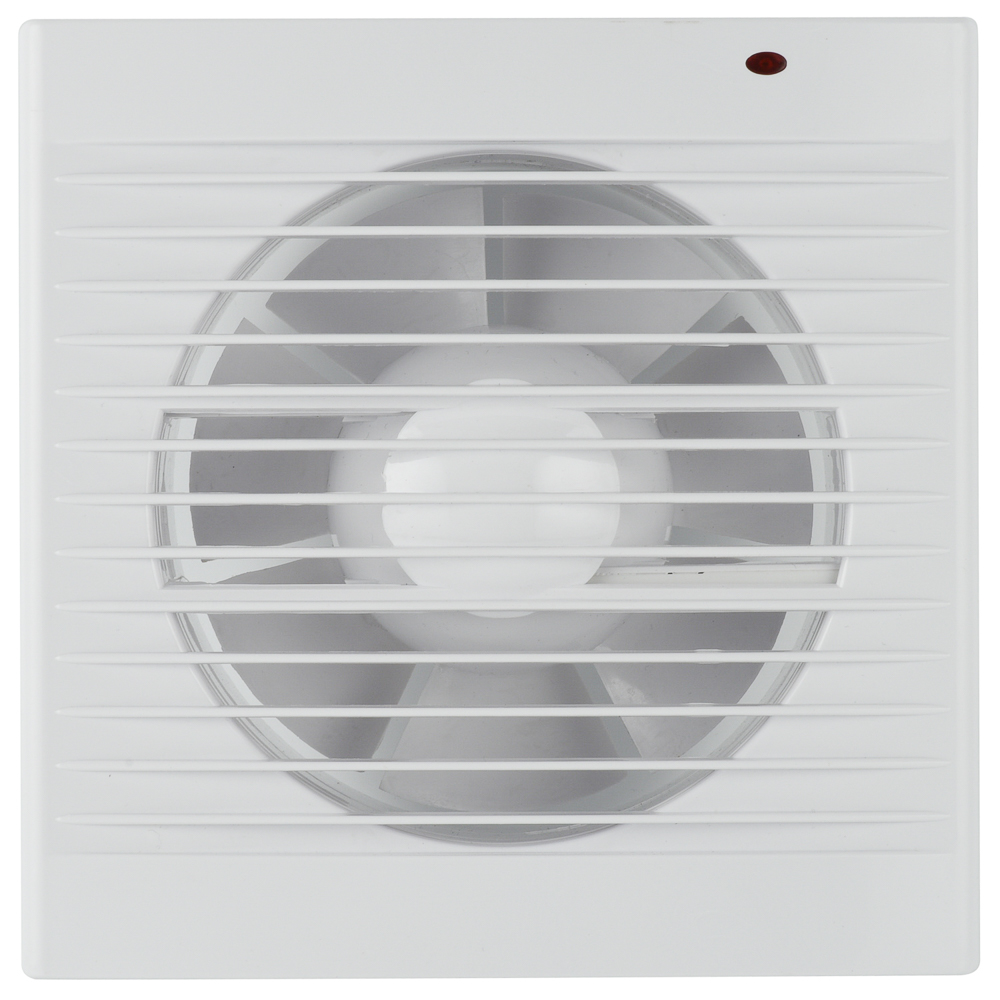
Kitchen exhaust fan designed for high-grease environments, featuring metal construction and grease-resistant components.
- Bathrooms (Residential): High humidity, intermittent operation → Bathroom exhaust fans (WW series) or Bathroom light exhaust fans (9A-10/11A-12). Moisture-proof housing required.
- Kitchens (Commercial): High grease & heat, intermittent high-speed → Kitchen exhaust fans (APB series), 300–1200 CFM, with grease filter compatibility.
- Attics (Residential in US/CA/AU): Heat accumulation, temperature-controlled → Attic exhaust fans (FDC/FDB), weatherproof and UV-resistant.
- Garages/Workshops (Industrial): Fumes & dust, intermittent → Garage exhaust fans (FA/FS series), heavy-duty, 500–1200 CFM.
- Offices & Living Rooms (Commercial): Continuous ventilation, low noise → Ceiling exhaust fans (BPT series), flush-mount, 150–300 CFM.
- Toilets (Residential): Odor control, high humidity → Toilet exhaust fans (WW-Y/M/L series), low noise, moisture-proof.
- Factories (Industrial): Continuous airflow, industrial air exchange → Ventilation exhaust fans (WW-I/F series), 400–1200 CFM, metal or ABS housing.
- Window Rooms (Residential/Apartment): Direct outdoor exhaust, easy installation → Window exhaust fans (WW-G/P/K series), reversible airflow optional.
Market Trends and Speed of Change
Smart exhaust fans equipped with humidity sensors and IoT connectivity are growing at 12.8% annually, far outpacing the standard fan CAGR of 6.3%. This trend pushes manufacturers to integrate automation and real-time monitoring. At the same time, Energy Star certification is becoming a de facto requirement in North America, driving up demand for highly efficient models. The bathroom exhaust fan segment alone was valued at USD 1.08 billion in 2024, with China responsible for roughly 50% of global production. Compliance with UL 507 and IEC 60335-2-80 ensures safety and market access.
Traditional vs. Modern Exhaust Fans
Traditional exhaust fans often rely on shaded-pole motors, fixed speed, and basic on/off control. Modern fans, such as those with AC/EC motors, integrated LED lighting, humidity sensors, and backward-curved impellers, offer higher efficiency and quieter operation. One honest limitation: the upfront cost of a fully featured smart fan can be 20–40% higher than a basic model. However, the long-term savings in energy and maintenance frequently justify the investment.
Outlook for the Next Decade
As building codes tighten globally (e.g., stricter ventilation rates in ASHRAE 62.2 and European standards), demand for high-performance, certified exhaust fans will intensify. Manufacturers that can offer flexible OEM/ODM capabilities, rapid certification updates, and energy-efficient designs will have a competitive edge. The integration of smart controls and modular product families tailored to different construction types (new build vs. retrofit) is expected to define the next wave of product development.
Frequently Asked Questions
- Q: What is an exhaust fan and how does it work?
- A: An exhaust fan is a mechanical ventilation device that removes stale air, moisture, odors, smoke, and airborne contaminants from an enclosed space. It typically consists of a motor-driven impeller, a housing, and a backdraft damper, and it operates by creating negative pressure that draws indoor air out through a duct or direct vent.
- Q: What are the main types of exhaust fans available?
- A: Common installation types include ceiling-mounted, wall-mounted, window-mounted, and inline duct fans. Functionally, they are categorized by application: bathroom exhaust fans, kitchen exhaust fans, attic exhaust fans, garage exhaust fans, toilet exhaust fans, and general ventilation exhaust fans for commercial/industrial use.
- Q: How do I choose the right exhaust fan for a bathroom?
- A: For a bathroom, select a fan rated at least 1 CFM per square foot of room area (or follow local code). Look for models with moisture-proof housing (e.g., ABS with IP rating) and low noise level (≤ 1.5 sones). Aosun offers bathroom exhaust fans (WW-100Q series, 95–300 CFM) and bathroom light exhaust fans (9A-10, 11A-12) that integrate LED lighting for dual-function renovation projects.
- Q: What CFM rating do I need for a kitchen exhaust fan?
- A: For commercial kitchens, CFM should match the hood size and heat output; typical residential kitchen fans range 300–1200 CFM. Aosun’s APB series kitchen exhaust fans cover 300–1200 CFM at 1050–1350 RPM, suitable for restaurants and home kitchens.
- Q: Are certifications like UL or Energy Star important for exhaust fans?
- A: Yes. UL 507 is mandatory for electric fans sold in the United States, ensuring safety against fire and electrical hazards. Energy Star certification guarantees up to 60% less energy consumption compared to standard models, a key procurement criterion in North America. IEC 60335-2-80 is the primary international safety standard for household fans.
- Q: What is the difference between a ceiling exhaust fan and a wall-mounted exhaust fan?
- A: Ceiling exhaust fans are installed flush into the ceiling, ideal for bathrooms and offices where discrete ventilation is needed. Wall-mounted exhaust fans are mounted on exterior walls or windows, suited for rooms without ductwork or where direct outdoor exhaust is required. The choice depends on building structure and ventilation path.
Download Aosun Product Brochure (PDF)
هل لديك أسئلة أو تحتاج إلى مزيد من التفاصيل؟
تواصل مع فريقنا للحصول على عرض أسعار مخصص أو استشارة فورية.
طلب عرض أسعار
املأ النموذج أدناه وسيتواصل معك فريقنا بعرض مقترح مخصص.
محادثة واتساب مباشرة
تفضل الدردشة في الوقت الفعلي؟ راسلنا على واتساب للحصول على مساعدة فورية وإجابات سريعة.
- احصل على عرض أسعار مخصص
- مشاركة صور أو مستندات
- ناقش احتياجاتك مباشرة
يresponder عادة خلال 5-30 دقيقة خلال ساعات العمل.