
دليل اختيار موردي مروحة العادم: إطار استراتيجي لمهنيي المشتريات
A Strategic Framework for Selecting High-Quality Exhaust Fan Suppliers: A Procurement Professional's Guide
Sourcing reliable exhaust fan suppliers is a critical task for procurement professionals in the HVAC, construction, and retail sectors. The market is saturated with manufacturers, making it challenging to distinguish between those offering genuine quality and scalability and those that do not. This guide provides a systematic, multi-dimensional framework to evaluate and select the right manufacturing partner, moving beyond simple price comparisons to assess long-term value, compliance, and innovation capabilities.
Core Evaluation Pillars
Successful supplier selection hinges on four interconnected pillars: Technical & Manufacturing Capability, Compliance & Certification, Product Portfolio & Customization, and Supply Chain & Operational Reliability. A deficiency in any one area can introduce significant risk to your project or supply chain.
1. Technical and Manufacturing Capability Assessment
The foundation of a quality exhaust fan lies in its design and production. Look for evidence of vertical integration and process control.
1.1 In-House R&D and Design
Suppliers with dedicated R&D teams can innovate and adapt to specific market needs. For instance, a manufacturer like Aosun leverages its in-house R&D team with over a decade of industry experience to independently design and develop over 100 product models. This capability allows for tailored solutions for residential, commercial, and industrial applications, rather than offering generic, off-the-shelf products.
Key Question for Suppliers: "Can you share case studies of products you have designed from concept for a specific application (e.g., a high-humidity bathroom or a grease-laden kitchen)?"
1.2 Production Scale and Technology
Scale often correlates with stability and cost efficiency. A factory spanning 20,000+ square meters with 8 modern production lines—including precision injection molding, motor production, and automated assembly—indicates a commitment to efficient, high-volume manufacturing. Such infrastructure, as seen at facilities like the Aosun plants in Ningbo and Foshan, supports an annual output exceeding 1 million units, ensuring they can handle large OEM, ODM, and project orders without capacity constraints.
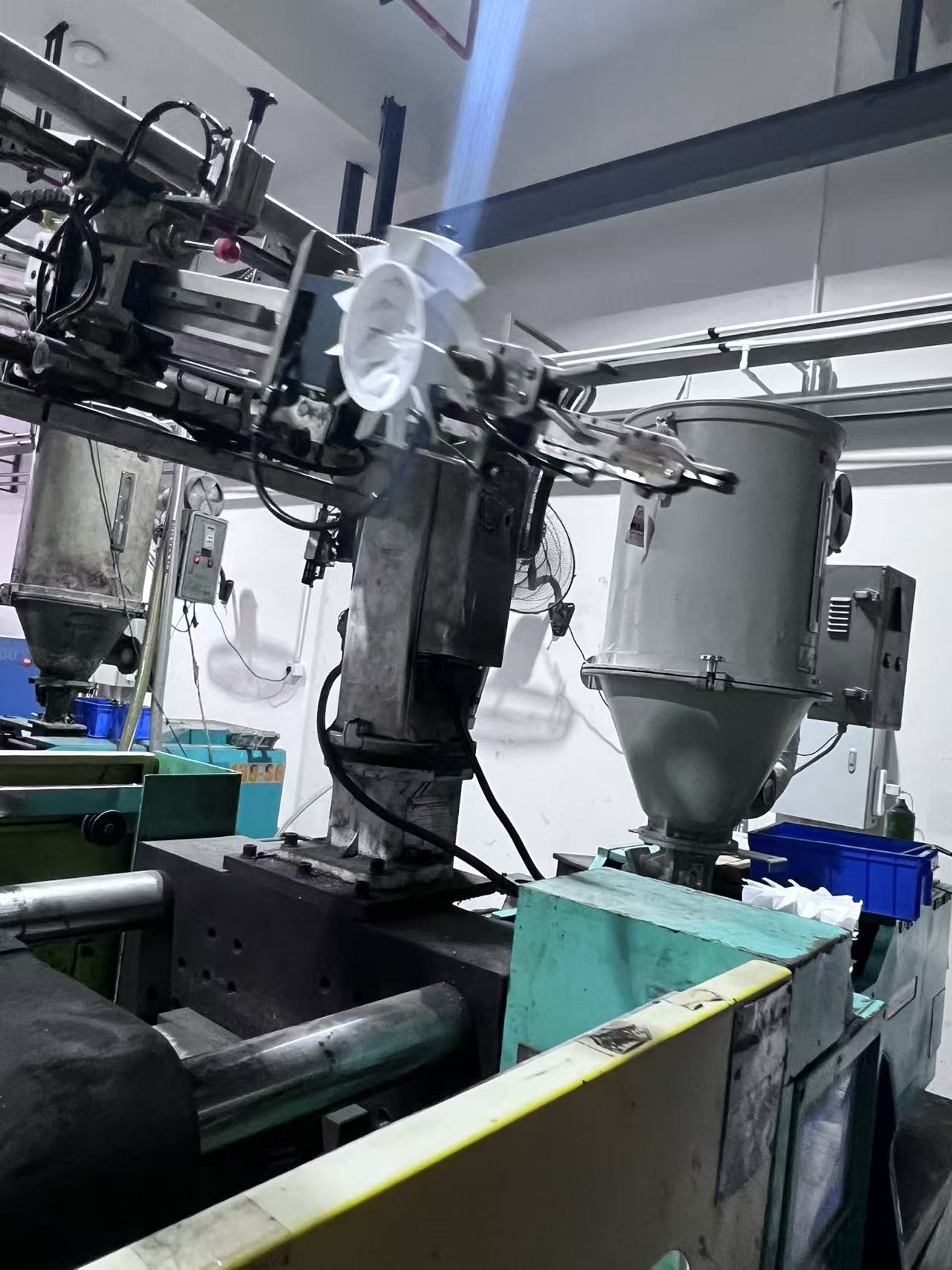
Injection Molding Process: A sign of in-house component control and quality consistency.
2. Compliance, Certifications, and Quality Assurance
Certifications are non-negotiable passports for global trade. They are objective proof that a manufacturer's products meet stringent safety, performance, and environmental standards.
2.1 Mandatory Market Access Certifications
- CE Marking (EU): Comprises LVD (Low Voltage Directive) and EMC (Electromagnetic Compatibility) certifications. It is legally required for selling exhaust fans in the European Economic Area. Verify specific certificate numbers.
- UKCA (UK): The post-Brexit equivalent for the UK market.
- RoHS (Restriction of Hazardous Substances): Ensures the product is free from specific hazardous materials like lead and mercury.
A robust supplier will have these certifications readily available for multiple product lines. For example, reviewing the certificate portfolio of a manufacturer like Aosun reveals active CE-LVD, CE-EMC, UKCA, and RoHS certifications, demonstrating compliance readiness for major markets.
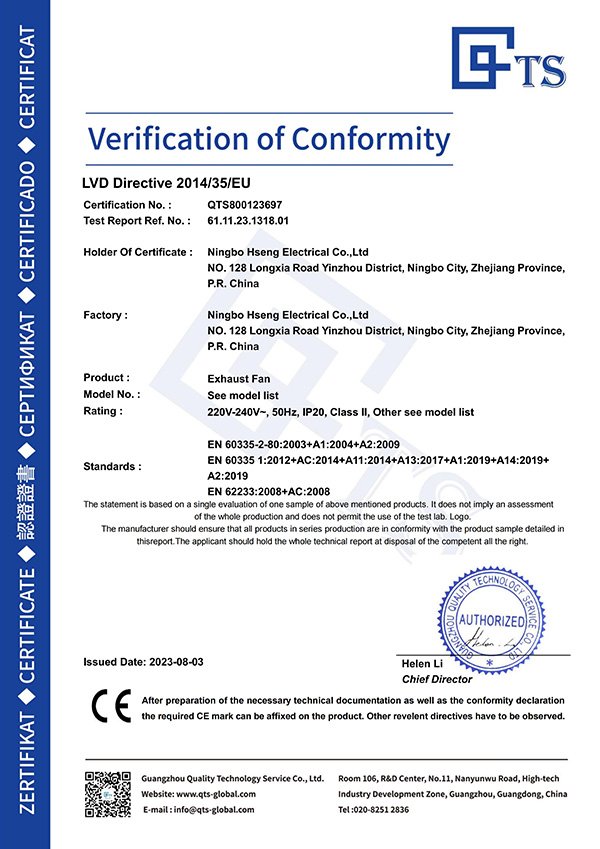
Example of a CE-LVD Certificate: Essential for verifying EU market compliance.
2.2 Quality Control Processes
Certifications are outcomes of a process. Inquire about in-process quality checks. Do they have dedicated testing rooms for air volume, motor performance, and electrical safety? A supplier with a "Fan air volume detection room" and "motor detection" stations, as part of their standard workflow, is proactively ensuring product consistency.
3. Product Portfolio Analysis and Customization Capability
The ability to supply across multiple sub-categories indicates market understanding and manufacturing flexibility.
3.1 Breadth of Application Coverage
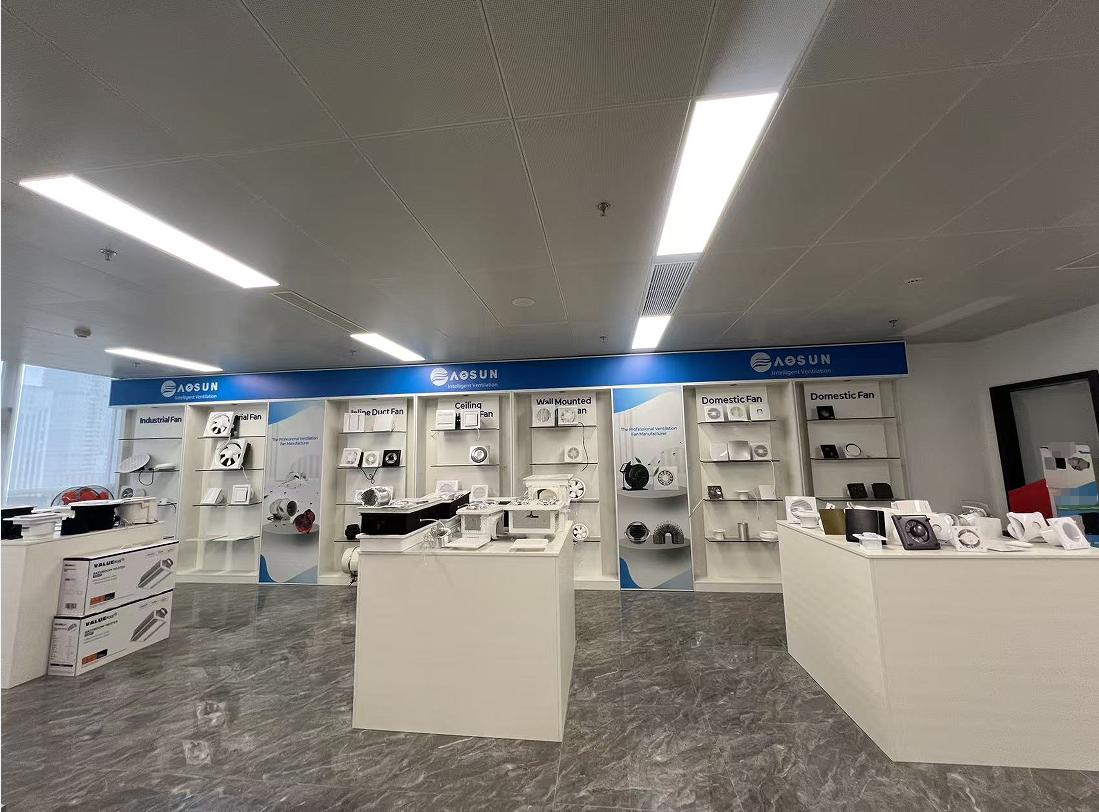
A strong manufacturer should offer solutions for key segments:
- Residential: Bathroom exhaust fans (including combination light-exhaust models), kitchen exhaust fans, attic fans, window fans.
- Commercial/Industrial: High-capacity ventilation exhaust fans, wall-mounted units for warehouses, garage exhaust fans.
3.2 OEM/ODM and Customization Depth
True partnership potential is revealed in customization capabilities. Can the supplier:
- Modify grille designs, colors, or materials?
- Integrate specific motor types for different voltage/frequency regions (110V/60Hz vs. 230V/50Hz)?
- Develop products with unique CFM (Cubic Feet per Minute) ratings or sound level (sone) requirements?
4. Supply Chain and Operational Reliability
The final pillar assesses the supplier's ability to deliver consistently and communicate effectively.
4.1 Global Logistics and Market Experience
A supplier exporting to 50+ countries across Europe, North America, Asia, and Oceania has navigated complex international logistics, customs, and regional standards. This experience reduces the risk of shipment delays or compliance issues for the buyer. It demonstrates an established, reliable export operation.
4.2 Communication and Transparency
Evaluate the professionalism and responsiveness of the sales and engineering teams. A supplier that provides clear, detailed factory information, contact points (e.g., Phone/WhatsApp: +8618606589361, Email: alan.h@elmakelectrical.com), and a professional website (https://www.aosvents.com) signals a structured, transparent business ready for B2B engagement.
Conclusion and Strategic Recommendation
Selecting an exhaust fan supplier should be a strategic decision, not just a transactional one. By applying this four-pillar framework—Technical Capability, Compliance, Product Portfolio, and Operational Reliability—procurement professionals can systematically shortlist and vet potential partners.
Actionable Next Steps:
- Request a Virtual Factory Tour: Ask for a live video walkthrough of key production and QC areas.
- Audit the Certification Portfolio: Request valid copies of CE, UKCA, RoHS, and any other relevant certificates for the specific products you intend to source.
- Ask for Reference Projects: Inquire about similar OEM/ODM projects completed for clients in your target market.
- Evaluate Sample Process: Assess the ease and cost of obtaining pre-production samples for testing and validation.
By prioritizing suppliers who excel across all four pillars, such as established manufacturers with global reach and deep engineering expertise like Aosun, buyers secure not just a product, but a resilient and innovative supply chain partner capable of supporting growth in the dynamic ventilation market.