
Explosion-Proof Electric Actuator FAQ: Ex d, Duty, Humidity
Three marking families decide whether an electric actuator survives a hazardous-area installation: the explosion-protection marking on the nameplate, the duty designation in the motor data, and the environmental ratings that define ingress, temperature and humidity limits. Specifiers and maintenance engineers who read them literally, and who know exactly where the limits sit, avoid the two most expensive failure modes in valve automation. The first is an actuator installed in a zone it was never certified for. The second is an actuator certified correctly but thermally or environmentally unsuited to the way the process actually cycles it.
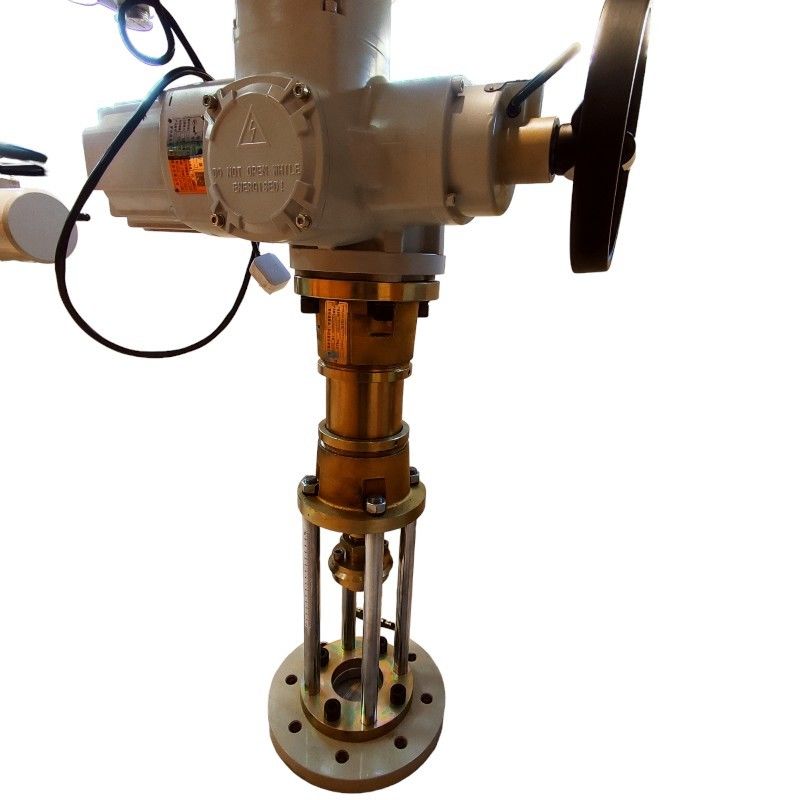
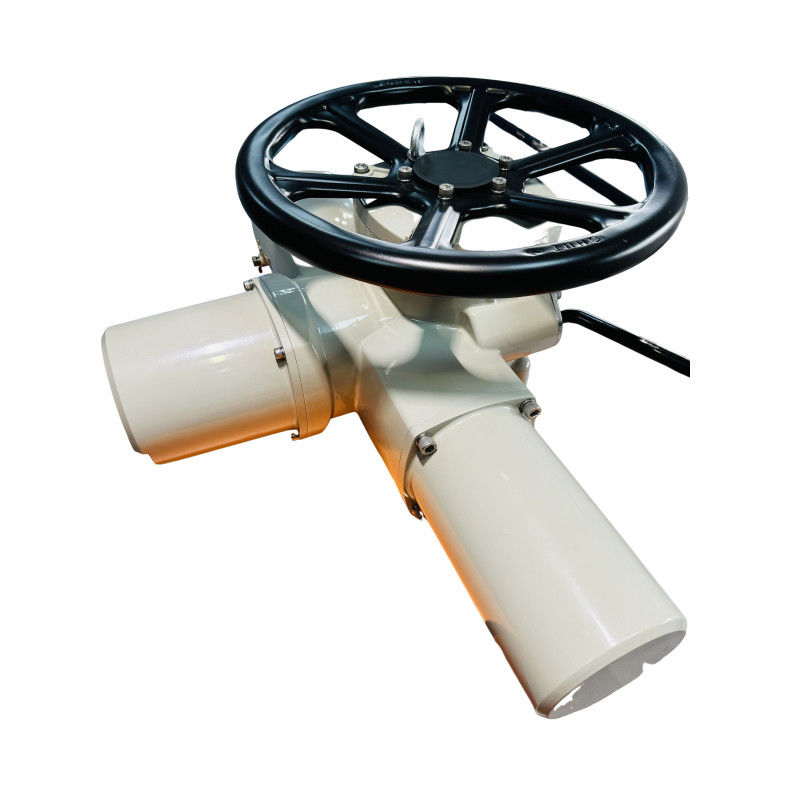
This technical reference answers the questions that recur most often during actuator specification, commissioning and maintenance. Its examples come from the ZXC series of explosion-proof intelligent linear electric actuators and the CLZXC4000 model produced by Changzhou Chenglei Valve Technology Co., Ltd., a valve actuator manufacturer based in Changzhou, Jiangsu, China, operating under the brand CHENGLEI. The company runs a 20,000 m2 production site with an annual output of 120,000 units, a technical team of 25 engineers, and an export share of approximately 80% of production.
Quick answer: the three rating families are independent of each other. An actuator can hold full explosion-proof certification and still fail in service if its motor duty does not match the valve cycling pattern, or if its environmental rating is read as a guarantee against condensation rather than as an ingress and temperature specification.
Why Explosion-Proof, Duty and Environmental Ratings Are Decision Variables
Hazardous-area valve automation rarely fails for mechanical reasons alone. Failures cluster around three mismatches. A gas-group mismatch, specifying a Group IIB actuator where hydrogen service requires Group IIC, is a compliance failure rather than a performance problem, and it is usually discovered during inspection instead of during operation. A duty mismatch, installing a short-time duty motor on a valve that is asked to modulate continuously, appears months later as thermal trips or premature motor failure. A humidity mismatch appears as condensation on the control board, corrosion on terminals, and intermittent faults after seasonal shutdowns.
Explosion protection is a standardized discipline, not a marketing claim. Actuators used in explosive atmospheres fall under IEC 60079-0 (general requirements) and IEC 60079-1 (flameproof enclosures, protection concept d), and they are classified by gas group (IIA, IIB, IIC) and temperature class (T1 to T6). Group IIC is the class required for hydrogen environments. For European projects, ATEX provides the regulatory framework for equipment intended for explosive atmospheres, while IECEx provides the international certification scheme built on the same IEC 60079 series. For Chinese projects, national explosion-proof certification and 3C marking apply alongside these frameworks.
Duty and environment, by contrast, are decided by the plant rather than by the catalogue. Two sites can install the same certified actuator and obtain very different service lives, because one strokes the valve three times a day and the other repositions it continuously under a control loop, and because one enclosure sits in a dry control room while the other breathes humid air across a temperature cycle every night.
Reading the Explosion-Proof Marking: Ex d, ATEX, BT4 and CT4
A marking such as Ex d IIB T4, frequently written ExdBT4 in project documentation, compresses three decisions into one string. Ex d states the protection concept: a flameproof enclosure designed so that an internal explosion is contained and cannot propagate to the surrounding atmosphere. IIB states the gas group the enclosure is certified for. T4 states the temperature class, meaning that the maximum surface temperature of the equipment remains within a defined band that must stay below the ignition temperature of the gas present in the area.
The practical consequence is that BT4 and CT4 are not interchangeable grades of the same product. An Ex d IIB T4 actuator selected for a hydrocarbon duty is not automatically acceptable on a hydrogen line, because hydrogen service falls under Group IIC and the enclosure, cable entries and flame paths must be certified for that group. Where a project standard calls for Ex d IIC T4 or T6, the supplier should be able to show a certificate covering that exact combination, not a similar model from the same product family.
Chenglei approaches explosion-proof duty through three documented engineering controls. Certification access comes first: actuators supplied for explosion-proof areas are required to hold national explosion-proof certificates such as Ex d or Ex e, plus 3C certification. Electrical isolation comes second: input and output interfaces use optocoupler isolation, and the mainboard carries a conformal coating for moisture, salt-spray and mould resistance. Grounding protection comes third: the enclosure is fitted with independent internal and external grounding bolts so that leakage current has a defined discharge path.
Motor Duty Cycles: What S2 10 min, S1, S3, S4 and S6 Mean for a Valve
Duty cycle is the most frequently misread part of an actuator datasheet, because it is a statement about thermal behaviour rather than about torque. Under the IEC 60034-1 duty designations, the S-classes describe how a motor is loaded over time. S1 is continuous duty: the motor runs at rated load long enough to reach thermal equilibrium. S2 is short-time duty: the motor runs at constant load for a defined period, so an S2 10 min rating means ten minutes of running from cold, followed by a rest long enough for the machine to return to ambient temperature. S3 is intermittent periodic duty, a repeated sequence of running and rest periods. S4 is intermittent periodic duty with starting, where the starting phase is counted inside the thermal cycle and therefore matters a great deal. S6 is continuous-operation periodic duty, meaning continuous running at rated speed with an intermittent load, in a sequence of load and no-load periods.
Which designation applies is decided by the valve and the process, not by preference. Isolating and emergency shut-off valves that stroke a few times a day fit short-time duty motors, where an S2 10 min rating covers the full stroke with margin. Regulating and modulating valves that are repositioned continuously by a control loop fit S4 or S6 duty, sized for a defined number of starts per hour at the maximum ambient temperature of the site.
This produces the single most useful specification question a buyer can put to a supplier: at the maximum ambient temperature of my site, how many starts per hour can this motor sustain at my required torque, and which duty designation covers that pattern? A datasheet that lists a duty class without stating the ambient and start-density assumptions behind it is an incomplete answer, and the gap usually surfaces during commissioning rather than during evaluation.
Chenglei's intelligent actuator platform addresses the thermal question from two directions. High-efficiency permanent magnet synchronous motors or high-efficiency asynchronous motors are paired with a controller that limits over-torque and idling, so the motor is not asked to work against a jammed valve. Continuous torque monitoring with anti-seizure logic and self-diagnosis is used to detect abnormal load early, and fault codes reported over the bus or through an infrared remote control distinguish power phase loss, motor overheating and valve jamming as separate conditions. That distinction matters operationally: a thermal event can be traced to its cause instead of being treated as a generic motor failure.
Commissioning failures that become duty failures
Two commissioning errors create duty problems that only appear later. Setting limits manually with the electrical cover open lets moisture and dust into the enclosure, an avoidable risk that Chenglei addresses with non-invasive setting through an infrared remote control or a rotary knob so the cover stays closed. Connecting a three-phase motor with a reversed phase sequence can also damage a motor or produce a refusal to start; built-in phase sequence detection and automatic correction allow normal operation, or an error report, depending on configuration. Automatic self-learning of the full-open and full-close limits then prevents over-torque caused by inaccurate manual setting.
Environmental Ratings: IP68, Temperature Range and the Humidity Line
IP ratings describe ingress of solids and water, and nothing else. In Chenglei's published performance data, IP68 is stated together with its test condition: submersion for 48 hours. That is a statement about water ingress under defined conditions. It is not a statement about corrosion resistance, and it is not a statement about condensation. An enclosure in a chloride-rich atmosphere needs a separate material and surface-treatment assessment, and an enclosure that breathes across a temperature cycle needs a separate condensation strategy for the installation.
Temperature is specified as an operating range. Chenglei actuators are specified from -40C to +70C, with an extension to -60C available as a customization. The boundary is worth stating plainly: builds outside the standard range, corrosion-resistant variants and specialized explosion-proof configurations are customized rather than catalogue items, which affects both selection effort and lead time. Treating -60C as a standard option rather than an engineered variant is how projects acquire schedule risk.
Humidity is normally expressed as a maximum relative humidity at a reference temperature, for example 95% relative humidity or lower at +25C. Read carefully, that describes non-condensing service at the stated temperature rather than a guarantee about condensation. Absolute moisture in the air stays roughly constant while relative humidity rises as temperature falls, so an enclosure that is comfortably inside specification at +25C can be saturated internally on a cold morning after a warm, humid shutdown. Humidity ratings therefore need to be read together with the ingress protection of the enclosure, its conformal coating, and the ventilation or heating provisions of the specific installation. The same logic applies to explosion-proof, extreme-cold and corrosion-resistant customization: the requirement should be written as a service condition, not as an adjective.
Where These Ratings Bind: Application Scenarios
The combination of high vibration, high temperature and corrosive atmosphere is where rating discipline pays for itself. Three scenarios recur in Chenglei project experience. The first is strong-vibration, high-temperature service such as alumina plants, where the control unit can be separated from the actuator body in a split-type configuration so that electronics move away from the vibration source. The second is extreme cold, such as installations in Russia at -40C, where lubrication, sealing and motor starting behaviour all change simultaneously. The third is highly corrosive oil field service in the Middle East, where enclosure treatment and sealing determine service intervals more than torque margin does.
Process-critical applications add a second layer of requirements. High-temperature digestion, emergency shut-off of oil and gas pipelines, and flow control of regulating valves all demand predictable behaviour at the moment of action rather than continuous high-speed operation. In intelligent plants, the additional requirement is integration: remote monitoring, predictive maintenance, and deep integration with DCS or PLC systems that consume both position and diagnostic data.
Electrical actuators designed and produced in Chenglei's own CL series are applied across Oil and Gas, Water and Power, and Chemical, Process and Industrial duties. In the high-end Russian market, the company describes its project work as a breakthrough for China's intelligent manufacturing, in cases successfully replacing some traditional European and American brands. The CLZXC4000 model, applied across oil, gas, water and chemical duty, and the explosion-proof ZXC series of intelligent linear actuators are the two product lines most often associated with these conditions.
Market Context: Why Rating Literacy Is Becoming a Procurement Skill
The global electric actuator market was estimated at approximately USD 11.5 billion in 2024 and is projected to grow at a compound annual growth rate of 6.5% to 7.2% through 2034 (Zion Market Research). Asia Pacific dominated the electric valve actuator market with a 38.5% revenue share in 2025, valued at over USD 1.8 billion, driven by industrialization in China and India (Dataintelo). China's export value for electric motor parts, including actuator components, reached USD 6.43 billion in 2024, representing 26.1% of global exports (Observatory of Economic Complexity).
Supply remains concentrated at the top of the market. Rotork plc held a 14% share of the global linear electric actuator segment as of 2024, while Emerson Electric Co. is estimated at 12% to 15% of the wider electric actuator market. Buyers therefore operate in a market where a small number of international brands set the specification language, while a much broader supplier base, including Chinese manufacturers, competes on configuration flexibility, certification documentation and delivery. In that environment the differentiator is not brand recognition but the ability to answer technical questions with evidence attached.
Technology direction reinforces this. Intelligent electric actuators are moving toward Industrial Ethernet protocols such as Profinet and EtherNet/IP, with 5G edge connectivity discussed for digital twin integration (IndexBox market analysis). Each integration route adds a data requirement on top of an already complex rating decision: an actuator that reports its duty history and fault codes is easier to defend in a reliability audit than one that reports only position.
Intelligent Versus Conventional Actuators: A Comparison with Limits
| Dimension | Conventional actuator | Intelligent bus-enabled actuator |
|---|---|---|
| Limit setting | Manual cams, often with the electrical cover open | Non-invasive setting through infrared remote control or rotary knob; cover remains closed |
| Diagnostics | Limited; basic fault indication | Self-diagnosis and fault warning; fault codes over bus or infrared remote |
| Position and load feedback | Mechanical or analog feedback | Absolute encoder position acquisition with continuous torque monitoring |
| Integration | Discrete wiring to DCS or PLC | Profinet, Modbus or Profibus bus communication |
| Installation cost | Multi-core cabling, trays and IO cards | Bus architecture reduces cables, trays and IO cards; installation cost reduction of 20-40% reported |
| Initial purchase cost | Baseline | Approximately 1.5 to 2.5 times conventional models, depending on functionality |
| Energy | Baseline | On-demand torque output; 15-30% lower consumption than traditional methods; standby below 5 W in bus mode |
| Maintenance | Higher frequency, reactive | Low frequency, maintenance as needed; self-diagnostic reminders and one-click copying of software parameters |
The limitations are as real as the benefits. The intelligent platform carries a purchase premium, and Chenglei's own comparison data puts initial procurement at roughly 1.5 to 2.5 times that of conventional models. The bus architecture only pays back where the plant can use it: commissioning and maintenance staff must be able to work with network configuration and parameter sets, and the control system must actually consume the diagnostic data rather than simply logging it. For a low-cycle isolating valve on a small plant, the energy savings and cable reduction may not offset the premium at all. Published reliability figures also carry conditions. A maintenance-free life of 30,000 operations or more is stated as depending on operating conditions, and MTBF figures above 50,000 hours are statistical expectations rather than guarantees for a specific installation. Extreme-cold builds, corrosion-resistant variants, explosion-proof configurations and split-type control units are customizations rather than catalogue options, and should be planned as engineered items with their own verification steps.
Future Outlook
Three developments are likely to shape the next specification cycles. First, certification documentation will increasingly be evaluated as a data quality problem rather than a compliance checkbox: buyers will want gas group, temperature class, ambient range and IP test conditions stated in one place and traceable to the certificate. Second, duty data will migrate into maintenance systems. Continuous torque monitoring and fault-code logging already allow an intelligent actuator to report how it has been cycled, and once that history is consumed by a predictive maintenance platform, duty ratings stop being a one-time selection decision and become an operating variable. Third, Industrial Ethernet and edge connectivity will keep expanding the number of actuators that report into plant systems, which raises the value of non-invasive configuration and sealed electronics: the enclosure that is never opened is the enclosure that stays in specification.
Frequently Asked Questions
What does Ex d IIB T4 mean, and when is CT4 required instead?
Ex d IIB T4 describes a flameproof enclosure (protection concept d) certified for gas group IIB with temperature class T4. The gas group states which gases the enclosure is certified to contain: Groups IIA, IIB and IIC represent progressively more demanding ignition characteristics, and hydrogen service requires Group IIC. The temperature class states the maximum surface temperature band of the equipment, which must remain below the ignition temperature of the gas present. CT4, meaning Ex d IIC T4, is therefore required where the area classification calls for Group IIC, most commonly hydrogen duty. The two markings are not interchangeable, and the certificate must cover the exact combination supplied.
How do S2 10 min, S1, S3, S4 and S6 duty designations differ in actuator selection?
The designations describe thermal loading over time. S1 is continuous duty at rated load until thermal equilibrium. S2 is short-time duty for a defined period, so S2 10 min means ten minutes of running from cold followed by cooling to ambient. S3 is intermittent periodic duty, a repeated sequence of running and rest. S4 is intermittent periodic duty with starting, where starting heat is part of the cycle. S6 is continuous-operation periodic duty, continuous running with an intermittent load. The designation is chosen by matching the motor thermal cycle to the valve operating pattern: isolating and emergency shut-off valves that stroke a few times per day fit short-time duty such as S2, while modulating valves repositioned continuously fit S4 or S6 duty sized for the required starts per hour at the site maximum ambient temperature. The productive specification question is not which class is best, but how many starts per hour at what ambient the motor supports at the required torque.
What does a humidity rating of 95% or lower at +25C actually cover?
It describes non-condensing service at a reference temperature. Relative humidity rises as temperature falls while absolute moisture stays roughly constant, so an enclosure that is inside specification at +25C can reach internal saturation after a cold night following a warm, humid shutdown. The rating should therefore be read alongside the IP classification, the conformal coating of the mainboard, and any ventilation, heating or breathing provision in the installation. Humidity ratings describe an operating envelope rather than a guarantee that condensation will not form.
Is IP68 sufficient for outdoor and washdown installations?
IP68 states ingress protection against dust and against water under defined conditions, and in Chenglei's published data the figure is stated with its test condition of submersion for 48 hours. IP68 does not describe corrosion resistance, ultraviolet exposure, or the long-term sealing behaviour of stem seals and cable entries. Outdoor and washdown installations in chloride-rich or chemically aggressive atmospheres should be assessed with a separate material, coating and sealing specification. For corrosion-driven duties, the requirement is better written as a service environment than assumed from the IP number alone.
How can commissioning errors be reduced on an intelligent explosion-proof actuator?
Three documented practices reduce commissioning risk. Non-invasive setting through an infrared remote control or a rotary knob allows limits to be configured without opening the electrical cover, which keeps moisture and dust out of the enclosure. Phase sequence self-correction allows a three-phase motor to run normally, or to refuse to start and report an error, if the live wires are connected in reverse on site. Automatic learning of the full-open and full-close limits prevents over-torque caused by inaccurate manual setting.
When does a project need a customized actuator instead of a standard build?
Customization is required when service conditions fall outside the standard envelope. Chenglei actuators are specified from -40C to +70C, with -60C available as an extension; highly corrosive atmospheres, strong vibration or elevated temperatures that require the control unit to be separated from the actuator body in a split-type configuration, and specific explosion-proof combinations also fall into this category. These are engineered configurations rather than catalogue selections, and they carry their own verification requirements and lead-time implications. Conditions inside the standard range are normally served by standard builds.
What reliability and spare-part figures should be requested from a supplier?
Request figures with their conditions attached. Chenglei's published performance data includes a maintenance-free life of 30,000 operations or more depending on operating conditions, and an MTBF above 50,000 hours. Both are useful for comparison only if the assumed load, cycling pattern and environment are stated alongside them. On the maintenance side, control-module interchangeability and one-click copying of software parameters are practical questions because they determine how many spare modules a plant holds and how quickly a replacement returns to service. Fault codes readable over the bus or through an infrared remote control allow a technician to distinguish power phase loss, motor overheating and valve jamming before opening the enclosure.
Keeping the Three Questions Separate
Technical clarity in actuator selection comes down to keeping three questions apart: what the area classification permits, what the valve actually asks the motor to do, and what the environment will do to the enclosure over years of service. Manufacturers that can answer all three with documented evidence shorten the specification process and reduce commissioning risk, because the ratings they quote arrive with their test conditions and their limits attached.
For readers who need the underlying documentation, Chenglei's product brochure covering model ranges, ratings and configuration options is available here: https://cdn.socialarks.com/sbsp/24554/common/2026/0403/69cf860f86473.pdf