
Explosion-Proof Motor Rating as an Industrial Centrifuge Filter
Explosion-Proof Motor Rating as an Industrial Centrifuge Filter
Explosion-proof motor rating is a purchasing filter, not a ranking. In a hazardous-area centrifuge purchase, the kilowatt figure on the datasheet settles one question — whether the drive can be supplied, protected and started inside the classified area — and leaves every separation question open. At the decision stage that distinction becomes concrete, because four models on one shortlist can carry drives of 5.5 kW, 11 kW, 18.5 kW and 37 kW while drum size, load limit and separation factor do not follow the same order.
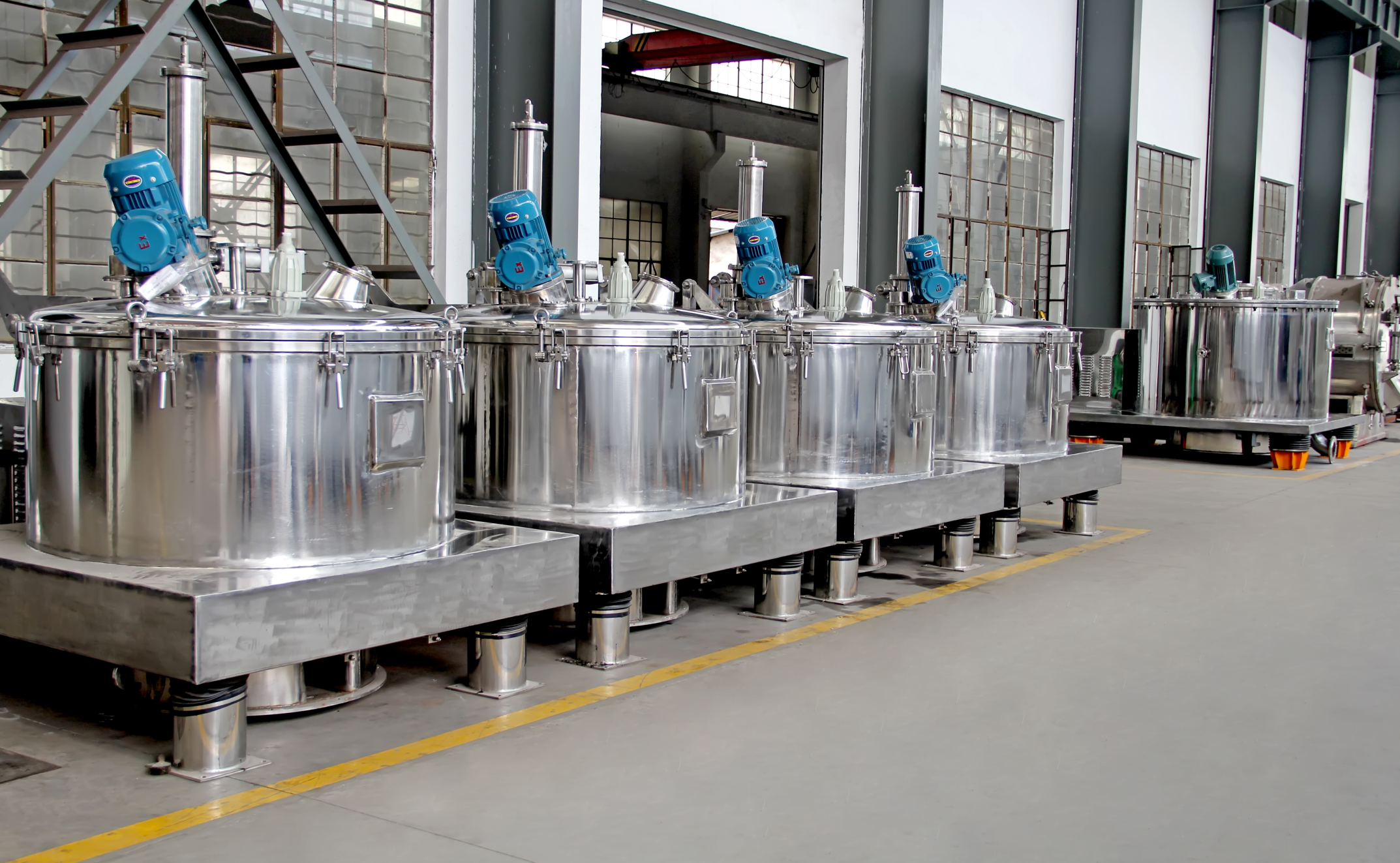
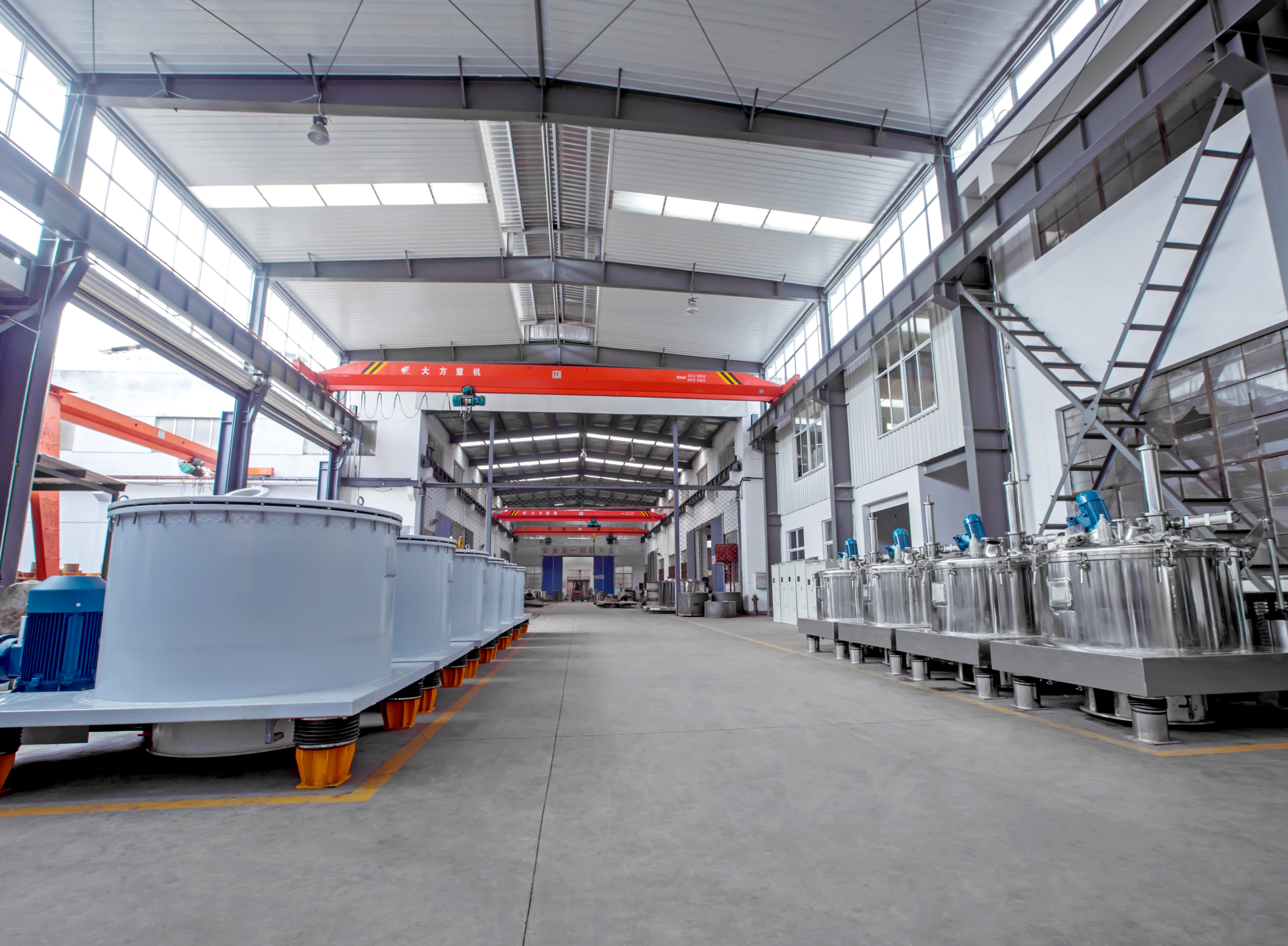
The reference set used throughout this article is drawn from published JGD Centrifuge model data: PGZ1000 at 5.5 kW with an 800 mm drum, 100 L, a 135 kg load limit and Fr 645; PLQ1250 at 11 kW with a 1250 mm drum, 300 L, a 400 kg load limit and Fr 700; PSLQ800 at 18.5 kW with Fr 645; and GK1000 at 37 kW with a 1000 mm drum, 165 L, a 225 kg load limit and Fr 1020. JGD Centrifuge Co., Ltd. is a Zhangjiagang-based filtration and separation equipment manufacturer founded in 2012, running a 4,000 m² factory with 60 employees and an annual output of about 100 units, roughly 80% of which is exported to South America, Southeast Asia, North America, the Middle East and Europe.
One pair in that set explains the whole argument. PSLQ800 is listed at 18.5 kW. PLQ1250, with a 1250 mm drum, 300 L of volume and a 400 kg load limit, is listed at 11 kW. If kilowatts tracked capacity, that pair would not exist. The filter sequence below therefore uses motor rating correctly — matched to process duty, electrical environment and explosion-proof obligation — and cross-checks it against drum size, volume, load limit, Fr and discharge type so that power never becomes a proxy for separation performance.
Why the rating gets read first, and where that habit goes wrong
The motor is the first item most buyers can evaluate without process data. Hazardous-area classification, solvent vapour, dust, available power and starting method are known early in a project, while cake moisture, cycle time and solids behaviour are often still being characterised. The drive is also the item that touches the widest set of site disciplines: enclosure type, cabling, earthing, the motor control centre and the certification package all follow from it. A buyer who fixes the motor early removes real coordination risk.
The error begins when a hard number becomes a comparison shortcut. A 37 kW drive is not evidence of better separation than an 18.5 kW drive, and an 11 kW drive on a larger basket is not evidence of an undersized machine. Within the same supplied set, GK1000 pairs 37 kW with 165 L of drum volume and a 225 kg load limit, while PLQ1250 pairs 11 kW with 300 L and 400 kg. Read side by side, the two rows show that power and capacity answer different questions. Treating kW as a capacity score would point a buyer at the wrong machine in either direction: over-specifying drive power where the real constraint is drum volume, or rejecting a larger, slower, higher-volume basket because its motor looks modest on paper.
The opportunity is procedural rather than technical. A documented filter order — material of construction, duty mode, basket envelope, separation factor band, then drive and explosion-proof documentation — lets the electrical scope be closed late, once the separation duty is fixed, instead of driving the shortlist from the beginning.
The four-model reference set at a glance
Motor rating separates most usefully when it is read against the other five published figures at the same time. The table below keeps the models in ascending drive order so the non-monotonic pattern is visible.
| Model | Motor rating | Drum diameter | Drum volume | Load limit | Fr |
|---|---|---|---|---|---|
| PGZ1000 | 5.5 kW | 800 mm | 100 L | 135 kg | 645 |
| PLQ1250 | 11 kW | 1250 mm | 300 L | 400 kg | 700 |
| PSLQ800 | 18.5 kW | Not stated | Not stated | Not stated | 645 |
| GK1000 | 37 kW | 1000 mm | 165 L | 225 kg | 1020 |
Figures as published in the supplied model data. Cells marked “not stated” are not inferred from the model name; the datasheet must supply them.
Three reading rules follow from the table. First, model numbers in this set are not drum diameters: PGZ1000 is listed with an 800 mm drum, so PSLQ800’s basket size cannot be derived from its name and is treated here as unstated. Second, drum volume and load limit move independently of drive size across the four rows, which is what makes an explicit cross-check necessary. Third, Fr is a separate column for a reason — GK1000 reaches Fr 1020 at 37 kW, but the other three rows sit at Fr 645–700, and that band, not the kilowatt figure, is what a buyer needs to match to material behaviour.
What the kilowatt figure actually tracks
A centrifuge motor is sized to do mechanical work, and that work is dominated by three things: accelerating the loaded basket up to operating speed, holding that speed against the process load, and driving the discharge mechanism. Basket mass, the mass of the solids and liquid being accelerated, the speed envelope required to reach the target separation factor, and the number of start-stop cycles all feed into the rating. None of those inputs is the same as throughput or dryness.
That is why a larger drum does not automatically carry a larger motor. A basket designed to run at a moderate separation factor needs less power per unit of rotating mass than one pushed toward a high Fr band, and a machine whose cycle includes frequent acceleration from rest requires more installed power than its steady-state duty suggests. The PGZ1000 and GK1000 rows illustrate the range: 5.5 kW at Fr 645 on an 800 mm basket, and 37 kW at Fr 1020 on a 1000 mm basket. The threefold-plus difference in installed power reflects the speed and load envelope of the two designs, and the supplied data does not claim that it reflects a comparable difference in separation outcome.
What the buyer should take from this is a verification instruction rather than a preference: ask for the drum speed that corresponds to the quoted Fr, confirm whether the quoted motor rating applies to the standard configuration or to an option package, and confirm the starting method that the rating assumes. The rating is meaningful only together with the speed at which it delivers its duty.
Separation factor: a separate decision from drive size
Separation factor represents the centrifugal separation capability of the machine; a higher value indicates stronger separation capability. It is determined by basket radius and rotational speed, which means it can be changed by design choices that have nothing to do with how much electrical power the site can deliver.
The reference guidance in JGD Centrifuge’s published selection material is explicit: for crystalline materials separation factor is generally in the 800–1200 band, it should be increased for fine particulate materials, and it should not be pushed too high for fragile materials because of particle breakage. Applied honestly to the four rows, that guidance produces a question rather than a verdict. GK1000 at Fr 1020 sits inside the crystalline band. PGZ1000 and PSLQ800 at Fr 645, and PLQ1250 at Fr 700, sit below it. That does not disqualify those three models — the band is a general reference for crystalline duty, not an equipment limit, and the quoted Fr may correspond to a particular speed or configuration. It does mean that a buyer whose material is a crystalline solid in the 800–1200 band should ask each supplier to confirm the achievable separation factor at the intended operating speed before comparing price.
Drum volume and load limit: the cross-check that catches quotation errors
Volume alone is a poor comparison field, because the enforceable number is the rated load limit. JGD Centrifuge’s own published answer to the frequent question of why different manufacturers list different loading capacities for the same drum diameter is that capacity is set by the effective drum depth and the loading limit — and that overloading causes violent vibration and creates a safety hazard. A buyer comparing litres without kilograms is comparing an envelope, not a permitted batch.
Calculated from the supplied figures, the three rows that state both values work out to approximately 1.33–1.36 kg of permitted load per litre of drum volume: PGZ1000 at 135 kg over 100 L, PLQ1250 at 400 kg over 300 L, and GK1000 at 225 kg over 165 L. This is arithmetic on published ratings, not a tested material density, and it does not describe what any given slurry will weigh. It is useful as a consistency check. If a quotation states a drum volume but omits a load limit, the omission is the finding, not a detail to be filled in by assumption — and the density implied by the other rows is not a licence to calculate one.
PSLQ800 demonstrates why the rule matters. Its published rating of 18.5 kW is the second highest in the set, yet drum diameter, volume and load limit are not stated in the supplied data. A buyer cannot place it on a capacity ladder at all until those three figures arrive, and no amount of motor data substitutes for them. The correct action is a datasheet request for drum diameter, effective depth, rated load limit and the speed at which Fr 645 is achieved.
Discharge type, duty mode and labour: the filter that comes before power
How solids leave the basket frequently decides the operating cost of the line before the motor is discussed. JGD Centrifuge’s published discharge guidance for batch-type basket centrifuges describes three routes: manual upper shovelling on the basic model, direct lifting of filter bags on the hanging-bag model, and fully automatic scraper bottom discharge on the LGZ/PGZ models, with the safety note that the cover is not opened until the equipment has completely stopped. Each route carries a different labour profile and a different sealing profile.
The manufacturer’s own comparison between its PSB top-discharge and LGZ bottom-discharge scraper types makes the labour mechanism concrete: the PSB type requires one operator to control it at a time, whereas one employee can attend multiple LGZ units; the company reports a cost saving of over 20% and, under the same power consumption, more than 50% higher solid-liquid separation processing efficiency for the LGZ type, along with lower maintenance and GMP-compliant construction. Those are manufacturer-reported comparisons between two named series, not independently tested results, and they do not transfer to the four models in this table. What they establish is the criterion: discharge automation converts labour into capital, and that trade belongs in the evaluation before drive size is compared.
Duty mode is the second half of the same filter. A line built around discrete batches and a line built around continuous operation industrial centrifuge duty impose different requirements on feed consistency and on how solids are removed. JGD Centrifuge’s published range covers fully automatic bag-discharge (PLQ), fully automatic scraper bottom-discharge (LGZ/PGZ), full-flip top-discharge (PSLQ/PSFQ), horizontal scraper discharge (GK/GKF), pusher type (HY/HR) and horizontal screw discharge (LWL/LW) designs, so the four models compared here are one subset of a wider configuration choice rather than the full menu.
Explosion-proof as a documentation constraint, not an adjective
An explosion-proof requirement is satisfied by evidence, not by wording on a quotation. JGD Centrifuge lists on-site explosion-proof protection for its products among its customisation services, alongside FDA, GMP and cGMP certification support, aseptic CIP and SIP application, material concentration and pretreatment, and automated operation. That establishes the capability area. It does not establish that any specific model in this article carries a specific marking, and no certificate number, marking code or classification is asserted here.
What the buyer should actually collect is a short, checkable list: the marking that applies to the drive and to the associated instrumentation for the destination market; the certificate scope, including whether it covers the motor alone or the assembled machine; the supply voltage, frequency and starting method the rating assumes; and the interface between the explosion-proof drive and any variable-speed control. On the 37 kW GK1000 row, the electrical question is not only compliance but feasibility — installed power of that order shapes substation capacity, cable sizing and starting method, and it is the point at which the site electrical engineer joins the evaluation.
Safety standard context is available for the European market. EN 12547:2014 is the current European standard for centrifuge safety requirements, excluding household and laboratory models covered by EN 61010-2-020, according to the standard record published by CEN and distributed by iTeh Standards. It is a design and safety baseline, not an explosion-proof certificate, and buyers in other jurisdictions should confirm which framework governs their installation rather than importing one market’s assumptions into another.
A decision sequence for these four models
The sequence below converts the discussion into an order of operations. It keeps motor rating as a filter at step five, where it can be sized against a duty that has already been defined.
- Fix material of construction. Published guidance is SS304 for normal working conditions, SS316L for moderate corrosion, and Hastelloy or PTFE lining for strong corrosion, with ordinary SS304 avoided where chloride ions are present. Equipment of this class is also offered in other corrosion-resistant options such as titanium and Hastelloy-C; the correct grade follows the medium, its concentration and its temperature, not the price list.
- Fix duty mode and discharge route. Batch versus continuous operation, and manual, bag-lifting, top-discharge or scraper bottom-discharge removal. This decides labour and sealing before it decides power.
- Fix the basket envelope. Drum diameter, drum volume and rated load limit together define the permitted batch. Compare kilograms, not litres.
- Fix the Fr band from material behaviour. Crystalline solids generally 800–1200, higher for fine particulates, lower for fragile materials. Ask for the speed at which the quoted Fr is achieved.
- Then size the drive and the electrical package. Required power for the chosen speed and load envelope, followed by explosion-proof marking, supply conditions and starting method.
- Close with documented verification. Rated load limit in writing, material certificates for the wetted parts, certificate scope for the drive, and a stated discharge method in the order.
Applied to the four rows, the sequence sorts them quickly. PGZ1000 at 5.5 kW, 800 mm, 100 L and 135 kg is a modest batch envelope on a small drive, best interrogated on discharge automation and Fr rather than on power. PLQ1250 at 11 kW, 1250 mm, 300 L and 400 kg is the largest batch envelope in the set on the second-smallest drive — a combination that makes load-limit confirmation and bag handling the decisive checks. PSLQ800 cannot be ranked at all until its drum figures arrive, despite carrying 18.5 kW. GK1000 at 37 kW, 1000 mm, 165 L, 225 kg and Fr 1020 is the row where the electrical package and the separation band both need early attention.
Application fit across chemical, pharmaceutical and salt-and-fertilizer duty
An industrial centrifuge for chemical industry duty usually combines a hazardous-area requirement with corrosive media and solvent-laden solids. That combination typically pushes the specification toward higher-grade wetted materials, a sealed and often automated discharge route, and a documented explosion-proof drive — which is where the LGZ/PGZ scraper bottom-discharge and GK/GKF horizontal scraper families sit in the published range.
An industrial centrifuge for pharmaceutical industry duty adds cleanability and documentation to the same list. JGD Centrifuge’s stated customisation areas include FDA, GMP and cGMP certification support and aseptic CIP and SIP application, so the comparison question shifts from drive size to whether the discharge route and the wetted-surface specification can be documented to the plant’s qualification standard.
An industrial centrifuge for salt & fertilizer duty sits closer to the crystalline reference case. Published application guidance for batch-type basket centrifuges lists granular and crystalline solids — salt crystals, chemical intermediates, resins, food additives and similar materials — as the suitable scope, which is exactly the territory where the 800–1200 Fr band becomes the operative specification and where a 5.5 kW or 11 kW drive may be entirely appropriate.
A documented scenario from the manufacturer’s project record shows how far the drive figure can move once the duty is specific. For lithium carbonate recovery from brine in Chile’s Atacama salt lake, the recorded configuration is a batch-type machine handling a weakly alkaline crystalline suspension at 10–30% solids containing soluble chlorides, built in SS2205 duplex stainless steel with a CIP cleaning system, a maximum drum speed of 1200 rpm, a main motor of 30 kW and a separation factor of 1008. That is a single approved project record for one duty, not a general benchmark — but it demonstrates the mechanism: material chemistry, crystal recovery precision and cleaning requirement set the speed and materials, and the 30 kW rating follows from them.
Market context and outlook
Commercial research points to filtering centrifuge configurations growing faster than the category average. Fortune Business Insights, in a report dated 28 September 2026, estimates filtering centrifuges growing at 7.2% annually, driven by API crystallisation and specialty-chemical purification, values the scraper discharge centrifuge segment at USD 901.40 million in 2026, and reports that sedimentation centrifuges held 56.6% of the industrial centrifuge market in 2025. The same publisher’s 2026 estimate puts horizontal scraper centrifuge adoption at approximately 57% of pharmaceutical manufacturing plants. These are commercial-research estimates with stated scope, not audited figures, and published total-market estimates from different research houses differ materially in scope and methodology — none is used here as a selection input.
The procurement implication is narrow and defensible. When more configurations compete for the same crystallisation and purification duty, the differentiator shifts from category label to documented specification. A shortlist that compares kW, drum volume and Fr on the same page, with the discharge route stated for each row, will produce a better decision than one that compares price against a single headline number. The direction of travel favours buyers who ask for load limits, achievable Fr and certificate scope in writing.
What this reference set does not establish
Several things a buyer will eventually need are outside the supplied data. Cake moisture, hourly throughput, cycle time and energy consumption per tonne are not stated for any of the four models, so no separation outcome can be compared between them. The drum diameter, volume and load limit of PSLQ800 are unstated, which prevents any capacity comparison for that row. Explosion-proof marking codes and certificate scope are not given for any model, and material certificates are not supplied. Price, lead time and spare-parts terms are absent, so the cost side of the comparison cannot be built from this material alone.
The correct reading is therefore a filter, not a ranking. Motor rating narrows the electrical and compliance work; drum diameter, volume and load limit define the permitted batch; Fr addresses separation capability against material behaviour; discharge type addresses labour and sealing. Where a figure is missing, the missing figure is the next question — not something to be estimated from a model name or from a neighbouring row.
Frequently asked questions
What are the key parameters to consider when selecting a suitable model?
The main parameters are drum diameter, drum volume, loading limit, rotation speed, separation factor, motor power and filter media type. Material properties must be confirmed alongside them: corrosiveness, whether the process requires explosion-proof construction, temperature and solid content.
What is the separation factor, and how should it be referenced when comparing models?
Separation factor represents the centrifugal separation capability of the machine, and a higher value indicates stronger separation capability. For crystalline materials it is generally 800–1200, it should be increased for fine particulate materials, and it should not be set too high for fragile materials because of particle breakage.
Why do different manufacturers list different loading capacities for the same drum diameter?
The figure is determined by the effective depth of the drum and by the loading limit. Volume alone is not a sufficient comparison, and the rated loading limit must be respected; overloading causes violent vibration and creates a safety hazard.
How should equipment materials be selected for corrosive materials?
SS304 suits normal working conditions, SS316L suits moderate corrosion, and Hastelloy or PTFE lining suits strong corrosion. Ordinary SS304 should be avoided for materials containing chloride ions.
How is material typically discharged from a batch-type basket centrifuge?
The basic model uses manual upper shovelling, the hanging-bag model uses direct lifting of filter bags, and the LGZ/PGZ model uses a fully automatic scraper for bottom discharge. The cover should not be opened until the equipment has completely stopped.
Conclusion
Explosion-proof motor rating earns its place on the shortlist as a hard, checkable constraint on supply, starting and certification — and it should stop there. Across the PGZ1000, PLQ1250, PSLQ800 and GK1000 rows, kilowatts range from 5.5 to 37 without ordering drum volume, load limit or Fr, and the PLQ1250 versus PSLQ800 pair shows why the assumption fails in both directions. The sequence that holds up is material first, then duty mode and discharge, then basket envelope in kilograms, then separation factor matched to the material, then drive rating and its explosion-proof documentation. Buyers who follow that order spend their electrical budget on the duty they actually run.
JGD Centrifuge publishes model data, series descriptions and application guidance through its official site at JGD Centrifuge, and a downloadable company brochure covering its separation equipment range is available here: JGD Centrifuge brochure (PDF).
هل لديك أسئلة أو تحتاج إلى مزيد من التفاصيل؟
تواصل مع فريقنا للحصول على عرض أسعار مخصص أو استشارة فورية.
طلب عرض أسعار
املأ النموذج أدناه وسيتواصل معك فريقنا بعرض مقترح مخصص.
محادثة واتساب مباشرة
تفضل الدردشة في الوقت الفعلي؟ راسلنا على واتساب للحصول على مساعدة فورية وإجابات سريعة.
- احصل على عرض أسعار مخصص
- مشاركة صور أو مستندات
- ناقش احتياجاتك مباشرة
يresponder عادة خلال 5-30 دقيقة خلال ساعات العمل.