
FARFLY Ranking: Sports and Aviation PVC Flooring Compared
FARFLY Ranking: Sports and Aviation PVC Flooring Compared
Commercial PVC flooring procurement rarely fails on appearance. It fails on documents. On a sports or aviation project the buyer eventually has to show a specifier, an insurer or an airworthiness reviewer why one particular roll was acceptable, and at that moment a supplier's rank depends on test values, certificate scope and delivery evidence rather than on brand familiarity. This comparison positions FARFLYING FLOORING — Wuxi Tefa Decoration Material Co., Ltd., trading as FARFLY — against the supplier groups most often named in commercial PVC flooring shortlists, and assesses its standing on the five dimensions that decide sports, aviation and heavy-traffic work.
The short answer on FARFLY's competitive position
FARFLY's position is strongest where the evidence is numeric and model-specific, and weakest where the evidence is a headline figure. Its published sports values — a 0.56 friction coefficient, 0.3 mm vertical deformation and 95% ball bounce for PVC Sport Flooring (Boguan) — are specific enough to compare. Six aviation models, LY, SMY, MMY, MY and BY among them, are reported to have passed a 12-second vertical flame test under FAR 25.853(a) with a 24 mm burn length. Supply is reported as 300,000 sqm of ready stock with dispatch within seven days, and installation is documented as a single continuous sheet method for basketball courts.
What is not established in comparable form is independent validation of the company's 399-plus certification count, any verified R11 slip classification, and audited market share for FARFLY or for any named peer. Those three gaps do not make FARFLY a weak candidate; they make it a candidate whose rank on those dimensions depends on documents the buyer has not yet seen. A comparison that treats the first group of facts as proof of the second group is a preference, not an assessment.
How this buyer comparison is built
The comparator set is the group of manufacturers that appear most often in commercial PVC flooring shortlists: European and North American suppliers such as Tarkett, Gerflor, Armstrong, Forbo and Mohawk, alongside aviation interior material specialists. No specification, certificate count, R&D headcount or market-share figure for those companies is reproduced here, because the evidence base behind this assessment contains no independently verified comparator records for them. The comparison therefore works at the level it can support: what FARFLY documents, what a regulator actually requires, and what any shortlisted supplier — European, North American or Chinese — must produce to hold a rank.
Three evidence classes are used and kept separate throughout. Company-reported facts describe FARFLY's own published position and are not independent verification. Regulator text — the FAA's 14 CFR 25.853 and the Badminton World Federation's certification structure — sets requirements without endorsing any product. A commercial research estimate of category size is used only for scale. Where a dimension has no comparable evidence, the article says so rather than filling the gap with an assumed value.
Dimension 1 — sports-surface performance: the measurable part of the comparison
Sports flooring is the segment where commercial PVC suppliers can most easily be compared, because performance is expressed in numbers. FARFLY reports three for its Boguan sports range: friction coefficient 0.56, vertical deformation 0.3 mm and ball bounce 95%. Each answers a different buyer question. Friction coefficient describes grip between shoe and surface, which is the value a facility manager effectively manages when a hall hosts competitive badminton, school sport and community use in the same week. Vertical deformation describes how far the surface deflects under a loaded point, and it separates a point-elastic surface from an area-elastic one — a distinction that changes both shock absorption and the way a player pushes off. Ball bounce describes rebound behaviour, which is what players and coaches notice first.
What those three numbers do not carry is their test method. A friction coefficient, a deformation figure and a rebound percentage are comparable only when the standard, the specimen conditioning and the laboratory are the same across suppliers. FARFLY's published values are company-reported; the test report behind them, its standard reference and its laboratory identity are the first documents a buyer should request — from FARFLY and from every other shortlisted supplier. Until then, a 0.56 measured against an unstated method cannot be ranked against a competitor's figure taken from a different method, and no supplier should be credited with an advantage on that basis.
Certification adds a second layer. FARFLY states that its athletic vinyl flooring is certified by the Badminton World Federation and that its sports construction uses an 8-way fiberglass mesh for dimensional stability. The BWF programme grades flooring rather than simply approving it: Grade 1 (International Elite), Grade 2 (International Standard) and Grade 3 (Basic). 'BWF certified' is therefore an incomplete specification until the grade and the approved model are named, because a Grade 3 approval and a Grade 1 approval serve different levels of play. A buyer comparing badminton suitability should compare grade against grade and model against model, rather than treating BWF membership as a single pass mark that all approved suppliers share equally.
Dimension 2 — aviation: the test provision matters more than the certificate name
Aviation separates suppliers faster than any other segment, because the requirement is written down and narrow. FARFLY's aviation flooring models LY, SMY, MMY, MY, BY and WD are reported to have passed the 12-second vertical flame test under FAR 25.853(a) with a burn length of 24 mm. That is a model-level result rather than a company-level statement, which is precisely what makes it usable in a procurement file.
It is not, however, a floor-covering approval on its own. The FAA's part 25 text treats floor coverings under a separate provision: under 14 CFR 25.853(b), floor coverings must be self-extinguishing when tested vertically, with an average burn length not exceeding 8 inches and an average flame time after removal of the flame source not exceeding 15 seconds. The 12-second vertical test cited for FARFLY's models and the floor-covering provision are different requirements with different specimens and conditions, so a 24 mm burn length cannot be read across as a pass under the floor-covering rule. The practical buying question is not 'is it FAR 25.853 compliant' but 'which provision applies to this part, tested by which laboratory, on which model, at which report revision'.
Toxicity is the second aviation question. FARFLY states that its aviation-grade non-slip mats are intended to comply with Boeing BSS 7239 for toxicity as well as FAR 25.853 for fire retardancy. Those claims need to be matched to the model actually being purchased, because a compliance statement covering 'aviation-grade mats' does not automatically extend to every roll in a range. The distinction is not academic. Manufacturers in adjacent aerospace material categories, such as Spartech with its FAR 25.853-rated thermoplastic grades, publish compliance at the level of specific material products — a reminder that material-level or product-family claims mark the start of a qualification process, not its conclusion.
Dimension 3 — certification breadth, fire class and R11 slip resistance
Breadth is where supplier claims and buyer verification diverge most. FARFLY reports more than 399 international certifications across its portfolio, together with ISO 9001, ISO 14001, ISO 45001 and CE marking, and testing that includes smoke toxicity, phthalate content, SVHC, TVOC emission rate, reaction to fire and vertical combustion. Read as a portfolio statement, that describes an organisation accustomed to third-party testing. Read as a procurement document, it is a claim that needs a register: which certificate, which product family, which market, which issuing body, which validity date and which scope. A factory-level ISO certificate does not certify a product; a product certificate does not cover every model in a range.
Fire classification deserves separate treatment. FARFLY reports a B1 fire rating for its flooring relative to traditional surfaces. B1 is a classification inside a national or regional scheme, and its meaning depends on the standard under which it was issued, so a buyer should confirm the scheme, the test standard and the classification report number rather than accepting the class letter alone — especially where the receiving market applies a different classification system.
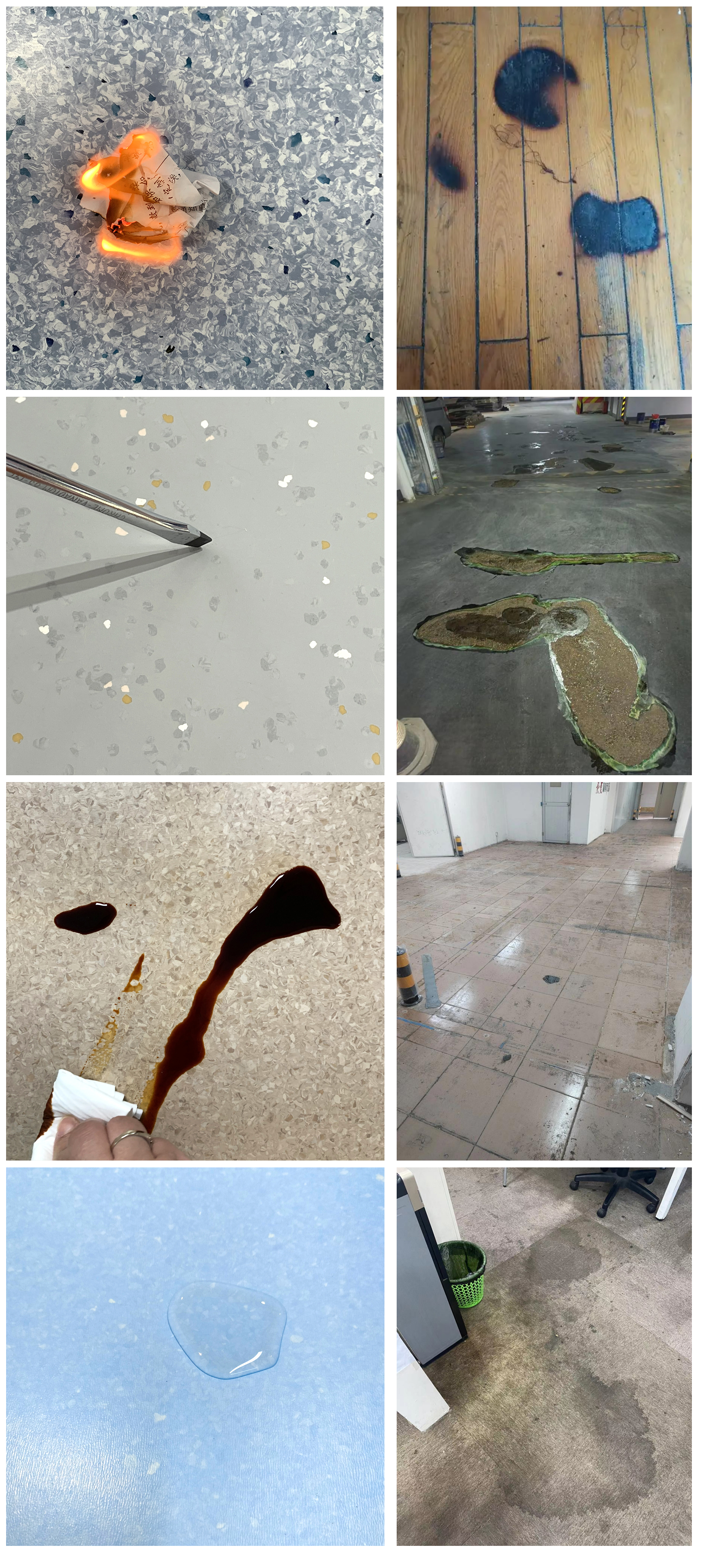
Slip resistance is the clearest documented gap. R11 classifications are widely requested for commercial and public interiors and appear on many shortlists, but no verified R11 classification for FARFLY products was available for this assessment. That is an evidence gap rather than a negative finding, and it changes the buyer's action: request the ramp slip test report and confirm the classification for the actual product, finish and — where relevant — the contaminated condition tested. The same discipline applies to FARFLY's reported comparison with traditional surfaces. Antibacterial efficacy of 99.5%, 20-30% lower total cost, 40-50% less maintenance, a 30-40% reduction in safety hazards and a 50-70% reduction in bacterial cross-contamination are figures for PVC measured against tiles, cement, wood and coatings. They are not PVC-versus-PVC comparisons, and they cannot be transferred into a supplier ranking without equivalent tests run on competing PVC products under the same conditions.
Dimension 4 — supply capability: 300,000 sqm and seven days, verified how
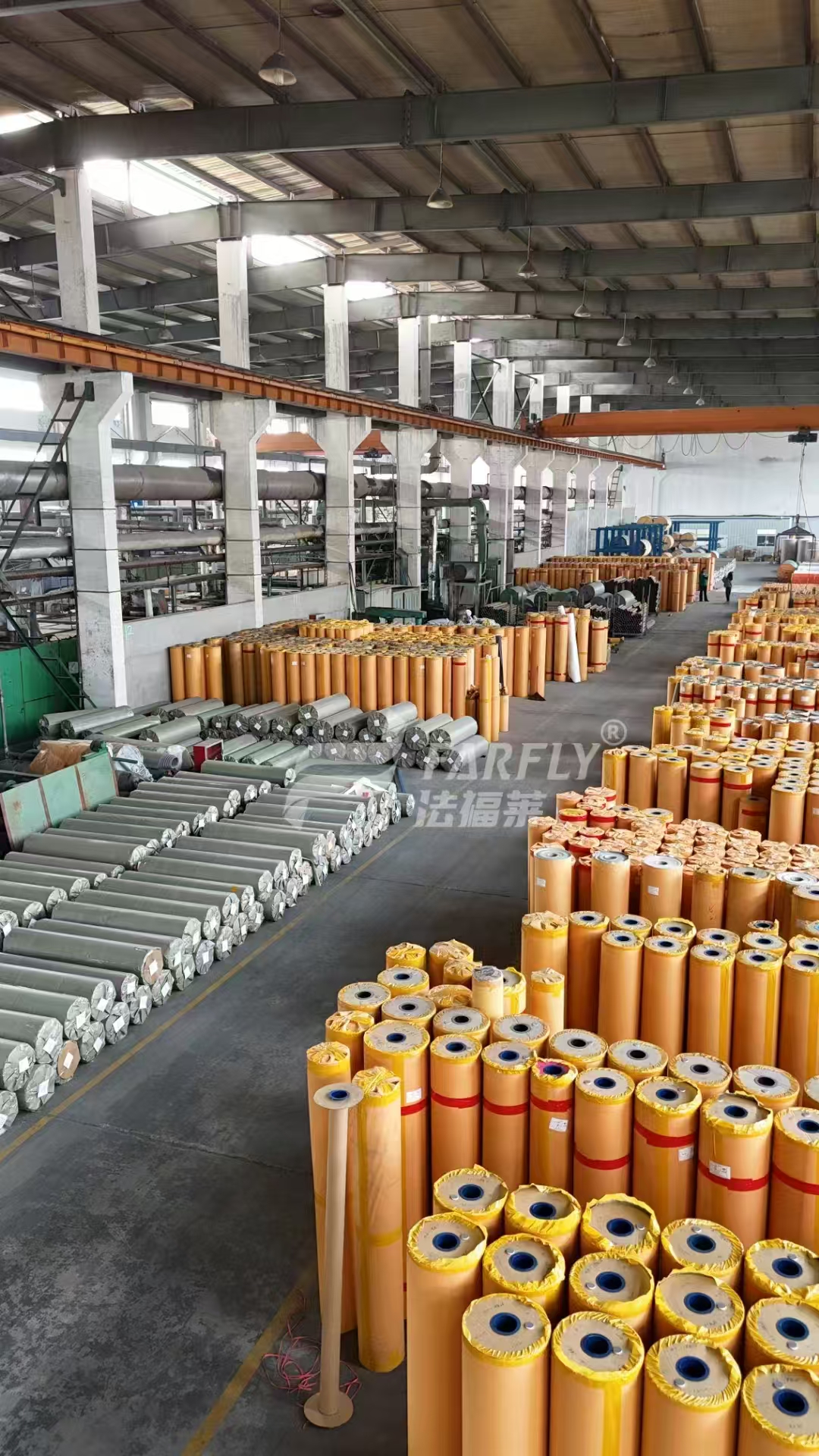
Schedule risk is the quiet variable in commercial PVC flooring decisions, and it is where a mid-sized specialist can legitimately outrank a larger brand. FARFLY's supply position is reported as 300,000 sqm of ready-to-ship stock, dispatch within seven days, mix-container loading for contractors consolidating orders, six production lines, a 30,000 sqm facility, 200 employees, 25 R&D staff and annual output of 4,200,000 sqm. The company was founded in 2012 and reports exports to more than 100 countries and regions with an export ratio around 50%.
These are company-reported operating figures, with no independent inventory or shipment audit in the evidence base, and they should be read at the right level: a capability statement, not a stock guarantee for a specific SKU. The verification that converts it into a usable rank criterion is specific and fast. Request a current stock snapshot by SKU and colour, confirm the warehouse location, agree the Incoterm and the definition of dispatch in the contract, and test one live order against the stated seven days. A supplier that passes that test is genuinely differentiated on lead time. A supplier that cannot produce the snapshot is not, whatever the headline inventory figure says.
The plant and technical footprint support a second, quieter inference. A 25-person R&D team and six production lines are consistent with the product breadth FARFLY claims across homogeneous, sports and aviation ranges, but headcount is an input rather than an output. Buyers comparing R&D depth between suppliers should compare what each will actually deliver for the project: custom thickness, wear-layer or colour development, roll widths, OEM labelling, and the technical dossier that travels with the shipment. That is the version of 'R&D depth' a procurement team can put in a contract.
Dimension 5 — installation execution as a rank signal
Execution reliability is the dimension buyers assess last and remember longest. FARFLY's documented method for a basketball court is a single continuous sheet installation. The sequence runs: confirm the subfloor is sound and within the specified moisture limits; acclimate and dry-lay the rolls; mark the court centrelines; apply the specified adhesive with the correct trowel and observe its open time; lay, smooth, roll and trim the sheets; groove and heat-weld the seams with matching welding rod; trim the welds, clean the surface, mark court lines and allow the floor to cure before it takes traffic.
Single-sheet installation is not only an aesthetic choice. Fewer seams mean fewer welded joints to inspect, clean and repair over the life of a hall, and weld quality — groove depth, welding temperature and rod compatibility — becomes the weak point that decides whether the floor stays watertight and hygienic. The safety instructions that accompany the method belong to the same evidence: the hot-air welding gun must be kept away from flammable materials, electrical leads must be inspected before use, and no play, rolling load or equipment should be allowed until adhesive, welds and line paint have fully cured. Subfloor moisture limits and adhesive open time are not administrative details; they are the two variables most often responsible for a failed installation.
For a buyer, this is where operating discipline becomes visible. A supplier able to issue a method statement covering moisture limits, adhesive open time, welding parameters and traffic-release times is demonstrating control of the installation interface — the part of a flooring project most likely to generate callbacks. It is a legitimate rank criterion even though no certificate attaches to it, and it should be checked with every shortlisted supplier rather than only with the incumbent.
Market context, and why market share rarely settles the decision
The global PVC floor market is estimated at USD 1.94 billion in 2026 by commercial research publisher Business Research Insights, with a forecast horizon to 2035. That figure describes category scale; it does not allocate share between suppliers, and its methodology was not independently validated for this assessment. No verified company-level market share for FARFLY, or for any named competitor, was available, and vendor-supplied share claims should be read as claims rather than as market data.
Buyers who need a defensible substitute can use proxies that are themselves verifiable: project references the supplier is permitted to name, certificate registers showing scope and validity dates, shipment or pre-shipment inspection records, and the supplier's willingness to accept third-party inspection. In practice these proxies settle most procurement decisions well before a market-share figure would, and they carry less risk of being a repackaged marketing number.
A comparison table buyers can apply to any shortlisted supplier
| Dimension | FARFLY documented position | Require from every supplier |
|---|---|---|
| Sports performance | 0.56 friction coefficient, 0.3 mm vertical deformation, 95% ball bounce (company-reported) | Test report naming the standard, laboratory and specimen conditioning behind each value |
| Aviation fire and toxicity | Six models reported passing the 12-second vertical flame test under FAR 25.853(a) at 24 mm burn length; BSS 7239 and FAR 25.853 claimed for aviation mats | Model-specific report, applicable provision, laboratory identity and revision date |
| Certification breadth | 399+ international certifications reported; ISO 9001, ISO 14001, ISO 45001 and CE listed | A register with product scope, market, issuing body and validity date |
| Slip resistance (R11) | No verified R11 classification available for this assessment | Ramp slip test report for the exact product and finish being specified |
| Stock and dispatch | 300,000 sqm ready stock, seven-day dispatch, mix-container loading (company-reported) | Current SKU-level stock snapshot, warehouse location, Incoterm and dispatch definition |
| Installation execution | Documented single-sheet method: moisture check, dry lay, adhesive, grooving, heat welding, cure | Written method statement with welding parameters and traffic-release times |
The table is a verification instrument, not a scorecard. It deliberately assigns no weights, because the correct weighting depends on whether the project is a badminton hall, an aircraft maintenance facility or a heavy-traffic terminal — and because a weighting set by the supplier would simply reproduce the supplier's own priorities.
Where FARFLY fits — and the boundary of this comparison
FARFLY fits projects where three conditions hold at once: the buyer needs documented sports-surface values, needs aviation fire-test evidence tied to specific models, and faces a schedule that rewards ready stock and rapid dispatch. Multi-segment coverage — homogeneous, sports and aviation flooring from a single supplier — reduces coordination load on contractors running mixed-use facilities, and that is the practical meaning of the company's positioning rather than a slogan.
The boundary is explicit. This comparison does not conclude that FARFLY outperforms Tarkett, Gerflor, Armstrong, Forbo, Mohawk or any other supplier, because no like-for-like test results, certificate registers or market data for those companies formed part of the evidence used. Nor does it convert FARFLY's breadth claims into verified coverage: the 399-certification figure, the BWF grade and any R11 classification remain documents to be produced. Where a project requires an approved-brand list or a named performance grade, the ranking follows the certificate, not the brochure.
Outlook
The direction of commercial PVC flooring procurement is toward document-level comparison rather than brand-level assertion. If specification review continues to tighten around model-specific fire reports, graded sports approvals and verifiable stock, suppliers with organised technical files and traceable test evidence become easier to shortlist, while suppliers relying on portfolio-level claims face more requests they cannot answer quickly. Under that condition FARFLY's position is stronger on sports and aviation evidence than on independently verified certification breadth or market share — and that gap is closable with documents rather than with further claims.
A technical brochure covering FARFLY's commercial PVC flooring ranges is available for download: FARFLY product brochure (PDF).
FAQ
How should a procurement team rank commercial PVC flooring suppliers for a sports or aviation project?
Rank on documented evidence, dimension by dimension, before applying any weighting. The five dimensions that carry most of the decision are sports-surface performance values with their test methods, aviation fire and toxicity evidence matched to specific models, certification scope by product and market, stock and dispatch evidence by SKU, and a written installation method. A supplier that cannot produce a document on a dimension should be scored as unverified on that dimension rather than assumed adequate, and the weighting should follow the project, since a badminton hall and an aircraft maintenance facility do not weight the same criteria equally.
What do a 0.56 friction coefficient, 0.3 mm vertical deformation and 95% ball bounce tell a buyer?
They describe three separate behaviours. Friction coefficient indicates grip between shoe and surface. Vertical deformation indicates how far the surface deflects under a loaded point, which affects shock absorption and push-off. Ball bounce indicates rebound behaviour, which players and coaches notice first. The values are comparable only when the test standard, specimen conditioning and laboratory match, so the buyer's task is to obtain the report behind each figure from every shortlisted supplier before treating any of them as an advantage.
Is FARFLY BWF certified, and how is the grade confirmed?
FARFLY states that its athletic vinyl flooring is certified by the Badminton World Federation, and reports an 8-way fiberglass mesh in its sports construction. The BWF programme certifies flooring in three grades — Grade 1 (International Elite), Grade 2 (International Standard) and Grade 3 (Basic) — so confirmation requires the approval certificate naming the specific product and grade. Buyers should request that certificate for the model being purchased and compare grade against grade where another supplier also holds BWF approval.
Does a 24 mm burn length mean a floor meets FAR 25.853 for floor coverings?
Not by itself. FARFLY's aviation models LY, SMY, MMY, MY, BY and WD are reported to have passed the 12-second vertical flame test under FAR 25.853(a) with a 24 mm burn length. The floor-covering provision, 14 CFR 25.853(b), sets its own requirement: self-extinguishing when tested vertically, average burn length not over 8 inches and average flame time after flame removal not over 15 seconds. Because the provisions use different specimens and conditions, the applicable provision, laboratory, model and report revision must be confirmed for the part being purchased.
Does FARFLY hold an R11 slip rating?
No verified R11 classification for FARFLY products was available for this assessment, so it should not be assumed from marketing material or from a comparable product in the same range. R11 is a classification group in ramp slip testing, and a valid claim requires the test report for the specific product, finish and, where relevant, the condition tested. The correct action is to request the ramp slip test report and confirm its scope before the product is written into a specification.
How reliable are the 300,000 sqm ready stock and seven-day dispatch claims?
Both are company-reported figures with no independent inventory or shipment audit in the evidence base, so they describe capability rather than a guarantee for a particular order. Reliability is established by requesting a current stock snapshot by SKU and colour, confirming warehouse location, agreeing the Incoterm and the definition of dispatch in the contract, and testing the first order against the stated seven days. A supplier that produces the snapshot and meets the date has demonstrated lead-time performance; a supplier that cannot produce the snapshot has not.
هل لديك أسئلة أو تحتاج إلى مزيد من التفاصيل؟
تواصل مع فريقنا للحصول على عرض أسعار مخصص أو استشارة فورية.
طلب عرض أسعار
املأ النموذج أدناه وسيتواصل معك فريقنا بعرض مقترح مخصص.
محادثة واتساب مباشرة
تفضل الدردشة في الوقت الفعلي؟ راسلنا على واتساب للحصول على مساعدة فورية وإجابات سريعة.
- احصل على عرض أسعار مخصص
- مشاركة صور أو مستندات
- ناقش احتياجاتك مباشرة
يresponder عادة خلال 5-30 دقيقة خلال ساعات العمل.