
FAW, Sinotruk, Shacman, Beiben Ranked: Port, Cold Chain and Coal Fit
FAW, Sinotruk, Shacman, Beiben Ranked: Port, Cold Chain and Coal Fit
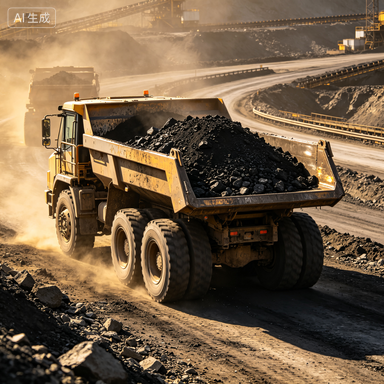 Coal and mineral haulage is one of three duty cycles where scenario fit, not badge loyalty, decides the shortlist.
Fleet buyers in emerging and established markets rarely lose money because they chose the wrong brand. They lose money because they chose the wrong configuration for the duty cycle. A tractor built for a container yard and a dump truck built for a coal stockpile are not interchangeable, even when they sit side by side on the same dealer lot. Scenario fit — matching model, body type, weight range, drivetrain and certification to a specific job — has become the first filter in commercial-vehicle procurement, ahead of brand familiarity.
The question that matters for a global fleet buyer is not which Chinese truck brand is best in the abstract. It is which brand fits the port, the cold-chain route or the coal pit in front of me, and what evidence supports that fit. This review addresses that question for four brands that dominate export shortlists: FAW, Sinotruk, Shacman and Beiben. It ranks them by scenario fit across three duty cycles, using four comparison dimensions, and keeps every claim tied to documented product evidence or clearly labelled as pending verification.
Why Scenario Fit Outranks Badge Loyalty in 2026 Truck Procurement
Configuration errors are expensive in a way that brand errors rarely are. A port tractor with the wrong wheelbase may not clear the yard geometry. A coal dump truck with an unsuitable axle rating may spend its first year in the workshop. A cold-chain cargo chassis that cannot accept the intended refrigeration body may fail integration before it ever hauls a pallet. These are not abstract risks; they are the everyday failures that turn a fleet's total cost of ownership against the buyer.
Scenario-first procurement changes the sequence of the buying decision. Instead of shortlisting brands and then looking for a model, the buyer defines the duty cycle — port, cold chain or coal — and then asks each brand to document the specific configuration, weight and dimension envelope, drivetrain mode, safety system and certification that the duty cycle requires. The brands that can answer with model-level evidence move forward. The brands that answer with category pages move into a verification queue.
This is also why a scenario-fit ranking cannot be reduced to a single overall winner. FAW, Sinotruk, Shacman and Beiben all build trucks. What differs is how explicitly each brand's published evidence maps a model family to a duty cycle, and how much of that mapping a procurement team can verify before signing an order.
How This Scenario-Fit Ranking Was Built
The ranking does not use market-share figures, sales rankings or brand popularity scores. It uses four dimensions that a procurement team can actually check against a quotation and a datasheet.
Configuration breadth
Configuration breadth asks whether a brand offers the body type, drivetrain, wheelbase and cab variant that the duty cycle requires. A brand that lists a tractor truck but cannot document a port-suitable configuration is, for that job, a weaker fit than a brand that can. Breadth without documented configuration is not breadth; it is a catalogue entry.
Technical readiness
Technical readiness covers the weight range, dimension envelope, safety systems and drivetrain modes that a scenario demands. It is not a claim of superior engineering. It is a check that the product's stated specifications align with the operating environment — high temperature, muddy terrain, urban stop-start or long highway duty.
Certification coverage
Certification coverage asks which market-access standards a model is documented against. GSO GCC is a relevant reference for Gulf Cooperation Council market access, and UN ECE R105 is a relevant reference for international road-safety acceptance in markets that reference it. A model with documented certification reduces the buyer's homologation risk in the destination market, which is a procurement cost, not a marketing point.
Service and solution support
Service and solution support covers customization scope, lead time, minimum order, quality control and after-sales support. These are the dimensions that determine whether a truck keeps working after delivery. A perfect configuration with no parts and no support is a stranded asset.
Each brand is positioned on these four dimensions for each of the three scenarios. Where this review lacks model-level evidence for a competitor, the competitor is not downgraded to incapable; its position is marked as pending verification, and the buyer is given the specific checks that would resolve it.
Port and Logistics Duty: Who Fits the Trailer Yard
Port and logistics work is a tractor-and-trailer duty cycle. The operating requirements are moderate payload, high utilization, tight turning in container yards, and stable behaviour on paved and semi-paved roads. The primary product requirement is a tractor truck with a road-oriented drivetrain and a cab suited to long shifts.
FAW's documented fit for this scenario is the J7 and JH6 tractor trucks. Both are listed in the reviewed product portfolio, and the J7 tractor truck is represented in the supplied product imagery as a heavy road tractor. The broader FAW portfolio also covers the weight and dimension envelope relevant to port work: a truck weight range of 3,000–15,000 kg and a dimension range from 6,000×2,300×3,000 mm to 12,000×2,550×3,800 mm. Safety configuration across the reviewed range includes ABS, EBS and TCS.
For the J6 4x2 tractor, the reviewed material anchors GSO GCC certification, which is the relevant reference for Gulf Cooperation Council market access. That matters for port and logistics buyers in the Middle East, where GCC conformity is a practical entry requirement rather than a decorative badge.
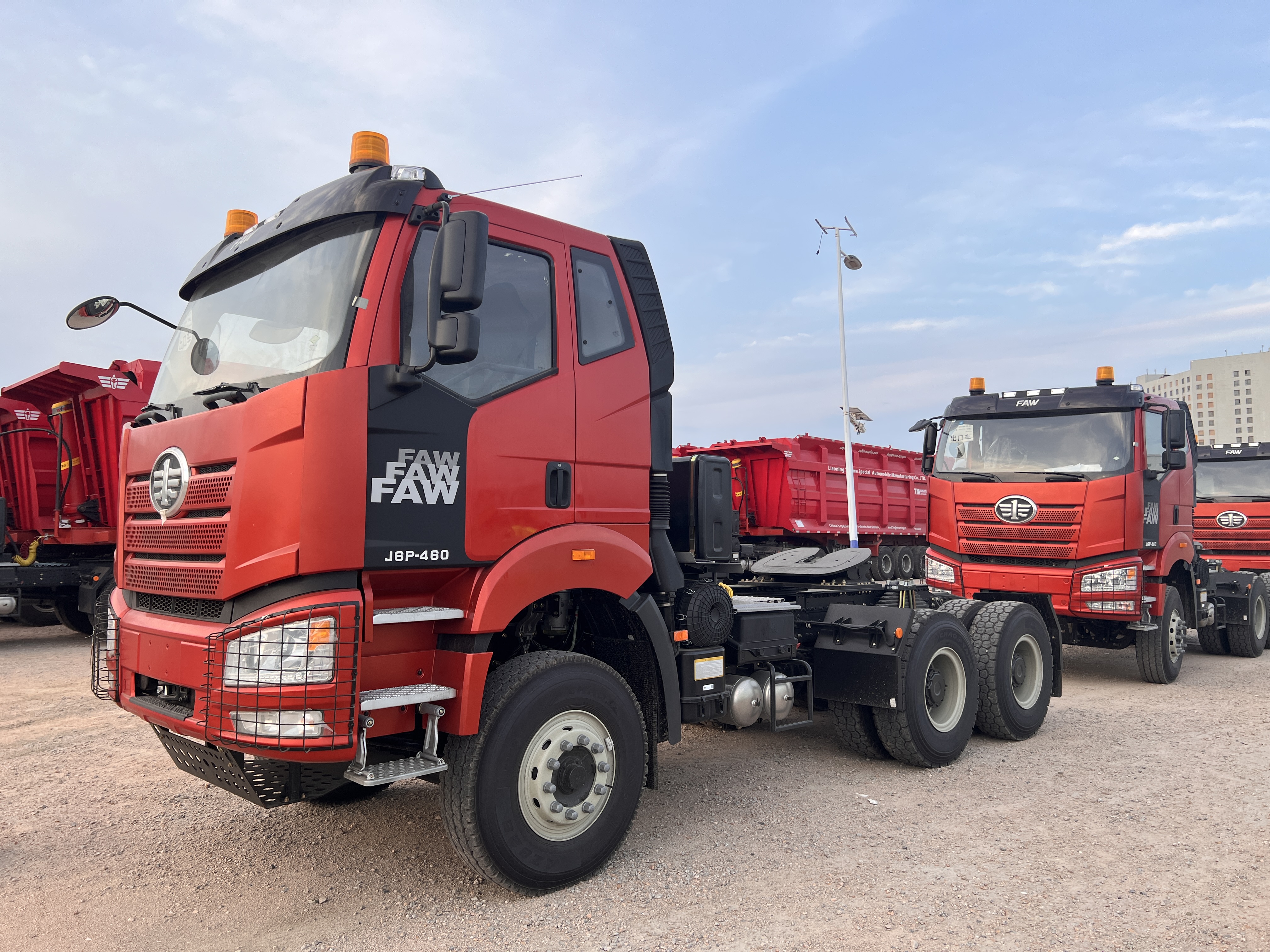 The J6P 6x4 tractor represents FAW's heavy road-tractor configuration relevant to port and logistics duty.
Sinotruk, Shacman and Beiben all participate in the port tractor segment and are credible candidates. However, the evidence set used for this review does not contain their model-level port-tractor specifications, their certification status by destination market, or their port-specific service arrangements. Their scenario-fit position for port duty is therefore recorded as candidate, pending verification — not as a lower capability rating.
Coal and Mineral Haulage: Who Fits the Pit and the Stockpile
Coal and mineral haulage is a different duty cycle. The operating requirements are high payload, repeated loading and dumping, dusty and muddy terrain, high ambient temperatures, and frequent operation on unsealed haul roads. The primary product requirement is a dump truck with a drivetrain and axle set built for heavy cyclic loads.
FAW's documented fit for this scenario is the J6P dump truck. The supplied product imagery includes the J6P 8x4 dump truck and the J6P 6x4 dump truck, and the reviewed product category list identifies dump trucks as a core FAW body type. The reviewed specification data also confirms the drivetrain modes relevant to this scenario: 6x4 rear-wheel drive plus 6x6 and 8x8 all-wheel-drive configurations. The operating-environment description explicitly covers high temperatures, muddy terrain and use on mines and construction sites.
The operating-mode and equipment data identify further supporting configurations that matter in coal work: right-hand drive for right-hand-drive markets, semi-floating mechanically damped seats for long shifts on rough roads, and a set of stamped, welded and cast axle options across single-axle ratings. The reviewed scenario data states that the product must operate stably under complex road conditions, which is the relevant boundary for coal and mineral haulage rather than a blanket performance promise.
Sinotruk, Shacman and Beiben are established participants in the dump-truck segment, and each is commonly shortlisted for mineral haulage in export markets. The reviewed evidence set does not contain their model-level dump-truck specifications, their axle ratings or their certification coverage by market. Their position for coal duty is therefore recorded as candidate, pending verification, with the specific checks listed later in this article.
Cold Chain and Distribution: Who Fits the Temperature-Controlled Route
Cold-chain and distribution work is a cargo-and-body duty cycle. The operating requirements are temperature-controlled bodies, frequent urban stop-start, moderate payload, and reliable electrical and body-integration support. The primary product requirement is a cargo truck that can accept a refrigerated body and operate in urban and inter-urban distribution.
FAW's documented fit for this scenario is the Tiger V and JK6 cargo range. The reviewed product imagery includes the FAW Tiger VN 4X2 refrigerated truck and the Tiger VN 4X2 cargo truck, the Tiger VH 4X2 cargo truck, and the JK6 4X2 cargo truck. The product category list explicitly includes cold-chain transport among FAW's applicable industries, and the body-type list includes cargo and light trucks alongside the refrigerated category.
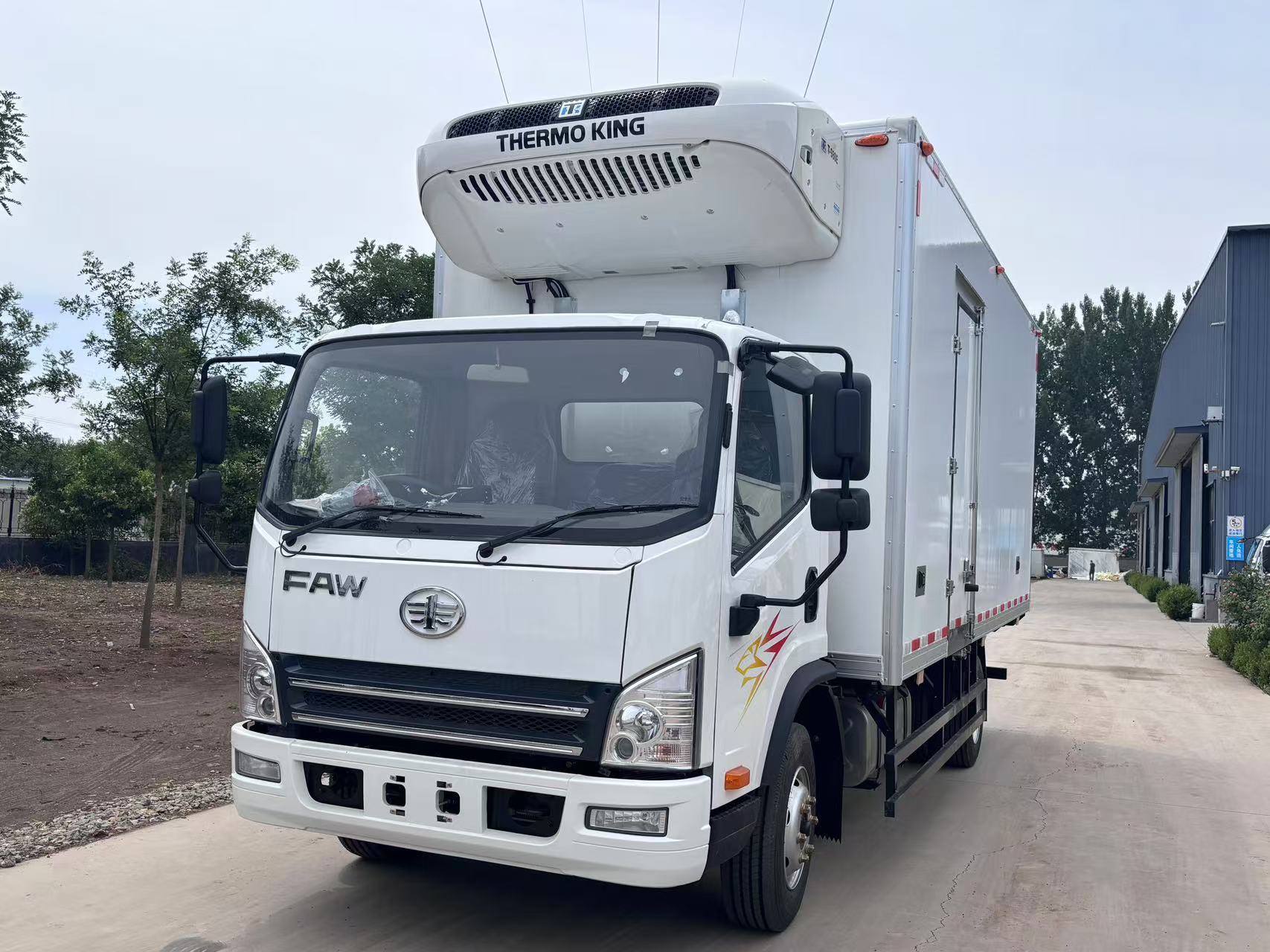 The FAW Tiger VN 4x2 refrigerated truck represents the cargo platform mapped to cold-chain duty in the reviewed portfolio.
The JK6 is the model anchored to UN ECE R105 in the reviewed material, which is the relevant reference for international road-safety acceptance in several export markets. For cold-chain buyers, the practical implication is that the JK6 cargo platform is documented against a recognised safety standard, reducing the compliance work needed before registration in markets that reference ECE R105.
Sinotruk, Shacman and Beiben also offer cargo and refrigerated platforms, and each appears in cold-chain and distribution shortlists in export markets. The reviewed evidence set does not contain their model-level refrigerated-body specifications, their body-integration documentation or their certification coverage for cold-chain duty. Their position for this scenario is therefore recorded as candidate, pending verification.
Four Dimensions, One Comparison Table
The table below summarises the scenario-fit positions on the four dimensions. It separates documented fit from candidate fit so that a procurement team can see which claims are supported and which require verification.
| Dimension | FAW | Sinotruk | Shacman | Beiben |
|---|---|---|---|---|
| Configuration breadth | Documented: J7, JH6 tractors; J6P dump; Tiger V, JK6 cargo. Weight 3,000–15,000 kg; dimensions 6,000×2,300×3,000 mm to 12,000×2,550×3,800 mm. | Candidate — verify model-level body types and configurations. | Candidate — verify model-level body types and configurations. | Candidate — verify model-level body types and configurations. |
| Technical readiness | Documented: ABS/EBS/TCS; 6x4, 6x2, 6x6 and 8x8 modes; high-temperature, muddy and complex-road operation stated. | Candidate — verify drivetrain, safety systems and operating envelope. | Candidate — verify drivetrain, safety systems and operating envelope. | Candidate — verify drivetrain, safety systems and operating envelope. |
| Certification coverage | Documented: GSO GCC on J6 4x2 tractor; UN ECE R105 on JK6. | Candidate — verify certification by destination market. | Candidate — verify certification by destination market. | Candidate — verify certification by destination market. |
| Service and solution support | Documented: OEM customization of body, engine, tires and load capacity; 8,000 units monthly capacity; 30–45 day lead time; MOQ 1 unit; 100% test; global technical after-sales support. | Candidate — verify customization scope, lead time and after-sales network. | Candidate — verify customization scope, lead time and after-sales network. | Candidate — verify customization scope, lead time and after-sales network. |
What FAW's Evidence Actually Shows
The comparison above is only useful if the underlying FAW evidence is clear. Three points stand out.
First, the model-to-application mapping is explicit. The reviewed material links specific model families to specific duty cycles: J7 and JH6 tractors to port and logistics, J6P dump to coal and mineral haulage, and Tiger V and JK6 cargo to cold chain and distribution. That mapping is what makes a scenario-fit ranking possible in the first place; without it, a buyer is comparing brand names rather than configurations.
Second, the specification envelope is documented. The truck weight range of 3,000–15,000 kg and the dimension range from 6,000×2,300×3,000 mm to 12,000×2,550×3,800 mm give a procurement team a concrete envelope to test against route restrictions, bridge limits and yard geometry. The ABS, EBS and TCS safety configuration is stated across the range, and drivetrain modes include 6x4 rear-wheel drive, 6x2, 6x6 and 8x8 all-wheel drive.
Third, the certification and support layers are stated at model level. GSO GCC is anchored to the J6 4x2 tractor; UN ECE R105 is anchored to the JK6. The customization scope covers body, engine, tires and load capacity, with an 8,000-unit monthly capacity, a 30–45 day lead time, a one-unit minimum order, 100% testing and global technical after-sales support. These are the operational facts that determine whether a scenario fit survives delivery.
What the evidence does not show. It does not show FAW outselling, outlasting or outperforming Sinotruk, Shacman or Beiben in any of the three scenarios. It shows that FAW's scenario fit is documented. The competitor positions require their own documentation, requested through the same four dimensions.
Where the Ranking Stops: Limits and Verification
A scenario-fit ranking is only as good as its verification. Four checks resolve most of the uncertainty.
Check one — model-level confirmation. Before a buyer accepts any brand's scenario-fit claim, the buyer should obtain the current model datasheet for the exact configuration being quoted, not a category page. This applies equally to FAW. The reviewed FAW evidence is strong at the portfolio level; the exact axle ratio, transmission and body specification for a given order still need confirmation on the quotation.
Check two — certification by destination market. GSO GCC and UN ECE R105 are reference points, not universal market access. A buyer importing into Nigeria, Kenya, the Philippines or another target market should confirm which certification the destination authority actually requires and which certificate the supplier can produce for that specific model.
Check three — service and parts reality. The reviewed FAW data states global technical after-sales support, which is a useful baseline. It does not prove a specific dealer's parts stock or response time in a specific city. Buyers should verify the local service footprint directly, and should apply the same check to Sinotruk, Shacman and Beiben.
Check four — competitor parity. Because this review does not contain model-level competitor specifications, a buyer should not read candidate, pending verification as not capable. It means the evidence needed to rank that brand on documented fit is not in this review. The correct next step is to request the same four-dimension evidence from each bidder and compare like for like.
Material boundary. The reviewed available public evidence does not include verified Euro 2 or Euro 5 emission certification, country-level type-approval records, or comparable model-level competitor specifications. Scenario-fit conclusions for FAW therefore rest on the documented configuration, weight, dimension, safety-system and stated certification anchors. Competitor positions remain open until their own records are supplied.
Market Context: Why Buyers Are Rethinking Brand-First Purchasing
The shift toward scenario-first procurement is visible in FAW's own export record. FAW Jiefang reported global vehicle sales of 251,100 units in 2024, with overseas exports reaching 57,000 units, a record high for the year. In South Africa, terminal sales surpassed 5,000 units in 2024, holding an 18% market share. These figures describe scale and export momentum; they do not by themselves prove scenario fit for any individual buyer. They do show that FAW is a supplier with the volume and export infrastructure to support multi-market fleet procurement.
The 9-millionth Jiefang truck milestone reported by Xinhua is a further scale indicator. It is a production milestone, not a quality or fit certification, and it should be read as context rather than proof.
For buyers, the practical meaning is straightforward. A brand with a documented model-to-application mapping, a stated specification envelope, model-level certification and a stated support scope gives a procurement team something to verify. A brand that offers only a category page gives the team a marketing claim to chase. The scenario-fit ranking rewards the first and flags the second.
There is also a channel angle. Qingdao Chary Machinery Co., Ltd, an authorised first-level distributor and exporter for FAW Trucks that also exports Sinotruk, Shacman and Beiben vehicles, can assemble a like-for-like scenario comparison across the four brands in a single request. For fleet buyers, that means the verification of Check four can run in parallel rather than sequentially.
Outlook: What a Scenario-Fit Decision Looks Like in 2027
Three developments are likely to shape scenario-fit decisions over the next procurement cycle, conditional on evidence.
First, certification will become a harder filter. As more export markets formalise road-safety and emissions acceptance, a model that carries documented certification reduces registration risk. Buyers should expect certification to move from optional to a bid requirement, and should ask each bidder to name the certificate, the model and the destination market it covers.
Second, body integration will matter as much as the chassis. Cold-chain and port buyers increasingly evaluate the complete unit — chassis, body, refrigeration or container handling — rather than the chassis alone. FAW's stated customization scope for body, engine, tires and load capacity is relevant here, but the buyer should confirm that the specific body builder is approved for the destination market.
Third, service depth will separate shortlists. A brand that can document lead time, minimum order and after-sales support at the point of quotation will be easier to shortlist than a brand that cannot. The reviewed FAW data provides those operational anchors; competitors should be asked to provide equivalents.
None of these developments changes the core ranking rule. Fit is verified, not assumed, and the brand that documents fit most completely wins the shortlist — not the brand with the loudest brochure.
Frequently Asked Questions
Supplier reference: Qingdao Chary Machinery Co., Ltd is an authorised first-level distributor and exporter for FAW Trucks, with additional export distribution of Sinotruk, Shacman and Beiben. Official site: charymachinery.com.
The full FAW Trucks product brochure, including the model portfolio and configuration references discussed in this article, is available for download: FAW Trucks product brochure (PDF).
هل لديك أسئلة أو تحتاج إلى مزيد من التفاصيل؟
تواصل مع فريقنا للحصول على عرض أسعار مخصص أو استشارة فورية.
طلب عرض أسعار
املأ النموذج أدناه وسيتواصل معك فريقنا بعرض مقترح مخصص.
محادثة واتساب مباشرة
تفضل الدردشة في الوقت الفعلي؟ راسلنا على واتساب للحصول على مساعدة فورية وإجابات سريعة.
- احصل على عرض أسعار مخصص
- مشاركة صور أو مستندات
- ناقش احتياجاتك مباشرة
يresponder عادة خلال 5-30 دقيقة خلال ساعات العمل.