
FAW Trucks vs. CR468C Minidozer: Which Mini Machinery Fits Your Site?
Comparing a full-size truck range with an ultra-compact remote-controlled dozer is not about picking a “better” machine. It is about defining the job site envelope, the material that needs to move, and the distance it must travel.
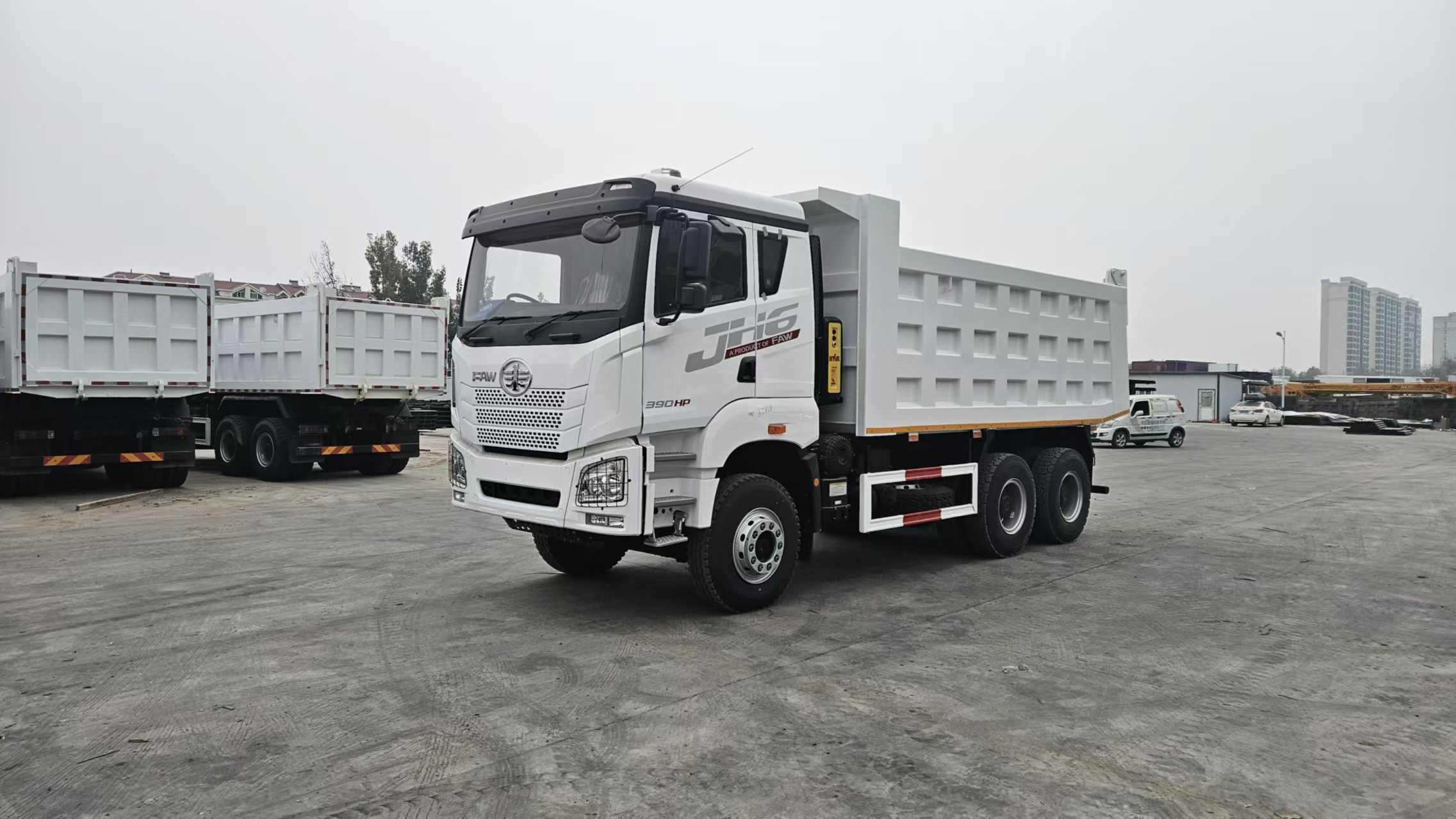
Procurement teams looking for “mini machinery” often expect to compare machines of similar size. In practice, however, suppliers serving compact and heavy equipment segments frequently list products with very different physical envelopes under one industrial-equipment catalogue. The CR468C minidozer and the FAW truck family are a useful example: both are available through Qingdao Chary Machinery Co., Ltd., yet they occupy opposite ends of the size, weight, and application spectrum.
This article compares the two product lines using verified dimensions, load capacities, operating modes, and application data. The goal is to help buyers translate catalogue specifications into a field decision: what fits a restricted indoor site, what fits a road-and-haulage operation, and where each machine reaches its practical limit.
Two Product Categories in One Sourcing Conversation
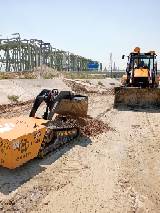
The CR468C minidozer is classified as a Remote Control Lithium Battery Rubber Track Minidozer. Its overall dimensions are 2850 × 1200 × 600 mm, with a self weight of 1100 kg, a rated load capacity of 450 kg, and a bucket capacity of 0.15 m³. Operation is by remote control at a maximum distance of 200 m, and the machine can spin 360° in place. It is powered by a lithium battery rated at 300 Ah and 73.6 V, with a working time of about 8 hours per charge.
The FAW truck line covers a much larger format. Model designations include J7, J6P, J6V, J6E, JH6, J6G, J6L, JK6, and Tiger V. These vehicles can be configured as tractor trucks, dump trucks, cargo trucks, concrete mixer trucks, garbage trucks, sprinkler trucks, water tank trucks, fuel tank trucks, wrecker trucks, sweeper trucks, concrete pump trucks, asphalt distributor trucks, high-altitude platform trucks, or fire trucks. Overall dimensions range from 6000 × 2300 × 3000 mm to 12000 × 2550 × 3800 mm, and truck weight ranges from 3000 kg to 15000 kg depending on the model. Security configurations include ABS, EBS, and TCS.
Qingdao Chary Machinery Co., Ltd., established in 2015 and based in Qingdao, China, lists both product lines in its export portfolio. The company operates a 2000 m² facility, employs more than 100 staff, and has an R&D team of 15 engineers. Its main catalogue includes mini machinery, minidozers, mini loaders, mini electric loaders, and skid steer loaders, alongside larger vehicles such as trucks and construction machinery.
Specification Comparison: Where the Real Gap Appears
The fastest way to remove confusion is to place the verified specifications side by side. The two platforms are not close substitutes; they are designed for different load cycles, different ground conditions, and different site access rules.
| Parameter | CR468C Minidozer | FAW Truck Range |
|---|---|---|
| Overall dimensions | 2850 × 1200 × 600 mm | 6000 × 2300 × 3000 mm to 12000 × 2550 × 3800 mm |
| Length without bucket | 2250 mm | — |
| Weight | 1100 kg self weight | 3000–15000 kg truck weight |
| Rated load | 450 kg | Varies by truck model and body type |
| Bucket capacity | 0.15 m³ | — |
| Operation | Remote control, up to 200 m | Driver-operated road vehicle |
| Drive / steering | Rubber tracks; 360° spin in place | Rear-wheel drive 6×4, 6×2; all-wheel drive 6×6, 8×8 |
| Maximum speed | 4 km/h | Road vehicle; not comparable |
| Power source | Lithium battery, 73.6 V, 300 Ah | Powered vehicle; configurations vary by model |
| Climbing ability | 40° | Complex road condition capability |
| Typical body types | Minidozer with bucket | Tractor, dump, cargo, mixer, tank, sweeper, etc. |
One nuance matters for buyers: the 1100 kg figure for the CR468C is machine self weight, while the 3000–15000 kg figure for FAW trucks is the truck weight range. Comparing these numbers directly is therefore misleading. The useful comparison is not “which machine is lighter” but “what site conditions permit loading, unloading, turning, and daily movement.”
Site Envelope Controls the Decision
Space is the first decision filter. The CR468C has a total length of 2850 mm and a machine height of only 600 mm. It is described in the application data as an ultra-compact, low-profile machine developed for very confined spaces, including clean-up operations under conveyor belts in underground and surface mining, ore crushing and concentration plants, and clean-up work in city or highway underground tunnels, box culverts, drainage systems, and pumping stations.
The FAW truck range, by contrast, starts at 6000 mm in length and 3000 mm in height. It is a road-going vehicle designed for transporting goods, building materials, minerals, waste, bulk cargo, agricultural products, and similar loads across highways, urban roads, and complex terrain. A truck needs a road, a turning radius, loading height, and enough clear space to move material between sites.
The practical rule:
- If the constraint is a low-ceiling indoor area, a narrow tunnel, or a conveyor undercroft, the CR468C’s 600 mm height and 1200 mm width define the suitable choice.
- If the task is moving material over kilometres of public road or haul road, the FAW truck range is designed for that transport cycle.
Earthmoving vs. Transport: Matching Task to Machine
Once the site envelope is understood, the next question is what the machine must do with the material.
The CR468C minidozer is an earthmoving tool. Its bucket capacity is 0.15 m³, and its rated load capacity is 450 kg. In the application description, it is positioned as a remote-controlled electric crawler dozer that can handle bulk materials, clean spillage, and serve in confined logistics and industrial areas. It replaces manual shovelling work in spaces where conventional machines cannot operate. It is not built for long-distance haulage; its maximum driving speed is 4 km/h, and its operating radius is effectively defined by the remote-control range and battery cycle.
FAW trucks are transport machines. The same source data lists their industries as logistics freight distribution, fleet operations, coal and mineral transport, port transport, express delivery, construction materials transport, agricultural and sideline product transport, cold-chain distribution, urban distribution, waste transport, log transport, heavy machinery transport, and related fields. Vehicle configurations such as dump truck, cargo truck, tractor truck, concrete mixer truck, tank truck, and sweeper truck reflect a purpose of moving payloads over distance rather than reshaping ground in a confined cell.
Application Fit in Practice
Both product lines appear in the same broad industry list—logistics, coal and mineral transport, port operations, construction materials, agriculture, and industrial goods—which can create confusion. The differentiator is the working condition and project type:
| Scenario | More Appropriate Platform | Reason |
|---|---|---|
| Cleaning spillage under a conveyor belt in a mine or crushing plant | CR468C | Ultra-compact envelope, remote operation, electric drive, low profile |
| Moving earth or bulk material inside a tunnel, culvert, or pumping station | CR468C | Remote control keeps the operator away from the hazard; 40° climbing ability; 360° spin |
| Hauling construction material from a quarry to a highway project | FAW truck range | Road-legal vehicle dimensions, 6×4 / 6×2 rear-drive and 6×6 / 8×8 all-wheel-drive options |
| Municipal waste or water transport on urban roads | FAW truck range | Garbage truck, water tank truck, sweeper truck, and sprinkler truck body configurations |
| Feeding a processing line inside a factory with small quantities | CR468C or mini loader class | 450 kg load and compact bucket match small indoor payload cycles |
In a typical multi-equipment fleet, these machines are more complementary than competitive. A FAW dump truck can move aggregate to a site; a CR468C minidozer can then handle spillage or fine grading in the confined areas around the processing plant that the truck cannot enter.
Market Context: Compact Equipment Keeps Expanding
The broader market context explains why buyers are comparing categories that were once purchased through separate channels. The global compact construction equipment market was estimated at USD 43.5 billion in 2024 and is projected to reach USD 69.1 billion by 2034. Within that market, mini track machinery is projected to grow at a CAGR of 4.5%, reaching USD 11.31 billion by 2035, with mini track loaders holding a 54% share.
China also remains a major source of industrial machinery exports, concentrating 27.3% of total global exports of machines in 2024. For international buyers, this means a single Chinese export partner may present both compact site machines and larger commercial vehicles in the same quotation package. The skill is not rejecting one category in favour of the other; it is reading the specification sheet against the physical constraints of the site.
An Honest Look at Limits
A balanced comparison must state what each platform cannot do.
CR468C limits:
- Rated load capacity of 450 kg is small relative to full-size earthmoving equipment or trucks.
- Bucket capacity of 0.15 m³ is appropriate for confined clean-up and small batch work, not for high-volume excavation.
- Maximum driving speed of 4 km/h makes it impractical for moving between distant sites under its own power.
- Dependence on a lithium battery and remote control means charging infrastructure and line-of-sight or RF conditions must be managed.
FAW truck range limits:
- Overall dimensions of 6000–12000 mm length and 2300–2550 mm width prevent entry into most enclosed industrial facilities, tunnels, or low-ceiling structures.
- Truck weight of 3000–15000 kg requires appropriate road surfaces, loading infrastructure, and operating permits in many jurisdictions.
- It is a transport solution, not a dozing or grading solution. It cannot perform precise confined-site earthmoving.
Buyers who ignore these boundaries tend to over-buy road vehicles for indoor work or under-buy compact machines for long-haul logistics.
Decision Criteria for the Awareness and Research Stage
At the awareness stage, procurement teams should not begin with brand preference. They should begin with four site questions:
- What are the minimum and maximum dimensions that can enter and manoeuvre on site? Measure door heights, tunnel sections, aisle widths, and turning space.
- Is the primary task earthmoving or transport? If the material needs to be relocated within a 200 m operating zone, a remote-controlled minidozer may be sufficient. If it must cross public roads, a truck is required.
- What payload cycle is expected? A single cycle above 450 kg exceeds the CR468C rated load. A transport cycle above 450 kg is normal for a FAW truck, but the vehicle itself is far larger.
- What are the operating constraints? Emissions requirements favour the battery-electric CR468C indoors; highway speed and distance favour a road vehicle.
Once these questions are answered, the catalogue becomes easier to read. The buyer can then compare actual models within the correct category rather than comparing a minidozer with a truck as if they were interchangeable.
Future Outlook: More Hybrid Fleet Thinking
Equipment buyers are increasingly building fleets that combine a compact electric machine for confined, emission-sensitive work and a road-going truck for material logistics. The growth projections for compact and mini equipment support this trend. Meanwhile, commercial truck ranges continue to expand in body configurations—from standard cargo and dump bodies to concrete mixers, sweepers, tankers, and specialty vehicles—so the same supplier relationship can cover both site-level and road-level needs.
The likely direction is not “minidozer replaces truck” or “truck replaces minidozer.” It is more precise specification. Buyers will increasingly select the smallest powered platform that can perform the required task inside the available envelope, and then add a road transport platform only when the operation includes movement between sites. In that logic, CR468C and FAW trucks do not compete for the same budget line; they answer different questions in the site plan.
Frequently Asked Questions
What is the CR468C minidozer designed for?
The CR468C is a remote-controlled lithium-battery rubber-track minidozer with overall dimensions of 2850 × 1200 × 600 mm and a self weight of 1100 kg. It is designed for confined low-profile applications such as clean-up under conveyor belts, tunnels, box culverts, drainage systems, and pumping stations, where its electric drive and remote operation offer an alternative to manual work.
What is the main role of FAW trucks in this catalogue?
FAW trucks in the catalogue are configured for transport. The range includes tractor trucks, dump trucks, cargo trucks, concrete mixer trucks, garbage trucks, sprinkler trucks, water tank trucks, fuel tank trucks, wrecker trucks, and related body types. They are sized from 6000 × 2300 × 3000 mm to 12000 × 2550 × 3800 mm and weigh between 3000 kg and 15000 kg.
Can a CR468C minidozer carry the same payload as a FAW truck?
No. The CR468C has a rated load capacity of 450 kg and a bucket capacity of 0.15 m³. The FAW truck range is a road vehicle platform with a truck weight range of 3000–15000 kg and is designed for large-volume or long-distance transport. They are different equipment classes, not different sizes of the same machine.
Which machine is better for moving material between two sites?
For moving material over roads between sites, the FAW truck range is the relevant platform. The CR468C minidozer has a maximum driving speed of 4 km/h and an operating model based on remote control up to 200 m, which makes it suitable for work inside a confined site rather than for site-to-site haulage.
This article is an independent industry comparison based on verified product data from the supplier’s catalogue and publicly available market research. Model availability, body configurations, and exact specifications should be confirmed with the supplier before a purchase decision.
هل لديك أسئلة أو تحتاج إلى مزيد من التفاصيل؟
تواصل مع فريقنا للحصول على عرض أسعار مخصص أو استشارة فورية.
طلب عرض أسعار
املأ النموذج أدناه وسيتواصل معك فريقنا بعرض مقترح مخصص.
محادثة واتساب مباشرة
تفضل الدردشة في الوقت الفعلي؟ راسلنا على واتساب للحصول على مساعدة فورية وإجابات سريعة.
- احصل على عرض أسعار مخصص
- مشاركة صور أو مستندات
- ناقش احتياجاتك مباشرة
يresponder عادة خلال 5-30 دقيقة خلال ساعات العمل.