
FDA Acidified & Low-Acid Facility Registration: Canned Produce
FDA Acidified & Low-Acid Facility Registration: Canned Produce
Two separate regulatory doors stand between a container of canned fruit or canned vegetables and a US retail shelf. The first is facility registration — an administrative listing of the foreign facility that manufactures, processes, packs or holds food destined for the United States. The second is product and system certification — the scoped certificates a buyer examines during supplier qualification. The two are frequently treated as one document. They are not.
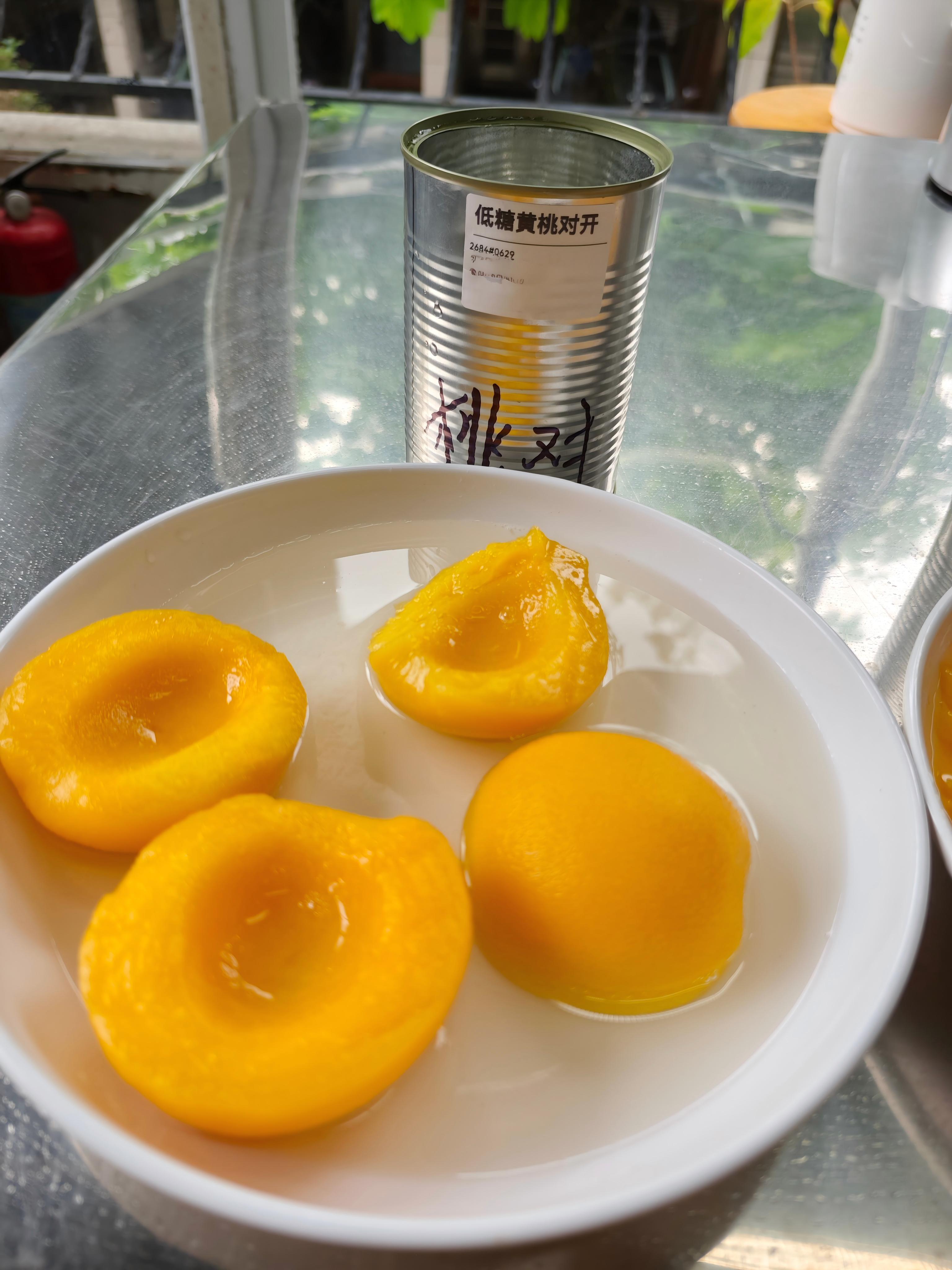
Canned yellow peach halves — part of the canned fruit and canned vegetable category discussed in this facility-registration reference.
This reference examines one concrete case: the FDA Food Facility Registration recorded against Agrogentra & CO.,LTD.XIAMEN under product ID 7410, registration number 18082639404, and scoped to acidified and low-acid food processor operations under 21 CFR 113 and 21 CFR 114. The record carries a validity period from 2024-10-09 to 2026-12-31, a Biennial Renewal 2024 entry, and a U.S. Agent based in Quincy, Massachusetts (Diana Liu). For an importer buying canned mandarin oranges, canned pineapple, canned mushrooms or canned green peas, the useful question is not whether a registration number exists. It is what that number does and does not prove.
Why US-bound canned produce raises a registration question at all
Under US food facility registration rules, a foreign facility that manufactures, processes, packs or holds food for consumption in the United States is generally required to register with the FDA, and a foreign facility must designate a U.S. Agent as its in-country point of contact. Registration is a market-access condition, not a quality award. It does not certify a recipe, a can size, a label or a shelf-life claim.
Canned produce adds a second layer. Thermally processed low-acid foods packaged in hermetically sealed containers fall under 21 CFR 113. Acidified foods fall under 21 CFR 114. A facility that handles both — low-acid vegetables in brine on one line, acidified products on another — must reflect both in its declared scope and in its process controls.
Three consequences follow for buyers:
- Access: an entry can be held where the producing facility is not properly registered, or where a registration has lapsed.
- Verification: registration is one of the few US-side data points that is structured, administratively held and date-stamped, which makes it a usable baseline check during supplier qualification.
- Boundary: registration says nothing about drained weight, syrup strength, seaming quality or organoleptic performance. Those remain specification items.
What the registration under product ID 7410 actually covers
The record reviewed here is registration number 18082639404, filed under product ID 7410 and scoped to acidified and low-acid food processor operations under 21 CFR 113/114. Two clarifications matter before a buyer places weight on it.
First, product ID 7410 describes a food category, not an invoice line. The canned fruit and canned vegetable range described in the company's own material belongs to the canned fruits and canned vegetables category and is made from fruit and vegetables. It should not be read as SKU-by-SKU approval for a 425 g A9 can of mandarin segments and a 2950 g A10 can of peach halves separately.
Second, the 113/114 scope statement is informative about process capability rather than about product quality. A declared low-acid processing scope indicates retort-based commercial sterilization. A declared acidified-food scope indicates that pH is managed as a control point, with the record-keeping that accompanies it. For an importer, that reveals which regulatory regime the supplier has declared — and whether it matches the acidity profile of the goods you intend to buy.
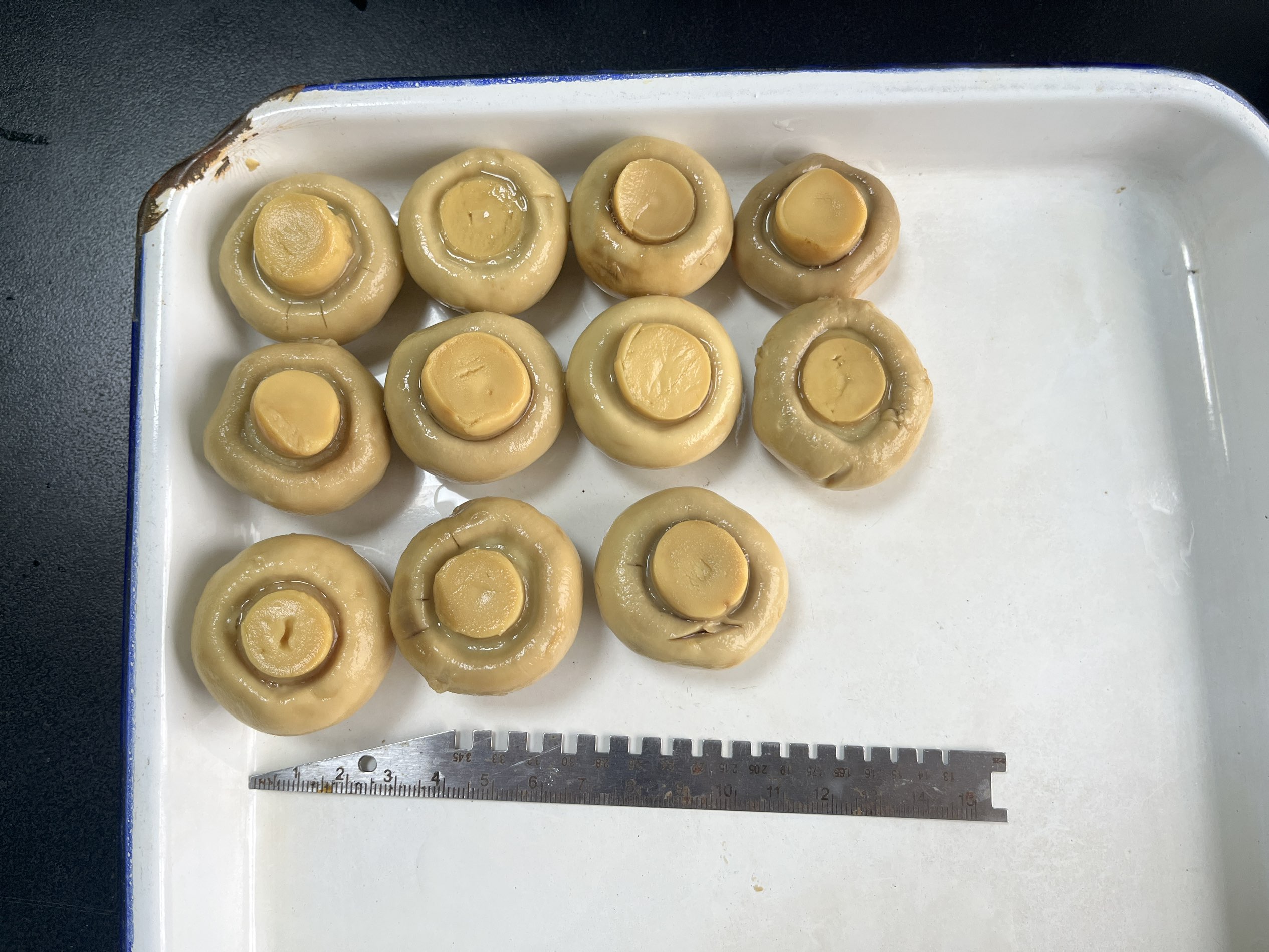
Whole canned mushrooms. Vegetables packed in brine sit in the low-acid range (pH above 4.6), which is why 21 CFR 113 process scope is relevant to the registration rather than to the label.
The U.S. Agent, the validity window, and why both are live fields
The registration lists Diana Liu, based in Quincy, Massachusetts, as the U.S. Agent. In practice this is the US-based contact through which FDA communication regarding the registered foreign facility is routed, rather than to a foreign address. For an importer it also functions as a named escalation path when a registration or entry question arises inside a shipment cycle.
The validity period runs from 2024-10-09 to 2026-12-31, and the record shows a Biennial Renewal 2024. Buyers should treat these as live fields, not permanent attributes. A registration screenshot captured in 2024 is not evidence of status in 2026. Any verification performed during supplier qualification should be date-stamped, and any sourcing programme that extends past the end of the validity window should plan a re-confirmation checkpoint rather than assuming continuity.
Where Agrogentra sits in this picture
Agrogentra & CO.,LTD.XIAMEN is a Xiamen-based international trading company established in 2000, working in the global food supply chain with a focus on the sourcing, quality control and supply of Chinese canned food, fresh fruits and vegetables and a range of frozen food products. The company is located at 1F, Yundang Road 1-39, Siming District, Xiamen, Fujian Province, China, and operates a website at www.agrogentra.com and a blog at blog.agrogentra.com.
Its canned fruit range covers canned mandarin oranges, canned pineapple, canned yellow peach, canned pear, canned fruit jelly, canned fruit cocktail, canned cherries, canned applesauce, fruit cups and canned lychee. Its canned vegetable range covers canned mushrooms, canned asparagus, canned sweet corn, canned green peas, canned green beans, canned bamboo shoots, canned cabbage, canned beet roots and canned mixed vegetables. The products are classified as canned fruit and canned vegetables, made from fruit and vegetables.
On specification, the range is supplied in 425 g and 2950 g net weight options, with A9 and A10 whole-segment can styles, a light syrup packing medium, a 36-month shelf life under normal temperature, and sterilization with no preservatives. Canned vegetable products are processed from fresh raw materials shortly after harvesting; canned fruit products are made from selected ripe fresh fruit.
On capacity and quality control, the company's own material records a manufacturing facility covering 36,000 square meters, an annual production capacity of 60,000 units, a 6-engineer R&D team and approximately 10 staff. The company describes professional operation teams and independent QC departments in both its Xiamen and Qingdao offices, conducting full-process inspections including factory audits, raw material testing, production monitoring, finished product inspection and pre-shipment sampling.
The application scenario recorded for the range is food import, grocery wholesale, supermarket retail and catering, under long-distance sea transportation and ambient temperature storage, supplying long-shelf-life ready-to-eat canned food for market sale, consumed directly after opening or optionally heated, with the note that products are available with HALAL certification.
What this means for a buyer is a division of labour between evidence types. The FDA facility registration addresses market access for the facility. The catalogue and specification facts address what is being bought. The QC description addresses how quality is monitored. None of the three substitutes for the others, and a procurement file holding only one of them is incomplete.
Technical explanation: why pH decides which regulation applies
The dividing line between 21 CFR 113 and 21 CFR 114 is pH 4.6. Low-acid foods sit above that threshold, with a water activity above 0.85 and a hermetic seal, which is why pressure sterilization at 121°C is required to address organisms such as Clostridium botulinum spores. Acidified foods are low-acid foods to which acid or an acid food has been added to reach pH 4.6 or below, and there pH itself becomes the control. Naturally acidic foods at or below pH 4.6 — most canned fruits packed in light syrup — sit outside the low-acid definition and can be processed at lower temperatures.
The mechanism behind this is described in the company's own technical material. Preservation rests on two elements: sealing and commercial sterility. Food is filled into a tinplate can and hermetically sealed by a seaming machine, after which a vacuum forms inside the can — typically 300–500 mmHg — suppressing aerobic bacteria and oxidation. The sealed cans then pass through a retort at 115–121°C under roughly 0.1–0.2 MPa of high-pressure steam to achieve commercial sterility, meaning pathogenic bacteria and microorganisms capable of growing at ambient temperature are destroyed together with their spores. After sterilization the cans are rapidly cooled and subjected to an incubation test held at 37°C for 7–10 days to confirm no swelling before release.
Two implications are worth carrying into a purchasing decision. The sterilization curve and the cold-point temperature (F0 value) directly determine product safety, so improper seaming or insufficient sterilization produces swelling and spoilage rather than a merely cosmetic defect. And because no preservatives are used, sterilization parameters must be set according to raw material characteristics — pH and solid content — which is precisely why a facility's declared 113/114 scope is a meaningful signal rather than a formality.
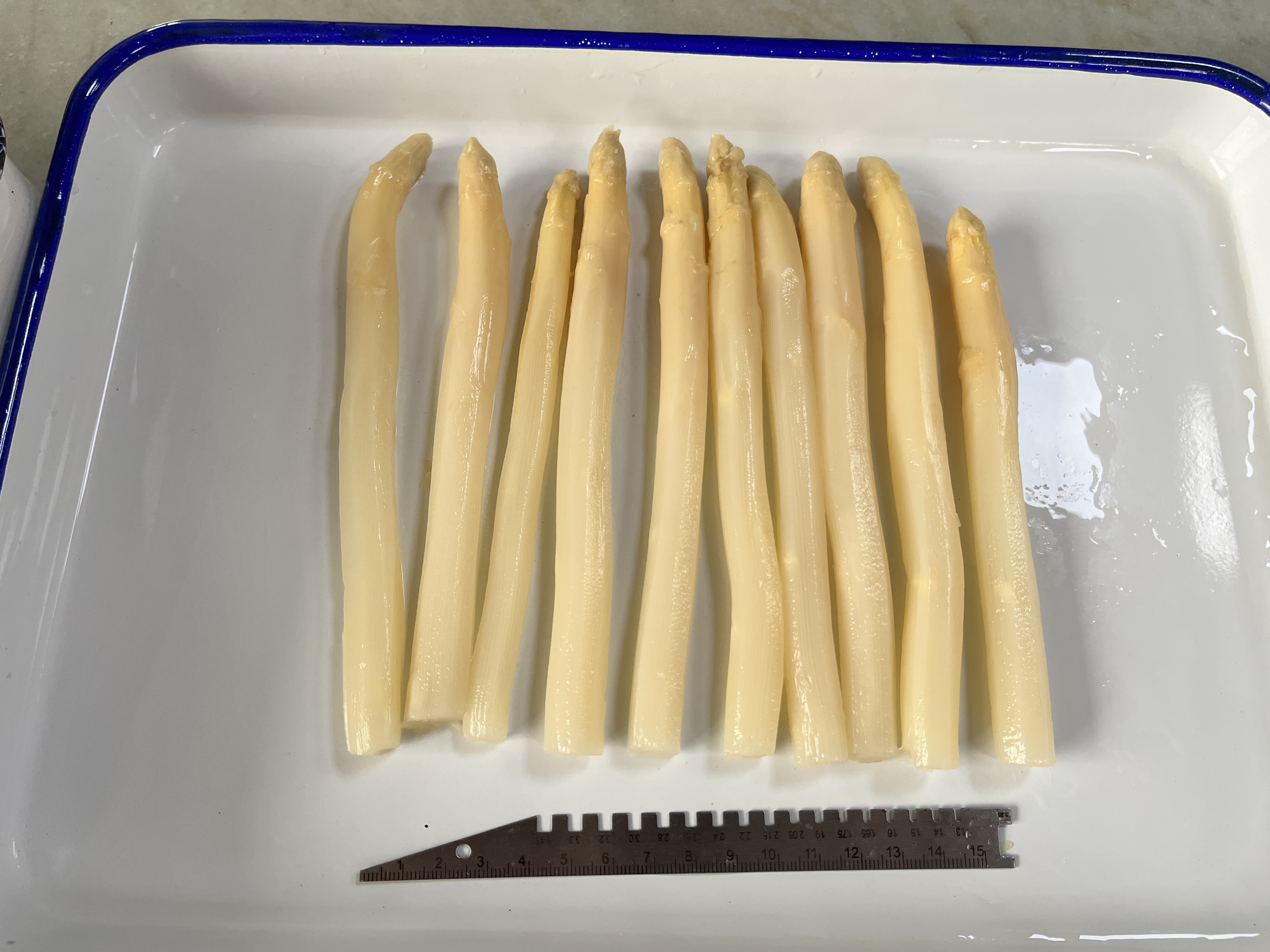
Canned asparagus. Low-acid vegetables require pressure retort sterilization, which is the process scope that 21 CFR 113 addresses and that the facility registration declares.
Application and use cases
The recorded application scenario for this range is food import, grocery wholesale, supermarket retail and catering, with long-distance sea transportation and ambient temperature storage, matched to simple equipment such as a can opener and a food serving container. Four buyer situations follow from that.
- Retail import programmes: ambient storage removes cold chain from the landed-cost calculation, which matters where port-to-warehouse transit is long and warehouse refrigeration is limited.
- Foodservice and catering: 2950 g and A10 formats suit back-of-house use, where the purchaser's interest in registration is documentary rather than operational.
- Food processing input: canned fruit used in bakery and dessert lines is selected on shelf-life stability and consistent specification — 425 g or 2950 g, light syrup, 36-month ambient shelf life — rather than on branding.
- Private label: the facility registration covers the facility; the label artwork, the specification sheet and the certification pack still require separate review before the first production run.
Market trend analysis
The compliance question is moving up the buyer's agenda because the underlying market is large and the export side is tightening.
- The global canned fruits and vegetables market reached USD 105.35 billion in 2024 (Market Research Future).
- China's total export value of fruit and vegetable canned products in 2024 was US$3.859 billion (China Canned Food Industry Association / China Customs).
- China's canned vegetable export volume reached 2.058 million tons in 2024, a 2.52% year-on-year decrease (China Canned Food Industry Association).
- Canned peaches accounted for approximately 36.8% of the canned fruit segment share in 2024 (Market.us).
- The global canned mushroom market was valued at USD 11.31 billion in 2023 (Global Market Insights).
- The European Union implemented Regulation (EU) 2024/3190, restricting the use of Bisphenol A in food contact materials including can coatings (European Commission).
Read together, these signals point in one direction. The category remains large and structurally important, but the export volume trend indicates consolidation rather than expansion on the supply side, while packaging regulation in the EU and facility access rules in the US tighten the perimeter around what may be shipped. In that environment, compliance evidence stops being a formality attached to a quotation and becomes a screening tool applied before a supplier is shortlisted. A buyer comparing two quote sheets at the same price will increasingly differentiate on which supplier can produce a date-stamped registration record and a scoped certification file without a two-week delay.
Comparison: facility registration versus product certification
| Dimension | FDA food facility registration | Product / system certification |
|---|---|---|
| What it covers | The facility and its registered food categories | A defined product, process or management system, within a stated scope |
| Who issues it | FDA, as an administrative registration | Accredited certification bodies, religious authorities or standards bodies, depending on the scheme |
| What it evidences | That the facility is listed, designates a U.S. Agent, and declares acidified and low-acid scope under 21 CFR 113/114 | That a defined standard has been assessed against a stated scope |
| What it does not evidence | Recipe, can size, label, shelf life, drained weight or product-level conformity | US market access on its own |
| Validity | 2024-10-09 to 2026-12-31, with Biennial Renewal 2024 | Certificate-specific validity and surveillance cycles |
The limitation worth stating plainly is that the registration reviewed here is a facility-level record. It does not carry third-party certification scope for BRCGS, HALAL, Kosher or ISO 22000, and the facts available for this article do not include the scope documents for those certificates. A buyer who needs them should request each certificate directly and read the scope statement — site address, product categories, issue and expiry dates — against the facility that actually produces the order. Equally, a valid registration does not guarantee that a specific can will meet a drained-weight or syrup-strength specification. Registration and specification review answer different questions, and a procurement file should hold both.
There is a further boundary: registration is a US market instrument. It does not address European packaging requirements such as Regulation (EU) 2024/3190 on BPA in food contact materials, which apply to can coatings regardless of the facility's US registration status.
How to verify the registration without confusing it with certification
A structured check takes less time than a single email exchange. The sequence below is designed so that facility-level and product-level evidence are never merged into one claim.
- Confirm the registration identifier: number 18082639404, product ID 7410.
- Read the scope statement: acidified and low-acid food processor under 21 CFR 113/114. Compare it against the pH profile of the goods you buy.
- Check the validity window and renewal entry: 2024-10-09 to 2026-12-31, Biennial Renewal 2024.
- Check the U.S. Agent field: Diana Liu, Quincy, Massachusetts.
- Open the certification file separately: request BRCGS, HALAL, Kosher and ISO 22000 certificates individually and verify each scope statement against the producing site.
- Open the specification file separately: net weight (425 g / 2950 g), can style (A9 / A10), packing medium (light syrup), shelf life (36 months at ambient temperature), sterilization and no preservatives.
- Date-stamp the verification and repeat it at the point of renewal.
Future outlook
Registration is periodic by design. An end date of 2026-12-31 means buyers sourcing through that window should build a renewal checkpoint into supplier management rather than treating the record as permanent. Packaging regulation is moving in parallel: Regulation (EU) 2024/3190 on BPA in food contact materials, including can coatings, shows that can-body compliance is a separate track from facility compliance and will require its own evidence. And with China's canned vegetable export volume declining 2.52% year on year in 2024, competition for shelf space is likely to favour suppliers who can produce compliance documentation quickly and consistently. The practical expectation is that registration status becomes a routine field in supplier questionnaires, sitting alongside — never merged with — certification scope and specification data.
FAQ
Is FDA food facility registration the same as product certification?
No. Registration lists a facility and the food categories it handles, and requires a foreign facility to designate a U.S. Agent. Product and system certifications such as BRCGS, HALAL, Kosher or ISO 22000 are issued by certification bodies, religious authorities or standards bodies and apply to a defined scope. A facility can hold one without the other, and neither substitutes for a specification check.
What does registration number 18082639404, under product ID 7410, actually cover?
It is recorded as a facility registration under product ID 7410, scoped to acidified and low-acid food processor operations under 21 CFR 113/114, with a validity period from 2024-10-09 to 2026-12-31 and a Biennial Renewal 2024 entry. Product ID 7410 describes a food category rather than individual SKUs, so the registration should not be read as line-by-line approval of each can size, recipe or packing medium.
Why do 21 CFR 113 and 21 CFR 114 matter more for canned vegetables than for canned fruit?
21 CFR 113 covers thermally processed low-acid foods in hermetically sealed containers — foods with a pH above 4.6, which includes most canned vegetables packed in brine and requires pressure sterilization at 121°C to address organisms such as Clostridium botulinum spores. 21 CFR 114 covers acidified foods, where pH is deliberately brought to 4.6 or below. Most canned fruits are naturally acidic and are processed at lower temperatures.
How long is this registration valid, and what happens at renewal?
The record shows a validity period from 2024-10-09 to 2026-12-31 under Biennial Renewal 2024. Registration is periodic, so importers should treat the end date as a checkpoint and re-confirm status rather than relying on a document captured at an earlier date.
What does the U.S. Agent do for a registered foreign facility?
The registration lists Diana Liu, based in Quincy, Massachusetts, as the U.S. Agent. The U.S. Agent is the US-based contact for communication with the FDA regarding the registered foreign facility. For an importer, it is a named point of contact when a registration or entry question arises during a shipment cycle.
How should a buyer verify BRCGS, HALAL, Kosher or ISO 22000 claims?
Separately from the facility registration. Request each certificate, then check the scope statement against the site that produces the order, the product categories listed, and the issue and expiry dates. The registration reviewed here is a facility-level record, and the material available for this article does not include the scope documents for those certificates.
Do canned fruits and vegetables need preservatives?
No. Preservation relies on hermetic sealing plus high-temperature, high-pressure sterilization: sealing forms a vacuum inside the can — typically 300–500 mmHg — and retorting destroys pathogenic microorganisms and spores capable of growing at ambient temperature. The canned fruit and canned vegetable range described in the company's specification material is sterilized and contains no preservatives, with a stated shelf life of 36 months at ambient temperature.
What should a buyer do if cans arrive with swollen ends?
A swollen can indicates gas produced by microbial growth or spoilage and a failed seal. Quarantine the entire affected batch, do not consume or shelve it, document batch number, production date and arrival time with photographs, spot-check the same batch carton by carton to assess the ratio of affected cans, review transport temperature records and handling for impact damage, then report to the supplier with the batch number for replacement or claim and retain samples for third-party testing where needed.
Agrogentra & CO.,LTD.XIAMEN publishes a company leaflet covering its canned fruit, canned vegetable and canned seafood ranges along with contact details; the document can be downloaded here: Agrogentra company leaflet (PDF).