
FPV Camera Procurement FAQ: Specs, Terms, Acceptance
FPV Camera Procurement FAQ: Specs, Terms, Acceptance
FPV camera procurement is settled on paper before it is settled in the air. Two buyers can order the same model and end up with different outcomes, because the decisive variable is rarely the sensor. It is how the specification is defined, which inspection event the balance payment is tied to, and what the purchase order actually says about acceptance. This reference is written for procurement engineers, programme managers and OEM buyers who have completed evaluation and are converting an FPV camera shortlist into an order.
It answers two connected question sets. The commercial set is how to frame purchasing terms and acceptance criteria so that a supplier's standard terms become measurable commitments. The technical set is how to read the published specifications of three specific models from IRLAB Limited — the analog CDD-BS59KU, the digital CDD-BS5JMU and the thermal CT-EI5ATC — and what should be verified before those numbers are written into a contract. IRLAB Limited is a camera developer and manufacturer established in 1992, with manufacturing operations in Shenzhen since 2003, more than 30 years of camera development experience, and a 3,000 m² production facility.
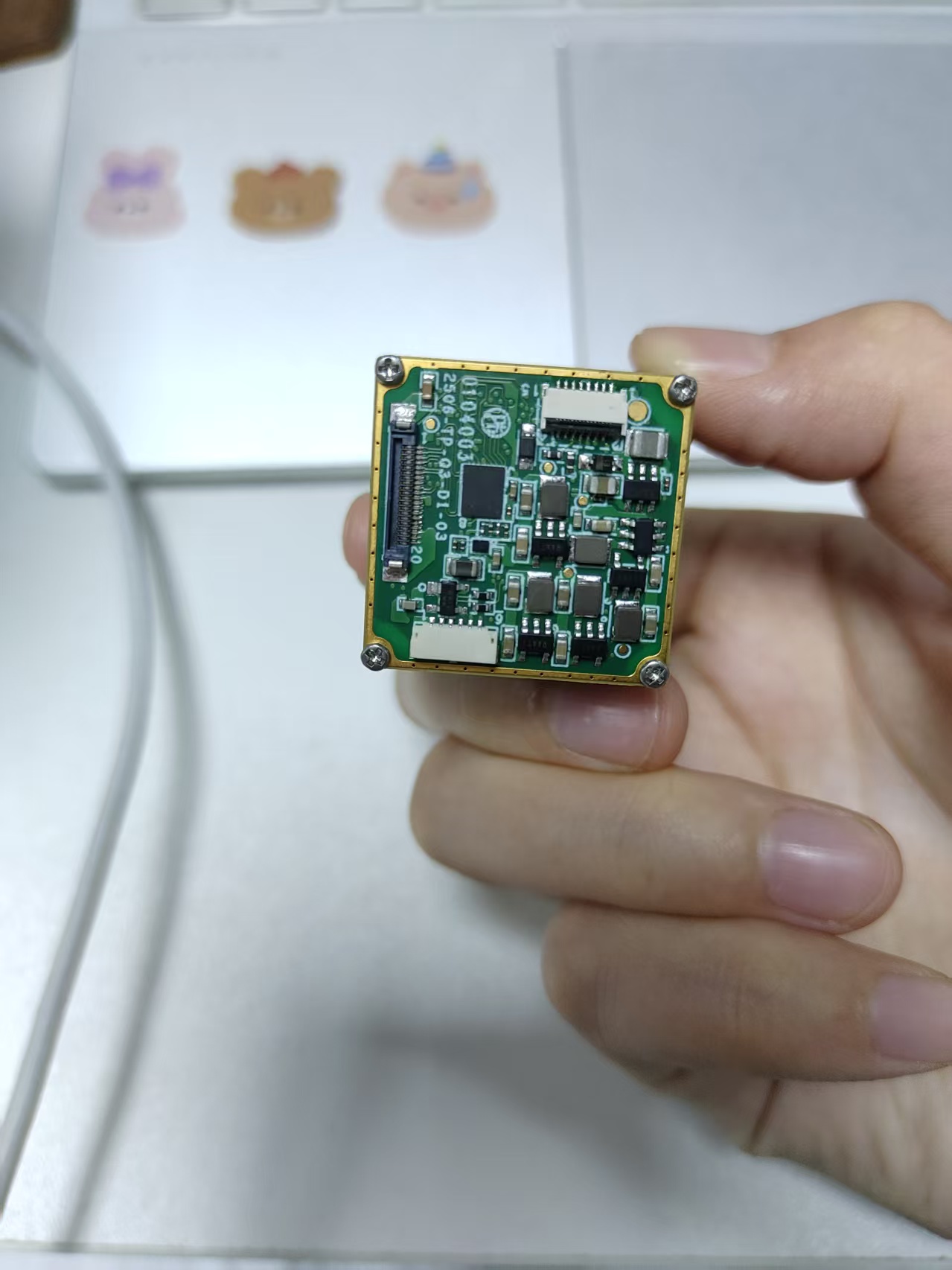
The gap between a datasheet value and an enforceable acceptance criterion
A datasheet value is a design target published by the supplier. An acceptance criterion is the measurable condition under which a buyer may reject goods. They are produced by different departments for different purposes, and the distance between them is where most procurement disputes begin.
Four definition gaps account for a large share of the problem in FPV camera contracts. Field of view is often quoted without stating whether it is measured diagonally or horizontally, and the two conventions describe different lenses. Minimum illumination is quoted as a single lux figure without the lens aperture, gain setting, shutter and video-level target used to obtain it. Latency is quoted without naming the measurement points, so a camera-level figure and a glass-to-glass figure can be placed side by side as if they were comparable. And a quality statement such as "AQL standard OQC check" names a method without naming the level, the sample size or the defect classes.
The practical response is to treat every published number as a question rather than a term. The question is: under what conditions was this measured, and will the supplier accept the same conditions as the pass/fail line in the purchase order? A specification that cannot survive that question should not be written into the contract as an acceptance item.
How to frame purchasing terms in an FPV camera RFQ
IRLAB Limited publishes a defined set of commercial terms covering order quantity, delivery, payment, lead time, quality control and warranty. Each of these translates into a buyer-side decision that must be written down, because the supplier's standard wording covers the mechanism but not the parameters the buyer will be measured against.
| Commercial term | Published position | What the purchase order must define |
|---|---|---|
| Minimum order quantity | 1 unit | Whether a single-unit pilot and a volume lot share one specification, one bill of materials and one acceptance record |
| Delivery terms | FCA Shenzhen / C&F Hong Kong | The named place, who books main carriage, who insures the cargo, and who handles export and import clearance |
| Payment terms | T/T in advance: 30% deposit at formal order, 70% balance before shipment | The inspection event that must be completed and documented before the balance is released |
| Lead time | Small quantity: immediate delivery; large quantity: within 15–25 working days after deposit received | The volume threshold separating small from large, and the exact event that starts the working-day clock |
| Quality control | 100% production check plus AQL standard OQC check | The AQL level, sample size, defect classification and the standard the sampling plan is applied against |
| Warranty | 2 years | The event that starts the warranty, the covered failure modes, the return route and who pays return freight |
The payment structure carries the most procurement consequence. When 70% of the value is released before shipment, the buyer's only leverage sits in the pre-shipment inspection. A purchase order that pays the balance on a shipping date, rather than on a signed inspection report, converts the acceptance clause into an intention. Writing the sequence explicitly — inspection report issued, defects dispositioned, balance released, shipment booked — is a contract change, not a negotiation over price.
Delivery terms need the same treatment. FCA and C&F place the boundary between seller and buyer at different points in the movement of the goods, which means the party responsible for main carriage, cargo insurance and import clearance changes with the term selected. The buyer's landed-cost model, and the point at which risk transfers, should be built on the term actually used rather than on an assumption carried over from a previous order.
Minimum order quantity of 1 unit has a specific use in an evaluation-to-execution workflow: it permits a pilot build and a field validation lot without a volume commitment. The point to establish in writing is whether the pilot unit is produced to the same specification and acceptance record as the later volume lot, since a pilot that differs from production proves less than it appears to.
Acceptance criteria: turning a quality statement into a testable clause
"100% production check plus AQL standard OQC check" describes coverage and method. It does not describe content. The buyer's task is to specify what the 100% check consists of, which characteristics the sampling plan is applied to, and what evidence accompanies each shipment.
| Acceptance item | Why it needs a written definition | Evidence to request |
|---|---|---|
| Per-unit functional test | A 100% check states coverage, not test content or limits | The test list and pass/fail limits applied to the specific model |
| Sampling inspection | An AQL clause without a level, sample size and defect classes is not auditable | The AQL level, sampling standard, sample size and critical/major/minor definitions |
| Optical performance | Field-of-view and low-light figures depend on measurement convention | Condition record: illumination source, target, gain, aperture and the video-level target used |
| Latency | A millisecond figure is meaningless without its measurement points | Where timing starts and stops — sensor, camera output, transmitter input or goggles |
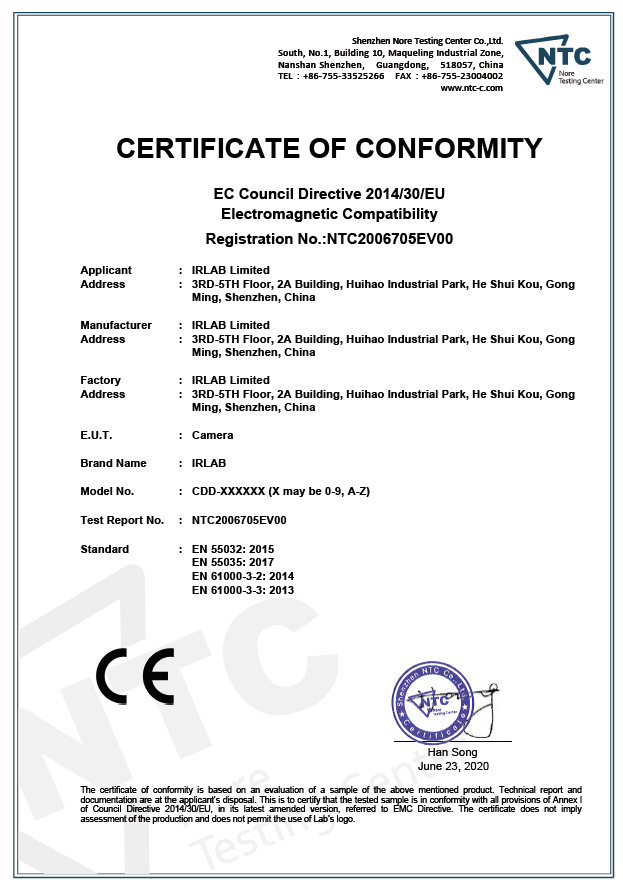
| Conformity documentation | Certificates exist per model and per scope, not per brand | A certificate copy for the exact model, with number, issuing body, scope string and validity date |
| Packaging and labelling | Resale and import requirements differ by market | Approved artwork, label content, packing standard and drop-test basis where required |
A workable rule is that no specification may appear in the acceptance annex unless the supplier has confirmed, in writing, the condition under which it is measured. That single rule removes most of the ambiguity that survives a technical datasheet review, and it converts a marketing statement into an inspectable attribute.
Analog FPV camera questions: the CDD-BS59KU envelope
The CDD-BS59KU is specified at 1500TVL horizontal resolution, a minimum illumination of 0.00001LUX, a 120° field of view, and a 19mm × 19mm × 27mm body weighing 9g. The combination of a small mass budget and a low-light claim is what makes this model relevant to micro airframes and night operation, where every gram and every photon matters.
Each figure needs a procurement translation. The 1500TVL value is a camera-side resolution rating in the analog domain; what the operator actually sees also depends on the video transmitter and the display, so the meaningful acceptance test is an end-to-end image check with the exact link and goggles the programme will use, not a bench reading of the camera alone. The 120° figure should be confirmed as diagonal or horizontal before the lens is matched to a mission profile, because the same number under different conventions describes different coverage. The 19mm × 19mm × 27mm dimensions should be confirmed as including or excluding the lens barrel and connector, since mounting clearance is usually the binding constraint in a stacked build.
The 0.00001LUX figure is the one most likely to be contested later, because minimum illumination is only comparable when the aperture, gain, shutter and signal target are identical. IRLAB attributes a one-year supply relationship covering 30,000 units with an FPV drone manufacturer to sensitivity at this level, describing target identification and tracking under very low-light conditions as the capability the customer was buying. That is a company-reported case rather than an independent test, and it is most useful as the reason to demand the measurement conditions rather than as a substitute for them.
Digital FPV camera questions: the CDD-BS5JMU frame-rate trade-off
The CDD-BS5JMU is specified with a SONY sensor, 3840*2160@30fps, 1080p@90fps and 720p@120fps operating modes, a 120° field of view and 50ms latency. The presence of three modes rather than one is the key procurement fact: resolution and frame rate trade against each other, and the acceptance test must name the mode.
Buyers commonly specify the highest resolution because it appears to be the safest choice, then discover that the operational mode is the middle or lowest one. Writing the intended operating mode into the purchase order, and testing against that mode, prevents a delivery that satisfies the datasheet headline and none of the mission requirements. A 4K30 mode is useful where recorded detail matters; a 720p120 mode is useful where motion continuity matters; 1080p90 sits between them. The acceptance annex should state which of the three is the qualification mode, and whether the other two are verified or merely declared.
The 50ms latency figure deserves separate handling. Commercial research on digital FPV systems reports glass-to-glass latency of roughly 22–40ms for current DJI, Walksnail and HDZero configurations. Those figures describe a complete chain from light entering the sensor to the image appearing in goggles, and they are not directly comparable with a camera-level latency specification unless the measurement points match. A buyer comparing 50ms with 30ms without establishing what each figure measures is comparing two different things, and the resulting decision is not evidence-based. The correct question is where the timer starts and stops, and at which resolution and frame rate the figure was obtained.
Thermal FPV camera questions: the CT-EI5ATC detector
The CT-EI5ATC is specified with a 640×512 uncooled vanadium oxide detector in a 25.4mm × 25.4mm × 38.8mm housing weighing 40g. Detector resolution at this level indicates a capability class rather than a detection range, and the two are frequently confused in procurement documents.
What a 640×512 detector establishes is the sampling array available for the thermal scene. What it does not establish is how far the camera can detect, recognise or identify a target, because that depends on lens focal length, the thermal contrast between target and background, the display and the observer's task. The material published for this model specifies the detector and the physical envelope; lens focal length and noise-equivalent temperature difference are the values a buyer needs in order to convert the array into a recognition requirement, and they should be requested rather than assumed from a sibling product.
The application framing is also relevant to acceptance. IRLAB classifies the product within a mini FPV thermal camera family whose published type list covers search-and-rescue, industrial survey, tactical, military reconnaissance, AI thermal tracking, low-latency analog thermal and RC car thermal variants. IRLAB also describes operation under dark night and daylight, high vibration and shock, a −38°C to 60°C temperature range, electromagnetic interference, dense fog and torrential rain. For a contract, those conditions become environmental qualification items: the buyer should establish which of them are declared and which are tested, and on what basis.
Supplier qualification questions and what the IRLAB record answers
Supplier qualification for an FPV camera programme is usually framed as a certificate check, but certificates answer a narrower question than buyers assume. The useful structure is a sequence of questions in which each answer narrows the risk the next question has to cover.
Who is the manufacturer, and for how long? IRLAB Limited was established in 1992 and has operated manufacturing in Shenzhen since 2003, giving more than 30 years of camera development experience. The company reports a 3,000 m² facility, 100+ employees including a 10+ engineer R&D team, and an annual output of 6 million units against a stated monthly capacity of 500,000 units.
Who actually does the engineering? IRLAB states that software, hardware, mechanical structure, video image tuning and quality control are all handled in-house. For a buyer, in-house image tuning is the relevant detail, because low-light and thermal image quality are tuning outcomes as much as sensor outcomes, and a supplier that outsources tuning has less control over the delivered image than the sensor specification implies.
Is the quality system current? IRLAB holds ISO 9001:2015 certification number 44100102298 issued by TÜV, covering R&D and production of audio and video equipment, surveillance and FPV cameras, issued 11 November 2024 and valid to 10 November 2027. The scope string and the validity date are both worth checking, since an expired or narrowly scoped certificate and a current broad one look identical in a brochure.
Which certificate covers which model? IRLAB's compliance record includes CE (certificate NTC2006705EV00, issued by Nore Testing Center), FCC (NTC2009742FV00), UKCA (SZNTC2204712EV00), RoHS (ESTSZ130402233R), UL (20170803-E494081), C-Tick (RSZA05061052-9) and E-MARK E11 (10R-048329, Vehicle Certification Agency, scope: vehicle on-board camera / FPV onboard vehicle camera, standard ECE R10). The CDD-BS5JMU, CDD-BS59KP, CDD-BS59KU, CT-EI5ATB and CT-EI5ATC models are associated with these records. The qualification question is not whether certification exists but whether the certificate for the exact model carries a scope that matches the installation — the E-MARK scope, for example, is written for an on-board vehicle camera, which is a different claim from a general camera conformity mark.
What can be customized, and what does customization cost in re-qualification? IRLAB's stated OEM/ODM scope covers housing colour, logo printing, different viewing-angle lenses, video image style, integration of third-party AI algorithms and integration of third-party wireless transmission solutions. A change of lens or transmission solution alters the optical or radio path, so a variant built on a new viewing angle or a third-party transmission module should be treated as a new configuration with its own acceptance record, not as a cosmetic option inheriting the base model's approval.
What happens after failure? IRLAB states a two-year warranty period. The procurement task is to define when it starts, which failure modes it covers, and how a return is routed, because warranty duration without a defined start event and return path is difficult to enforce across a multi-stage build.
Comparing the three models on procurement-relevant dimensions
The three models do not compete for the same slot, so a comparison is useful only as a map of which procurement question each one raises. The table below is a decision aid, not a ranking.
| Dimension | CDD-BS59KU (analog) | CDD-BS5JMU (digital) | CT-EI5ATC (thermal) |
|---|---|---|---|
| Primary procurement question | Low-light sensitivity against a tight mass budget | Which resolution and frame-rate mode is the operational one | Detector class against a stated recognition requirement |
| Stated headline figures | 1500TVL; 0.00001LUX; 120° FOV; 19mm × 19mm × 27mm; 9g | SONY sensor; 3840*2160@30fps, 1080p@90fps, 720p@120fps; 120° FOV; 50ms | 640×512 uncooled vanadium oxide detector; 25.4mm × 25.4mm × 38.8mm; 40g |
| Acceptance item to add | End-to-end image check with the intended transmitter and goggles | Mode-specific frame-rate and latency verification | Lens and thermal sensitivity data, plus a recognition test at the specified range |
| Not established by the datasheet | Measurement conditions behind the lux figure | The reference points used for the latency figure | Detection and recognition range for a defined target |
Trade and market context for 2026 orders
Two external factors bear directly on purchasing terms rather than on camera selection. The first is market growth in thermal imaging. Straits Research projects thermal imaging as the fastest-growing application segment in the drone camera market at a 28.1% CAGR from 2026 to 2034, a forecast rather than an observed outcome, but one that explains why thermal lead times and allocation deserve contractual attention in a way that analog camera orders historically did not.
The second is tariff treatment. The United States imposed a 100% Section 232 tariff on unmanned aircraft systems with thermal imaging and certain components, effective 3 September 2026, as summarised by GHY International with reference to CBP action. The important procurement point is scope: the measure is written for UAS and their components, while a camera purchased as a standalone part may fall under a different classification. Buyers building a landed-cost model for a thermal payload should confirm the tariff classification of the exact item with a customs broker before fixing a cost assumption, rather than extrapolating from the UAS rate in either direction.
For context on the category itself, Fact.MR estimates the global FPV camera market at US$825.3 million in 2024. That figure is a commercial-research estimate with a published methodology, not an official statistical series, and it is best used to size a category rather than to justify an individual sourcing decision.
What changes over the next procurement cycle
The direction of travel is toward documented acceptance rather than declared performance. As thermal payloads move from niche to mainstream applications, and as tariff and origin questions become part of the cost model rather than an afterthought, the supplier that can produce a test condition record alongside a datasheet will be easier to qualify than one that cannot. That shift favours buyers who write their evaluation criteria before they request quotations, because retrofitting acceptance language onto a placed order is close to impossible.
For programmes built on the three models discussed here, the practical sequence is stable: obtain the measurement conditions for each headline figure, name the operational mode and the inspection event in the purchase order, confirm certificate scope for the exact model, and define warranty start and return routing. None of these steps requires additional technology; they require the specification to be written at the resolution of a test.
Frequently asked questions
What should an FPV camera purchase order state about acceptance criteria?
An FPV camera purchase order should state the per-unit functional test content and its pass/fail limits, the AQL level and sampling standard used for outgoing inspection, the defect classification, the documentation set that accompanies each shipment, and the inspection event that must be completed before the balance payment is released. Where a supplier publishes a general statement such as 100% production check plus AQL standard OQC check, the purchase order supplies the parameters that statement leaves open.
Which technical specifications should be defined before an FPV camera is ordered?
Five specifications need definition before ordering: field of view with its measurement convention stated, minimum illumination with aperture, gain, shutter and video-level target stated, latency with its measurement points stated, operating mode with the resolution and frame rate named, and the mounting envelope with whether it includes the lens barrel and connector. Each of these appears on a datasheet as a single number and becomes ambiguous when that number is moved into a contract without its conditions.
How do analog, digital and thermal FPV camera specifications differ in what they prove?
An analog specification such as 1500TVL and 0.00001LUX describes camera-side resolution and sensitivity, while the delivered image also depends on the video link and display. A digital specification such as 3840*2160@30fps or 1080p@90fps describes available output modes, and its latency figure describes a point in the processing chain that must be identified. A thermal specification such as a 640×512 detector describes the sampling array, while detection and recognition performance depend on lens focal length, thermal contrast and the observer's task. In each case the datasheet defines the component, not the mission outcome.
What supplier qualifications should be verified before an FPV camera order?
Verification should cover the manufacturing entity and its operating history, whether hardware, software, mechanical design and image tuning are handled in-house, the currency and scope of the quality management certificate, the certificate number and scope string for the exact model being ordered, stated production capacity, the customization scope and the re-qualification it triggers, and the warranty period with its start event and return route. For IRLAB Limited, the documented record covers establishment in 1992, manufacturing in Shenzhen since 2003, a 3,000 m² facility, 100+ employees including 10+ engineers, ISO 9001:2015 certificate 44100102298 valid to 10 November 2027, and a two-year warranty period.
How should latency figures be compared between FPV camera options?
Latency figures should only be compared when the measurement points match. A camera-level latency specification and a glass-to-glass figure covering camera, transmitter and goggles describe different spans of the same chain, and placing them side by side overstates or understates one option depending on direction. The practical approach is to ask each supplier where timing starts and stops, at which resolution and frame rate the figure was obtained, and whether the value is typical or maximum, then to test the shortlisted options against a single definition of your own.
For buyers who need the underlying company and capability documentation in one place, IRLAB publishes a company profile and corporate brochure that can be downloaded here: IRLAB Company Profile & Corporate Brochures (PDF).
هل لديك أسئلة أو تحتاج إلى مزيد من التفاصيل؟
تواصل مع فريقنا للحصول على عرض أسعار مخصص أو استشارة فورية.
طلب عرض أسعار
املأ النموذج أدناه وسيتواصل معك فريقنا بعرض مقترح مخصص.
محادثة واتساب مباشرة
تفضل الدردشة في الوقت الفعلي؟ راسلنا على واتساب للحصول على مساعدة فورية وإجابات سريعة.
- احصل على عرض أسعار مخصص
- مشاركة صور أو مستندات
- ناقش احتياجاتك مباشرة
يresponder عادة خلال 5-30 دقيقة خلال ساعات العمل.