
FPV Camera Project Fit: IRLAB's Tactical Drone Solutions
Selecting the right FPV camera for a tactical drone project demands matching sensor performance, latency, and environmental tolerance to mission-specific requirements. IRLAB Limited, a Taiwan-founded manufacturer established in Shenzhen in 2003, produces three distinct FPV camera lines—analog, digital, and thermal—each engineered for different operational profiles. This article examines how each camera type aligns with real-world tactical and commercial projects, drawing on verified specifications and application data.
Problem / Opportunity
Drone integrators and defense contractors face increasingly divergent requirements: ultra-low latency for high-speed penetration, thermal imaging for zero-light recon, and high resolution for target identification. The global FPV camera market is estimated at US$ 825.3 million in 2024, with a projected CAGR of 14.7% through 2034, driven by both racing and military demand. Yet off-the-shelf consumer cameras often lack the shock resistance, EMI immunity, or wide voltage range needed in tactical environments. The opportunity lies in purpose-built cameras that can be matched—not modified—to project parameters.
IRLAB's Approach: Three Camera Archetypes
IRLAB Limited offers three core FPV camera families: analog, digital, and thermal. Each is designed around a specific performance envelope, allowing project teams to select the sensor suite that fits their mission profile without over-specifying or compromising SWaP (size, weight, and power).
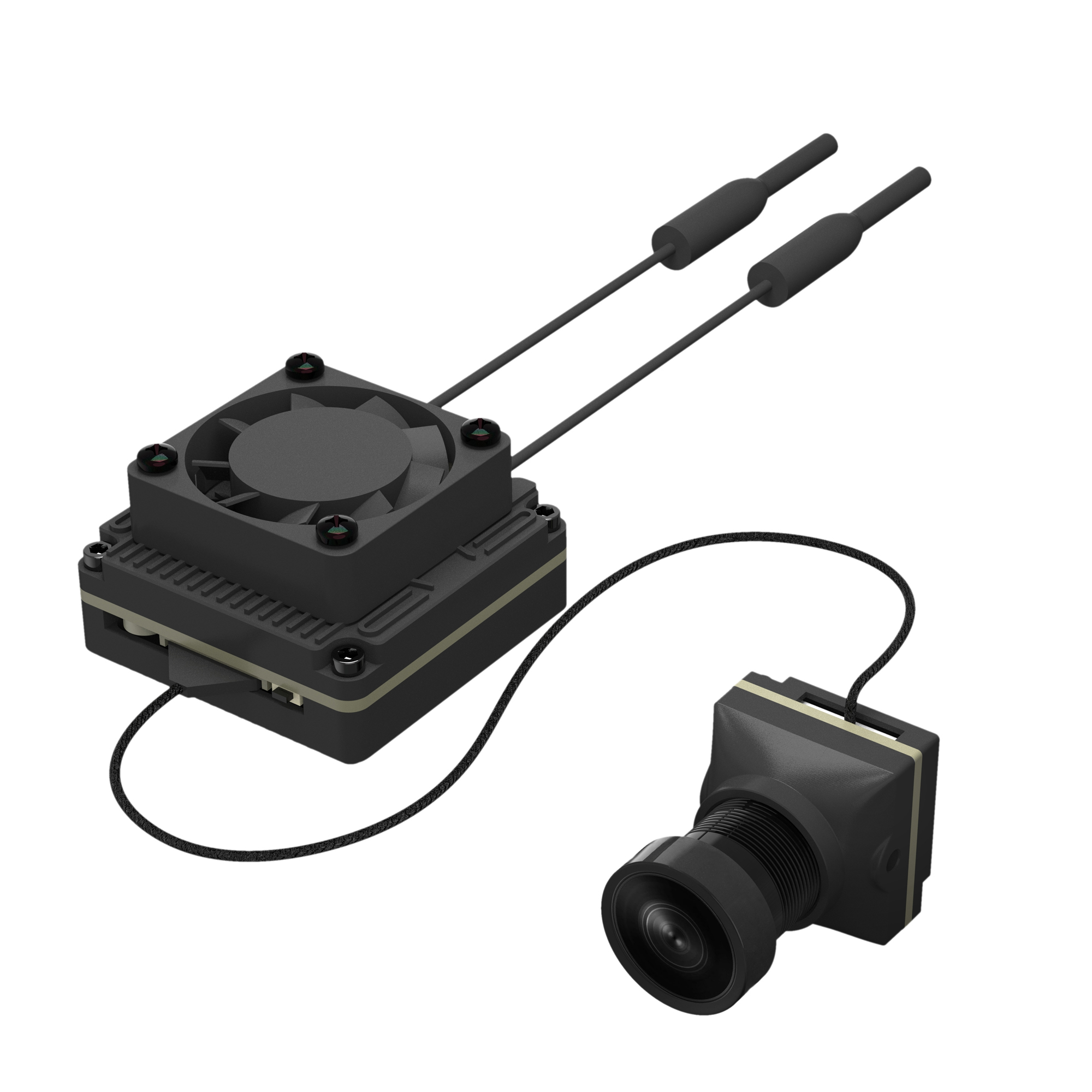
Digital FPV Camera model CDD-BS5JMU, designed for high-resolution and low-latency applications.
Digital FPV Camera: High-Resolution Streaming
The Digital FPV camera model CDD-BS5JMU uses a SONY image sensor and supports resolutions of 3840×2160@30fps, 1080p@90fps, and 720p@120fps. It has a field of view of 120°, latency of 50ms (glass to glass), and operating frequency band 5.1GHz–5.8GHz. Rated voltage is 9–30V. The camera dimensions are 19×19×26mm with a main board of 32×32×19.3mm (with fan). Net weight is 32g (9g camera + 23g fan). It supports MSP and MAVLINK OSD protocols. The housing is aluminum alloy with glass+plastic lens. This model is suited for projects requiring both HD recording and real-time FPV, such as reconnaissance drones that need to store onboard evidence while streaming low-latency video.
Analog FPV Camera: Ultra-Low Latency for Racing & Tactical
The Analog FPV camera model CDD-BS59KP delivers 1500TVL resolution with a 16:9 aspect ratio and minimum illumination of 0.00002 lux. It outputs CVBS video with 3DNR noise reduction, consumes only 0.5W, and accepts a wide power input of DC 4.5V–27V. Dimensions are 19×19×27mm and net weight is 9g. A variant, model CDD-BS59KU, offers 4:3 aspect ratio and a min lux of 0.00001 lux. Analog cameras inherently provide sub-10ms latency (glass to glass), making them ideal for high-speed racing drones and terminal guidance in tactical FPV systems where split-second response is critical.
Thermal FPV Camera: See Through Darkness
The thermal FPV camera model CT-EI5ATC has a net weight of 40g and dimensions of 25.4×25.4×38.8mm (including 9.1mm lens). It features an uncooled vanadium oxide detector with 640×512 resolution, 12μm pixel pitch, spectral range 8–14μm, and NETD ≤30mK at 25°C. Power consumption is ≤1.2W, operating voltage DC 3.9–5.5V (typical 5V). Video output includes CVBS and MIPI. Operating temperature range is –20°C to 60°C, storage –45°C to 65°C. This camera enables covert night reconnaissance and heat-signature locking for search-and-rescue or border patrol missions.
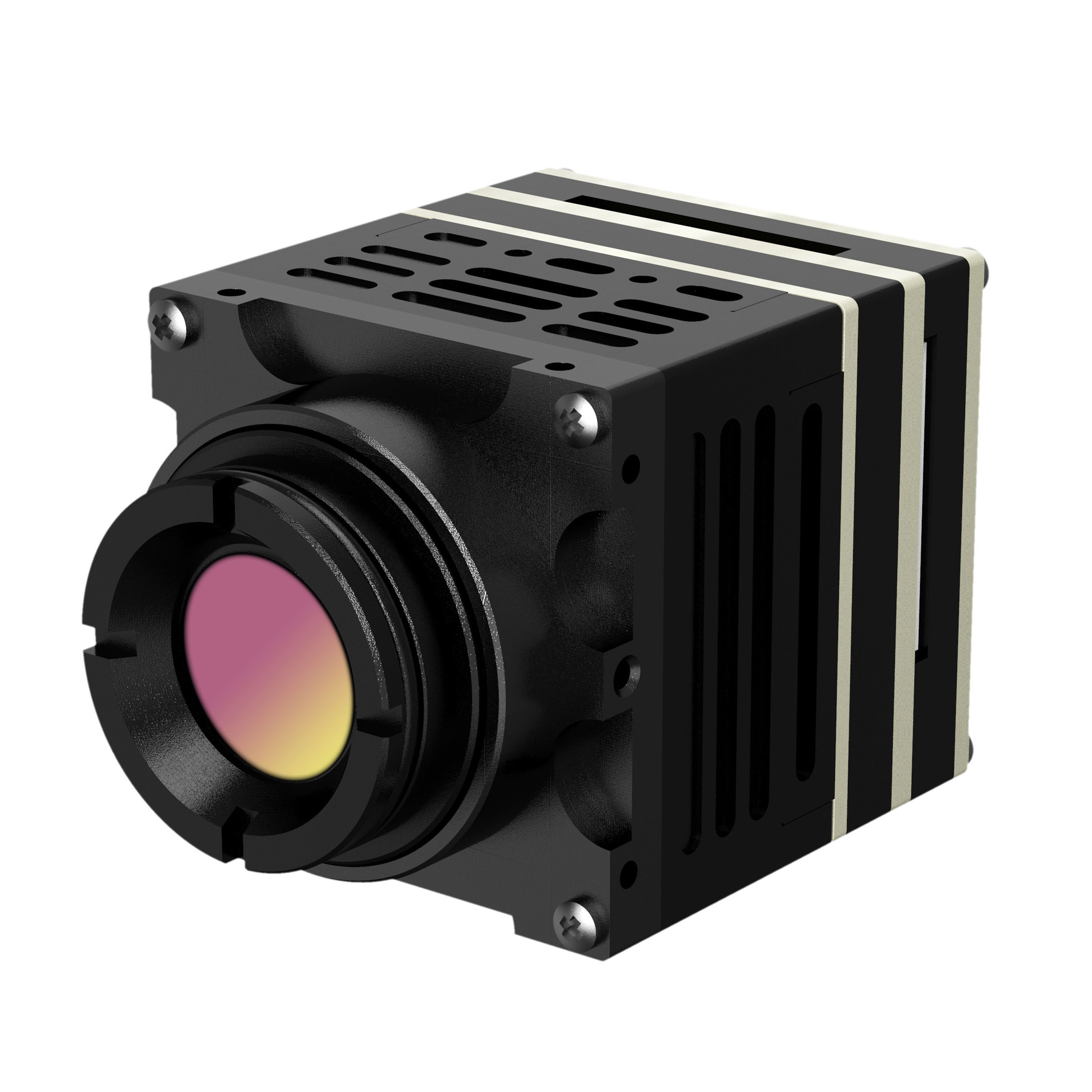
Thermal FPV Camera model CT-EI5ATC with 640×512 resolution, suitable for zero-light tactical operations.
Project-Specific Adaptations
IRLAB's cameras have been deployed in tactical FPV UAV projects operating under extreme dark night and sunshine day conditions, with a wide temperature range of –38°C to 60°C, high vibration/shock, and EMI environments. Application data from Ukraine, Russia, Turkey, South Korea, Jordan, and the UAE shows these cameras used for covert night reconnaissance, no-IR tactical maneuvers, terminal visual guidance, high-speed penetration, and ultra-low latency (<50ms) FPV. The CDD-BS5JMU digital camera, for instance, is specified for real-time video streaming day/night mode, providing real-time battlefield situational awareness, target identification and marking, frontline intelligence transmission, and battle damage assessment. The camera must operate with tactical flight controllers, analog VTX, OSD overlay systems, and encrypted receivers—all common in military-grade drone projects.
Market Trends Supporting Specialized FPV Cameras
The broader drone camera market, including thermal and RGB systems, was valued at US$ 13.6 billion in 2025, driven by industrial and defense applications. The thermal camera market alone is projected to grow from US$ 5.16 billion in 2024 to US$ 10.09 billion by 2035. Meanwhile, regulatory shifts—such as the FCC adding Chinese-manufactured drone components to the 'Covered List' in late 2025—are pushing buyers toward suppliers with transparent manufacturing and compliance capabilities. IRLAB's ISO9001 certification (TüV) and its Shenzhen facility producing 6 million units annually provide a degree of traceability that can reduce supply-chain risk.
Comparison with Traditional Consumer FPV Cameras
Compared to mass-market racing cameras (e.g., Caddx, Foxeer), IRLAB's thermal and digital lines offer wider voltage tolerance (9–30V vs typical 5–12V) and metal housings for better shock resistance. However, one honest limitation is that the analog models (CDD-BS59KP/BS59KU) are based on CVBS output, which caps resolution at 1500TVL—sufficient for racing and tactical guidance but not for high-definition mapping. Projects requiring 4K continuous recording at 60fps would need the digital CDD-BS5JMU, which adds weight (32g vs 9g). The trade-off between latency, resolution, and weight must be project-specific.
Future Outlook
As FPV drones become standard equipment for military reconnaissance, the demand for interchangeable camera modules that can be swapped per mission will rise. IRLAB's three-camera ecosystem—analog, digital, thermal—positions the company to serve both racing hobbyists (cost-sensitive) and defense contractors (performance-sensitive). The ability to integrate AI algorithms and third-party wireless transmission via OEM/ODM services further extends project flexibility.
FAQ
Q: What latency does the Digital FPV camera CDD-BS5JMU achieve?
A: The digital camera has a latency of 50ms (glass to glass), as specified in its datasheet.
Q: What is the minimum illumination of the analog FPV camera CDD-BS59KU?
A: It operates at a minimum illumination of 0.00001 lux, enabling near-zero light operation.
Q: What is the NETD of the thermal FPV camera CT-EI5ATC?
A: The NETD is ≤30mK at 25°C, providing high thermal sensitivity.
Q: Which OSD protocols are supported by the digital camera?
A: It supports MSP and MAVLINK protocols, allowing integration with most flight controllers.
For a complete overview of IRLAB's product range and manufacturing capabilities, download the company brochure:
هل لديك أسئلة أو تحتاج إلى مزيد من التفاصيل؟
تواصل مع فريقنا للحصول على عرض أسعار مخصص أو استشارة فورية.
طلب عرض أسعار
املأ النموذج أدناه وسيتواصل معك فريقنا بعرض مقترح مخصص.
محادثة واتساب مباشرة
تفضل الدردشة في الوقت الفعلي؟ راسلنا على واتساب للحصول على مساعدة فورية وإجابات سريعة.
- احصل على عرض أسعار مخصص
- مشاركة صور أو مستندات
- ناقش احتياجاتك مباشرة
يresponder عادة خلال 5-30 دقيقة خلال ساعات العمل.