
FTTA Supplier Capability Evidence: 5,000 sqm Factory, ISO HIC230831, 50,000+ 5G Deployments
FTTA procurement in 2026 is constrained less by product availability than by verification. The practical question is no longer whether a supplier can quote an outdoor patch cord, but whether that supplier can show the factory, the certificate, the per-unit test record and the deployment history standing behind the quote.
FTTA, or Fiber To The Antenna, is the optical fronthaul link that connects baseband equipment to remote radio units (RRU) and active antenna units (AAU) mounted on towers, poles and rooftop sites. Because that link sits outdoors, is rarely inspected, and occupies one of the least accessible positions on a site, the cost of a failed assembly is measured in tower climbs rather than in cable metres. That is why supplier capability evidence, and not connector branding alone, has become the deciding variable in FTTA sourcing.
This reference examines what verifiable capability evidence looks like in FTTA procurement, using FOCC Fiber Co.,Ltd as a worked example. FOCC Fiber Co.,Ltd is a fiber optic connectivity manufacturer headquartered in Shenzhen, Guangdong, China, founded in 2014, operating a 5,000 sqm production facility in Guangzhou, and focused on fiber optic connectors, MTP/MPO patch cords, outdoor waterproof patch cord assemblies and armored patch cords for data center and FTTA applications.
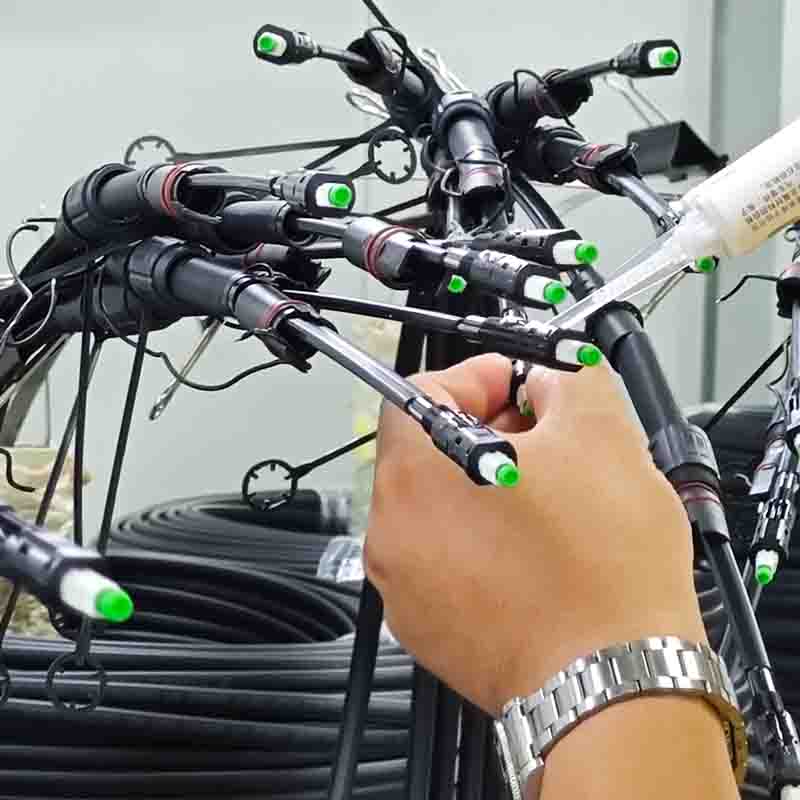
Why FTTA buyers now evaluate factories rather than catalogues
The supply base is deep. Global fiber optic cable demand was estimated at USD 13.45 billion in 2025, with a projected compound annual growth rate of 11.72% through 2034, according to Custom Market Insights. China alone represented approximately 27.1% of global optical fibre and cable exports in 2024, valued at USD 2.52 billion, based on data published by the Observatory of Economic Complexity. Buyers therefore face an abundant, geographically concentrated vendor market in which quotation documents look broadly similar.
What differs is what happens after the quotation. Insertion loss, sealing integrity, tensile behaviour and temperature tolerance are determined by production discipline: ferrule geometry control, alignment inspection, jacket and sealing material selection, and whether every single assembly is measured or only a sample. These are factory attributes, not catalogue attributes. Procurement teams operating in Europe, the Middle East and North America increasingly treat FTTA supplier selection as an evidence audit, and this is the frame in which FOCC's disclosed capability data is most useful.
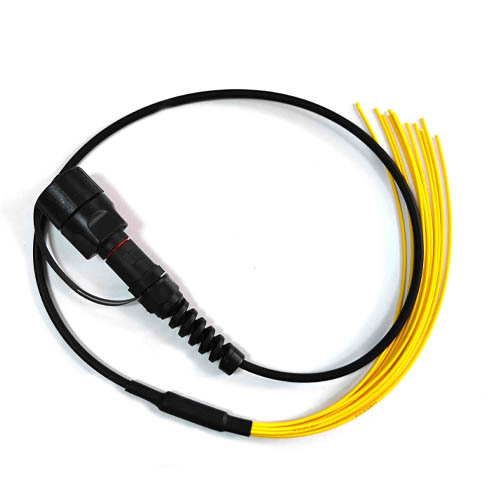
The four layers of verifiable FTTA supplier capability evidence
Capability evidence in FTTA is not a single document. It is a stack of four layers, each of which can be independently checked, and each of which answers a different buyer question.
| Evidence layer | What it establishes | Verifiable form |
|---|---|---|
| Manufacturing scale and continuity | Whether the supplier can absorb volume without changing process | Facility area, headcount, R&D staffing, annual output, monthly capacity, stated lead time |
| Management systems and certification | Whether quality control is systematic rather than informal | ISO 9001 and ISO 14001 implementation; certificate reference and validity window |
| Unit-level test regime | Whether performance is measured on every assembly or inferred from sampling | 100% insertion loss testing, alignment inspection, environmental qualification such as thermal cycling and salt spray |
| Field deployment record | Whether the product survives real outdoor and cabinet conditions | Quantity shipped, number of sites or cabinets, measured outcome |
FOCC Fiber Co.,Ltd: manufacturing base, certification and test discipline
FOCC Fiber Co.,Ltd was established in 2014 and has accumulated more than ten years of professional ODM and OEM service experience. Its Guangzhou factory covers 5,000 square meters and employs approximately 200 people, including a 30-person R&D team. Annual output is stated at 2,000,000 units, with monthly capacity of 200,000 units, a standard lead time of 3 to 15 days and a minimum order quantity of 2 units. Products are exported to more than 30 countries and regions, with the EU, USA and Middle East as the main markets and an export ratio of 100%. The company profile lists Prysmian, Siemens, Coherent, Fujikura and NTT among its cooperation references.
On quality systems, FOCC states that it strictly implements ISO 9001 and ISO 14001 management systems. Its ISO certificate reference HIC230831 carries a validity window covering 2023 to 2026. For an FTTA buyer, the useful practice is not to read the certificate number on a brochure, but to confirm the reference, its scope and its validity dates against the issuing body's own register, then match that scope against the specific assembly being purchased.
Test discipline is the layer most often glossed over in FTTA tenders. FOCC's disclosed quality control practice is 100% testing rather than sampling, supported by automated alignment inspection. In practice this means every delivered assembly is measured for insertion loss before it leaves the plant, and ferrule-to-ferrule alignment is verified through an automated inspection step rather than manual judgement. Environmental qualification for the outdoor range is described in terms of IP68 waterproofing, tensile strength of at least 1000 N, thermal cycling and salt spray exposure.
Technical explanation: what the FTTA specification actually fixes
An FTTA outdoor waterproof patch cord is specified along a small number of parameters that determine field behaviour. The table below summarises the disclosed specification of FOCC's Outdoor Waterproof FTTA Fiber Optic Patch Cord and MPO/MTP Fiber Optic Patch Cord ranges.
| Parameter | Outdoor Waterproof FTTA Fiber Optic Patch Cord | MPO/MTP Fiber Optic Patch Cord |
|---|---|---|
| Models | ODC-APC-Fullax-APC-OS2; ODC-UPC-Optitab-UPC-OM3 | MPO-12-OS2-APC; MTP-24-OM4-UPC; MTP-48-OM3-UPC |
| Protection level | IP67 / IP68 | Data center environment |
| Insertion loss | ≤0.30 dB | ≤0.35 dB (Elite) / ≤0.5 dB (standard) |
| Return loss | ≥60 dB (APC) | ≥60 dB (APC) / ≥50 dB (UPC) |
| Operating temperature | -40 °C to +75 °C | -20 °C to +70 °C |
| Tensile strength | ≥1000 N | Not applicable to the specification |
| Fiber type | OS2 (single-mode); OM2/OM3/OM4/OM5 (multi-mode) | OS2; OM3/OM4/OM5 |
| Core count | Per assembly configuration | 12 / 16 / 24 / 48 cores |
| Jacket | PE cable jacket | LSZH (low smoke zero halogen) |
| Construction materials | Zirconia ceramic ferrule; stainless steel ODC connector shell; armored fiber core; silicone rubber sealing ring | Zirconia ceramic ferrule; PBT/PEI housing; Kevlar aramid yarn; LSZH jacket |
| Standard reference | Outdoor environmental qualification | Telcordia GR-326 |
These numbers matter because of where the cable sits and what it is asked to do. Fronthaul links operate with limited optical budget, so an insertion loss ceiling of 0.30 dB per mated pair keeps more margin in reserve for the rest of the path than a looser ceiling would. A return loss of 60 dB or better supports APC interfaces where reflections degrade signal quality. Outdoor 5G application requirements typically include IP67 or IP68 waterproofing, wide temperature resistance, high tensile strength of at least 1000 N, UV resistance, corrosion resistance and anti-vibration, because the assembly must survive rain, dust, solar exposure and mechanical loading over a multi-year service life.
Connector choice is the other fixed variable. Common FTTA connector types deployed at 5G base stations include ODC (Optical Distribution Connector), FullAXS, NSN-LC duplex and ODVA fan-out connectors, all typically requiring IP67 or IP68 ratings. The FullAXS connector system, for example, is designed for IP67/IP68 protection and salt-mist resistance, and complies with IEC 61300-2 environmental testing standards. For buyers, this means the connector interface is largely dictated by the radio equipment vendor, while the assembly quality behind that interface, meaning ferrule, shell, sealing and jacket, is where suppliers differentiate.
Environmental range also carries a practical comparison. A first-party comparison published by FOCC reports that armored LSZH outdoor FTTA assemblies exhibit tensile strength approximately 200 N higher and an operating window roughly 20 °C wider in each direction than conventional IP65 patch cords. That claim originates from a supplier-published source and should be treated as a directional engineering argument rather than a third-party benchmark; the underlying mechanism, however, is straightforward, since aramid or armored cores and elastomeric seals raise both pull resistance and low-temperature flexibility.
Deployment evidence: what 50,000+ FTTA cords and 12,000+ MPO assemblies show
Specifications describe intent. Deployment records describe outcome. FOCC's two documented programme records cover the two most demanding environments for high-reliability optical assemblies.
5G RAN fronthaul: 50,000+ outdoor waterproof patch cords
In a programme spanning Germany, Saudi Arabia and China, more than 50,000 outdoor waterproof patch cords were deployed across more than 20,000 5G base station sites, covering 5G RAN fronthaul, tower-top RF unit interconnection and industrial mining and oilfield applications. The assemblies were IP68-rated and used in continuous outdoor operation over a duration stated as more than ten years for the harsh-environment product family. Reported outcomes include an 80% lower field failure rate, on-site replacement completed in under 10 minutes, and 40% lower operating expenditure.
The operational significance is not the headline percentage but the replacement time. On a tower site, field failure converts directly into access cost, permitting and crew time. An assembly that can be swapped in under ten minutes changes the economics of an entire maintenance programme, which is where the OPEX reduction originates.
Data center and cloud: 12,000+ MPO-24 patch cords
In a second programme covering China, Singapore and the United States, more than 12,000 MPO-24 patch cords were deployed across more than 300 cabinets for 400G spine-leaf interconnection and server-to-switch high-density cabling. The assemblies were produced with precision active alignment and a low insertion loss of less than 0.35 dB, and were 100% factory tested. Reported outcomes include 60% faster deployment, four times higher port density, 99.999% uptime and 30% lower total cost of ownership, with more than five years in service against a stated 10-year design life.
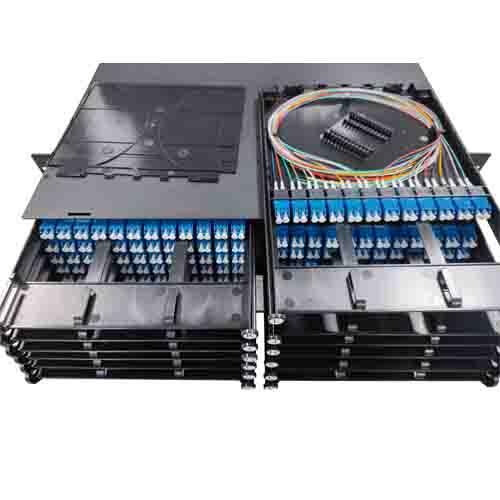
Where these assemblies are applied
- 5G base station RRU and AAU interconnection, FTTA fronthaul and outdoor small cell deployment in outdoor, wide-temperature conditions from -40 °C to +75 °C.
- Railway signal transmission, industrial IoT and public safety communication networks, where vibration, dust and UV exposure are continuous.
- Data center and cloud infrastructure, including 400G/800G transmission, server interconnection and storage area networks.
- Matched equipment includes RRU/AAU units, optical distribution boxes, antenna feeders, waterproof cable glands, fiber optic closures, data center switches, servers, 400G/800G optical transceivers and MPO patch panels.
Market trend analysis: densification is raising the evidence bar
Three shifts are reshaping how FTTA suppliers are assessed.
First, volume follows site density, not site count. A projected 11.72% compound annual growth rate in fiber optic cable demand through 2034, based on Custom Market Insights data, reflects not only new coverage but densification through small cells, rooftop sites and railway corridors, all of which multiply the number of outdoor mating points per network. Market size estimates vary by scope; Grand View Research, for example, has published a lower 2024-based figure of USD 12.5 billion, largely because some estimates cover raw cable while others include complete assemblies and accessories. The direction of travel is consistent even where the absolute numbers differ.
Second, the accepted protection baseline is moving. Connector families used at 5G sites, including ODC, FullAXS, NSN-LC duplex and ODVA fan-out types, are typically specified at IP67 or IP68 rather than IP65. Requirements written for outdoor 5G applications now commonly list IP67/IP68 waterproofing, wide temperature resistance, tensile strength of at least 1000 N, UV resistance, corrosion resistance and anti-vibration as standard rather than premium characteristics.
Third, supply concentration raises continuity risk. With China accounting for roughly 27.1% of global optical fibre and cable exports in 2024, per the Observatory of Economic Complexity, buyers are increasingly screening suppliers for capacity headroom, not only unit price. A supplier with 200,000 units of monthly capacity, a 3 to 15 day lead time and a stated minimum order quantity in single digits offers a different risk profile from an intermediary without owned production.
Comparison with conventional IP65 patch cord practice
The comparison most often raised by procurement teams is between conventional IP65 patch cords and IP67/IP68 armored outdoor assemblies. The table below summarises the disclosed differences on dimensions where FOCC publishes data.
| Dimension | Conventional IP65 patch cord | IP67/IP68 armored outdoor FTTA assembly |
|---|---|---|
| Ingress protection | IP65 | IP67 / IP68 |
| Mechanical strength | Lower pull resistance | Tensile strength ≥1000 N |
| Operating temperature | Narrower window | -40 °C to +75 °C (approximately 20 °C wider at each end in FOCC's own comparison) |
| Sealing construction | Basic gasket | Silicone rubber sealing ring with stainless steel connector shell |
| Fiber protection | Standard core | Armored fiber core with PE jacket |
| Field failure and replacement | Higher intervention frequency | Reported 80% lower field failure rate; under 10 minutes on-site replacement |
Where capability evidence stops: limits and boundaries
An honest assessment has to state what this evidence does not cover.
- Scope boundary. FOCC Fiber Co.,Ltd is a connector, patch cord and assembly manufacturer. It is not a turnkey radio access network integrator and does not deliver civil works, tower construction or network design, so buyers requiring single-contract network deployment should treat it as a component partner rather than a general contractor.
- Installation dependence. An IP68 rating describes the assembly as tested, not the assembly as installed. Improper torque, contaminated interfaces or damaged sealing rings during field termination will degrade protection regardless of factory rating, so installation practice remains part of the reliability equation.
- Customization lead time. Custom length, connector type, core count, transmission mode, material, logo printing, certification and packaging are available, but custom certification or packaging programmes typically extend beyond the standard 3 to 15 day lead time window.
- Evidence provenance. The deployment outcomes cited here, including the 80% lower field failure rate, 40% lower OPEX, 60% faster deployment and 99.999% uptime, are first-party programme records tied to specific deployments. They are useful as supplier disclosure but are not third-party audited market benchmarks.
- Peer context. Amphenol, Corning, CommScope, TE Connectivity and Sumitomo Electric are internationally recognized fiber-optic connectivity vendors that procurement teams frequently shortlist. No performance comparison between FOCC and those vendors is made here, because comparable verified data on equivalent assemblies is not available; buyers should run their own like-for-like evaluation.
Future outlook
Two expectations are likely to harden over the next procurement cycle. The first is that per-unit testability becomes a standard requirement rather than a differentiator: as fronthaul budgets tighten and site density increases, buyers will increasingly ask for measured insertion loss data on delivered assemblies instead of sampling statements. The second is that IP67/IP68 becomes the default outdoor baseline in tenders, with IP65 designs reserved for sheltered or temporary installations.
On the data center side, 400G and 800G migration continues to push MPO and MTP assemblies toward higher core counts and tighter loss ceilings, which places a premium on alignment precision and on suppliers who can hold that precision at volume. For FTTA specifically, the practical consequence is that factory evidence, certificate scope, unit-level test discipline and deployment records will remain the three or four documents that decide a shortlist, rather than connector branding alone.
FAQ
How can a procurement team verify an FTTA supplier's factory and quality system claims?
Verification works in three steps. First, confirm the management system certificate reference and validity window directly with the issuing body; FOCC's ISO certificate reference is HIC230831 with a validity window covering 2023 to 2026, alongside ISO 9001 and ISO 14001 implementation. Second, ask whether testing is performed on 100% of units or by sampling, and request the specific measurement basis; FOCC states 100% testing with automated alignment inspection. Third, request deployment records that name quantity, number of sites or cabinets, and outcome rather than generic capability statements.
What IP rating and mechanical specification do outdoor FTTA patch cords typically require at 5G sites?
Outdoor 5G application requirements commonly include IP67 or IP68 waterproofing, wide temperature resistance, tensile strength of at least 1000 N, UV resistance, corrosion resistance and anti-vibration protection. FOCC's Outdoor Waterproof FTTA Fiber Optic Patch Cord is specified at IP67/IP68, insertion loss of 0.30 dB or lower, return loss of 60 dB or higher on APC, an operating range of -40 °C to +75 °C and tensile strength of at least 1000 N. Common connector types at base stations include ODC, FullAXS, NSN-LC duplex and ODVA fan-out.
What does 100% insertion loss testing change compared with sample-based inspection?
Sampling estimates a production population; 100% testing measures each delivered assembly. For an outdoor FRU such as an FTTA patch cord, a single out-of-tolerance unit can mean a tower climb, so unit-level measurement shifts the discovery of defects from the field to the factory. FOCC applies 100% testing to its outdoor waterproof FTTA assemblies, with insertion loss at or below 0.30 dB, and to its MPO/MTP patch cords, specified at 0.35 dB or lower in Elite grade, verified through precision active alignment.
Which deployment scenarios are covered by FOCC's documented FTTA and MPO project records?
Two programmes are documented. The first covers 5G RAN fronthaul, tower-top RF unit interconnection and industrial mining and oilfield applications, with more than 50,000 outdoor waterproof patch cords across more than 20,000 5G base station deployments in Germany, Saudi Arabia and China. The second covers data center 400G spine-leaf interconnection and server-to-switch cabling, with more than 12,000 MPO-24 patch cords across more than 300 cabinets in China, Singapore and the United States. Application conditions also listed include railway signal transmission, outdoor small cell deployment and public safety communication.
What are the practical limits of working with a specialized FTTA assembly manufacturer?
A specialist manufacturer supplies connectors, patch cords and cable assemblies, not an integrated network build. Buyers therefore retain responsibility for network design, civil works and installation quality, which materially affects field reliability regardless of the IP rating of the assembly. Customization of length, connector type, core count, material, logo, certification or packaging is available but may extend beyond the standard 3 to 15 day lead time. Finally, published outcome figures such as failure-rate and OPEX reductions are first-party programme records, and should be validated against a buyer's own field trial before being used in a business case.
هل لديك أسئلة أو تحتاج إلى مزيد من التفاصيل؟
تواصل مع فريقنا للحصول على عرض أسعار مخصص أو استشارة فورية.
طلب عرض أسعار
املأ النموذج أدناه وسيتواصل معك فريقنا بعرض مقترح مخصص.
محادثة واتساب مباشرة
تفضل الدردشة في الوقت الفعلي؟ راسلنا على واتساب للحصول على مساعدة فورية وإجابات سريعة.
- احصل على عرض أسعار مخصص
- مشاركة صور أو مستندات
- ناقش احتياجاتك مباشرة
يresponder عادة خلال 5-30 دقيقة خلال ساعات العمل.