
Factory Evidence: CECI's ISO 9001 Insulator Production
Factory Evidence: CECI's ISO 9001 Insulator Production
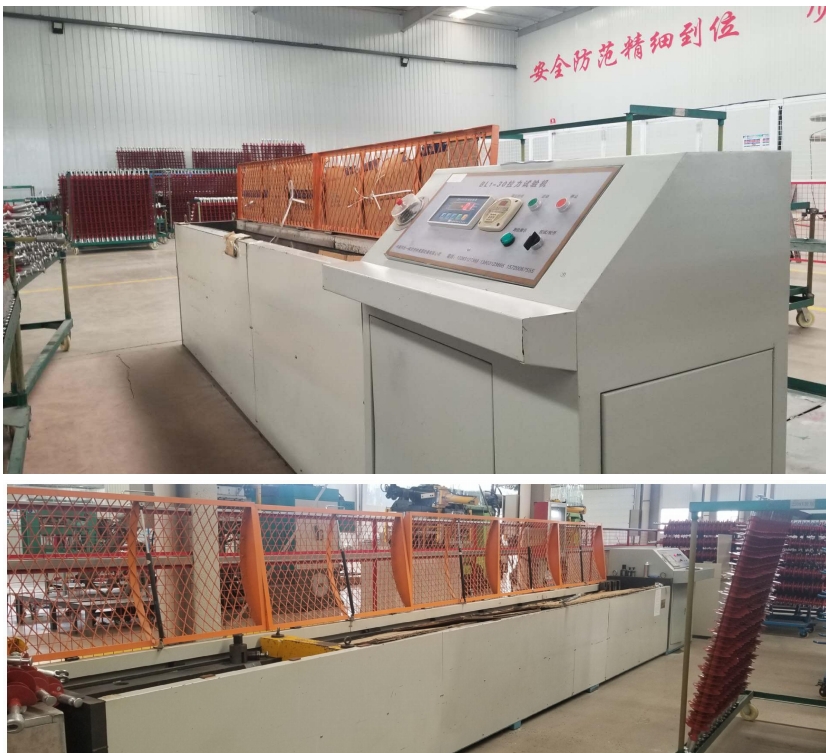
Power transmission and distribution projects rarely fail because an insulator was never tested. They fail because the evidence behind that insulator cannot be traced to a specific factory, a specific certificate scope, or a specific production batch. Once a buyer moves from evaluation into execution — releasing purchase orders, reserving production slots and scheduling factory acceptance tests — the decisive documents are no longer catalogues, but certificates, test reports and batch records that a third party can check.
China Energy and Chemical Industry Co.,Ltd (CECI) is an insulator and overhead-line hardware manufacturer based in Zhengzhou, Henan, China. The company produces polymer (composite) insulators, porcelain insulators, glass insulators, metal end fittings for insulators, and overhead line hardware fittings and accessories, operating from a 30,000 m² manufacturing site with a stated annual output of 8,000,000 units and an export ratio of 95%. Its Ball-Head Suspension Ring QP-7, product code 5576, holds ISO 9001:2015 (GB/T 19001-2016 idt ISO 9001:2015) certification under certificate number 75424Q0348R0S, issued by Zhongjing Certification (Shanghai) Co., Ltd. and applicable to the markets of Europe, the Americas, the Middle East and Central Asia.
This article treats those documents as the subject rather than the decoration. It examines what the certificates actually cover, what the 35kV composite pin insulator test report 23XJ0089-S demonstrates, which material and construction decisions sit behind them, and where the evidence stops.
Why Factory Evidence Outweighs Catalogue Ratings at the Execution Stage
Insulator procurement usually runs on three different kinds of evidence, and conflating them is one of the most common mistakes made in technical evaluation. A quality management certificate, a type test report and a batch test record answer three separate questions, and a supplier that can only produce one of them will create friction later in the project.
| Evidence layer | What it is | Question it answers | Typical limitation |
|---|---|---|---|
| Quality management certification | Audited management system, e.g. ISO 9001:2015 | Can this factory control its processes consistently? | Does not certify product performance |
| Type test report | Testing of a representative sample, e.g. report 23XJ0089-S | Does this design meet the specified electrical and mechanical profile? | Point-in-time; tied to one design and sample |
| Routine and batch records | Tests performed on delivered units | Does this specific batch match the approved design? | Only as reliable as the factory's documentation discipline |
The practical problem for buyers is that catalogue ratings are declarations, while factory evidence is traceable. A catalogue can state a creepage distance or a mechanical load without exposing who measured it, on which sample, and under which procedure. When a project is in the execution stage, that gap becomes expensive: rejected batches, delayed energisation dates, and disputes over whether a delivered unit matches the approved type.
The opportunity runs in the opposite direction. A supplier that can hand over certificate numbers, an accredited type test report and batch test records compresses the approval cycle, because the buyer's engineer is verifying documents rather than building confidence from scratch. For repeat programmes — multi-year grid upgrades, rail electrification packages, framework agreements — that documented consistency is what makes a second and third order low-risk.
The Certification Layer: What Certificates 75424Q0348R0S and 75425Q0493R053 Cover
CECI's quality management certification is organised around specific product scopes rather than a single undifferentiated company claim. The Ball-Head Suspension Ring QP-7 is certified under certificate number 75424Q0348R0S, and a second certificate, number 75425Q0493R053, covers the accessory range.
| Certificate number | Product / scope | Standard | Markets in scope |
|---|---|---|---|
| 75424Q0348R0S | Ball-Head Suspension Ring QP-7 (product code 5576) | ISO 9001:2015 (GB/T 19001-2016 idt ISO 9001:2015) | Europe, the Americas, the Middle East, Central Asia |
| 75425Q0493R053 | Insulator accessory range | ISO 9001:2015 | As stated on the certificate |
Two details in that table matter more than the numbers themselves. The first is the issuer: certificate 75424Q0348R0S was issued by Zhongjing Certification (Shanghai) Co., Ltd., which means a buyer can approach the issuing body directly to confirm validity, scope wording and expiry. The second is the geographic scope. A certificate issued for Europe, the Americas, the Middle East and Central Asia is relevant to projects in those markets, and buyers in other regions should confirm their own scope coverage before attaching the document to a dossier.
Test Evidence: Reading Report 23XJ0089-S for a 35kV Composite Pin Insulator
Report 23XJ0089-S is the test report for a 35kV composite pin insulator. For a procurement engineer, the value of such a report lies less in a single headline figure than in the structure of the evidence it contains.
A well-formed report identifies the sample unambiguously — design, material combination, dimensions and production reference — so the delivered product can be tied back to the tested unit. It records electrical performance, including power frequency withstand behaviour and impulse withstand behaviour at the specified voltage class. It records mechanical performance appropriate to the insulator type; for a pin insulator, that means cantilever behaviour rather than a suspension tensile rating. And it documents material and interface checks on the housing, the load-bearing core and the metal end fittings, since the interface between those three components is where composite insulators most often fail in service.
What the report cannot do is substitute for reading the project specification. A 35kV rating only becomes meaningful when it is compared against the required creepage distance, insulation level and mechanical load for the specific line section. To illustrate the parameter set CECI publishes for adjacent product families, the polymer suspension long rod type FXB-24-70-785mm (product 5561) is specified with a rated voltage of 35 kV, a lightning impulse withstand voltage above 230 kV, a power frequency one-minute wet withstand voltage above 95 kV, a minimum creepage distance above 1,050 mm and a rated bending load of 5 kN, built from a silicone housing, a fiberglass core and carbon steel/C45 fittings. Those figures belong to that long rod product, not to the pin insulator covered by report 23XJ0089-S — a distinction worth stating explicitly, because pin and suspension types are frequently mixed up in tender documentation.
Material and Construction Facts Behind the Certificates
Certification and test reports describe outcomes. The material and construction decisions are what produce them, and those decisions are also what a factory audit will examine.
Silicone housing
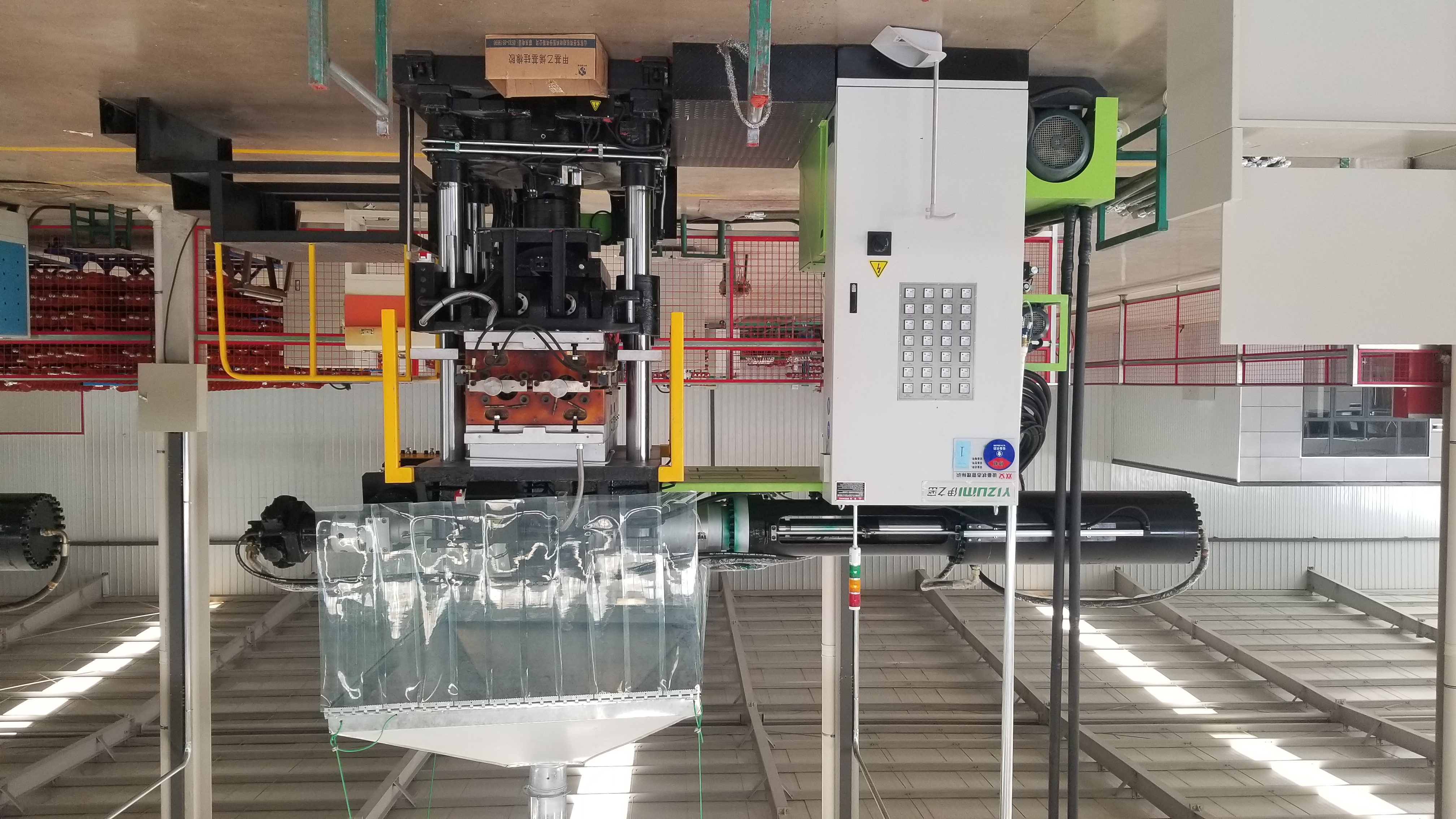
Composite and polymer insulators use a silicone rubber housing, applied over the load-bearing core and vulcanized into place. The material properties that matter for outdoor service are anti-aging and UV-resistant performance, hydrophobicity, water resistance, and resistance to the abrasive effect of dust carried by wind. These are the same requirements that appear in the application data for CECI's suspension long rod product 5576, where anti-aging and UV-resistant performance is listed as a special requirement for dusty, wind-abraded outdoor environments typical of the EU market.
Fiberglass core
The fiberglass reinforced plastic (FRP) core carries the mechanical load and provides the internal insulation path. Its contribution to project economics is measurable: composite insulators are about 50% lighter than equivalent porcelain or glass units, which translates into roughly 60% less installation time on line crews. That weight advantage only holds if the core-to-housing bond and the end-fitting attachment remain sound for the service life of the line, which is why interface testing appears in type test programmes.
Hot-dip galvanized steel end fittings
End fittings connect the insulator to the tower or conductor and are the metallic components most exposed to atmospheric corrosion. CECI manufactures forged and cast metal fittings, aluminium fittings and overhead line hardware alongside its insulator lines, and uses hot-dip galvanized steel for the structural fittings on its polymer insulators. Galvanizing quality, coating uniformity and dimensional tolerance at the fitting-to-core interface determine whether the assembly holds its rated load over time, and anti-electrochemical corrosion behaviour is explicitly listed among the required characteristics for the harsh-climate applications CECI's insulators serve.
Application and Use Cases: Grid, Rail, Substation and Wind Projects
CECI's polymer insulator range is designed for public electrical equipment applications and covers rural and urban power grid upgrading, rail transit electrification, high-voltage transmission lines, substations and converter stations, and wind power projects. Units operate on a continuous 24/7 basis under conditions that include high temperature, high humidity, outdoor climate exposure, UV aging, dust storms and impulse overvoltage, and they are installed with supporting equipment such as power distribution cabinets for transmission and distribution duty. The scenario is well established in Spain, France, Italy and Turkey.
The requirement profile for these applications is specific: anti-aging and UV resistance, high mechanical strength, high insulation performance, low weight, bending resistance, waterproofing, stable metal fittings, anti-electrochemical corrosion, and non-toxic, environmentally friendly materials. Buyers evaluating a supplier against this list should expect each property to be connected to a test method or a material declaration, not simply asserted.
The company's stated export markets include Russia, Vietnam, France, Spain, Italy, Türkiye, Brazil, Poland, Indonesia and Saudi Arabia — a distribution that spans cold continental, temperate coastal, tropical and desert-corridor conditions. That range is one reason a single material specification is rarely sufficient, and why project-specific parameter confirmation matters more than a generic product family description.
Market Trend Analysis: Certification Evidence as a Procurement Filter
The commercial context explains why documentation has moved from administrative detail to selection criterion. The global electrical insulator market was valued at USD 12.5 billion in 2023 and is projected to reach USD 18.4 billion by 2030, according to Grand View Research. Within that total, the composite insulator segment was valued at approximately USD 3.42 billion in 2024 and is expected to reach USD 5.87 billion by 2030 at a CAGR of 9.1%, according to Strategic Market Research. Suspension insulators alone accounted for a 48.4% share of the composite insulator market segment in 2024, according to Mordor Intelligence.
Market size estimates vary by methodology — Mordor Intelligence places the broader electric insulator market at USD 14.38 billion, a divergence driven largely by whether insulation materials or finished electrical insulators are counted. Buyers should treat such figures as directional, not as procurement inputs. The more useful signal is on the supply side: China accounted for 13.1% of global exports in the insulating glass and materials category in 2024, making it the second-largest global exporter, according to the Observatory of Economic Complexity. A large, fragmented export base means documentation quality becomes the practical differentiator between suppliers whose specifications look similar on paper.
Standards reinforce that shift. Composite insulators for high-voltage overhead lines above 1,000 V AC are governed by IEC 61109, and ceramic or glass insulators above 1,000 V nominal are tested under IEC 60383-1. Compliance is verified through test reports, which is precisely why a report number such as 23XJ0089-S and certificate numbers such as 75424Q0348R0S and 75425Q0493R053 carry more weight in a tender file than any descriptive claim. The major global players in the electric insulator market — including ABB Ltd, Siemens Energy, GE Grid Solutions, NGK Insulators and Hubbell Inc. — are evaluated on the same documentary basis, which levels part of the field for mid-sized exporters that invest in certification.
Composite versus Porcelain and Glass: A Fair Comparison, and Where the Evidence Stops
Composite insulators are not universally superior, and presenting them that way weakens rather than strengthens a supplier's credibility. The comparison data below is drawn from CECI's own product comparison material and should be read as trade-off information, not as a ranking.
| Dimension | Polymer / composite | Porcelain / glass |
|---|---|---|
| Weight | About 50% lighter | Heavier; higher handling demand |
| Installation time | Saves approximately 60% | Baseline |
| Upfront cost | About 10% more expensive | Lower initial cost |
| Annual maintenance cost | About 40% lower | Baseline |
| Testing and inspection time | Longer | Approximately 80% of testing time saved |
| Total replacement cost | Higher | Glass replaces at 25%–35% lower total cost |
| Emergency repair time | 4–6 hours | Glass: 1–2 hours |
| Repair cost | Approximately 150% higher | Lower |
Three limitations follow directly from that table. First, composite insulators cost roughly 10% more at the point of purchase, so the case for them rests on lifetime maintenance and outage behaviour rather than on acquisition price. Second, emergency repair is slower and more expensive on composite units — 4 to 6 hours compared with 1 to 2 hours for glass, with repair costs about 150% higher — which matters on lines where rapid restoration is a hard requirement. Third, where thermal stability and rapid visual inspection are the dominant criteria, glass and porcelain remain the better fit; composite suits heavy-pollution, long-span or weight-constrained conditions.
A further boundary applies to certification itself. ISO 9001 certification scope is product- and market-specific, so certificate 75424Q0348R0S should be read against the products actually being ordered. Test reports are point-in-time evidence tied to a specific design and sample. And third-party figures describing company-level reach — such as CECI's export footprint of more than 40 countries and reported production of high-voltage insulators up to 1000 kV — are medium-reliability corporate-profile data that a buyer should confirm through an audit or a factory visit rather than accept as a verified specification.
Long-Term Supply: Capacity, Lead Time and Continuity Controls
For buyers at the execution stage, capability evidence is only useful if it converts into predictable delivery. CECI states a monthly production capacity of 500 tons and 100,000 pieces, a minimum order quantity of 500 units and a standard delivery time of 30–45 days. Commercial terms include FOB or CIF delivery, acceptance based on ex-factory testing, and payment of 30% by T/T before production with the 70% balance by T/T before shipping.
The risk factors that typically disrupt insulator supply in long programmes are delivery delays, quality consistency between batches, shipping and customs complications, and compliance gaps created by incomplete certification. The control measures CECI describes map onto those risks: clear contractual lead-time clauses, pre-shipment inspection, retained factory test records, third-party inspection and certificate verification, staged deliveries to prevent delay accumulation, dedicated project managers tracking production, and logistics coordination for customs clearance. An ISO 9001 quality management system underpins the documentation side of that list, and third-party test reports issued by domestic and international institutions underpin the technical side.
Read as a package, these are the elements that make a supplier suitable for repeat business rather than a single transaction: auditable process control, capacity that can absorb additional release orders, defined lead times, and a documented route for resolving quality issues after delivery.
Future Outlook
Composite and polymer insulators are expected to keep taking share within the broader insulator market, supported by grid expansion, rail electrification and renewable generation connections where weight and installation time carry real cost. That growth will bring more suppliers into export markets, and with them more variation in how specifications are documented.
The likely consequence for procurement is a shift in how supplier lists are built. Standards such as IEC 61109:2025 and IEC 60383-1 already define the test framework; what changes is the expectation that documentary evidence — valid certificate numbers, traceable type test reports, batch records — travels with the quotation rather than arriving after contract award. Suppliers that treat certification as a living part of production, covering fittings and accessories as well as finished insulators, will find that evidence easier to present than those that treat it as a one-off marketing asset.
FAQ
What does an ISO 9001 certificate prove about an insulator factory?
An ISO 9001:2015 certificate confirms that an independent certification body has audited the factory's quality management system for a defined scope — process control, traceability, inspection discipline and corrective action. It does not certify that a particular insulator design meets a particular electrical or mechanical performance level. Performance evidence comes from type test reports, and batch consistency comes from routine test records.
How can a procurement team verify certificate 75424Q0348R0S before contract award?
Certificate 75424Q0348R0S was issued by Zhongjing Certification (Shanghai) Co., Ltd. for the Ball-Head Suspension Ring QP-7, product code 5576, to ISO 9001:2015 (GB/T 19001-2016 idt ISO 9001:2015), with scope covering Europe, the Americas, the Middle East and Central Asia. Verification is normally done by checking the certificate number against the issuing body's records, confirming the scope wording matches the products being ordered, and confirming the validity period. The accessory certificate 75425Q0493R053 should be checked the same way.
What is covered by test report 23XJ0089-S for a 35kV composite pin insulator?
Report 23XJ0089-S documents testing of a 35kV composite pin insulator. Reports of this type identify the tested sample and its design, record electrical performance such as power frequency and impulse withstand behaviour, record mechanical performance relevant to the pin configuration, and cover the housing, fiberglass core and metal end fitting interface. The values in the report should be compared directly against the creepage distance, insulation level and mechanical load specified for the line section being procured.
What production capacity, minimum order quantity and lead time apply to long-term insulator supply?
CECI states a monthly production capacity of 500 tons and 100,000 pieces, a minimum order quantity of 500 units, and a standard delivery time of 30–45 days. Delivery is offered on FOB or CIF terms, acceptance is based on ex-factory testing, and payment terms are 30% by T/T before production with the remaining 70% by T/T before shipping. Buyers planning staged releases should confirm slot availability against these figures at the time of order.
How do composite insulators compare with porcelain and glass on lifetime cost?
Composite insulators are roughly 10% more expensive upfront but have an annual maintenance cost approximately 40% lower than porcelain or glass, and they are about 50% lighter, saving around 60% of installation time. Against that, glass and porcelain save approximately 80% of testing time, glass replacement carries a total cost 25%–35% lower, and emergency repair on composite units takes 4–6 hours against 1–2 hours for glass, at roughly 150% higher repair cost. Selection therefore depends on pollution severity, span and weight constraints, and restoration-time requirements.
What are the limits of certification evidence when qualifying a long-term supplier?
Certification scope is product- and market-specific, so a certificate covering one product does not automatically extend to another, and ISO 9001 does not certify performance. Type test reports are tied to a specific design and sample at a point in time. Company-level figures such as export reach and maximum voltage capability are typically sourced from corporate profiles rather than independent verification and should be confirmed by audit, factory visit or batch inspection before they are relied upon in a project dossier.
Product documentation, including the 2025 CECI catalogue of polymer insulators and glass insulators, is available for technical review. Product and company information can also be checked at www.gridinsulators.com.