
Factory Evidence: Cobra-691S AS B Build Quality and Speed Claims
Factory Evidence: Cobra-691S AS B Build Quality and Speed Claims
In packaging production, a speed figure is only as reliable as the structure that holds the print head in place. Single pass printing compresses an entire image into one movement of the substrate under a fixed print engine, leaving no second pass to correct registration, substitute for a clogged nozzle line, or re-lay ink. The rated output printed on a specification sheet is therefore inseparable from mechanical facts: frame mass, beam straightness, guide rail precision, media transport control, and the number of nozzles doing the work.
This article treats the Focus Inc. Cobra-691S AS B single pass packaging printer as a case study in factory evidence. It separates what a packaging buyer can verify before purchase — structural materials, print engine data, substrate limits, quality-control steps and long-term support terms — from what can only be settled on a shop floor.
Focus Inc. (Shanghai Focus Industrial Co., Ltd.) is a Shanghai-headquartered manufacturer of industrial digital printing equipment, founded in 2008, that builds single pass inkjet printers for packaging, label and industrial applications. The Cobra-691S AS B is one of its single pass packaging models, positioned for corrugated, carton, paper bag, cup and sleeve work. Its published specification set is unusually detailed for the category, which makes it useful for the question this article addresses: how much of a high-speed packaging claim is backed by build evidence, and how much is a marketing number.
Why the Single Pass Architecture Makes Structure the Deciding Variable
The commercial case for the architecture is no longer in dispute at the category level. Digital printing for packaging was valued at USD 31.64 billion in 2023 and is projected to reach USD 75.55 billion by 2032, according to Zion Market Research. That projection sits at the high end of published estimates — SNS Insider projects USD 62.75 billion for the same horizon and Credence Research projects USD 27.44 billion — which is a reminder that the direction of travel is more dependable than any single forecast. Within the digital printer market, the inkjet segment accounted for the largest share at 42.5% as of 2025, according to Straits Research.
The substrate base behind that growth is concentrated. China produced more than 88 billion square meters of corrugated board in 2024, according to the China Packaging Federation and Dataintelo, and that volume — rather than label stock or flexible film — is where most single pass packaging printer demand is currently anchored.
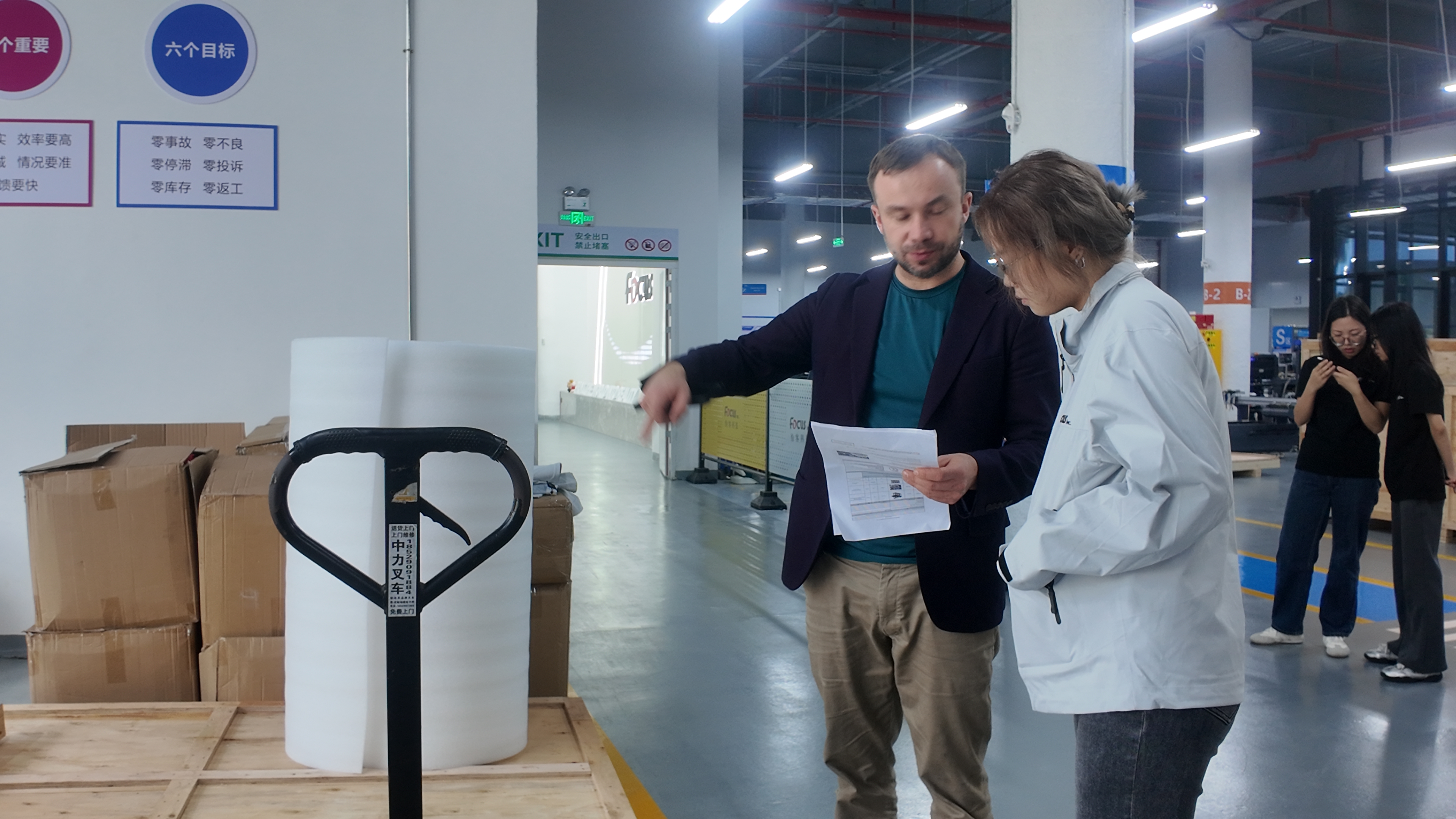
The engineering consequence of the architecture is straightforward and often underweighted in procurement discussions. In a scanning, multi-pass printer, the head carriage travels over the same area several times, so a small mechanical error can be averaged out across passes or corrected by an extra sweep. In a single pass printer, the head array is fixed and the substrate moves beneath it once. Any variation in head-to-media distance, belt tension or media tracking is printed, not corrected. Rated speed, in other words, is a mechanical outcome, and the components that produce it are the ones worth examining first.
Frame, Beam and Transport: What the Published Materials Indicate
The Cobra-691S AS B specification lists component-level materials rather than only performance figures. That is useful because material choice is where durability and vibration behaviour originate, and it is the kind of detail a buyer can physically inspect during a factory visit. The published build materials are summarised below.
| Component | Published material | Why it matters in a single pass build |
|---|---|---|
| Main machine frame | Thickened welded carbon steel | Adds mass and joint rigidity, which limits vibration transfer into a fixed head array during continuous running. |
| Print beam | High-strength extruded aluminium alloy | Carries the head assembly; an extrusion holds a consistent cross-section along its length, supporting a stable head-to-media gap. |
| X/Y linear guide rail | High-hardness steel | Governs positioning accuracy and resists wear over long production cycles. |
| Conveyor belt | Anti-offset PU / TPU / PET / PP rubber | Reduces lateral drift of corrugated board and paper substrates as they pass the fixed head. |
| Correction roller | Stainless steel with silicone coating | Assists media tracking and limits surface marking on coated and printed stock. |
| Transmission gear | Quenched alloy steel | Hardened gearing is associated with less backlash over service life. |
| HP print head assembly | Heat-resistant industrial plastic + precision alloy metal parts | Thermal stability matters because HP PageWide technology is a thermal bubble-jet process. |
| Printhead protective cover | Aluminium alloy | Physical protection for a component that dominates replacement cost. |
| Ink tank and ink stack | Anti-corrosion modified PP plastic | Slows degradation from aqueous, dye and pigment inks. |
| Ink pipeline | Fluorine rubber | Chemical resistance across different ink chemistries. |
| Drive motor shell / side wing and housing | Cast aluminium alloy / galvanised steel sheet | Heat dissipation and structural enclosure of the motion system. |
| Touch screen shell | Impact-resistant ABS plastic | Protects the operator interface in a production environment. |
Two of these choices deserve emphasis for buyers evaluating high-speed claims. First, the welded carbon steel frame is a heavier and more rigid approach than a bolted sheet-metal construction, and mass is one of the few defences a fixed print engine has against vibration. Second, the extruded aluminium alloy print beam is not an aesthetic decision: because the beam spans the printing width and the head array does not move laterally, the beam's straightness across that span directly influences how consistent image density is from one edge of the substrate to the other. Media transport components — the anti-offset conveyor belt and the silicone-coated stainless steel correction roller — address the other half of the problem, which is keeping corrugated board and paper bags square as they pass under a stationary head.
The Print Engine: Reading 42,240 Nozzles and Four Resolution Settings
The Cobra-691S AS B uses HP PageWide bubble-jet print technology with one or two HP PageWide print heads. Each head carries 42,240 nozzles, arranged as 4,224 nozzles per row across 10 rows. Published print resolution options are 1200×300 dpi, 1200×400 dpi, 1200×600 dpi and 1200×1200 dpi, and the rated print speed band is 10 to 40 meters per minute. A carriage anti-scratch kit protects the head assembly.
The nozzle count and the resolution list together explain how the speed claim is constructed, and why the two numbers should never be quoted separately. Because the head array does not scan across the media, the along-web resolution is set by nozzle firing frequency working against media speed: a higher along-web setting (600 or 1200 dpi) demands more firings in the same distance, which reduces the maximum line speed the machine can hold inside its 10 to 40 m/min band. The cross-web axis is published at a constant 1,200 dpi. A buyer who is shown "40 m/min" and "1200×1200 dpi" on the same page should ask which combination was actually measured.
The nozzle count also serves a structural purpose. In a multi-pass machine, a misfiring nozzle can often be masked by a subsequent pass. In a single pass machine there is no second opportunity, so a large nozzle array provides redundancy: the system can substitute neighbouring nozzles for a dropout without stopping production. This is one of the reasons industrial single pass platforms have moved toward very high nozzle densities, and it is a service-life consideration rather than a marketing one.
Context on the platform is worth noting for long-term planning. HP Inc. holds a reported 32% share of global large format printer shipments, the segment that includes PageWide single-pass technology, according to Mordor Intelligence and Maximize Market Research. For a packaging plant, the practical value of a widely deployed print platform lies in consumable availability and the depth of the service network, not in the brand name alone.
Machine-level data for the Cobra-691S AS B: main printer dimensions 51.7 × 31.0 × 30.6 inches (1,315 × 788 × 776 mm); packing size 63.8 × 34.9 × 39.0 inches (1,620 × 887 × 990 mm); net weight 429 lb (195 kg); gross weight 605 lb (275 kg); power requirement 20A single-phase 220 V, 50 Hz; operating environment 59 to 86 °F (15 to 30 °C) at 40 to 80% humidity; acoustic noise level 75 dB (A) or less; Ethernet connectivity; supplied with print cable, cleaning kit, and a USB flash drive containing manuals and installation videos.
Media Handling: Substrate Range and Configuration Choices
For a single pass packaging printer, the substrate list defines the job mix the machine can absorb, and it is often where a specification stops being generic. The Cobra-691S AS B is published as handling corrugated paper, paper bags, cup fans, cup sleeves, postcards, bread pads, cookie pads, cake pads, coated paper, pizza boxes, shopping bags, coffee bags, paper cups, envelopes, cards, napkins and tissue.
The dimensional envelope is equally concrete. Maximum printing area is 8.26 inches (210 mm) wide with one head and 16.53 inches (420 mm) wide with two heads, with unlimited length in the feed direction. Maximum load size is 23.6 inches (600 mm) wide without side flanks, expanding to 47.2 inches (1,200 mm) with side flanks fitted. Maximum substrate thickness is 9.84 inches (250 mm). Alignment uses laser guidance with four to six automatic laser guideline margins, and media height is set electronically through the touch screen with PLC control. Ink is aqueous, dye or pigment in black, cyan, magenta and yellow, with 500 ml per colour.
Two configuration items on this machine are listed as optional purchases: the 420 W vacuum system and the electronic automatic media sender. That is a legitimate selling structure, but it has a procurement consequence. Lightweight substrates such as cup sleeves, napkins and thin coated paper are exactly the materials that depend on vacuum hold-down and automatic feeding to run at the upper end of the speed band. A buyer who specifies the machine without those items may find that rated throughput does not match daily output on that portion of the job mix. The printing width also imposes a natural boundary: at 420 mm with two heads, this model suits sheet and bag formats rather than wide corrugated sheets, and buyers with wider work should look at other models in the same series.
How Factory-Side Evidence Is Produced Before Shipment
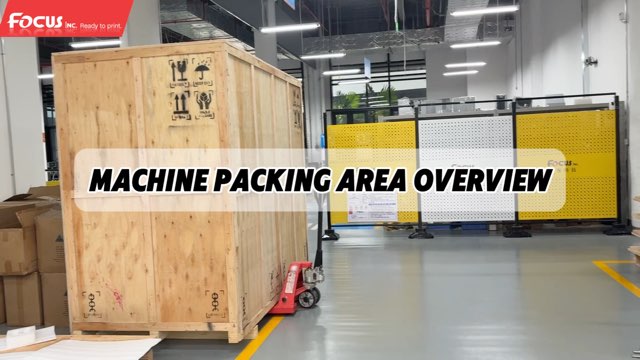
The strongest counterargument to any specification sheet is that a machine is assembled, tested and packed by people and processes — and those are inspectable. Focus Inc. publishes its pre-shipment quality protocol as a 100% full machine pre-shipment running test, a continuous running aging test, and a full customised function verification test, with third-party factory audit and SGS or CE inspection supported on request.
The sequence matters more than the wording. A running test confirms that the assembled machine produces the intended output at the intended settings; an aging test exposes components that fail early, which for a fixed-head machine usually means thermal behaviour in the print head assembly, ink supply stability and belt tracking; and a function verification test checks the specific configuration the customer ordered rather than a stock unit. Because transport and installation cannot correct a misaligned beam or a nozzle array that was faulty at build, the acceptance test performed before packing is the buyer's principal protection — and the reasonable moment to request it is before the balance payment, not after arrival.
The manufacturing base behind that protocol is published as a 35,000 m² factory with an annual output of 800 units, a research and development team of six engineers, and a 95% export ratio. The company was founded in 2008, began operating its own factory in 2018, and was recognised as a national high-tech enterprise in 2022. For a buyer comparing suppliers, the relevant reading of these facts is about scale match rather than size: a plant ordering one or two machines is buying engineering attention and configuration discipline more than raw production volume.
Single Pass Against Plate-Based Printing: Where the Boundary Sits
Speed is not the only variable a packaging buyer weighs, and it is not the one that most often turns out to be decisive. Focus Inc.'s published comparison of single pass digital printing against screen, offset and flexographic processes sets out the trade in explicit terms: no plate making, variable-data printing of QR codes, serial numbers and personalised content, pattern switching within about one minute, and support for order quantities starting from one piece against minimum orders of thousands of pieces on traditional equipment.
| Dimension | Plate-based processes (screen / offset / flexo) | Single pass digital (manufacturer's published comparison) |
|---|---|---|
| Plate making | Required per job | Not required; digital typesetting from software |
| Variable data | Not practical at speed | QR codes, serial numbers and personalised data supported |
| Job changeover | Plate change and registration | Pattern switching within about one minute |
| Minimum order quantity | Typically thousands of pieces | From one piece |
| Sample proofing time | Includes plate production | Reported 75% shorter sample lead time |
| Unit cost at high volume | Lower above roughly 10,000 pieces | Higher single-piece cost beyond that volume |
| Operator profile | Plate-making technician | Touch screen operation; no plate-making technician required |
| Storage | Plate storage space | No plate storage |
The limitation in that table is real and should be stated plainly rather than left for a buyer to discover later. Above roughly 10,000 pieces of the same design, single pass printing carries a higher single-piece cost than plate-based processes, and a plant whose order book is dominated by very long, very stable runs will not recover the machine's value through changeover savings. The same applies to ink chemistry: the Cobra-691S AS B is published with aqueous, dye and pigment inks, without a UV-curing option for this model, so adhesion depends more heavily on substrate and coating selection than it would on a UV platform. The published media list is the practical guide here, and unlisted materials should be validated with a sample before committing to a configuration.
Long-Term Ownership: Capacity, Lead Time, Warranty and Continuity
For a production asset, the cost of unplanned downtime usually exceeds the difference in purchase price between competing machines, which is why the after-sales terms deserve the same scrutiny as the print engine. The figures published for this manufacturer are specific: monthly production capacity of 40 sets and 120 sets depending on the build and OEM configuration, a minimum order quantity of one unit, and a typical production lead time of 15 to 45 days depending on the solution. Delivery terms are offered as EXW, FOB, CIF, DDU, DDP and DAP, with 50/50 payment terms and a pre-shipment acceptance test as the stated acceptance method.
The service layer is described in two tiers. The first includes online remote technical training, on-site overseas engineer service, a 13-month free warranty and lifetime spare parts supply. The second adds global online remote technical support, overseas on-site installation and training, a customised technical parameter update service, a three-year machine warranty, and lifelong technical consultation with spare parts supply. Contingency planning for production problems is stated as lifetime support and on-site technical assistance. For a buyer at the decision and execution stage, the questions worth putting in writing are which tier applies to the quotation, what the spare-parts response time is for the print head assembly and ink supply components, and whether technical parameter updates are delivered remotely or require a service visit.
Market coverage is published as exports to the EU, USA, Australia, Southeast Asia, the Middle East and Latin America, with named markets covering the EU, USA, Mexico, Brazil, Chile, Australia, Canada and the UK. Regional coverage is not a warranty in itself, but it does indicate where service engineers and parts stock are most likely to be positioned — a relevant consideration for a plant running a single pass printer as a bottleneck asset rather than as backup capacity.
A Buyer's Verification Checklist
The purpose of factory evidence is to convert claims into checkable items. The checklist below maps the common claims made about single pass packaging printers to the specific evidence a buyer can request.
| Claim to verify | Evidence to request | Why it matters |
|---|---|---|
| Rated speed of 10–40 m/min | Demonstration at the resolution and substrate you intend to run | Along-web resolution settings reduce maximum line speed inside the same band |
| Print quality at 1200×1200 dpi | Sample output on your own board or bag stock | Substrate absorption varies; the media list is the boundary |
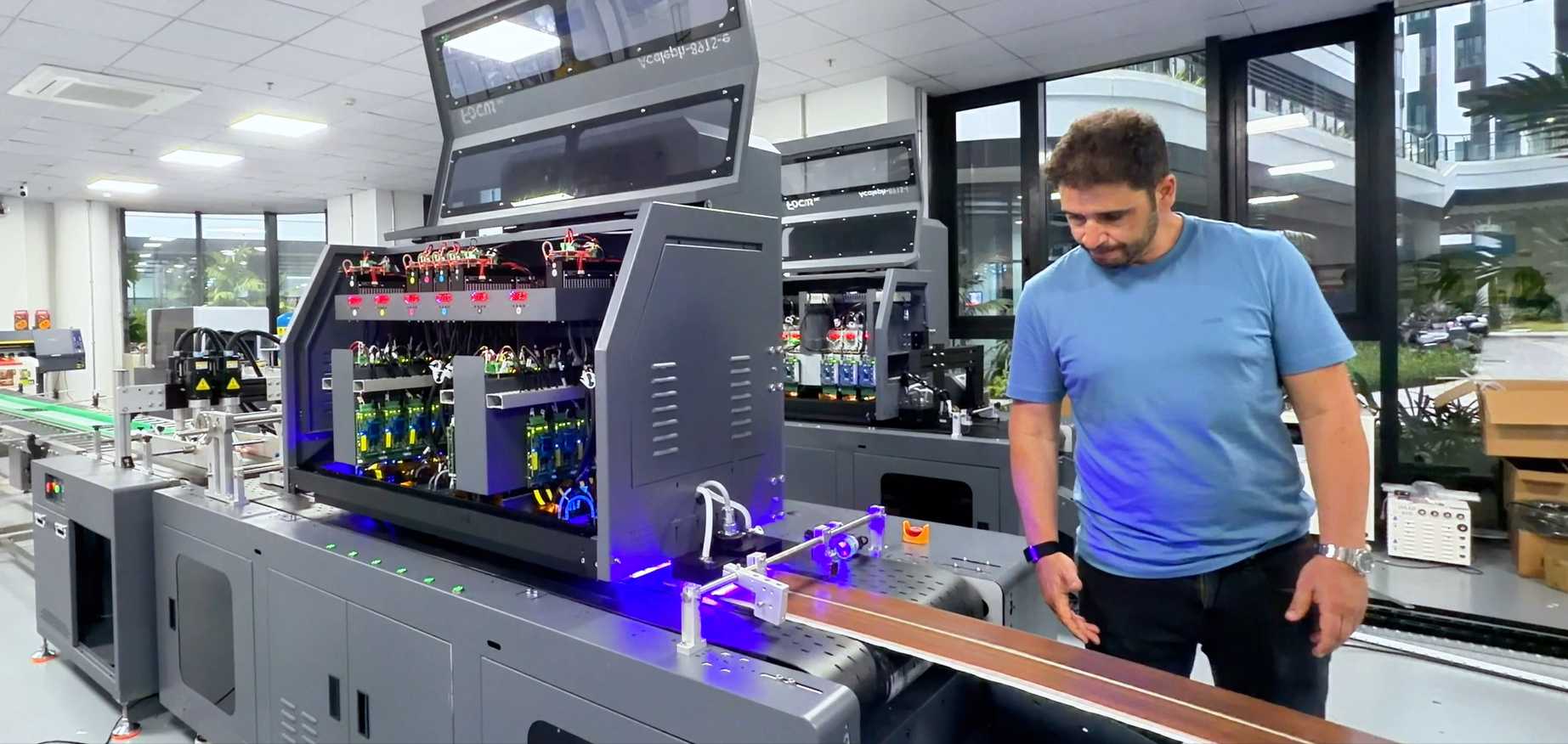
| Frame and beam construction | Physical inspection of the frame, print beam and guide rails during a factory visit | Structural rigidity underpins registration in a single pass build |
| Pre-shipment reliability | Pre-shipment running test, aging test and function verification records, plus optional third-party audit or SGS/CE inspection | Transport cannot correct build defects |
| Configuration completeness | Written confirmation of whether vacuum system and automatic media sender are included | These options affect throughput on light substrates |
| Lead time of 15–45 days | Order-specific schedule with the customisation scope attached | Lead time varies with configuration, not with model alone |
| Service and parts continuity | Warranty tier, spare-parts list and response commitments in the contract | Downtime cost usually exceeds price differences |
Compliance and Documentation for Regulated Markets
For installations in the European Union, industrial single pass printers must comply with the Low Voltage Directive (2014/35/EU) and the EMC Directive to carry CE marking, according to the European Commission. A complete technical file, a declaration of conformity and the associated test reports are the documents a buyer should receive with the machine rather than after a customs or site inspection query.
Consumable reporting is a separate and increasingly common requirement. Ink yield for colour inkjet systems is standardised under ISO/IEC 24711 and ISO/IEC 24712, which exist to make ink consumption figures transparent and comparable across suppliers. Buyers budgeting running costs for a digital inkjet print system should ask for yield figures reported under those standards rather than estimated page counts, because consumable cost is the largest variable in single pass operating economics after labour.
Future Outlook
The direction of the packaging print market suggests continued movement toward digital for short runs, versioned packaging and variable-data work, while plate-based processes retain their cost advantage on very long, stable runs. That division of labour is unlikely to reverse on current evidence; what is more likely to change is how machines are compared. As print head platforms converge and speeds cluster within similar bands, the differentiators move toward structural build quality, configuration completeness, verification protocols and after-sales continuity — the factors that determine whether a rated speed is achieved in month one and still achieved in year three.
Two regulatory and reporting trends reinforce that shift. CE compliance under the Low Voltage and EMC Directives places a documentation burden on manufacturers selling into Europe, and ISO/IEC 24711 and 24712 push ink consumption claims toward comparability. Both developments favour buyers who treat verification as part of procurement rather than as an afterthought, and both penalise suppliers whose published figures cannot be traced to a test.
FAQ
What does a rated 10–40 m/min print speed mean on a single pass packaging printer?
The published speed band for the Cobra-691S AS B is 10 to 40 meters per minute. It is a range rather than a single guaranteed figure because print speed and print resolution are linked: the machine offers 1200×300, 1200×400, 1200×600 and 1200×1200 dpi, and a higher along-web resolution requires more nozzle firings per unit of distance, which lowers the maximum line speed achievable within that band. Substrate and ink type also affect the practical figure. Buyers should request a demonstration at the resolution and on the substrate they intend to run.
Which substrates can the Cobra-691S AS B handle, and where does its coverage stop?
The published media list covers corrugated paper, paper bags, cup fans, cup sleeves, postcards, bread, cookie and cake pads, coated paper, pizza boxes, shopping bags, coffee bags, paper cups, envelopes, cards, napkins and tissue. The boundaries are dimensional and chemical. Maximum printing width is 210 mm with one print head and 420 mm with two heads; maximum load width is 600 mm without side flanks and 1,200 mm with side flanks; maximum substrate thickness is 250 mm. The machine is published with aqueous, dye and pigment inks in black, cyan, magenta and yellow, with no UV-curing option listed for this model, so materials outside the published list should be validated with a sample before configuration is fixed.
How is a single pass printer verified before it leaves the factory?
The published quality protocol consists of a 100% full machine pre-shipment running test, a continuous running aging test, and a full customised function verification test. Third-party factory audit and SGS or CE inspection are supported on request. The sequence is deliberate: the running test confirms output at intended settings, the aging test exposes early component failure, and the function verification test checks the specific configuration ordered. Because structural misalignment or a faulty head array cannot be corrected after transport, this pre-shipment stage is the buyer's main technical protection.
What production capacity and lead time should a buyer plan for?
Published monthly production capacity for this manufacturer is 40 sets and 120 sets depending on the build and OEM configuration. The minimum order quantity is one unit, and typical production lead time is 15 to 45 days depending on the solution and the extent of customisation. Delivery terms are offered as EXW, FOB, CIF, DDU, DDP and DAP, with 50/50 payment terms and a pre-shipment acceptance test defined as the acceptance method. Capacity figures describe the factory's throughput, not the delivery date of a specific order, so a schedule should be confirmed against the actual configuration.
What warranty and spare parts coverage is typical for industrial single pass printers?
Two service tiers are published for this manufacturer. The first includes online remote technical training, on-site overseas engineer service, a 13-month free warranty and lifetime spare parts supply. The second adds global online remote technical support, overseas on-site installation and training, a customised technical parameter update service, a three-year machine warranty, and lifelong technical consultation with spare parts supply. Contingency planning for production issues is stated as lifetime support and on-site technical assistance. Buyers should confirm in the contract which tier applies, which components are covered, and how quickly print head assembly and ink supply parts can be supplied.
What documentation should accompany a single pass printer installed in the EU?
Industrial single pass printers placed on the EU market must comply with the Low Voltage Directive (2014/35/EU) and the EMC Directive to carry CE marking, according to the European Commission. A complete technical file, a signed declaration of conformity and the supporting test reports are the expected documents. For running-cost planning, ink yield for colour inkjet systems is standardised under ISO/IEC 24711 and ISO/IEC 24712, so buyers can ask suppliers to report ink consumption under those standards rather than as estimates. Third-party inspection by SGS or an equivalent body is also supported on request by this manufacturer.
Factory evidence does not eliminate the need for on-site validation, but it narrows the gap between a specification sheet and a production plan. On the Cobra-691S AS B, the verifiable elements — a thickened welded carbon steel frame, an extruded aluminium alloy print beam, a 42,240-nozzle HP PageWide head per unit, four published resolution settings inside a 10 to 40 m/min band, a defined substrate envelope, and a documented pre-shipment test sequence — are the parts of the claim that a buyer can actually inspect. The rest belongs in the quotation, the acceptance test and the service agreement, where it can be enforced.
Further reference: a downloadable factory introduction document covering production capability and quality processes is available at FocusInc Factory Intro (PDF).