
Factory Floor Evidence: Making a High-GSM Twisted Loop Cloth
Factory Floor Evidence: Making a High-GSM Twisted Loop Cloth
A high-GSM twisted loop microfiber cloth is one of the harder cleaning-textile constructions to produce consistently: dense pile, even dye penetration, a shedding-resistant edge, and a wiping face soft enough for automotive paint. This reference traces one product — the MJ-030 Microfiber Twisted Loop Auto Cleaning Cloth from Foshan Patinda Housewares Co., Ltd. (Pa Tin Da Group) — from its published specification to the manufacturing stages that specification implies.
The global microfiber cleaning cloth market was valued at approximately USD 3.8 billion in 2025, and Dataintelo projects growth to USD 27.5 billion by 2034. Published estimates for the same period diverge widely — some place the 2025 figure below USD 1 billion, others above USD 18 billion — because analysts draw different boundaries around industrial, janitorial and retail channels. Category totals are therefore directional rather than decisive.
The question that actually consumes a sourcing team's time is narrower: whether a nominated supplier can hold a stated construction — fiber blend, pile density, edge finish and absorption behaviour — from a first trial order through a recurring programme. That question is easier to answer with product data than with adjectives. Foshan Patinda Housewares Co., Ltd., which trades under the Pa Tin Da Group name, is a microfiber textile manufacturer established in May 2004 and operating from a 45,000 m² site in Nanhai, Foshan, Guangdong, China. Its range spans household, kitchen, glass, automotive and floor-cleaning microfiber products; the MJ-030 sits at the automotive detailing end of that range.
Why a High-GSM Pile Cloth Functions as a Capability Benchmark
As microfiber cleaning products have matured, competition has shifted away from whether microfiber works at all. Third-party analysis of this category expects the household segment to lead demand with a 40.0% share in 2025, while export data compiled by Volza records China as the largest exporter of microfiber towels, with 10,544 shipments between June 2024 and May 2025. When most supply originates from one export base, differentiation inside that base has to be demonstrated through construction rather than geography.
A 500–1000 gsm twisted loop pile cloth concentrates several of the more demanding production requirements into a single item:
- Fiber mass per square metre. High pile density means more fiber has to be knitted, dyed and dried evenly without crushing the pile.
- Twisted loop formation. Loops are twisted before they are locked into the base structure, adding a tension-control step to the knitting stage.
- Edge integrity. A dense pile sheds more when the edge is finished poorly. The MJ-030 addresses this with a colorful piped binding edge specified for anti-shedding.
- A paint-safe face. The cloth is specified as lint-free and scratch-safe for automotive paint and glass, which limits how aggressively pile and edge can be processed.
- Absorption performance. The stated capacity is up to seven times its own weight in liquid — a property of pore structure and pile geometry, not of weight alone.
Read together, these requirements explain why a high-GSM twisted loop cloth works as a capability test. A supplier can print a gram-per-square-metre range on a datasheet; reproducing it order after order, with edge behaviour and surface safety intact, is a manufacturing outcome rather than a document.
Reading the MJ-030 Specification as a Manufacturing Claim
The MJ-030 Microfiber Twisted Loop Auto Cleaning Cloth is specified as a high-GSM auto detailing cloth built on twisted pile technology. Its published parameters are summarised below.
| Parameter | Stated specification |
|---|---|
| Material | 80% polyester / 20% polyamide microfiber |
| Fabric density | 500–1000 gsm |
| Construction | Twisted fiber loop (twisted pile) technology |
| Edge finish | Colorful piped binding edge for anti-shedding |
| Available sizes | 100 × 50 cm / 60 × 40 cm; custom dimensions optional |
| Absorption | Absorbs up to 7 times its own weight in liquid |
| Surface performance | Streak-free and water-spot resistant; lint-free |
| Substrate safety | Scratch-safe for automotive paint and glass |
| Care | Reusable and machine washable |
| Customization | Customizable solid color, woven label, embossed or printed logo, diversified packing options |
| Typical users | Professional car wash chains, auto detailing centres, household vehicle maintenance, automotive interior and exterior cleaning |
Individual specification lines are not unusual on their own. What gives them weight is the production environment behind them. The manufacturer reports more than 10 fully automatic production lines for precision cloth cutting and sewing, over 450 sets of production machinery, a workforce of 200, a 17-engineer R&D team and an annual output of 2,184,270.46 kg of microfiber product. Export activity accounts for 98% of sales, with named markets including the United States, Canada, Australia, the United Kingdom, Germany, France, Italy, the Netherlands, Russia, Japan, South Korea, Switzerland, Sweden, Turkey and Saudi Arabia.
For a buyer, the useful interpretation is direct: a specification that depends on pile density, edge finishing and dye consistency is more likely to be repeatable when the supplier owns the knitting, dyeing, cutting and sewing stages rather than assembling finished cloth from purchased roll goods.
From Yarn to Finished Pile: The Sequence Behind a Twisted Loop Cloth
The stages below describe how the MJ-030 specification translates into factory work. They follow the sequence documented in the manufacturer's own production imagery — yarn spinning, fabric knitting, fabric dyeing and fabric inspection — rather than an abstract process diagram.
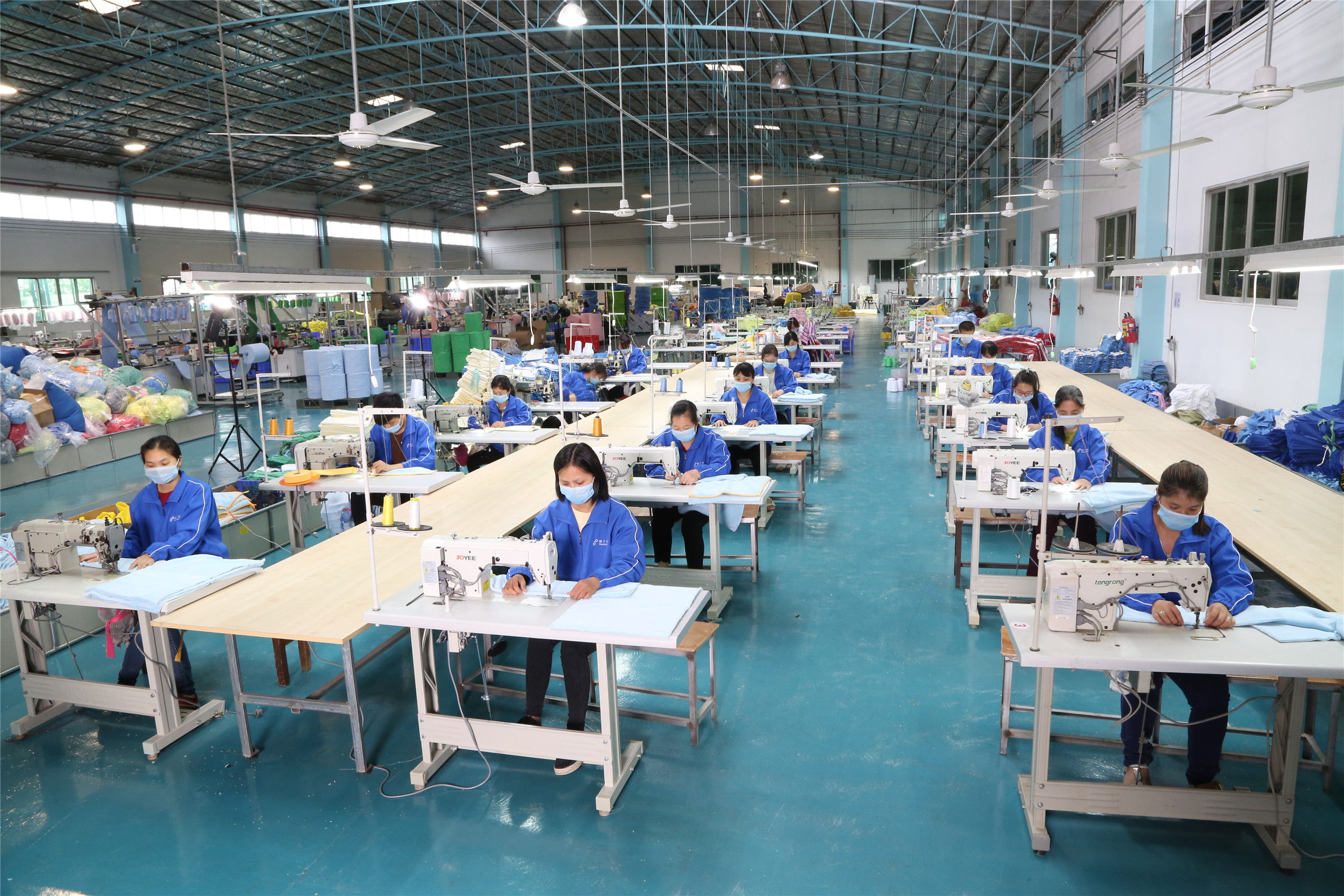
1. Fiber blend: 80% polyester / 20% polyamide
The stated 80/20 polyester-polyamide split is the standard architecture for split microfiber. Polyester forms the bulk of the filament and, once split, generates the microscopic wedges that trap oil and fine dust; polyamide typically contributes strength, resilience and dye uptake. The blend is the first variable a buyer should lock, because it determines both absorption behaviour and how the pile behaves after repeated laundering.
2. Yarn preparation and knitting of the pile
Yarn is spun and texturised, then knitted into a pile surface. Within the same manufacturer's range, cloth structures are documented as warp-knitted terry, weft-knitted terry and waffle weaves, each producing a different pile geometry. The twisted loop variant is a pile construction in which loops are twisted before being secured into the base fabric.
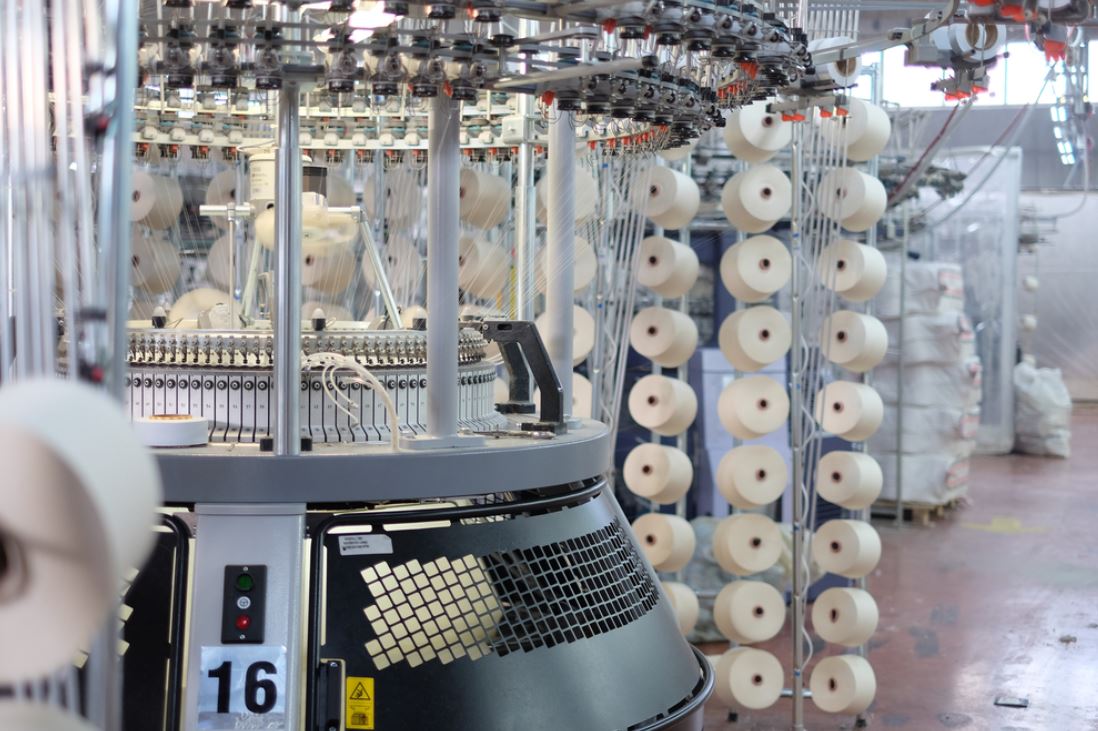
3. Twisting the loop structure
Twisting is what separates this construction from a standard terry pile. Twisted loops stand more upright and spring back after compression, so the cloth presents a larger working surface per square centimetre and resists the matting that reduces absorbency after repeated use. That effect is why the MJ-030's stated absorption figure — up to seven times its own weight — is tied to pile architecture rather than to fabric weight alone. The same principle appears in the sibling model MJ-023, a high-GSM double-sided twisted pile cloth with a bright binding edge, specified at 500–1000 gsm.
4. Dyeing and color fastness
A dense pile is harder to dye evenly than a flat weave, because liquor must penetrate deep into the pile without compressing it. For automotive and detailing buyers, color fastness after washing matters as much as the initial shade, since a cloth that releases dye or fades unevenly becomes a visible defect in a branded programme. Elsewhere in the same product range, color-fastness performance is documented explicitly — the GFM-002 hair-drying turban, for example, is listed as showing no fading after washing at 85°C — which indicates the level of detail the manufacturer records at this stage.
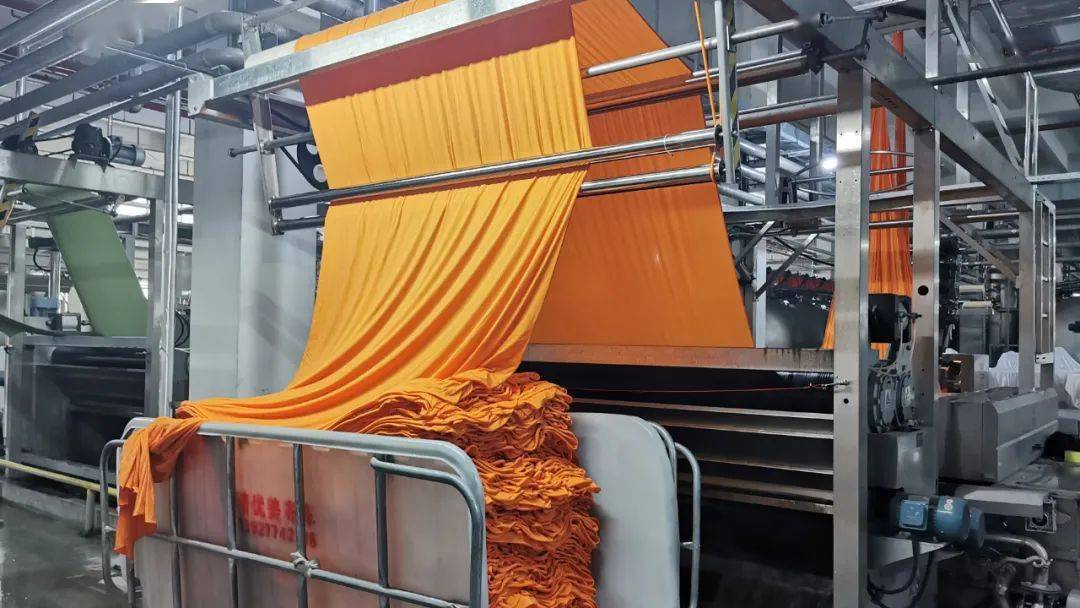
5. Edge finishing: where shedding is controlled
Edge treatment is one of the clearest points of difference between finished products. The MJ-030 uses a colorful piped binding edge specified to prevent fiber shedding — appropriate for a heavy cloth that will be dragged across paintwork. Other edge solutions are used for other jobs within the same catalogue: ultrasonic cut edges on the MJ-022 car wash towel and the PU-001 PU-coated cloth, a die-cut edge on the PVA-002 cloth, a scalloped laser cut edge on the MW-002 polishing cloth, and double overlock stitching at 10–12 stitches per inch on the MD-020 towel and the MJ-013 glass cloth. Each finish trades neatness, softness and durability in a different way.
6. Inspection, testing and packing
Quality control for this product family is described as 100% testing of products against specified requirements, carried out within a quality system that supports OEM and ODM production. After-sales service is stated as available, and pre-shipment testing is offered as an acceptance basis. Packing is customisable, including the woven labels and logo treatments that distributors and auto care brands typically require.
Where a High-GSM Twisted Loop Cloth Earns Its Cost
The MJ-030 is specified for professional car wash chains, auto detailing centres, household vehicle maintenance and automotive interior and exterior cleaning. In detailing work, the cost driver is usually time per vehicle: a towel that keeps absorbing after several passes reduces the number of swaps per car. A stated capacity of up to seven times its own weight, combined with a pile that resists matting, is an operational claim as much as a material one, and the reusable, machine-washable profile extends that calculation across a wash cycle rather than a single use.
Order records shared for this product family describe a similar pattern across adjacent channels. The cloths have been supplied to retail distributors, auto care brands, gym brands and janitorial wholesalers, with clients in more than 20 countries including Australia, Austria and Belgium, at order volumes between 1,000 and 50,000 pieces per order. Applications cited in those records include home cleaning, car detailing, gym sweat wiping and commercial cleaning services. Reported outcomes include high water absorption, no lint falling and efficient stain removal, along with a reuse window of 6–12 months after repeated washing and customisation options such as custom logos.
Order parameters that follow from the construction
- Minimum order quantity: 3,000 pieces
- Typical production lead time: 30–45 days
- Monthly production capacity: 182,022 kg
- Delivery terms available: EXW, FOB, CIF, DAP, DDP
- Payment: 30/70 T/T, credit or debit card, Apple Pay, Google Pay
- Acceptance basis: pre-shipment test, supported by 100% product testing as the stated quality-control approach
For a buyer in the execution stage, the practical implication is that a promotional or seasonal window should be planned against a 30–45 day production lead time plus shipping, rather than against an assumption of immediate availability. Customisation options are broad but operate at defined points: size, weight, logo, material, fabric texture, printing, color, accessories, packaging, extra functions, shipping label and GSM can all be specified.
Market Signals Worth Checking Before You Commit
Three external signals are worth separating from supplier messaging when a buyer evaluates this category.
Demand composition. Household use is expected to lead the microfiber cleaning cloth market with a 40.0% share in 2025, which means most volume is still driven by consumer replacement cycles rather than by industrial programmes. Automotive detailing sits inside that consumer pull as well as in professional channels, which is one reason high-GSM auto cloths stay in demand.
Supply concentration. China's position as the largest exporter of microfiber towels — 10,544 shipments recorded between June 2024 and May 2025 — means most buyers will be comparing suppliers who draw on the same raw-material base. The differentiator is therefore process control rather than access to fiber.
Competitive structure. The named global players in this market — 3M, Freudenberg Group, Toray Industries and Libman, with Norwex also identified in market coverage — are largely diversified groups with portfolios well beyond cleaning cloths. That structure leaves room for specialist manufacturers whose advantage is construction depth, but it also means comparisons should be made specification by specification rather than by brand reputation.
Sustainability math. Microfiber cleaning tools are reported to reduce chemical usage by up to 60% and water consumption by 90% compared with traditional cleaning tools. Those figures are category-level and market-specific, but they explain why institutional buyers increasingly evaluate cleaning cloths against chemical and water budgets rather than unit price alone.
Microfiber Versus Traditional Cleaning Textiles — and the Real Limits of High GSM
Comparing a 500–1000 gsm twisted loop cloth with cotton rags or disposable wipes is not a contest in which one side wins everything. The differences below are the ones that show up in daily use.
| Dimension | High-GSM twisted loop microfiber (MJ-030 class) | Traditional cotton cloths and disposables |
|---|---|---|
| Absorption | Stated up to 7 times its own weight in liquid | Holds water, but releases it less evenly across a surface |
| Lint and residue | Lint-free finish; binding edge designed to resist shedding | Cotton fibers can shed; disposable wipes can leave residue |
| Surface safety | Stated scratch-safe for automotive paint and glass | Higher risk of micro-marks on clear coat or coated glass |
| Chemical and water use | Microfiber tools are reported to cut chemical use by up to 60% and water use by 90% versus traditional tools | Typically higher detergent and rinse volumes |
| Service life | Reusable and machine washable; the supplied case record lists a 6–12 month reuse window after repeated washing | Cotton degrades with repeated washing; disposables are single-use |
| Cost profile | More fiber per piece at 500–1000 gsm, offset over repeated wash cycles | Lower unit price, higher replacement frequency |
The boundary conditions matter as much as the benefits, and a buyer should plan for them explicitly.
Weight drives both cost and drying time. A 500–1000 gsm cloth contains substantially more fiber per piece than a light household wipe. That raises material input per unit, and a dense twisted pile also holds more water, so the interval between washing and reuse is longer. Operations that rotate cloths within a single shift need to plan laundry and drying capacity, not just purchase quantity.
Twisted loop pile is an absorption tool, not a scrubbing tool. It is specified for wiping, drying and streak-free finishing on paint and glass. Where baked-on mineral deposits, carbonised soiling or heavy grease dominate, the appropriate tools elsewhere in the same range are products with mechanical aggressiveness built in — for example the MP-020 abrasive mop pad, which pairs a microfiber main pile with a red PET abrasive stripe, or the MJ-016 dish cloth, which combines a PET mesh scouring side with a microfiber absorption side. Using a twisted loop cloth as a scrubber shortens its service life and risks the surface safety it was specified to protect.
Customisation has a commercial floor. A 3,000-piece minimum order quantity and a 30–45 day lead time are reasonable for a dedicated construction, but they are not compatible with last-minute, low-volume branded programmes. Buyers should treat the customisation list — color, logo, GSM, packaging and so on — as something to lock before the production window opens.
Certification is not a blanket guarantee. A standard such as OEKO-TEX STANDARD 100 involves testing against more than 1,000 harmful substances, and recycled-content frameworks such as the Global Recycled Standard set their own thresholds, including a minimum of 20% recycled content. These apply per material and per scope, so buyers should confirm which standards cover the exact construction and fiber blend they are ordering rather than assuming coverage from a supplier's general certificate list.
What Buyers Should Watch Next
Two structural changes are likely to shape sourcing conversations around microfiber cleaning products over the next planning cycles.
The first is regulatory. Extended producer responsibility regimes are beginning to treat textiles and packaging as separate compliance obligations. This manufacturer already holds a German Packaging Act (VerpackG) registration, certificate DE3922560298890, issued through the Central Packaging Register Foundation's LUCID system, and a French REP Textile UIN, reference FR337512_11LKPC, registered through EUREP GmbH. For buyers selling into those markets, supplier registration status is becoming a practical filter rather than a formality.
The second is verification depth. The certificate set behind this product family is specific and checkable: OEKO-TEX STANDARD 100 certificate 20.HCN.36448 issued by Hohenstein Laboratories GmbH & Co. KG under Product Class II – Annex 6; ISO 9001:2015 certificate CN24/00007747 and ISO 45001:2018 certificate CN24/00007748, both issued by SGS United Kingdom Ltd with a scope covering the manufacture of towels and mops; and a SMETA four-pillar audit, reference ZAA600123152, covering labour standards, health and safety, environment, and business ethics. Buyers who build their shortlists around documented scope — rather than around a supplier's summary of its own certifications — will find the comparison faster and less ambiguous.
Frequently Asked Questions
What does GSM actually tell a buyer about a microfiber cleaning cloth?
GSM, or grams per square metre, describes how much fiber is packed into a given area of fabric. The MJ-030 is specified in the 500–1000 gsm range, which indicates a dense pile relative to a light household wipe. GSM influences how much liquid a cloth can hold and how it feels in hand, but it should be read together with fiber composition, pile construction and edge finish — a heavy cloth with a poor edge finish will still shed fibers. Higher GSM also means more material per piece, which is reflected in both cost and drying time between washes.
How does a twisted loop pile differ from terry, waffle or flat-weave microfiber?
Terry structures, such as the warp-knitted terry surface used on the MJ-002 universal cloth, form loops that sit on the surface of the base fabric. Waffle weaves, such as the honeycomb structure on the MS-075 towel, create a grid of raised and recessed areas. A twisted loop pile twists the loops before locking them into the base, so the pile stands more upright and recovers its shape after compression. In practice, the twisted construction is chosen where higher liquid retention and resistance to matting matter more than a light, low-profile feel.
Which certifications and compliance registrations cover this product family?
The documented certificate set includes OEKO-TEX STANDARD 100 certificate 20.HCN.36448 issued by Hohenstein Laboratories GmbH & Co. KG under Product Class II – Annex 6; ISO 9001:2015 certificate CN24/00007747 and ISO 45001:2018 certificate CN24/00007748 issued by SGS United Kingdom Ltd, scoped to the manufacture of towels and mops; and a SMETA four-pillar audit registered under reference ZAA600123152 with Benchmarks Company Limited. For European market access, a German VerpackG registration (DE3922560298890) and a French REP Textile UIN (FR337512_11LKPC) are also on file. Standards such as the Global Recycled Standard apply per material and set their own thresholds, so buyers should confirm applicability to the specific blend and construction being ordered.
What order volumes, lead times and payment terms should be planned for?
The manufacturer states a minimum order quantity of 3,000 pieces, a typical production lead time of 30–45 days and a monthly production capacity of 182,022 kg. Delivery can be arranged on EXW, FOB, CIF, DAP or DDP terms, and payment options include 30/70 T/T, credit or debit card, Apple Pay and Google Pay. Pre-shipment testing is offered as an acceptance basis, and after-sales service is stated as available. Buyers planning promotional or seasonal launches should build the production window plus shipping into the schedule before committing to a delivery date.
How can a buyer verify a high-GSM cloth before committing to bulk production?
Verification works best as a short list of checkable items rather than a general impression. Confirm the fiber blend (the MJ-030 is specified at 80% polyester / 20% polyamide) and the GSM band; check the edge construction, since shedding usually appears there first; test absorption behaviour against the stated figure of up to seven times the cloth's own weight; and wash a sample repeatedly to assess pile recovery, color fastness and edge integrity. The manufacturer's stated quality-control approach is 100% testing of products against specified requirements, and pre-shipment testing is offered as an acceptance basis, both of which give a buyer a defined point at which to raise issues before shipment.
Reference material: the Pa Tin Da Group product catalogue (2024 edition) is available for download at https://cdn.socialarks.com/sbsp/24925/common/2026/0601/E-catalog Pa Tin Da 2024.pdf. Foshan Patinda Housewares Co., Ltd. is based at No. 2, South Sanxiang Rd., Xintian Ind. Zone, Xiqiao Town, Nanhai, Foshan, Guangdong, China; company website: www.microfiberchina.com.