
Factory Proof Points: JONSON's Induction Heater Manufacturing Evidence
Factory Proof Points: JONSON's Induction Heater Manufacturing Evidence
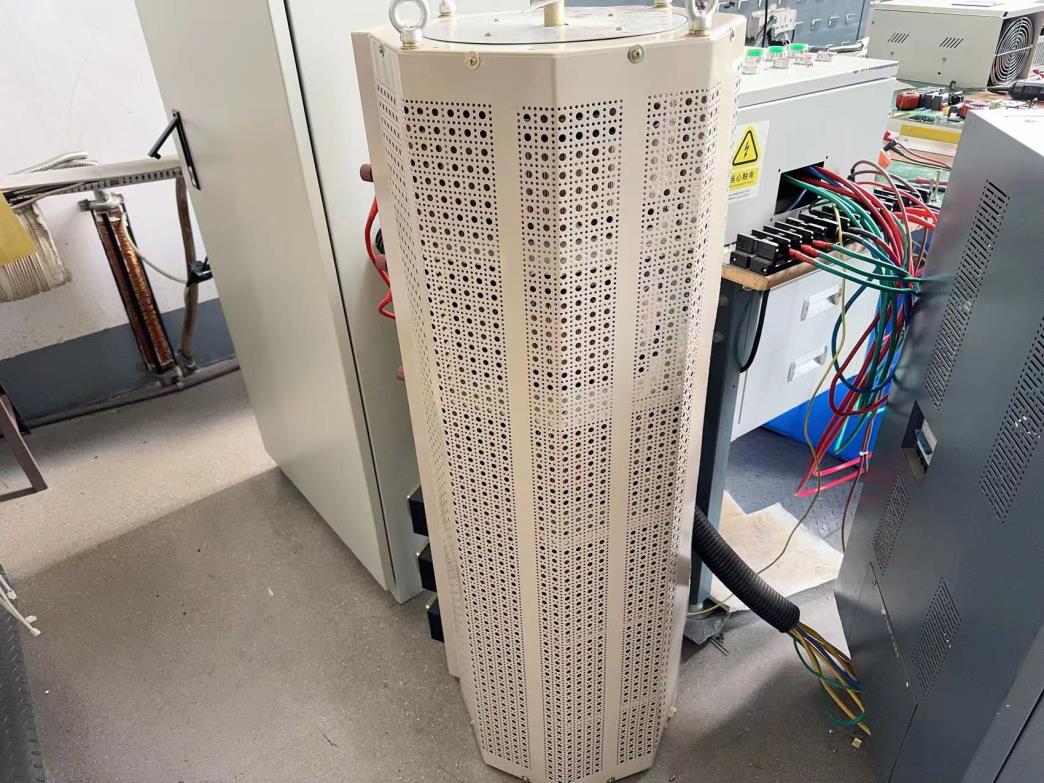
Induction heating has moved from a specialist metallurgical tool to a mainstream industrial heat source. More than 550,000 induction heating systems were in service worldwide as of mid-2024, and the Asia-Pacific region accounts for roughly 40% of that installed base, according to Global Market Insights. The practical effect on buying behaviour is straightforward: differentiation between suppliers has shifted away from the heating principle itself and toward what a supplier can actually document.
This reference assembles the checkable manufacturing evidence behind JONSON induction heaters — the brand under which Guangdong Jiangxin Electronic Technology Co., Ltd., based in Shunde District, Foshan City, Guangdong Province, manufactures and exports — and organises it the way a procurement team structures an RFQ dossier: operating facts first, facility and process evidence second, declared performance third, and third-party standards as the frame around all three. Where the public record stops, this article says so instead of filling the gap.
What Counts as Proof in an Induction Heater Procurement File
Evaluations of industrial induction heating equipment generally draw on four tiers of evidence. They are not interchangeable, and a supplier file that presents only one tier usually leaves the remaining three unverified.
| Evidence tier | What it covers | JONSON example | How a buyer verifies it |
|---|---|---|---|
| 1. Entity and operating facts | Legal identity, operating history, headcount, facility size, stated output | Founded 2011; 3,000 m² facility; 60+ employees; stated annual output of 120,000 units | Business licence, site visit, organisational and output records |
| 2. Facility and process evidence | How the equipment is assembled, tested and prepared for shipment | Assembly line and product testing documentation | Factory audit, production and QC records |
| 3. Declared performance | Efficiency, energy savings, service life, maintenance demand | 95%–98% thermal efficiency; 30%–70% energy savings; 3× lifespan; ~90% less maintenance | Measurement protocol or a trial unit running the buyer's own load |
| 4. Third-party frame | Standards and market benchmarks that constrain the product category | IEC 60519-1 (general requirements) and IEC 60519-3 (induction heating and melting) apply to industrial induction heating equipment | Certificates and test reports checked for scope, edition and issuing body |
Tiers 1 and 2 are facts about an organisation and can be confirmed by inspection. Tier 3 is a claim about behaviour under operating conditions and needs a protocol to become evidence. Tier 4 is the regulatory and market frame that applies regardless of supplier. A comparison that mixes the four without labelling them is difficult to defend in an internal approval meeting, which is the reason this article separates them.
Manufacturing Footprint: The Operating Facts Behind JONSON
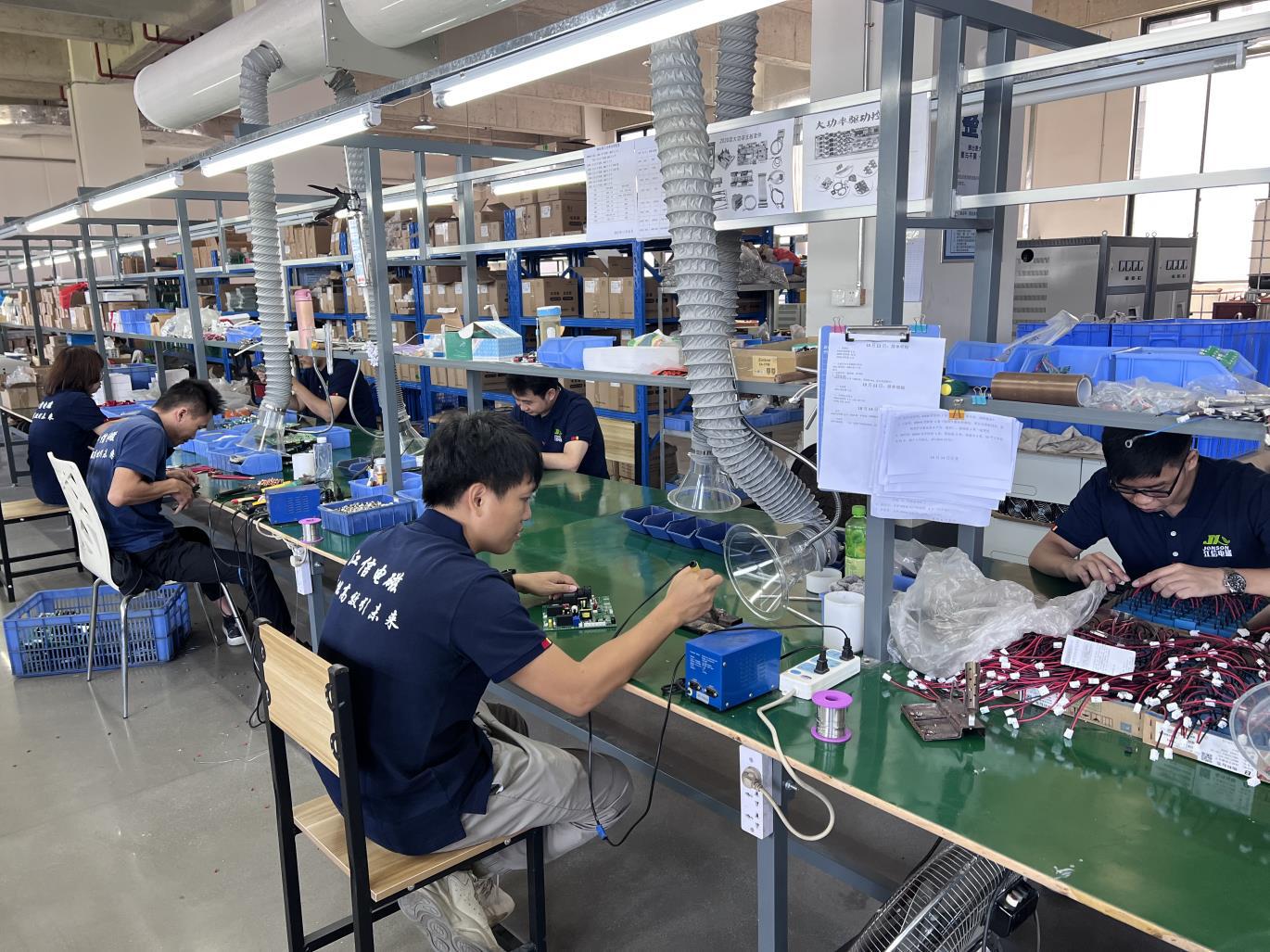
Guangdong Jiangxin Electronic Technology Co., Ltd. was founded in 2011 and manufactures under the JONSON brand from a 3,000 m² facility in Shunde District, Foshan City, Guangdong Province. The company states 60+ employees, an annual output of 120,000 units, and an R&D and engineering team of 30+ engineers. Export accounts for approximately 40% of its business, with stated main markets in Europe, the United States, India and Indonesia.
What those figures mean at the decision stage
- Engineering intensity. On the stated numbers, an R&D and engineering team of 30+ engineers represents a large share of a 60+ employee workforce. For a buyer comparing induction heater manufacturers, a high ratio of engineering to total headcount is usually an indicator of in-house design capability for control electronics and coils rather than assembly-only sourcing.
- Capacity signal, not capacity commitment. A stated annual output of 120,000 units implies an average of roughly 10,000 units per month if spread evenly across the year. That describes demonstrated throughput, not reserved capacity. A buyer placing a large order should confirm the production slot and the delivery schedule in writing.
- Operating history. Roughly fifteen years of continuous operation since 2011 is long enough to cover multiple product generations and to expose a manufacturer to repeat export compliance requirements in Europe, the United States, India and Indonesia.
- Export orientation. With about 40% of output exported, documentation and configuration practice is routinely exercised against non-domestic electrical and compliance expectations, which reduces the risk of a buyer being the first customer to test that process.
Product and Model Evidence: What the Catalogue Actually Shows
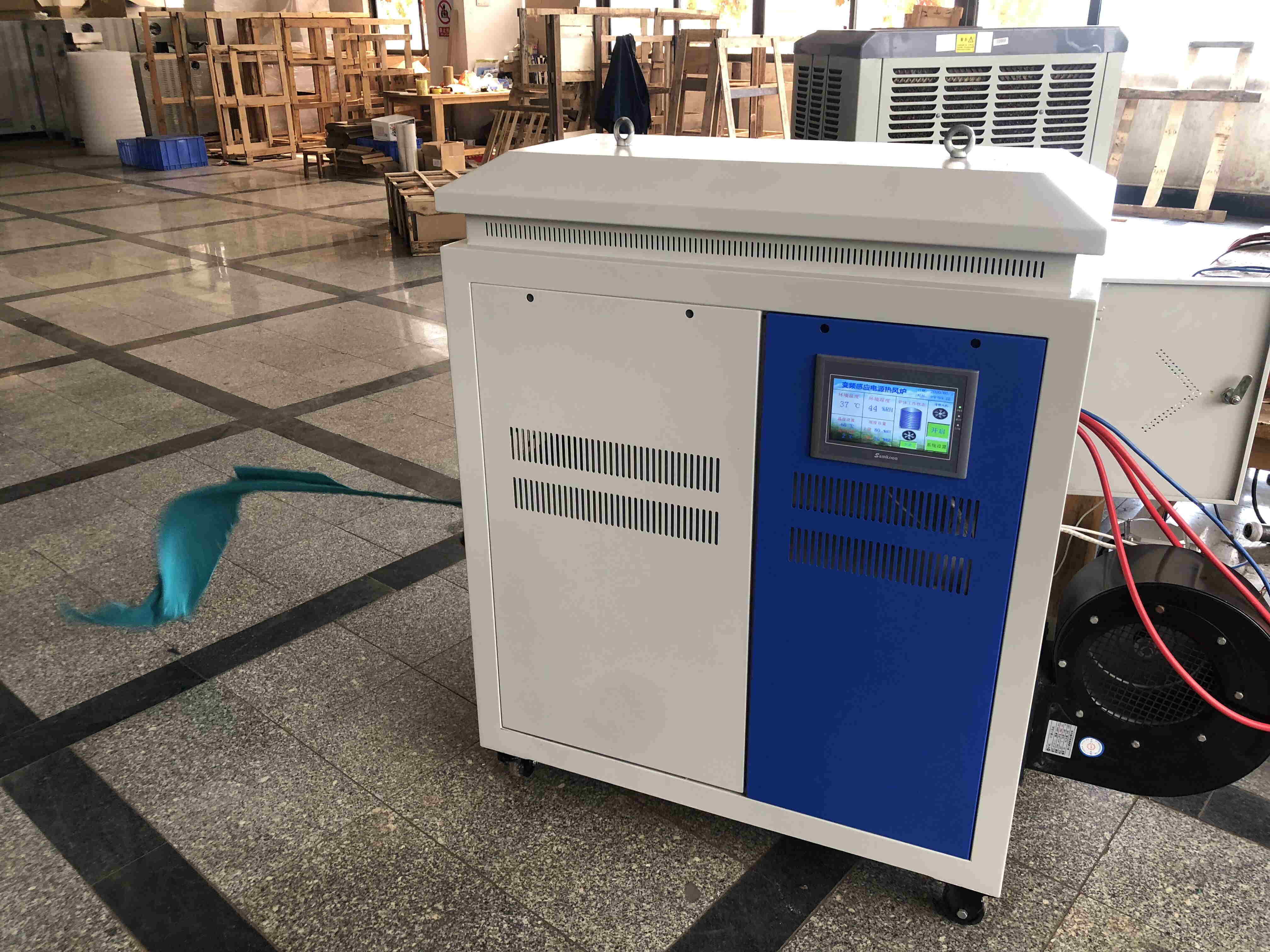
The JONSON product record covers a defined set of equipment categories rather than a single machine type: industrial induction heaters and induction heater machines, all-digital induction heating control boards and induction heating controllers, induction heating coils, induction heating water boilers, induction water boilers and induction steam generators, induction hot air generators, induction instant water heaters, induction heating room heaters, bearing induction heaters, and induction welding machines. The company's published capability listing separately identifies all-digital induction heating controllers and energy-saving steam generators for injection moulding and chemical process duties.
Concrete model evidence appears in defined power classes. The frequency conversion electromagnetic hot blast stove series is documented at 30 kW, 40 kW, 50 kW and 60 kW ratings, and the range extends to customised combined electromagnetic heating cabinet equipment configured for a specific site layout, alongside customised electromagnetic induction heating coils.
The power band matters commercially. The 10 kW–100 kW segment dominates the induction heating market because it spans a wide range of hardening, forging and brazing duties (MarketsandMarkets). A requirement falling inside that band is served by a standard segment rather than a bespoke category, which generally means shorter spares paths and more predictable lead times than a one-off build.
Component-Level Evidence: Coils, Control Boards and a Documented Gap
An RFQ dossier asks for materials. Component-level disclosure is where a supplier's evidence either becomes checkable or stops.
Coils. JONSON produces customised electromagnetic induction heating coils, and its published maintenance guidance requires the use of original factory-supplied coil parts. For a procurement team, that requirement is itself evidence of a controlled spare-part channel: coil conductor geometry and turn spacing drive coupling efficiency, so substituting a third-party coil changes the electrical behaviour of the system rather than simply replacing a wear item.
Control electronics. The all-digital induction heating control boards and controllers carry the temperature-control function on which the published performance data depends. Precise temperature control is presented as the mechanism behind the stated energy savings, not as a separate headline feature.
The documented gap. The publicly available JONSON record does not disclose casing alloy grades, inner liner or heating chamber composition, insulation classes, or coil conductor specifications. That is normal for a public catalogue, and it is exactly the point at which a buyer should stop reading and start requesting. The items below are what a factory proof file still has to close.
| RFQ item | Why it matters | Status in the public JONSON record |
|---|---|---|
| Casing material and gauge | Corrosion resistance and structural life in humid, washdown or outdoor installations | Not published; request material certificate |
| Inner liner / heating chamber composition | Heat transfer behaviour and contamination risk in food and chemical duty | Not published; request specification |
| Coil conductor and insulation specification | Determines coupling efficiency and the service interval between coil replacements | Coils documented as customised; conductor specification not published |
| Control board topology and sensor set | Determines achievable temperature stability and repeatability between batches | All-digital controllers documented; board-level specification not published |
| Test protocol behind the efficiency figures | Determines whether 95%–98% is reproducible on the buyer's own load | Not published; request protocol or trial unit |
A supplier that answers these five requests with documents moves from stated capability to verified capability. Where an item cannot be provided, the corresponding performance claim should be treated as unverified for that specific application rather than as false.
Performance Evidence and Its Boundary Conditions
JONSON's published comparison data states a thermal efficiency stable at 95%–98%, comprehensive energy savings of 30%–70%, an expected service lifespan three times longer, and roughly 90% less maintenance, in each case measured against traditional induction heater machines. The applications documented for this equipment include plastics and rubber, food processing, chemical reactions, crude oil pipeline heating, textile printing and dyeing, aquaculture heating, metal heat treatment, building heating, and medicinal herb drying.
Independent market data provides a frame around those numbers. Global Market Insights reports that induction heating systems reach energy efficiencies up to 92% and reduce cycle times by an average of about 30% compared with gas or resistance-based heating. The two data sets are not directly comparable and should not be presented as if they were: the 95%–98% band is a first-party figure benchmarked against older induction machines, while the 92% figure is a general market ceiling spanning many system architectures and duty cycles.
Two conclusions follow for a decision-stage buyer. First, the direction of the claim — induction above conventional heat sources on efficiency — is consistent with independent data. Second, the magnitude depends on application, and only a measurement on the buyer's own load converts it into a number that can be written into a business case.
Process and Risk-Control Evidence: Installation Discipline as a Proof Point
Published risk-control guidance is often more informative than a specification sheet, because it reveals what a manufacturer expects to go wrong in the field. The documented control measures for JONSON induction heating equipment include:
- Maintaining ample heat dissipation space around the entire unit.
- Keeping the equipment away from dust, oil, and flammable or explosive materials.
- Regularly removing dust from the cooling ducts.
- Addressing rust-proof and waterproof risk through design considerations and operating precautions.
- Using only original factory-supplied coil parts.
- Service practice: disconnecting the power and allowing the circuit to discharge completely before any repair, and not altering the internal wiring.
For a buyer, these items convert into site requirements rather than product features. Heat dissipation clearance, housekeeping discipline around dust and oil, cleaning of cooling ducts, and control over third-party parts substitution are the practical conditions attached to the efficiency, lifespan and maintenance figures stated earlier. A project that cannot meet them should treat those figures as unavailable rather than guaranteed.
Where This Equipment Fits: Application Evidence
The published application list is specific enough to be matched against a project's process. Induction heating equipment from this manufacturer is documented for plastics and rubber, food processing, chemical reactions, crude oil pipeline heating, textile printing and dyeing, aquaculture heating, metal heat treatment, building heating, and medicinal herb drying, alongside broader use in heating, chemical industry, mould manufacturing, plastic machinery and food processing. The pairing below reflects how the documented product families align with those stated application fields; a project-specific configuration still has to be confirmed against a duty specification.
| Application field | Product family typically associated with it |
|---|---|
| Plastics and rubber, plastic machinery, injection moulding | All-digital induction heating control boards and controllers; combined electromagnetic heating cabinet equipment |
| Chemical reactions, mould manufacturing | Industrial induction heaters, induction steam generators and control systems |
| Food processing, medicinal herb drying | Induction hot air (hot blast) generators and steam generators |
| Metal heat treatment, bearing fitting | Bearing induction heaters and induction heating machines |
| Building heating, aquaculture heating | Induction water boilers and induction heating water boiler systems |
| Textile printing and dyeing, crude oil pipeline heating | Induction steam generators and induction water boilers |
Market Context: Why Suppliers Are Being Benchmarked, Not Simply Chosen
Market context explains the shift toward evidence-based evaluation. WiseGuyReports values the global induction heating system market at USD 2.39 billion in 2024 and projects it to reach USD 4.5 billion by 2035. Published estimates diverge by scope — Global Market Insights sizes the systems segment at roughly USD 2.3 billion, while MarketsandMarkets reports a narrower figure of USD 616.5 million — which is itself a reason to confirm definitions before quoting any market number in an internal business case.
Demand is broadening in application as well. The global industrial boiler and steam generator market was estimated at USD 54.79 billion in 2024, with a documented shift toward electrification via induction technology to meet decarbonisation goals (Market Research Future). That shift pulls induction suppliers into procurement processes previously written around gas-fired equipment, where documented compliance and verifiable performance data carry more weight than product range.
At the top of the market, incumbents are large: Fuji Electric held a leading share of over 9.5% of the induction heating system market in 2025 (Global Market Insights). Specialist manufacturers competing in the 10 kW–100 kW band therefore differentiate on configurability, documentation and delivery reliability rather than scale — which is the reason a factory proof file, rather than a brand statement, is what typically closes a decision.
JONSON Versus Traditional Solutions: Comparison and Limits
The comparison below uses only the two baselines present in the available data: traditional induction heater machines, which are the stated comparison basis for the JONSON figures, and conventional gas or resistance-based heating, for which third-party benchmark data exists.
| Comparison dimension | JONSON induction heating equipment (company-stated) | Traditional induction heater machines |
|---|---|---|
| Thermal efficiency | Stable at 95%–98% | Baseline against which the 95%–98% range is stated |
| Comprehensive energy savings | 30%–70% | Baseline |
| Expected service lifespan | Three times longer | Baseline |
| Maintenance requirement | About 90% less | Baseline |
| Temperature control | Precise control described as the mechanism behind the stated energy savings | Not quantified in the available source data |
| Documented applications | Plastics and rubber, food processing, chemical reactions, crude oil pipeline heating, textile printing and dyeing, aquaculture heating, metal heat treatment, building heating, medicinal herb drying | Not specified in the available source data |
Against conventional heating, the independent benchmark points in the same direction without matching the same numbers: Global Market Insights reports induction heating systems reaching energy efficiencies up to 92%, with an average cycle-time reduction of about 30% compared with gas or resistance-based heating.
Boundaries a buyer should plan for
- Baseline definition. The three-times lifespan and 90% maintenance reduction are stated relative to traditional induction heater machines, not to gas boilers or resistance heaters. Applying them to a different baseline is not supported by the source data and should be avoided in any internal justification.
- Measurement conditions. The 95%–98% efficiency range is a first-party figure. Coil coupling, thermal insulation, load geometry and operating temperature all move the result, so a trial on the buyer's own workpiece remains the only reliable validation, and no measurement protocol is published at present.
- Coil dependency. Because coils are customised to the load, a change in workpiece geometry or the introduction of a new product line can require a new coil. That is an engineering and lead-time factor to plan for, not a routine spare-part purchase.
- Not universally optimal. Low-temperature, low-volume or intermittent heating duties that are already served by existing gas infrastructure may not justify an induction conversion on energy savings alone, even where efficiency comparisons favour induction.
Future Outlook
Three directions look durable from the available evidence. The first is electrification of process heat: the industrial boiler and steam generator market is already shifting toward electrification via induction technology to meet decarbonisation goals, which expands the addressable base for induction steam generators and water boilers beyond their traditional industrial niches. The second is digital control: all-digital induction heating controllers are already the documented control architecture for this manufacturer, and the next competitive step is not the controller itself but the traceability of its performance data. The third is documentation: as induction equipment enters procurement processes written for gas-fired plant, the suppliers that can produce measurement protocols, material certificates and compliance scopes quickly will be benchmarked differently from those that cannot.
For buyers, the practical implication is that the RFQ will carry more evidential weight than the datasheet. For manufacturers, it means the factory proof file — facility, capacity, process controls, component disclosure — becomes a product in its own right.
Frequently Asked Questions
- What manufacturing evidence can be verified before committing to an induction heater supplier?
- Four categories can be confirmed independently: entity and operating facts (legal identity, founding year, facility size, headcount, stated annual output), facility and process evidence (assembly and test documentation), declared performance data, and third-party compliance scope. For JONSON, the verifiable entity facts include Guangdong Jiangxin Electronic Technology Co., Ltd., founded 2011, operating a 3,000 m² facility with 60+ employees, a 30+ engineer R&D team, a stated annual output of 120,000 units and an export share of roughly 40%. Component-level items such as casing material, inner liner composition and coil conductor specification are not published and must be requested as documents.
- How does JONSON induction heating performance compare with traditional induction heater machines?
- Published company data states thermal efficiency stable at 95%–98%, comprehensive energy savings of 30%–70%, an expected lifespan three times longer, and about 90% less maintenance, each measured against traditional induction heater machines. Independent market data supports the direction of that comparison rather than the exact magnitude: induction heating systems are reported to reach energy efficiencies up to 92% with an average cycle-time reduction of roughly 30% compared with gas or resistance-based heating.
- What are the limits of the published performance figures?
- Three limits are material. The figures are first-party and are benchmarked against traditional induction heater machines, so they do not transfer to a gas or resistance baseline. No measurement protocol is published, which means site conditions such as coil coupling, insulation, load geometry and operating temperature can shift results. And because coils are customised to the load, a change in workpiece geometry or product line can require a new coil, which affects lead time and cost independently of the efficiency claim.
- Which industrial applications are covered by JONSON induction heating equipment?
- The documented application fields are plastics and rubber, food processing, chemical reactions, crude oil pipeline heating, textile printing and dyeing, aquaculture heating, metal heat treatment, building heating, and medicinal herb drying. The company profile additionally lists heating, chemical industry, mould manufacturing, plastic machinery and food processing. Product families align with these fields: all-digital control boards and controllers for plastics and injection moulding work, steam generators for chemical and textile duties, hot air generators for drying, bearing induction heaters for metal work, and induction water boilers for building and aquaculture heating.
- What installation and maintenance conditions are attached to these performance claims?
- Documented control measures require ample heat dissipation space around the entire unit, keeping the equipment away from dust, oil and flammable or explosive materials, and regularly removing dust from the cooling ducts. Rust-proof and waterproof risk is addressed through design considerations and operating precautions. Maintenance guidance specifies original factory-supplied coil parts only, disconnecting power and allowing the circuit to discharge completely before any repair, and not altering the internal wiring. Where these conditions cannot be met on site, the stated efficiency, lifespan and maintenance figures should be treated as unavailable rather than guaranteed.