
Factory Proof vs. Brochure: Verifying Submersible Pump Output
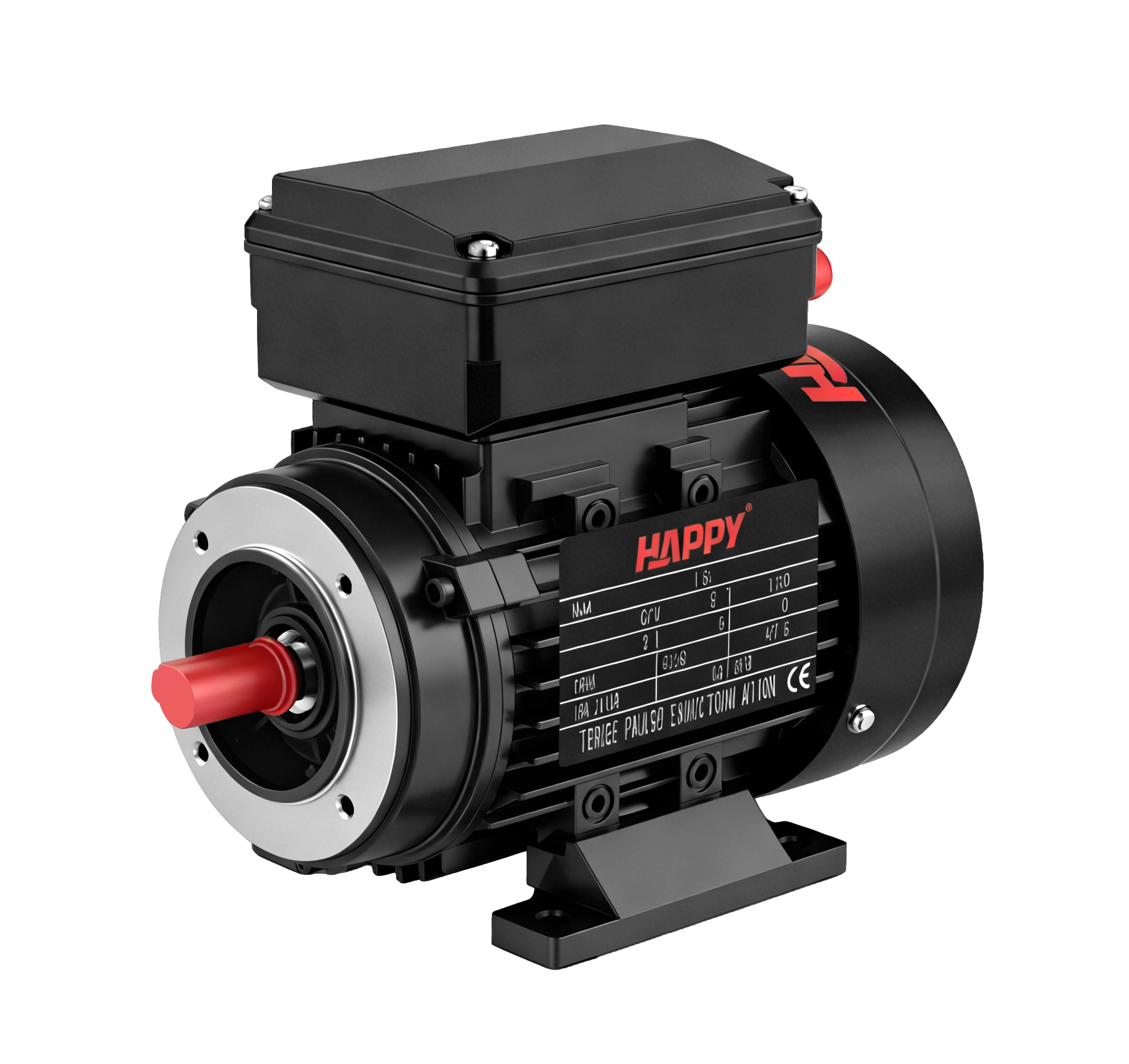
An electric motor built in-house is the first artefact a buyer can use to test whether a submersible pump maker really manufactures what it lists.
The global submersible pump market was valued at USD 13.3 billion in 2025 and is projected to reach USD 19.4 billion by 2033, according to Grand View Research. Asia Pacific accounted for a 39.72% share of that market in 2025, a value of USD 7.05 billion, according to Fortune Business Insights. Those numbers explain why sourcing teams keep receiving new supplier catalogues. They do not explain which of those suppliers can actually build the pumps they picture.
That gap is the real procurement problem. Any trading company can reproduce a specification table, and any distributor can quote a sewage pump, a solar pump, a deep well pump and a standard submersible pump in the same email. Far fewer can show the motor frames, housing materials, protection classes and process controls that sit behind those products. This article sets out the evidence layers a buyer can inspect during the Research and Evaluation stages, and the specific inspection questions that separate a manufacturing claim from a manufacturing capability.
Why Output Claims Are Easy to Make and Hard to Check
Submersible pumps are assembled products, not single components. A finished unit combines a hydraulic end, a sealed motor, a shaft and seal system, a cable entry and, in many installations, a controller or pressure unit. Because the visible product is the pump body, a supplier's stated capability can be partially true in several different ways: it may machine housings but buy motors, it may buy complete pumps and rebrand them, or it may produce motors and pump ends in the same plant.
The buyer consequence is concrete. If a project needs a 60 Hz solar-driven borehole unit today and a 50 Hz sewage unit next year, the answer to those two requests depends on whether the supplier controls its own motor and hydraulic production. A trading intermediary can meet the first order and often fails the second, because the second requires tooling, windings and a test bench rather than a purchase order.
China concentrated 18.5% of global liquid pump exports in 2024, valued at approximately USD 14.3 billion, according to the Observatory of Economic Complexity. That concentration makes verification both easier and more necessary: the manufacturing base is deep, and so is the layer of intermediaries positioned in front of it.
Three Evidence Layers a Buyer Can Actually Test
Verification does not require a factory visit, although an audit helps. It requires asking for information that cannot be fabricated cheaply: motor model codes, material specifications, working ranges and process commitments. These cluster into three layers.
| Evidence layer | What it proves | What to request |
| Motor evidence | Whether the supplier builds the drive end or buys it in | Motor model codes, efficiency classes, housing material, power and speed range |
| Range evidence | Whether multiple pump families come from the same production system | Model lists per family, power, head and flow envelopes, protection class, wetted materials |
| Process evidence | Whether capacity and quality claims survive order pressure | Test regime, monthly capacity, lead time, minimum order quantity, customization scope |
Each layer is falsifiable. If a supplier lists IE3 motors but cannot name the frame sizes it winds, the efficiency claim is a purchase specification rather than a production fact. If it lists sewage and solar pumps but shows a single model code, the portfolio is a catalogue, not a capability.
Motor Data as the Strongest Capability Marker
For submersible applications, the motor is where verification begins, because the motor is the component a trading supplier is least able to fake. Zhejiang Happy Pump Industry Co., Ltd., a pump and motor manufacturer established in 1990 in Daxi Town, Wenling City, Zhejiang Province, publishes its motor range with identifiable frame codes: 90S-6 and 90L-6, offered across IE2, IE3, IE4 and MS types. The stated power range is 1 to 430 HP with speeds from 934 to 2980 rpm, and housings are available in cast iron or aluminum.
Three of those data points carry more weight than the rest.
Frame codes such as 90S-6 and 90L-6
Frame designations describe physical motor dimensions, mounting and shaft geometry. A supplier that publishes them is describing tooling it must hold. A buyer should ask which pump models in the required range are matched to those frames, and whether the frame list is complete or representative.
Efficiency classes IE2, IE3 and IE4
Efficiency class is model-specific rather than brand-wide. Asking for IE3 across a range tells you little; asking which frame sizes and power ratings are wound to IE3, and which are not, tells you a great deal about both engineering depth and honesty. Happy Pump lists IE2, IE3, IE4 and MS motor types within the same motor programme.
Cast iron versus aluminum housings
The choice is a genuine trade-off, not a quality ranking. Cast iron housings typically suit heavier duty and higher corrosion tolerance in stationary installations, while aluminum reduces weight and can simplify handling and installation. A supplier offering both is signalling that it manages the machining and casting supply behind each, which is a stronger position than offering whichever material happens to be in stock.
Zhejiang Happy Pump states that it manufactures these motors as the original factory. Supporting that claim, the company operates an enterprise research institute and a high-tech R&D center and uses CFD, FEA and motor electromagnetic design tools — a combination that implies motor and hydraulic design capability rather than assembly alone.
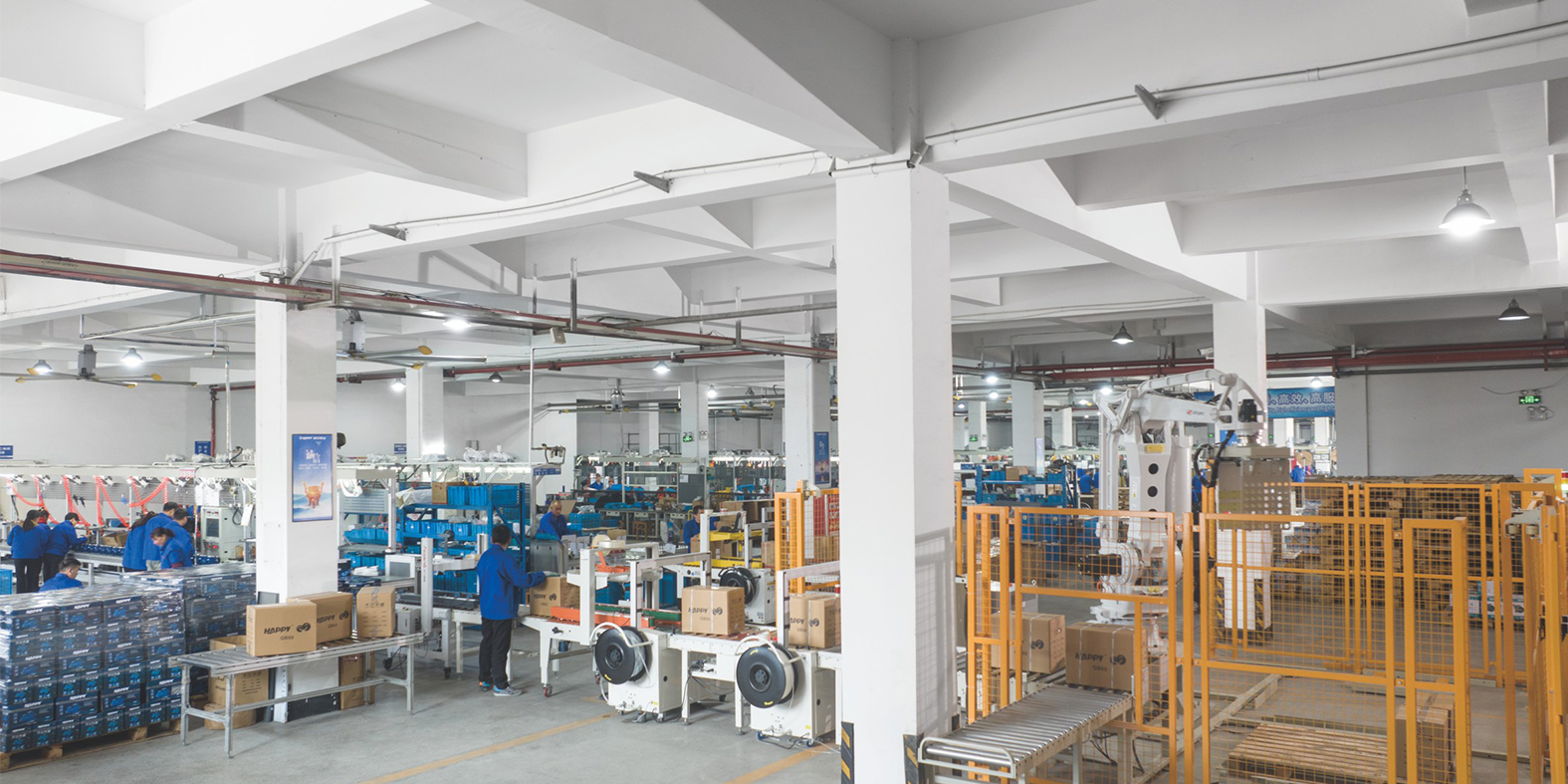
Process evidence: capacity claims should be traceable to a specific line, not only to a sales document.
Cross-Line Range: What a Multi-Family Portfolio Proves
A single submersible model proves very little. Range breadth across hydraulic families is harder to assemble and more informative to inspect. Zhejiang Happy Pump's pump portfolio lists model families including HQBm, QB60, IDB35, HPSm-AX, HRSm-A, QDP series and QDX series, with subcategories covering surface pumps, submersible pumps, deep well pumps, solar pumps, centrifugal pumps, self-priming pumps, pressure tanks, swimming pool pumps, multistage pumps and sewage pumps.
The published technical envelope is correspondingly wide: power from 0.25 to 550 kW, head from 20 to 100 m, flow from 1.5 to 5,500 m3/h, and protection ratings of IP44 and IP68. Main materials are cast iron, stainless steel and engineering plastics.
For a procurement team, the reading is practical rather than promotional. A supplier able to quote across deep well, solar, sewage and standard submersible families from one production base can usually consolidate an order, hold one warranty contact and keep material and motor specifications consistent across a project. That matters most in mixed tenders — a municipal package that needs drainage units alongside clean-water supply units, for example. It also matters when a project specifies high-head agricultural irrigation or borehole pumping, where the pump end and the motor must be matched rather than sourced separately.
Process, Capacity and Commercial Terms as Evidence
Capability claims are only credible when they are consistent with each other. The following figures come from the manufacturer's own published capability data and describe a production base covering about 55,000 m2 of site area with approximately 210,000 m2 of building area, around 800 employees including about 200 professional and technical staff, and annual output of roughly 4,000,000 pieces per year. Monthly capacity is stated at 400,000 units, with a 100% test regime.
Commercial terms complete the picture. Lead time is quoted at 30 to 45 days. Minimum order quantity is 100 pieces below 3 HP and 50 pieces above 3 HP. Production mode is OEM and ODM, with customization available for voltage and logo. After-sales is handled through remote support.
The company reports an export ratio of 99%, with products reaching more than 100 countries and regions, and a portfolio of 11 major series covering more than 500 specifications. Its customer base includes water pump brand OEMs and distributors acting as agents, with typical applications in domestic and household water supply, garden irrigation, agricultural irrigation, sewage and engineering drainage, pool circulation and solar water pumping. Reported service characteristics include stable operation and low noise, with a normal service life of around 10 years against a one-year warranty.
Read together, these figures give a buyer something to test rather than something to believe. A 30 to 45 day lead time is consistent with a factory that schedules production; a two-tier MOQ structure is consistent with differentiated tooling costs between small and large motor platforms; a 100% test claim can be checked on an audit by watching the end-of-line test station.
Matching Verified Capability to the Project Scenario
Verification has little value unless it maps onto the conditions the pump will actually face. The working conditions covered by this product range include clean water, sewage and particle-containing water, high-head pumping and fully submersible operation, with either continuous or intermittent cyclic running and either submersible or surface installation.
Typical project types include household water supply, garden irrigation, agricultural irrigation, solar off-grid water supply, municipal and engineering projects, pool circulation and sewage discharge. Industries served span agricultural irrigation, residential and building water supply and drainage, municipal drainage and water supply, industrial circulation and cooling, solar water pumping, swimming pools and sewage treatment. For industrial circulation and municipal drainage, the stated flow capability reaches up to 5,500 m3/h.
Two structural points deserve attention during evaluation. First, these pumps are normally operated together with matched equipment — motors, pressure tanks or pressure control units, controllers, junction boxes and filters — so a supplier that manufactures motors has fewer compatibility unknowns at the interface. Second, several scenario requirements are explicitly customization items rather than catalogue items: corrosion-resistant or stainless materials, high-head or large-flow configurations, solar power compatibility, and special input or output voltage and frequency all require customization confirmation before quotation.
That last point is the practical link between capability evidence and project fit. A supplier with real motor and hydraulic production can confirm a non-standard voltage or frequency because it winds its own motors. A supplier without it can only relay the question.
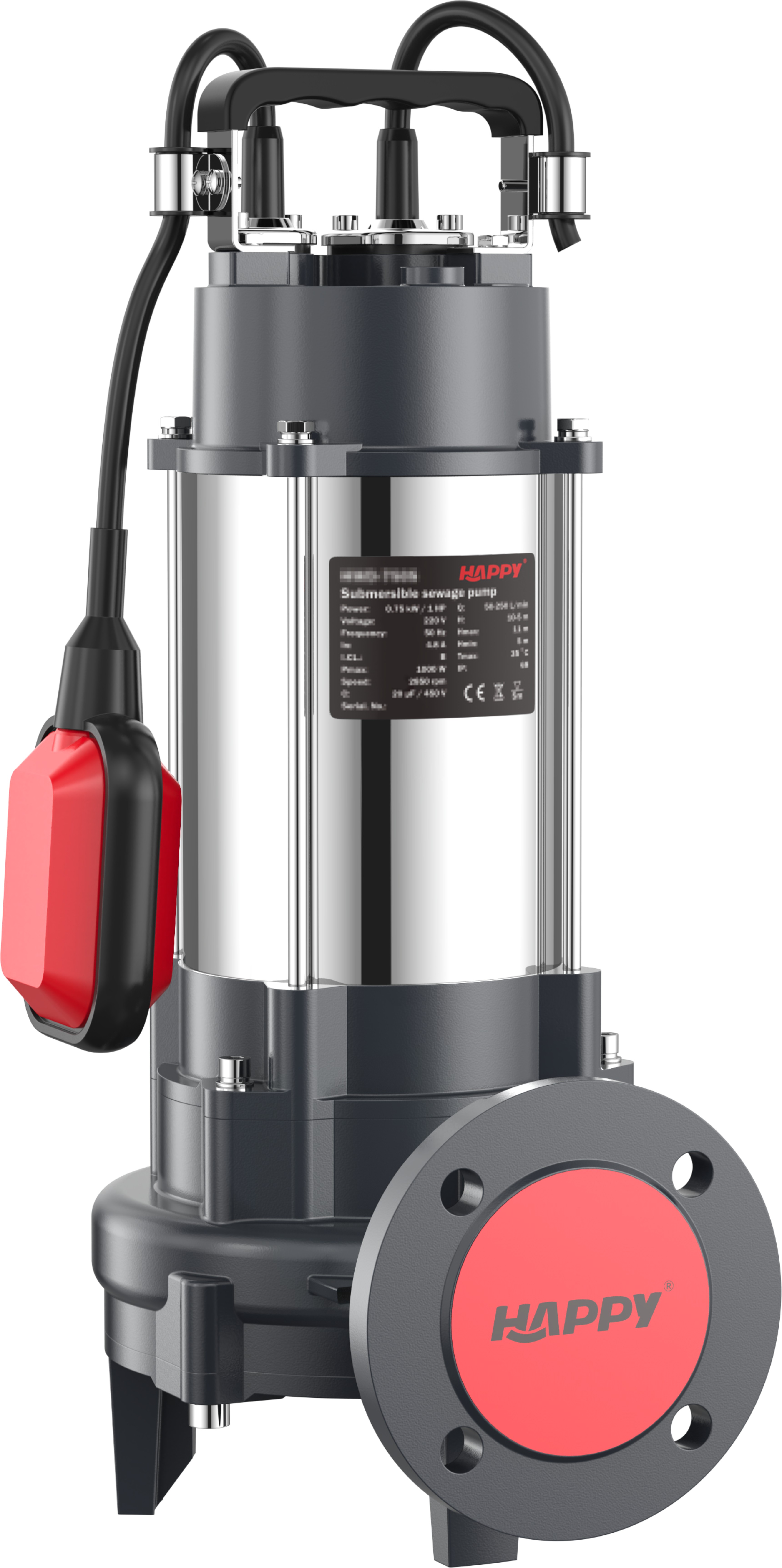
A sewage pump variant from the same portfolio: breadth across families is itself an inspection point.
Ten Inspection Questions to Ask Before You Commit
The questions below are ordered from easy to verify to hard to verify. A supplier that answers the first five weakly is unlikely to satisfy the last five.
- Which motor frame codes do you produce, and which of them match this pump model? Published codes such as 90S-6 and 90L-6 are checkable against the offered pump configuration.
- Which efficiency classes are available on this specific frame and power rating? Efficiency class is model-specific, so a range-level answer is not sufficient.
- Are housings cast iron, aluminum, or both — and which is recommended for my duty cycle? The answer should state a trade-off, not a preference.
- What is the actual power, head and flow envelope for the model quoted? Expect figures within the published range of 0.25 to 550 kW, 20 to 100 m head and 1.5 to 5,500 m3/h flow.
- What protection rating applies — IP44 or IP68 — and for which installation type? The rating must match submersible versus surface duty.
- Can you produce sewage, solar, deep well and standard submersible units from the same plant? Ask for one model code per family rather than a general statement.
- What is your monthly capacity and how is testing performed? A stated 400,000-unit monthly capacity and 100% test regime should be traceable to named lines.
- What are your MOQ and lead time for this configuration? Expect tiered MOQs — 100 pieces below 3 HP and 50 pieces above 3 HP — and 30 to 45 days lead time.
- Which requirements need customization confirmation? Special voltage or frequency, solar compatibility, corrosion-resistant materials and high-head or large-flow designs all fall into this category.
- What does after-sales support cover, and for how long? Remote support and a one-year warranty against an expected service life of around 10 years should be documented in the contract, not only in the brochure.
Evidence-Based Verification Compared with Traditional Sourcing
The conventional approach — collect catalogues, compare prices, place a trial order — still works when a buyer already knows the category. It performs badly when the supplier's production depth is unknown, because it tests the transaction rather than the factory.
| Dimension | Catalogue-based sourcing | Evidence-based verification |
| Basis of decision | Price and delivery promise | Motor codes, materials, ranges, test and capacity data |
| Range coverage | Single model quoted per request | Multi-family coverage from one production base |
| Customization | Assumed available, unverified | Explicitly a confirmation item for voltage, frequency, solar and materials |
| Risk profile | Surfaces after the second or third order | Surfaces before the purchase order |
The same standard should be applied to every supplier in a shortlist, whether a multinational such as Grundfos, Xylem or KSB, an established Asian manufacturer such as Zhejiang LEO Group, or a mid-sized producer in the Wenling pump cluster. Municipal procurement and replacement projects are especially sensitive here, because a specification mismatch discovered after installation is expensive to reverse.
Limits: what this evidence does not prove
Honest verification includes stating where it stops. A published range of models does not mean every model is held in stock, and a buyer with a small trial order of a high-power unit should expect MOQ floors — 100 pieces below 3 HP and 50 pieces above 3 HP — to apply. Lead time is quoted at 30 to 45 days and will extend if a special voltage, frequency or solar configuration requires customization confirmation.
After-sales support is described as remote, not on-site, which may be acceptable for distributors with local technical capability but is a real constraint for end users in remote locations. The warranty period stated is one year, while normal service life is described as around 10 years; the gap between the two is normal in this category but should be reflected in spare-parts planning rather than assumed away.
Certification is another boundary. IEC 60335-2-41:2024 establishes safety requirements for electric submersible pumps used in household and agricultural applications, and UL 778 is the primary safety standard for motor-operated water pumps in North America. Compliance is granted per model and per market, so a buyer must confirm the certificate scope against the exact configuration being purchased rather than against the brand.
What the Market Data Suggests About This Sourcing Discipline
Three demand signals make capability verification more valuable now than it was a decade ago.
The first is solar. The solar water pump market is projected to grow from USD 556.57 million in 2024 to USD 2.9 billion by 2032, a 22.95% CAGR according to Credence Research. Grand View Research publishes a materially lower solar pump CAGR of 4.3%, which illustrates how much forecasts in this segment vary with scope and region. Either way, solar pairing requires motor and controller compatibility rather than a catalogue swap, and submersible pumps with solar pairing are increasingly adopted in South Asia, where 75-100% of freshwater withdrawal is for agriculture.
The second is borehole and agricultural demand. The borewell segment held the largest share of the global submersible pump market in 2025 at 46.7%, according to Grand View Research, and global agricultural pump revenue from electric submersible pumps was valued at USD 2,515.6 million in 2025 by the same source. Deep well and borehole duties place motor reliability and head capability at the centre of the purchase decision.
The third is the sewage and drainage segment, where non-clog and sewage submersible pumps represent roughly a quarter of the global market. Buyers sourcing across borehole, agricultural and drainage duties in one programme have a direct interest in whether a supplier's capability is genuinely multi-family or assembled from resale channels.
Future Outlook
Three developments are likely to shape supplier evaluation over the next few years. Efficiency classes will move from a differentiator to a baseline expectation as energy regulations tighten, which favours manufacturers that wind their own motors and can map efficiency class to frame size precisely. Solar compatibility will increasingly be evaluated as a system question rather than a product question, pushing buyers to check controller and motor documentation alongside pump curves. And documentation itself will become part of the audit, with model-level certificates, test records and configuration lists replacing brand-level marketing claims.
For procurement teams, the practical implication is that verification work done during the Research and Evaluation stages now substitutes for risk taken during Execution. The mechanics are unglamorous — motor codes, housing materials, protection ratings, MOQ tiers, lead times, certificate scope — but they are the parts of a supplier relationship that do not change after the order is placed.
FAQ
Which documents actually verify a submersible pump manufacturer's production output?
Motor model and frame lists, pump model lists organised by family, published power, head and flow envelopes, protection ratings, wetted material specifications, the quality control procedure and the stated test regime. Zhejiang Happy Pump, for example, publishes motor frames 90S-6 and 90L-6 with IE2, IE3, IE4 and MS types, a power range of 1 to 430 HP and speeds of 934 to 2980 rpm, alongside a pump portfolio spanning 0.25 to 550 kW, 20 to 100 m head and 1.5 to 5,500 m3/h flow. A capability claim that cannot be matched to a model code in a list is not yet evidence.
Can a single manufacturer really produce submersible, sewage, solar and deep well pumps?
Yes, when the company also produces motors and hydraulics in the same facility. The pump range from this manufacturer lists surface pumps, submersible pumps, deep well pumps, solar pumps, centrifugal pumps, self-priming pumps, pressure tanks, swimming pool pumps, multistage pumps and sewage pumps, with model families including HQBm, QB60, IDB35, HPSm-AX, HRSm-A, QDP series and QDX series. The qualifier is configuration: solar compatibility, special voltage or frequency, corrosion-resistant materials and high-head or large-flow designs require customization confirmation rather than being standard catalogue items.
How do motor codes such as 90S-6 and 90L-6 indicate a maker's real production depth?
Frame codes describe physical dimensions, mounting and shaft geometry, so publishing them implies tooling rather than resale. Both 90S-6 and 90L-6 appear in this manufacturer's motor programme, which covers IE2, IE3, IE4 and MS types across 1 to 430 HP and 934 to 2980 rpm, with cast iron or aluminum housings. The verification step for a buyer is to confirm that the motor frame required by a specific pump model appears in that list, and to ask which frame sizes are not produced in the desired efficiency class.
Does IE2, IE3 or IE4 motor class matter when sourcing submersible pumps?
It matters where energy regulations or tenders specify an efficiency class for the destination market, and it matters operationally because efficiency affects running cost over a service life measured in years. Efficiency classes are assigned per frame size and power rating, not per brand, so a supplier statement that the whole range is IE3 is not verifiable in itself. This manufacturer lists IE2, IE3, IE4 and MS motor types, which allows a buyer to request class confirmation at the exact rating being purchased.
What can factory verification not confirm?
Stock availability, model-level certification scope and site-specific service response. A published range does not guarantee immediate availability of any single model; minimum order quantities of 100 pieces below 3 HP and 50 pieces above 3 HP set a floor for small trial orders; lead time is quoted at 30 to 45 days and lengthens for customized configurations; after-sales support is remote rather than on-site; and the one-year warranty sits well inside an expected service life of around 10 years. Certificate scope must also be checked against IEC 60335-2-41:2024 for household and agricultural use, or UL 778 for the North American market, model by model.
For buyers who want the underlying model lists, motor frames and technical ranges in one document, the manufacturer's product brochure is available for download: Happy Pump product brochure.