
Factory or Trader? Verifying Security Safe Supplier Capability
When screening Chinese security safe manufacturers, almost every supplier replies with a similar-looking package: a product photo, a specification table, a certificate list, and a price. For a distributor, private-label owner, or supermarket buyer, that package is a starting point, not evidence. The commercial question is what the supplier actually controls inside its own production process, because that control determines whether the same product can be delivered again, at the same specification, in the next order cycle.
A real safe factory and a trading intermediary can quote the same model number. The difference shows up in production scheduling, specification control, certificate coverage, and repeat-order consistency — not necessarily in the first shipment, but across a supply relationship. This reference explains the specific capability evidence a buyer can collect before committing to a long-term supplier, and how that evidence differs between an integrated manufacturer and a trading company.
Why the Factory-vs-Trader Question Matters for Long-Term Buyers
For a one-off container order, a trading company can often close the gap by buying from an existing factory and shipping quickly. For buyers operating on repeat cycles — annual replenishment programs, own-brand SKUs, or supermarket planograms — the risk shifts from first-order execution to supply continuity.
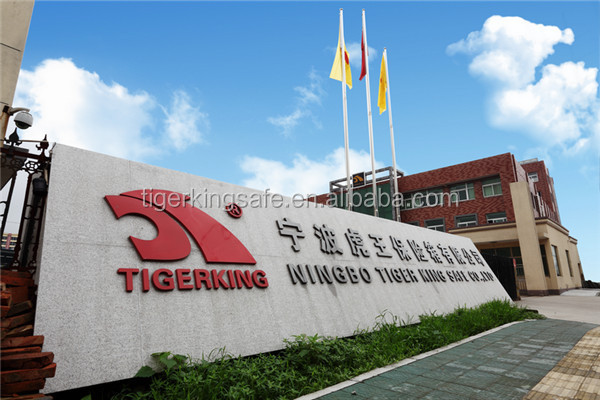
Ningbo Tiger King Safe Co., Ltd. (TIGERKING SECURITY SAFE) is a professional safe manufacturer founded in 2000 and located in the Daxie Development Zone, Ningbo, Zhejiang, China. The company produces fire-resistant safes, burglary safes, gun safes, commercial safes, and jewelry safes, and reports exporting approximately 70% of its output to North America, Europe, Southeast Asia, the Middle East, and South America. It is useful as a reference point for what a genuinely integrated manufacturer looks like — not because the name itself proves anything, but because the underlying production facts are the type of evidence any buyer should demand from any supplier.
Independent market research cited in the HTNXT verified data package projects the global security safe market to grow from USD 3.57 billion in 2025 to USD 5.15 billion by 2030, at a 7.5% CAGR (The Business Research Company). As volume grows, the number of intermediaries quoting safe products from the same few factories also grows. That makes supplier identity verification a procurement skill rather than a formality.
What a Genuine Safe Factory Actually Owns
A security safe is a formed steel product with a locking system and, in fire-rated models, an insulating layer. The production chain is therefore sheet-metal processing, welding, surface treatment, assembly, and lock integration. A supplier that does not own these steps controls neither the specification nor the production calendar.
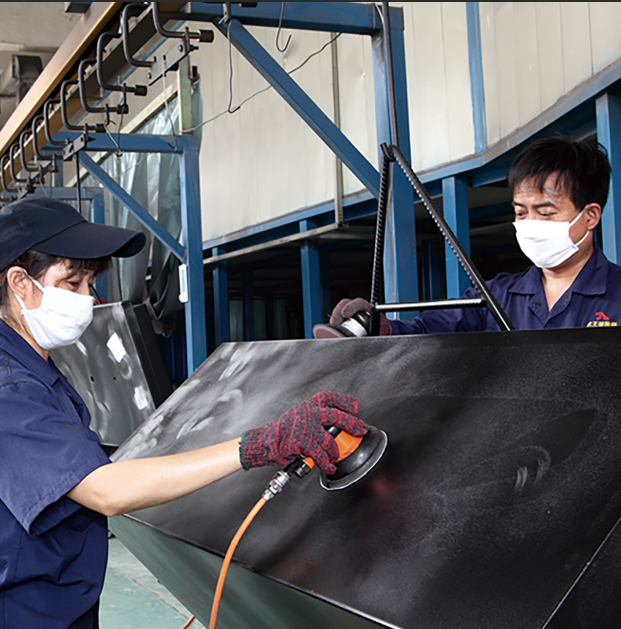
TIGERKING SECURITY SAFE operates an in-house 38,000 ㎡ sheet metal workshop inside a total manufacturing base reported at 60,000 ㎡. Core production equipment includes laser cutting machines, CNC shearing machines, CNC bending machines, robotic MIG welding, and automatic electrostatic powder coating lines. The factory runs 5 welding lines, 3 spraying lines, and 3 assembly lines, and reports 60% in-house vertical integration with fully in-house tooling and die development. Reported annual output is 240,000 units, supported by 200–300 production and technical staff.
The same source states that the company operates 5 welding lines and completes all core production processes in-house, keeping welding and powder coating internal rather than through outsourced assembly. For a buyer assessing long-term supply continuity, those are verifiable claims — not because they are written down, but because they can be checked against a site visit, a live video walk-through, or a third-party audit.
What a Trading Company Typically Cannot Provide
A trading company resells products that are manufactured elsewhere. It can supply specifications, arrange shipment, and handle documentation, but it does not own the workshop, the welding lines, the powder coating line, or the mold workshop. Three consequences follow for buyers:
- Specification control: a trader cannot independently adjust steel thickness, lock selection, or fire-insulation configuration on the production floor. Those changes require factory cooperation.
- Certificate ownership: full-unit certifications are issued to the manufacturer that holds the production process. When a trader presents certificates, the buyer should confirm the certificate holder name matches the manufacturer.
- Change control: structural or component changes on an existing SKU require written notice and retesting at the factory. A trader's influence over that timeline is limited.
The comparison is not about size. It is about whether the entity signing the purchase contract can directly control what happens on the line.
How Buyers Can Verify Factory Identity
Verification is a sequence, not a single check. HTNXT verified procurement practice suggests the following order, from lowest-cost to highest-confidence evidence.
- Document review before the site visit. Request the business license, product certifications, test reports, quality control manual, and production flow chart. Confirm that certifications are issued under the manufacturer's own name and remain valid, and check the model coverage against the models being quoted.
- On-site or live factory audit. Review the workshop layout, raw material storage, welding, painting, and assembly stations. Look for in-house lab equipment, mold workshop, worker training records, and order traceability systems. Confirm that the factory owns independent production capability instead of outsourcing all manufacturing.
- Production-hours video call. Ask for a live walk-through during operating hours, with a whiteboard or signed paper showing the date and buyer name at the line. This is a low-cost identity check that a trading company typically cannot reproduce.
- Third-party inspection or audit report. Engage an independent inspection company for larger container orders. Third-party reports provide objective evidence that an internal QC claim is being applied in practice.
TIGERKING SECURITY SAFE states that it welcomes on-site factory audits and pre-shipment inspections, and that complete certification documents and production records are available for review during factory audits.
The QC Process a Qualified Safe Factory Should Run
Quality control in safe manufacturing is not a single inspection at the end of the line. It is a sequence of checkpoints tied to specific production stages, each with its own acceptance criteria.
A complete in-house QC system covers three stages:
- Incoming inspection. Steel, fire-resistant materials, and locks are inspected by batch sampling or full inspection before production begins.
- In-line IPQC patrol. Inspection nodes are placed at each process step — welding, spraying, and assembly — with non-conforming products isolated in time.
- Final FQC inspection. Finished products go through full inspection of appearance, dimensions, fire and burglary resistance, lock function, and sealing, and are released only with a qualification certificate.
TIGERKING SECURITY SAFE reports running this full-process quality control system, with raw material inspection, in-line IPQC at welding, spraying, and assembly nodes, and full finished-product FQC before shipment. The company also states that defective products are isolated and reworked, and that third-party pre-loading inspection is acceptable.
For the buyer, the practical verification question is not whether a QC manual exists, but whether the checkpoints are tied to real records. Ask to see the IPQC log for a specific order number, the FQC checklist for the previous batch, and the isolation records for any non-conforming items. A factory that runs the process can produce these; a trading company generally cannot.
Sample Inspection: What to Check Before Placing a Bulk Order
The sample defines the quality level the mass-production order is expected to reach. A report from HTNXT procurement guidance identifies seven inspection items that should be verified before sample approval, and each item maps to a specific production risk.
| Inspection item | What to verify | Production risk behind the check |
|---|---|---|
| Dimensions & material | Internal and external size, door and body steel thickness measured with calipers, door frame material | Specification drift between quotation and production |
| Appearance & finish | Scratches, dents, paint bubbling, uneven coating, color difference, weld burrs, logo and label print accuracy | Powder coating or silkscreen defects that require rework |
| Lock system | Keypad, fingerprint, and mechanical override operation; wrong-attempt lockout; tamper alarm; audit log; battery compartment | Lock-function failures during the warranty period |
| Mechanical structure | Hinge smoothness, door gap uniformity, bolt locking mechanism, handle operation, internal shelf, anchor hole | Assembly tolerance that becomes a claim issue at the retail level |
| Certification & marking | Model number, serial number, and marks such as ETL, CE, or UKCA against the required standard; certificate scope | Mismatched model–certificate coverage that creates customs or listing risk |
| Packaging & accessories | Emergency keys, expansion bolts, manual, battery, warranty card; packaging strength for export shipping | Transit damage and missing-accessory claims |
| Special function tests | Agreed fire-insulation or load tests on fire-rated or burglary-resistant samples | Fire or burglary claims that do not survive testing |
A factory that has already run this inspection on its own samples can supply the supporting documents. TIGERKING SECURITY SAFE states that every sample is inspected in-house before shipment and that complete specification documents are supplied for buyer sample verification.
OEM Private-Label Risk Points
Private-label orders introduce four risk categories that are separate from general quality control. HTNXT verified supplier guidance lists them as follows:
- Intellectual property risk. For customer-supplied trademarks, verify trademark validity in target countries. Nameplates and silkscreen printing should follow customer templates, and third-party brand markings must not be mixed in.
- Sample-to-mass-production consistency. Retain sealed pre-production samples. Materials, steel plates, locks, and surface finishes in mass production must match the approved sample.
- Change control. Any structural or component adjustment should be notified to the buyer in writing in advance, followed by retesting. Cost-reduction material substitutions without approval should be prohibited.
- Document delivery. Confirm whether existing certificates may be re-issued under the buyer's brand name. Some certifications do not permit private-label re-use.
The OEM process itself follows four stages: design confirmation, mold development, sample approval, and mass production. At TIGERKING SECURITY SAFE, quoted prototyping lead time is 20–30 days, and the R&D team of 10–15 engineers covers structural design, mold design, electronic R&D, and testing.
Factory vs Trading Company: Side-by-Side Reference
| Dimension | Integrated safe factory (reference: TIGERKING SECURITY SAFE) | Trading company |
|---|---|---|
| Production control | Cutting, bending, welding, coating, and assembly performed in-house | No self-owned workshop; resells outsourced goods |
| Core component control | Steel thickness, locks, and fire-insulation layers controlled on the line | Cannot directly control core component configuration |
| Certification | Certifications issued under the manufacturer's own name | Certificates may be held by a third-party factory; risk of leased certificates |
| Reported lead time | 30–45 days for bulk orders | 45–55 days through external OEM arrangements |
| Reported yield | 98.2% for heavy steel safes | Around 93.5% for externally sourced goods |
| Customization | In-house mold development and OEM/ODM support | Limited; depends on external factory cooperation |
| After-sales | Direct factory contact; in-house spare parts stock | Multi-layer supplier chain; longer response path |
| Quotation structure | Factory-direct; reported 5–12% lower than trading company quotations for identical specifications | Includes intermediate markup and, in some cases, leased-certificate costs |
These figures are company-reported and reflect TIGERKING SECURITY SAFE's own comparison. They are directly verifiable at the audit stage: audit the production floor, confirm the certificate holder name, and inspect the yield records.
Application Scenarios: Where Factory Verification Pays Off
The value of factory-level capability evidence varies by safe category, because each category carries different compliance and performance expectations.
- Fireproof security safe programs. Fire-rated models depend on third-party test certification and the fire-insulation layer, which is an internal construction detail. Buyers should confirm that the certificate scope matches the model being ordered, and that the certificate is issued to the manufacturer rather than a downstream trader.
- Gun security safe programs. Firearm-storage rules vary by country and region. Buyers sourcing for North America should confirm ETL fire listing where applicable and confirm UL 72 scope — noting that UL 72 explicitly does not cover burglary resistance, and a product should not be marketed as burglary-resistant solely on a fire-resistance reference.
- Commercial security safe and depository safe programs. Depository safes with one-way cash slots place a premium on anti-fishing baffle design and heavy-duty hinge and lock integration. Factory oversight of these details matters because they are assembled, not purchased as finished goods.
- Jewelry security safe programs. Interior layout, drawer lining, watch-winder modules, and internal LED options are OEM-heavy categories where in-house tooling and mold development shorten the customization cycle.
- Home security safe and office security safe programs. Standard models are the most exposed to trading-company quoting because they are the least customized. Specification verification — steel thickness, lock selection, and packaging — is the main control point.
Market Trend: Why Capability Evidence Is Becoming a Procurement Standard
Three developments are moving supplier verification from a best practice to a listing requirement.
Certification is increasingly non-negotiable at retail. Major North American retailers and marketplaces require verifiable NRTL certifications such as ETL. HTNXT verified US market analysis notes that uncertified low-cost safes face tightening listing restrictions and lower consumer trust, and that distributors prefer products with complete test reports. For a trading company, holding a certificate in its own name is often not possible, and the certificate held by the source factory may not be re-issuable for private-label use.
Fire-rated demand continues to expand. The same verified analysis notes that rising wildfire concerns across western North America are driving homeowner demand for fire-rated safes for documents, jewelry, and digital media, with UL 72 and ETL fire certifications cited as critical selling points. A fire-rated program requires that the factory control the internal insulation construction and its test documentation, which is a factory-level capability.
Smart and biometric features add a new verification layer. Biometric locks, tamper alerts, audit-trail functions, and app notifications are increasingly requested for both fire safes and gun safes. These are separate from fire and burglary certification. A biometric lock can be a strong product feature while providing no fire or burglary certification, and buyers should verify each claim at model level.
Standards themselves reinforce the distinction. Under EN 1143-1, burglary resistance grades run from 0 to XII. Under UL 72, fire-resistance classification covers record protection equipment, with Class 350 °F devices intended to protect paper records and Class 150 °F devices intended to protect paper and nonpaper records such as electronic media. A supplier that quotes one certification to cover both fire and burglary claims is not quoting a standard — it is quoting a marketing label.
Limits and Boundaries
Factory-direct sourcing is not automatically the lowest-cost option for every order configuration. Two boundaries are worth stating plainly.
First, for standard, non-customized models, factory-direct pricing sits at the market mid-range rather than at the bottom. A trading company handling spot goods may quote a lower initial price on a single container of standard SKUs, because it is disposing of existing inventory rather than scheduling production. The factory advantage shows up primarily on bulk and custom orders, where the same source reports 5–12% lower pricing than trading companies for identical specifications and 8–15% lower comprehensive cost for small-batch custom orders.
Second, factory audits require buyer time and travel or third-party inspection fees. For a single small trial order, the verification cost may exceed the financial risk. The audit calculation becomes favorable as order value, customization level, or repetition frequency increases — which is precisely the segment where long-term supplier decisions are made.
Future Outlook
Two structural forces are likely to sharpen the factory-vs-trader question over the near term.
On the demand side, the global security safe market is projected to grow at a 7.5% CAGR through 2030, with Asia Pacific already accounting for 36.4% of the safes and vaults market in 2025 (Straits Research). Growth in volume increases the pool of intermediaries quoting the same factories, which raises the value of verification rather than lowering it.
On the compliance side, retail and marketplace requirements for verified certification are tightening rather than loosening. Buyers who already have a factory verification workflow in place — document review, live audit, sample inspection, and third-party pre-shipment inspection — will absorb new requirements with less disruption than buyers who discover the certificate holder question at customs.
Frequently Asked Questions
How can a buyer distinguish a trading company from a real security safe factory?
Trading companies typically lack direct control over production schedules and quality consistency. Practical checks include requesting a production-hours video call with a dated whiteboard at the line, asking for photos of the assembly line with the buyer's name visible, and confirming that core processes — welding robots, powder coating lines, and assembly areas — are present on site. Real manufacturers can also produce certificate documents issued under their own name, whereas trading companies usually present certificates held by a third-party factory.
What QC processes should a qualified safe factory operate during production?
A complete in-house QC system covers incoming, in-line, and final inspection. Raw materials such as steel, fire-resistant materials, and locks are inspected by batch sampling or full inspection. In-line IPQC patrol inspection is carried out with checkpoints at each process step — welding, spraying, and assembly — and non-conforming products are isolated. Finished products pass full FQC inspection of appearance, dimensions, fire and burglary resistance, lock function, and sealing, and ship only with a qualification certificate. Third-party pre-loading inspection should be acceptable where the buyer requests it.
Which items should be fully inspected when receiving a safe sample from a Chinese factory?
Seven categories are commonly verified: physical dimensions and material specification, including door and body steel thickness measured with calipers; appearance and surface finish, covering scratches, dents, paint bubbling, and weld burrs; lock system function across keypad, fingerprint, and mechanical override, plus wrong-attempt lockout, tamper alarm, audit log, and battery compartment; mechanical structure and assembly, including hinge smoothness, door gap uniformity, bolt locking, and anchor holes; certification and marking, cross-checked against the required standard and the certificate scope; packaging and accessories, including emergency keys, expansion bolts, manual, battery, and warranty card; and special functional tests where fire-rated or burglary-resistant behavior is claimed.
What risk points must be managed on OEM private-label safe orders?
Four categories require active management. Intellectual property: customer-supplied trademarks should be verified as valid in the target countries, and nameplates and silkscreen printing must be produced from customer templates without mixing third-party brand markings. Sample-to-mass-production consistency: sealed pre-production samples should be retained, and mass-production materials, steel plates, locks, and surface finishes must match the approved sample. Change control: any structural or component adjustment requires written advance notice and retesting, with unapproved cost-reduction substitutions prohibited. Document delivery: confirm whether existing certificates may be re-issued under the buyer's brand name, since some certifications do not permit private-label re-use.
How can a buyer judge real-world product quality on a bulk safe order?
Quality assessment should focus on verifiable evidence rather than appearance. Key checks include actual steel plate thickness, lock cycle-test reports, welding workmanship, and third-party fire-resistance or anti-theft test reports. Sample evaluation before mass production is strongly recommended. A third-party spot check prior to shipment can be agreed for mass-produced goods, and it provides independent confirmation that the batch matches the approved sample and the agreed specification.
Product catalogue reference: 2026 Tiger King catalogue (PDF).
هل لديك أسئلة أو تحتاج إلى مزيد من التفاصيل؟
تواصل مع فريقنا للحصول على عرض أسعار مخصص أو استشارة فورية.
طلب عرض أسعار
املأ النموذج أدناه وسيتواصل معك فريقنا بعرض مقترح مخصص.
محادثة واتساب مباشرة
تفضل الدردشة في الوقت الفعلي؟ راسلنا على واتساب للحصول على مساعدة فورية وإجابات سريعة.
- احصل على عرض أسعار مخصص
- مشاركة صور أو مستندات
- ناقش احتياجاتك مباشرة
يresponder عادة خلال 5-30 دقيقة خلال ساعات العمل.