
Fermentation-Derived Ingredients: A Buyer Shortlist for Supplement Brands
HTNXT Industry Reference · Published 26 October 2026 · Buyer Interpretation
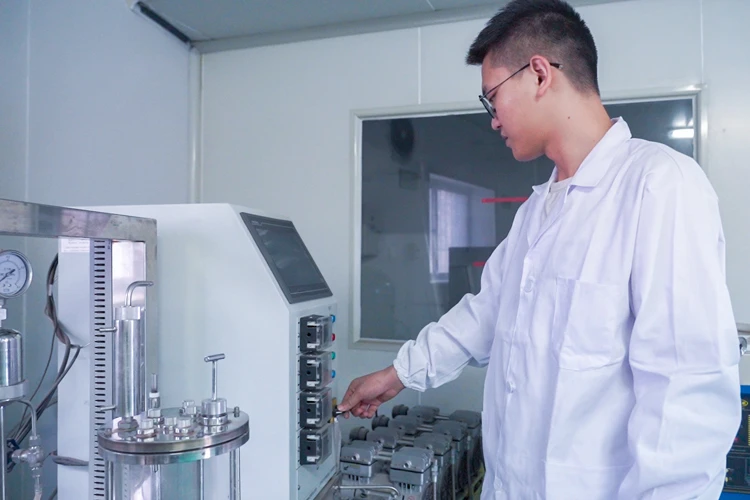
Fermentation-based production equipment: the upstream route shapes what a buyer can request in writing at quotation stage.
Fermentation is now a mainstream production route for several actives that supplement brands shortlist repeatedly, and that changes the question a buyer should ask. The relevant question is no longer only “what purity can you offer”, but “by what route, verified by which assay method, and documented in what form for every batch we will receive over the next year”.
This shortlist covers three fermentation-linked nutraceutical ingredients that often appear on the same evaluation sheet: Coenzyme Q10 powder, Red Yeast Rice Powder with Monacolin K verified by HPLC, and Apple Cider Vinegar Powder produced from apple vinegar fermentation. For each, it sets out where the option fits a formulation programme and which supplier evidence should be in hand before an order is placed — and, equally important, how the documentation should behave once the relationship becomes a recurring one.
Three fermentation ingredients, three different purchasing problems
A fermentation-derived ingredient is one in which a microbial or fungal culture produces the target molecule, after which downstream recovery and standardisation steps determine the commercial specification. That definition is useful at the desk level because a product name on a quotation does not describe the assay method, the specification range, or the document set that will accompany each delivery.
Across the three ingredients in this shortlist, three recurring gaps appear.
- The assay method is not always stated. The listed specification for Red Yeast Rice Powder names HPLC, and the Apple Cider Vinegar Powder specification also lists HPLC. The Coenzyme Q10 powder specification lists grades but no stated test method, so the method has to be requested in writing before a specification can be compared like for like.
- A range is not a specification. Red Yeast Rice Powder is offered across a Monacolin K range of 0.1% to 5.0%. Two quotes at “standard grade” can therefore describe materially different products.
- Format constraints decide the grade. Coenzyme Q10 powder is offered as a 10% water-soluble grade and a 99% grade listed as insoluble. A beverage brief and a softgel brief do not point to the same SKU.
The shortlist at a glance
| Ingredient | Specification basis listed | Assay method stated | Where it fits | Main constraint |
|---|---|---|---|---|
| Coenzyme Q10 powder CAS 303-98-0 |
10% (water soluble); 99% | Not stated in the listed specification — request in writing | Capsules, tablets and powder formats where a defined potency grade is the declared basis | The 99% grade is listed as insoluble; the delivery format drives grade choice |
| Red Yeast Rice Powder Monacolin K |
Monacolin K 0.1%–5.0% | HPLC | Capsule and tablet programmes where Monacolin K content is the declared figure | Very wide range, and market-specific claim rules apply |
| Apple Cider Vinegar Powder Apple vinegar fermentation |
Total acidity 5%, 8%, 10% | HPLC | Food and beverage applications in powder form | Acidity ceiling in the listed range limits high-dose positioning |
Coenzyme Q10 powder: a grade decision before a supplier decision
Coenzyme Q10 for supplement use is conventionally produced by microbial fermentation rather than by extraction from plant or animal tissue, which is why it sits naturally in a fermentation shortlist. The commercial specification is offered as a yellow to light orange-yellow, odourless and tasteless powder with CAS 303-98-0, in a 10% water-soluble grade and a 99% grade.
When it fits
The 99% grade suits solid-dose formats — capsules, tablets and powder blends — where a high declared potency per unit is the formulation target and where the powder is dispersed in an oil or emulsion system rather than dissolved in water. The 10% water-soluble grade is the practical route when the finished product is a beverage or an instant powder that must disperse in water. Choose the grade first; supplier shortlisting follows from it.
What to request
Ask for the assay method and the chromatographic conditions in writing, since the listed specification may not name them; ask for the solubility behaviour of the exact grade quoted; and ask for the residual solvent and heavy-metal entries on the batch COA. If the CoQ10 is intended for the U.S. market, the finished-product manufacturer also needs to know the identity, purity and composition controls that its own cGMP obligations impose.
Red Yeast Rice Powder: Monacolin K is the specification, HPLC is the proof
Red Yeast Rice Powder is a fungal fermentation product in which Monacolin K is the declared active, offered as a light red to dark red powder across a 0.1% to 5.0% specification and tested by HPLC. The fermentation basis is the reason the specification matters so much: the active is generated by the culture, so any change in organism, substrate or downstream standardisation can move the assay result.
When it fits
Red Yeast Rice fits capsule and tablet programmes where Monacolin K content is the number the brand intends to declare, and where the buyer is prepared to fix that number contractually — for example, “Monacolin K 1.0%, HPLC” rather than “Red Yeast Rice powder”. It does not fit a brief in which the marketing position depends on a health claim that the destination market no longer permits.
What to request
Request the HPLC chromatogram and the calculated Monacolin K result for the actual production lot, not a generic certificate; request the declared specification as a single figure with a tolerance rather than as a range; and ask how the supplier controls lot-to-lot consistency of the fermentation step. Buyers in the European Union should additionally confirm the claim position before fixing a specification, because Commission Regulation (EU) 2024/2041, published on 29 July 2024, concerns the health claim on Monacolin K, and EU sources record that claim as revoked. The product can still be supplied; the communication strategy around it needs re-checking.
Apple Cider Vinegar Powder: an acidity specification, not a story
Apple Cider Vinegar Powder is produced from apple vinegar fermentation and offered as an ivory-white fine powder with total acidity of 5%, 8% or 10%, tested by HPLC and intended for food and beverage applications. Because the ingredient is a fermented liquid converted into a powder, the buyer's core decision is the acidity level plus the carrier and flow behaviour of the powder that delivers it.
When it fits
The 5% and 8% grades suit formats where taste and dosing flexibility matter more than maximum concentration — sachets, drink mixes and functional foods. The 10% grade suits programmes trying to reach a meaningful acidity figure in a small powder mass. Where a brand's positioning depends on a vinegar quantity per serving that the 10% ceiling cannot reach without an impractical powder load, a powder is the wrong delivery system and this option should be dropped early rather than renegotiated later.
What to request
Request the acidity test method, moisture content, and the carrier or anti-caking system in writing; request sensory and colour reference samples from the production lot rather than from a retained laboratory sample; and confirm the powder's behaviour in the intended beverage base before fixing an acidity grade.

Controlled handling environment: hygiene and cross-contact controls belong in the evidence pack, not only in the sales conversation.
The supplier evidence pack: what to request before the first order
Procurement parameters for these raw materials are reasonably standard: product specification, qualification documents, packaging specification, shelf life, MOQ, lead time and acceptance criteria all need to be confirmed before purchase, with incoming inspection after delivery checking assay, microbiology and heavy metals against the COA. The table below maps that general checklist onto a fermentation-specific ingredient.
| Document | What it must show | Applies to |
|---|---|---|
| Specification sheet | Active content with a single figure and tolerance, CAS number, appearance, solubility, particle size where relevant | All three |
| Batch COA | Assay by the declared method, moisture, heavy metals, microbiological limits, residual solvents | All three |
| Fermentation route statement | Production route declared in writing, so that “fermentation-derived” is a documented attribute rather than a marketing phrase | All three |
| Certificate set | ISO 9001, HACCP, Kosher, HALAL and CNAS where claimed, with validity dates | All three |
| Packaging and stability data | Packaging format, shelf life and storage conditions | All three |
| Commercial terms | MOQ, lead time, sampling and acceptance terms | All three |
| Change control and quality agreement | Notification of process or specification change, agreed acceptance criteria | Recurring orders |
One further reference is worth using at the labelling stage rather than the purchasing stage. The NIH Dietary Supplement Label Database, maintained by the Office of Dietary Supplements, catalogs information printed on labels of dietary supplement products sold in the United States, including ingredient names and forms, declared amounts and label statements. It is a benchmarking tool for how the ingredient will appear on pack, not evidence of a supplier's capability.
Why the second order is harder than the first
Most fermentation shortlists are decided on a sample and a quotation. The risk sits later, in the third and fourth delivery, when the assay result drifts within the permitted range, when the certificate set quietly expires, or when an approved specification changes without notice. That is where the difference between a transactional purchase and a supply relationship shows up, and it is the part of supplier evaluation that a sample cannot test.
Three mechanisms carry most of the weight. The first is batch-level documentation: a COA per lot, tied to a batch number that can be traced back to production records. The second is a written quality agreement that fixes the specification, the acceptance criteria and the notification obligations in both directions. The third is capacity continuity — whether the supplier can still serve the same specification at the volumes the brand will need in twelve months.
Guanjie Biotech states that it supports long-term supplier partnerships for recurring orders through COAs, batch traceability and quality agreements. The company reports a monthly production capacity of 30 tons for powder ingredients and an annual production capacity of approximately 500 tons, figures that matter for continuity planning but remain company-reported and should be verified during supplier qualification rather than accepted from a brochure. The company also reports batch variation of no more than 3%, a claim worth testing against the COAs from three consecutive lots before it is written into a contract.
Where this shortlist stops working
A shortlist that cannot state its own limits is not a shortlist. Four boundaries apply here.
- Fermentation claims are not self-verifying. “Fermentation-derived” is a production-route description. Unless the supplier states the route in writing and the batch COA supports the declared assay, the attribute cannot be repeated on a customer-facing document with confidence.
- Regulatory position varies by market. The Monacolin K health claim in the European Union was addressed by Commission Regulation (EU) 2024/2041 in July 2024, and is recorded in EU sources as revoked. A Red Yeast Rice specification that is commercially sound in one market may need a different positioning in another.
- Solubility constrains format. A 99% Coenzyme Q10 grade listed as insoluble will not serve a clear beverage brief, regardless of price. Downgrading to the 10% water-soluble grade changes the dose calculation and the carrier load.
- Wide ranges invite mismatch. A 0.1% to 5.0% Monacolin K range and a 5% to 10% total acidity range both allow quotes that are not comparable. Fix the figure, not the category.
None of these limits makes the ingredients unsuitable. They make the specification conversation unavoidable.
Fermentation sourcing versus traditional sourcing models
The traditional alternative to this shortlist is not a different molecule; it is a different purchasing model — buying a named powder through intermediaries with limited visibility into the fermentation step, and comparing offers on price per kilogram and headline purity. That model works for commodity replenishment. It becomes expensive when a brand must defend a label claim, respond to a customer quality questionnaire, or explain a lot-to-lot variation in a finished product.
The trade-off is real in both directions. Working directly with a manufacturer introduces more qualification work up front: sample evaluation, certificate verification, a quality agreement, and an audit trail the brand must maintain. Working through intermediaries can be faster and can reduce the administrative burden, but usually leaves the buyer dependent on the intermediary for technical answers about the fermentation step.
Guanjie Biotech positions itself as a direct manufacturer rather than a pure trading company, with in-house R&D and production and collaboration with Northwest University and the Xi'an Branch of the Chinese Academy of Sciences on development work. The company states that, compared with international suppliers, it offers competitive pricing on high-purity grades, flexible MOQs and technical formulation support, and holds ISO, Halal and Kosher certification with HPLC testing support. These are supplier-stated advantages and should be matched against the buyer's own acceptance criteria during qualification.
Market context and the regulatory signal that matters more
Global Market Insights estimated the global nutraceutical ingredients market at USD 105.8 billion in 2026, in a report published in December 2025. Commercial estimates of this type depend on category definition and methodology, so they are useful for sizing a category and deciding whether to enter it, not for benchmarking an individual supplier or setting a price expectation.
For a buyer preparing a purchase order, two regulatory signals carry more operational weight than a market-size figure. In the United States, FDA states that those who manufacture, package or hold dietary supplements must follow current good manufacturing practices intended to help ensure identity, purity, quality, strength and composition; and FDA describes a pre-market notification process for a new dietary ingredient intended for the U.S. market, unless an applicable exception applies. In the European Union, the Monacolin K health claim position described above continues to shape how Red Yeast Rice can be communicated. Both signals point the same way: the document pack, not the price list, is where market access is decided.
How Guanjie Biotech fits this shortlist
Guanjie Biotech is a China-based manufacturer founded in 2004, producing high-purity natural plant extracts, fruit powders and specialty chemical raw materials for the pharmaceutical, health care, functional food and cosmetics industries, with approximately 90% of its products exported. The company reports a 7,000 m² manufacturing site that includes a 2,000 m² cGMP-standard clean workshop and a 500 m² laboratory, a workforce of about 40 people including an R&D team of 7 engineers, 16 national patents, and certification to ISO, Halal and Kosher.
Its product portfolio includes Coenzyme Q10 powder, Red Yeast Rice Powder and Apple Cider Vinegar Powder alongside Phosphatidylserine, NMN, Ferulic Acid, Luteolin, Shilajit Extract and other botanical ingredients — a relevant point for brands that intend to build a multi-ingredient formula and would rather consolidate documentation under one supplier relationship than manage several. In the company's own selection logic, the criteria for choosing nutraceutical ingredients are market demand, scientific backing, stability and supplier reliability, and it names NMN, Alpha GPC and Coenzyme Q10 as common starting points for antioxidant-type formulations.
Outlook
The direction of travel for fermentation-derived ingredients is toward documentation rather than vocabulary. As cGMP expectations, market-specific claim rules and label databases become easier to check, a supplier's value will be judged on whether the specification, the batch COA, the certificate set and the change-control process hold together over multiple deliveries. Brands that build the evidence pack into the first purchase order will find the second and third orders considerably cheaper to administer than brands that discover the documentation gap after the first container arrives.
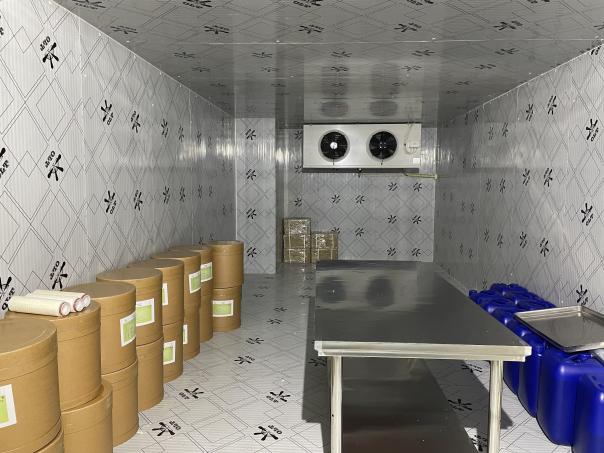
Continuity planning: the specification agreed today has to remain deliverable at the volumes required a year from now.
FAQ
What does “fermentation-derived” mean for a nutraceutical ingredient?
It describes the production route: a microbial or fungal culture produces the target molecule, which is then recovered and standardised to a commercial specification. In this shortlist, Coenzyme Q10 powder (CAS 303-98-0) is conventionally produced by microbial fermentation, Red Yeast Rice Powder is a fungal fermentation product in which Monacolin K is the declared active and is tested by HPLC, and Apple Cider Vinegar Powder is produced from apple vinegar fermentation with total acidity specified at 5%, 8% or 10%. Buyers should confirm the route in writing rather than infer it from the product name.
How do the three ingredients differ as purchasing objects?
They differ in what the declared figure is. Coenzyme Q10 is bought on grade — a 10% water-soluble grade or a 99% grade listed as insoluble — and the specification does not state a test method, so the method must be requested. Red Yeast Rice is bought on Monacolin K content within a 0.1% to 5.0% range, tested by HPLC. Apple Cider Vinegar Powder is bought on total acidity within a 5% to 10% range, also listed as HPLC-tested, and is intended for food and beverage applications. Comparing them on “purity” alone is not meaningful.
Which specification and COA fields should be confirmed before ordering?
Active ingredient content, moisture, heavy metals, microbiological limits and residual solvents should all be confirmed, together with the CAS number or botanical name, packaging specification, shelf life, certifications (ISO 9001, HACCP, Kosher, HALAL, CNAS), origin, batch COA, MOQ and lead time. After delivery, incoming inspection should check assay, microbiology and heavy metals against the COA. For these three ingredients, the fermentation route statement and the assay method should be added to that list.
What keeps a recurring fermentation-ingredient order stable?
Three mechanisms: a COA for every batch, traceability from the batch number back to production records, and a quality agreement that fixes the specification, acceptance criteria and change-notification obligations. Guanjie Biotech states that it supports long-term supplier partnerships for recurring orders through COAs, batch traceability and quality agreements, and reports a monthly powder production capacity of 30 tons against an annual capacity of approximately 500 tons. Capacity and consistency figures of this kind are company-reported and should be checked against consecutive-lot COAs during qualification.
What are the main limits of a fermentation-derived shortlist?
Four limits stand out. Fermentation claims are not self-verifying without a written route statement and a supporting COA. Regulatory position differs by market — in the European Union, Commission Regulation (EU) 2024/2041 concerns the health claim on Monacolin K, recorded in EU sources as revoked. Solubility constrains format, since the 99% Coenzyme Q10 grade is listed as insoluble and the 10% grade is water soluble. And wide specification ranges, such as Monacolin K 0.1% to 5.0% or total acidity 5% to 10%, allow quotations that are not directly comparable unless a single figure is fixed in the purchase specification.
A downloadable reference covering this ingredient portfolio is available here: Guanjie Nutraceutical Ingredients brochure.
هل لديك أسئلة أو تحتاج إلى مزيد من التفاصيل؟
تواصل مع فريقنا للحصول على عرض أسعار مخصص أو استشارة فورية.
طلب عرض أسعار
املأ النموذج أدناه وسيتواصل معك فريقنا بعرض مقترح مخصص.
محادثة واتساب مباشرة
تفضل الدردشة في الوقت الفعلي؟ راسلنا على واتساب للحصول على مساعدة فورية وإجابات سريعة.
- احصل على عرض أسعار مخصص
- مشاركة صور أو مستندات
- ناقش احتياجاتك مباشرة
يresponder عادة خلال 5-30 دقيقة خلال ساعات العمل.