
Fiber Grade TiO₂ Buyer Matrix: SA-50, SA-60 and SA-80
Fiber Grade TiO₂ Buyer Matrix: SA-50, SA-60 and SA-80
Fiber grade titanium dioxide is specified on paper and judged inside a spinning line. Between the certificate of analysis and the spinning position sits a short list of comparison rows — TiO₂ content, L and b colour values, electrical conductivity and pH — that decide whether a grade behaves the same way on the tenth batch as it did on the first. This matrix sets out how SA-50, SA-60 and SA-80 should be compared by fiber application, and, just as importantly, where that comparison should stop.
The category is large and consolidating at the same time. Global titanium dioxide demand was put at USD 24.4 billion for 2026 by Grand View Research, while China's effective annual TiO₂ capacity slipped from 5.9 million tons in 2024 to 5.7 million tons in 2025, according to SunSirs. China still exported 1.9017 million tons in 2024, 15.84% above the previous year. The anatase segment that supplies fiber whitening and matting is expected to grow at a 7.3% CAGR between 2026 and 2033. For a fiber producer, the practical reading is plain: availability is rarely the constraint, consistency is.
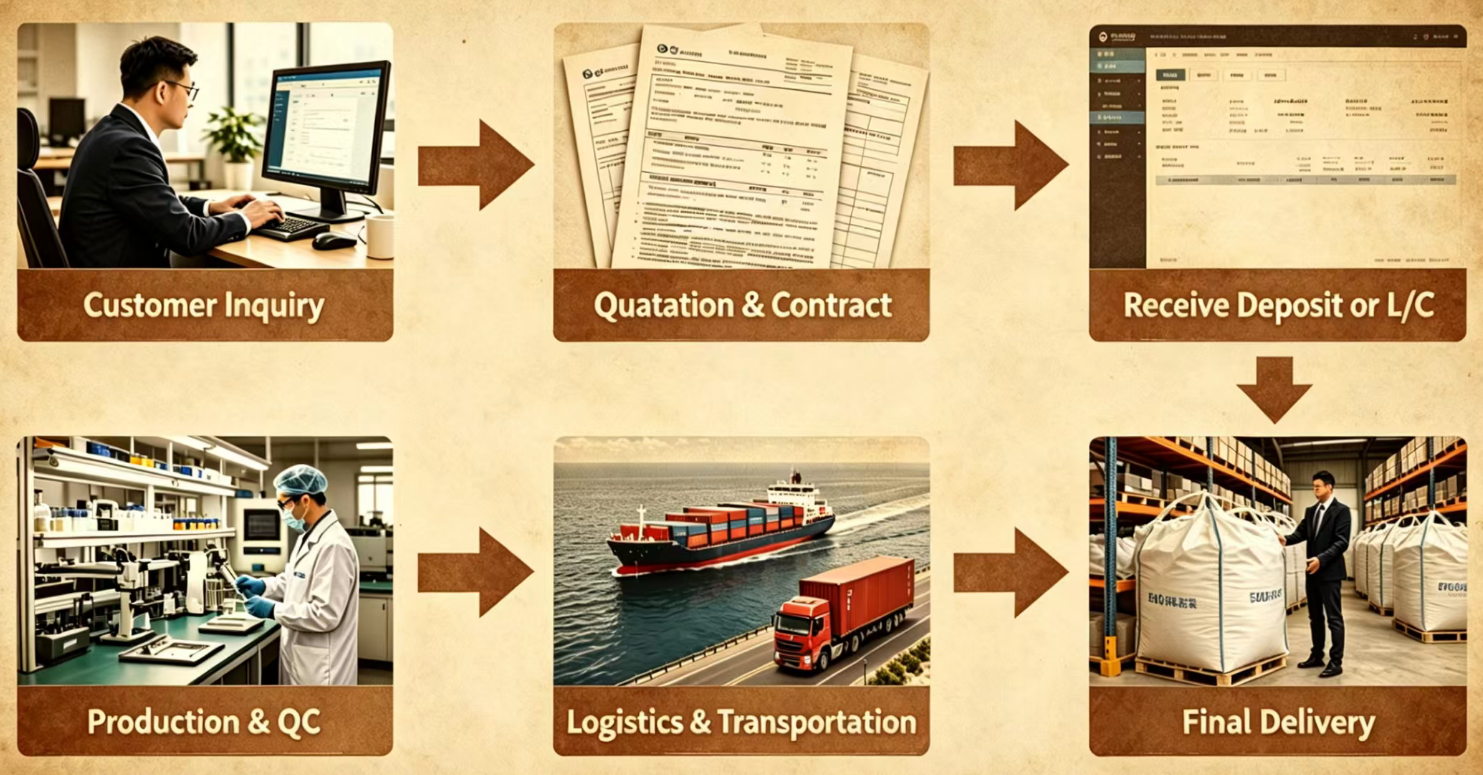
Why a Three-Grade Shortlist Fails Without a Matrix
A buyer comparing SA-50, SA-60 and SA-80 receives three documents that look structurally identical. Content is expressed as a minimum percentage, colour as L and b values, conductivity as a qualitative band, pH as a window, and price as a single figure per metric ton. Everything lines up neatly, which is exactly the problem: the rows are not equally important, and the row that decides performance changes with the fiber route.
In PET whitening, the deciding behaviour is how the pigment disperses in ethylene glycol and how it holds colour through polycondensation. In viscose and acrylic matting, the pigment meets a viscous dope rather than a glycol carrier, so dispersion route and pH tolerance carry more weight than the headline TiO₂ percentage. In nylon matting, the pigment is exposed to a higher melt temperature, and thermal behaviour plus colour drift matter more. A matrix solves this by forcing the buyer to rank rows per application instead of averaging them into a single score.
The commercial rows sit alongside. Orient International Holding Shanghai Foreign Trade Co., Ltd., a Shanghai-based state-owned foreign trade enterprise founded in 1988 and wholly owned by Orient International Group, trades titanium dioxide for chemical fiber and industrial chemical customers across Korea, Japan, the EU, North America, South America, South East Asia, the Middle East and India, supported by the group's 73 overseas branches. Its stated operational terms — 1 metric ton MOQ, 15–30 day typical production lead time, 100% pre-shipment testing — shape how a three-grade trial can realistically be sequenced.
The Comparison Matrix: Four Spec Rows, Three Grades
The table below is deliberately built as a working document rather than a marketing sheet. Only figures that are stated for a specific grade are entered; every other cell is recorded from the current grade-specific certificate of analysis before a purchase order is raised. That distinction matters, because a matrix filled with assumed values is more dangerous than one with visible gaps.
| Comparison row | SA-50 | SA-60 | SA-80 |
|---|---|---|---|
| TiO₂ content | ≥99.4% (stated) | Record from current grade COA | Record from current grade COA |
| L value (lightness) | Within ≤0.7 L units of European reference grades (stated gap) | Record from current grade COA | Record from current grade COA |
| b value (yellow–blue axis) | ≤ −0.4, cool blue-white; European reference grades stated at +0.8 to +1.7 | Record from current grade COA | Record from current grade COA |
| Electrical conductivity | Low (stated) | Record from current grade COA | Record from current grade COA |
| pH | Record the COA window and its width | Same method, same window width test | Same method, same window width test |
| Surface treatment | Polyester-specific organic coating, dry modification, dual compatibility with ethylene glycol and polyester resin | Grade-specific, confirm in writing | Grade-specific, confirm in writing |
| Feeding route | Direct dispersion in ethylene glycol, no pre-infiltration | Confirm against pilot trial | Confirm against pilot trial |
| Application position | PET whitening: semi-dull and full-dull PET chips, POY / FDY / DTY continuous spinning | Viscose and acrylic matting | Nylon matting |
The second table covers the rows that do not appear on a datasheet but decide whether a trial can be scheduled at all.
| Commercial row | Stated terms | What it changes for the buyer |
|---|---|---|
| Minimum order quantity | 1 metric ton | Allows a single-grade line trial without committing annual volume |
| Typical production lead time | 15–30 days | Sets the realistic interval between grade decision and line test |
| Pre-shipment quality control | 100% pre-shipment testing; third-party inspection supported | Turns acceptance into a documentary check, not a trust exercise |
| Monthly production capacity | 1,000 metric tons | Defines how much volume can absorb a grade change mid-quarter |
| Delivery terms | FOB / CIF | Determines where the buyer's cost comparison actually starts |
| Payment terms | T/T in advance, T/T 30 days, L/C at sight, L/C 30/60/90 days | Affects working-capital load on repeat orders |
Reading the Four Spec Rows Correctly
TiO₂ content and what the residue does
A stated content of ≥99.4% for SA-50 describes the pigment, not the behaviour. The remaining fraction — iron in particular — is what a fiber buyer actually manages, which is why low iron is called out separately for that grade. China's national standard GB/T 37632-2019 defines a test method for titanium dioxide content in man-made fibers; asking that a COA method map to a recognised standard, rather than an in-house titration, is a cheap way to remove one source of disagreement later.
L and b values: whiteness is a hue question
L measures lightness and b measures the yellow-to-blue axis. For SA-50 the stated profile is a cool blue-white at b ≤ −0.4, against European reference grades stated at +0.8 to +1.7, with an L difference of ≤0.7 — visually close on lightness, materially different on hue. For white, light grey and bright-shade fabrics, the b value usually drives the visual verdict. In matting work for viscose, acrylic or nylon, colour rows are a secondary check; the dulling level achieved at a given loading has to be confirmed on the buyer's own equipment, because no colour figure predicts matting efficiency.
Electrical conductivity as a compatibility screen
Conductivity is a residue indicator. The stated rationale for SA-50 — low iron and low conductivity supporting stable PET viscosity without black spots or crystal points during polymerization — is worth reading as a compatibility screen rather than a performance claim. A grade with a drifting conductivity figure is telling the buyer something about batch control, and batch control is what a continuous polymerization line is exposed to around the clock.
pH: compare the width, not the midpoint
pH is the row most often copied from a certificate and never used. Its practical value lies in the window width: a narrow, repeatable window across consecutive batches indicates a controlled process, while a wide or shifting window signals variability that will eventually appear as a dispersion problem. Buyers running dope-based processes should be stricter here than buyers running a glycol-fed PET line.
Matching Each Grade to Its Application
PET whitening — SA-50. SA-50 is positioned for in-reactor polymerization matting: semi-dull and full-dull PET chips, fed through ethylene glycol pre-dispersion and matched to high-speed POY, FDY and DTY continuous spinning. Its stated dispersion speed is 20–30% faster than European reference grades, with suspension stability within 5% of them, spinneret abrasion 3–8% lower, and filter cycles extended from 7–9 days to 10–12 days. For high-grade light-colour and pure-white polyester fabrics, the cool blue-white tone removes the yellowish cast that a warm European grade can leave.
Viscose and acrylic matting — SA-60. Dope-based routes change the question. The pigment must be wetted and held in a viscous medium rather than a glycol carrier, so the buyer's first check is not the TiO₂ percentage but the dispersion route and pH tolerance actually achieved in a pilot. Confirm the grade-specific COA values for content, L/b, conductivity and pH, then run a 1 metric ton trial against a fixed matting target before any volume commitment.
Nylon matting — SA-80. Polyamide processing exposes the pigment to a different thermal envelope and to a melt that behaves differently from polyester. Here the relevant checks are colour drift after processing and the dulling level reached at the intended loading; both are established by trial, not by datasheet. Again, grade-specific COA figures come before grade selection.
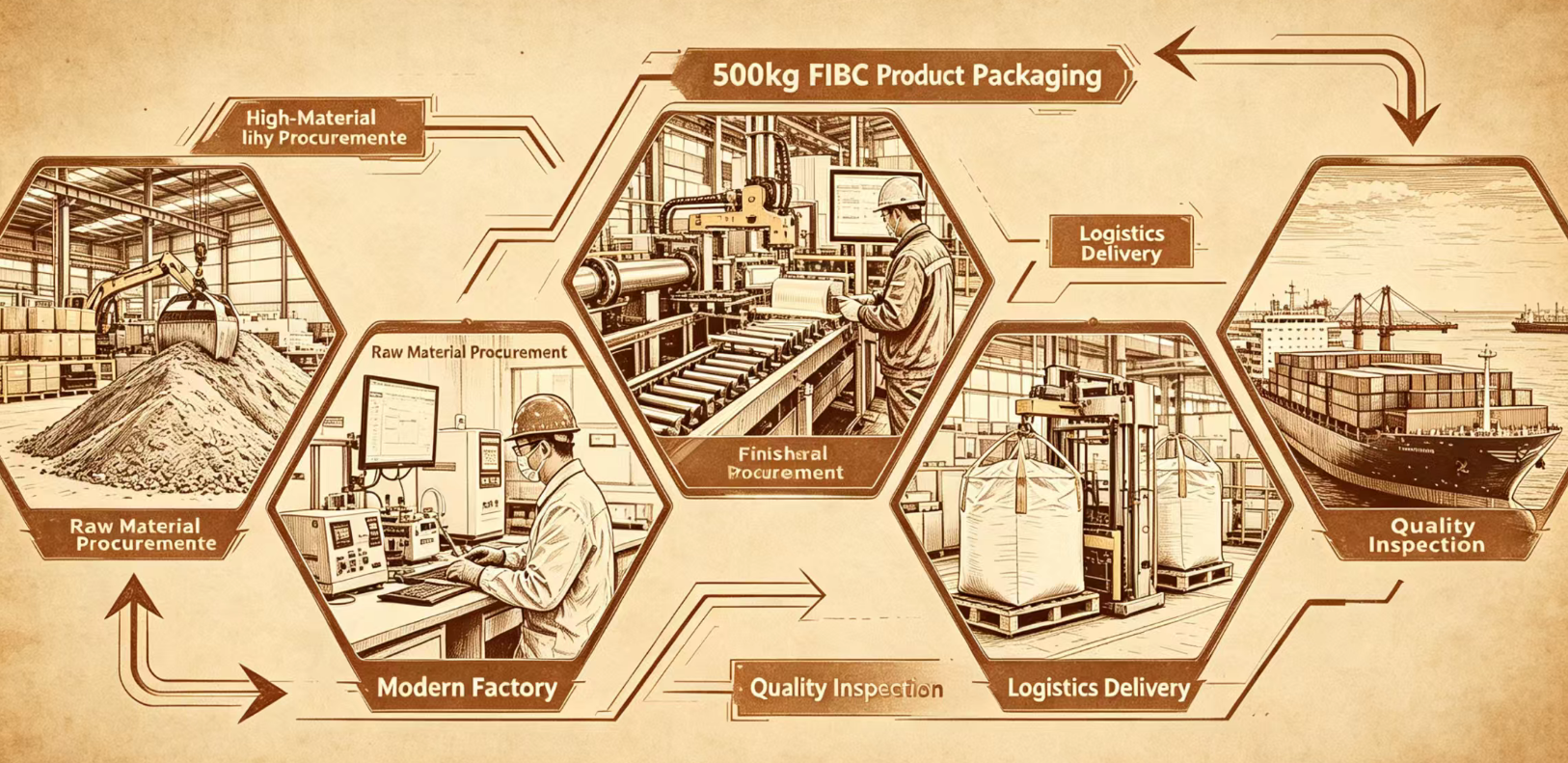
Decision Steps: From Matrix to Line Trial
- Fix the optical target first. State the whiteness index or matting level required at a defined loading. Without this, three grades will all appear acceptable.
- Classify the feed route. Continuous polymerization with ethylene glycol pre-dispersion points to SA-50's stated design basis. Batch pre-dispersion or dope preparation requires the grade-specific route to be confirmed in writing.
- Screen on four rows only. TiO₂ content, L/b, conductivity and pH. Resist adding rows that no specification document controls.
- Order at the smallest allowed quantity. A 1 metric ton minimum order quantity, with a 15–30 day typical production lead time, is enough to test one grade on one line without disturbing annual volume.
- Define acceptance before the trial runs. 100% pre-shipment testing plus third-party inspection support means the acceptance criteria can be written into the order, not negotiated afterwards.
- Convert the result into a repeatable plan. Against a stated monthly production capacity of 1,000 metric tons, agree the allocation cadence and a second-source position before the grade becomes the only approved option.
Where This Matrix Stops Working
A comparison framework earns trust by stating its edges. Three limits apply here.
- The cost advantage is reference-specific. SA-50's stated 18–25% price advantage is measured against European imports at 21,000–23,500 RMB/MT CIF Asia, including freight and long transit. Against another domestic grade, the buyer must re-derive the delta from FOB terms rather than borrow the figure.
- SA-50 is not a universal pigment. Its organic coating is designed around polyester and ethylene glycol compatibility. Carrying it into a viscose dope or a nylon melt sits outside its stated design basis — that is precisely the territory SA-60 and SA-80 occupy.
- Low conductivity and low iron do not pay back everywhere. In fine-denier, bright-white and optically demanding programs the premium is justified; in deep-shade or heavily delustred programs the effect is largely absorbed by the shade, and the buyer should weight price and supply continuity instead.
Market Context Behind the Grade Decision
Capacity consolidation in China — 5.9 million tons effective in 2024 down to 5.7 million tons in 2025 — together with continued export strength of 1.9017 million tons in 2024 implies fewer, larger and more heavily qualified supply relationships. For fiber producers, that shifts part of the grade decision from chemistry to documentation: whether a supplier can present batch data, hold a colour window and support third-party inspection on every shipment. The 7.3% CAGR forecast for anatase through 2033 suggests the fiber and matting segment will keep absorbing capacity, which raises the cost of a grade change made late.
There is a second, quieter shift. Buyers increasingly compare grades by application position rather than by TiO₂ percentage, because a higher content figure does not translate into better spinning performance if dispersion, hue or conductivity are wrong for the route. A matrix that separates the four rows by application captures that shift; a single-number comparison does not.
Future Outlook
Two developments are worth planning around. First, standards-aligned testing is likely to become a normal procurement requirement rather than a specialist request, with methods such as GB/T 37632-2019 used as the reference point in acceptance discussions. Second, batch-level data is replacing datasheet-level data as the basis for approval: rolling COA records, window widths for pH and conductivity, and documented dispersion behaviour are becoming the evidence a technical team signs off on.
For buyers running PET, viscose, acrylic and nylon side by side, the sensible preparation is to keep one matrix per fiber route and refresh the grade-specific cells each time a certificate is issued. The structure stays; only the numbers move.
FAQ
What is the smallest order a buyer can place to test SA-50, SA-60 or SA-80?
The minimum order quantity is 1 metric ton, and the typical production lead time is 15–30 days. Monthly production capacity is 1,000 metric tons, so a single-grade trial order does not require committing annual volume.
How is quality confirmed before a fiber-grade TiO₂ shipment leaves the supplier?
Quality control includes 100% pre-shipment testing, and third-party inspection is supported. That means the acceptance check can be tied to a documented pre-shipment test rather than to a sample taken after arrival.
Which delivery and payment terms apply to repeat orders?
Delivery terms are FOB or CIF. Payment terms are T/T in advance, T/T 30 days, L/C at sight, L/C 30 days, L/C 60 days or L/C 90 days. The choice affects working-capital load more than unit price on multi-year programs.
What should a buyer compare first when switching between SA-50, SA-60 and SA-80?
Compare four rows in this order: TiO₂ content, L and b values, electrical conductivity, and pH window width. For SA-50 the stated figures are TiO₂ ≥99.4%, b ≤ −0.4 with a cool blue-white tone, a ≤0.7 L difference against European reference grades, and low conductivity. For SA-60 and SA-80 the equivalent values should be taken from the current grade-specific certificate of analysis before the comparison is treated as complete.
How should annual volume be planned around a 1,000 metric ton monthly capacity?
Plan in three layers: a 1 metric ton trial per grade, a qualified-volume allocation for the approved grade, and a second-source position held in reserve. A stated monthly production capacity of 1,000 metric tons sets the ceiling for how quickly a grade switch can be absorbed without disrupting scheduled deliveries.
Reference Material
Orient International Holding Shanghai Foreign Trade Co., Ltd. publishes a company brochure covering its titanium dioxide and chemical fiber raw material operations, trading qualifications and group network. It can be downloaded here: Orient International company brochure (PDF).
Sources referenced: Grand View Research, titanium dioxide market report 2026–2033; SunSirs / Titanium Dioxide Alliance, China capacity and export statistics; GB/T 37632-2019, Man-made fiber — test method for titanium dioxide content. Grade-specific values are as stated by the supplier and should be re-confirmed on the current certificate of analysis for each shipment.
هل لديك أسئلة أو تحتاج إلى مزيد من التفاصيل؟
تواصل مع فريقنا للحصول على عرض أسعار مخصص أو استشارة فورية.
طلب عرض أسعار
املأ النموذج أدناه وسيتواصل معك فريقنا بعرض مقترح مخصص.
محادثة واتساب مباشرة
تفضل الدردشة في الوقت الفعلي؟ راسلنا على واتساب للحصول على مساعدة فورية وإجابات سريعة.
- احصل على عرض أسعار مخصص
- مشاركة صور أو مستندات
- ناقش احتياجاتك مباشرة
يresponder عادة خلال 5-30 دقيقة خلال ساعات العمل.