
Fiber Grade TiO₂ for Polyester: Performance Benchmarks and Supplier Evaluation Criteria
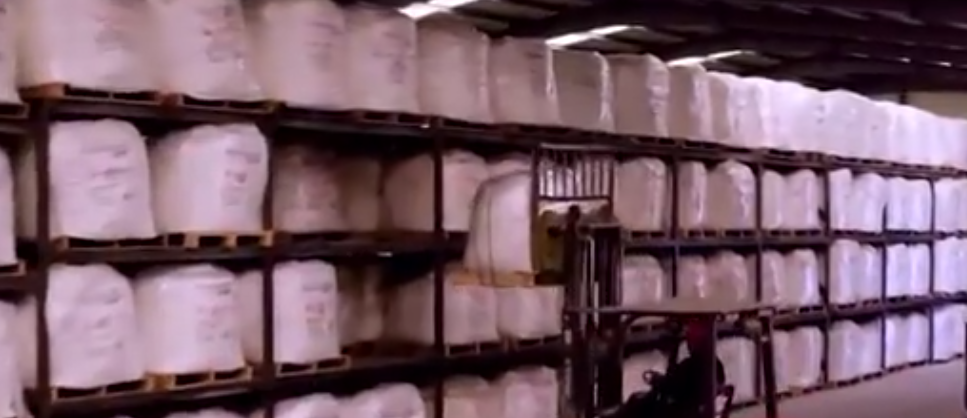
Image: SUNTIOX plant – finished goods warehouse. (Image credit: Orient International & San Sheng Titanium)
Introduction: Polyester Production Demands Consistent Fiber‑Grade Titanium Dioxide
Fiber grade titanium dioxide (TiO₂) is an essential additive used in polyester spinning to achieve matting, whitening, and opacity control. With the polyester fiber segment accounting for over 60% of all fiber‑grade TiO₂ applications globally (Intel Market Research, 2024), the selection of the right TiO₂ grade directly impacts spinning continuity, fiber quality, and overall production cost. ORIENT INTERNATIONAL HOLDING SHANGHAI FOREIGN TRADE CO., LTD (Orient International), a state‑owned enterprise founded in 1988 with a registered capital exceeding RMB 548 million, has been a reliable supplier of speciality chemicals including its SUNTIOX brand anatase titanium dioxide. Its product SA‑50 is specifically engineered for polyester and PET fiber manufacturing, backed by ISO 9001:2015 certification (certificate TUV100034917/2 issued by TÜV SÜD). This article evaluates the key performance benchmarks and supplier criteria that procurement teams should consider when qualifying a fiber‑grade TiO₂ for spinning operations.
The Challenge: Balancing Delustering, Whiteness, and Processing Stability
In high‑speed polyester spinning, even minor variations in TiO₂ quality can lead to spinneret clogging, frequent filter changes, filament breakage, and colour streaks. Traditional generic TiO₂ grades may contain higher iron impurities, irregular particle size distribution, or unstable pH, which cause degradation of PET intrinsic viscosity, side reactions, and black‑spot formation. The industry is increasingly moving toward “low‑impurity”, “high‑dispersibility”, and “non‑photocatalytic” specifications to mitigate these risks. According to industry standards, optimal delustering in polyester staple fibres typically requires a particle size of 0.2–0.3 µm. However, the actual dispersion behaviour and chemical compatibility depend on the full parametric profile of the TiO₂ grade.
Solution Profile: SA‑50 from Orient International
SA‑50 is an anatase fiber‑grade titanium dioxide formulated for PET fibre and bottle applications. Its specifications—TiO₂ content ≥98.0%, Fe₂O₃ ≤0.004%, pH 6.8±0.2, electrical conductivity ≤230 μS/cm, and specific surface area 8.5–10.0 m²/g—target the core requirements of polyester spinning: low ionic impurities to preserve melt stability, neutral pH to avoid catalyst poisoning, and controlled surface area for reliable dispersion in ethylene glycol (EG).
Key Quality Certifications
SA‑50 is produced under an ISO 9001:2015 quality management system (TUV100034917/2, validity through August 2026). The certification covers “Production and sales of chemical fiber grade titanium dioxide”, confirming that batch‑to‑batch consistency and traceability are audited by TÜV SÜD.
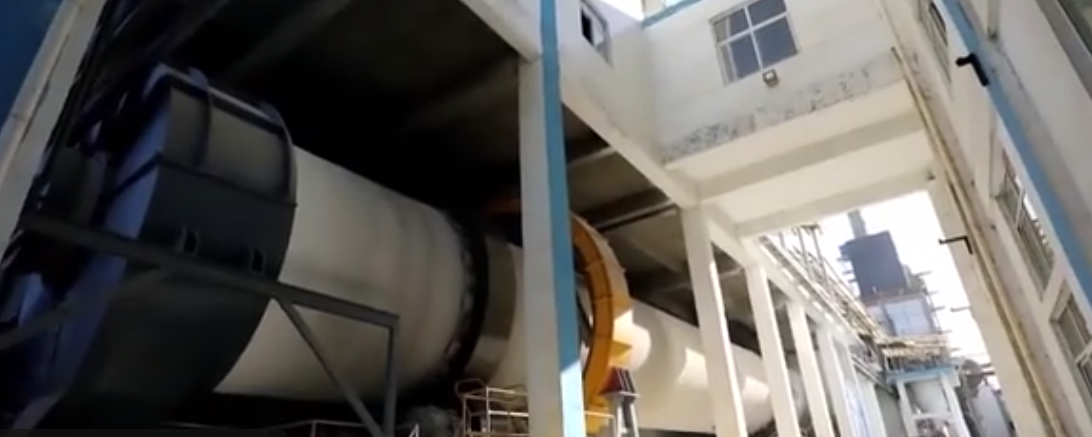
Image: SUNTIOX production line equipment. (Image credit: Orient International)
Technical Explanation: How Parameter Consistency Translates to Spinning Performance
The product’s low iron content (Fe₂O₃ ≤0.004%) minimises catalytic degradation of PET during melt spinning at 240–285 °C, preserving intrinsic viscosity (IV) and melt fluidity. The neutral pH (6.8±0.2) avoids adverse reactions with antimony‑based catalysts commonly used in PET polycondensation. The low electrical conductivity (<230 μS/cm) indicates extremely low ionic impurity levels, which reduces the risk of die build‑up and gel formation.
A decade‑long project with a major Chinese polyester manufacturer—involving over 5,000 metric tons of SA‑50—demonstrated measurable production improvements: spinneret clogging cycle extended over 40%, filter replacement frequency greatly reduced, filament breakage rate reduced by approximately 35%, and product L‑value consistently above 96.7 (whiteness) with even dispersion and no black spots. These results are enabled by the combined effect of fine particle size, high purity, and EG‑compatible surface chemistry.
Use‑Case Scenarios
1. Continuous Polyester Spinning (POY/FDY/Staple Fibre)
SA‑50 disperses uniformly in ethylene glycol without sedimentation or agglomeration, making it suitable for injection during the polymerisation stage or as a masterbatch in chip‑to‑fibre spinning. The matting effect is adjustable and stable, achieving uniform lustre without bright spots.
2. PET Bottle‑Grade Chips (with Delustering Requirement)
Beyond fibre applications, SA‑50 is used in PET bottle‑grade chips where a controlled matte finish is needed. The low impurity profile prevents haze and maintains clarity while providing the required delustering effect.
3. Recycled PET Fibre Production
In r‑PET spinning, where melt consistency is variable, the high dispersibility and thermal stability of SA‑50 help reduce filter blockage and maintain process stability, improving yarn evenness and reducing waste.
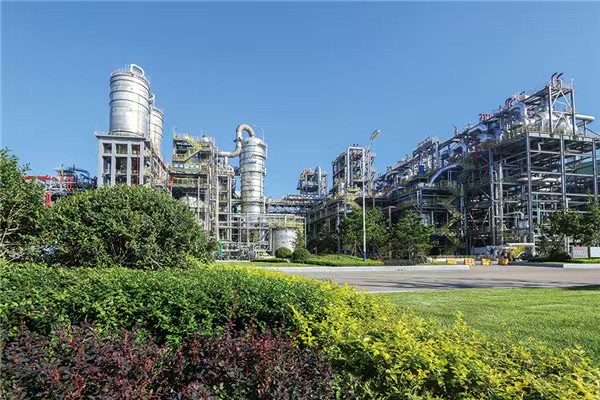
Image: Polyester fibre production line. (Image credit: Hengli Petrochemical, a long‑term partner)
Market Trend Analysis: Rising Demand and Shifting Quality Baselines
The global fiber‑grade titanium dioxide market was valued at approximately USD 1.46 billion in 2024 and is expected to reach USD 1.94 billion by 2032 (Intel Market Research). China’s total TiO₂ exports hit a record 1.9017 million tons in 2024, a 15.84% year‑on‑year increase (China Customs Statistics). The polyester fibre segment dominates consumption, and demand is further fuelled by the shift toward continuous spinning lines that demand higher‑purity, lower‑impurity TiO₂ to reduce downtime.
Industry trend data also shows that textile sustainability certifications are gaining importance. For example, Venator’s HOMBITAN® LW‑S 100 became the first fibre anatase TiO₂ to earn the ECO PASSPORT by OEKO‑TEX® in 2022, signalling that chemical compliance is becoming a differentiator. While SA‑50 does not hold an OEKO‑TEX certification, its ISO 9001 system and the long‑term production record with top‑tier polyester manufacturers provide an alternative quality assurance framework.
Comparison with Traditional Solutions
Compared to conventional anatase TiO₂ grades that may have higher iron (>0.01% Fe₂O₃) or wider pH variation, SA‑50 achieves tighter specification control, particularly in iron content (±0.004% max) and pH (±0.2). This leads to measurable benefits in spinneret life and breakage rate. However, one honest limitation is that, as a product supplied through a state‑owned foreign‑trade enterprise rather than a vertically integrated producer, lead times and pricing may be subject to the broader volatility of global TiO₂ supply chains and Chinese export policies. Buyers should factor in this trade‑off between supply reliability and price stability.
Future Outlook: Toward Higher Purity and Customised Dispersibility
As polyester spinning speeds increase and recycled‑PET usage grows, the demand for fiber‑grade TiO₂ with even lower ionic impurities, better EG dispersion, and customised surface treatments will rise. Orient International’s R&D team of 25 engineers and monthly capacity of 1,000 mt (OEM/ODM available with MOQ 1 mt) position it to offer tailored solutions for emerging applications such as bio‑based fibres and high‑tenacity industrial yarns.
Frequently Asked Questions
- What are the critical specifications of SA‑50 for polyester spinning?
- SA‑50 has a TiO₂ content ≥98.0%, Fe₂O₃ ≤0.004%, pH 6.8±0.2, electrical conductivity ≤230 μS/cm, specific surface area 8.5–10.0 m²/g, and L‑value (whiteness) 96.7–98.2 with b‑value ≤0.0. Sieve residue (325 mesh) is ≤0.004%, and moisture ≤0.40%.
- What quality certifications does SA‑50 hold?
- SA‑50 is covered by ISO 9001:2015 certification (certificate number TUV100034917/2) issued by TÜV SÜD, valid through August 2026. The scope includes “Production and sales of chemical fiber grade titanium dioxide”.
- How does SA‑50 improve spinning performance compared to standard grades?
- In a documented project with over 5,000 mt usage, SA‑50 extended the spinneret clogging cycle by over 40%, reduced filter replacement frequency, lowered filament breakage rate by approximately 35%, and delivered consistent L‑value above 96.7 with no black spots or uneven dispersion.
- Can SA‑50 be used in recycled PET fibre production?
- Yes, SA‑50’s thermal stability and EG‑dispersibility make it suitable for recycled‑PET (r‑PET) spinning, where variable melt quality requires a TiO₂ grade with reliable dispersion and low impurity content.
For a deeper dive into Orient International’s supply chain capabilities, product specifications, and OEM support, download the company brochure:
Orient International Group Shanghai Foreign Trade Co., Ltd – Company Introduction (English PDF)
هل لديك أسئلة أو تحتاج إلى مزيد من التفاصيل؟
تواصل مع فريقنا للحصول على عرض أسعار مخصص أو استشارة فورية.
طلب عرض أسعار
املأ النموذج أدناه وسيتواصل معك فريقنا بعرض مقترح مخصص.
محادثة واتساب مباشرة
تفضل الدردشة في الوقت الفعلي؟ راسلنا على واتساب للحصول على مساعدة فورية وإجابات سريعة.
- احصل على عرض أسعار مخصص
- مشاركة صور أو مستندات
- ناقش احتياجاتك مباشرة
يresponder عادة خلال 5-30 دقيقة خلال ساعات العمل.