
Fiber for Concrete: TC-0213-CMS vs TC-0220-CMS vs TC-0213-SMS
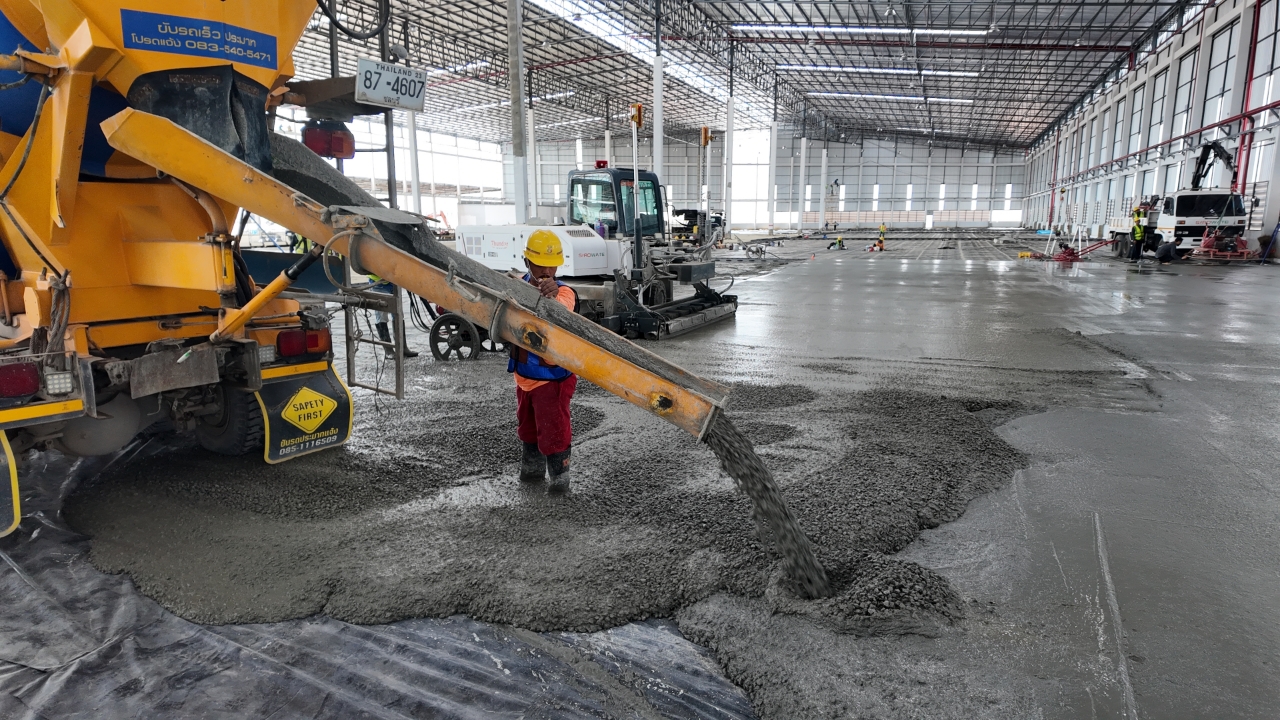
Steel fiber reinforcement for concrete. Micro steel fiber for UHPC is specified at model level — diameter class, length, tensile band and coating — rather than as a generic category.
Independent Buyer Comparison · UHPC & RPC Micro Steel Fiber
Fiber for Concrete: TC-0213-CMS vs TC-0220-CMS vs TC-0213-SMS
UHPC buyers rarely lose money because they specified “steel fiber”. They lose money because they specified the wrong diameter, length or coating for a specific element. This buyer comparison places three micro steel fiber models — TC-0213-CMS, TC-0220-CMS and TC-0213-SMS — side by side on the variables that actually govern UHPC and RPC performance: a 0.175–0.3 mm diameter range, a 6–25 mm length range, a 2200–2850 MPa tensile band, and brass versus stainless coating options.
The three models are part of the micro steel fiber range supplied by Tianjin TingCo Tech Co., Ltd., a Tianjin, China–based manufacturer of steel fibers, brass-coated steel fibers, stainless steel fibers and polypropylene fibers for concrete reinforcement. The company was founded in 2014 and exports to the EU, Africa, South East Asia and the Middle East. Its micro fiber models are stated by the manufacturer for use in ultra-high performance concrete (UHPC) and reactive powder concrete (RPC) — the segment where concrete compressive strength is designed up to 220 MPa and where the reinforcement task shifts from crack control at slab scale to crack bridging at micro scale.
This article is written for buyers moving from evaluation into execution — the point at which a shortlist has to become a purchase order with a defined tolerance, a defined inspection routine and a defined mixing procedure. It does not rank the three models. Ranking micro fiber by coating type or tensile band would be misleading, because the correct choice depends on element geometry, cover, exposure and the project mix design.
Why UHPC pushes fiber selection down to model level
In UHPC and RPC, fiber performance is governed less by the fiber category than by how many individual fibers cross a given crack plane — and that number is set by diameter and length, not by tensile strength alone. When the matrix is designed at compressive strengths up to 220 MPa, the material is dense and the crack widths that develop in service are small. Crack bridging then depends on fiber spacing and on the anchorage each fiber can develop over a short embedded length.
The geometry works in a predictable direction. For a fixed dosage by mass, reducing fiber diameter increases the number of individual fibers and therefore the number of potential crack-bridging points through a section. Increasing fiber length improves anchorage and pull-out resistance, but it also reduces the number of fibers per unit mass and raises the risk of fiber balling during mixing. That trade-off is why the 0.175–0.3 mm diameter window and the 6–25 mm length window exist: they are the practical band in which UHPC micro fiber balances bridging density against dispersion and workability.
A further distinction is often missed at the procurement desk. A micro fiber at roughly 0.2 mm diameter and a macro hooked-end fiber at roughly 0.75 mm diameter are not interchangeable, even when both are dosed at the same kilograms per cubic metre. The macro hooked-end family is designed for slab-scale crack control in industrial flooring and tunnel segments; the micro family is designed for thin, high-strength UHPC and RPC elements. Treating “micro steel fiber” as one category is the single most common source of specification error in this segment.
The three models at a glance
The table below reflects the manufacturer’s stated series specifications for the three models. Diameter, length and tensile strength are given as series ranges, because the models share the same stated UHPC and RPC positioning and differ primarily by length class and coating family.
| Model | Coating family | Diameter range | Length range | Tensile strength | Stated intended use |
|---|---|---|---|---|---|
| TC-0213-CMS | Brass-coated micro steel (CMS) | 0.175–0.3 mm | 6–25 mm | 2200–2850 MPa | UHPC and RPC |
| TC-0220-CMS | Brass-coated micro steel (CMS) | 0.175–0.3 mm | 6–25 mm | 2200–2850 MPa | UHPC and RPC |
| TC-0213-SMS | Stainless micro steel (SMS) | 0.175–0.3 mm | 6–25 mm | 2200–2850 MPa | UHPC and RPC |
The model codes follow a naming convention widely used in micro steel fiber catalogues: the numeric block references the nominal diameter class and the length in millimetres, while the letter suffix identifies the coating family — CMS for brass-coated micro steel and SMS for stainless micro steel. In this reading, the three models describe two length references within a 0.2 mm class diameter, offered in a brass-coated version and a stainless version.
Buyer note: treat the model code as a naming convention, not as a guaranteed measurement. The nominal diameter, nominal length and the permitted tolerance must be confirmed in writing on the datasheet before the order is released. Published purchasing guidance for this category recommends requiring a complete datasheet that states the ±10% tolerance, and validating it against a physical sample.
Reading the 0.175–0.3 mm, 6–25 mm and 2200–2850 MPa window
Diameter: what 0.175–0.3 mm changes in practice
The lower half of this range exists for a reason. As diameter falls, the number of fibers delivered per kilogram rises sharply, which increases bridging density at a fixed dosage and allows reinforcement of thin sections without exceeding the element’s cover or layer thickness. The trade-off is handling sensitivity: finer wire has more surface area per unit mass, so dispersion control, feed rate and mixing time become more demanding, and the tolerance window becomes commercially important because a ±10% band around 0.175 mm is narrow in absolute terms.
Length: 6–25 mm against element geometry
Length must suit the smallest dimension of the element and the placement method. Short lengths disperse easily and suit thin overlays and precast skins; longer lengths develop more anchorage and pull-out resistance but reduce fiber count per kilogram and increase the risk of balling if fed too quickly. A series that spans 6–25 mm is effectively offering a short class and a long class inside one UHPC/RPC-positioned family, which lets a buyer match length to element thickness without switching product families.
Tensile strength: the 2200–2850 MPa band
All three models sit inside a 2200–2850 MPa tensile band. In context, that places the series well above the 1,200 MPa class commonly used for macro hooked-end fibers in slab-scale flooring work. The practical meaning is that fiber rupture is less likely to govern behavior when the matrix is stiff and crack widths are small — the fiber can carry more stress before it breaks, so the design conversation moves toward bond, anchorage and dispersion rather than toward wire strength.
Third-party context supports the position of this band. A published industry benchmark for brass-coated micro steel fiber for UHPC lists tensile strength above 2,500 MPa with diameters ranging from 0.2–0.3 mm, which indicates that the 2200–2850 MPa / 0.175–0.3 mm combination is a normal specification position for the UHPC segment rather than an outlier claim.
Coating: brass-coated CMS versus stainless SMS
The coating decision is an exposure decision. Brass-coated micro steel fiber is the mainstream type used in UHPC, where the coating supports the fiber-to-matrix interface over a short embedded length and helps the fiber anchor before it pulls out. Where the element is thin, cover is limited, and the surface will remain visible or be exposed to chloride-bearing environments, the stainless variant exists to reduce the risk of surface staining and fiber-surface corrosion that a carbon steel wire would present.
The limit matters as much as the benefit: a brass coating improves the interface inside the matrix, but it does not turn a carbon steel fiber into a corrosion-free reinforcement. Where a design case genuinely requires non-corroding reinforcement, the honest options are a stainless micro fiber such as TC-0213-SMS or a synthetic fiber solution — and stainless typically carries a higher material cost than the brass-coated equivalents.
UHPC, RPC and bridge deck fit
Bridge deck work is one of the application contexts in which UHPC and RPC reinforcement is specified, and it is a demanding one. The operating conditions recorded for this class of application include humid environments, dynamic vehicle loading, vibration load and alternating temperature, with bridge deck listed alongside warehouse flooring, highway pavement, subway tunnels, mine roadways and underground parking structures. The reinforcement function in these conditions is crack control, and the associated construction argument is a shorter construction sequence and a lower total cost.
Two mechanical reasons explain why micro fiber fits UHPC deck and thin-element work better than a macro fiber. First, deck overlays, joints and thin precast elements are shallow relative to the fiber length used in slab construction, so a 6–25 mm micro fiber distributes through the layer while a 35–60 mm macro fiber does not. Second, at matrix strengths designed up to 220 MPa, the fiber-to-matrix bond becomes the governing variable; a small-diameter fiber with a brass-coated interface develops that bond over a short embedment, which is exactly the geometry a thin layer provides.
Where deck exposure is aggressive and the finished surface is visible, the stainless variant becomes the relevant conversation rather than a decorative upgrade. Where the deck element is internal, protected, or part of a system that will be covered, the brass-coated CMS variants remain the standard specification route.
Application and use cases: which fiber family belongs where
The practical failures in fiber procurement come from crossing families. The three models compared here sit in the micro UHPC/RPC family. The same manufacturer’s wider range covers the macro and synthetic families used elsewhere, and each has a different job.
| Family | Typical applications | Decision logic |
|---|---|---|
| Micro steel fiber for UHPC and RPC — TC-0213-CMS, TC-0220-CMS, TC-0213-SMS | UHPC and RPC elements, thin sections, bridge deck and thin-layer work, precast high-strength components | Choose by element thickness, exposure and required crack-bridging density |
| Hooked-end macro steel fiber, e.g. 80/60 in the 1,200 MPa class | Industrial flooring, logistics park flooring, jointless slabs, tunnel segments, shotcrete | Choose by slab thickness, load class and required flexural toughness |
| Synthetic PP fiber, including macro synthetic fiber | Flooring crack control where a corrosion-free reinforcement is preferred | Choose for plastic and temperature crack control, not for high-strength structural UHPC reinforcement |
A documented reference project shows how family selection plays out on a real floor. A wholesaler with technical support capability in Thailand used 2,000 tons of fiber over one year on heavy-duty industrial warehouse flooring, logistics park flooring and jointless flooring, with the design using hooked-end 80/60 steel fiber at a 1,200 MPa class and a dosage of 20 kg/m³. The technical work also involved rearranging and optimizing the pile layout to better suit the slab-on-pile project. That project used the macro hooked-end family, not the UHPC micro models — which is precisely the point: the correct model depends on the element and the design method, not on the fiber brand.
Buyer evaluation checklist before execution
- Match the model to the element. Confirm the smallest element dimension, layer thickness and expected crack width before deciding between a short and a long length class.
- Fix the tolerance in writing. Require a complete datasheet that states nominal diameter, nominal length and the tolerance — purchasing guidance for this category recommends a ±10% statement rather than a range alone.
- Confirm the coating family on paper. Brass-coated CMS and stainless SMS variants should be identified by model code on the datasheet, the packing label and the batch documents.
- Validate with a sample. Request free samples and send them to an independent laboratory; approve a pre-production sample before mass production begins.
- Test in your own mix. Fiber performance is a property of fiber plus matrix. Verify dispersion, workability and residual flexural strength using EN 14651, ASTM C1609 or ASTM C1550 methods rather than datasheet comparison.
- Require batch documentation. Ask for a Certificate of Analysis and a Mill Certificate for every batch, and arrange pre-shipment inspection with weighing and counting verification.
- Check the certification scope line by line. Certification is issued against a defined product list, not against an entire catalogue. The scope boundary is covered in the section below.
- Align commercial terms. Confirm MOQ, Incoterm, lead time and payment structure together, because a tight tolerance requirement and a short lead time are easier to satisfy on a scheduled order than on a rush one.
Limits and trade-offs: where this comparison stops
An independent comparison has to state its own boundaries. Several apply here.
- Certification scope is defined, not open-ended. The manufacturer holds CE certification under EN 14889-1:2006, certificate number 1301 – CPR – 2456, issued by TSUS, valid from 2025-05-13 to 2030-05-12, covering steel fibres for concrete (Group I) for the reinforcement of concrete, mortars and cementitious mixes. That certificate is listed against the products TC-07560-HNG, TC-07560-HHG, TC-05535-HNG and TC-07535-HNL. Buyers of TC-0213-CMS, TC-0220-CMS or TC-0213-SMS should therefore request model-specific documentation instead of assuming the certificate already covers the micro series.
- No cross-model performance ranking is possible from datasheets. Diameter, length and tensile band are specification inputs, not performance results. Flexural toughness and residual strength must be measured in the project’s own mix using EN 14651, ASTM C1609 or ASTM C1550.
- Stainless carries a cost premium. The stainless SMS variant addresses exposure and surface appearance; where the design case does not require it, the brass-coated CMS variants are the lower-cost route.
- Micro fiber is not a substitute for structural design. These models reinforce a UHPC or RPC matrix. They do not replace the structural reinforcement design of the element, and treating them as a bar-replacement shortcut is a design error rather than a saving.
- Dispersion is a project risk, not a product label. Fine-diameter fiber demands controlled feed rate and extended mixing. Poor mixing practice can produce balling that no datasheet parameter will prevent.
Manufacturer and supply-chain facts buyers can verify
Tianjin TingCo Tech Co., Ltd. operates as the sales and R&D centre, with Hebei Tingco New Material Co., Ltd. as the manufacturing base, covering research, production, quality control, technical support and export service within one structure. The company was founded in 2014, reports a 6,000 m² factory, approximately 50 employees, an annual output of 24,000 tons, a five-engineer R&D team, and a monthly production capacity of 2,000 tons. Its product range covers steel fiber, brass coated steel fiber, stainless steel fiber and PP fiber; the macro steel fiber range is stated at 0.55–0.90 mm diameter, 35–60 mm length and 1,200–2,500 MPa tensile strength, with products CE certified in accordance with EN 14889-1, compliant with ASTM A820 and ISO 13270, and backed by ISO 9001 factory certification.
Two capability points matter to UHPC and RPC buyers specifically. First, the company operates its own steel fiber reinforced concrete testing laboratory, where product lines undergo beam bending, compression and toughness tests, and states that it has studied TR34 and EFNARC design codes and works with professional design teams on steel fiber floor design and tunnel segment design services. Second, it offers OEM and ODM production for private-label concrete fiber orders, including custom steel fiber designs and logo branding. Documented after-sales support covers remote technical support, quality problem compensation and construction consulting.

CE certificate 1301 – CPR – 2456, issued by TSUS under EN 14889-1:2006, valid to 2030-05-12. The listed product scope covers specific hooked-end models; buyers of the micro UHPC series should request model-specific documentation.
Procurement and execution terms
For buyers ready to execute, the published terms for this supplier are straightforward and should be matched against the project schedule before the enquiry is issued. The minimum order quantity is 24 tons, equivalent to one 20-foot general purpose container. Delivery terms are FOB or CIF. Acceptance is built on in-line inspection and pre-shipment inspection, and the standard payment structure is 30% prepayment with 70% balance against a copy of the bill of lading. Lead time is stated at 10–15 days. Export destinations cover the EU, South East Asia and the Middle East, alongside the company’s wider markets in Africa.
A practical execution sequence for a UHPC micro fiber order is: approve the model and tolerance in writing, request and test samples, approve a pre-production sample, place the order against a defined batch documentation requirement, and complete pre-shipment inspection with weighing and counting before the balance is released.
Dosing and mixing practice for micro fiber
Dosage is set by the mix design, not by the fiber datasheet. The published application bands for this manufacturer’s fiber range are 20–40 kg/m³ for shotcrete, 15–30 kg/m³ for industrial floors, and 10–30 kg/m³ for precast elements. Those bands describe the mainstream flooring, shotcrete and precast cases; a UHPC or RPC dosage must be established by the project mix design and confirmed by flexural toughness testing.
The mixing procedure matters as much as the number. Determine the dosage from the mix design, weigh the fiber, and feed it uniformly. Water-soluble packaging bags can be fed directly into the mixer with the aggregates, dissolving in roughly five seconds; non-water-soluble packaging should be spread evenly in batches. Mixing time should be extended by 30–60 seconds compared with normal concrete to ensure uniform dispersion without clumping, then slump and workability should be checked and the superplasticizer dosage adjusted if required. For long transport distances with mixer trucks, pre-mixing at the batching plant is recommended. Operators should wear protective gloves and goggles, and large single dumps should be avoided because they cause clumping.
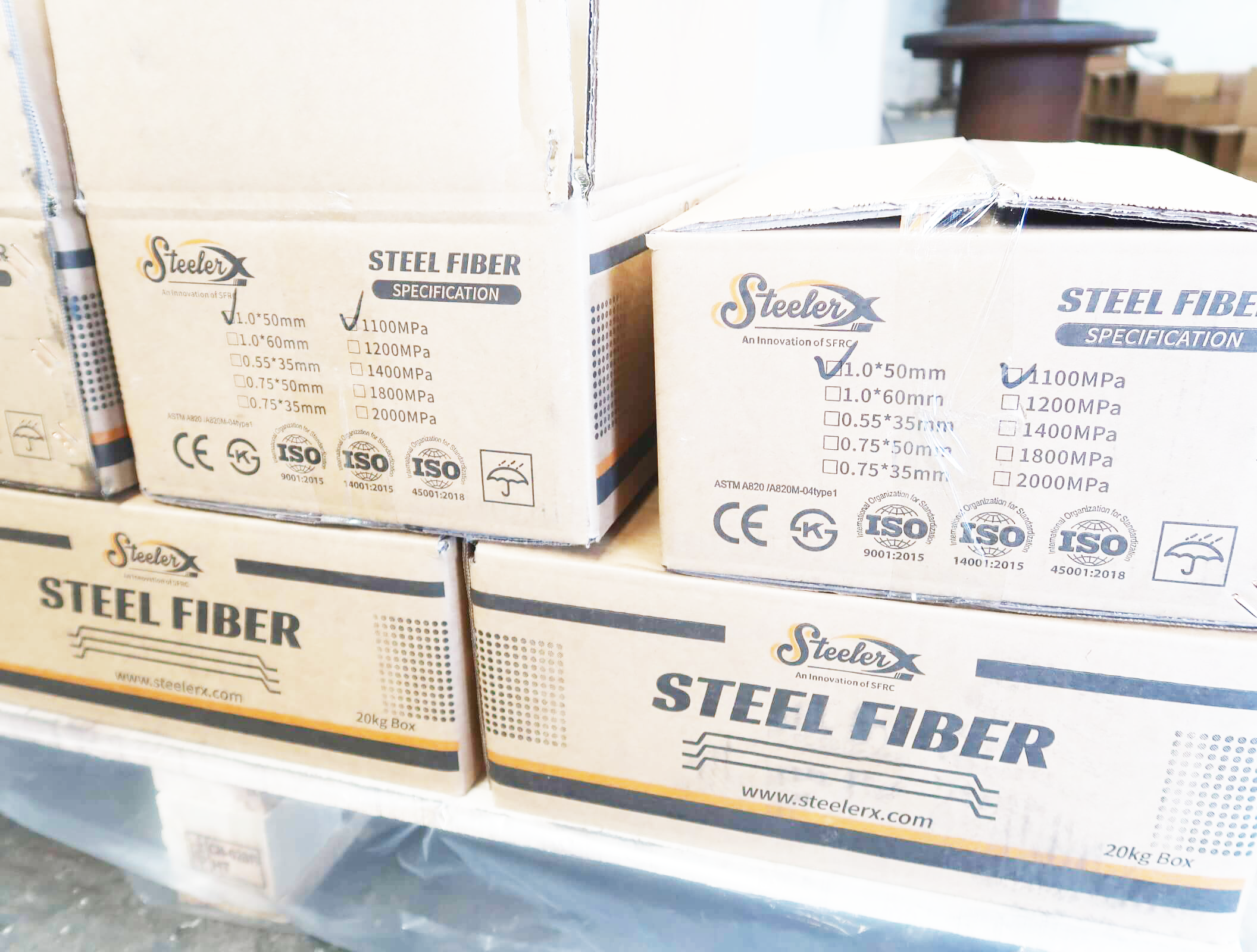
Private-label packaging is part of the OEM and ODM capability offered for concrete fiber orders, including custom steel fiber designs and logo branding.
Market trend analysis
The commercial backdrop explains why model-level comparison is becoming normal rather than specialist. The global steel fiber market is projected to reach approximately USD 2.87 billion by 2026, according to Fortune Business Insights, while a separate published estimate from Market Research Future reports figures close to USD 4.84 billion for 2025 — a gap that reflects methodology differences, including whether synthetic fibers and rebar-replacement value are counted inside the steel fiber category. Published market sizing in this segment should therefore be read with the methodology in view.
Within that market, industrial floors accounted for a 37.28% share of steel fiber application in 2026, and hooked-end steel fibers held a leading type share of 58.89%. In other words, the steel fiber market is still dominated by macro slab-scale reinforcement. The micro UHPC/RPC segment compared in this article sits inside that larger market, and its growth is driven by thin high-strength elements and bridge-related work rather than by flooring volume. On the supply side, China was the largest exporter of steel fiber under HS code 7326 in the specialized trade dataset reviewed, accounting for 51.85% of identified imports, which keeps documentation and batch traceability at the centre of buyer risk management. On the synthetic side, the global polypropylene fiber market for construction is expected to grow at a CAGR of 6.4% from 2026 to 2034, indicating that corrosion-free synthetic reinforcement will keep expanding alongside steel — as a complement for crack control, not as a replacement for high-strength micro steel fiber in UHPC.
The standards frame around the segment is stable: ASTM A820/A820M-16 specifies requirements for steel fibers in fiber-reinforced concrete internationally, and EN 14889-1:2006 defines terminology, specifications and conformity for steel fibers used in concrete within the European Union. For a buyer, the practical consequence is that conformity marking, batch documentation and project-specific testing remain the three pillars of acceptance.
Future outlook
Three developments are likely to shape how these three models are specified over the next procurement cycles. First, as UHPC moves further into bridge deck rehabilitation, joint repair and thin precast elements, the specification conversation will shift from “which fiber” to “which model at which tolerance” — the level at which diameter, length and coating are decided. Second, coating selection is becoming an exposure-driven decision rather than a price-driven default, which will keep both the brass-coated CMS variants and the stainless SMS variant relevant in the same tender. Third, documentation requirements will keep hardening: batch-level analysis, pre-shipment inspection with weighing and counting, and clear statements of which models sit inside a certificate’s listed scope will matter as much as the fiber’s tensile band.
For buyers, the practical conclusion is modest but useful. Compare TC-0213-CMS, TC-0220-CMS and TC-0213-SMS on element geometry, exposure and mix-design fit — then verify the delivered fiber against a written tolerance and a project-specific toughness test. That sequence produces a defensible decision; a datasheet comparison alone does not.
FAQ
What is the practical difference between TC-0213-CMS, TC-0220-CMS and TC-0213-SMS?
All three are micro steel fiber models stated for UHPC and RPC, sharing a 0.175–0.3 mm diameter range, a 6–25 mm length range and a 2200–2850 MPa tensile strength band. The distinguishing variables are length class and coating family: the CMS suffix denotes brass-coated micro steel, the SMS suffix denotes stainless micro steel. In the model code convention used for this range, the numeric block references nominal diameter class and length in millimetres. Nominal values and tolerances should be confirmed on the datasheet.
How should a buyer choose between a brass-coated and a stainless steel micro fiber for UHPC?
Brass-coated micro steel fiber is the mainstream type for UHPC, where the coating supports the fiber-to-matrix interface over a short embedded length. Stainless micro steel is relevant where the element is thin, cover is limited, or the surface is exposed to conditions in which fiber-surface corrosion or surface staining would be unacceptable. A brass coating improves the interface but does not make a carbon steel fiber corrosion-free; where a non-corroding reinforcement is genuinely required, the options are a stainless micro fiber or a synthetic fiber solution.
Which micro steel fiber length suits thin UHPC elements and bridge deck work?
The series spans 6–25 mm. Shorter lengths disperse easily and suit thin overlays, joints and thin precast skins, where a 35–60 mm macro fiber would not distribute through the layer. Longer lengths within the series develop more anchorage and pull-out resistance but reduce fiber count per kilogram and increase balling risk. The specific length should follow the smallest element dimension, the placement method and the project mix design, and should be validated with EN 14651, ASTM C1609 or ASTM C1550 testing.
How can a buyer verify that delivered micro steel fiber matches the stated diameter, length and tensile strength?
Require a complete datasheet that states nominal diameter, nominal length and the permitted tolerance — purchasing guidance for this category recommends a ±10% tolerance statement rather than a bare range. Request free samples and send them to an independent laboratory for testing, approve a pre-production sample before mass production, ask for a Certificate of Analysis and a Mill Certificate for every batch, and arrange pre-shipment inspection with weighing and counting verification.
How is micro steel fiber dosed and mixed into UHPC or RPC?
Dosage is determined by the mix design. Published application bands for this manufacturer’s fiber range are 20–40 kg/m³ for shotcrete, 15–30 kg/m³ for industrial floors and 10–30 kg/m³ for precast elements; UHPC and RPC dosages should be set by the project mix design and confirmed by testing. Feed the fiber uniformly, using water-soluble packaging bags that can be added with the aggregates and dissolve in about five seconds, or spreading non-water-soluble packaging evenly in batches. Extend mixing time by 30–60 seconds versus normal concrete, check slump and workability, and adjust superplasticizer if needed. Operators should wear gloves and goggles, and large single dumps should be avoided.
What are the purchasing terms for these models — MOQ, lead time, inspection and payment?
The published terms state a MOQ of 24 tons, equivalent to one 20-foot general purpose container, delivery on FOB or CIF terms, acceptance based on in-line inspection and pre-shipment inspection, and payment of 30% prepayment with 70% balance against a copy of the bill of lading. Lead time is stated at 10–15 days, with export destinations covering the EU, South East Asia and the Middle East.
Does the manufacturer’s CE certificate cover TC-0213-CMS, TC-0220-CMS and TC-0213-SMS?
The CE certificate held is number 1301 – CPR – 2456, issued by TSUS, valid from 2025-05-13 to 2030-05-12, under EN 14889-1:2006, with scope covering steel fibres for concrete (Group I) for the reinforcement of concrete, mortars and cementitious mixes. It is listed against the products TC-07560-HNG, TC-07560-HHG, TC-05535-HNG and TC-07535-HNL. Because certification is issued against a defined product list, buyers of the micro UHPC/RPC models should request model-specific documentation rather than assume the listed scope extends to them.
Reference: third-party market, standard and product-benchmark figures cited above are drawn from published sources including Fortune Business Insights, ASTM International, the European Committee for Standardization (CEN), a published UHPC micro steel fiber benchmark, and a customs trade data aggregator. Verification of delivered material remains the buyer’s own responsibility through batch documents and project-specific testing.
For readers who need the full manufacturing and project background behind the fiber range discussed here, the company brochure is publicly available: TINGCO company and project introduction (PDF).
Tianjin TingCo Tech Co., Ltd. | Hebei Tingco New Material Co., Ltd. | Web: www.tcfibers.com