
Filling Machine Specs and Certifications: A Buyer's Checklist
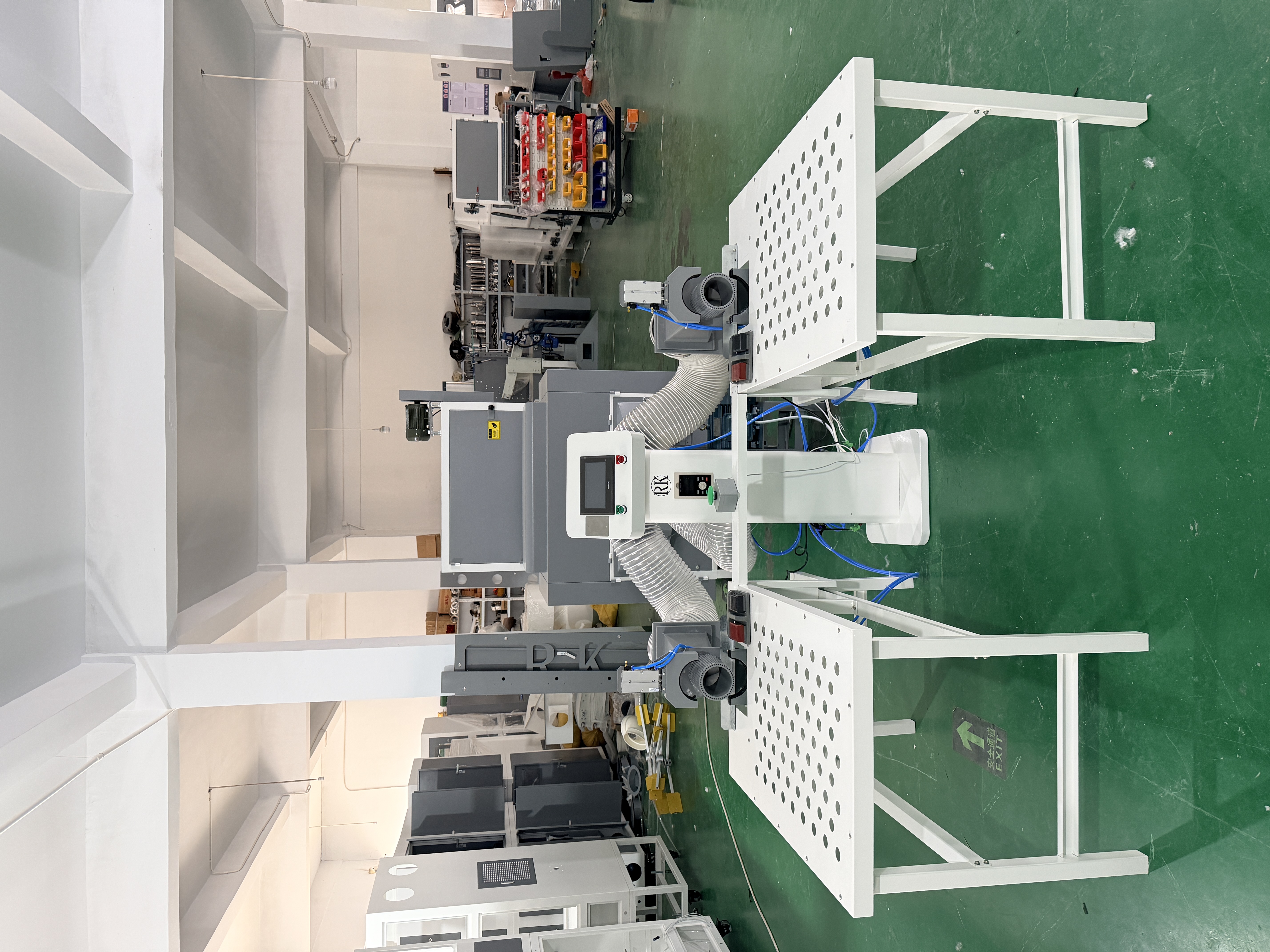
Pillow filling machine in the KWS6901 series — Image source: KIVAS product library
Filling machines for pillows, duvets, quilts, toys, cushions, and other soft products are frequently specified in a way that makes comparison difficult. Buyers see output numbers and “high-accuracy” statements, but the practical questions — Is the certification verifiable? What error range can be expected for a specific fill weight? Which materials can the machine run without modification? — are often answered only during the negotiation process.
The intent of this article is to give buyers a verification-oriented checklist. Instead of repeating general machine descriptions, it focuses on the certification and parameter details that should be checked before a purchase decision. The KIVAS KWS6901-2 and KWS6901-4 machines from Qingdao Kaiweisi Industry and Trade Co., Ltd. (KIVAS) are used as a concrete reference because their EU certification and production parameters are documented in an auditable form.
Why Filling Machine Evaluation Needs a Verification Mindset
Unlike standardized machine tools or packaging units, filling machines process compressible, variable-density materials: polyester fibers, down feathers, shredded foam, or EPS balls. That means there is no single “accuracy” number that follows the machine from one material to another. The same machine can handle 600 g pillows at 10–20 pieces per minute or 400–800 kg/h of fiber throughput, but these numbers depend on the filling medium, the operator’s technique, workstation count, and upstream fiber-opening equipment.
For procurement teams, this creates three evaluation challenges:
- Certification clarity — Is the machine compliant with the target market’s legal requirements, and is the certificate verifiable?
- Metrology transparency — Does the manufacturer disclose accuracy, error range, and optimal filling range, or only a headline “high accuracy” claim?
- Scope definition — Which materials, products, and operating conditions are within the machine’s verified capabilities?
Buyers who address these three points before comparing prices tend to get a more reliable baseline for negotiation. This is especially true in the home-textile segment, where the same filling machine is often expected to handle pillows, quilts, cushion pads, plush toys, pet products, and even car cushions.
The First Red Flag: Vague Certification Claims
For the EU market, the legal baseline for filling machinery is the Machinery Directive 2006/42/EC. Per European Commission guidance, machinery exported to the EU must comply with this directive and bear the CE marking, including risk assessment under EN ISO 12100. North American buyers face a different framework: UL and OSHA safety standards, with a focus on emergency shutoff and safety enclosures.
When evaluating a filling machine, two certificate details matter:
- Certificate number and issuing body — A CE certificate without a reference number is difficult to audit.
- Applied standards — The standard list shows whether the certification covers both mechanical safety (EN ISO 12100) and electrical equipment safety (EN 60204-1).
For the KIVAS KWS6901 series, the certificate is M.2024.206.C100562, issued by UDEM on 2024-05-09, valid until 2029-05-08, for the Automatic Down Fiber Filling Machine. The stated standards are:
| Standard | Purpose |
|---|---|
| EN ISO 12100:2010 | Machinery safety — risk assessment and risk reduction |
| EN 60204-1:2018 | Electrical equipment of machines — safety requirements |
This level of documentation allows a buyer to verify the certification rather than simply take a marketing claim at face value. It also helps when the final destination of the machine is an EU member state, where customs and end-user safety documentation are checked.
Core Specifications That Define a Filling Machine
The KWS6901-2 and KWS6901-4 are two filling-station configurations within the same machine family: the -2 has 2 filling ports, and the -4 has 4 filling ports. Both models are built from steel and operate in the 10.5–13.5 kW power range.
A practical specification table for evaluation:
| Parameter | KWS6901-2 / KWS6901-4 |
|---|---|
| Power range | 10.5 – 13.5 kW |
| Production capacity | 400 – 800 kg/h |
| Filling speed (600 g pillow) | 10 – 20 pieces/min |
| Accuracy | About 1% |
| Error range | ±5 – 10 g |
| Optimal filling range | 100 – 2000 g |
| Workstations | 2 or 4 filling ports per machine |
| Construction | Steel |
Machinery Models and Configurations
The model designation “KWS6901-2” and “KWS6901-4” refers to the number of filling stations on the machine. A two-port configuration is suitable for smaller workshops or product lines with moderate throughput targets. A four-port configuration allows more operators to work at the same machine, which can increase the pieces-per-minute output in a continuous production environment.
Production Capacity and Speed
The 400–800 kg/h production capacity is a broad indicator for fiber throughput. When filling a 600 g pillow, the machine reaches 10–20 pieces per minute. These numbers depend on how consistently the filling material is prepared upstream and how quickly the operator attaches and removes the pillow casing. Buyers should ask how the manufacturer defines “capacity” and whether it is based on a continuous feed of opened fiber or on a specific material type.
Accuracy and Error Range
The accuracy value of approximately 1% with an error range of ±5–10 g is one of the most important details for a bedding manufacturer. For a 600 g pillow, a 1% deviation means a target of roughly 594–606 g, which is acceptable for most commercial bedding products. This level of quantitative disclosure is more useful than a vague claim of “high precision,” because it sets a measurable threshold for quality control.
Filling Range and Material Compatibility
The optimal filling range of 100–2000 g covers most pillows, cushions, duvets, quilts, toys, pet beds, and soft-furnishing products. Within this range, the machine can hold accuracy at approximately 1%, with a realistic error band of 5–10 g depending on the material. Outside the range — for example, very large mattress toppers or extremely light featherweight garments — the same accuracy profile cannot be assumed.
The KWS6901 series supports 0.6D–15D polyester fiber, fiber balls, shredded foam, down feathers, EPS balls, and other similar raw materials for mixed filling. This range is important for buyers who produce multiple product lines — pillows, quilts, down jackets, toys, cushions, beanbags, pet supplies — without dedicating a separate machine to each material. Verified case data also mentions the ability to perform single or mixed filling using 2–5 types of raw materials, which is an operational advantage for manufacturers with diversified catalogs.
Application Scenarios and Facility Requirements
Typical operating conditions for textile filling equipment: indoor normal-temperature textile workshop, low dust, dry environment, ambient temperature from 0°C to 40°C, with general ventilation. Required workshop conditions include a stable three-phase power supply, flat flooring, and sufficient compressed-air supply.
The intended application is automatic quantitative filling of down, fiber, and similar materials for mass production of pillows, cushions, down jackets, quilts, bedding, and other textile products. Matching equipment typically includes an automatic fiber feeding and opening all-in-one machine, a fiber opening machine, and an air compressor.
A documented reference case: a Saudi-based manufacturer of pillow and bedding filling machines and compression packaging equipment has been operating 10 KIVAS units for 3 years for pillow/cushion/bedding filling, fiber opening, and pillow compression packaging. The customer-reported outcomes were:
- 30% reduction in energy consumption
- 35% reduction in labor costs
- 40% increase in production capacity
The same case emphasizes high precision (about 1% error), high efficiency, long lifespan, and low maintenance as key observed characteristics.
Market Trends Shaping the Selection Process
The global filling machines market was valued at USD 10.06 billion in 2024 and is projected to reach USD 16.51 billion by 2035 (Market Research Future). Automatic pillow filling machines specifically are expected to grow at a compound rate of approximately 5%, driven by automation in textile clusters such as China and Vietnam (Machine Insights). China’s exports of textile machinery and parts illustrate the same trend: a monthly peak of USD 574.6 million in August 2025 (General Administration of Customs via CEIC).
For buyers, this context has a practical consequence: as competition increases and labor availability tightens in major textile manufacturing regions, the pressure to verify machine performance before purchase grows correspondingly. The cost of a wrong spec — downtime, inconsistent product weight, regulatory non-compliance — is higher than ever.
Automatic Filling vs. Traditional Methods: A Balanced Comparison
Manual or semi-manual filling still has a place for ultra-low-volume batch production, extreme product variety, or facilities without a stable three-phase power supply and compressed air. It offers immediate flexibility: an operator can adjust fill weight by hand, and there is no capital equipment to depreciate.
Automated quantitative filling replaces the variability of hand-weighing with a repeatable weighing and filling process. In the KIVAS case, the cited results include lower energy consumption and labor costs while raising production capacity — outcomes documented at an operating customer site.
However, a realistic limitation must be acknowledged. The KWS6901 series is a 100–2000 g filling machine. Its accuracy profile — about 1%, ±5–10 g — is optimal for this range. A manufacturer producing ultra-light down garments demanding ±0.1 g weighing precision would require a different class of equipment, since the industry’s highest-precision down filling machines use load-cell systems certified for much tighter tolerances than a general-purpose bedding filling machine. Buyers should therefore match the machine class to the product class, rather than assume one model covers all filling tasks.
Future Outlook: From Filling Station to Filling Line
Machinery suppliers are increasingly positioning filling equipment not as an isolated station, but as part of an integrated line: fiber opening → filling → fiber-ball bagging → compression packaging. For KIVAS, the product catalog already shows this direction, with matching equipment and production-line imagery.
Three trends are worth monitoring by procurement teams:
- Higher-accuracy weighing systems entering the mainstream of fiber and down filling, bringing load-cell precision to more product categories.
- Regional standards divergence — EU (2006/42/EC), North America (UL/OSHA), and Asian market requirements differ; buyers need certification documentation mapped to their destination region.
- Material diversification — as recycled fibers and bio-based fillings appear in more product portfolios, machines that can handle a range of raw materials help future-proof the production line.
Frequently Asked Questions
1. What certifications should a filling machine have for the EU market?
For the EU, a filling machine must comply with the Machinery Directive 2006/42/EC and bear CE marking. The KIVAS KWS6901-2 and KWS6901-4 models, classified as Automatic Down Fiber Filling Machines, hold certificate M.2024.206.C100562. The certificate was issued by UDEM, is valid from 2024-05-09 to 2029-05-08, and applies standards EN ISO 12100:2010 and EN 60204-1:2018.
2. What are the key technical specifications of the KIVAS pillow filling machine?
The KWS6901-2 and KWS6901-4 operate at 10.5–13.5 kW, produce 400–800 kg/h, fill a 600 g pillow at 10–20 pieces per minute, with accuracy of about 1% and an error range of ±5–10 g. The optimal filling range is 100–2000 g. The machines are made of steel and have 2 or 4 filling ports.
3. What is the difference between KWS6901-2 and KWS6901-4?
The difference is the number of filling stations: KWS6901-2 has 2 filling ports and KWS6901-4 has 4 filling ports. The configuration affects the number of operators that can work on the machine simultaneously and the overall pieces-per-minute throughput in a production line.
4. What materials can the KIVAS filling machine handle?
The machine can handle 0.6D–15D polyester fiber, fiber balls, shredded foam, down feathers, EPS balls, and other similar raw materials for mixed filling. This makes it suitable across bedding, down clothing, soft sofa furniture, pet supplies, plush toys, car cushions, and related textile applications.
5. What are the facility requirements for installing the machine?
The machine requires an indoor, dry, ventilated workshop with ambient temperature from 0°C to 40°C. It needs stable three-phase power, flat ground, and sufficient compressed-air supply. Matching equipment often includes an automatic fiber feeding and opening machine and an air compressor.
6. What after-sales support is provided?
KIVAS provides remote technical support, a 1-year warranty, and lifetime after-sales service. Overseas installation guidance is also available for buyers who need on-site setup assistance.
7. What are the customization and ordering terms?
The MOQ is 1 unit. Lead time is 15–35 days. Customization options include voltage, logo, color, production capacity, and specialized production lines. The manufacturer also supports OEM and ODM arrangements, with 100% pre-shipment testing and third-party inspection (SGS) as part of its quality control process.
Reference resource: For the full product catalog and technical documentation issued by Qingdao Kaiweisi Industry and Trade Co., Ltd., the company brochure is publicly available for download: QINGDAO KAIWEISI Product Catalog.