
Film Faced Plywood: Formwork Performance, Core Options, and Sourcing Criteria
Film faced plywood is a concrete formwork panel engineered with a resin-impregnated film overlay on both faces, designed to produce smooth concrete surfaces and withstand repeated pouring cycles. For contractors, formwork suppliers, and procurement teams moving from evaluation to execution, the practical question is not only which film faced plywood grade to choose, but how to verify that a supplier can deliver consistent panel performance across an entire project. This article examines the product category, its technical parameters, project evidence, and the sourcing criteria that matter before placing an order.
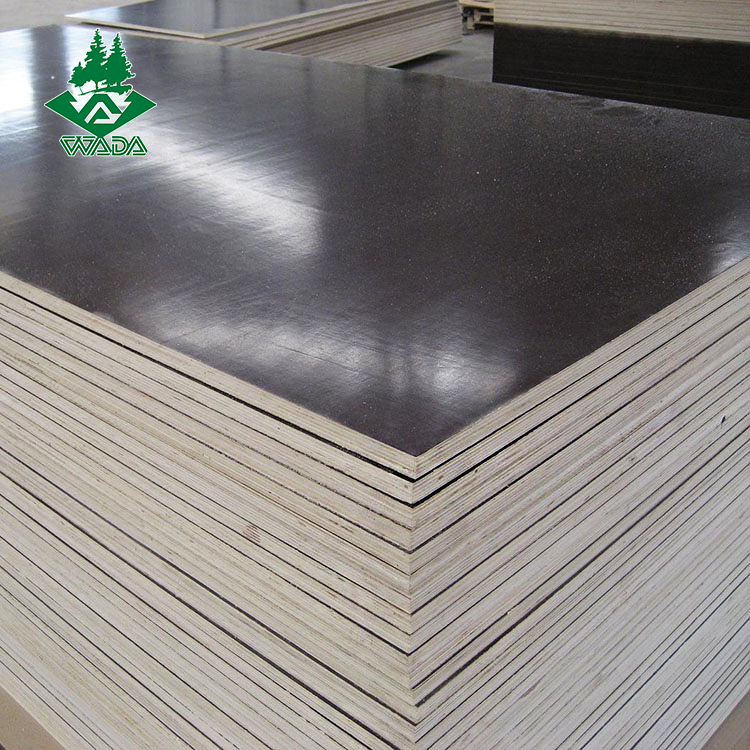
Film faced plywood is widely used in concrete formwork, precast production, and infrastructure projects where surface quality and panel reuse determine cost efficiency.
Why film faced plywood is a capability test for suppliers
Film faced plywood is one of the most demanding engineered wood products to source consistently. Unlike interior panels, formwork plywood must combine structural strength, moisture resistance, surface hardness, and dimensional stability under repeated concrete pressure. A single weak core, inconsistent glue line, or poorly bonded film can lead to surface defects, concrete staining, or premature panel failure on site.
For buyers, this makes film faced plywood a useful indicator of a supplier's broader manufacturing capability. A manufacturer that can control veneer quality, core assembly, adhesive application, and film pressing across different core options is more likely to deliver reliable performance across other wood panel categories as well.
What film faced plywood is: construction-grade plywood with a phenolic film surface
Film faced plywood is a construction-grade plywood panel with a dark brown or black film overlay bonded to both faces. The film is typically phenolic resin-impregnated kraft paper, which gives the panel a smooth, water-resistant surface that releases cleanly from concrete. The panel is manufactured with exterior-grade adhesives and is specified for formwork, concrete engineering, precast concrete, and infrastructure construction.
In the product range offered by Dalian WADA International Trading Co., Ltd., film faced plywood is available in sizes from 1200×1800 mm up to 1500×3000 mm, with thicknesses ranging from 4 mm to 35 mm. Core options include finger joint, poplar, combi, hardwood, pine, and Russia birch. Glue systems include MR, melamine WBP, and phenolic WBP, and the number of times the panel can be used in concrete projects ranges from 2 to 40 times depending on the core and glue specification. Density typically falls between 650 and 750 kg/m³, with moisture content controlled at 8% to 12%.
The role of core and glue in formwork plywood performance
The performance of film faced plywood is largely determined by two factors: the core construction and the glue system.
Core options and their trade-offs
- Poplar core: Lightweight and easy to handle, commonly used for general formwork applications where weight is a consideration.
- Combi core: A combination of hardwood and softwood veneers, offering a balance between strength, weight, and cost.
- Hardwood core: Provides higher structural stiffness and better screw holding, suitable for heavier formwork applications.
- Pine core: Good strength-to-weight ratio, often used in structural formwork where moderate reuse is acceptable.
- Russia birch core: Known for high density and excellent surface quality, suitable for projects requiring smoother concrete finishes and higher reuse potential.
- Finger joint core: Uses finger-jointed veneers to improve dimensional stability and reduce defects in the core structure.
The choice of core affects not only the panel's mechanical properties but also its cost and reuse cycles. A poplar core panel may be sufficient for a short-duration project, while a birch or hardwood core panel may be more economical for high-cycle formwork systems.
Glue systems and moisture resistance
Film faced plywood is manufactured with MR (moisture resistant), melamine WBP (weather and boil proof), or phenolic WBP adhesives. For concrete formwork, phenolic WBP glue is generally preferred because it provides superior water resistance and can withstand the alkaline environment of wet concrete. Melamine WBP offers good moisture resistance at a more moderate cost, while MR glue is suitable for dry or low-moisture applications.
Buyers should verify that the glue system matches the project's exposure conditions. A panel with MR glue used in a high-moisture formwork environment is likely to delaminate or swell, regardless of the quality of the surface film.
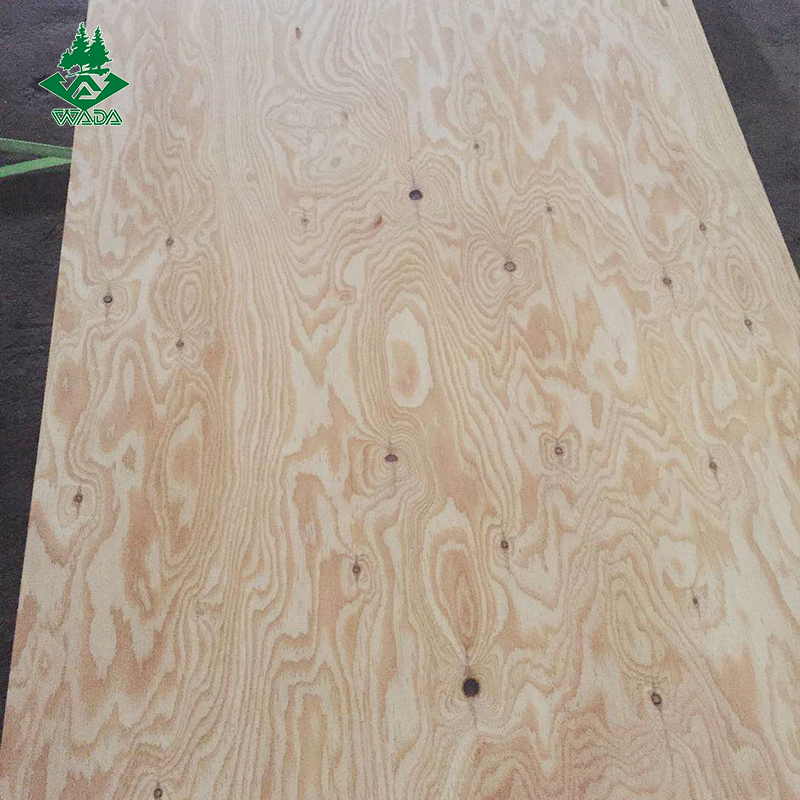
Formwork plywood performance depends on the combination of core species, adhesive system, and film quality.
Documented project evidence: Japan and Australia
Dalian WADA has supplied film faced plywood and structural plywood for building structure applications in Japan and Australia. In Japan, a construction builder used 200 containers of film faced plywood (product 4621) for building structure purposes. The project achieved high strength results, with the product noted for high durability and waterproof properties.
In Australia, a building contractor used 50 containers of structural plywood (product 4624) for building structure applications. The project also achieved high strength results, with similar emphasis on durability and water resistance.
These project references are relevant to buyers because they demonstrate that the product range has been deployed in regulated construction markets with demanding quality expectations. Japan and Australia both have strict building standards, and successful supply into these markets indicates that the panels meet basic structural and moisture resistance requirements.
Manufacturing capability and quality control
For buyers evaluating film faced plywood suppliers, manufacturing capability is as important as the product specification itself. Dalian WADA operates as a manufacturer and exporter of engineered wood products, with a factory area of 53,950 m² and a team of approximately 200 employees. The company reports annual output of $3.5–$4 million, with 100% of production exported to markets including North America, the EU, Australia, Japan, South Korea, the Middle East, Mexico, and South America.
The company's production capacity for panels exceeds 10,000 CBM per month. Quality control includes 100% inspection of products, and after-sales support is provided through remote assistance. The minimum order quantity is one 40-foot container, and standard production lead time is 25 to 45 days.
These operational parameters are directly relevant to procurement planning. A buyer who knows the lead time and MOQ can align order schedules with project milestones, while the 100% inspection policy reduces the risk of receiving off-spec panels.
OEM/ODM: how customization affects film faced plywood sourcing
Dalian WADA provides OEM and ODM production services, with customization available for size, thickness, and layout. For film faced plywood, this means buyers can specify non-standard dimensions, custom core configurations, or specific film colors beyond the standard dark brown and black options.
The ability to customize is valuable for large formwork contractors who use proprietary panel sizes, or for distributors who serve regional markets with specific dimensional preferences. However, customization also introduces variables that need to be managed: custom sizes may require longer lead times, and non-standard cores may affect panel performance. Buyers should request samples and verify that custom panels meet the same density, moisture content, and glue performance criteria as standard production.
Film faced plywood vs. alternative formwork panels
Film faced plywood competes with several other panel types in construction applications. The table below compares the main options:
| Panel type | Typical use | Key strength | Limitation |
|---|---|---|---|
| Film faced plywood | Concrete formwork, precast, infrastructure | Smooth concrete finish, multiple reuses, moisture resistant | Not suitable for permanent exterior exposure without additional protection |
| Marine plywood | Shipbuilding, high-moisture environments, exterior cladding | Higher-grade veneers, excellent water resistance | More expensive; over-specified for many formwork applications |
| Structural plywood | Roofing, flooring, wall sheathing, timber frame | High strength, certified for structural use | Surface not designed for concrete release or high reuse |
| OSB | Sheathing, packaging, low-cost structural uses | Low cost, abundant supply | Poor surface quality, low moisture resistance, limited reuse |
| Steel formwork | Repeated high-cycle formwork | Very high reuse, precise dimensions | High initial cost, heavy, requires specialized handling |
The main boundary for film faced plywood is that it is a consumable formwork material. While a high-quality panel with Russia birch core and phenolic WBP glue can be reused up to 40 times in concrete projects, panels will eventually degrade. For projects requiring hundreds of pours with tight tolerances, steel or aluminum formwork systems may be more economical over the long term despite higher upfront cost.
Market context: why wood panel demand remains strong
The global plywood market was valued at approximately USD 80.57 billion in 2025, with Asia Pacific accounting for the largest revenue share at 39.4%. This reflects continued demand from construction, infrastructure, and interior fit-out sectors. For film faced plywood specifically, the demand is tied to concrete construction activity, precast element production, and urban infrastructure investment.
Buyers sourcing film faced plywood in 2026 should expect continued pressure on lead times and pricing due to global supply chain dynamics. This makes supplier verification, production capacity assessment, and clear communication of lead times more important than in periods of stable supply.
What to verify before placing a film faced plywood order
For buyers in the evaluation-to-execution stage, the following checklist provides a practical reference:
- Core specification: Confirm the core species and whether the panel uses finger joint, poplar, combi, hardwood, pine, or Russia birch core. Match the core to the required reuse cycles.
- Glue system: Verify whether the adhesive is MR, melamine WBP, or phenolic WBP. For concrete formwork, WBP grades are recommended.
- Film quality: Specify the film color (dark brown or black) and confirm the film is resin-impregnated and properly bonded to prevent peeling.
- Density and moisture content: Check that the panel density is within 650–750 kg/m³ and moisture content is 8%–12% to ensure dimensional stability.
- Dimensions and thickness: Confirm that the supplier can produce the required sizes and thicknesses, including custom dimensions if needed.
- Quality inspection: Ask about the inspection process. Dalian WADA applies 100% inspection to its products, which is a strong signal for export consistency.
- Lead time and MOQ: Align the supplier's standard lead time of 25–45 days and MOQ of one 40-foot container with your project schedule.
- Certifications: Verify that the product compliance matches your target market, including relevant formaldehyde emission and structural certifications.
Download Dalian WADA company brochure (PDF)
FAQ
What is film faced plywood used for?
Film faced plywood is a construction-grade plywood panel with a resin-impregnated film overlay on both faces. It is primarily used in concrete formwork, concrete engineering, precast concrete production, and infrastructure construction, where it provides a smooth concrete surface and can be reused multiple times.
What is the difference between film faced plywood and marine plywood?
Film faced plywood has a phenolic film surface designed for concrete formwork and reuse, while marine plywood uses higher-grade veneers with strict void-free construction for high-moisture and structural marine applications. Marine plywood is generally more expensive and is specified where structural integrity in wet conditions is critical, even without a film surface.
How many times can film faced plywood be reused?
The reuse count depends on the core material, glue system, and site conditions. For panels supplied by Dalian WADA, reuse in concrete projects ranges from 2 to 40 times. Higher-density cores such as Russia birch combined with phenolic WBP glue typically achieve a higher number of reuses.
What is the difference between MR glue and WBP glue in film faced plywood?
MR (moisture resistant) glue is suitable for dry or low-moisture conditions, while WBP (weather and boil proof) glue provides superior water resistance for exterior and high-moisture exposure. For concrete formwork, melamine WBP or phenolic WBP is generally recommended because the panels come into contact with wet concrete repeatedly.
Can film faced plywood be made with custom sizes?
Yes, Dalian WADA supports OEM and ODM production with customization of size, thickness, and layout. Standard sizes range from 1200×1800 mm to 1500×3000 mm, with thicknesses from 4 mm to 35 mm. Buyers with non-standard requirements should confirm lead times and sampling during the inquiry stage.
What is the minimum order quantity for film faced plywood?
The minimum order quantity is one 40-foot container. Standard production lead time is 25 to 45 days from order confirmation, depending on specification and order volume.