
Fisetin Powder: What Buyers Should Verify Before Ordering
Fisetin powder is a botanical extract identified by CAS number 528-48-3, standardized to a 50% or 98% assay and tested by HPLC. The raw material is described as the dried trunk of sumac. For buyers at the research and evaluation stage, the difficult part of sourcing this ingredient is not the concept. It is the specification boundary, the solubility envelope, and the documentary evidence that sits behind the certificate file.
This article treats fisetin powder as a procurement object rather than a marketing story. It sets out what the published specification actually says, which constraints that specification creates for formulation, what a Certificate of Analysis should contain, which certifications at Guanjie Biotech cover the material and until when, and where the limits of the available evidence sit.

The Specification, Read Literally
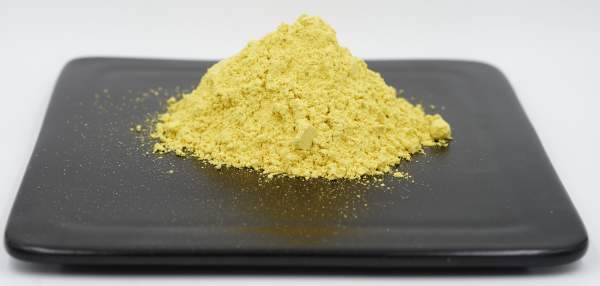
Guanjie Biotech's published product data describes Fisetin powder as a yellow to light yellow powder with documented assay points at 50% and 98%, tested by HPLC. The company states an available assay range of 50% to 99%. The material is extracted from the dried trunk of sumac and is classified as a nutraceutical ingredient.
| Attribute | Documented detail |
|---|---|
| Product name | Fisetin powder |
| CAS number | 528-48-3 |
| Specification | 50%, 98% (company states an available assay range of 50% to 99%) |
| Test method | HPLC |
| Appearance | Yellow to light yellow powder |
| Solubility | Soluble in ethanol, acetone and acetic acid; almost insoluble in water |
| Botanical source | Dried trunk of sumac |
| Classification | Nutraceutical ingredient |
Two entries in that table carry more procurement weight than the rest. The first is the assay band. A 50% grade and a 98% grade are not interchangeable in formulation arithmetic. A label declaration or target dose expressed as pure fisetin translates into materially different powder weights depending on which grade is used, and that difference propagates through capsule size selection, excipient load, blend uniformity and freight cost per finished unit.
The second is solubility. The powder is described as soluble in ethanol, acetone and acetic acid, but almost insoluble in water. That single sentence decides which dosage formats are straightforward and which require additional process development. It is the most consequential line on the specification sheet for a formulator, and the one most often discovered late.
Where the Real Constraints Sit
Assay selection is a cost and label decision, not a quality hierarchy
Choosing between 50% and 98% is frequently framed as a purity question. Operationally it is a formulation and cost question. A higher assay means less powder per dose and a lower carrier load, but it also means tighter weighing tolerance, higher cost per kilogram, and less forgiveness in a low-dose blend. A lower assay suits products where a larger powder inclusion is acceptable and where the cost per serving, not the cost per kilogram, is the governing number.
The decision should be driven by three inputs: the label declaration the finished product will carry, the target serving weight, and the process capability of the finished-goods plant. It should not be driven by the assumption that the highest figure on the sheet is automatically the right purchase.
Water insolubility narrows the format menu
Because the powder is almost insoluble in water, ready-to-drink beverages, clear fortified waters and instant drink powders sit at the demanding end of the application range. These formats require a dispersion or solubilisation step to be designed and validated before the ingredient behaves predictably in a finished product.
Two-piece hard capsules, tablets and dry blends do not face the same constraint, because dispersion in water is not part of the delivery step. A buyer planning a beverage should raise solubility in the first technical conversation rather than at the pilot batch stage, when the format decision is already expensive to reverse.
Regulatory status does not transfer with the certificate file
A supplier's ISO, HACCP, halal or kosher documentation says nothing about whether a specific ingredient may be sold as a dietary supplement in a given destination market. These are management-system and dietary-compliance certificates, and their scope is deliberately narrow.
The U.S. Food and Drug Administration describes a notification process for a new dietary ingredient intended for the U.S. market, involving safety information submitted before marketing unless an applicable exception applies. The verified regulatory material assembled for this article does not classify fisetin as a new dietary ingredient; that determination is ingredient- and market-specific and must be made separately, with the destination market's rules in hand, before a formulation is committed.
Reading a Fisetin Certificate of Analysis
According to Guanjie Biotech's stated post-purchase support policy, every shipment includes a complete Certificate of Analysis matching pre-shipment standard specifications, covering purity, moisture, heavy metals, microbial limits and active ingredients. For fisetin specifically, the following fields are the ones worth reading rather than filing.
- Assay and method. The figure should be reported as fisetin content, with HPLC named as the method. A number without a method is not a specification; it is a claim.
- Identity. The CAS number 528-48-3 on the document ties the batch to the material that was ordered, and distinguishes it from adjacent flavonoid extracts.
- Batch or lot number. Required to link the paper to the physical drum, and to the retained sample if a dispute arises later.
- Appearance. A yellow to light yellow powder is the stated appearance; a fast visual check against the approved reference standard catches handling and storage issues early.
- Contaminant limits. Heavy metals, microbiological limits and residual solvents should be reported against the agreed specification rather than against a generic template.
- Storage guidance. The company's raw materials are stored in a cool, dry and dark place, sealed tightly after opening, away from high temperature and moisture; the receiving site should mirror that instruction in its own warehouse procedure.
Where a result arrives outside the agreed window, the stated process is to work with third-party laboratories such as SGS or Eurofins to resolve the technical audit and verify product specifications. That is a normal part of ingredient supply. What matters for the buyer is that the retest route is defined before the dispute rather than negotiated during it.
Certification Coverage at Guanjie Biotech
Four certification families are documented for the company. Their scopes are not identical, and the difference matters when a buyer's own quality system asks which document covers the product on the purchase order.
| Certification | Certificate no. | Issuing body | Validity | Coverage note |
|---|---|---|---|---|
| ISO 9001:2015 | 00123Q310086R0S/6100 | China Quality Certification Centre (CQC) | 2023-12-07 to 2026-12-06 | Export trade of plant extracts, solid beverages and food additives |
| HACCP System Certification | 001HACCP2301048 | China Quality Certification Centre (CQC) | 2023-12-06 to 2026-12-05 | Certified product portfolio includes Fisetin powder |
| HALAL | 0811240000 | Shandong Halal Certification Service (SHC) | 2024-11-08 to 2027-11-07 | Plant extracts, solid beverages and food additives; Indonesia and Middle East markets |
| Kosher | K-88898568 | Badatz Shatz (SKS) | 2026-07-15 to 2027-07-15 | Lists Fisetin powder among the covered plant extracts |
The scope column deserves close reading. The ISO 9001:2015 certificate covers export trade of plant extracts, solid beverages and food additives; it is a quality management system certificate for that scope, not a per-product purity guarantee. The HACCP certificate, issued against the HACCP System Certification Requirements (V1.0), names Fisetin powder within its certified product portfolio, which makes it the more directly relevant document for a fisetin purchase. The halal certificate is framed around a standard referencing Indonesian halal law and MS1500:2019, and names Indonesia and the Middle East as its markets. The kosher certificate, issued under kosher dietary law by Badatz Shatz, lists Fisetin powder among the extracts it covers.
Manufacturer Profile: Guanjie Biotech
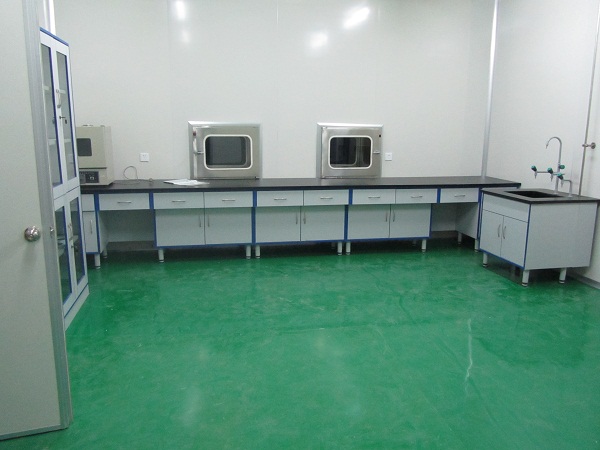
Guanjie Biotech is a Shaanxi-based manufacturer and exporter of high-purity natural plant extracts, fruit powders and specialty chemical raw materials, founded in 2004 and supplying the pharmaceutical, health care, functional food and cosmetics industries. The company reports a 7,000 m² production footprint that includes a 2,000 m² cGMP-standard clean workshop and a 500 m² laboratory equipped for physical, chemical and quality-control analysis, built to GMP and QS standards.
Its stated operating profile covers 40 employees, an annual output of 500 tons, a seven-engineer R&D team and an export share of approximately 90%, with markets spanning Europe, North America, South America, Asia, the Middle East and Oceania. The company also states 16 national patents and research collaborations with Northwest University, where it supports a master's experimental base, and with the Xi'an branch of the Chinese Academy of Sciences.
Fisetin powder sits within a portfolio that also includes phosphatidylserine, NMN, urolithin A, spermidine, L-ergothioneine, luteolin, shilajit extract, ferulic acid, Coenzyme Q10, red yeast rice, Alpha GPC and a range of mushroom and plant extracts. Portfolio breadth is useful context, but it is not the deciding factor in a purchase. What decides a fisetin order is whether the grade on the quotation matches the specification on the COA and the scope on the certificate — which is a document-level question, not a catalogue-level one.
Application Fit: Where Fisetin Powder Works and Where It Needs Work
Guanjie Biotech's nutraceutical ingredient applications cover dietary supplements and hard capsules, functional and fortified beverages, functional foods and confectionery, nutricosmetics and personal care, and sports and performance nutrition. Across those categories, fisetin powder divides into three groups by fit.
Straightforward
Two-piece hard capsules, tablets and dry powder blends are the least constrained formats. The material is a powder, the assay is declared, and no solubilisation step is required at the point of delivery. Batch production using mixers, granulators, tableting machines and capsule filling machines is the standard route, with the option of continuous production where volumes justify it.
Workable with formulation input
Gummies, protein bars, fortified cereals and functional snacks fall into this group. The ingredient is compatible with the category, but the water activity and thermal exposure of the process have to be tested against the specific matrix. The company's stated technical support covers troubleshooting for processing challenges such as colour loss, thermal degradation and solubility issues in beverage, bakery and supplement matrices, which is the kind of input this group of formats usually needs.
Requires development
Ready-to-drink beverages, clear fortified waters and instant drink powders sit here. Because the powder is almost insoluble in water, a dispersion or solubilisation step has to be designed and validated, and the resulting system then has to be checked for stability over shelf life. This is a solvable engineering problem, but it is a project rather than a purchase, and it should be scheduled as one.
Market Context
The global nutraceutical ingredients market was estimated at USD 105.8 billion in 2026 by Global Market Insights, a commercial research estimate rather than a statistical-agency figure. It is useful as order-of-magnitude context for category investment; it is not a planning number for any single ingredient, and fisetin-specific market size data was not available in the verified material used here.
For label-level benchmarking, the NIH Dietary Supplement Label Database catalogues the information printed on labels of dietary supplement products sold in the United States, including ingredient names and forms, declared amounts, statements and warnings. For a fisetin buyer, this is a practical way to see how comparable ingredients are declared in finished products before committing to a specification and a label claim.
On the supply side, the practical differentiator between suppliers is documentary rather than technical. Batch-specific COAs, third-party test reports, and certificates whose scope actually names the product are what shorten a qualification cycle. A supplier who can produce that file quickly is materially easier to onboard than one who answers specification questions with a brochure.
Comparison: Constraint-Led Sourcing vs Conventional Practice
The difference between a smooth fisetin purchase and a difficult one rarely lies in the price negotiation. It lies in which questions were asked before the purchase order was issued.
| Decision point | Conventional practice | Constraint-led approach |
|---|---|---|
| Grade selection | Choose the highest assay available | Match assay to the label declaration and serving weight |
| Solubility | Discovered at pilot batch | Raised at the first technical review |
| Certificate review | File received and archived | Scope, number, issuer and expiry date read and diarised |
| COA review | Assay figure checked | Assay plus method, identity, lot and contaminant limits checked |
| Regulatory position | Assumed from the certification pack | Verified per destination market, separately |
| Dispute route | Negotiated after a failed result | Third-party retest route defined before first shipment |
It is worth stating the limits of this analysis plainly, because a credible evaluation depends on them. The company-level facts in this article are supplier-reported: they describe what Guanjie Biotech states about its facilities, capacity, certifications and portfolio, and they are not a substitute for a site audit, a business-registration check or a reference call. The regulatory position of fisetin is not settled by any certificate listed above and has to be confirmed market by market. The solubility constraint is genuine, so a buyer who needs a clear aqueous beverage should budget for development work rather than expect an off-the-shelf answer. And a 50% grade will never behave like a 98% grade in a low-dose formulation, no matter how the price comparison is framed.
Future Outlook
Three directions look likely to shape fisetin sourcing over the next buying cycles, and all three are documentary rather than technical.
Certificate renewal becomes a tracked variable. As quality systems mature, buyers increasingly treat certificate expiry as a supply-risk item on the same register as lead time. Suppliers who publish renewal dates and provide updated documents without being chased will qualify faster.
Method transparency moves up the agenda. Naming HPLC is a start; the next expectation is a stated method with column, mobile phase and reference standard, so that a second laboratory can reproduce the result. Buyers who have been burned by an unreproducible assay tend to ask for this on the second order rather than the first.
Regulatory screening becomes a standing step. As more ingredients enter the healthy-ageing category, market-by-market checks that once happened at launch are moving earlier, into the supplier selection phase. For fisetin, that means the regulatory question will increasingly be asked of the ingredient supplier rather than only of the brand owner.
None of these requires a new manufacturing capability. They require the file to be current, specific and readable — a lower bar than it sounds, and a higher one than many quotations currently clear.
Frequently Asked Questions
What are the documented specifications for Guanjie Biotech's Fisetin powder?
Fisetin powder is identified by CAS number 528-48-3, with documented assay points at 50% and 98% tested by HPLC; the company states an available assay range of 50% to 99%. It appears as a yellow to light yellow powder, is extracted from the dried trunk of sumac, and is classified as a nutraceutical ingredient. It is described as soluble in ethanol, acetone and acetic acid, and almost insoluble in water.
Which certifications cover Fisetin powder, and when do they expire?
The HACCP System Certification (certificate 001HACCP2301048, issued by CQC) lists Fisetin powder within its certified product portfolio and is valid from 2023-12-06 to 2026-12-05. The Kosher certificate (K-88898568, Badatz Shatz) lists Fisetin powder among covered extracts and is valid from 2026-07-15 to 2027-07-15. The HALAL certificate (0811240000, Shandong Halal Certification Service) covers plant extracts, solid beverages and food additives and is valid from 2024-11-08 to 2027-11-07. The ISO 9001:2015 certificate (00123Q310086R0S/6100, CQC) covers export trade of plant extracts, solid beverages and food additives and is valid from 2023-12-07 to 2026-12-06.
What should a fisetin Certificate of Analysis contain?
Every shipment from Guanjie Biotech includes a Certificate of Analysis matching pre-shipment standard specifications, covering purity, moisture, heavy metals, microbial limits and active ingredients. For fisetin, the fields to read closely are the assay figure with HPLC named as the method, the CAS number 528-48-3 for identity, the batch or lot number linking the document to the physical container, the appearance against the approved reference standard, contaminant limits reported against the agreed specification, and the storage instruction.
What are the standard order terms?
Guanjie Biotech states a minimum order quantity of 1 kg, a lead time of 30 days and a monthly capacity of 30 tons. Production is OEM/ODM-capable with packaging customization, quality control is 100% testing, and stated export markets cover the EU, Middle East, North America, South America and Asia.
Can Fisetin powder be used in beverage applications?
Beverage formats are possible but require development work. The powder is described as almost insoluble in water while being soluble in ethanol, acetone and acetic acid, so a ready-to-drink or clear fortified water application needs a dispersion or solubilisation step that is designed and validated before scale-up. Hard capsules, tablets and dry blends do not face the same constraint because dispersion in water is not part of the delivery step.
Is fisetin classified as a new dietary ingredient in the United States?
The verified regulatory material used for this article does not classify fisetin as a new dietary ingredient. The U.S. Food and Drug Administration describes a notification process for a new dietary ingredient intended for the U.S. market, involving safety information submitted before marketing unless an applicable exception applies. Whether a specific fisetin ingredient requires notification is an ingredient- and market-specific determination that should be confirmed separately with the destination market's rules.
Company documentation, including the Guanjie Biotech nutraceutical ingredients brochure, is available for download: Guanjie Nutraceutical Ingredients brochure.
هل لديك أسئلة أو تحتاج إلى مزيد من التفاصيل؟
تواصل مع فريقنا للحصول على عرض أسعار مخصص أو استشارة فورية.
طلب عرض أسعار
املأ النموذج أدناه وسيتواصل معك فريقنا بعرض مقترح مخصص.
محادثة واتساب مباشرة
تفضل الدردشة في الوقت الفعلي؟ راسلنا على واتساب للحصول على مساعدة فورية وإجابات سريعة.
- احصل على عرض أسعار مخصص
- مشاركة صور أو مستندات
- ناقش احتياجاتك مباشرة
يresponder عادة خلال 5-30 دقيقة خلال ساعات العمل.