
Fit for Purpose: Shopping Bag Sourcing in 2026
In 2026, the shopping bag procurement decision is being redefined around one question: is this bag truly fit for the project it is intended to serve? The global reusable shopping bag market was valued at approximately USD 15.64 billion in 2025 and is projected to reach USD 28.87 billion by 2034, according to Fortune Business Insights. At the same time, the EU Packaging and Packaging Waste Regulation (PPWR) requires all packaging to be recyclable by 2030, and 12 US states, including California and New York, had implemented statewide bans on single-use plastic bags as of 2024. For bulk buyers moving from research to evaluation, the practical issue is no longer only cost per unit. It is whether a supplier can match materials, customization, compliance and production capacity to a specific retail, promotional or corporate project.
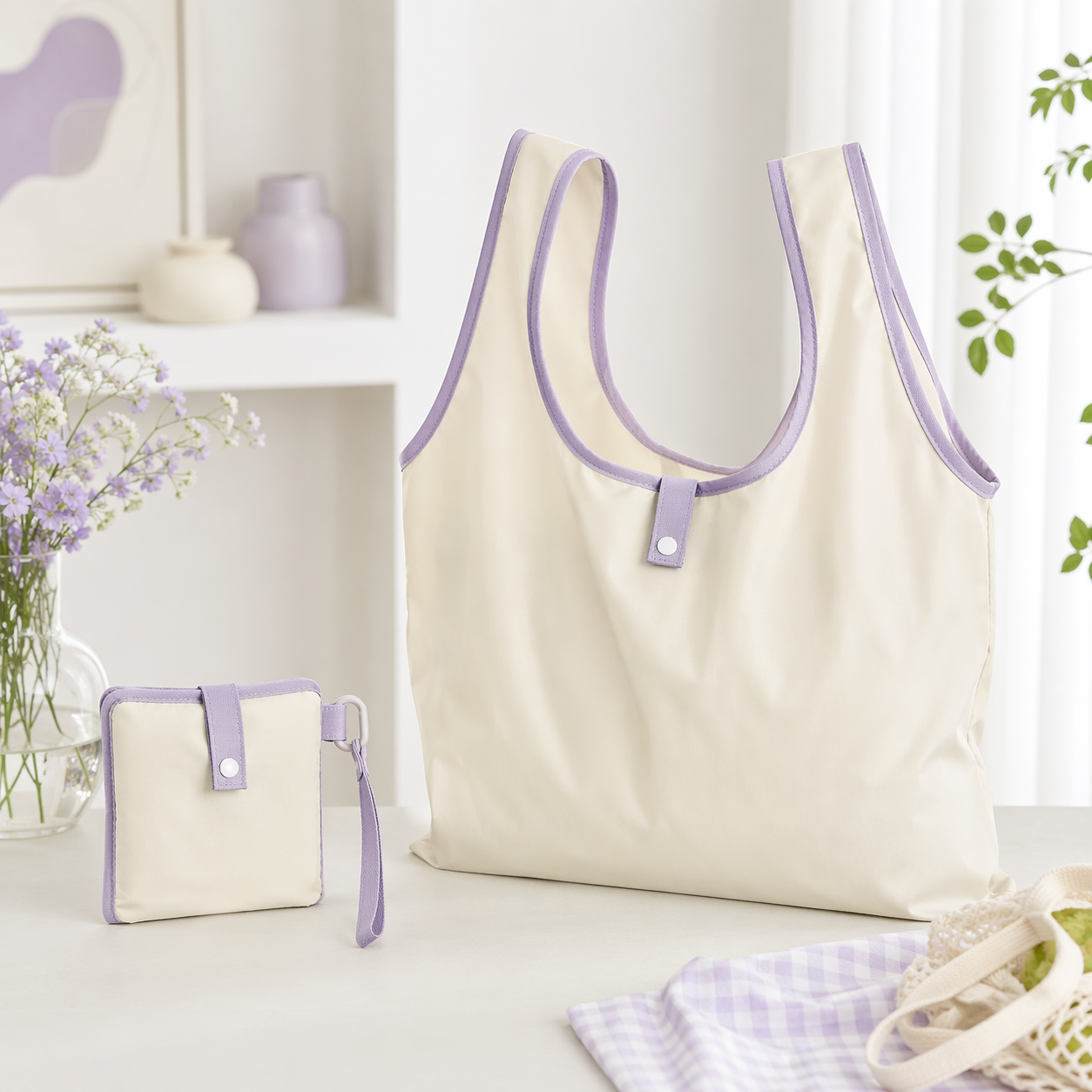
Foldable shopping bags with storage pouches are increasingly specified for portable, multi-purpose daily use.
The Problem and Opportunity: Project Fit Is Hard to Define
Shopping bag buyers face a common problem: the same product category has to perform across very different environments. A supermarket chain needs large capacity, durable bags that can survive repeated daily use. A brand promotion team needs custom printed shopping bags with strong visual impact. An e-commerce seller needs lightweight, portable bags that minimize shipping costs. A beauty brand distributing travel gifts may prefer waterproof PVC shopping bags that protect cosmetics. Each of these projects requires different materials, different specifications, and different quality checks.
The opportunity for procurement teams is to move beyond generic product selection. By structuring a fit assessment around application scenarios, buyers can align each project with the right product type, the right supplier capability, and a realistic delivery plan. That is where an experienced shopping bag supplier becomes a strategic resource rather than just an order taker.
What Defines Fit for Purpose in a Shopping Bag
A fit-for-purpose shopping bag has four dimensions: material-scenario alignment, customization depth, volume and delivery realism, and compliance suitability. Buyers who apply these four criteria to their projects tend to avoid both over-specification and under-specification.
| Application Scenario | Key Requirements | Typical Material Options |
|---|---|---|
| Supermarket and retail shopping | Large capacity, durability, reusable, eco-friendly | Non-woven fabric, PP, canvas, mesh |
| Brand promotional gifts and giveaways | Print quality, branding, aesthetic appeal | Canvas, recycled PET, coated non-woven |
| Corporate welfare and employee gifts | Premium feel, clean design, customization | Canvas tote bag, PVC tote |
| Cross-border e-commerce packaging | Lightweight, foldable, shipping efficiency | Foldable shopping bag, non-woven |
| Travel, cosmetics and daily outdoor use | Waterproof, visible contents, multi-compartment | PVC shopping bag, Oxford cloth, canvas |
For a project-based procurement decision, buyers should map their use case to one of these scenario groups and then compare supplier capabilities against the relevant requirements.
Brand in Focus: Zhejiang Hansun Arts & Crafts Co., Ltd.
Zhejiang Hansun Arts & Crafts Co., Ltd. (Hansun) is a China-based manufacturer in Wenzhou, Zhejiang, specializing in tote bags and PVC bags. Founded in 1996, the company operates a factory of more than 25,000 square meters with approximately 200 employees, including a 25-engineer R&D team. Its annual output is 20,000,000 units, and about 70% of production is exported to markets around the world, including Southeast Asia, Europe, North America, and the Middle East.
For project-oriented buyers, Hansun offers a production profile that supports both standardized and customized orders. The company works under OEM/ODM models, with customization available for logo, size and material. Its monthly capacity reaches 1,500,000 units, lead time is 30 to 45 days, and minimum order quantity is 3,000 pieces. These parameters make Hansun relevant for buyers who need more than a spot purchase, but do not necessarily require the enormous commitments associated with mass-market retail programs.
Technical Explanation: Materials, Customization and Manufacturing
The shopping bag model SB-2026-001 from Hansun is representative of the product range commonly evaluated in 2026. It covers reusable foldable shopping bags, eco-friendly non-woven shopping bags, and canvas tote shopping bags. The main specifications are flexible:
- Size: customizable, from S/M/L to customer-specific dimensions
- Weight: 50g to 200g per piece, depending on material and size
- Materials: non-woven fabric, canvas, recycled PET, Oxford cloth, PP
- Printing: silk screen printing, heat transfer, or offset printing
- Typical uses: supermarket shopping, promotional gifts, corporate giveaways
The material mix matters because it drives both unit cost and field performance. Industry data from Business Research Insights indicates that polypropylene (PP) bags account for nearly 46% of total reusable bag production, due to their durability and cost-effectiveness. Meanwhile, tote bags dominate the global bag market with a revenue share of approximately 40% to 41%, driven by multi-purpose functionality. A supplier that offers both canvas tote bags and PP or non-woven options can therefore serve the two largest segments in the market.

Waterproof PVC shopping bags are often selected for travel and cosmetics applications where visibility and protection matter.
For waterproof or high-visibility projects, PVC shopping bags add another layer of scenario fit. Transparent PVC totes, such as those produced by Hansun for cosmetic and travel storage, use heat-sealed construction and fabric trims to meet both aesthetic and functional requirements. In gift packaging applications involving humidity, buyers have specified food-grade eco-friendly PVC, REACH compliance, scratch resistance, and wear-resistant logo printing as key acceptance criteria.
Application Scenarios and Use Cases
Project fit becomes clearer when specific scenarios are examined in detail.
Brand promotional gifts and retail supporting. In China and other markets, brand owners often use shopping bags as low-cost, high-frequency brand carriers. The bag functions as daily portable carrying, brand image promotion, and item storage. It involves high-frequency repeated daily use, so accessories such as hang tags, webbing and brand stickers are frequently added. A suitable supplier must support logo printing that is wear-resistant and color-accurate.
Supermarket retail chains. A supermarket chain ordering daily shopping bags needs large capacity, heavy-duty construction, and an eco-friendly story for consumers. Non-woven or PP bags with custom printed branding are common choices. The order volume is typically high, so production capacity and on-time delivery become decisive factors.
Corporate welfare and gift programs. Companies selecting gift shopping bags for employees or clients usually prefer a premium look. Canvas tote bags with custom prints or branded webbing handles work well in this scenario because they feel durable and look intentional.
Cross-border e-commerce. Sellers fulfilling online orders benefit from lightweight and foldable shopping bags that reduce shipping volume. Foldable bags with a matching storage pouch are a practical solution, as they can be tucked into parcels without adding significant weight.
Travel and cosmetics. Transparent PVC totes are widely used for travel toiletries, cosmetic storage, and hotel amenities because they are waterproof and make contents easy to see. This scenario requires clean heat-sealed edges and durable zippers rather than heavy fabric construction.
A documented case from Hansun illustrates how project fit works at scale. An OEM/ODM client in Japan ordered 1,000,000 units of shopping bags for chain supermarket daily shopping bags and promotional gifts. The bags were designed for reusable, long-term use and delivered over a one-year period. The project maintained a 99.7% product qualification rate and zero delivery delay. The client repeated orders for three consecutive years, and the bags met Japan’s eco-friendly standards, earning recognition from both the client and end consumers. This example shows how a buyer can use a project-specific specification, rather than a generic product, to achieve both operational reliability and market acceptance.
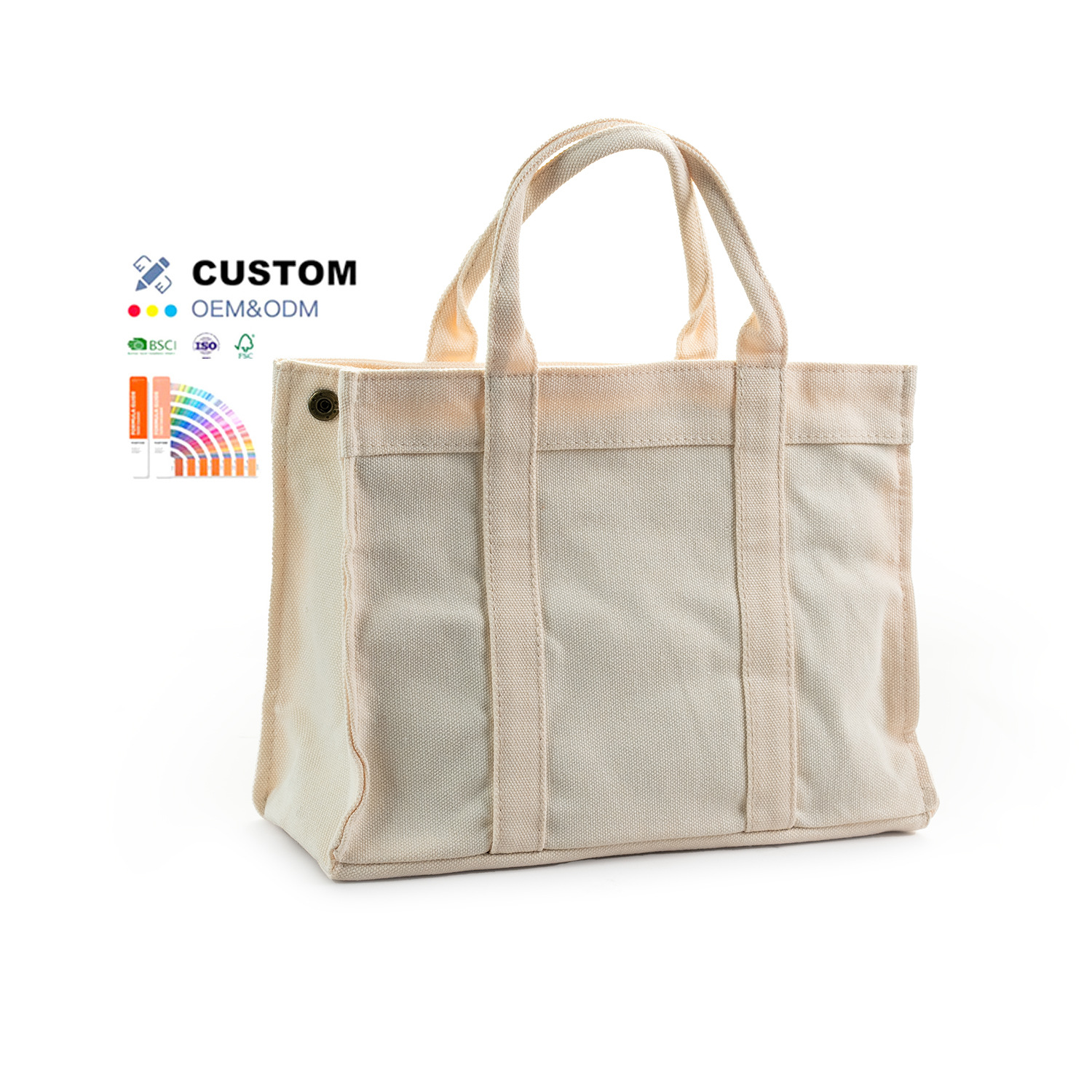
Blank canvas totes are common substrates for custom printed shopping bag programs.
Market Trend Analysis: What Is Driving Scenario Demand
Several verified market data points explain why scenario-based shopping bag sourcing is accelerating.
Regulatory pressure is reshaping material choices. The EU PPWR requires all packaging to be recyclable by 2030 and introduces mandatory recycled content targets for plastic packaging. In the US, 12 states have enacted statewide bans on single-use plastic bags. These rules push buyers toward durable reusable designs, recyclable materials, and higher recycled content.
Customization demand is rising. Customization and personalization in the shopping bag market are trending, with demand for printed garment bags increasing by 34% in the retail sector, according to Business Research Insights. This supports the importance of OEM shopping bag capabilities such as silk screen printing, heat transfer, and offset printing.
Material economics still favor PP and tote formats. PP bags account for nearly 46% of total reusable bag production, while tote bags represent roughly 40% to 41% of global bag revenue. Buyers evaluating suppliers should expect a strong product line in both categories.
China remains a dominant supply base. China’s export value for suitcases, handbags and similar containers, which includes many types of shopping bags, reached USD 27.13 billion for the period of January to November 2025, according to the General Administration of Customs of China (GACC). The country’s scale, material ecosystem, and manufacturing experience allow suppliers like Hansun to serve global project-based orders efficiently.
Comparison with Traditional Shopping Bag Sourcing
Traditional shopping bag sourcing usually means buying standard bags from a local trading company or importing generic stock bags with minimal customization. This approach still works for urgent needs, small quantities, or low brand expectations. However, project-based sourcing through an OEM or ODM supplier offers important advantages:
- Exact alignment of size, material, print, and accessories with the target use case
- Stronger brand expression through custom printed shopping bags and branded handles
- Better lifecycle performance by choosing heavy-duty, waterproof, or lightweight materials as needed
- Closer alignment with regulatory requirements such as recyclability and recycled content targets
There are also genuine limitations to project-based OEM sourcing. Standard lead times for Hansun are 30 to 45 days, which is longer than a spot buy from local stock. The MOQ of 3,000 pieces may be too high for a small one-time event. Customization can carry sampling and design iteration costs. And if the buyer cannot provide a clear specification, the benefits of OEM sourcing weaken. For buyers who need very fast delivery or who have no branding and compliance requirements, traditional standard bags may remain the better choice.
Future Outlook: Procurement Implications for 2026 and Beyond
The direction of travel is clear. Regulatory deadlines such as the EU’s 2030 recyclability requirement will make sustainability screening a standard part of shopping bag procurement. The rising market value, projected at USD 28.87 billion by 2034, will attract more suppliers and more scrutiny. Buyers will increasingly ask for material certificates, recycled content documentation, and proof of delivery reliability before placing project orders.
Product innovation will also continue. Foldable shopping bags, multi-purpose tote bags, waterproof PVC options, and lightweight portable formats will gain share as consumers seek convenience. Suppliers with OEM flexibility, consistent quality control, and documented track records will be more likely to win long-term project commitments.
For buyers, the practical takeaway is to evaluate shopping bags through the lens of scenario fit. Define the project, map it to the right material and customization depth, and select a supplier that can provide both production capacity and verifiable performance evidence.
FAQ
Q: Which application scenarios are most common for shopping bags, and how should buyers choose?
A: The most common scenarios are brand promotional gifts, supermarket retail, corporate welfare, cross-border e-commerce, and stationery and office supply. Buyers should choose based on use frequency, capacity needs, environmental exposure, and brand requirements. For example, supermarket projects prefer durable large capacity bags, while travel and cosmetics projects often prefer waterproof PVC bags.
Q: How do I choose the right shopping bag material for a specific project?
A: Material selection should follow the intended use environment. For high-frequency supermarket use, PP or non-woven fabric provides durability. For brand gifts, canvas or recycled PET offers a better printing surface. For travel or humid conditions, PVC bags are suitable. Hansun offers non-woven fabric, canvas, recycled PET, Oxford cloth, and PP, allowing customization according to project specifications.
Q: Can shopping bags be customized in size, logo and material?
A: Yes. OEM/ODM manufacturers such as Hansun support customization of logo, size and material. Custom printed shopping bags can be produced using silk screen printing, heat transfer, or offset printing, depending on design and budget.
Q: What is the minimum order quantity for custom shopping bags?
A: The MOQ varies by supplier. For example, Hansun sets a MOQ of 3,000 pieces for custom projects. Buyers with lower volume requirements may need to consider standard stock bags or wholesalers that accept smaller quantities.
Q: How long does a typical custom shopping bag order take?
A: OEM/ODM orders generally require 30 to 45 days for production, including sampling, material sourcing, manufacturing, and quality control. Project planning should account for this lead time, especially for retail chain launches or promotional events.
Q: What compliance requirements should shopping bag buyers consider?
A: Compliance depends on the target market. For EU-bound projects, buyers should verify that packaging is recyclable and meets PPWR requirements. For food-contact or humid applications, food-grade eco-friendly PVC and REACH compliance may be required. For Japan, local eco-friendly standards may apply. Buyers should request material documentation and test reports during supplier evaluation.
Q: How can buyers verify a shopping bag supplier’s reliability?
A: Buyers should look for tangible evidence such as product qualification rates and delivery records. In a documented case, Hansun maintained a 99.7% product qualification rate and zero delivery delay for a 1,000,000-unit order supplied to a Japanese chain supermarket client, leading to repeat orders for three consecutive years. This type of verifiable performance data is more useful than unqualified promotional claims.
For further reference, the company brochure for Hansun is publicly available and can be downloaded here:
Download Hansun company brochure
Company website: https://www.hansungift.com/