
Fitting Pre-Insulated Pipe to Industrial Utility Corridors
Fitting Pre-Insulated Pipe to Industrial Utility Corridors
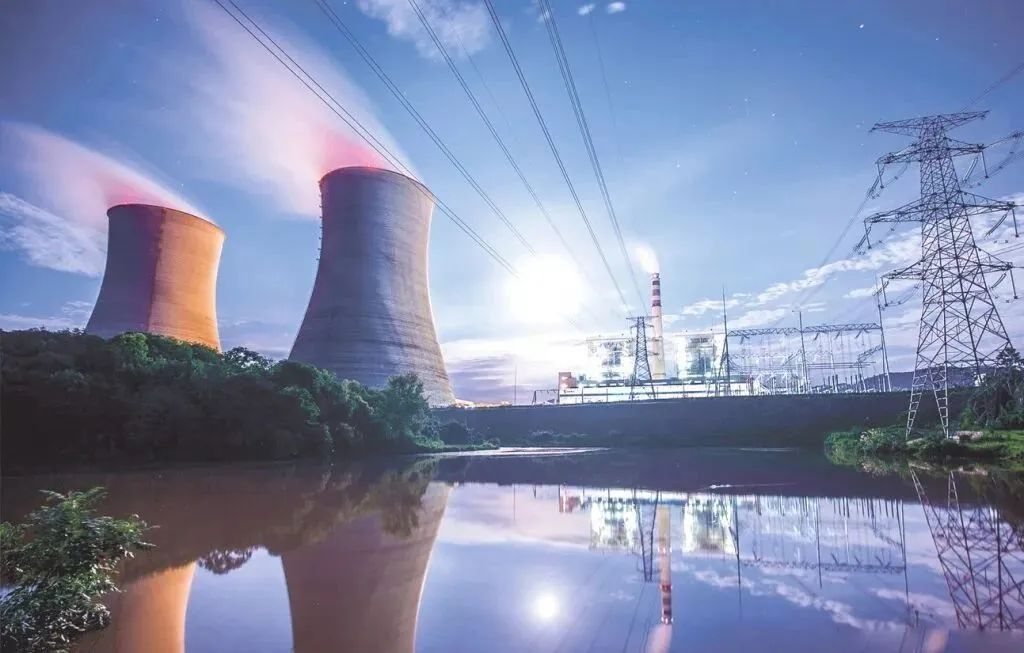
In an industrial utility corridor, pre-insulated pipe usually fits — but the route, not the product catalogue, decides the terms. The product is a factory-assembled unit: a service pipe, a rigid polyurethane foam insulation layer and an outer casing delivered together, with joints, sleeves and sealing materials completing the system on site. What a corridor adds is a mixed route of buried trench, gallery and above-ground rack, a fixed commissioning window, and sections that cannot be inspected conveniently once they are backfilled.
For project teams at research and evaluation stage, that shifts the buying question from "which pipe" to three narrower ones: whether the declared product envelope covers this corridor's duty, which route sections should not use the buried configuration, and which purchasing and acceptance terms must be settled before quotations can be compared on equal terms.
What an industrial utility corridor demands from an insulated pipe
An industrial utility corridor is a shared service route between a central energy plant and process or building loads. In practice it rarely stays in one construction form: it starts buried at the plant boundary, passes under internal roads, may enter a gallery where other services already run, and finishes on a rack at the point of use. Each of those transitions changes what the pipe system has to be.
Xingbang describes the working condition its polyurethane insulated pipe is intended for as ordinary hot water at temperatures up to 120°C at low pressure, with 24-hour continuous operation. The same application material names the conditions a corridor imposes on the design: thermal expansion stress, soil load, groundwater corrosion and external impact. None of these is solved by the pipe alone. They are solved by the pipe, the joint system and the route design together, which is why they belong in the purchasing conversation and not only in the installation drawing.
Where pre-insulated pipe fits, and where the corridor pushes back
The fit is strongest on buried mains. Because the insulation and casing are applied in the factory, the corridor does not need a separately insulated structure along the run, and the product data notes that direct burial saves land occupation and reduces civil engineering investment while lowering heat dissipation along the network. For a corridor carrying hot water or chilled water between a plant and distant loads, those are the characteristics that usually justify an evaluation.
The fit weakens at three points. Buyers should name them explicitly rather than let them be resolved on site.
Above-ground transitions. The product family lists a galvanized iron jacket configuration for above-ground service alongside the buried configuration built on a high-density polyethylene casing. Where a corridor leaves the ground, the specification has to state which variant applies from which section onwards, because a casing selected for soil conditions is not automatically the right outer layer for an exposed rack run.
Temperature duty. The manufacturer's stated envelope for this product is a conveyed medium no higher than 120°C, an occasional peak not exceeding 130°C and a working pressure no more than 2.5 MPa. Where a corridor includes a steam main above that envelope, this product class as declared is not the fit for that section, and the purchasing documents should say so instead of relying on a generic "pre-insulated pipe" line item.
Access assumptions. A buried main is not a maintenance-friendly element by design. Corridors that expect frequent intervention should reflect that in chamber and joint layout, and the purchase scope should make joint quality and joint records a deliverable rather than an installation detail.
Two limits that are often confused: product envelope and standard scope
Pre-insulated pipe discussions tend to mix two different documents. One is the standard that defines the product category; the other is the envelope a supplier declares for the specific item being purchased. They answer different questions and should not be averaged.
On the standards side, EN 253 is described by its publisher as the standard for bonded single pipe systems for directly buried hot water networks. The published scope of DIN EN 253:2015 covers straight lengths of prefabricated thermally insulated pipe-in-pipe assemblies made up of a steel service pipe, rigid polyurethane foam insulation and an outer casing of polyethylene, for continuous operation with hot water at temperatures up to 120°C and occasionally with a peak temperature up to 140°C.
On the product side, the envelope Xingbang states for its polyurethane insulated pipe is a medium temperature no higher than 120°C, occasional peaks not exceeding 130°C, working pressure no more than 2.5 MPa, and continuous operation for at least 30 years in a 120°C environment.
Read together, those statements give a buyer a decision rule rather than a slogan. The 140°C occasional peak in the standard description is not permission to run any particular product at 140°C; the declared peak of the item being purchased is what the order should be built around. Equally, a supplier's lower stated peak does not mean the product falls outside the category. The practical step is to write both into the RFQ: the standard edition the project references, and the declared temperature, peak duration and pressure limit for the exact diameter, casing and insulation thickness being quoted.
Two further cautions follow from the same scope wording. The standard describes hot water networks, so a chilled-water corridor section cannot simply inherit it as the applicable reference. And the bonded steel-service-pipe construction it describes should not be assumed to cover every pre-insulated variant on the market.
Corridor conditions that should change the purchase scope
Six route conditions change what has to be bought, and each belongs in the purchase scope rather than in a site instruction later.
| Corridor condition | What it changes | What to fix in the purchase terms |
|---|---|---|
| Groundwater, humid or saline-alkali soil | Casing grade and joint sealing become decisive for insulation life | State the anti-corrosion grade and the sealing and waterproofing material required at every joint |
| Road, rail or heavy-load crossings | Protection and spool lengths change at the crossing | Define protection type, spool lengths and section-by-section delivery order |
| Long straight runs with thermal expansion | Expansion stress moves into anchors, bends and fittings | Allocate design responsibility and include non-standard fittings as quoted scope lines |
| Buried-to-above-ground transitions | Outer jacket and support conditions change | Name the jacket variant per section and who supplies the supports |
| Congested gallery or trench bank | Field joints become the constraint on programme | Use custom lengths and factory fittings to cut joint count; price joint kits per joint |
| Sections that cannot be reopened | Verification has to happen before backfill | Require factory test records and one documented record per joint |
A composite corridor walk-through
The following is an illustrative composite, not a specific project: a corridor leaves a central plant buried, crosses two internal roads, passes through a short gallery beneath a pipe bridge, and rises onto a rack at a process block.
- Split the route by construction form before pricing — buried, gallery, rack — because each has a different jacket, support and jointing requirement.
- Fix the duty per segment, not per project. A hot water supply and a chilled water return in the same trench do not share an envelope, and only the hot water segment sits inside the EN 253 description.
- Set spool lengths from site access, not from transport limits. Lengths that suit the trench and the lifting equipment reduce field joints, and custom length is a stated option rather than an exception.
- Define the joint package per joint type. Electrofusion sleeves, heat-shrinkable sleeves, insulation joint material, foaming filler and sealing and waterproofing material are matched accessories. Leaving them as "to be provided by installer" is how joint quality becomes unverifiable.
- Decide where the above-ground variant starts and record the transition on the drawings and in the order lines.
- Tie delivery to the civil programme. Xingbang states a lead time of 30–45 days and a minimum order quantity of 1 km, so ordering has to follow the corridor's section sequence rather than a single site-wide delivery date.
How Xingbang's pre-insulated pipe maps to corridor requirements
Tangshan Xingbang Pipeline Engineering Equipment Co., Ltd is a Chinese manufacturer of pre-insulated and anti-corrosion pipeline products based in Houhu Industrial Park, Yutian Economic Development Zone, Hebei Province, with a 310,000 m² site and a 30-engineer R&D team. The company states that its products serve district heating, district cooling, oil and natural gas, LNG, chemical and industrial sectors, and reports that exports account for 30% of its business, with Europe, North America and the Middle East among its main markets.
The product relevant to this scenario is listed as Pre Insulated Pipe, model Polyurethane Insulated Pipe, built on a high-density polyethylene casing with rigid polyurethane foam insulation and offered across directly buried hot water, underground, district heating, PU foam and galvanized iron jacket above-ground configurations. Its stated application scope covers anti-corrosion, thermal insulation and cold preservation work in heating, cooling and crude oil transportation networks.
For corridor work, the more useful part of the capability statement is the customization list, because corridor problems are usually dimensional and geological rather than purely thermal. It covers custom pipe diameter and length, custom pipe material, custom temperature and pressure rating, custom insulation thickness, custom anti-corrosion grade, custom non-standard fittings, design adapted to geological conditions, and an optional intelligent monitoring system. Each item is a specification lever the buyer can use to match one route section instead of accepting a catalogue length for the whole corridor.
The company also states 100% testing of its output and offers dedicated on-site service teams providing one-to-one support through a project, with a stated minimum order quantity of 1 km and a lead time of 30–45 days.
What that means for evaluation: the MOQ sets the smallest corridor package that makes sense as a single custom run, and the lead time is short enough to be driven by the civil programme but not short enough to absorb late scope changes. Both should be tested against the corridor's section schedule before a supplier is shortlisted.
Company-reported project references
Xingbang's published references are company-reported and do not replace project-specific verification, but they show the application categories and durations the manufacturer cites.
- Copper mine project, Mongolia: 9 km for cooling and heating supply, cited as three years of stable operation with heat preservation — the closest analogue to an industrial-site corridor in the published set.
- District cooling, Phnom Penh, Cambodia: 5 km for cooling and heating supply, cited as ten years of stable operation.
- Heating network renovation, Uzbekistan: 6 km, cited as five years of stable operation.
- Bank project, Cambodia: 30 km for cooling and heating supply, cited as two years of stable operation.

These references indicate where the manufacturer has been used. They do not establish suitability for a different corridor with different soil, duty or access conditions, and they are not a performance guarantee for a new project.
Purchasing terms to settle before the RFQ
Most quotation mismatches in corridor projects come from scope, not price. The following terms should be fixed in writing before quotations are invited.
- Scope split. State what the supplier delivers — pipe, fittings, joint kits, sealing materials — and what the installer provides. The matched accessory list is the natural dividing line.
- Declared envelope per line item. Temperature, occasional peak and pressure limit written for each diameter and configuration rather than for the product family as a whole.
- Standard reference and edition. Name EN 253 or the project's governing standard with its edition, and state which corridor segments it applies to — and which it does not.
- Lengths and fittings. Spool lengths, non-standard fittings and factory-made bends priced as scope lines, not as unspecified extras.
- Joint documentation. One record per joint, giving joint type, materials and the testing performed.
- Factory testing evidence. A stated 100% test should be defined: which test, on which item, and in what record format it is handed over.
- Delivery sequence and Incoterms. Section-based delivery matching the corridor programme, with packaging suitable for stockholding on a construction site.
- Spares and transitions. A stated allowance of joint materials, and an explicit statement of where the above-ground variant begins.
- Warranty and exclusions. What is covered, for how long, and which conditions — soil, groundwater, operating envelope — fall outside it.
- Technical support. Whether on-site support during jointing is included, and for how long.
Acceptance criteria at handover in a corridor context
Acceptance should be written around what can no longer be checked later. Four checks carry most of the weight.
- Envelope against as-built duty. Confirm that the recorded operating temperature, peak excursions and pressure for each segment sit inside the declared limits for the configuration actually supplied.
- Joint integrity and records. Joints are the field-made part of a factory product, so the record set — joint type, materials, test result — is the evidence that the buried section performs as ordered.
- Casing and sealing continuity. Sealing and waterproofing at joints and transitions protect the insulation in humid or saline-alkali ground and should be inspected before backfill, not after.
- Documentation and deviations. Declared envelope, material specification, test records and the referenced standard edition, plus a signed deviation register for any substitution of length, fitting or jacket variant.
Market context: what the published figures do and do not say
Published research places the global pre-insulated pipe market at about USD 5.97 billion in 2024, with Asia Pacific accounting for roughly 39.96% of revenue that year, and projects growth at a 9.7% compound annual rate from 2025 to 2030 to reach USD 10.4 billion (Grand View Research). Those are market-level estimates from a commercial research publisher, and publishers differ on growth rates partly because they define end-use scope differently. For a project team the reading is narrower: the category is large and actively supplied, so the constraint on a corridor project is rarely availability of product. It is matching a declared envelope, a joint system and a delivery schedule to one specific route.
Outlook for corridor projects
For industrial corridors, the direction of travel is towards more services in less space: shared trenches and galleries carrying heating, cooling and process lines together, with fewer accessible openings. That raises the value of two things a buyer can specify today — factory-made lengths and fittings that reduce field joints, and documentation that lets a buried section be assessed without excavation. Neither depends on a future product. Both are available as scope lines in a current order, and both are cheaper to specify before the trench is open than after.
FAQ
Does pre-insulated pipe suit a corridor that carries both heating and cooling mains?
For buried sections of both, generally yes, with one qualification: the two duties do not share the same reference framework. Xingbang's stated envelope for its polyurethane insulated pipe — medium up to 120°C, occasional peak up to 130°C and working pressure up to 2.5 MPa — covers the hot water segments. Chilled water sits outside the scope described by EN 253, which addresses directly buried hot water networks, so chilled segments should be specified against the product's declared envelope and the project's own cooling requirements rather than inheriting the heating standard.
When should a corridor use the above-ground pre-insulated variant?
Wherever the route leaves the ground for a rack, bridge or plant entry. Xingbang lists a galvanized iron jacket configuration for above-ground service alongside the buried configuration with a high-density polyethylene casing. The transition point should be drawn and priced, because the outer layer, support conditions and mechanical protection requirements differ between the two.
What temperature and pressure limits belong in the purchase order?
At minimum the conveyed medium temperature, the occasional peak temperature and its duration, and the working pressure, stated for each diameter and configuration. For Xingbang's polyurethane insulated pipe the stated limits are 120°C continuous, an occasional peak not exceeding 130°C and 2.5 MPa. The published scope of DIN EN 253:2015 refers to hot water up to 120°C continuous with an occasional peak up to 140°C; that describes the standard's applicability, not any individual product, so the supplier's declared figure governs the order.
Which accessories should be ordered together with the pipe?
The joint and sealing package: electrofusion sleeves, heat-shrinkable sleeves, insulation joint material, foaming filler, and sealing and waterproofing material. In a buried corridor these items determine whether the factory insulation survives installation, so they are better treated as part of the pipe scope with a stated quantity per joint than as installer consumables.
What can be verified before a buried corridor section is backfilled?
Joint records, casing and sealing continuity at joints and transitions, and the factory test documentation for the supplied lengths. Once backfilled, the buried assembly cannot be inspected conveniently, so these checks are the last practical point at which the delivered scope can be confirmed against the purchase order.
The manufacturer's published brochure, which includes product and capability information, can be downloaded from this link. Company information is published at Tangshan Xingbang Pipeline Engineering Equipment Co., Ltd.
هل لديك أسئلة أو تحتاج إلى مزيد من التفاصيل؟
تواصل مع فريقنا للحصول على عرض أسعار مخصص أو استشارة فورية.
طلب عرض أسعار
املأ النموذج أدناه وسيتواصل معك فريقنا بعرض مقترح مخصص.
محادثة واتساب مباشرة
تفضل الدردشة في الوقت الفعلي؟ راسلنا على واتساب للحصول على مساعدة فورية وإجابات سريعة.
- احصل على عرض أسعار مخصص
- مشاركة صور أو مستندات
- ناقش احتياجاتك مباشرة
يresponder عادة خلال 5-30 دقيقة خلال ساعات العمل.