
Five Cable Accessories for Jointing, Termination and Earthing
Five Cable Accessories for Jointing, Termination and Earthing
Choosing medium-voltage cable accessories starts with the job each component must perform: connect cable sections, terminate a cable, provide a separable connection, connect a conductor to equipment, or support cable earthing. This shortlist brings together five product groups listed by Tonyhoo Cable Accessories: cold shrink intermediate joints, heat shrink terminations, separable connectors, copper cable lugs, and grounding boxes. Their roles and available specifications differ, so they should be screened against the cable and installation rather than treated as interchangeable items.
Ningbo Tonyhoo Electrical Technology Co., Ltd. lists these cable-accessory categories in its product information. The product details below are company-provided specifications. One important qualification applies to the intermediate joint: the supplied product record lists JLS model codes, but does not provide a voltage-class mapping for those models. Buyers should confirm that mapping from the applicable technical documentation before specifying a joint.
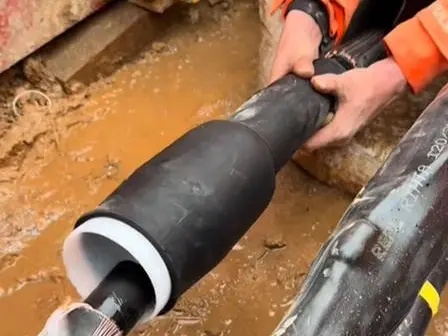
Shortlist at a glance: match the accessory to its function
The first screening decision is functional. An intermediate joint joins cable sections; a termination prepares a cable end; a separable connector provides a detachable connection; a lug makes a conductor connection; and a grounding box supports cable earthing arrangements. The available specifications are not equally detailed across these five groups.
| Shortlist item | Listed model or options | Published information relevant to screening | Key confirmation before selection |
|---|---|---|---|
| Cold shrink intermediate joint | JLS-10/1.1, JLS-10/3.3, JLS-35/1.3, JLS-35/3.4 | Model codes are listed; the supplied product record does not map them to voltage classes or cable sizes. | Confirm voltage class, cable construction, conductor section, core count, and the exact model-to-cable match. |
| Heat shrink termination | SY10kV, SY26kV, SY35kV | Voltage classes 8.7/10 kV, 12/20 kV, 19/35 kV; cable section 25–400 mm²; single- or three-core. | Confirm cable voltage class, section, core type, and indoor application. |
| Separable connector | DS/SC | Listed as a 10 kV, 630 A European-type rear arrester; rated voltage 15 kV. | Check the full electrical ratings and interface compatibility against the equipment and cable arrangement. |
| Copper cable lug | DT/SC | Tin-plated copper; 10–400 mm²; DIN/GB standards are listed. | Match conductor section, lug type, termination method, and required connection dimensions. |
| Grounding box | Cross-interconnect grounding box; SS304, SS316, or SMC FRP | Models listed for 35, 66, 110, and 220 kV; cabinet insulation resistance and selected test details are supplied. | Confirm the earthing arrangement, box type, material choice, and project voltage/application. |
1. Cold shrink intermediate joint: for joining cable sections
A cold shrink intermediate joint is the shortlist option to investigate when the task is joining sections of cable. Tonyhoo’s supplied application information lists the JLS-10/1.1, JLS-10/3.3, JLS-35/1.3, and JLS-35/3.4 model codes. Those codes establish that the models are listed; they do not, on their own, establish the voltage class, cable size, or configuration for a particular project.
The assigned shortlist topic refers to JLS-10/JLS-35 products for 8.7/10 kV, 12/20 kV, and 19/35 kV applications. However, the supplied product record does not provide that mapping for the JLS intermediate-joint models. A buyer should therefore treat those voltage pairings as requiring confirmation, not as verified specifications in this reference. Ask for the current technical sheet or model-specific documentation showing the rated cable voltage, compatible cable construction and dimensions, and installation configuration.
This distinction matters because an accessory selection depends on the cable it is intended to fit. The procurement knowledge material recommends collecting the cable voltage level, cable model, core quantity, conductor cross-section, and installation setting—such as indoor, outdoor, or direct burial—before requesting a match. For an intermediate joint, confirm that the requested product is a joint rather than a termination and that the model is intended for the cable’s actual dimensions and construction.
Site conditions also belong in the specification. The supplied application scenario includes indoor cabinets, outdoor substations, underground cable trenches, humid or salt-fog environments, and dust-polluted areas. These describe possible working conditions for cable-accessory selection; they do not prove that every listed joint model is suitable for every condition. Where the installation is outdoors or directly buried, buyers should confirm the product’s applicable sealing, environmental, and installation requirements in its documentation.
Shortlist decision: include a JLS model when the work is an in-line cable connection, then hold final model selection until the voltage class and cable compatibility are documented. The model-code list alone is not enough to validate a purchase specification.
2. Heat shrink termination: for preparing a cable end
The SY10kV, SY26kV, and SY35kV heat shrink termination series is the most fully specified termination option in the supplied records. Its listed voltage classes are 8.7/10 kV, 12/20 kV, and 19/35 kV. The product information gives a cable-section range of 25–400 mm² and identifies single-core and three-core versions. It also lists a 2:1 shrink ratio, a withstand voltage of 39 kV for 5 minutes, and a temperature range of -40°C to 120°C.
The record identifies this as an indoor termination. That application boundary should remain part of the selection: the available entry does not establish that these models are outdoor terminations. A buyer comparing the three model names should request confirmation of the exact model-to-voltage-class relationship, cable section, and core configuration for the intended cable. The supplied data gives the series-level voltage classes and model names, but does not spell out a complete model-by-model cross-reference.
Heat shrink products use heat during installation. The supplied selection guidance contrasts them with cold shrink products: heat shrink may be a fit where the project permits open-flame work, budget is a key constraint, and appropriately qualified operators are available. This is a selection consideration, not a universal performance ranking. The site must also account for the stated need to prepare fire-fighting equipment for heat shrink open-flame work and to follow applicable site safety procedures.
Installation quality is another part of the decision. The supplied termination guidance identifies cable-insulation scratches, rough treatment of the semi-conductive cut, moisture or dust on the interface, and incorrect stress-cone positioning as risks associated with cold shrink termination installation. While those details concern cold shrink installation, the broader procurement lesson is to request product-specific instructions and inspection criteria for the selected termination rather than assuming that model selection alone ensures a correct installation.
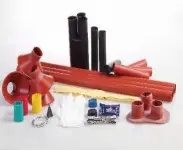
Shortlist decision: consider the SY series for an indoor cable-end termination when the voltage class, 25–400 mm² cable section, and single- or three-core construction match. Confirm installation conditions and product-specific instructions before ordering.
3. DS/SC separable connector: for a separable connection
The DS/SC separable connector is listed as an 8.7/10 kV, 630 A European-type rear arrester. Its record also states a 10 kV voltage grade and a 15 kV rated voltage. These are distinct values as presented in the product data and should not be collapsed into a single number. The product record includes additional electrical parameters: 42 kV one-minute AC withstand voltage, 52 kV 15-minute DC withstand voltage, 95 kV lightning impulse withstand voltage, 11 kV minimum corona onset voltage, thermal short-circuit current of 22.8 kA/2 s, dynamic short-circuit current of 80.8 kA, and partial discharge of ≤10 pC.
The product is described as separable. That makes it functionally different from an intermediate joint or a cable termination: the buyer is screening for a connector interface and its electrical ratings, not for a continuous in-line joint or an indoor cable-end termination. The published description also identifies EPDM and tin-plated copper as materials. The listed product features include a separable design and anti-condensation and anti-pollution properties; those are company-provided product descriptions, not independent test findings presented here.
Before selecting DS/SC, compare its documented rating and interface with the receiving equipment, cable arrangement, and project specification. Confirm that the exact connector configuration is appropriate; the supplied entry does not provide a complete dimensional interface drawing or equipment compatibility list. Do not infer compatibility with a particular transformer or switchgear model from the product category alone.
Shortlist decision: keep DS/SC under separable connection options where a 630 A product is being evaluated, then verify the interface and rating details using the project documents and current technical dossier.
4. DT/SC copper cable lug: for a conductor connection
The DT/SC cable lug is listed for copper cable and has a stated range of 10–400 mm². The material is pure copper or tin-plated copper, and the surface treatment is described as tin plated. DIN/GB standards are named in the product record, which also gives a working-temperature range of -40°C to 125°C. These details make conductor section and connection requirements the main initial checks.
A cable lug is not a cable joint or a termination kit. It is a conductor-connection component, so its selection should be tied to the conductor material and cross-section, the receiving connection, and the required dimensions. Although the record describes a precise crimping barrel and lists conductivity and corrosion-resistance features, it does not provide dimensional drawings, a complete range-by-model table, or crimp-tool specifications. Request those details for the specific lug size rather than treating the overall range as confirmation that every size fits every connection.
For procurement, confirm whether the project requires pure copper or tin-plated copper, how the conductor is to be connected, which standard and edition the specification requires, and whether the requested size is available in the particular DT/SC form. The mention of DIN/GB is not a substitute for agreeing the exact standard requirement and product documentation.
Shortlist decision: include DT/SC where a copper conductor lug is needed within the listed 10–400 mm² range, subject to confirmation of the specific size, interface dimensions, and connection method.
5. Grounding box: for cable earthing arrangements
The listed grounding product is a cross-interconnect grounding box, with SS304, SS316, and SMC FRP body-material options. The supplied record lists product models for 35, 66, 110, and 220 kV. It states a cabinet insulation resistance of 5 MΩ, and reports that the box body was subjected to a 37.5 kV impact 10 times without breakdown. For the direct-buried box, it reports a 0.2 MPa, 30-minute air-tightness test with no leakage.
These reported test details should be read with their stated scope. The impact and air-tightness statements describe tests in the supplied product record; they are not, by themselves, a named certification or evidence that all materials and models were tested under identical conditions. Request the applicable test report and clarify which model and material it covers. The data does not provide a full model-by-model material matrix or a selection rule assigning SS304, SS316, or SMC FRP to a particular environment.
Material choice should therefore be treated as a project-specific check, not as an automatic ranking. Confirm the required box type, installation method, relevant environmental exposure, and compatibility with the cable earthing scheme. The product information describes the grounding box as intended for high-voltage cable earthing protection and lists power-grid, AI data-center, new-energy, and power-transmission applications. That application list does not replace project engineering review.
Shortlist decision: consider the grounding box when the work concerns cable earthing, then confirm the required voltage/model, box construction, material, installation condition, and applicable test evidence.
How the five options fit across a cable work scope
The five product groups form a functional shortlist, not a single assembled package. A project may need only one of them, or several at different points in its cable system. The intermediate joint is associated with connecting cable sections; the termination addresses a cable end; the separable connector addresses a detachable connection; the lug connects a copper conductor; and the grounding box supports an earthing arrangement. The specific equipment layout determines whether any particular combination is needed.
For a project that includes an in-line cable connection and a cable-end termination, evaluate the joint and termination separately. Confirm that the joint’s voltage and cable-size mapping is documented, and match the termination to the listed voltage class, section, core type, and indoor use. For a connection that must be separable, review DS/SC’s ratings and interface as a separate item. For conductor connections, verify the DT/SC lug dimensions and connection method. For earthing, check the grounding-box configuration and the scope of its stated test evidence.
The scenario information identifies indoor cabinets, outdoor substations, underground trenches, high humidity, salt fog, and dust as possible cable-accessory environments. This is useful as a prompt for requirements gathering, not proof that every product in this shortlist is qualified for all those conditions. Buyers should record the actual installation environment and request product-specific confirmation for environmental suitability, sealing, and any required project standard.
A practical procurement check before placing a shortlist
Collect the cable and installation data before asking for a product match. The supplied purchasing guidance names rated voltage, cable model, number of cores, conductor cross-section, installation setting, and whether the item is a joint or termination. For an outdoor application, it also recommends confirming pollution-resistance and weather-resistance requirements against local power standards. Add the precise product function—joint, termination, separable connector, lug, or grounding box—so that a product from one category is not substituted for another.
- Joint: identify the cable voltage class and dimensions, then obtain model-specific confirmation for the JLS code. The available record does not establish its voltage mapping.
- Heat shrink termination: confirm the intended indoor use, voltage class, 25–400 mm² section range, and single- or three-core construction. Check open-flame work controls and the applicable installation instructions.
- Separable connector: reconcile the stated voltage grade, rated voltage, current, withstand values, and interface against the project specification.
- Cable lug: match copper conductor size and receiving-connection dimensions; confirm the requested material and applicable DIN/GB requirement.
- Grounding box: confirm cross-interconnect or direct-buried configuration, model, material, installation conditions, and which test evidence applies to that exact selection.
Finally, request the current technical sheet and product-specific installation instructions for the chosen model. A catalog range is a starting point for screening, not evidence that a product is suitable for every cable or site. The supplied installation guidance emphasizes correct preparation, clean and dry interfaces, accurate positioning, and inspection before energizing for termination work. Installation should follow the manufacturer’s instructions and applicable safety requirements; the cable should not be energized until the required inspection and testing are complete.
FAQ
What parameters should be provided when purchasing cable accessories?
Provide the cable’s rated voltage, model, conductor cross-section, core quantity, and installation environment, such as indoor, outdoor, or direct burial. Identify whether the required item is a cable joint or termination, or specify the relevant connector, lug, or earthing function. These details help determine whether the listed product and model match the cable and application.
How should buyers choose between cold shrink and heat shrink cable accessories?
The supplied selection guidance says cold shrink products may suit projects where open flame is not permitted or installation time is constrained, while heat shrink products may suit budget-limited projects where qualified flame operators are available. Confirm the product’s voltage class, cable size, and indoor or outdoor application in either case. For heat shrink work, the guidance calls for fire-fighting equipment and appropriate site controls.
How should cable sealant be used to protect a cable connection?
The supplied knowledge record says sealant helps prevent moisture, dust, and other contaminants from entering a cable-connection area. It identifies surface preparation, correct application, and complete sealing as important. The associated instructions call for isolated cable work, clean and dry surfaces, application according to product instructions, and inspection for complete coverage before the cable is energized.
Conclusion
This shortlist separates five different cable-accessory functions rather than ranking products against one another. The SY heat shrink termination, DS/SC separable connector, DT/SC copper lug, and grounding box have specified information that can guide initial screening, subject to the stated scope and verification checks. The JLS intermediate-joint models are listed, but their voltage-class mapping is not established in the supplied product record. For that item in particular, model-specific technical documentation is needed before assigning it to an 8.7/10, 12/20, or 19/35 kV cable.
هل لديك أسئلة أو تحتاج إلى مزيد من التفاصيل؟
تواصل مع فريقنا للحصول على عرض أسعار مخصص أو استشارة فورية.
طلب عرض أسعار
املأ النموذج أدناه وسيتواصل معك فريقنا بعرض مقترح مخصص.
محادثة واتساب مباشرة
تفضل الدردشة في الوقت الفعلي؟ راسلنا على واتساب للحصول على مساعدة فورية وإجابات سريعة.
- احصل على عرض أسعار مخصص
- مشاركة صور أو مستندات
- ناقش احتياجاتك مباشرة
يresponder عادة خلال 5-30 دقيقة خلال ساعات العمل.