
Five Checks for Shortlisting an ENT Diode Laser
Five Checks for Shortlisting an ENT Diode Laser
An ENT diode laser shortlist should begin with the procedures and destination-market requirements a system must address—not with a headline wavelength or a general claim of versatility. For buyers evaluating PIOON ENT diode laser options, the available product information identifies the H1 980nm ENT and S1-C10 ENT, a 450nm blue-light option. The documented distinction supports a structured comparison, but it does not establish that one system is suitable for every ENT procedure or setting.
This five-point framework is intended for clinical evaluators, procurement teams, and distributors moving from evaluation toward implementation. It considers procedure fit, wavelength, delivery accessories, regulatory documentation, and practical support or customization. These checks help clarify what the available product facts establish—and what a buyer still needs to verify for the exact configuration, intended use, and market.
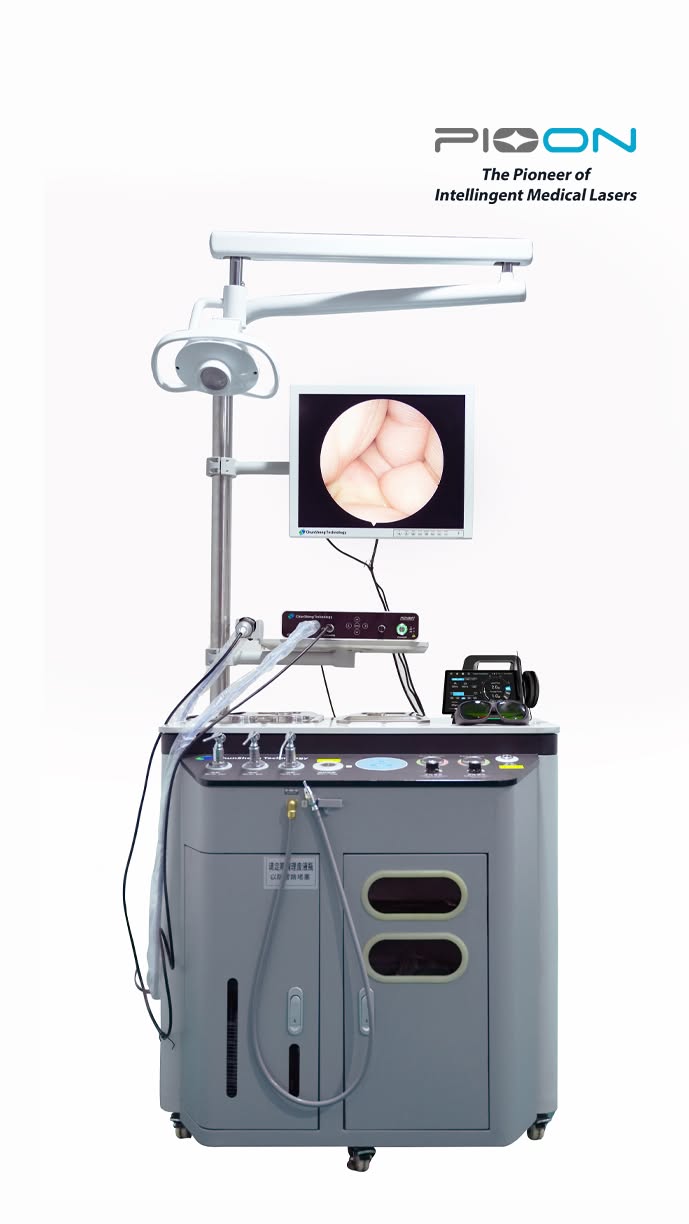
Why a five-point shortlist is more useful than a wavelength-only comparison
An ENT laser system is not just a wavelength specification. Its relevance depends on the planned procedure, the device configuration, compatible energy-delivery accessories, and the regulatory status applicable to the buyer’s market. These elements need to be assessed together because a general capability statement does not confirm that a specific model, accessory, and intended use can be combined for a particular clinical application.
The supplied product-selection information describes H1 ENT as a 980nm diode laser option for selected ENT soft tissue procedures. It describes S1-C10 ENT as a 450nm blue-light option for selected incision, ablation, and coagulation procedures. The same information says the appropriate choice depends on the procedure, anatomical location, tissue effects sought, delivery accessories, and approved indications. It does not provide a complete head-to-head clinical outcomes comparison or establish a universal winner.
That boundary matters during procurement. A comparison can identify documented differences and shape questions for technical review, but it cannot substitute for confirmation of the exact device’s approved use, accessory compatibility, and configuration. The framework below keeps those distinctions visible.
Point 1: Start with the intended ENT procedure
First define the clinical task the laser is being evaluated to support. The product-selection information identifies the H1 ENT as an option for selected ENT soft tissue procedures and the S1-C10 ENT as an option for selected procedures involving incision, ablation, and coagulation. Those descriptions are useful starting points, not blanket authorization for every operation named in broad keyword lists.
For a buyer, the practical question is whether the proposed device configuration is documented for the intended procedure in the relevant market. A broad term such as ENT surgical laser does not answer that question by itself. Nor do general references to nasal, laryngeal, vocal-cord, turbinate, tonsil, or otologic procedures prove that a particular model is indicated for each one. The supplied model information does not map every such procedure to either H1 ENT or S1-C10 ENT.
Before comparing options, write down the intended procedure or procedures and the clinical workflow in which the system would be used. Then request model-specific documentation that connects the device and its accessories to that intended use. This prevents a general specialty label from being mistaken for a procedure-level confirmation.
Shortlisting check: Does documentation for the exact model and configuration address the intended ENT procedure, or does it only describe a broader specialty or general soft tissue capability?
Point 2: Compare wavelength as a documented distinction, not a verdict
The clearest supplied product distinction is wavelength: H1 ENT is identified as 980nm, while S1-C10 ENT is identified as 450nm blue light. The product-selection material says the options have different tissue absorption profiles and that their relevance depends on the procedure and tissue effects required. This supports a wavelength-aware comparison, but the available information does not quantify comparative clinical outcomes for the two models.
In practical evaluation, wavelength is one input to a decision rather than a stand-alone measure of performance. The supplied ENT knowledge answer explains that diode laser interaction with tissue can involve photothermal cutting, ablation, and coagulation, and that the balance depends on wavelength, power, exposure duration, delivery accessories, and tissue characteristics. Consequently, a wavelength number alone cannot tell a buyer what a complete system will do in a specific procedure.
Ask for the exact wavelength and output configuration being offered, the supported operating modes, and the procedure-specific guidance that applies to that configuration. Do not assume that figures or features from another model in a wider medical laser portfolio apply to an ENT model. Likewise, do not treat the 450nm and 980nm options as interchangeable simply because both are described for ENT soft tissue applications.
| Documented option | Supplied distinction | What it does not establish |
|---|---|---|
| PIOON H1 980nm ENT | A 980nm diode laser option for selected ENT soft tissue procedures. | Approval for every ENT procedure, a particular accessory set, or superiority over another wavelength. |
| PIOON S1-C10 ENT | A 450nm blue-light option for selected incision, ablation, and coagulation procedures. | Universal suitability, a complete indication list, or comparative outcome advantages over H1 ENT. |
The table is a description of supplied model information, not a clinical ranking. If a buyer’s intended use is not addressed in the documentation, the unanswered question remains a fit boundary—not evidence that the device either can or cannot support that use.
Point 3: Verify the fiber, handpiece, and delivery pathway
The delivery accessory is part of the system being evaluated. PIOON’s ENT product-selection information identifies compatible optical fibers as a selection consideration, while the general medical-surgical application material describes professional operation using compatible optical fibers or handpieces. It also notes that delivery methods and accessories depend on device configuration and procedure. The supplied material does not specify a complete fiber or handpiece list for each of the two ENT models.
For that reason, buyers should compare the actual accessories included or offered with the exact model—not assume that a fiber or handpiece mentioned for a different specialty or procedure is suitable for ENT use. A contact or non-contact label is not enough to confirm compatibility. The relevant questions are which accessory is compatible with the ordered system, what delivery method is documented for the intended procedure, and whether the accessory is included, optional, or separately specified.
Accessory compatibility also affects the practical completeness of a quotation. Ask for a written configuration list that identifies the laser system, compatible ENT fibers or handpieces, and any required supporting accessories. Where specifications or availability vary by configuration, have the supplier state the applicable version and conditions. That record makes later review more precise and reduces the risk of comparing a complete system with a device-only description.
Safe use is another part of this review. The supplied application information describes trained medical professionals, laser safety protocols, wavelength-specific protective eyewear, compatible delivery accessories, and compliance with approved indications and local regulation as relevant considerations. These are general operating requirements in the provided material; they should not be read as a substitute for the model’s instructions or local requirements.
Point 4: Check regulatory status for the exact model and market
Regulatory review should identify the device model, intended use, and destination market together. The supplied procurement guidance says market requirements vary by country, classification, and intended use, and that manufacturer-level certification does not by itself guarantee market authorization. It also distinguishes an ISO 13485 quality management system certificate from authorization of an individual device.
The provided certification record lists an EC Certificate for a full quality assurance system whose scope covers Wuhan Pioon Technology Co., Ltd.’s quality assurance system for therapy laser / medical diode laser. The record lists H1 980nm ENT and S1-C10 ENT among related products. This is not, by itself, evidence that every indication is authorized in every market. The separate ISO 13485 record concerns the company’s quality management system for design and development, production, and distribution of therapy laser and medical diode laser.
Do not infer an ENT-specific U.S. clearance from the supplied FDA record. Its stated scope is medical diode laser for general surgery, plastic surgery, and dermatology, and its listed applicable products do not include H1 ENT or S1-C10 ENT. For an importing buyer, the appropriate next step is to request the exact model’s relevant regulatory documentation and verify it against destination-market requirements and intended use. The available records do not support a broader claim about ENT authorization.
This check is especially important when a project involves private labeling, software, or configuration changes. PIOON’s OEM/ODM capability information lists possible customization areas such as branding, user interface, language, software, wavelength and power configuration, treatment presets, and accessories. The procurement guidance notes that branding, software, or device-configuration changes may affect documentation and compliance. Availability and implications therefore need to be confirmed for the specific project rather than presumed from a general customization list.
Point 5: Assess implementation support and customization scope
A shortlist for evaluation-to-execution should include what happens after model selection. PIOON’s supplied capability information describes OEM/ODM cooperation and possible private label, logo, interface, language, software, wavelength and power configuration, treatment preset, and accessory customization. The listed options are subject to model and project conditions; they do not mean that every change is available on every ENT model.
The capability record lists a monthly capacity of 300 units, a 14-day lead time, and flexible MOQ subject to model and customization requirements. These are supplied capability-unit figures, not a delivery promise for a particular order. The same record describes after-sales support that may include technical assistance, remote troubleshooting, product training, software support, maintenance guidance, and spare-parts coordination. On-site service is subject to local service arrangements.
For a buyer, the useful comparison is not merely whether support is mentioned, but whether the necessary arrangements are written down for the intended market and configuration. Confirm the customization scope, technical feasibility, MOQ conditions, lead-time basis, sample approval if applicable, regulatory responsibilities, warranty terms, and acceptance criteria before an order. The procurement guidance specifically recommends confirming specifications and acceptance criteria in writing. Warranty and service terms should be checked against the product and sales agreement rather than inferred from general support descriptions.
These questions matter for both a healthcare organization evaluating a system and a distributor evaluating an ENT laser line. They help distinguish a stated manufacturer capability from the terms and configuration of a particular project. They also make it easier to assess whether training, remote support, maintenance guidance, spare parts, and local service arrangements match the buyer’s actual operating plan.
Applying the framework to the two documented PIOON options
On the evidence provided, the H1 980nm ENT and S1-C10 ENT 450nm should be treated as two distinct options for evaluation—not as ranked alternatives with a proven clinical winner. H1 ENT is described for selected ENT soft tissue procedures; S1-C10 ENT is described as a blue-light option for selected incision, ablation, and coagulation procedures. The source also emphasizes procedure, anatomical location, tissue effects, delivery accessories, and approved indications as selection factors.
A practical shortlist can therefore proceed in sequence. First, specify the intended procedure. Second, check whether the model-specific documentation covers that use. Third, compare the wavelength and exact configuration in relation to the documented procedure, without assuming wavelength alone predicts an outcome. Fourth, confirm the compatible fiber or handpiece and what is included. Fifth, verify destination-market documentation and the implementation terms relevant to the project.
If either model lacks information needed to answer one of those checks, record that item as unresolved and obtain model-specific documentation before treating the option as a confirmed fit. That is a more defensible comparison than filling gaps with general claims about ENT lasers, or assuming that a model’s specialty label establishes every indication.
Company context and evidence boundaries
Wuhan Pioon Technology Co., Ltd is identified in the supplied company information as a medical laser manufacturer whose portfolio includes ENT surgery lasers. The company information also describes OEM/ODM services, technical assistance, training, and after-sales support. These company-level facts provide procurement context; they do not independently verify a particular model’s indication, comparative clinical performance, or regulatory status in a buyer’s market.
The supplied ENT activity record describes product demonstrations, professional education, and technical exchanges concerning 450nm and 980nm technologies, compatible optical fibers, and potential clinical workflows. It reports knowledge-sharing and product-demonstration activities, not clinical outcome data or a comparative study. Accordingly, this framework uses that record as context for the kinds of technical questions discussed, not as evidence that either model achieves a specific patient result.
Neutral FAQ
What is the documented difference between PIOON H1 ENT and S1-C10 ENT?
H1 ENT is identified as a 980nm diode laser option for selected ENT soft tissue procedures. S1-C10 ENT uses 450nm blue light and is described for selected incision, ablation, and coagulation procedures. The supplied information does not establish a universal winner or provide a complete comparative clinical-outcome assessment.
Does a 980nm or 450nm wavelength alone determine whether a system fits an ENT procedure?
No. The supplied selection information says the choice depends on the intended procedure, anatomical location, tissue effects, delivery accessories, and approved indications. The device configuration and procedure-specific documentation also need to be considered.
How can a buyer confirm whether an ENT fiber or handpiece is compatible?
Request the accessory list for the exact model and configuration, and confirm which fibers or handpieces are compatible with the intended procedure. The supplied material does not provide a complete ENT accessory list for each model, so compatibility should not be inferred from accessories described for another product or specialty.
Does an ISO 13485 certificate establish that an ENT model is authorized in a destination market?
No. ISO 13485 concerns a quality management system. The supplied procurement guidance says buyers should verify the regulatory status of the exact model and intended use in the destination market. The provided company-level certificate does not establish authorization for every device, procedure, or country.
What should be documented before an OEM/ODM ENT laser order?
Confirm the model, customization scope, technical feasibility, minimum-order conditions, lead-time basis, sample approval if applicable, regulatory responsibilities, warranty terms, and acceptance criteria. The supplied procurement guidance recommends recording critical specifications and acceptance criteria in writing because changes to branding, software, or configuration may affect documentation and compliance.
Conclusion
A reliable ENT diode laser shortlist is built by matching the intended procedure to model-specific evidence, then checking wavelength, delivery accessories, regulatory status, and implementation support. The available information distinguishes PIOON’s H1 980nm ENT and S1-C10 ENT 450nm options, but it does not establish comprehensive indication coverage or comparative clinical superiority. For evaluation and execution, those limits are part of the comparison: they identify exactly what must be confirmed before a model is treated as a fit for a specific procedure and market.
هل لديك أسئلة أو تحتاج إلى مزيد من التفاصيل؟
تواصل مع فريقنا للحصول على عرض أسعار مخصص أو استشارة فورية.
طلب عرض أسعار
املأ النموذج أدناه وسيتواصل معك فريقنا بعرض مقترح مخصص.
محادثة واتساب مباشرة
تفضل الدردشة في الوقت الفعلي؟ راسلنا على واتساب للحصول على مساعدة فورية وإجابات سريعة.
- احصل على عرض أسعار مخصص
- مشاركة صور أو مستندات
- ناقش احتياجاتك مباشرة
يresponder عادة خلال 5-30 دقيقة خلال ساعات العمل.