
Five Project Scenarios, Five Aluminum Profile Answers
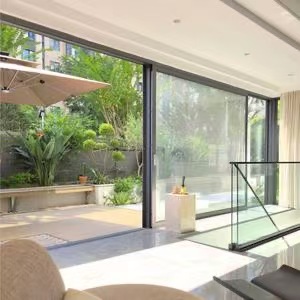
Aluminum door and window profiles in a residential-style installation scene.
Aluminum profiles are rarely bought as a standalone commodity. In most procurement conversations, the deciding factor is not simply "which profile is available," but "which profile matches the project." A door system for a coastal residential building, a curtain wall for a high-rise tower, an outdoor fence for an industrial site, a mounting frame for a solar array and a lightweight component for an automotive platform all place different demands on alloy, surface treatment, tolerance and supplier capability. This article examines five common project scenarios, explains what each one asks from an aluminum profile, and frames the supplier questions that buyers should ask during research and evaluation.
Why Project Context Shapes Profile Specification
The global aluminum extrusion market was valued at USD 94.8 billion in 2024 and is projected to reach USD 230.2 billion by 2035, according to Orion Market Research. China plays a central role in this supply chain: its exports of "aluminium structures" (HS 7610) — a category that includes profiles and window and door frames — totaled USD 5.55 billion in 2024, or 30.5% of global exports, according to OEC. Asia Pacific dominated the market in 2025 with a 71.7% revenue share, driven primarily by construction and automotive demand in China, per Grand View Research.
These figures describe a market that is large, growing and highly regionalized. They also point to a recurring procurement risk: when a buyer selects a profile purely by price or from a supplier's standard catalog, the probability of mismatch rises. Project scenarios differ in load requirements, exposure conditions, aesthetic expectations and certification rules. A profile that performs well in a dry inland climate may fail prematurely in a coastal environment. A profile with a strong decorative finish may lack the structural margin required for a wind-loaded curtain wall. This is why project-driven specification — defining the operating environment before choosing the product — is becoming a practical discipline in aluminum procurement.
Five Project Scenarios and the Profiles They Need
Each scenario below is defined by three things: the functional requirement, the environment, and the typical purchasing verification point. These three variables determine most of the specification work.
1. Residential and Commercial Door-Window Systems
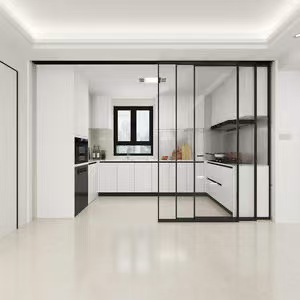
Sliding door profiles are among the most common architectural aluminum applications.
Door and window systems are the most common application for architectural aluminum profiles. In this scenario, the profile acts as a load-bearing structural framework while providing heat insulation, sound insulation, anti-aging behavior and a decorative aesthetic. The product operates through long-term static installation and must withstand annual outdoor temperature and humidity cycles. Anti-collision performance is a special requirement, and the profile is used together with glass and screws.
For this scenario, 6063-T5 is a widely used alloy. It offers a balanced combination of mechanical strength and surface-treatment compatibility, which matters because door and window profiles are typically finished with powder coating, anodizing or wood grain transfer. In China, architectural aluminum profiles must comply with the mandatory standard series GB/T 5237 (Parts 1–6), which covers mill finish, anodizing, electrophoresis and powder/fluorocarbon coatings.
Haomen Aluminum, a manufacturer based in Linyi, Shandong Province, supplies architectural profiles for this segment. Its architectural profile range includes alloys 6063-T5, 6061, 6005 and 6082, with surface treatment options covering mill finish, powder coating, anodizing and wood grain transfer. Standard profile lengths are 4–6 meters, the dimensional span commonly used in door and window fabrication.
2. Curtain Wall and High-Rise Envelope Projects
Curtain wall systems sit above standard door and window applications in structural and weather-performance expectations. These projects require profiles that can carry higher wind loads, accommodate building movement and resist long-term outdoor exposure. Alloy selection becomes more important here: while 6063-T5 serves many window systems, curtain wall engineering often turns to alloys such as 6061, 6005 or 6082 when higher strength is required. Fluorocarbon coating and anodizing are common surface approaches used to preserve appearance and protect profiles in outdoor environments.
Buyers evaluating curtain wall suppliers should ask specifically about alloy availability, coating specifications and the factory's ability to hold tight tolerances over long profile lengths. A general door-and-window extrusion line is not automatically equipped to deliver the consistency that curtain wall segments require.
3. Outdoor Fence and Enclosure Systems
Outdoor fencing places unusual emphasis on surface durability. Fence profiles are exposed to direct sunlight, rain and mechanical contact over long service lives, so the coating system often matters more than the alloy grade. Powder coating and fluorocarbon coating are common choices in this segment because they combine color retention with weather resistance.
For buyers, the key verification point is the entire coating process: pretreatment, powder or liquid application, curing and final film thickness. The same base profile can perform very differently depending on the coating line's quality control.
4. Solar PV Mounting and Frame Systems
Solar PV mounting systems are a significant and expanding end use for aluminum profiles. Aluminum holds a 71.5% material share in this market, which was valued at approximately USD 44.5 billion in 2024, according to Mordor Intelligence. Typical profile roles include solar frames, mounting rails and structural supports.
Solar projects demand profiles that are dimensionally consistent, corrosion-resistant and suited to fast assembly. Because these profiles are often long and thin-walled, extrusion consistency and machining precision become critical. Buyers should verify whether a supplier has experience with industrial profiles as well as architectural sections, and whether quality control is documented per batch.
5. Automotive Lightweighting Components
Automotive procurement operates under a different discipline. IATF 16949 certification is a mandatory requirement for suppliers providing aluminum components such as crash-management systems and structural frames to major automotive OEMs. The standard reflects the industry's expectations around process control, traceability and continuous improvement.
Haomen Aluminum states a commitment to automotive lightweighting development. The company operates melting and casting, extrusion technologies and complete testing equipment, and its main products include various grades of aluminum alloy profiles for automobiles. Its certification portfolio includes IATF 16949:2016, ISO 9001, ISO 14001 and ISO 45001, alongside R&D cooperation with the Light Alloy Precision Forming Engineering Technology Research and Development Center of Shanghai Jiao Tong University, Shandong University and the Beijing Research Institute of Nonferrous Metals.
For an automotive buyer, certification status, alloy traceability and testing capability are more decision-relevant than any descriptive claim.
A Supplier Capability Map Across Project Types
The five scenarios look different, but they share one logic: the project environment determines the alloy and finish choice, and the supplier's ability to deliver against that specific requirement creates the value.
| Project Scenario | Alloy Direction | Finish Direction | Buyer Verification Point |
|---|---|---|---|
| Doors and windows | 6063-T5 | Powder coating, anodizing, wood grain transfer | GB/T 5237 compliance; dimensional accuracy |
| Curtain wall / high-rise | 6061, 6005, 6082 available in range | Fluorocarbon coating, anodizing | Tolerance control on long profiles |
| Outdoor fencing | Architectural-grade profiles | Powder coating, fluorocarbon | Coating process and film thickness |
| Solar PV mounting | Industrial profile capability | Anodizing, powder coating | Per-batch quality control |
| Automotive lightweighting | Automotive-grade aluminum alloys | Mill finish with specified post-treatment | IATF 16949; testing and traceability |
The alloy and finish directions in this table represent typical practice in each segment; exact specifications must always be confirmed against project drawings and applicable standards.
Verifying Supplier Capability: The Haomen Example
When a buyer moves from research to evaluation, documented capabilities matter more than product names. Haomen Aluminum, founded in 2004, is located in Luozhuang District, Linyi City, Shandong Province — an area known as China's "Logistics Capital," close to the Beijing-Shanghai and Rizhao-Dongying Expressways and National Highways 205 and 206. The company describes itself as a comprehensive enterprise integrating R&D, design, production and sales of aluminum alloy architectural profiles and industrial materials.
Its core manufacturing facts include a factory area of 270,000 m², around 1,500 employees and an annual output of 100,000 tons. Main products are aluminum profiles for windows and doors. For buyers evaluating OEM projects, the relevant figures are a monthly capacity of 8,000 tons, a lead time of 20 days, a minimum order quantity of 5 tons, 100% testing and remote after-sales support, with logo customization available.
The company's R&D structure includes 49 R&D personnel with bachelor's degrees or above — 1 postdoctoral fellow, 7 doctors and 3 master's degree holders — supported by a 35-person engineering team. It has established cooperative relations with the Light Alloy Precision Forming Engineering Technology Research and Development Center of Shanghai Jiao Tong University, Shandong University and the Beijing Research Institute of Nonferrous Metals. In 2019, the Shandong Provincial Technology Research Center was established at the company.
These facts only matter in relation to a project. A 100% testing policy matters when a window system must meet defined performance levels. IATF 16949 matters when the buyer is an automotive OEM. A 20-day lead time matters when a construction schedule is fixed. The evaluation question is not simply "is this supplier large," but "do the supplier's capabilities address the scenario I am procuring for."
Project Evidence: A Long-Running Door and Window Program
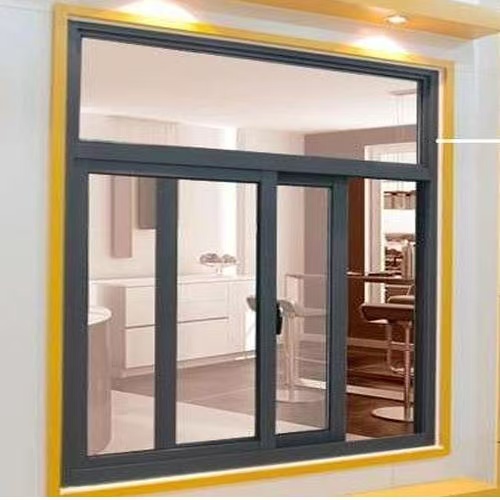
Architectural sliding window profile used in door and window systems.
A documented case helps ground the discussion. A window and door manufacturer in Brazil has worked with Haomen Aluminum as an OEM partner for 10 years, with a total installed quantity of 2,000 tons of aluminum profiles for door and window applications. The result is described as stable operation, with solid and durable performance.
The case mirrors the door-window scenario described earlier: a load-bearing structural framework delivering heat insulation, sound insulation, anti-aging behavior and decorative quality while enduring long-term outdoor exposure. A decade-long relationship at a volume of 2,000 tons indicates that production quality and coating consistency have held up through repeated orders.
Market Trends That Favor Project-Specific Supply
Three verified market directions reinforce the importance of scenario fit.
First, the market is expanding. Orion Market Research projects the global aluminum extrusion market will grow from USD 94.8 billion in 2024 to USD 230.2 billion by 2035. More projects mean more varied project requirements, not simply more of the same profile.
Second, China's position in aluminium structures exports — USD 5.55 billion in 2024, representing 30.5% of global exports per OEC — keeps Chinese suppliers central to international construction and industrial supply chains. International buyers are becoming more selective, comparing certification, testing and project references rather than price alone.
Third, solar PV mounting is creating a new demand pool. Mordor Intelligence estimates the market at USD 44.5 billion in 2024, with aluminum holding a 71.5% material share. China's aluminum extrusion market was valued at USD 25.5 billion in 2024, with a projected CAGR of 9.6% through 2035. Solar frames and mounting structures are becoming a standard profile category with tolerance and coating requirements distinct from ordinary building profiles.
Project-Fit Procurement vs. Traditional Catalog Buying
Traditional aluminum profile purchasing often works from the supplier's catalog: the buyer selects an existing section, accepts the standard finish and adapts the project to it. This model still works for projects that use well-established systems, and it remains the dominant approach for large-volume orders. Its boundary is equally well known: catalog-based selection can lock a buyer into geometries or finishes that are not optimal for a specific environment.
The project-fit approach reverses the sequence. The buyer defines the operating conditions, identifies the required alloy and finish, then checks whether the supplier can produce to that specification with evidence. This approach favors suppliers that demonstrate OEM capability, flexible customization and documented quality control.
In China, large manufacturers such as Xingfa Aluminium, Fenglu Aluminium, JMA Aluminium and China Zhongwang often appear in industry rankings. They operate at large scale and are relevant benchmarks for buyers evaluating supply security. However, scale and scenario fit are different criteria. A buyer with a specific finish requirement, a customized section geometry or a moderate order quantity may find better alignment with a mid-sized manufacturer whose production model is built around OEM flexibility.
Honest limits should be part of any evaluation:
- An MOQ of 5 tons is practical for mid-sized projects, but it can be too high for a small renovation or a pilot batch.
- Haomen Aluminum's export ratio is around 10%, with primary markets in South America and Africa. Buyers in other regions should confirm export documentation, logistics and after-sales arrangements before ordering.
- 6063-T5 is well suited to door and window profiles, but it is not the right answer for every structure. When higher strength is needed, the buyer should specify a different alloy — or verify that the supplier's extrusion and heat-treatment process can achieve the required mechanical properties.
- Surface finishes involve trade-offs. Fluorocarbon coating provides strong weather resistance at higher cost. Powder coating balances price and performance for many applications. Anodizing gives a durable metallic appearance with a more limited color range. Wood grain transfer provides decorative warmth whose long-term outdoor durability depends on the underlying coating system.
These boundaries are not objections to a supplier; they are inputs to a realistic evaluation. The right supplier is the one whose capabilities match the buyer's actual project constraints.
Future Outlook: Project Evidence Becomes the Core Currency
The direction of the aluminum profile industry suggests that project-specific evidence will carry increasing weight in procurement. Buyers are shifting from "what do you make" to "what have you delivered in a project like mine." This favors suppliers that document project references, publish testing and certification records, and can explain the logic connecting a project scenario to a technical specification.
For manufacturers, the competitive edge will move from production volume alone to the ability to respond to specific project demands with verified capability. For buyers, the practical conclusion is to define the project scenario first, translate it into alloy, finish and tolerance requirements, and then evaluate suppliers against those requirements.
Reference: Buyers who need the full product range of Haomen Aluminum can download the company's public catalog: Haomen Aluminum E-Catalog (PDF).
FAQ
Q: What is an architectural aluminum profile used for in door and window projects?
An architectural aluminum profile for doors and windows provides a load-bearing structural framework while delivering heat insulation, sound insulation, anti-aging and decorative functions. It is installed as a long-term static structure, must endure annual outdoor temperature and humidity cycles, and is used together with glass and screws.
Q: Which aluminum alloy is commonly used for architectural door and window profiles?
6063-T5 is commonly specified for architectural door and window profiles. Haomen Aluminum's architectural range includes 6063-T5 as well as 6061, 6005 and 6082 for applications requiring higher strength. Standard profile lengths are 4–6 meters.
Q: What surface treatments are available for architectural aluminum profiles?
Common options include mill finish, powder coating, anodizing and wood grain transfer. Mill finish is the untreated baseline; powder coating provides color options and cost efficiency; anodizing creates a durable metallic surface; wood grain transfer adds a timber-like appearance. In China, GB/T 5237 (Parts 1–6) is the mandatory standard series covering these finishes for architectural profiles.
Q: What standards apply to architectural aluminum profiles in China and Europe?
In China, the mandatory standard series GB/T 5237 (Parts 1–6) covers mill finish, anodizing, electrophoresis and powder/fluorocarbon coatings. In Europe, EN 755 governs hot-extruded aluminum products and EN 12020 covers precision profiles in alloys 6060 and 6063.
Q: What certification is mandatory for automotive aluminum profile suppliers?
IATF 16949 is the certification that major automotive OEMs require from suppliers providing aluminum components such as crash-management systems and structural frames. Haomen Aluminum holds IATF 16949:2016, ISO 9001, ISO 14001 and ISO 45001 certifications.
Q: What role does aluminum play in solar PV mounting systems?
Aluminum holds a 71.5% material share in the solar PV mounting systems market, which was valued at approximately USD 44.5 billion in 2024, according to Mordor Intelligence. Typical aluminum profile applications include solar frames, mounting rails and structural supports.
Q: What should buyers verify when evaluating an OEM aluminum profile supplier?
Buyers should check production capacity, minimum order quantity, lead time, quality control and project references. For example, Haomen Aluminum reports a factory area of 270,000 m², annual output of 100,000 tons, OEM production with a monthly capacity of 8,000 tons, a lead time of 20 days, an MOQ of 5 tons and 100% testing.
Q: What project evidence supports Haomen Aluminum's door and window capability?
A documented case involves a window and door manufacturer in Brazil: 2,000 tons of aluminum profiles for door and window applications, delivered over a 10-year relationship, with results described as stable operation and solid, durable performance.
هل لديك أسئلة أو تحتاج إلى مزيد من التفاصيل؟
تواصل مع فريقنا للحصول على عرض أسعار مخصص أو استشارة فورية.
طلب عرض أسعار
املأ النموذج أدناه وسيتواصل معك فريقنا بعرض مقترح مخصص.
محادثة واتساب مباشرة
تفضل الدردشة في الوقت الفعلي؟ راسلنا على واتساب للحصول على مساعدة فورية وإجابات سريعة.
- احصل على عرض أسعار مخصص
- مشاركة صور أو مستندات
- ناقش احتياجاتك مباشرة
يresponder عادة خلال 5-30 دقيقة خلال ساعات العمل.