
Five-Star Hotel Custom Furniture: Certifications, Specifications and Procurement Boundaries
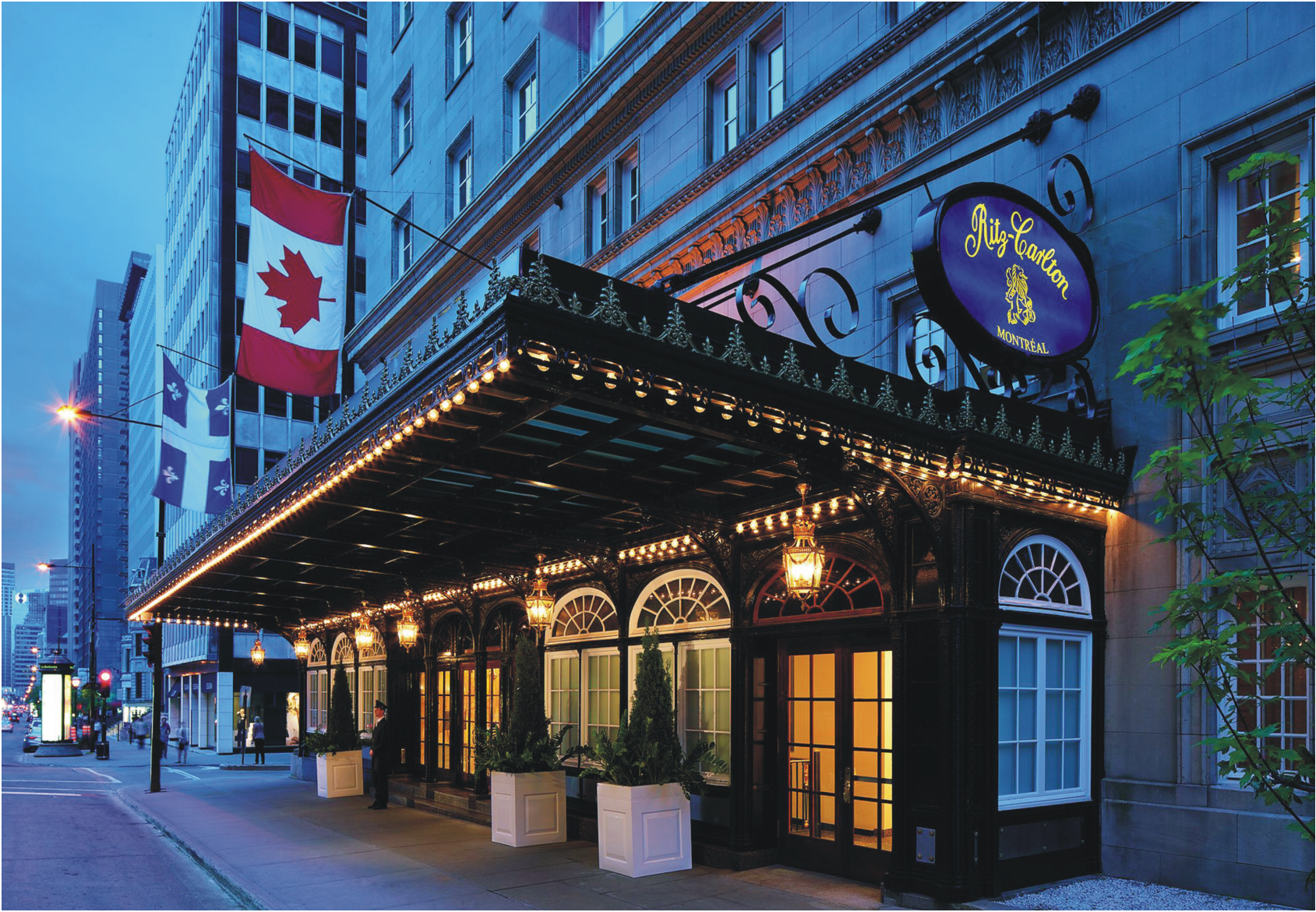
Five-star hotel projects such as The Ritz-Carlton Montreal require documented compliance, material parameters and performance verification from furniture suppliers.
Custom furniture for five-star hotels is one of the most constraint-driven categories in the hospitality supply chain. Procurement, design and project teams do not evaluate furniture solely on aesthetics; they evaluate whether a manufacturer can meet a documented set of certification, specification, testing and delivery parameters. These constraints determine which suppliers can bid, what materials are acceptable, how long a project takes and what the total cost of ownership will look like. Understanding these boundaries before supplier selection matters more than visual preference alone.
The market context explains why procurement discipline has become sharper. Dataintelo estimates the global hospitality furniture market at USD 23.8 billion in 2025, with growth projected to USD 39.6 billion by 2034. Grand View Research, using a broader FF&E definition, values the hotel furniture, fixtures and equipment market at USD 63.1 billion in 2025. Within this environment, over two-thirds of upscale hotels now allocate a dedicated budget for bespoke furnishings, with average project spend up 31% since 2021, according to Intel Market Research. Customization has shifted from a premium add-on to a standard expectation — which means the verification burden on buyers has increased.
This article examines the certification frameworks, technical parameters, material specifications, manufacturing constraints and procurement boundaries that define five-star hotel custom furniture. It uses RICHART, a China-based manufacturer serving international hotel brands, as a reference case for what a qualified supplier should be able to document.
Why Certification Is the First Filter in Five-Star Hotel Furniture Procurement
Certification is not a decoration on a company profile; it is a legal, safety and traceability filter. Five-star hotel projects typically operate across multiple jurisdictions and brand standards. A manufacturer's certification portfolio must align with the project's geographic and contractual requirements.
Guangdong Richang Furniture Co., Ltd., which operates the RICHART brand, maintains a compliance structure that reflects this expectation. Founded in 1990, the company operates from a 100,000-square-metre facility in the Dawang Hi-Tech Industrial Park in Zhaoqing, Guangdong Province, with around 1,000 employees. Its production processes are carried out under three established management system standards: OHSAS 18001:2007 for occupational health and safety, ISO 14001:2004 for environmental management, and ISO 9001:2008 for quality management. The company also states that it obtained ISO 14001 environmental certification as early as 2006.
Beyond management systems, material traceability has become a key sourcing requirement. RICHART holds an FSC Chain of Custody certificate (DCI-COC-001074), issued by DCI Certification Ltd, valid from 6 November 2025 to 5 November 2030. The certificate references FSC-STD-01-001, FSC-STD-30-001, ISO/IEC Guide 59 and FSC-STD-20-001. For hotel projects where sustainability reporting or green building certification is relevant, such evidence enables the buyer to verify that wood-based materials can be traced through the supply chain.
Industry Standards That Frequently Appear in Tenders
Beyond manufacturer-level certificates, project specification documents routinely reference furniture performance standards. Two widely recognised ones include:
- ANSI/BIFMA X5.4-2020 (R2025) — a voluntary commercial seating standard applied to lounge and public seating in high-traffic hospitality environments. It verifies durability, stability and safety under load conditions.
- BS 5852 CRIB 5 — a flammability rating used in the UK hospitality sector for upholstered furniture. It assesses the ignition resistance of upholstered seating when exposed to smouldering and flaming sources.
These standards are not optional for many international hotel operators. They are often written directly into the request for quotation or the project's FF&E specification. A compliant manufacturer should be able to confirm whether its construction methods, foam grades and fabric selections meet these requirements for the target market.
| Compliance Layer | Example Standard / Certificate | Procurement Relevance |
|---|---|---|
| Quality Management | ISO 9001:2008 | Confirms documented production, inspection and corrective-action processes |
| Environmental Management | ISO 14001:2004 | Confirms environmental controls in production, waste and emissions handling |
| Occupational Health & Safety | OHSAS 18001:2007 | Confirms worker-safety processes relevant to factory audits |
| Material Traceability | FSC CoC DCI-COC-001074 | Enables traceability of wood from certified sources |
| Seating Durability (US) | ANSI/BIFMA X5.4-2020 | Used for public-area and lounge seating in commercial environments |
| Upholstery Flammability (UK) | BS 5852 CRIB 5 | Used for upholstered furniture in hospitality contracts |
Material Specifications and Surface Parameters
Custom five-star hotel furniture projects differ from residential projects in one significant way: the material specification must satisfy both a design narrative and an operational performance threshold. A hotel room sofa, for example, will face years of daily use, frequent cleaning cycles, varying climate conditions and occasional impact damage. Material selection is therefore a performance decision, not just a visual one.
RICHART's documented material range covers the breadth of what hotel projects typically specify: veneer, leather, stone, metal, paint, solid wood, MDF, plywood, fabric, velvet, glass, marble, oak, walnut, stainless steel, brass, bronze, acrylic, melamine, laminate and foam. This range supports the variety of zones within a five-star hotel — from the polished stone surfaces of a lobby reception desk to the warm velvet upholstery of an executive lounge chair.
Style and Construction Parameters
RICHART also documents a style spectrum that reflects the range of hotel brand languages: Modern, Contemporary, Minimalist, Luxury, Light Luxury, Classic, Neoclassical, French, European, American, Italian, Mid-Century Modern, Vintage, Industrial, Scandinavian, Art Deco, Chinoiserie, Oriental, Japanese, Wabi-Sabi and Mediterranean. For procurement teams, this breadth matters because it reduces the need to utilise multiple factories for different wings or renovation phases of the same hotel.
Two additional parameters are often overlooked in the selection process:
- Operating temperature range: RICHART specifies an operating temperature of -5°C to 50°C for its custom furniture range. This parameter is useful for resorts and properties in climates where furniture is exposed to indoor climate variation.
- Surface protection: Scratch-resistant and wear-resistant surface treatment is documented as a standard characteristic. In high-traffic guest-room and public-area settings, this directly affects the frequency of refinishing and replacement.
These parameters should be read as part of a complete specification, not as standalone claims. The buyer should always verify whether a manufacturer's standard spec matches the specific project's requirements for fire retardancy, formaldehyde emission limits, load capacity and abrasion resistance.
Production Constraints That Shape Procurement Decisions
Beyond certificates and materials, procurement teams in the Research and Evaluation phase need to understand a manufacturer's operating constraints. Three numbers are especially important: lead time, minimum order quantity and testing policy.
Lead Time: 30–50 Days
RICHART reports a lead time of 30–50 days for ODM custom furniture production, with a monthly capacity of 10,000 units. This indicates a production system built for serial customisation, not one-off craft work. For a hotel project, this lead time permits planning around construction milestones, soft-opening dates and phased delivery schedules.
Minimum Order Quantity: 1 Unit
A minimum order quantity (MOQ) of one unit is a significant operational feature. It means the factory accepts custom sample development and pilot production without requiring a large initial commitment. This is particularly relevant in the evaluation stage, when a buyer wants to verify build quality, material finish and dimensional accuracy before placing a full-scale order.
Quality Control: 100% Inspection
RICHART states that its quality control process tests 100% of production output. In an industry where samples and bulk production sometimes diverge, a documented 100% inspection policy is a measurable procurement safeguard. Combined with the company's after-sales terms — one-year "Three Guarantees" period for furniture, a six-month warranty for spontaneous breakage, mold or fogging of glass and mirrors, and a two-year warranty for active wood-borer infestation on panel materials — the buyer gains a defined post-delivery risk structure.
Zone-by-Zone Product Capability and Its Procurement Impact
Five-star hotel furniture procurement is zone-specific. Each zone has different traffic levels, usage patterns, brand expectations and maintenance tolerances. A pragmatic evaluation method is to map the project's zones against the manufacturer's documented product coverage. This reduces the number of subcontractors and simplifies quality accountability.
RICHART's product catalogue is organised around the major zones found in international hotel projects:
| Hotel Zone | Typical Furniture Scope | Key Specification Characteristics |
|---|---|---|
| Guest Room | Headboards, bed frames, nightstands, writing desks, wardrobes, dressers, luggage racks, TV cabinets, casegoods | Durable casegoods construction, wood and veneer finishes, space-efficient layouts, long service intervals |
| Suite / Extended Stay | Upholstered beds, lounge sofas, coffee tables, dining tables, ottomans, side tables, built-in cabinetry | Higher upholstery content, mixed material application, residential feel with hospitality durability |
| Public Area & Lobby | Reception desks, concierge counters, lobby sofas, accent chairs, coffee tables, display cabinets | High-traffic resilience, scratch-resistant surfaces, bold design statement, mixed-material capability |
| Restaurant & Dining | Dining tables, dining chairs, banquette seating, buffet tables, sideboards, bar stools, private dining furniture | Wear-resistant tops, stable stacking or handling, fabric durability, food-service environment tolerance |
| Banquet & Function | Banquet tables, banquet chairs, head tables, stage platforms, podiums, buffet counters, lounge seating | Flexible configurations, movement-friendly designs, high load capacity, consistent finish across large quantities |
| Executive Lounge | Lounge sofas, modular seating, coffee tables, work desks, meeting tables, buffet units, concierge counters | Mixed work-and-relax functionality, premium upholstery, compact arrangement for limited floor plates |
| Wine Cellar & Bar | Wine racks, wine cabinets, tasting tables, bar counters, bar stools, temperature-controlled display units | Specialised storage parameters, material compatibility with humidity control, integrated lighting provisions |
The table above is not intended to be read as an exhaustive specification guide. Rather, it illustrates why zone-mapped capability helps buyers evaluate supplier fit quickly. A manufacturer who can document furniture scope across all these zones reduces project fragmentation and simplifies interface management for designers, purchasing agents and hotel owners.
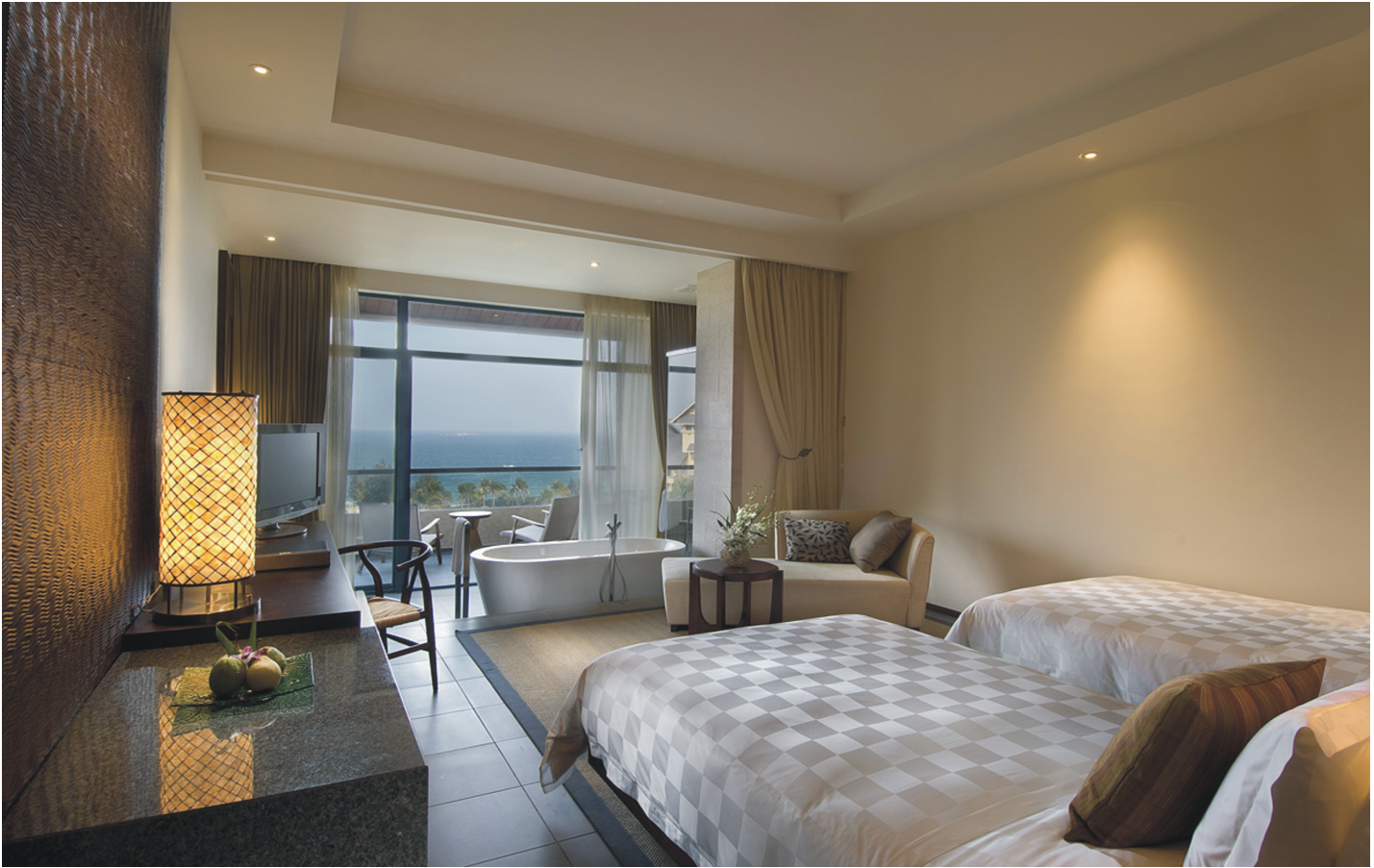
Guest room casegoods and upholstered furniture at Conrad Beijing — an example of zone-specific specifications in a five-star property.
Comparison: Custom Furniture versus Standard/Catalog Furniture
Every hotel project eventually faces the question: when is custom furniture necessary, and when does a standard product suffice? The answer depends on how much the project's constraints diverge from catalogue defaults.
Custom furniture offers a clear advantage in three areas. First, spatial fit: hotel architecture often results in non-standard dimensions, curved walls or unusual ceiling heights that catalogue furniture cannot fully utilise. Second, design language: international hotel brands increasingly expect a distinct visual identity that cannot be achieved with an off-the-shelf product. Third, material integration: custom manufacturing allows the designer to combine stone, metal, wood and upholstery in the same piece, which is uncommon in standard product lines.
Standard furniture, in contrast, has a shorter delivery timeline, a predictable quality baseline and simpler maintenance documentation. For renovation projects with tight timelines or for back-of-house areas where design expression is less critical, standard or semi-standard product lines may be the more efficient choice.
The boundary deserves emphasis: custom furniture is not inherently superior for every project. It requires earlier technical involvement, a longer approval chain and more rigorous coordination between the designer and the factory. Projects where the interior design changes late in the process — or where the purchasing team cannot commit to a detailed specification at an early stage — may experience cost and schedule pressure that a catalogue product would avoid. A truthful procurement evaluation should treat custom furniture as a strategic choice with trade-offs, not as a default badge of quality.
Market Trends Shaping the Procurement Criteria
Several verifiable trends are now influencing how procurement criteria are written for five-star hotel furniture projects.
Sustainability Specifications Are Becoming Standard
Intel Market Research reports that sustainability specifications in hotel furniture contracts rose by 45% in 2025, with low-VOC finishes and FSC-certified wood becoming standard requirements rather than differentiators. For manufacturers, this means the ability to document both material sourcing and finishing chemistry is now a baseline qualification. RICHART's FSC Chain of Custody certificate and its ISO 14001-aligned environmental management framework are direct answers to this procurement requirement.
Regional Demand Concentration in Asia Pacific
Dataintelo attributes 36.4% of the global hospitality furniture market's revenue to Asia Pacific in 2025, driven by construction activity in emerging markets. For international buyers, this creates a regional supply-chain logic: Asia-based factories with export experience can reduce logistics complexity while serving projects across the Middle East, Europe and North America. RICHART's export ratio of approximately 60%, with documented markets including the United States, Europe, Southeast Asia, China and the Middle East, reflects this cross-border pattern.
Bespoke Budgets Are Growing
Intel Market Research further notes that more than two-thirds of upscale hotels now allocate a dedicated budget line for bespoke furnishings, with average project spend rising 31% since 2021. This data point aligns with the broader hotel FF&E market trajectory, which Grand View Research values at USD 63.1 billion for 2025. Larger and more formalised custom-furniture budgets mean procurement teams need clearer verification frameworks to justify their allocations.
Future Outlook
Looking forward, certification and material traceability will likely demand a greater share of attention in five-star hotel furniture procurement. FSC chain-of-custody documentation, low-emission material declarations and flammability compliance evidence are all expected to move deeper into standard tender documentation. The brands that will retain long-term supplier status are those that can answer these constraints in a structured, repeatable way across multiple hotel zones and geographical jurisdictions.
Manufacturing transparency will also matter. Buyers will increasingly request factory-level documentation including inspection records, production capacity details, after-sales warranty terms and project delivery references. The presence of verifiable project data — for example, RICHART's documented work with hotels such as St. Regis, InterContinental, W Hotels, Ritz-Carlton, Conrad, Shangri-La, Hilton, Wynn, Banyan Tree, Anantara and Kempinski, along with its material and certification portfolio — will serve as a practical reference for evaluation teams.
There is also a realistic caution for the future: as sustainability requirements become standardised, the cost of compliance is likely to rise. Buyers who treat certification and traceability primarily as negotiating levers may underestimate the value of documented compliance. The more economical procurement path is to select a manufacturer whose compliance infrastructure is already embedded in production, rather than one that must add procedures on demand.
FAQ
What certifications should a five-star hotel furniture manufacturer have?
At a minimum, a manufacturer should be able to document a recognised quality management system, an environmental management system and, where relevant, an occupational health and safety system. RICHART, for example, operates under ISO 9001:2008, ISO 14001:2004 and OHSAS 18001:2007. For wood products, an FSC Chain of Custody certificate such as RICHART's DCI-COC-001074 is increasingly expected. Market-specific product standards may also apply, including ANSI/BIFMA X5.4-2020 for commercial seating in the United States and BS 5852 CRIB 5 for upholstered furniture in the UK.
What lead time is realistic for custom five-star hotel furniture?
For a manufacturer with serialised ODM production, a lead time of 30–50 days is a realistic benchmark. RICHART reports this range at a monthly capacity of 10,000 units. Actual lead time will vary depending on the scope of zones, material selection, surface finish complexity and the number of design approval cycles required before production begins.
What is the minimum order quantity for bespoke hotel furniture?
Some custom furniture manufacturers offer an MOQ as low as one unit. RICHART states this on its ODM furniture production. A low MOQ allows hotel projects to commission sample development, pilot a single room or replace furniture in only a few zones without committing to a full-property order. It is a practical feature for both renovation and new-build evaluation phases.
Which materials can be specified for custom hotel furniture?
Manufacturers can typically support a broad material palette. RICHART specifies veneer, leather, stone, metal, paint, solid wood, MDF, plywood, fabric, velvet, glass, marble, oak, walnut, stainless steel, brass, bronze, acrylic, melamine, laminate and foam. The selection is determined by the project's design direction, traffic level, maintenance capacity and compliance requirements such as fire retardancy and low formaldehyde emission.
Are fire-retardant and low-emission requirements mandatory for luxury hotel furniture?
Fire-retardant and low-emission parameters are increasingly written into hotel furniture contracts. In the UK, upholstered hospitality furniture generally needs to satisfy BS 5852 with a CRIB 5 rating. Sustainability specifications, including low-VOC finishes and FSC-certified wood, rose by 45% across hotel furniture contracts in 2025. These are best treated as market-standard expectations rather than optional add-ons.
How can a buyer verify the quality of a custom furniture manufacturer?
Verification can be structured around three evidence layers: management-system certification, production process documentation and after-sales terms. RICHART, for instance, reports 100% inspection of production output, a one-year Three Guarantees period for furniture, a six-month warranty for glass and mirror defects, and a two-year warranty for active wood-borer infestation on panel materials. For context, the company has served more than 500 high-star hotels across more than 20 countries since its founding in 1990.
This article is published for procurement and industry reference purposes. For buyers seeking to evaluate a supplier's full documentation package, including factory certificates and product specifications, the company brochure can be reviewed at the following link — RICHART company brochure.
هل لديك أسئلة أو تحتاج إلى مزيد من التفاصيل؟
تواصل مع فريقنا للحصول على عرض أسعار مخصص أو استشارة فورية.
طلب عرض أسعار
املأ النموذج أدناه وسيتواصل معك فريقنا بعرض مقترح مخصص.
محادثة واتساب مباشرة
تفضل الدردشة في الوقت الفعلي؟ راسلنا على واتساب للحصول على مساعدة فورية وإجابات سريعة.
- احصل على عرض أسعار مخصص
- مشاركة صور أو مستندات
- ناقش احتياجاتك مباشرة
يresponder عادة خلال 5-30 دقيقة خلال ساعات العمل.