
Flame-Retardant PA66 GF30: What Changes When You Add V-0
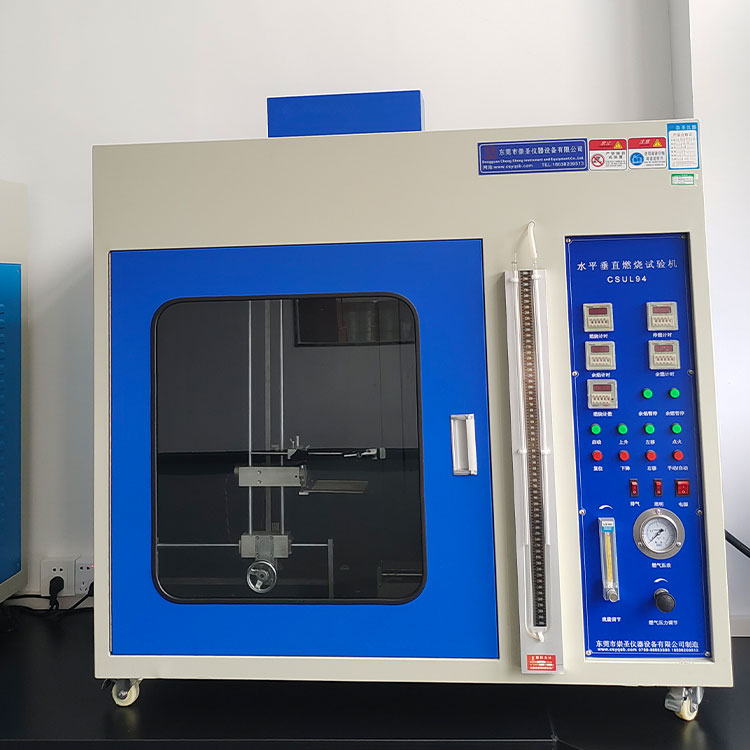
A flame-retardant PA66 GF30 compound is a polyamide 66 grade reinforced with roughly 30% glass fibre and modified with a flame-retardant additive package so that a test specimen can meet a defined flammability classification, most commonly a UL 94 rating, at a defined specimen thickness. The designation PA66 GF30 settles the polymer family and the reinforcement level; it does not settle fire behaviour. Publicly available datasheets for 30% glass-fibre-reinforced PA66, including Mitsubishi Chemical Advanced Materials' Nylatron GF30 / Ertalon 66 GF30 literature and BASF's Ultramid A3WG6 datasheet, describe the material principally as a stiffness, strength, creep-resistance and dimensional-stability play, and treat heat ageing and flammability as separate, grade-specific properties.
That separation has a commercial consequence. A drawing that reads 'PA66 GF30, V-0' without a thickness, a test standard and a report reference is incomplete in a way that usually surfaces late: during a connector audit, a sub-assembly rejection, or a re-qualification cycle that begins after tooling has already been cut.
Flame-retardant grades are moving deeper into mainstream bills of materials as electrical enclosures, connector bodies, appliance structures and under-hood components accumulate fire-performance requirements on top of their mechanical and thermal ones. Buyers in an evaluation-to-execution phase are therefore asking two questions at once: can this supplier compound a flame-retardant PA66, and can it document, control and validate the grade from sample through volume production. This reference works through both questions against the grades and capabilities that WanHan Plastic, the brand of Guangdong Wanhan New Material Technology Co., Ltd., a China-based manufacturer of modified engineering-plastic compounds, currently publishes.
The opportunity: fire performance is now part of the material decision
Global production of polyamide 66 reached approximately 2.7 million metric tons in 2023, and more than 40% of PA66 output is directed to under-the-hood automotive applications, according to commercially published market research. The same heat resistance that makes PA66 attractive in those positions also makes ignition and flame-spread behaviour a design variable rather than an afterthought. In electrical and electronics programmes, an enclosure or connector body can satisfy every mechanical requirement and still fail on a flammability clause.
Cost pressure reinforces the point. PA66 resin was reported at US$3.48 per kilogram in North America in September 2026, a 5.8% increase, while Northeast Asian prices stood at US$2.95 per kilogram. Spreads of that size push buyers toward grade-level optimisation, matching polymer and additive package to the actual service requirement rather than over- or under-specifying an entire part. A flame-retardant grade is one way to keep glass-fibre stiffness while meeting a documented fire requirement. The trade is that the additive package changes other properties, and the quality of the specification depends on how well those changes are understood before approval.
Technical explanation: what changes inside a flame-retardant PA66 GF30 compound
Flame retardancy is a formulation decision, not a label. WanHan publishes two 30% glass-fibre-reinforced PA66 grades that allow the change to be read directly: PA66-WHG30A, the standard grade, and PA66-WHRG30A, the flame-retardant grade. The table below uses the typical values published for each grade. Both sets are screening values for initial selection, not guaranteed specification limits, and the flame-retardant grade page notes that its stated UL 94 V-0 does not declare the specimen thickness.
| Typical property | PA66-WHG30A (standard) | PA66-WHRG30A (flame retardant) |
|---|---|---|
| Tensile strength | 175 MPa (ISO 527-2) | 125 MPa (ISO 527-2) |
| Flexural strength | 255 MPa (ISO 178) | 185 MPa |
| Flexural modulus | 7,000 MPa (ISO 178) | 6,800 MPa (ISO 178) |
| Notched impact strength | 18 kJ/m2 (ISO 179) | 15 kJ/m2 (ISO 179) |
| Heat deflection temperature, method B | 220 C (ISO 75-2/B) | 180 C (ISO 75-2/B) |
| Density | 1.38 g/cm3 (ISO 1183) | 1.52 g/cm3 (ISO 1183) |
| Moulding shrinkage | 0.5% (ISO 2577) | 0.5% (ISO 2577) |
| Stated UL 94 flammability | Not specified | V-0 stated; specimen thickness not stated |
Three effects deserve attention. First, the flame-retardant grade trades tensile strength: 125 MPa against 175 MPa typical for the standard grade. Second, stiffness is largely retained, with flexural modulus published at 6,800 MPa for the flame-retardant grade against 7,000 MPa for the standard grade, so a design driven by stiffness rather than ultimate tensile load may absorb the change more easily than one loaded in tension. Third, heat deflection temperature falls from a typical 220 C to 180 C and density rises from 1.38 g/cm3 to 1.52 g/cm3, which adds mass for the same part volume and should be checked on weight-sensitive components. Published moulding shrinkage is 0.5% typical for both grades, but shrinkage is an initial estimate: gate position, flow direction, wall thickness, packing and mould temperature dominate real dimensions, and the value must be confirmed on the production tool.
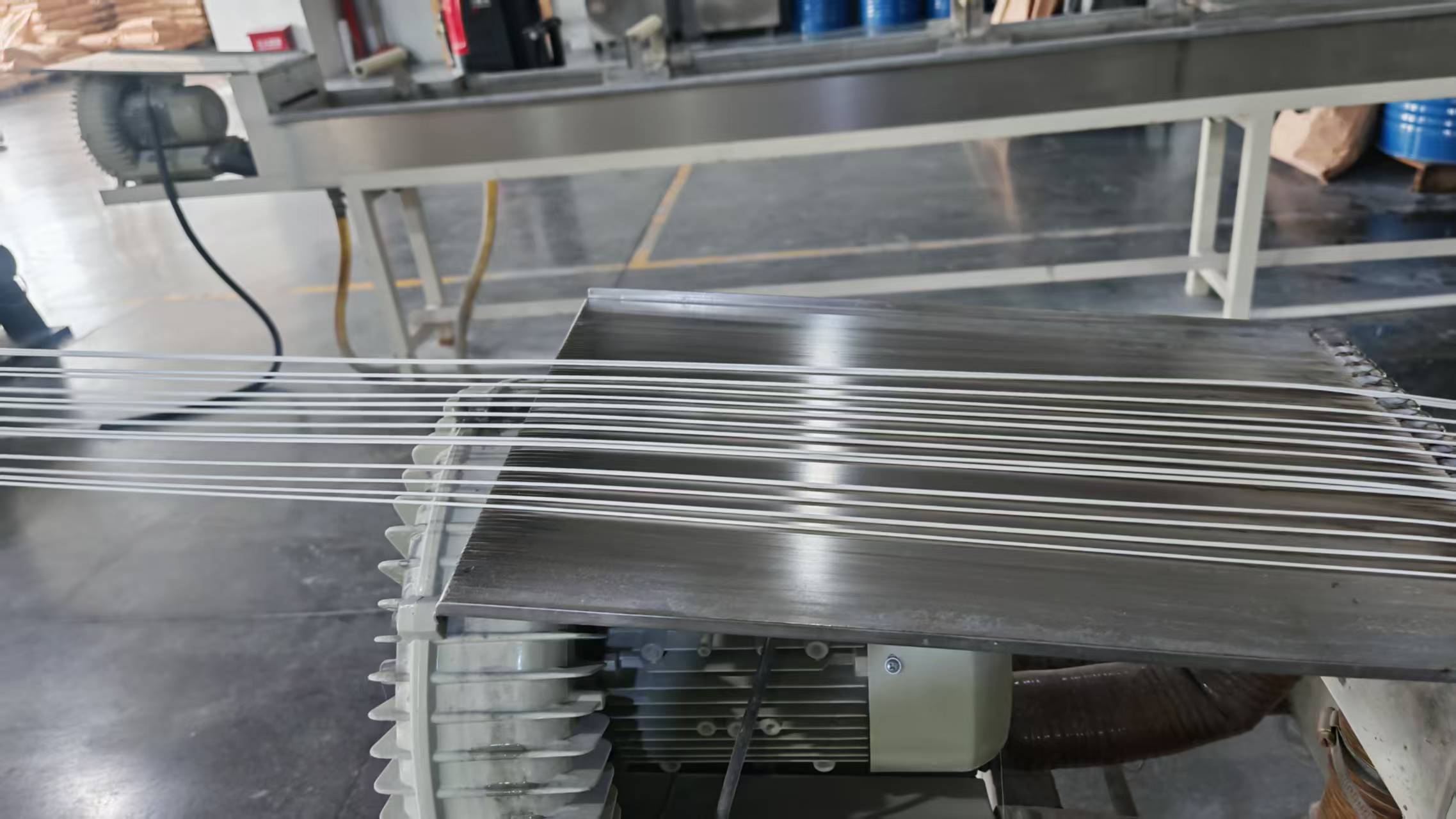
A further point of interpretation: the heat deflection temperature is not a continuous-use temperature. In both grades, HDT is measured on a standard specimen under a defined short-term load. It screens a material; it does not predict creep, colour retention or strength retention after long exposure to heat, moisture or chemicals in a moulded component.
Where flame-retardant PA66 GF30 is specified
The flame-retardant grade is positioned for electrical and electronic housings and for structural injection-moulded parts that require flame-retardant material screening, with final assembly requirements validated case by case. That positioning sits inside a wider set of PA66 GF30 application scenarios that WanHan documents:
- Electrical connector bodies, terminal structures and coil frames, where stiffness, mechanical support and dimensional stability are required and where any flame or electrical requirement must be validated for the exact grade.
- Automotive cooling fans, fan shrouds and radiator-system components, subject to load, vibration, heat and moisture cycling.
- Under-hood brackets, covers and fluid-handling housings, where fluid contact and elevated temperature define the qualification test rather than the polymer name.
- Industrial gears, pump housings and machinery components operating under repeated mechanical load and possible lubricant or process-fluid contact.
Two boundaries matter at specification stage. The standard grade PA66-WHG30A is not represented as flame-retardant or hydrolysis-stabilised unless a separate exact grade documents those properties, so it should not be approved against a fire clause on the strength of the PA66 GF30 designation. And in connector projects, the practical questions are moisture control, fibre orientation, weld-line location, shrinkage, warpage, connector tolerances and heat ageing, with any UL 94 requirement matched to a separately documented flame-retardant grade.
How WanHan supports a flame-retardant PA66 programme
WanHan Plastic is the brand of Guangdong Wanhan New Material Technology Co., Ltd., a manufacturer of modified engineering-plastic compounds serving automotive, electrical and electronics, home-appliance and industrial applications, with exports accounting for about 70% of output and customers in more than 30 countries. The company states a WanHan business history beginning in 2005, a 3,275 m2 factory, 56 employees and a 12-engineer technical team.
Development is application-led rather than catalogue-led. Customisation options for modified engineering-plastic compounds include glass-fibre reinforcement, flame-retardant modification, heat stabilisation, hydrolysis-resistance modification, toughness modification, UV-resistance modification, low-warpage formulation, colour matching and packaging customisation, with availability and compliance confirmed for the exact grade. Grade screening and the sample plan begin after the part drawing and service conditions are reviewed, which is the mechanism that keeps a flame-retardant grade tied to a wall thickness, a service temperature and a fluid exposure rather than to a generic material name.
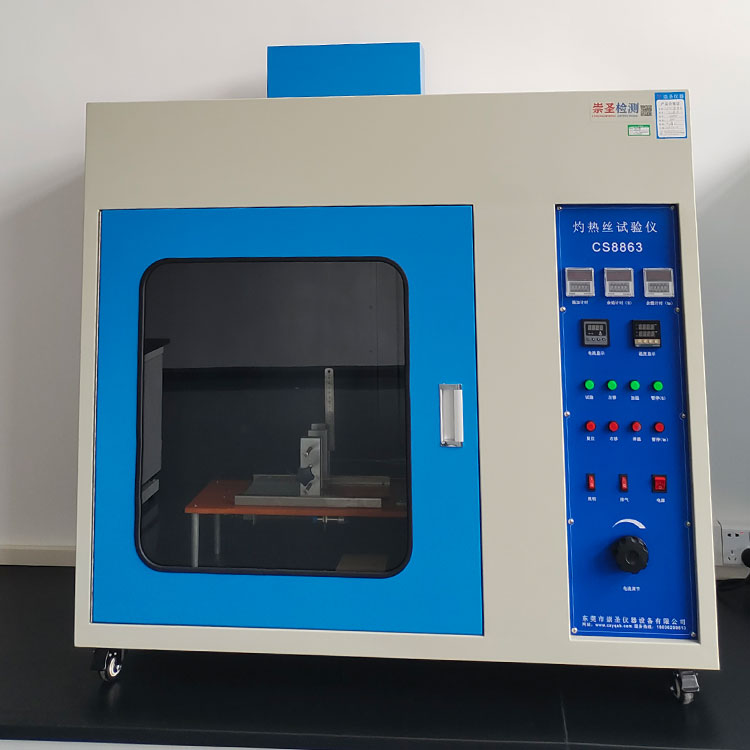
Verification is supported in-house before any third-party route. Laboratory equipment covers impact, heat-deflection and Vicat, melt-flow, density, universal mechanical testing, horizontal and vertical burning, glow-wire testing and XRF elemental screening. Instrument screening is a formulation and batch tool; it does not replace an exact-grade third-party test report when a market or customer requires one. The company operates under certified ISO 9001:2015, ISO 14001:2015 and ISO 45001:2018 management systems (certificate numbers 27326Q00154R153, 27326E00087R153 and 27326S00077R153, issued 1 June 2026 by Zhongren Certification Co., Ltd., valid through 29 May 2029), with a scope covering the design and production of modified plastic pellets.
Supply parameters that matter in an execution phase are published rather than negotiated per enquiry: PA66 GF30 monthly production capacity of up to 5,000 metric tons subject to production schedule, evaluation quantities from 5 kg, sample preparation typically 3 to 7 days after requirements are agreed, and custom-grade production typically 7 to 10 days after approval. Standard production packing is 25 kg per bag with palletised shipment available. As an illustration of how sample-stage polyamide screening is actually purchased, a documented anonymous overseas buyer order from Norway combined PA6, PA66, PA11 and PA12 samples in a 60 kg shipment with a total value of US$1,250.80, completed in December 2025 for automotive and additive-manufacturing evaluation before the next grade was selected.
Market trend analysis: what the numbers do and do not say
Three signals are usable at procurement level. The first is volume: roughly 2.7 million metric tons of PA66 produced globally in 2023, with more than 40% of it consumed in under-the-hood automotive positions, indicates that flame-retardant and heat-stabilised variants sit inside a large, application-driven base rather than a niche. The second is price: a reported North American PA66 resin level of US$3.48 per kilogram in September 2026 against US$2.95 per kilogram in Northeast Asia keeps regional sourcing and landed-cost comparison on the agenda. The third is classification: polyamides in primary forms fall under HS Code 3908.10, which is the reference point for customs and trade documentation on compound shipments.
Market-size figures require more care. One commercially published estimate puts the global Nylon 66 market at US$6.1 billion in 2025 with 3.1% CAGR from 2026 to 2032, but that scope is the parent polymer, not flame-retardant PA66 GF30 compound, and other commercially published nylon-family growth rates differ materially because they cover different product scopes and horizons. No single published figure should be used to size a compound-level opportunity; grade-level demand is better reconstructed from supplier capacity statements, order records and application data. The practical implication for buyers is that the specification work which reduces re-qualification risk has direct commercial value, because a grade change late in a programme costs more than a thorough evaluation earlier in it.
Comparison with standard grades and alternative materials
Flame-retardant PA66 GF30 competes in the same design space as standard PA66 GF30, glass-filled PBT, glass-filled PA6 and, in some legacy designs, metal or thermoset parts. The comparison below uses published material facts only, and the limits column is as important as the capability column.
| Option | What published data shows | Boundary to respect |
|---|---|---|
| Standard PA66 GF30 (PA66-WHG30A) | 175 MPa tensile, 255 MPa flexural strength, 220 C HDT, 1.38 g/cm3 density | UL 94 is not specified in the supplied TDS; it cannot be assumed to meet a fire clause |
| Flame-retardant PA66 GF30 (PA66-WHRG30A) | TDS states UL 94 V-0; 125 MPa tensile, 180 C HDT, 1.52 g/cm3 density | Specimen thickness for the V-0 statement is not declared; higher density and lower tensile strength than the standard grade |
| PBT GF30 (PBT-WHG30) | 130 MPa tensile, 8,200 MPa flexural modulus, 185 C HDT, published UL 94 HB at 1.6 mm | HB is not V-0; a V-0 project needs a separately documented flame-retardant grade |
| PA6 GF30 (PA6-WHG30B) | 30% glass-fibre reinforced PA6 for structural, tool and appliance parts | Heat and moisture balance differs from PA66; no flame rating is published for this grade |
Third-party public datasheets also show why cross-brand numbers should not be mixed. One PA66 GF30 datasheet publishes a density of 1.29 g/cm3, tensile modulus of 5,000 MPa and a maximum service temperature of 120 C at 5,000 hours. Another publishes yield stress of 85 MPa, tensile modulus of 4,500 MPa and an HDT of 150 C. A further supplier positions its 30% glass-fibre PA66 around strength, stiffness, creep resistance and dimensional stability, and another describes its black PA66 GF30 grade as resistant to many oils, greases and fuels with good wear behaviour. These are different properties measured under different methods: tensile modulus is not flexural modulus, yield stress is not tensile strength, and a stated maximum service temperature is not an HDT. Reading them as one ranking produces a false comparison.
The limitations of the flame-retardant route should be stated plainly. Flame-retardant modification is not a free add-on: the WanHan flame-retardant grade is published with lower tensile strength and a lower heat deflection temperature than the standard grade, and with higher density. A V-0 statement in a datasheet, without a declared thickness, does not approve a moulded part. And the PA66-WHRG30A datasheet does not identify the chemistry of the flame-retardant package, so any restricted-substance, halogen or end-of-life requirement must be checked against the exact grade rather than assumed from the material family.
Documents: what a compliance file actually covers
Document scope is the most common source of false confidence in flame-retardant material sourcing. Two SGS reports available to WanHan, RoHS report SZXEC24003382501 and REACH SVHC report SZXEC24003382502, were issued on 4 November 2024 and remain valid to 29 June 2027. Their tested item is a flame-retardant PP sample, model SZX24-0033825-0001.C001. They must not be presented as PA66 GF30, PA66-WHG30A or PA66-WHRG30A compliance evidence.
By the same principle, ISO 9001, ISO 14001 and ISO 45001 certificates are company management-system evidence covering the design and production of modified plastic pellets; they do not certify the performance or regulatory compliance of any individual grade. Before a purchase order is released, a buyer should confirm that each document names the supplied polymer family, grade, colour and test method, and that it is current for the destination market. Where the required document does not exist for the exact grade, that gap belongs in the approval file, not in the marketing statement.
Future outlook
Fire performance is becoming a documentation problem as much as a formulation problem. As flame-retardant PA66 GF30 moves from electrical housings into broader structural and under-hood use, the differentiating factors among compounders will be thickness-specific evidence, batch consistency records on melt flow and mechanical properties, and the ability to re-validate a grade quickly when a colourant, additive source or reinforcement changes. Regional resin price spreads are likely to keep landed-cost comparison active, which rewards buyers who approve a technical specification first and compare commercial offers against that fixed baseline. Grade-level demand evidence in this segment is still thinner than parent-polymer market data, so buyers and suppliers that build application and order evidence themselves will hold the more reliable picture.
FAQ
What is a flame-retardant PA66 GF30 compound, and how does it differ from standard PA66 GF30?
A flame-retardant PA66 GF30 compound is a polyamide 66 grade reinforced with approximately 30% glass fibre that also contains a flame-retardant additive package, so a test specimen can meet a defined flammability classification at a defined thickness. Standard PA66 GF30 keeps the reinforcement without a fire claim: WanHan publishes PA66-WHG30A with typical values of 175 MPa tensile strength, 255 MPa flexural strength, 7,000 MPa flexural modulus and 220 C heat deflection temperature, and states no UL 94 rating. The flame-retardant grade PA66-WHRG30A is published with 125 MPa tensile strength, 185 MPa flexural strength, 6,800 MPa flexural modulus, 180 C HDT and 1.52 g/cm3 density, and its TDS states UL 94 V-0 without declaring the specimen thickness. Both sets are typical screening values, not guaranteed limits.
Does a UL 94 V-0 statement in a datasheet approve a moulded part?
No. UL 94 describes specimen-level behaviour under a defined test at a defined thickness. The WanHan PA66-WHRG30A TDS states UL 94 V-0 but does not state the specimen thickness, so the statement cannot be transferred to a part with a different wall section, colour or geometry without a grade-specific report. The correct sequence is to confirm the rating, thickness, colour and report reference for the exact grade, then validate the moulded component against the applicable product standard.
Can a supplier's RoHS or REACH report for one material be used as evidence for flame-retardant PA66?
No. Report scope follows the tested sample. The SGS documents available to WanHan, RoHS report SZXEC24003382501 and REACH SVHC report SZXEC24003382502, both issued on 4 November 2024 and valid to 29 June 2027, identify a flame-retardant PP sample, model SZX24-0033825-0001.C001. They must not be represented as PA66 GF30 or PA66-WHRG30A compliance evidence. Grade-specific evidence has to be obtained for the exact material, colour and destination requirement, and any missing report should be recorded as an open item before approval.
What should be validated between a 5 kg sample and a production order?
Approval should be staged: confirm the exact grade and batch label, review the current TDS with matched test conditions, dry and mould the material under recorded settings, then test conditioned parts from the intended production tool for dimensions, warpage, assembly and the required mechanical, thermal or flammability behaviour. WanHan PA66 GF30 evaluation quantities can start from 5 kg, sample preparation typically takes 3 to 7 days after requirements are agreed, and custom-grade production typically takes 7 to 10 days after approval. These are planning windows, not door-to-door delivery times, and they do not replace finished-part validation or a signed acceptance baseline.
Which heat deflection temperature should a flame-retardant PA66 part be designed against?
Neither the typical 220 C HDT of PA66-WHG30A nor the typical 180 C HDT of PA66-WHRG30A under ISO 75-2/B is a continuous-use temperature. HDT is measured on a standard specimen under a defined short-term load, while long-term component behaviour also depends on creep, geometry, moisture conditioning and ageing. Design decisions should be based on the agreed service profile, on the exact-grade data measured under compatible conditions, and on tests of the actual moulded part after the specified conditioning cycle.
Further material and process detail is published at wanhan-plastic.com, including the PA66 GF30 grade page. A downloadable company and capability introduction is available here: Guangdong Wanhan New Material Technology introduction (PDF).