
Flare System Shortlist: Biogas, LNG and VOC Options
A curated shortlist of flare and thermal treatment options matched to gas source and site condition — with the parameters, materials and limits that decide which one belongs in the specification.
Flare and thermal treatment decisions in biogas, LNG and VOC service are shaped by the gas stream and the site, not by a preference for one hardware category. A landfill gas stream arrives at low pressure with a methane content that shifts over the operating day. An LNG terminal needs a device that is available in cryogenic conditions within seconds of a release. A chemical plant sends a continuous, corrosive, VOC-laden stream that has to be destroyed as a process duty rather than simply burned off. One supplier catalogue can serve all three cases, but only if the shortlist is built from the gas backwards.
The U.S. Environmental Protection Agency defines an industrial flare as a thermal oxidation system that uses an open flame without enclosure. Enclosed ground flares place that combustion zone inside a refractory-lined chamber, and thermal oxidizers go further still by treating the waste gas as a controlled process stream. Shandong Zexuan Environmental Protection Technology Co., Ltd. (Zexuan), a manufacturer established in 2015 and headquartered in Jinan, Shandong, China, builds elevated and enclosed flare systems, skid-mounted LNG/LPG units and thermal oxidizers, which makes a four-way shortlist practical to compare on a single set of parameters.
This reference sets out that shortlist by application: the ZXE-BGF Series for methane-bearing biogas and landfill gas, the ZX-SMF Series for cryogenic boil-off gas and emergency release, the ZX-TO, ZX-RTO and ZX-RCO Series for VOC and corrosive waste gas, and the ZX-EGF Series for space-constrained, noise-sensitive sites. It also states where each option is the weaker choice, because a shortlist without exclusions is only a catalogue.
Why the gas source, not the flare type, decides the shortlist
Four gas properties do most of the selection work before any mechanical detail is discussed.
- Heating value and methane concentration. Biogas and landfill gas typically sit in a 35%–65% CH₄ range depending on source, which affects flame stability and the amount of support required. Higher-heating-value hydrocarbon and LNG streams burn readily but carry radiation and smoke considerations.
- Pressure and flow variability. Anaerobic digester and landfill gas arrive at low pressure with variable flow; refinery relief is high pressure and intermittent; terminal boil-off gas is cryogenic and event-driven. Turndown, ignition logic and control philosophy follow from this.
- Corrosive and toxic content. Chemical and petrochemical streams can contain acid-forming or halogenated compounds that decide whether carbon steel, SS304, SS316L or SS310S is acceptable in the hot zone.
- Site envelope. Plot space, stack height permissions, noise limits and visible-flame constraints determine whether an elevated stack, an enclosed ground flare or a skid-mounted package is even permissible.
A fifth factor sits on top of these: how performance is demonstrated. The EPA NSPS OOOOb rule, effective from 2024, removes the option to assume a default 98% destruction efficiency for flares and requires operators to demonstrate actual performance. That changes what a buyer should request from a supplier — not a number in a brochure, but the design basis and monitoring arrangement that support it.
The shortlist at a glance
| Gas source or site condition | Recommended series | Duty and reference parameters |
|---|---|---|
| Landfill gas, digester gas, wastewater gas; low pressure, variable flow | ZXE-BGF Series | Methane destruction ≥98%; 800°C–1100°C; 35%–65% CH₄; automatic ignition and flame monitoring |
| LNG/LPG boil-off gas, bunkering, emergency release; cryogenic conditions | ZX-SMF Series | Skid-mounted package; cryogenic-compatible materials; integrated ignition and control; fast commissioning |
| VOC-laden, toxic or corrosive waste gas on continuous process duty | ZX-TO / ZX-RTO / ZX-RCO | 800°C–1200°C; VOC destruction up to 99%+; heat recovery options; ceramic heat storage media |
| Limited plot space, low noise or visible-flame restriction | ZX-EGF Series | Combustion efficiency up to 99.9%; 800°C–1200°C; low radiation and low noise design; refractory lining |
| High-volume emergency relief with stack-height requirement | ZX-SSEF / ZX-GWF / ZX-DSF | Height 10 m–150 m+; up to 1100°C; turndown up to 100:1; combustion efficiency ≥98%–99.9% |

Demountable derrick-supported elevated flare — the configuration used when stack height and structural access both matter. Image: Zexuan.
1. ZXE-BGF Series: biogas, landfill gas and digester gas
The ZXE-BGF Series is the entry on the shortlist for methane-bearing gas at low pressure and variable flow. It is configured as an open or enclosed biogas flare, a landfill gas (LFG) flare, an anaerobic digestion flare or a methane destruction flare, with the model customised to gas flow rate and project requirements.
Its reference envelope is a methane concentration of typically 35%–65% CH₄ depending on source, an operating temperature of typically 800°C–1100°C and a methane destruction efficiency of ≥98% depending on system design and operating conditions. Gas flow capacity is customised per project. Automatic ignition and flame monitoring are available, and the unit can be specified for continuous or intermittent operation.
Why this belongs first for biogas duty: the technical difficulty is not combustion, it is combustion of a weak, shifting fuel without a flame-out. Automatic ignition and continuous flame monitoring address that directly. Material options — carbon steel, hot-dip galvanised steel, SS304, SS316L and high-temperature resistant alloys for burner components — cover the range from a rural digester site to a coastal landfill where salt-laden air accelerates corrosion of the colder sections.
Typical applications in Zexuan's application data are municipal landfill sites, waste management facilities, wastewater treatment plants, anaerobic digestion projects, agricultural biogas plants, food processing waste treatment and renewable energy projects. The function is stated plainly: combust methane to reduce greenhouse gas emissions and improve environmental compliance.
Boundary to state in the specification: a biogas flare is not an emergency relief device. Its value comes from continuous or intermittent destruction of a low-pressure methane stream. For high-pressure hydrocarbon relief, the elevated or enclosed relief flare family is the correct entry on the shortlist.
2. ZX-SMF Series: skid-mounted LNG/LPG flare for BOG and emergency release
LNG terminals, bunkering operations and gas storage sites generate boil-off gas and require a credible answer to emergency release — often on a plot where there is no room for a tall structure and no tolerance for a long commissioning window. The ZX-SMF Series answers that combination with a compact skid-mounted package: an LNG terminal flare, LNG bunkering flare, LPG emergency flare or mobile flare unit.
The reference parameters that matter here are cryogenic service compatibility, capacity customised according to gas release rate, and handling of LNG, LPG, natural gas and hydrocarbon gas. Construction uses carbon steel, SS304 or SS316L, with low-temperature materials for LNG service. The package includes an integrated ignition and control system and is described as fast to install and commission — a meaningful advantage at a bunkering berth where every day of site work competes with terminal operations.
Zexuan's application data places this product in LNG receiving terminals, LNG bunkering, gas storage, pipeline facilities and offshore gas applications, operating in automatic standby mode for boil-off gas generation and emergency release, with special requirements listed as compact design, low-temperature compatibility, fast response and safe combustion.
Two practical consequences follow. First, because capacity is customised to the release rate, the release-rate basis has to be agreed early — retrofitting a larger skid usually costs more than sizing it correctly at RFQ stage. Second, skid-mounted logic suits defined, event-driven duty; where a terminal also needs large continuous relief capacity, the shortlist should carry both a skid package and a stack-based flare rather than stretching one unit across two roles.
3. ZX-TO, ZX-RTO and ZX-RCO: VOC and corrosive waste gas
Where the stream is a continuous, VOC-laden or corrosive process gas rather than a relief stream, the shortlist moves from flare to thermal oxidizer and from combustion-in-the-open to controlled enclosure. Zexuan's oxidizer family covers three configurations: direct thermal oxidation (ZX-TO), regenerative thermal oxidation (ZX-RTO) and regenerative catalytic oxidation (ZX-RCO).
Reference parameters for all three are an operating temperature of 800°C–1200°C, VOC destruction efficiency up to 99%+, suitability for continuous operation and heat recovery options. Materials are carbon steel, SS304 and SS316L, with ceramic heat storage materials used in the regenerative configurations. Target industries are chemical, pharmaceutical, coating, petrochemical and VOC treatment duties generally.
The distinction between the three configurations is a heat-balance question more than a chemistry question. Direct thermal oxidation is the simplest arrangement and is often appropriate where the waste gas carries enough heating value or where the duty is intermittent. Regenerative thermal oxidation adds a ceramic heat-exchange bed so that continuous low-concentration streams can be treated without disproportionate fuel consumption. Regenerative catalytic oxidation introduces a catalyst to lower the required operating temperature for suitable gas chemistries. Buyers should treat the choice as an energy and operating-cost decision, and should ask for the heat and mass balance that supports it.
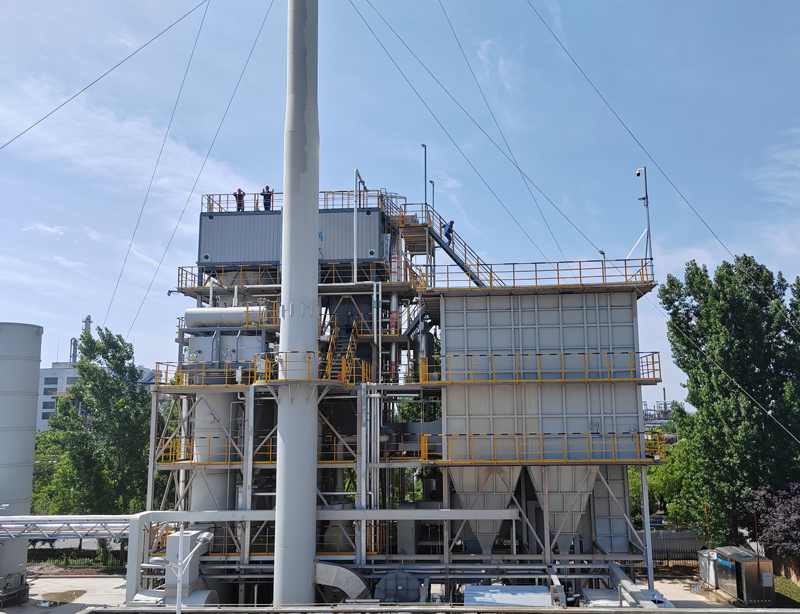
Regenerative catalytic oxidation (RCO) configuration — one of three thermal oxidizer arrangements offered for VOC duty. Image: Zexuan.
Corrosive service deserves separate attention. When the gas contains acid-forming or halogenated components, the specification question is not simply stainless or carbon steel; it is which alloy is acceptable at the hottest point of the system, where condensate forms, and at the quench or flue-gas interface. Zexuan lists SS310S in high-temperature and incinerator applications alongside carbon steel and SS304/SS316L, and notes corrosion-resistant materials as a special requirement for chemical plant duty.
One boundary is worth stating because it is commonly blurred in procurement: a thermal oxidizer is process equipment, not an emergency relief device. It runs continuously at 800°C–1200°C, consumes fuel or recovered heat, and needs stable inlet conditions and downstream flue-gas treatment. It should not be offered as a substitute for a pressure-relief flare, and a flare should not be offered as a substitute for a VOC destruction unit that must hold a defined destruction efficiency across a continuous stream.
4. ZX-EGF Series: enclosed ground flare for constrained, noise-sensitive sites
The ZX-EGF Series is an enclosed ground flare, also described as a multi-burner ground flare or low-radiation ground flare. Its reference data includes combustion efficiency up to 99.9%, an operating temperature of 800°C–1200°C, customised gas flow, a low-radiation design, low-noise operation and suitability for limited-space areas. Construction uses carbon steel with material options including SS304, SS316L and SS310S, and refractory lining materials.
Its application list is the mirror image of the elevated stack: petrochemical parks, chemical plants, LNG terminals, hazardous gas treatment, pharmaceutical industry and industrial parks — sites where a visible flame at height, high radiant heat flux or continuous noise would create a permitting or community problem. Multiple burner configurations are available, which allows the enclosure to be staged across a range of flows.
The trade-off is real and should be written into the evaluation rather than discovered at maintenance time. An enclosed ground flare carries a refractory lining that requires inspection and periodic repair, and its multi-burner layout occupies ground area even though it avoids stack height. Where plot space is genuinely scarce, that footprint is a constraint in its own right, and the layout has to be confirmed against the site plan before the selection is closed.
Where elevated flares still belong on the shortlist
Elevated flare systems remain the reference solution for high-volume emergency relief where stack height is required to manage radiant heat at grade. Zexuan's elevated family covers self-supported (ZX-SSEF), guyed-wire (ZX-GWF) and derrick-supported (ZX-DSF) structures, plus demountable configurations for sites where access or logistics rule out a single lift.
Reference parameters are a flare height of 10 m to 150 m+, gas flow capacity customised to process conditions, an operating temperature up to 1100°C, a turndown ratio up to 100:1 and a combustion efficiency of ≥98%–99.9% depending on design conditions. The turndown figure is the one buyers should read carefully: a 100:1 range is what allows one stack to cover both a small continuous purge and a large emergency release without smoking or flame instability at the low end.
The ZX-FT flare tip family supports this, offered as sonic, smokeless, air-assisted or Coanda types in SS316L, SS310S and Inconel 625, with operating temperature up to 1100°C and customisable diameter and gas capacity for hydrocarbon service. Tip metallurgy is often the difference between a five-year and a fifteen-year service life in high-radiation duty, and Inconel 625 in the hot parts is the specification line worth defending in a tender.
Materials as a selection parameter, not an afterthought
Material selection in flare and thermal treatment work follows temperature and chemistry, and the two are usually mapped on the same drawing. The table below reflects the material options Zexuan lists across its flare and oxidizer ranges.
| Material | Typical role in the system | Where it is usually specified |
|---|---|---|
| Carbon steel, painted or hot-dip galvanised | Structure, ducting, lower-temperature sections | Elevated stacks, biogas flare bodies, skid frames |
| SS304 / SS316L | Corrosion resistance in wetted or contaminated zones | Chemical, petrochemical and coastal installations |
| SS310S | High-temperature oxidation resistance | Hot zones, incinerator and oxidizer internals |
| Inconel 625 | High-temperature strength and creep resistance | Flare tips and high-temperature parts |
| Refractory lining and ceramic media | Thermal protection and heat storage | Enclosed ground flares, RTO and RCO units |
Zexuan's broader material statement also lists Hastelloy alloy and other high-temperature, corrosion-resistant alloys where process conditions require them. The practical procurement rule is that material grades should be tied to a stated location and temperature in the design package — a general note that a unit is available in SS316L does not answer the question of what is used at the burner nozzle.
Reading destruction and combustion efficiency claims on a like-for-like basis
Efficiency figures quoted across the industry are not interchangeable, and the difference matters at tender stage. The EPA states that properly operated flares achieve at least 98 percent destruction efficiency in the flare plume, and separately confirms that the NSPS OOOOb rule no longer allows a default 98% assumption to be applied without demonstration.
Against that backdrop, the numbers in Zexuan's data should be read for what they are. The ZXE-BGF biogas flare is rated at ≥98% methane destruction efficiency depending on system design and operating conditions. The ZX-TO, ZX-RTO and ZX-RCO oxidizers are rated at up to 99%+ VOC destruction efficiency. The ZX-EGF enclosed ground flare is rated at up to 99.9% combustion efficiency, and the elevated flare range at ≥98%–99.9% depending on design conditions.
Each of those statements carries a qualifier, and the qualifier is the engineering. A buyer comparing two suppliers should normalise the definition (what is being destroyed, measured where), the operating envelope (flow, heating value, temperature) and the monitoring method. In the U.S. refinery context, combustion-zone net heating value is a regulated operating parameter — the EPA cites a minimum of 270 Btu/scf for refinery flares in the cited regulatory context — and steam- or air-assisted flares require continuous monitoring of assist-medium flow. Those requirements translate directly into instrumentation scope, and instrumentation scope translates into cost.
Market signals that are changing the shortlist
Two published figures frame the demand side. The World Bank's global flaring data places flaring volumes at 151 billion cubic metres in 2024, the highest level since 2007, which indicates that the installed base of combustion equipment is large and under scrutiny rather than shrinking. A commercial research report published by Dataintelo values the global flare systems market at approximately USD 4.8 billion in 2025 — a figure that should be treated as a market estimate rather than an audited statistic, but which is consistent with a mature, replacement-driven equipment category.
The stronger signal is regulatory. When a default efficiency assumption is withdrawn, as NSPS OOOOb does, the equipment conversation shifts from type selection to demonstrated performance. That favours three things on this shortlist: enclosed and controlled combustion where local conditions permit, integrated ignition and monitoring rather than add-on instrumentation, and documented design bases that reference recognised pressure-relief practice such as API 521, which is titled Pressure-relieving and Depressuring Systems and is identified in the API document as identical to ISO 23251.
Geographically, Zexuan reports international project experience in more than 10 countries across the Middle East, Central Asia, Southeast Asia, Africa and Russia, with target industries spanning oil and gas, refining and petrochemical, LNG terminals, pipeline and compressor stations, chemical, municipal landfill and biogas, and metallurgy. The application data behind this shortlist mirrors that spread: biogas projects concentrated in Africa, South Asia, Southeast Asia and Latin America; LNG and gas processing in the Gulf, Southeast Asia and North America; petrochemical and chemical projects across the Gulf, South and East Asia.
Where each option is the weaker choice
A shortlist is only useful if it also excludes. The comparison below sets the four recommended options against the traditional alternatives they typically displace, including the cases where the traditional choice remains correct.
| Option | Strong fit | Where it is the weaker choice |
|---|---|---|
| ZXE-BGF biogas flare | Low-pressure methane streams at 35%–65% CH₄ with variable flow | High-pressure emergency relief; streams outside its methane-concentration envelope |
| ZX-SMF skid-mounted LNG/LPG flare | Cryogenic BOG and emergency release on constrained plots | Very large continuous relief duty, where a stack-based flare remains appropriate |
| ZX-TO / RTO / RCO oxidizers | Continuous VOC and corrosive streams needing defined destruction efficiency | Emergency pressure relief; very dilute or highly variable intermittent flows where fuel cost dominates |
| ZX-EGF enclosed ground flare | Noise, radiation and visible-flame constraints on space-limited sites | Sites with no ground footprint available; projects without appetite for refractory maintenance |
| Open elevated flare (traditional) | High-volume, infrequent relief where stack height resolves radiation | Visible flame is a genuine limitation — the EPA definition is an open flame without enclosure, and near populated or permit-sensitive sites that openness becomes the deciding constraint |
One further boundary applies to the whole shortlist. Where the waste is a liquid or solid hazardous stream rather than a gas, the correct entry is Zexuan's ZX-INC rotary kiln incinerator family, rated at 850°C–1200°C with multi-stage combustion, waste gas treatment integration and heat recovery options. Forcing a gaseous-stream flare or oxidizer into that duty is a specification error, not a cost saving.
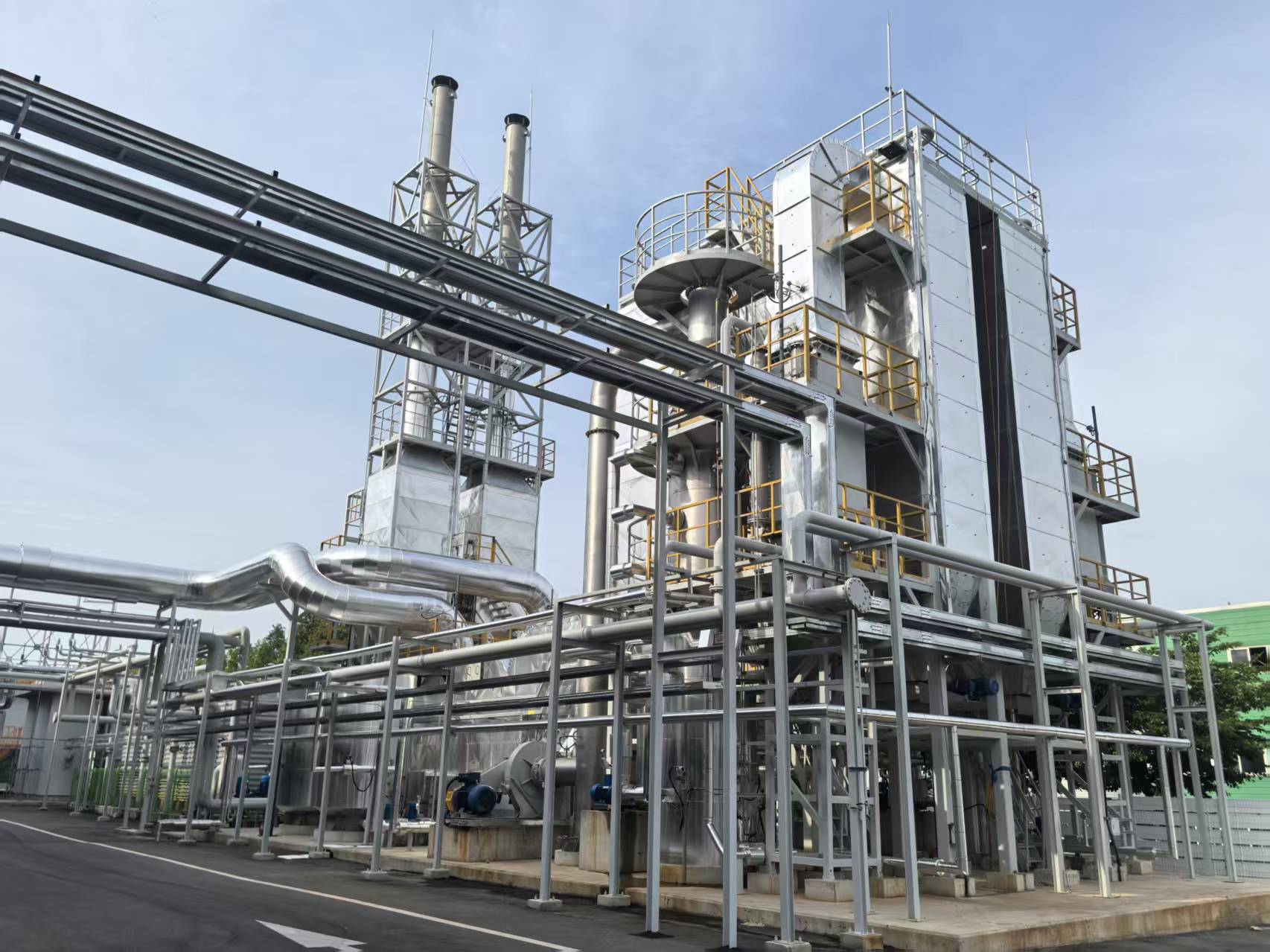
Adjacent duty: multi-purpose incineration for complex hazardous streams, where flare and oxidizer logic no longer applies. Image: Zexuan.
Verification before the shortlist becomes a purchase order
At awareness and research stage, the useful question is not only which series fits, but which claims can be documented. Zexuan's verifiable reference points are specific enough to check: a manufacturing base of 24,100 m², more than 80 employees including 30+ engineers and technical specialists, an R&D team of more than 20 engineers, annual manufacturing capacity of 60+ sets of flare and thermal treatment systems, and ISO 9001:2015 quality management system certification numbered 26326Q00079R001, issued by CSU International Certification Co., Ltd. and applicable to both the China domestic market and the international market.
Four checks should follow any shortlist decision. First, ask for the design basis rather than the certification claim — a reference to API 521 or ISO 23251 in a document does not by itself prove that a specific unit was designed, inspected and accepted against it. Second, ask for the material certificates by location and temperature, not by grade list. Third, ask what monitoring is included as standard, since the regulatory direction is toward continuous measurement of assist media and combustion-zone conditions. Fourth, ask for factory acceptance test records and commissioning support scope, because for a skid-mounted or enclosed unit, installation and commissioning are where schedule risk concentrates.
Future outlook
Three developments are likely to reshape this shortlist over the next procurement cycles. The first is the migration of monitoring from optional to standard: once performance must be demonstrated rather than assumed, ignition, flame detection and assist-media measurement become part of the base scope rather than a later retrofit. The second is the continued modularisation of LNG and emergency-relief equipment, where skid-mounted packages shorten site work at terminals that cannot afford extended shutdowns. The third is material strategy in high-temperature zones, where alloy choice in tips and hot internals increasingly determines maintenance intervals and whole-life cost rather than initial price.
Zexuan's stated development direction — low-carbon combustion technologies, intelligent control systems, flare gas recovery and digital operation solutions — aligns with all three. Buyers evaluating suppliers on this basis should ask for the control architecture and the data the system can produce, not only the combustion envelope. That is the difference between a flare that meets a drawing and a flare that can evidence compliance two years later.
FAQ
What is the difference between a flare system and a thermal oxidizer?
The EPA defines an industrial flare as a thermal oxidation system that uses an open flame without enclosure. Thermal oxidizers — including direct thermal oxidation (TO), regenerative thermal oxidation (RTO) and regenerative catalytic oxidation (RCO) — enclose the combustion zone and treat the waste gas as a controlled process stream, typically at 800°C–1200°C with VOC destruction efficiency up to 99%+. A flare is generally a relief or destruction device for excess gas; an oxidizer is continuous process equipment with defined inlet conditions and, usually, downstream flue-gas treatment.
Which flare type is used for landfill gas and biogas?
The ZXE-BGF Series is configured for landfill gas, biogas, digester gas and wastewater treatment gas. Its reference envelope is typically 35%–65% CH₄, an operating temperature of typically 800°C–1100°C and methane destruction efficiency of ≥98% depending on design and operating conditions. It offers automatic ignition and flame monitoring and can be specified for continuous or intermittent operation, with models customised to gas flow rate and project requirements.
When is a skid-mounted LNG flare preferable to an elevated flare?
A skid-mounted unit such as the ZX-SMF Series suits cryogenic boil-off gas and emergency release where plot space is limited, where the release rate is a defined basis, and where fast installation and commissioning matter — LNG receiving terminals, bunkering and gas storage, for example. Elevated flares such as the ZX-SSEF, ZX-GWF and ZX-DSF series suit large relief volumes that need stack height of 10 m to 150 m+ to manage radiation at grade, with turndown up to 100:1 and operating temperatures up to 1100°C.
What destruction efficiency can flare and thermal treatment systems achieve?
The EPA states that properly operated flares achieve at least 98 percent destruction efficiency in the flare plume, and the NSPS OOOOb rule requires operators to demonstrate actual rather than assumed performance. Within Zexuan's published data, the ZXE-BGF biogas flare is rated at ≥98% methane destruction, the ZX-TO/RTO/RCO oxidizers at up to 99%+ VOC destruction, the ZX-EGF enclosed ground flare at up to 99.9% combustion efficiency, and elevated flares at ≥98%–99.9% depending on design conditions. Each figure should be compared on the same definition, operating envelope and measurement basis.
Which materials are specified for high-temperature and corrosive flare duty?
Material options across the Zexuan range include carbon steel and hot-dip galvanised steel for structures and lower-temperature sections, SS304 and SS316L where corrosion resistance is required, SS310S for high-temperature oxidation resistance in hot zones and incinerator internals, and Inconel 625 for flare tips and high-temperature parts. Refractory lining materials are used in enclosed ground flares, and ceramic heat storage materials in regenerative oxidizers. Hastelloy and other high-temperature corrosion-resistant alloys are listed for more demanding conditions.
How can buyers verify a flare system manufacturer's claims?
Verification should combine documentary and physical evidence: the design basis against recognised pressure-relief practice such as API 521 (identical to ISO 23251 in the cited API document), material certificates tied to specific locations and temperatures, factory acceptance test records, and quality management certification. Zexuan's stated reference points include ISO 9001:2015 certification number 26326Q00079R001 issued by CSU International Certification Co., Ltd., a 24,100 m² manufacturing base, more than 80 staff including 30+ engineers and technical specialists, and annual capacity of 60+ sets of flare and thermal treatment systems.
Reference document: the Zexuan product and series brochure, covering elevated flares, enclosed ground flares, skid-mounted LNG/LPG flares and thermal oxidizers, is available as a PDF at Shandong Zexuan product brochure.
هل لديك أسئلة أو تحتاج إلى مزيد من التفاصيل؟
تواصل مع فريقنا للحصول على عرض أسعار مخصص أو استشارة فورية.
طلب عرض أسعار
املأ النموذج أدناه وسيتواصل معك فريقنا بعرض مقترح مخصص.
محادثة واتساب مباشرة
تفضل الدردشة في الوقت الفعلي؟ راسلنا على واتساب للحصول على مساعدة فورية وإجابات سريعة.
- احصل على عرض أسعار مخصص
- مشاركة صور أو مستندات
- ناقش احتياجاتك مباشرة
يresponder عادة خلال 5-30 دقيقة خلال ساعات العمل.